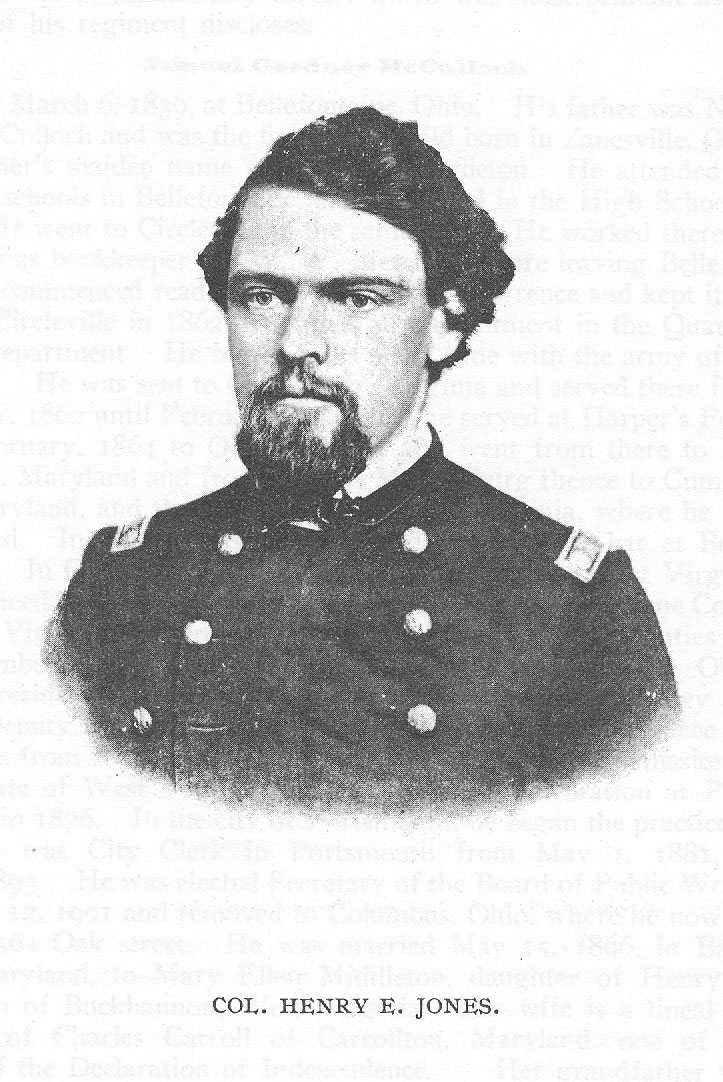
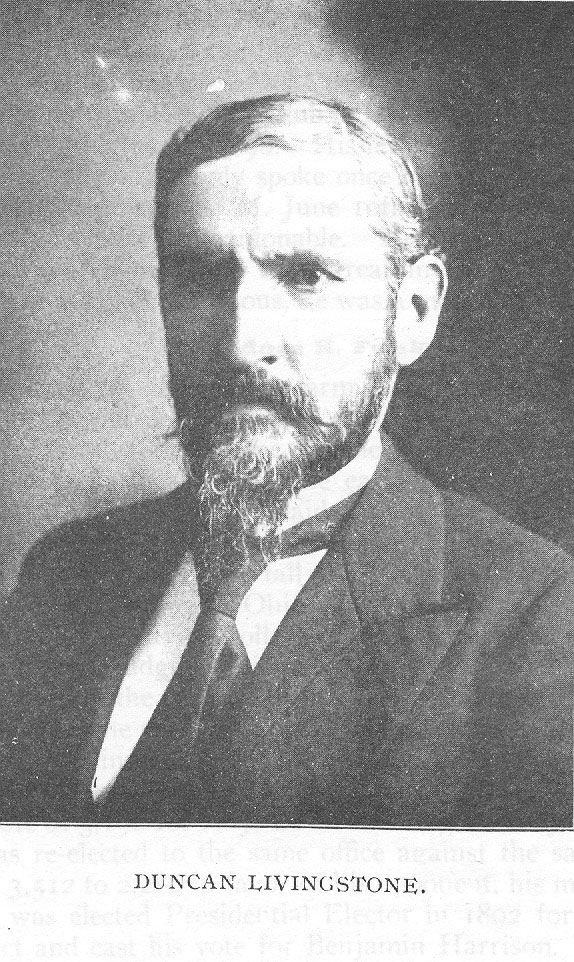
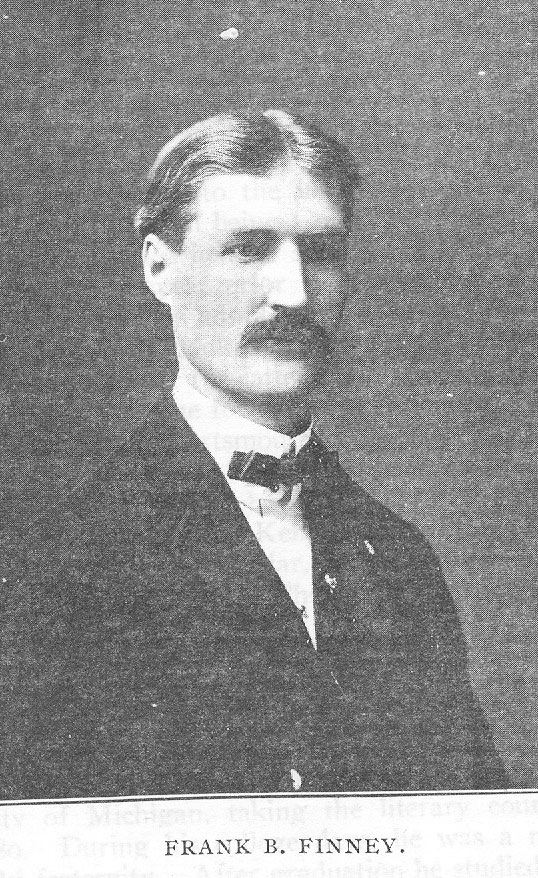
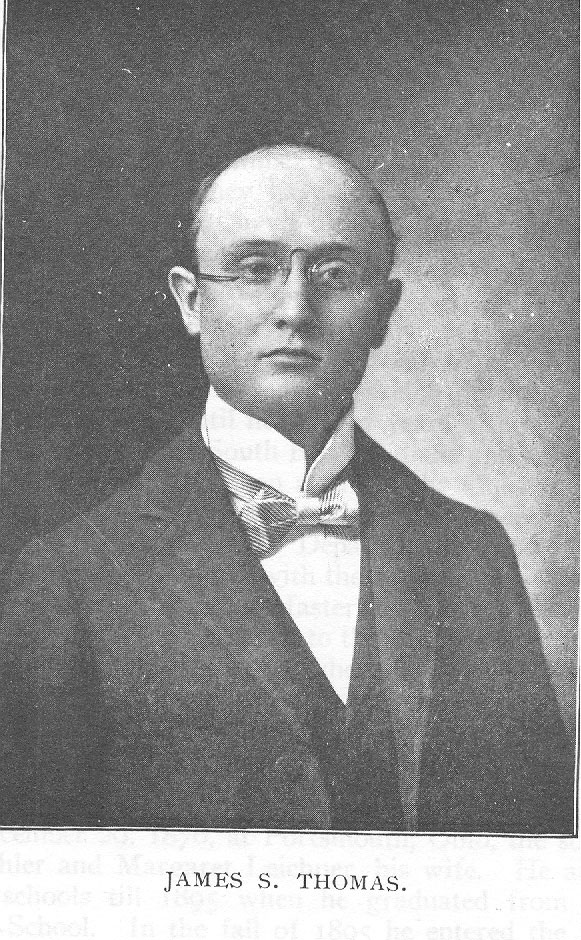
|
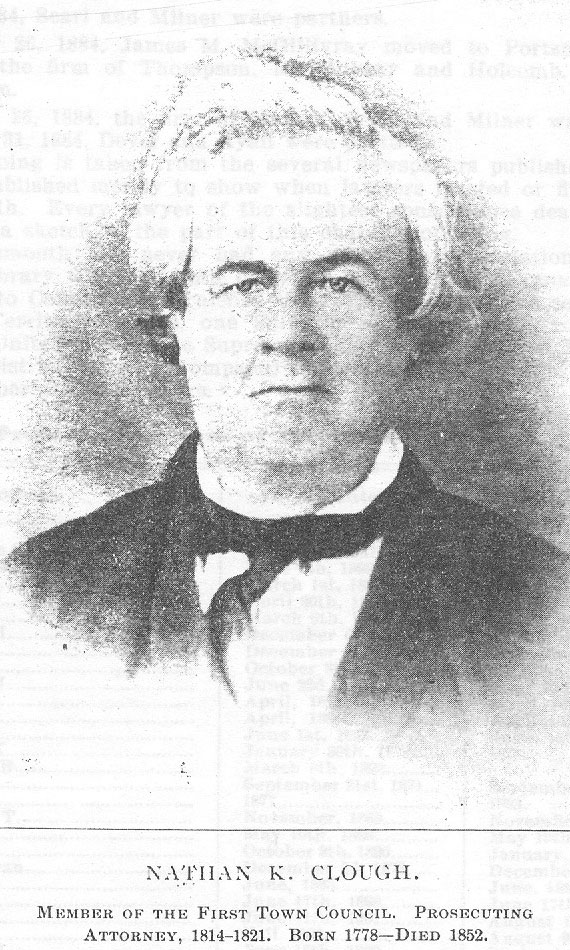
THE BAR OF SCIOTO COUNTY - 277 Resolutions of the Bar of Scioto County, Ohio, at the Last Court Under the Old Constitution, September, 1851. S. M. Tracy moved the Court that the following be entered upon the Journal of the Court as the last act of the Court. To the Honorable William V. Peck, President Judge, Samuel Crull, Edward Cranston and Jacob P. Noel, associate Judges of the Court of Common Pleas of Scioto County. The undersigned members of the Bar and officers of said Court, respectfully request, in view of the final adjournment of this Court and of the termination of the present Judicial system, to put upon your Records an expression of our sentiments. Judge Crull has with short intervals been upon the Bench for forty-three years. He has servedwith every President Judge except one. His early brethren are all gone. Few of the lawyers who first practiced before him are now alive. Not one of them is here. When he looks at the present Bar, he sees a majority who do not number as many years of life as he does of official service. The other members of the Bench have served comparatively a short time. With each of you the most friendly relations have ever existed. The Bench under your administration has enjoyed our full confidence, and that confidence has enabled us to discharge harmoniously and satisfactorily the various and complicated duties growing out of our official and professional relations and each individual member of the Court retires from the Bench with our hearty approbation of his judicious course and our warmest wish for his welfare and happiness. Charles Oscar Tracy, R. Ramsey, J. R. Turner, Clerk, S. M. Tracy, E. Glover, C. P. Chandler, Ex-Sheriff, W. A. Hutchins, E. W. Jordan, Enos Gunn, Sheriff, A. Crichton, Jr., George Johnson, George 0. Newman. George Turner, 0. F. Moore. And thereupon the foregoing is by the Court ordered to be entered upon the Journal Record. And it is further ordered that this Court adjourn without day. On November 21, 1885, at a bar meeting on account of the death of Col. 0. F. Moore, Mr. Hutchins said, "I located in Portsmouth December 21, 1841. At that time John E. Hanna was presiding judge, Richard Tomlin, Samuel Crull, Abijah Batterson were Associate Judges. The members of the bar were Samuel M. and Charles 0. Tracy, Wm. V. Peck. Edward Hamilton, Archibald Hamilton, Richard H. Tomlin, Major D. F. Heaton, H. Goodwin Blinn, Benjamin Ramsey, Oscar F. Moore, and myself. Since that time there became members of the bar, Geo. Johnson, E. B. Cone, Cyril? H. Bracket, J. M. Nelson, B. F. Conway, J. V. Robinson, Jr., Joseph M. Glidden, Elijah Glover, J. M. Whitney, John W. Collings, Wm. H. Reed, Wm. S. Huston, Martin Crain, Henry E. Jones, George H. Gaffey, E. Jeffords, George Turner, Robert N. Spry and James S. Pollitt, none of whom are now living. Those who became members of the bar but removed from Portsmouth and are still living are: Edward F. Jordan. Thos. McCauslen, James W. Davis, Joseph McDowell, W. A. Whitney, John W. Glidden, James T. Douglas, Perry J. Dunham, J. C. Hughes, James Culbertson, John E. Harper, George H. Jones and A. T. Holcomb." "When I made my first speech in court twenty-two of the present members of the bar had not been born, and the judge on the bench was but three, years old." BIOGRAPHIES OF MEMBERS OF THE BAR. Nathan Kimball Clough was born in 1778 in Francistown, N. H. The name was originally Cluffe. The first one of the family to emigrate was John Cluffe, who came over in the ship "Elizabeth" in 1635. He settled in Salisbury, Mass. He had two brothers who came over soon after. The family is Welsh and can be traced to the Twelfth Century, to a 278 - HISTORY OF SCIOTO COUNTY. Knight, from whom the title descended. Their coats of arms was a lion rampant, a lion couchant with a sword in the right paw, with a Latin motto, which translated reads, "Purity without spot or blemish," and the family lived up to it. The Cloughs were well known in New England for their integrity. Nathan K. Clough attended Dartmouth College. and graduated in 1806. His diploma of graduation is in the possession of his granddaughter, Mrs. H. P. Pursell, of Portsmouth, Ohio. He studied law after his graduation and was admitted to the bar in New England. He located in Portsmouth, Ohio, in 1810, at the age of 32 years. He soon married Clarissa Hempstead, daughter of Hallam Hempstead, Sr., and sister of Mrs. James Lodwick and Mrs. William Oldfield. He was the Prosecuting Attorney of the county from December, 1814 to July, 1821, when he was succeeded by Samuel M. Tracy. On March 15th, 1815, he was . elected one of the nine first councilmen of Portsmouth. The nine were elected without reference to terms and then they were to draw for classes, three for one year, three for two years and three for three years. He drew one of the three years' terms and was re-elected in 1818 and 1821. On March 14, 1823, he resigned from the Council. He was elected the first Recorder of the town and re-elected annually until February 4, 82o, when he resigned and was succeeded by Jacob Clingman. While Prosecuting Attorney, he received allowances to the amount of $100.00 per year. In 1839, his professional income was estimated at $500, per year and his tax on it was $4.00. His first residence in Portsmouth was on Second street where Steindam's three story brick building now stands and his office stood on the site of the Zoellner building now occupied by A. M. Glockner. In 1830, he moved his office to Front street. In 1820, he had a partner in the law business by the name of Wilkinson. In 1818 he was a School Trustee in Portsmouth. The school was conducted in the Methodist Church and seems to have been a private enterprise. In 1830, he built the residence on Fourth street recently occupied by Dr. Arthur Moore as an office, At that time he advertised he had out $2,000 to $3,000, and wanted payment. In 1826, the county allowed him $8.00 for defending the defendant in State vs. David Vaughn. The services had been rendered in 1824, and he waited two years to obtain payment of his bill. As to his history in the town Council, we have a few traces. In 1815, he was on a Committee to lease school lands. In 1816, he was on a Committee to report regulations for the wagoners for using the streets and alleys with their wagons. On August l0th, he was fined for leaving Council without permission. At the same meeting John R. Turner and David Gharky were fined for being late. On September 17, 1822, he and Daniel Corwine were on a Committee to buy THE BAR OF SCIOTO COUNTY - 279 a town bull of John H. Thornton. In 1825, he was one of the health officers of the town. In 1831, he was one of the Commissioners to organize the Portsmouth and Columbus turnpike. In the fall of 1833, he removed to Piketon, Ohio, where he continued to reside until his death in June 1853. He made the Portsmouth Town duplicate in 1817, and received $4.00 for his service. He was a Presbyterian in his religious faith and was at the meeting, when that church was organized in Portsmouth. Mrs. Mary Barrow Clough, wife of our subject, died in 1869 in Piketon. She was a cousin of Dr. G. S. B. Hempstead and traced her ancestry to Sir Robert Hempstead, who came to this Country in 1820, and was one of the founders of New London, Connecticut. Our subject had five children, three of whom lived to maturity. Dr. G. W. A. Clough of Chillicothe; Jane who married John Wesley Dunham, long a citizen of Portsmouth, and a daughter Mary, who died at the age of twenty-three years, unmarried. In his political views, Mr. Clough was a Whig. As a lawyer, he was well read and did a great amount of business, but was prolix and tedious in his arguments. He was a safe and g00d counselor and possessed the confidence of the community. Richard Douglas was born at New London, Connecticut, in September, 1785, and came to Ohio in the winter of 1808-9, on an intended voyage to New Orleans. On reaching Chillicothe he came to the conclusion to remain there and he finished a course of law reading, which he had begun in Connecticut, in the office of Colonel Henry Brush. He was admitted to the bar in 1809, and immediately published his professional card in the Scioto Gazette, of December 23, 1809, as follows : DOUGLAS "Intends practicing law in Chillicothe, if he can get anything to do. He intends to be honest, likewise." He got something to do. In fact, he did a great deal before he ceased to practice law. Mr. Douglas stuck closely to his professional work. We know of only two or three times in his life in which his practice was in any degree interrupted. In 1812, he went for a few months into the military service under' General McArthur, and held the rank of Lieutenant, performing the duties of quartermaster and chaplain of the First Regiment of Ohio Volunteers. He was a member of the Eleventh Legislature, which met December 7, 1812, and adjourned February 19, 1813. He represented Ross and Pickaway Counties. While a member of this Legislature he participated in the election of Jeremiah Morrow to the United States Senate. In 1831. he was nominated by the Whigs for Congress, but William Key Bond 280 - HISTORY OF SCIOTO COUNTY. and his personal friends claimed that Douglas' nomination was unfairly and irregularly made, and Bond announced himself as a candidate also. As this would mean defeat to the Whigs, Bond and Douglas withdrew, and Governor McArthur was adopted as a Whig candidate, and was defeated by William Allen, who afterwards was his father-in-law. During his youth Mr. Douglas spent six years as a sailor in the whaling trade, and studied law one year before he came to Chillicothe. Colonel Wm. E. Gilmore says that he possessed such an extraordinary gift of seeming to know anything and everything, that no mortal man was able to gauge his real attainments. He was a great reader and had a wonderful memory, and was able to quote from all current literature and all the classics, both English and Latin. Colonel Gilmore relates having heard him in a temperance address to a hill-top audience, quote a page and a half of the seventh book of "Paradise Lost," beginning with the first of the book, to reach the lines : "But drive far off the barbarous dissonance Of Bacchus and his revellers." He had a wonderful fund of humor, and could assume the style of most any of the well known poets or essayists ; and in making addresses could use long paragraphs apparently quoted from English classics, His wonderful knowledge of the titles of real estate in the Virginia Military district gave vast trouble to many a land owner among his contemporaries. It is reported that some timid ones would not purchase any land unless the conveyances included a quit-claim deed from Douglas. He was a life long member of the Episcopal Church. In his personal appearance, he was short and stout. His eyes were gray, small and deep set in his fleshy face ; and always twinkled with merriment. His brow and upper head were large, well arched and suggestive of intellect. He died in February, 1852. Joseph Sill was born in Grandville, New York, in 1784. He graduated from Middlebury College, Vermont, and entered upon the study of law, which he completed by graduating from the Philadelphia law school. He came to Chillicothe in 1810 and after the completion of one years residence in Ohio, began the practice of law which he continued for half a century, although he survived a number of years after having relinquished his business. Mr. Sill was an accomplished scholar. He ranked second to B. G. Leonard, of all the men who have practiced at Chillicothe, in his attainments in history, mathematics and the classics ; although in law learning a number have equaled and some excelled him. It was his habit throughout his very long life, to review daily some parts of his THE BAR OF SCIOTO COUNTY - 281 Latin an Greek literature, and work some of the propositions in higher mathematics. A marked deficiency in Mr. Sills make up was his want of confidence in his own powers. He would scarcely ever try a case unless forced to do so and then would seek the assistance of other lawyers much inferior to himself in learning and ability. His conversation was often strikingly brilliant with genuine wit. and his frankness in the expression of his opinions was in marked contrast to his timidity in his practice in the courts. Mr. Sill was very frequently appointed prosecuting attorney by the court, under the old constitution, and was elected prosecutor once after the adoption of the present constitution. He declined a re-nomination. He practiced law in Portsmouth, Ohio in 1821. He was elected to the legislature in 1818 and in January 1819, offered a series of resolutions, which were adopted by the general assembly, and were the real initiative of the system of canals afterwards constructed in Ohio. He was an enthusiastic Whig in politics, and a zealous Republican and Union man after the Whig party became disorganized; but we believe he never sought political preferment from either party. He saved a small competence only from his large practice; and when he became very old he exhibited a little, but only a little, of the avarice which is said to be the "vice of age." A notorious old dead beat who never paid any body anything, but was unknown to Mr. Sill, applied to him to rent one of his little tenements, and inquired what the rent would be. "Four dollars and a half per month in advance," said Mr. Sill. Dead Beat reflected for a while and replied, "I can't afford it sir. I will give you four dollars and a shilling, sir, and no more." "Sir, you shall have the house," responded Mr. Sill ; and he afterwards told his wife, he certainly was an honest tenant, whom he could depend on; for he counted so accurately what he could and could not afford to pay as rent. That shilling did the business. Dead Beat got in and staid six months, for which Mr. Sill, of course did not get one cent, besides having the expense of a "forcible detainer" case to incur. Mr. Sill lived to the very great age of ninety-one; and died Nov. 25, 1875. He was rather under medium size and weight. He had regular and pleasant features and expression of face. His eyes were dark hazel in color, and he had a curious habit of closing them while talking to any person. His hair was originally very dark, but began to turn gray at forty years before his death. He began dying his hair and kept it up the remainder of his life, and sometimes with ill success, almost equal to that of "Tittlebat Titmouse." But he was an excellent and honest man ; and may ill fare the one who wrongs the memory of Father Joseph Sill. 282 - HISTORY OF SCIOTO COUNTY. Edward King, fourth son of Hon. Rufus King, of New York, minister of the United States at the court of St. James, United States Senator, and Federal Candidate for the Presidency in 1804, 1808 and 1816. He was born in Albany, New York, March 13, 1795. He spent his early boyhood with his father in London, England. Upon his return to this country, after proper preparation in a grammar school, he graduated from Columbia College. He finished his professional studies in a law school at Litchfield, Connecticut. In 1815 he came to Ohio and established himself at Chillicothe where in 1815 he was admitted to practice. In the same year he married Sarah, daughter of Hon. Thomas Worthington, Governor of Ohio. He was a member of the House in 1823, 1824, 1825, 1826 and 1827 and was Speaker at the last session. In 1827, 1828 and 1829 he was again in the House and at the last session was again Speaker. In 1830 and 1831 he was Senator from Ross County, but only served one session from December 6, 1830 to March 14, 1831. After his location in Chillicothe he soon acquired business and was very popular with all classes of the people. "Ned" King is yet spoken of by all of the citizens of Chillicothe, who were old enough to have known him personally, with positive affection. He did the first legal work ever performed by an attorney for the town of Portsmouth. This was on March 14, 1823 and the services were rendered in a suit of the Corporation against one Moore. He attended the Courts of Scioto County while a resident of Chillicothe. In 1831, he removed to Cincinnati, where he remained until his death and obtained a good practice in his new theatre of action, very steadily, and retained it as long as his health permitted him to attend to professional duties. In 1833, in connection with three other gentlemen of Cincinnati, he was efficient in organizing a law school, and was one of the lecturers in it the following winter ; and upon the establishment of the Cincinnati College in 1835, he was appointed by the Trustees to a chair in the Law Department, but ill health prevented him from assuming this position. He was the father of Hon. Rufus King, who became a prominent lawyer of Cincinnati and lived to a good old age As early as October 1834, he was attacked by a dropsical disease; in the following winter he went to the South, in hope that the change would benefit him, but he did not realize any advantage from the journey. He returned greatly depressed, and thence forward grew feebler until his death, which occurred on the 6th day of February, 1836. There was a great deal to admire in Edward Kings ability and a great deal to love in his character. He was quick and acute in perception, of active and vivid imagination, abounded in good natural wit, was fluent and pleasant in speech, graceful and often forcible in declamation and always gentle and polished in manners. He was generous to a fault, if that be possible ; cheerful, frank, cordial to all acquaintances, high or low, learned .or ignorant, rich or poor. No wonder then "that his praise
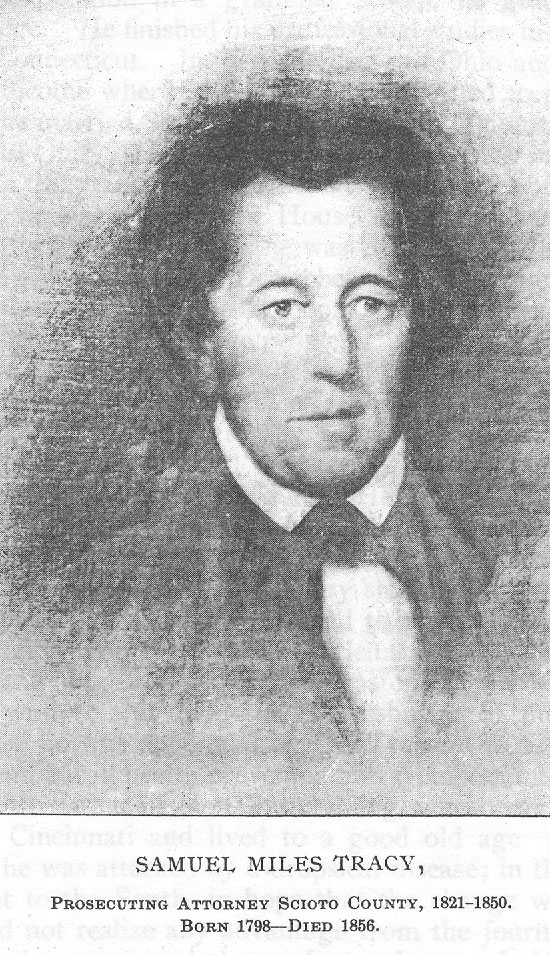
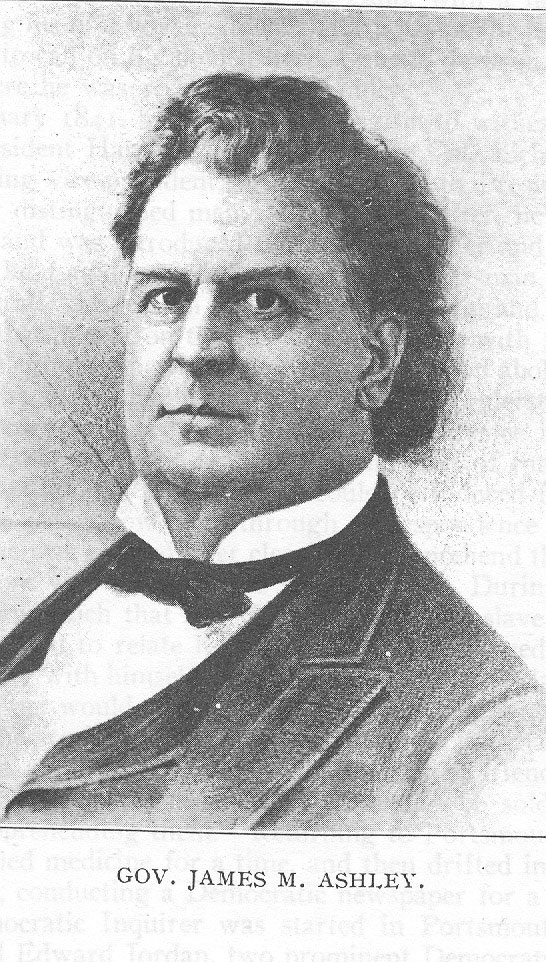
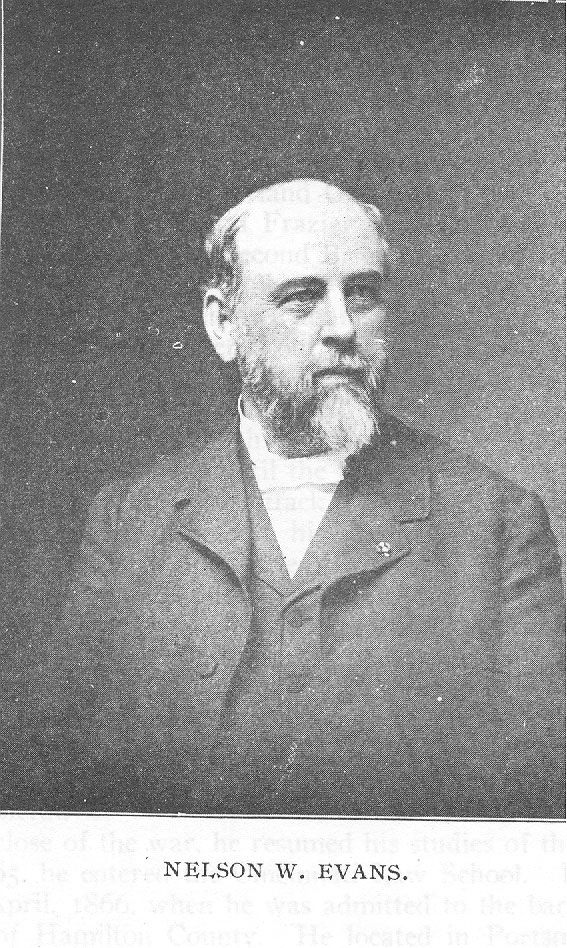
THE BAR OF SCIOTO COUNTY - 283 was in all mens mouths." One little anecdote of him before we quit this sketch ; "Joe! Joe !" called out King, one day in the court room ; meaning to attract the attention of the very venerable Joseph Sill. "Well, what is it Ned ?" replied Mr.. Sill. "Ned ?"—who the devil authorized you to call me Ned ?" tartly replied King. Samuel Miles Tracy was born in Chenango County, N. Y., 1798. He graduated at Hamilton College in 1815. He studied law and was admitted in 1818, and in the fall of that year visited Portsmouth, traveling horseback. He was looking for a location to practice law. He had relatives in Portsmouth, and made a lengthy visit. He had it in his mind to ride on to Lafayette, Ind. He lingered about Portsmouth, visiting all the shops, stores, etc. One William Dailey kept a store in Portsmouth at that time, and had a pretty grown up daughter who assisted in the store part of the time. Tracy found himself visiting that store oftener than any other place, but he could not just tell why. However, he had made his visit in Portsmouth as long as he felt it proper and thought he must be moving on. So he mounted his horse and started for Lafayette, Ind. Along the way, every day, he kept thinking of that attractive Miss Dailey. He could not drive her image out of his mind, though he made no particular effort in that direction. Every day he rode west the remembrance of Miss .Dailey grew stronger. Finally, when he was a few days' ride west of Cincinnati, he made up his mind he was in love with Miss Dailey and would return to Portsmouth, locate there and marry her. Once he formed the purpose he returned to Portsmouth. On February 19, 1819, he published his card in the papers, and stated he would be happy to attend to any business entrusted to his care. He announced that he had succeeded to the business of Judge Osborn, who became presiding Judge February 6, 1826, and served one term. Until he was married, Mr. Tracy boarded at the Portsmouth Hotel, of which John Peebles was the landlord. He was married to Miss Mary Dailey October 13, 1822. She died November 5, 1845. John Collins was an Associate Judge of Scioto County from 1803 to 1832. He took a great fancy to young Tracy, and had him appointed Prosecuting Attorney. We find he drew his first pay in this office June 22, 1821, when he was allowed $33.33, or at the rate of $100.00 per year. Judge Collins was so strong a friend of Tracy that he declared that he, Tracy, should be Prosecuting Attorney as. long as he sat on the bench, and he kept his word. Collins retired in 1832, and Tracy held the office as Prosecutor until January, 1850. He was appointed by the Court of Common Pleas until 1833, when the office became elective for two years, and he was elected every two years from that time until October, 849. No record of the elections of 1833, 1835, 1837, 1839 or 1841, 1843, 1845 or 1847 284 - HISTORY OF SCIOTO COUNTY. have been preserved, and we can give no figure, but we are told he was elected without opposition. In 1849 Mr: Tracy received the regular Whig nomination as usual Many felt jealous of him, and, this encouraged E. W. Jordan, then a young lawyer and a Democrat, to stand against him. Jordan hesitated, but, being encouraged, finally concluded to run, and, at the election, Mr. Tracy received 933 votes to 961 for Jordan. The Whig majority was 350, and Mr. Tracy was the only candidate on the ticket defeated. Mr. Tracy was again a candidate for the same office as the regular Whig nominee in 1851, and was again defeated. This time the vote stood—E. W. Jordan, 1,434; Tracy, 731; Jordan's majority, 703. The Whig majority was about 400. Mr. Tracy felt much chagrined at this result, and justly so, for he had made a most efficient officer. In 1833, at Tracys first election, he received seventy-eight votes in Wayne township, to forty- three for Ransom Odle, a seng-digger in the hills of the West Side. The persons who voted for Odle had sons who had stolen bee-hives and were prosecuted by Mr. Tracy. In 1830 Mr. Tracys income was estimated at $500; in 1833, $600; in 1842, $1,000; in 1843, $1,250; in 1847, $1,600; in 1849, $2,000; He was Recorder of the town from May 12, 1823, until April 4, 1834, when he resigned. In 1833 his compensation as Recorder was $36.00 for the entire year. The lawyers' incomes were estimated from 1830 to 1851, and they were taxed on them. In 1839 and 1840 he was Corporation. Counsel at $50.00 per year. In 1837 he was a School Visitor, and served as such most of the time till 1853. He became a Councilman in the town in 1823, and served till 1834. In 1824 he was authorized to print twenty-five copies of the Ordinances. In 1827 he was Trustee of Wayne Township, and was elected to the same position in 1828. In 1827 he was employed in the celebrated controversy about the Front of the Town, and perpetuated the testimony in relation thereto. In 1829 he and Washington Kinney were a committee to purchase the Front of the Town from Henry Massie. In 1839 he was a Director of the Commercial Bank, and in 1843, became one of its Assignees. In 1842 he was a Commissioner in Bankruptcy, under the law of 1841. The old Tracy homestead on Front street was built in 1833 by Jacob P. Noel, who sold it to Mr. Tracy, who resided there until his death, on December 25, 1856, of consumption. Mr. Tracy was married twice. His second wife was Mrs. Thurston. Mr. Tracy was a gentleman very proud and always on his dignity. He was perhaps .the best lawyer who ever practiced in Portsmouth. That was the opinion of the lawyers who were contempo- THF BAR OF SCIOTO COUNTY - 285 rary with him and of the business men of his period of active life. He had an influence in the county possessed by no other lawyer before or since. The juries always believed in him and he never failed to convict a defendant when he made up his mind to do it. The County Officers, during the time he was Prosecuting Attorney would take no action without his advise and would follow the latter in every respect. With the County Commissioners, whatever Sam Tracy said, they did. He was engaged in all the principal litigation of his time. Captain James W. Davis, one of the leading business men of Portsmouth, said Samuel M. Tracy was the best lawyer he ever knew or heard of. He had three daughters and one son by his first marriage. His daughter, Mary R., married George Johnson. Another daughter married M. B. Ross, and the third, Emily, married Mr. Julius C. Guthrie. His son, Samuel, died a young man. It seems Mr. Tracy never had any ambition to be a Judge or a Congressman, but was content with being the leader of the bar to which he belonged. We doubt if there ever was another instance in the State of Ohio of the same lawyer holding the office of Prosecuting Attorney for 29 consecutive years. Charles Oscar Tracy was a younger brother of Samuel M. Tracy. He was born August 4, 1804 at Oxford, N. Y. He came to Portsmouth, Ohio in 1826 and located as a lawyer. He married Dec. 20, 1827 to Maria Kinney, a daughter of Aaron Kinney and had a family of two sons and three. daughters. His son, Uri Tracy is living in Columbus. His son, Van Der Lyn Tracy, born in 1829, died a young married man. His daughters are Mrs. Frank Oakes, Mrs. Mary Camnitz of Goshen, Ohio and Mrs. Alice Hurd, wife of Colonel John R. Hurd of Colorado. In 1830, he built the home on Washington street just south of the German M. E. Church and resided there until his death. In 1830, his income as a lawyer was estimated at $300.00 and arose to as high as $1500.00 in 1851. From March 6, 1830, until March 7, 1831, he served as Auditor of Scioto County, Ohio by appointment, but never was a candidate for any office. He left all of that to his brother of Samuel. In 1833, he was the Supervisor of the East ward in Portsmouth and "received $3.25 for one year's services. He was an eloquent advocate, hut a lazy lawyer. It took considerable to rouse him up, but once aroused, he was as good a lawyer as any at the bar. He was witty, eloquent. courteous and kind to every one. As an advocate he was clear, logical and cogent. He was fond of hunting and fishing and never was happier than when with a hunting or fishing party, and a three weeks hunt or fish was the acme of his enjoyment. He often said that the only meat fit to eat was that killed and dressed in the woods, and eaten there: He had a fund of anecdotes apparently inexhaustible. Hon. James W. Ashley, afterwards Con- 286 - HISTORY OF SCIOTO COUNTY. gressman from the Toledo District, was a law student under him. As a companion, Charles Oscar Tracy was one of the most agreeable and entertaining of men. Benjamin Ramsey must have come to Portsmouth in 1837. The first notice we have of him in Portsmouth was in 838, when the Ward Assessor found him and listed his income as a lawyer at $300. The next three years he dropped $100 off that and in 1843, he went up to $500, in 1847 to $800 and in 1851 to $1,000, which was the high water mark with him. March 11, 1851, he was elected Mayor of Portsmouth and served two years, defeating James M. Ashley. In 1851, he was elected Probate Judge, the first elected. He took his set February 9, 1852, and served till November, 1853, when he resigned: He then got on to a stage coach and went to Western Pennsylvania, where he came from. He was a bachelor while he lived in Portsmouth. He was a Whig but would not join the “Know Nothings." If he ever had any religion, it never materialized. As a lawyer, he was only moderately successful. He was a large man, lazy and indolent. In 1838, he was in partnership with one William S. Murphy, as Murphy and Ramsey. In 1842, he was in partnership with Hon. Wells A. Hutchins, in his first year in Portsmouth. The firm was Ramsey and Hutchins. In 1846 he was in partnership with Sterret Barr as Ramsey and Barr. In 1842, he delivered a lecture to the Franklin Institute. These are all the vestigia he left in Portsmouth. He pulled out November 8, 1853. Andrew Crichton was born August 8, 1819 in Perthshire, Scotland. With his fathers family he emigrated to this country in 1833 at the age of fourteen. Most of his education was acquired at Perthshire, where the schools— like those in Scotland generally—were good. At an early age he assisted in the Clerk's office in Portsmouth and remained there for many years with John R. Turner. In 1841 he was elected County Recorder on the Whig ticket. He had 1,459 votes and his opponent, Daniels, 1,058. He was re-elected in 1847 and again in 1850. In 1853 he went on the bond of Martin Crain as Recorder. He was a lawyer in 1845 and was taxed as such on an income of $500, in 1851 he was taxed on $1,000, his income varying between these two dates from $250 to $1,000. He was a practicing attorney in this county until he died on March 14, 1855. In he married Virginia McCoy by whom he had four children : Miss Kate Crichton of Portsmouth being the only survivor. The work by which Mr. Crichton was best known among this people was the admirable methods employed by him in the Recorder's office. Everything there under his care was a model of neatness and order. Any point which the records were designed to show could be found in a moment, and the information was always accurate and reliable. For many years after his incumbency, THE BAR OF SCIOTO COUNTY - 287 it was common for the older attorneys to refer to the methodical accuracy which characterized everything committed to the care of the Recorders office under Andrew Chrichton. Edward Jordan was born in Messina, St. Lawrence County, New York, October 6, 1820. His father was Elijah Jordan and his mother Betsey (Frazee) Jordan. His father was a Baptist minister of repute for unusual eloquence, with a talent for many useful things such as cooper, watchmaker, carpenter, flute player and verse maker, by turns. As a boy, Edward Jordan had an unquenchable thirst for knowledge and was a great book reader. He at one time tried to leard the blacksmith trade„ but found that he had no taste for the work. Having received the rudiments of an education, he concluded that the next best thing for him to do was to teach school, and he started out on a career for himself. He was very fastidious in his personal habits and was always neatly dressed. He had fine black hair and black eyes. He was always close shaved, and his linen was always immaculate. At that time he had a taste for athletics, being a good horseman, an excellent shot, and could row and manage a sail boat. As a youth, he never smoked or drank, and refued to gather with men in saloons, but was very fond of attending picnics, political gatherings, torchlight processions, barbecues, and demonstrations of that character. He was a young man of great personal courage. He came to Portsmouth in 1844 and entered himself as a law student with Samuel M. Tracy. He was an intimate friend of Ralph Leete, who was a pupil of Judge W. V. Peck. He maintained himself by teaching school. He taught at the old Red School House near Portsmouth, ,Ohio. He and Leete were great friends and use to spend their Sunday afternoons together in Jordan's office, reading and criticizing one another. James M. Ashley was with them part of the time. Mr. Jordan was admitted to the bar in 1846 and immediately formed a 'partnership with Edward Hamilton which dated from the 15th of February, 1846. In 1845, he was rated as a practicing lawyer in Scioto County and his income was assessed at $500. He and James M. Ashley at one time edited and conducted a Democratic newspaper in Portsmouth. In 1847, his practice was assessed at $400, in 1848, at $600, in 1849, at $800, in 1850, $1,000. In 1849, he was elected Prosecuting Attorney of Scioto County, Ohio. on the Democratic ticket, being the only Democrat elected. He had 961 votes and Samuel M. Tracy 936. The Whig majority that year was 549. Mr. Jordan had no expectation of election. Samuel M. Tracy had been Prosecuting Attorney for the County for twenty-nine consecutive years and some one induced Mr. Jordan to place his n=ame on the Democratic ticket merely to see what could be done. In 1851, he was re-elected against the same competitor. receiving 1,434 votes to 731 for Mr Tracy. His majority was 703. 288 - HISTORY OF SCIOTO COUNTY. April 26, 1851, he was elected City Clerk. He had 223 votes to 207 for J. L. Watkins. In 1856, he changed his politics, before that he had been a Democrat, but became a Republican on account of his anti-slavery ideas. Between 1856 and 1860 he became an intimate friend of Salmon P. Chase, and this friendship caused his appointment in Washington, hereafter mentioned. He removed to .Lawrence County in 1854 and was Prosecuting Attorney of that county from 1856 to 1858. He took an active part in the campaign of President Lincoln and after his cabinet was formed, he was made Solicitor of the Treasury and held that office for eight years, serving from 1861 to 1869. At the close of his term of service as Solicitor of the Treasury, he took his family to Flushing, Long Island, where he lived until 1872, while practicing law in New York city. His partners in New York were : Grosvenor P. Lowry, William Mellen, Daniel G. Thompson. He was a member of the Presbyterian Church while in Portsmouth.. During Cleveland's administration, he left the Republican party and became a' Democrat again. This was largely on account of the tariff question. He was patient and deliberate and nothing could hurry him. Ralph Leete says he could control his temper better than any man he ever knew. He was industrious and energetic in his profession. He was courteous to all and a good advocate He was slow to form his purposes, but sure to carry them out. He had great force of character and good judgment in legal matters. On October 27. 1852, he was married to Augusta Ricker, at Franklin Furnace, Ohio. Their children were : Mary Augusta, Professor of English. Smith College, Northampton, Massachusetts Susan Elizabeth, now Mrs. George Dimock of Elizabeth, New Jersey :Emily, now Mrs. Henry C. Folger of Br00klyn, New. York : and Francis who married Harriet F. Abbott. daughter of Rev. Lyman Abbott of Brooklyn, New York. Our subject retired in 1872 to Elizabeth, New Jersey, where he made his home with his daughter, Mrs. Elizabeth Dimock until his death on September 22, 1899, surviving his wife eighteen years. He and his wife are buried in Woodland Cemetery near Ironton, Ohio. James M. Ashley was born in a suburb of Pittsburg, Pa., Nov. 24, 1822, son of John Clinton and Mary Ann (Kirkpatrick) Ashley. His colonial ancestor was Capt. John Ashley of London, England, whose name appears in the second Virginia charter of 1707. His great grandfather, William, was masters mate in the navy during the Revolution. His grandfather. Rev. Benjamin Ashley, was a Baptist minister, and his father (b. 1800, d. 1855) was also an itinerant minister and a follower of Alexander Campbell. His mother was born in Alleghany City, Penn., in 1800, and died in Matamoras. Ohio, in 1861. The family, then consisting of husband, wife and three children, removed to Portsmouth,
THE BAR OF SCIOTO COUNTY - 289 Ohio, in the spring of 1826. James M. Ashley was educated at home under the stern discipline of his father, whose rigor clashed with the spirited and fun-loving nature of the youth, so that at the age of fourteen he left home. He never received much school-education. His mother sympathized with her spirited son, and her letters, followed him in all his wanderings. After leaving home he became a common laborer on a flat-boat, then cabin boy, then clerk of a river steamer. He later engaged in freighting on the Ohio, with a flat boat of his own. During his first voyage clown the Mississippi he left the steamer at Memphis, to call on his boyish hero, General Jackson, at the "Hermitage," where he was received very kindly. In February. 1841, he visited Washington to witness the inauguration of President Harrison, and while there Col. Richard M. Johnson, the retiring vice-president, introduced him to President Van Buren and other distinguished men. Some years after, he again visited Washington, and was introduced to President Tyler and John C. Calhoun, whom he found personally a very pleasing man. He attended the Democratic convention at Baltimore in 844, and through Colonel Johnson had a seat on the floor of the house with the Kentucky delegation. Beginning active systematic work as an abolitionist when but eighteen, he spared neither time nor labor to understand the position and tendency of every public man of prominence in the South, and also the exact status of as many of the men of intellect in that section who were not in public life as could be induced to answer his letters. These facts show how, through correspondence and personal acquaintance he was enabled later clearly to comprehend the power and purpose of those who menaced the national life. During his life on the river he saw much that horrified him with the slave system. In later years he used to relate how free negroes employed to work on the same steamer with himself would be kidnaped. At landing places where the steamer would stop to take on freight they would go ashore to help with the work, and would be arrested on the charge of being runaway slaves, and being unable, without money or friends, to make a defense, and no owner appearing, would finally be sold to pay the expenses of apprehending them. Returning to Portsmouth while still young he studied medicine for a time, and then drifted into the newspaper business, conducting a Democratic newspaper for a time. The Democratic Inquirer was started in Portsmouth by James M. Ashley and Edward Jordan, two prominent Democrats. The first publication of the paper was April 6, 1848. They published another issue April 13th, and then the enterprise broke down. Neither of them had a cent of capital. Captain Francis Cleveland bought them out and continued the Inquirer as a Democratic paper, gotten out every week until 1849, when it became a doily paper. After the failure of the newspaper, young Ashley began the study of law with Charles G. Tracy and in 1849 he was admitted to the bar. In January 1851, 290 - HISTORY OF SCIOTO COUNTY. he was assessed as a lawyer upon an income of $1,000 but it is doubtful if he earned that amount of money. However as the tax was only $5.00, Mr. Ashley, rather than admit that he had not earned it, paid it. On April 7, 1851, our subject was a candidate for Mayor as a Democrat against Benjamin Ramsey as a Whig and he was defeated. The vote stood : Benjamin Ramsey, Whig, 261, James M. Ashley 201, William Oldfield 97. If Judge Oldfield had kept out of the race Ashley might have been elected and his wonderful career belonged to the Portsmouth instead of the Toledo District. But it was "kismet" that the electors of Portsmouth were to make this mistake. If the citizens of Portsmouth had known of what greatness and talent Mr. Ashley was possessed, probably this would not have occurred as Ramsey was a man who attained no distinction whatever and he was too lazy to live. But this discouraged young Ashley with Portsmouth and justly so. While in Portsmouth he became connected with the "underground railway," and at great risk to himself assisted a number of runaway slaves in their flight to Canada. In those days it was, of course, very necessary to be secretive about this ; otherwise, with the state of sentiment that then prevailed along the Ohio Valley, he would have been sent to the penitentiary. At one time he met a Quaker on the street who said to him, "James, I think thee needs this," at the same time handing him $20.00. Knowing that the Quaker was of anti-slavery sentiments he came to the conclusion that this money was given him to aid in the operation of the underground railway, and thinking that if the, Quaker knew of his activity in that direction many others must. he decided to leave Portsmouth and in 1851 removed to Toledo, Ohio, where he engaged in the wholesale drug business. From the first he was very active in politics. In 1852 he at first supported Franklin Pierce, but later seeing the pro-slavery drift of the Pierce campaign, he changed his mind and voted for Hale and Julian. In 1854 he participated in the first Republican Convention of Lucas County held in the Court House at Maumee. During the Fremont-Buchanan campaign of 1853 he delivered many speeches of remarkable ability and boldness, declaring among other things, "that there was no escape from a revolution that must end either in the destruction of the Union, or in the abolition of slavery"—thus anticipating Lincoln's celebrated declaration "that a house divided against itself cannot stand." In 1858 he was elected a representative to Congress from the Toledo district, being re-elected until 1868. Mr. Ashley made a trip to Illinois and at Alton first met Mr. Lincoln and heard his last speech in the famous Lincoln-Douglas debate. A very warm friendship followed, which lasted until Mr. Lincoln's death. Mr. Ashley soon became a prominent figure, in the Republican ranks, acting with the most radical Abolitionists, many of whom he had long known. Dur- THE BAR OF SCIOTO COUNTY - 291 ing the first session of Congress, after Mr. Lincoln became president, he introduced a bill for the abolition of slavery in the District of Columbia, which met with no support and was finally replaced by another bill, the joint work of Mr. Ashley and Hon. Lot M. Morrill. which was finally passed April 11, 1862. It appropriated $1,000,000, with which to compensate the owners for their slaves, but was supported by Ashley and his friends as the precursor to emancipation. He had no faith in compromises, but from. the outbreak of the Civil War believed that the Union would be preserved. To that end his first re-construction bill was prepared in June, 1861, before leaving home to attend the extra session of Congress, convened by President Lincoln July 4th of that year ; but his colleagues were not prepared for it. At the regular session, December 23, 1861, he introduced a successful resolution instructing the Committee on Territories, of which he was chairman, to inquire into the legality and expediency of establishing territorial governments within the limits of disloyal states. On March 12, 1862, a majority of the committee reported his bill; but it was laid on the table. Mr. Ashley introduced a bill for the organization of the Territory of Arizona, and aided in securing a law prohibiting slavery in the territories. On December 14, 1863, he introduced a proposition to amend the Constitution of the United States, abolishing slavery, but on June 15, 864. this proposition was defeated in the house. On his motion to reconsider Mr. Ashley succeeded in converting twenty-four border-state and northern Democrats and secured the passage of the measure. On January 31, 1865, the 13th Constitutional Amendment was passed and of this vote Mr. Ashley said later : "I knew that the hour was at hand when the world would witness the complete triumph of a cause, which at the beginning of my political life I had not hoped to live long enough to see." On his re-election to Congress in 1864, Mr. Ashley was tendered a banquet, at which. Hon, Salmon P. Chase said : "To him, more than to any other man, do we owe the consecration of all the new states to liberty by irreparable provisions of fundamental law." March 7, 1867, Mr. Ashley introduced the resolution for the impeachment of President Johnson, and on May 29, 1868, a constitutional amendment proposing the election of president by direct vote of the people. In 1869 he was appointed territorial governor of Montana, which territory, with Arizona and Idaho, he had organized and named while chairman of the committee on territories, but he remained only about a year on account of a difference with President Grant. In the presidential campaign of 1872, Mr. Ashley supported Horace Greelev and favored the restoration of all rights, dignities and privileges forfeited by the rebellion, claiming that by so doing 'the republic would be elevated toward heights of moral grandeur. Mr. Ashley has consecrated his life to the cause of a race from whom he could not expect any reward save the gratitude and appre- 292 - HISTORY OF SCIOTO COUNTY. ciation which he received The colored people did everything in their power to honor him while living and to perpetuate his memory when dead, making a souvenir volume of his addresses. He left public life in 1870 with depleted finances, but observing that a railroad extending north from Toledo, across the peninsula of Michigan would furnish an outlet for about 300 miles of country, then largely without such facilities, he purchased valuable terminals at Toledo entirely on credit and proceeded to build the road north to Lake Michigan ; there, with his eldest son, J. M. Ashley, Jr., constructed a fleet of train-carrying ferry boats, operating them to and from Gladstone, Wis.,—the first vessels to carry trains across so wide a body of water. This made the Toledo, Ann Arbor and North Michigan an important line. In connection with this great enterprise, Mr. Ashley again indulged his philanthropic impulses by schemes of industrial profit-sharing, When the disciples of John Brown, who had encouraged him to make his raid on Harpers Ferry, all deserted him, Mr. Ashley had the courage to go into the midst of the angered south and visit the friendless old man in his prison, procured permission for the wife to visit the husband, and the tragedy over, asked for the body of the dead martyr and sent it north among the Adirondack hills. Meeting the stricken wife he said, with tears streaming down his face : "Dear Madam, Virginia has hung your husband, but Virginia will, some day, erect a monument to his memory, and his name will live among the martyrs of, freedom and the race when all the rest of us are forgotten." Mr. Ashley was married in 1851 to Emma J. Smith, of Portsmouth, Ohio. They had three sons, Tames M., Henry W., and Charles S., and one daughter. Mary, wife of Edward Ringwood Hewitt of New York City. To his family he was remarkably kind and liberal, giving all his children college educations at a time when the financial strain was hard to hear ; and in every other way he was kind and indulgent to an unusual degree. Governor Ashley died September 6, 1896. Gov. Ashley always considered that his want of education was a very great handicap to hisl success in life. He never learned in school how to spell well or to express himself with perfect grammatical correctness. His mind was so made that while capable of long and intense labor on matters that interested him, he found it very difficult to do dry detail work of uninteresting sort, and for this reason he never made up the deficiencies of his early training. This characteristic followed him in business and in politics. His methods of business, while characterized by great foresight, and a large ability in appreciating the factors of enterprises of magnitude, seriously lacked carefulness of detail. He was extremely good at working out his own ideas, but had small inclination to put much time or study upon the suggestions of others. When putting up buildings he would plan them himself rather than invite the best skill of an architect. When moving THE BAR OF SCIOTO COUNTY - 293 the impeachment of Andrew Johnson in 1867, he put no time or study upon a precedent. It is quite in accordance with this general trait that he is reported to have been somewhat averse to manual labor when he was a young man, although considered very bright mentally. Perhaps his most remarkable quality was the extraordinary courage with which he would pursue his designs regardless of serious obstacles. His railroad enterprise was prosecuted and over $6,000,000 obtained and expended by him on a very slender private capital. This involved him in very heavy liabilities and for fourteen years he was under a continuous financial strain. The failure of the railroad he had built with so much effort, after he had ceased from active control of it, was a very great grief to his last years, although he uttered no word of complaint. In social life he was a delightful reconteur having very large appreciation of humor and loving to entertain his friends with stories and narratives that interested himself. If these had been preserved they would make no small addition to the history of the period in which he lived. Joseph Mills Glidder was born June 1, 1808, near Northfield, New Hampshire. His father Charles Mills Glidden was a successful stock raiser in this state. He moved, with his family to Scioto County, Ohio, about 82o: where he followed the same vocation until his death, which occurred a few years later. Joseph Glidden was one of a family of seven sons: John, who died in young manhood, Mills, Jefferson, Obadiah, Galusha and Dan, all of whom were successful iron furnacemen. Our subject graduated with high honors at Dartmouth College in 1829 and wrecked his 'health by hard study in his course. Directly after he graduated, he took a three years voyage in a whaling vessel and came home a well man physically, but his mind was never what it was before his arduous study at college. He studied law at Portsmouth with Judge Peck, was admitted to the bar of Scioto County, but practiced but little. In 1845, Mr. Glidden was elected Marshal of Portsmouth, but resigned December 5, 1845. He was at one time a Justice of the Peace in Portsmouth. He was married first to Mary Donaldson of Highland County about 1835. She died and left one child, Charles Henry, now living at Lincoln, Illinois. In 1844, he married Eliza Emory Young, daughter of Rev. Dan Young, who was so prominently identified with early Methodism in Scioto County. Eliza Young, his wife, was born near Northfield, New Hampshire, October 3, 1819, and came with her parents, when a babe, to Scioto County, Ohio. She was one of a very numerous family of sons and daughters. At the age of sixteen, she, taught a country district school. After that she taught in a private family, the Pogues in Kentucky. She began teaching in the Portsmouth schools in 1839 at the age of twenty and taught till her marriage in 1844. She began teaching again'in 294 - HISTORY OF SCIOTO COUNTY. and taught continuously till June 1878. She taught the colored schools a part of the time. She had the reputation of being one of the best teachers in Portsmouth. Of this last marriage there were three children : Jefferson, Kate and Flora, now Mrs. John E. Williams, all residents of Williamson, West Virginia. Joseph Glidden died May 7, 1865, at Portsmouth. His wife died September 29, 1881, at the home of her daughter, Mrs. John E. Williams, at Syracuse, Meigs County, Ohio. William H. Reed was born on the South Branch of the Potomac River in Virginia, about 1810. His father and mother brought their family, a large one to Adams County and they settled near Loudon. There Mr. Reed was educated in the common schools. After he came of age, he went to Sinking Springs and engaged in merchandising. He concluded law was best for him and studied law in West Union under Nelson Barrere. He was admitted to the bar in 846, and located is Piketon, where he very soon attained distinction in his profession. He was on one side of every case of importance in Pike County for years, even after he left there and located in Portsmouth, which was in 1863. He was most highly esteemed as a lawyer in Pike County. Every one had confidence in him and believed in him. As a lawyer, he was disposed to be technical. He could always make a good argument to the Court or jury. While in Pike County, he was a partner in the, banking- business of T. Sergeant & Co., which failed. He also took an interest in Pioneer Furnace, which turned out badly. May 17, 1849, he married Mrs Catharine Penn, a daughter of Judge Johnson of Hillsboro. They had one child, Charles A., who grew to manhood. graduated at Marietta College and studied law. His health failed and he went to Iowa, where he died August 2, 1878. Mr. Reed never obtained the confidence of the people of Scioto County, or Adams, to the extent he had obtained that of the people of Pike County. That was not however, because it was not deserved. Mr. Reed was not of a pushing disposition. He never went after business, but let it come to him. Judge W. W. Johnson of Ironton passed a high compliment on him. He told of him that when a certain enterprise he was in failed and the partners were sued and judgments were obtained, others sought to conceal and dispose of their property, but he never tried to avoid the payment of any obligation and let his property be seized and applied to the debts of the concern. Mr. Reed became addicted to the drink habit in Pike County and it ruined his life. He had enough troubles to drive one to drink. He never told them himself, or talked of them, but his acquaintances did. He died at about the age of 68 and was interred at Loudon in Adams County, where his grave is unmarked. He was an honorable man and a faithful, able and honorable attorney. He was no man's enemy but THE BAR OF SCIOTO COUNTY - 295 his own. In personal appearance, he, was tall and slender, but much stooped in his shoulders. The top of his head was bald and around the sides of his head he had a fringe of brown hair, as fine as silk, and which never turned gray. His voice had a squeak in it, owing to an injury to his palate in middle life. Had he sat for Renan's pen picture of St. Paul in the latter's life of the Great Apostle, the description would not have been more true to himself. Mr. Reed was a Whig, while the Whig party was in existence. He afterwards became a Republican. He was never a candidate for any public office. His great strength lay in defending a case. It was customary with him to file a general denial whenever it would lie and to require the plaintiff to make full proof. If he failed to prove any necessary fact, then Reed demanded a non-suit. He was never a member of any Church, at least, not in his latter days. His religion consisted of his honesty and integrity.- William S. Huston was born in Portsmouth, Ohio, January 21, 1824, the eldest son and child of Captain Samuel J. and Elizabeth (Leonard) Huston. He was reared in Portsmouth and received his education in its public schools. He was of a precocious mind and early developed a judgment in advance of his years. He was noted for his filial affection. He developed early a faculty for making and saving money. The first hundred dollars he earned and saved he presented to his mother as an evidence of his tender affection for her. He studied law with Mr. George Johnson, and was admitted to the bar. He was City Treasurer in 1854. He was practicing in 1856 and continued until his death except the period he was Probate Judge. He was elected Probate Judge in 1857 on the Democratic ticket and served, one term, February 9, 1858, to February 9, 1861. He was appointed Regimental Quartermaster of the 56th Ohio Volunteer Infantry, October 8, 1861, and served until December 17, 1862, when he resigned. In 863 and 864 he was practicing law in Portsmouth. His health was never strong and he died August 27, 1865, at the age of forty-one years. Mr. Huston had great ability as a financier and had he lived he would have acquired a great fortune. The great and overpowering characteristic of his life was his devotion to his family, his father and mother, and their children. He could never do too much for them, and he was entirely devoted to their interest. As a business lawyer he had no superior ; but by natural taste he preferred the quieter walks of the profession. George Ott Newman was born in Stanton, Virginia, November 9, 1836, the eldest of six children of his parents, Hon. William Newman and his wife, Catherine Ott. In 1839, his parents came to Portsmouth, where he has ever since resided. He attended the public schools of Portsmouth and in 296 - HISTORY OF SCIOTO COUNTY. 1853, entered the Ohio Wesleyan University at Delaware, Ohio, and graduated in 1858. He entered the office of Moore and Johnson as a law student directly after his graduation. On August 1, 1860, he was admitted to the bar by the District Court of Morrow County, Ohio, and began practice in Portsmouth. In April, 1861, he was First Sergeant of Company A, 15th Regiment Ohio Volunteer Militia. This Company responded to the first call for 75,000 troops in the Civil War and .became Company G, 1st 0. V. I. It served from April 6, 1861, until August 1, 1861. It reached home 3 a. m. August 16, 1861, and every one was out to welcome it. Hon. Wells A. Hutchins delivered the welcoming address. Mr. Newman replied for the Company. Mr. Newman was elected in 1861 Prosecuting Attorney on the Democratic ticket, J. J. Harper being the Republican candidate. 111,863, the same two were opposed for the same office and Harper was elected. In 1868, Mr. Newman was the candidate of his party for Common Pleas Judge but was defeated. Mr. Newman was married September 1, 1866, to Miss Clay B., eldest daughter of Colonel 0. F. Moore. Their children are Oscar William, a member of the Portsmouth Bar ; Mrs. Kate Alger, wife of Edwin N. Alger of Huntington, W. Va.; Mrs. Fannie Shaw, wife of Edward H Shaw, and Charles Russell. Mr. Newman is a good and well read lawyer. He is uniformly correct in preparing all legal instruments, a wise and prudent counselor, and always takes the safe side. He has been President of the Portsmouth Library Board since its creation and has been a member of the Board of City Elections since 1889, its first organization. In politics, he has always been a Democrat. He is not a member of any Church, but prefers the Episcopal. He has fine literary tastes, and is popular with all who know him. He carries his years lightly. In 870, he became a member of the firm of Moore and Johnson and Newman. After the death of Mr. Johnson in 1873, the firm continued Moore and Newman, until the death of Colonel Moore in 1885. Since then Mr. Newman has practised alone. In September, 1901, at the organization of the Portsmouth Bar and Law Library Association, he was made its President. John Jefferson Glidden was born September 19, 1840, at Junior Furnace. His father was Jefferson Wadley Glidden and his mother, Catherine Wolfe Young. His grandfather, Charles Glidden, came from New Hampshire in 1820 and his father in 1826. There were ten children in his fathers family, although but three lived to maturity. John, Carlos and Mrs. Anna Houts. His father built the Goddard house at Junior Furnace in 1844. There stands a magnolia tree in the yard which was planted there by our subjects mother in 1844. In 1850, his father removed to Dayton. Ohio, on account of the schools and lived there three years. In 1854, he built the present Peebles residence on the north-east cor- THE BAR OF SCIOTO COUNTY - 297 ner of Second and Washington streets, in Portsmouth, Ohio. His father lived there until 1858 when his wife died of consumption at the age of 48. In 1858, his father went to Junior Furnace and made his home with Jesse Young until his death in March 1863. In 1856, our subject attended the Collegiate and Commercial Institute at New Haven, Conn., for two or three years. In the fall of 1851, he went into the law office of the Hon. Wells A. Hutchins in the Massie Block, as a law student. He entered the Cincinnati Law School in 1859 and graduated in 1860. As he was not then of age, he took a post-graduate course in 1860 and 1861. On April 16, 1861, he enlisted in Company "G," 1st Ohio Volunteer Infantry, three months men. He was made a Corporal April 29, 1861, and mustered out August 1, 1861. He was admitted to the bar in 1861 in Columbus and located in Portsmouth. He formed a partnership with Martin Crain, the firm being known as Crain & Glidden, which continued for two years. After that time he practiced alone. In the Spring of 1869, he was elected City Solicitor of Portsmouth, Ohio. The vote stood, John Glidden, Republican, 787 ; Robert N. Spry, Democrat, 736; majority, 51 votes. In regard to his election Mr. Glidden said that he did not ask anyone to vote for him and did not expect to be elected. In December, 1870, he resigned his office as City Solicitor and located in La Porte, Indiana, and remained there until March, 1872, when he removed to Cincinnati and began the practice of law and has continued it ever since. He is located in the Atlas Bank Building on Walnut Street. He has always been a Republican. He was married to Mary A. Bell; daughter of Robert Bell, Esq., in October, 1862. They had three children, two of whom died in infancy. His son, Bruce, of this marriage, is now a prominent lawyer in Denver, Colorado He was married to Elizabeth Montgomery, and they have one child. Mr. Glidden, our subject, was married a second time to Miss Ruth Hall Glidden, daughter of Obadiah Glidden, December 20, 1870. The children of this marriage are Ellen, the wife of Walter W. Clippenger, an attorney of Cincinnati, Ohio; Hope S., who graduates this Spring in the Cincinnati Medical College, and Ruth, who resides in Brooklyn and has charge of a kindergarten. Mr. Glidden has had distinguished success in his chosen profession of the law. He has assiduously devoted himself to it and has been connected with some of the most important litigation in the courts, and his reputation could safely rest on his conduct of two or more important cases. His ability in these shown has sufficiently fixed and established his reputation as a most able lawyer. James Severn Pollitt was born at Tolesboro, Lewis County, Kentucky, October 14, 1839, son of Alexander and Elenor Pollitt. He had scarcely any educa- 298 - HISTORY OF SCIOTO COUNTY. Lion, hut Always thirsted for one. At the age of twenty, he went to Maysville, Kentucky and studied law with the Hon. Wm. H. Wadsworth for whom he always professed and expressed the greatest admiration and friendship. At 22 years of age, he was. admitted to the bar and located at Clarksburg, in Lewis County. He afterwards moved to Vanceburg, the County seat, and was elected County Judge, July 3, 1865, to succeed Socrates Holbrook who had resigned. August 24, 1866 he was elected for a term of four years, to the same office. He resigned October 20, 1868 and came to Portsmouth and formed a partnership with William H. Reed which continued until 1871. He was madly fond of politics. Nothing made him happier than to be in a political contest. In 1873, he received the Republican nomination for Mayor. He defeated George W. Flanders in the convention. Flanders ran independent and beat him before the people. The vote stood : Flanders 972, Pollitt 867. In 1873, he was a candidate for City Solicitor on the Republican ticket and defeated by Duncan Livingstone. The vote stood, Livingstone 1,061, Pollitt 1,039. In 1881, he was a candidate for Common Pleas Judge and carried the County, but it was taken away from him. In 1883, he was again Republican candidate for Mayor against John J. McFarlin, Democrat, and was defeated by the following vote : McFarlin 1,361, Pollitt 1,129, majority 232. These votes in which he was defeated are given to show that he stood well with his own friends and that he was never discouraged or appalled by defeat. His Republicanism was of the purest and most zealous kind. He never sulked in his tent. No matter about his misfortunes, he always supported the ticket. He always controlled the negro vote. They were his friends and stood by him. He had an extensive practice in Scioto County, and was something of an orator, He believed in exercising his gifts as an advocate, and did so. He was a thin, slender man of very dark complexion, black full beard and long black hair, and was a typical Kentuckian. He never could tolerate anything Democratic. When the Cincinnati Daily Gazette and the Commercial were printed as separate papers, he regarded the Gazette as Orthodox and the Commercial heterodox. He never could bear to see a Republican read the Commercial. He was fond of talking of his fixed principles. While he never swore a profane oath, his favorite, so called oath was "Dod burn it." His enthusiasm for his party never flagged, and he could not tolerate political luke-warmness in others. He was honest to the core. He was a victim of consumption. A week before he died he proposed to go to Florida and take his son Orville with him, but when it was apparent that he must die, he called Orville to him and told him that he would take a longer and farther journey and go alone. He was married June 26, 1865 to Miss Lucy C. Parker of Vanceburg, Ky. They had two children : Arthur Wadsworth, born June 4, 1869, died June 28, 1871 and Orville Preston, born THE BAR OF SCIOTO COUNTY - 299 September 8, 1871, now County Clerk of Lewis County, Kentucky. He died November 2, 1885, with the greatest calmness and composure. He was buried at Hill Crest Cemetery; just west of Vanceburg, Kentucky, and his widow and her son took up their residence in Vanceburg, Kentucky, where they have remained since. James S. Pollitt's ambitions were not great, but they were very dear to him, and yet he was thwarted in them all, and compelled, when but 46 years of age, to depart to the land of spirits, but in all his reverses and disappointments he acted the part of a man. His was a noble soul in a frail casket, but his memory is honored by all who knew him well. Judge Fernando Cortes Searl Here is a subject whose father, a great reader of Prescott's Conquest of Mexico, compelled him to bear the name of a Spanish general all his life and yet he has done well and prospered and in the course of his long life has demonstrated what the Spanish General ought to have been. Then our ideas of Spaniards in the course of years have changed. While we admired the characters portrayed by Prescott, when his books were new, now that the doctrine of humanity has forged to the front, the characters of the Spaniards have been relegated to the background. The name of our subject in its origin, in the far misty past was of Scandinavian origin. The Searls went from Sweden to Normandy several generations before William the Conqueror, and when he went over to England on his free-booting expedition, they packed their traps and went along, ready for fighting or plunder, or both. Our subject's great-grandfather came from England with a brother, Gideon: His son, Reuben was born in New England. His son, Nathaniel, father of our subject, was born in Middleton, Rutland County, Vermont, February, 1788. The same year the Searl family moved out of the house where Nathaniel was born and the White family moved in and Rebecca White, afterwards the wife of Nathaniel Searl, was born there in 1797. Her father, Abel White was a Revolutionary soldier from Steuben County, New York. He and his wife, Comfort, died in Scioto County, Ohio. Nathaniel Searl and his wife Rebecca were married in Steuben County, New York, March 26, 1806, and had eight children. Miranda was the eldest of the family and was seventeen years older than our subject. The family moved to Scioto County in 813, from New York, prior to the birth of our subject, who was born July 8, 1825, on the Searl farm, in sight of Chaffins Mills, Vernon Township. He was a thinker and reasoner from boyhood. He would discuss matters with his father at the early age of eight years. So persistent was he that to get rid of him his father would send him to bed, as evening was always their time for discussing. His father was pro-slavery and young Searl would. take the side of anti-slavery. He was an abolitionist at eight years and had reasoned the matter out for himself. He went to school 300 - HISTORY OF SCIOTO COUNTY. but little till the age of fourteen, when he attended for three months. At fifteen years of age, he went to school for five months. He was very industrious and had a knack of doing anything. He could be a carpenter, blacksmith or machinist as occasion required. At the age of sixteen, he became a teacher in the public schools and began by teaching in a district in Madison Township, where his uncle John White lived. At the age of eight he read an account of the murder of Lovejoy in Illinois which confirmed his views as an abolitionist. He was not slow to announce his opinions, formed when a child, and there was an effort made to deprive him of his school on account of his anti-slavery opinions. He continued to teach from time to .time until he was thirty-five years of age. He taught in South Webster from 1853 to 1859. In 1855, he tackled Kansas. He took a preemption claim but came home for his wife and never went back. He was an Assessor in Vernon Township for several years. He was Justice of the Peace in Vernon Township from 1849 to 1852, and afterwards in Bloom. In 1855, he began the study of law under Jordan and McCauslen. He had canvassed the County with Jordan for the Republican ticket. He came to Portsmouth in 1858, to accept the position of Deputy Sheriff under John L. Ward, who was Sheriff from 1859 to 1863. John L. Ward thought to make a politician of him, but he was born one, and the pupil was more apt than his teacher. In 1859, Deputy Sheriff Searl tried his virgin hand on politics. He was a candidate for justice of the Peace in Wayne Township and defeated Cornelius McCoy by 65 majority.. Squire McCoy was an easy subject but Searls victory made him eager for more. In 1860, the Republican party was a weak and wobbly affair, but young Searl was one of them. The American party had been all powerful and held sway in Scioto County. Searl, Joseph Ashton and Milton Kennedy had stood for the Republican party when none others would. Searl was placed on the ticket for Probate Judge against William S. Huston, a popular Democrat and Searl was elected by a majority of 57 votes. The poll was, Searl 286 and Huston 2,129. John L. Ward, his political godfather was on the ticket too and was re-elected for Sheriff. On April 19, 1861, there was a great Union meeting at the Biggs House and Searl was one of the speakers. His devotion to the Union never wavered. In 1862, he was a Commissioner of the Draft. On May 8, 1863, he was admitted to the bar. In 1863, Searl was re-nominated Probate Judge and the vote stood, Searl 2,273, Franklin Patterson 1,743, Searls majority 530. In 1866, he was a candidate for a third term and was elected. The vote stood Searl 2,615, J. T. Douglas 2,158, Searl's majority 457. He was Deputy Sheriff under John L. Ward for two years and in that time was a member of the County Board of School Examiners and its clerk. In February, 1864, he went into the moth O. V. I., as First Lieutenant of Co. F, and served until September 2nd. He was at home three weeks of the time to attend to THE BAR OF SCIOTO COUNTY - 301 business of the Probate Office and while with his regiment served as Judge Advocate on Court Martial. During the war he was Chairman of the Military Committee of the County and had powers equal to that of a dictator. He supervised the enlistment of volunteers and as a friend of the negroes, he believed in recruiting them for service and did so. He put them into the service and secured them bounties from $150 for single men to $250 for married men. He was a member of the City Council for four years and its President in 1876. In 1865 and for several years, he acted as a Goverment Claim Agent. He began the practice of law in 1870 to 1872 in the partnership of Harper and Searl. From 1873 to 1880, the firm was Searl and Dever and in 880. it was Searl and Briggs. In 1884, the partnership was Searl and Milner and the same year became, Harper, Searl and Milner. Afterwards in 1890, it was dissolved and since then Judge Searl has practised alone. He was married March 12, 1884, at the age of nineteen, to Julia Schoonover, and had one son and three daughters. His eldest daughter Minta, is the wife of Rev. J. C. Vananda of Morganhill, California. Helen is the wife of a Mr. Fleming and resides at Cheny near Wichita, Kansas. His daughter, Mrs. Morton is deceased and his son, Orpheus A.. is the postmaster at Sciotoville. His wife died August 1, 1876. In 1878, he married Catherine A. Shoemaker, and has four children : Clinton M., a lawyer in Portsmouth Bertha M. Loyston, aged twenty- one, Beecher aged sixteen and Katie aged fourteen. Judge Searl is not aware of it but he- is a man of many idiosyncrasies. He is a first-class poet. He wrote the "Shanghai Rebellion," "Ukawabbewein," "The Story of the Bald Crag in Kentucky," and many others. He can write poetry on any subject. He is a man of extraordinary good common sense and judgment and that is the Yankee part of him. He never belonged to any secret order but the Sons of Temperance which maintained its organization but a short time. In a newspaper controversy he is sure to get the best of his opponent. There is one remarkable characteristic of judge Searl and that is, that he has always acted on his convictions. He was a Whig until the Republican party was formed and then he joined that and has adhered to it all his life. He never went off after strange political gods at any time, and his strict adherence to one party made him a political success. His excellent business sense has enabled him to acquire a fortune which he knows how to take care off. He, John L. Ward and Thomas T. Yeager are the only ones who ever went into politics and at the same time succeeded in business : hut they would have succeeded in anything. Robert Newton Spry was born at Norwich, New York, March 10, 1840. His father was Richard Spry, who, located in Portsmouth, Ohio, July 27, 1844. He attended the Portsmouth schools and graduated in the Portsmouth High School. He then attended the Ohio Wesleyan University at 302 - HISTORY OF SCIOTO COUNTY. Delaware. 0 , for two years, but owing to defective eyesight, gave up his course. He enlisted in Captain John R. Hurds Company in the Second Kentucky Volunteer Infantry, but was rejected for imperfect vision. In 1862, he began reading law with Hon. Thomas McCauslen, and was admitted to the bar in April, 1864. He was Second Sergeant of Company E, 140th Regiment, Ohio Volunteer Infantry and served from May 2, to September 3, 1864. In the Spring of 1865, he as elected City Solicitor of Portsmouth, as a Republican, over George H. Gaffey, Democrat. by the following vote. Gaffey, 468 ; Spry, 551, majority, 82. In 1867, he was re-elected to the same office on the Republican ticket. The vote st00d Spry, Republican 732; Hutchins, Democrat, 651 : majority 81. In 1869, he became a Democrat. On November 10, 1868, he was appointed Prosecuting Attorney in place of A. J. McFan, resigned, and served till October, 869. In 869, he was the Democratic candidate for Solicitor and was defeated. The vote stood : John J. Glidden, Republican. 787, Spry, 736, majority, 51, In October, 1869, he was on the Democratic ticket for Prosecuting Attorney against Colonel H. E. Jones. The vote stood Jones, 2,440, Spry, 2,212, majority 228. We give these votes to show Mr. Sprysis popularity where he was known. On June 29, 1870, he married Miss B. Inez Davis. who survived him. They had one daughter. Roberta, now the wife of Edward Whitelaw of 06 Cannon street, Charleston, South Carolina. In 1871, he was the Democratic candidate for Representative, and was defeated by John C. Malone; the vote stood : John C. Malone, 258, Spry, 2,407, majority, 111. In 1873, he defeated William B. Grice. Republican, for Prosecuting Attorney. The vote stood : Spry. 2,534, Grice, 2,271, majority, 263. In 1875, H. W. Farnham defeated him for a second term for Prosecuting Attorney, by the following vote: Spry; 3,044 ; Farnham, 3,213, majority, 69. Mr. Spry was a well read lawyer. His pleadings were always carefully prepared and were scarcely ever open to motion or demurrer. For a lawyer, he wrote a readable hand. Mr. Sprys whole life was tinged with sadness. From his manhood lie felt "the sword of Damocles," in the shape of consumption, hanging over him. He resisted its inroads for years, but at last succumbed June 10, 1877, at the age of thirty- seven. He was much liked by all who knew him intimately and well. He was of a retiring disposition, but there was no more agreeable companion than he. To all the lawyers who knew him, his memory is ever fragrant. He was a lover of music and his soul was attuned to its harmonies. He had a fine sense' of honor and was uniformly true to his friends. The latter were always ready to do anything for him. If any one ever possessed more of the manly or heroic virtues, the editor never knew them. Nelson Wiley Evans, the editor of this work, was horn June 4, 1842, at Sardinia, Brown County, Ohio. His father was Edward Patton Evans, who was then
THE BAR OF SCIOTO COUNTY - 303 a lawyer practicing in Brown and Highland Counties. His mother was Amanda Jane King, born June 20, 1824. His father resided in Sardinia until April, 1847, when he removed to West Union, Adams County, to practice his profession. Our subject resided in West Union from that time until the fall of 1860. He went through the usual experiences of boyhood, enjoyed all its pleasures and endured its sorrows. As a schoolboy he showed a disposition to take life seriously, which has followed him ever since. In the fall of 1860, he attended the North Liberty Academy, and in January 1861, he entered the Freshman class of Miami University, half advanced. He remained in that school until June, 1863, when he enlisted in the 129th O. V. I. He was made First Lieutenant of Company G in that regiment, and with it marched to Cumberland Gap, which was taken by capitulation from the Rebel General Frazier on September 9, 1863. His regiment was attached to the Second Brigade, Second Division, Ninth Army Corps, under General Ambrose E. Burnside. He participated in the campaign in East Tennessee against Longstreet. On March 4, 1864, the regiment was mustered out, and he returned to Miami University, where he was graduated in June, 1864. On the eighteenth of September, 1864, he was appointed Adjutant of the 173rd 0. V. I. and joined his' regiment at Nashville, Tennessee. The regiment performed duty about Nashville until the time of the battle, when it was placed in the second line for the attack on Montgomery Hill. Owing to the first line moving the rebels, his command was only exposed to a dropping fire. Prior to the battle of Nashville, Mr. Evans was promoted to a Captaincy in his regiment, and during the seige of Nashville by Gen. Hood, and during the battle, was Adjutant of a brigade. After the battle of Nashville. his regiment was sent to Columbia, Tennessee, and from there to Johnsonville, Tennessee, where it performed the duty of gathering stragglers from the Rebel army, and taking them to Nashville as prisoners of war. During the time the regiment was at Johnsonville, Captain Evans was detailed as Acting. Assistant Adjutant-General. At the close of the war, he resumed his studies of the law and in October. 1865, he entered the Cincinnati Law School. He remained there until April, 1866, when he was admitted to the bar by the District Court of Hamilton County. He located in Portsmouth, Ohio, on August 1, 1866, and has remained there ever since. On September 9, 1868, he was married to Miss Lizzie Henderson, of Middletown, Ohio. He was a School Examiner of the county for two and a half years from 1867. He was a City Solicitor of Portsmouth, Ohio, from 1871 to 1875, Register in Bankruptcy of the Eleventh District of Ohio from 1870 to 1878. and a member of the Board of Education of the city of Portsmouth for ten years. He is one of the Trustees of the Miami University, and a vestryman of All Saints Episcopal Church. 304 - HISTORY OF SCIOTO COUNTY. For nine years he has been a Trustee of the Children's Hospital of the Protestant Episcopal Church, at Cincinnati. He has two daughters, Gladys and Muriel. In politics, he is and always has been a Republican. A friend who has known Mr. Evans since 1871, speaks of him as follows : "Captain Evans is one of the foremost attorneys at the Portsmouth bar, and has a large and lucrative practice. He is an indefatigable worker and in the preparation of his cases for trial, makes himself thoroughly familiar with every detail and fights to the last in the interest of those he represents. He is a good counselor, a safe and a careful business and commercial lawyer. In his intercourse with his fellow men he is frank, open, courteous, accommodating and always true to his friends. His intimate associates like him best. Socially he stands high and his honesty and integrity make him respected by all." Col. Herr Ewing Jones was born at Nashville, Tenn., September 28, 1836. His father, David D. Jones moved to Portsmouth, Ohio, when he was seven months old. He was educated in the Portsmouth schools and then attended Dennison University at Granville, Ohio, where he graduated in 1860. He then t00k up the study of law with Hon. Wells A. Hutchins. In 1860, he was First Sergeant in a Militia Company at Portsmouth, belonging to the 15th Regiment, 0. V. M. In 861, he volunteered in Company G. First Ohio Regiment of Volunteer Infantry and was made Second Sergeant. He entered that regiment April 6, 1861, at the age of 24 years and was mustered out January 1, 1861. September 18, 1861, he entered the 56th 0. V. I. as Adjutant. He was made Captain of Co. A, February 6, 1863. He was transferred to Co. D, August 8, 1863. He was detached on Brigade and Division Staff until May 8, 1864, and was promoted to Lieutenant-Colonel January 8, 1865. He was not mustered out till April 25, 1866. He was appointed Colonel May 25, 1866, hut not mustered. He was wounded in the first three months service, at Vienna He was admitted to the bar in 1866 and January 23, 1867, formed a partnersbip with Hon. J. J. Harper as Harper & Jones. In 1867, he was a candidate for Prosecuting Attorney on the Republican ticket, but in that year of Republican disaster, he was defeated by A. J. McFan. The vote stood McFan, 2,560; Jones, 2.440. In 1869, he was again elected. The vote stood Jones, 2,440; Spry, 2,212 majority 228. In 1871, he was re-elected. The vote stood Jones, 2,542; Huston. 2,365; majority 177. On July 9, 1873, he formed a partnership with Hon. A. C. Thompson as Jones and Thompson. He was a well read lawyer, a pleasing speaker and an excellent advocate He married Miss Harriet Timbrooks and they had four children, Edith, Gertrude. Henry and Wells, who was in the Spanish war. Col. Jones, died September 13, 1876, of apoplexy. His widow and one son, Henry have since died.
THE BAR OF SCIOTO COUNTY - 305 No man in Scioto County gave more to his Country than he, and he was as true a patriot as ever breathed. In every position he held whether military or civil, he discharged his duties with great ability and to the satisfaction of the public and those concerned. He had a constitution which would ordinarily have lasted him till the age of ninety. He was a large man, physically, and of great strength. Had he lived he, no doubt, would have attained as much distinction in civil life as he did in his military career, which was most brilliant as the history of his regiment discloses. Samuel Gardner McCulloch was born March 6, 1839, at Bellefontaine, Ohio. His father was Noah Zane McCulloch and was the first white child born in Zanesville, Ohio. His mother's maiden name was Psyche Shuffleton. He attended the common schools in Bellefontaine and graduated in the High School in 1857. He went to Circleville in the same year. He worked there for five years as bookkeeper for W. W. Bierce. Before leaving Bellefontaine, he commenced reading law with Judge Lawrence and kept it up. He left Circleville in 1862, to accept an appointment in the Quartermaster Department. He served for a short time with the army of the Potomac. He was sent to Clarksburg, Virginia and served there from December. 862 until February 1864, then he served at Harpers Ferry from February, 1864 to October, 1864 and went from there to Hagerstown, Maryland and from there to Martinsburg thence to Cumberland, Maryland, and then to Wheeling, West Virginia, where he was discharged. In August. 1866. he was admitted to the bar at Bellefontaine. In October, 1866, lie located at Clarksburg. West Virginia and practiced law there one year and removed to Spencer. Roane County, West Virginia, and practiced in that and surrounding Counties until September, 1876. when he removed to Portsmouth, Ohio. While a resident in Roane County: he was Prosecuting Attorney and he was Deputy United States Assessor and Collector at that place for four years from 1871 to 1875. He was one of the five Commissioners of the state of West Virginia to the Centennial Celebration at Philadelphia, in 876. In the city of Portsmouth. he began the practice of law. He was City Clerk in Portsmouth from May 1, 1881, to Tune 1. 1893. He was elected Secretary of the Board of Public Works February 12, 1901 and removed to Columbus, Ohio, where he now resides at 564 Oak street. He was married May 15, 1866, in Baltimore. Maryland, to Mary Ellen Middleton, daughter of Henry C. Middleton of Buckhannon, West Virginia. His wife is a lineal descendant of Charles Carroll of Carrollton, Maryland. one of the signers of the Declaration of Independence. Her grandfather was Henry 0. Middleton of Fredricksburg, Maryland. He moved from there to Clarksburg. Virginia. He has two children : Samuel L. who resides in Portsmouth and Grace Carroll in Columbus with her fath- 306 - HISTORY OF SCIOTO COUNTY. er. Mr. McCulloch is a Republican and a member of the Episcopal Church. He is a Blue Lodge Mason. Robert Allen Calvert was the second son of George Washington Calvert and was born in Scioto County, June 17, 1837. He passed his minority on his father’s farm. He received his education in the common schools and Wittenberg Academy at Springfield, Ohio, from which institution he graduated. Directly after his graduation he embarked in the grocery business with his brother, Frank W. Calvert and continued it four years. He bought out his brother at that time and continued the business for three years longer. He concluded to take up law as a profession and conducted his reading in the office of the late John W. Collings, of Portsmouth, Ohio. He was admitted to the bar in West Union, Adams County, Ohio, on October 8, 1868. He at once began the practice of law at Portsmouth where he has since resided. On June 17, 1862, he was married to Martha Jane, daughter of John D. Clark, of Clark County, Ohio. They had five children: Cosette, the wife of W. S. Todd of Cincinnati. Ohio; Robert Emerson, Ralph Waldo, Bertha and Forest W., who died at the age of eight and one-half years. In the fall of 1872, he was elected Probate Judge of Scioto County and re-elected in 1875 and served six years. In politics, Judge Calvert is a Republican. He is a member of the Methodist Episcopal Church. Homer Wilson Farnham was born September 8, 1844, in Kingsville, Ashtabula County, Ohio. His father was Homer Wilson Farnham and his mothers maiden name was Clarice Griswold. They were married August 22, 1843. He attended school at Kingsville. Ashtabula County, Ohio, and at Ann Arbor. Michigan. He enlisted in Company "F," 98th Regiment of Pennsylvania Infantry, April 8, 1865, for one year. He was honorably discharged June 29, 1865, with his company near Washington, D. C. Directly after his return in the fall of 1865. he came to Haverhill, and began teaching in the Public Schools, and taught there until 1868. He came to Portsmouth in February, 1868, and entered N. W. Evans' law office as a student of law. He was admitted to the bar in May, 1869. He became a partner with his preceptor, N. W. Evans, immediately after his admission to the bar, and remained with him as such until November, 1870, when lie formed a partnership with Judge Towne, under the name of Towne & Farnham. He was appointed Sch00l Examiner in place of John Bolton, December 11, 1872, and served for a period of eight years. He was elected Prosecuting Attorney of Scioto County, Ohio, October 12, 1875. The vote stood Farnham, Republican, 3,213; Robert N. Spry, Democrat, 3.044; Farnham's majority, 69. He was re-elected Prosecuting , Attorney of THE BAR OF SCIOTO COUNTY - 307 Scioto County, 0., in 1877. The vote stood Farnham, Republican, 2,722 William Waller, Democrat, 2,691 ; Farnhams majority 31. He remained in partnership with Judge Towne, and part of the time with Mr. Purdum until 1880, when he formed a partnership with Ryan & Ball. The firm became Farnham, Ryan & Ball. He was married November 28, 1870, to Miss Carrie Boynton, daughter of Peter Boynton, of Haverhill, Ohio. They have two children: Claire, wife of .Lawrence S. Robertson and Claude Cadot who is now residing in Louisville, Kentucky. Mr. Farnham died August 15, 1896. He was a good collector, a well read lawyer and a humorist. He excelled in the criminal law. His wit was bright and sparkling and he was always genial. Charles Henry McFarland was born September 26, 1849, at Columbus, Ohio. His father was Daniel McFarland, who has a separate sketch herein ; and his mothers maiden name was Lydia McCulloch. He was brought to Portsmouth, Ohio, with his parents when he was five years of age. In 1863 he was a carrier for the Tribune. In 1866 he was sent to the Military school at Dayton, Ohio, for 3 years. At the age of nineteen he began reading law at Portsmouth, Ohio, with Judge Bannon ; and attended school at Lexington, Kentucky. He was a student there for one year, studying law. He was admitted to the bar, November 9, 1870. He began practice in Portsmouth, Ohio, and remained in Portsmouth until the fall of 1886, when he removed to Los Angeles, California, where he has since resided. April 20, 1880, he was appointed on the Decennial Board of Equalization in Portsmouth, Ohio. He was elected City Solicitor in April, 1885, and served until November 6, 1886, when he resigned. He was married July 28, 1877 to Miss Lily D. Larkins. (laughter of D. V. Larkins. He was City Attorney in Los Angeles for three terms, or six years, from 1890 to 1896. He has a good practice and is regarded as one of the ablest lawyers at the bar. He has two sons, Daniel, born Sept. 6, 1879, and Hugh, born January 1, 1882. His son Daniel is employed at a railroad office in Santa Ana, California, and Hugh is a school boy at home. William Waller, Jr. was born March 3, 1849 in Portsmouth. Ohio. He obtained his education in the public schools of Portsmouth and studied law with Colonel 0. F. Moore. He was admitted to the bar April 25, 1872. He practiced law all his life, with the exception of four years he spent with his father in the hardware business and four years as a clerk in the Post Office under W. K. Thompson, Postmaster. In 1874, when the School Board of two from each ward was organized, he was made its first Clerk and served till 1879. March 15, 1875, the Kinney Guards were organized and he was made First Sergeant. In 1877, he was a candidate for Prosecuting Attorney on the Democratic ticket and was de- 308 - HISTORY OF SCIOTO COUNTY. feated by only 31 votes. The vote stood : H. W. Farnham, 2,722, William Waller, 2,691. He was defeated by the treachery of his own party because of his temperance principles. He was a candidate for the same office in 1890 and was defeated by John C. Milner. The vote stood 3,825 for Milner and 2,495 for Waller, making a majority of 1,330. Soon after that he changed his party relations, becoming a Republican, and on April 9, 1895, he was elected a Justice of the Peace in the city of Portsmouth by the Republicans He was reared in All Saints Church. He was Superintendent of Christ Church Sunday School for a long time and for some time prior to his death had been Superintendent of the Sunday School at St. Thomas Chapel, a mission maintained by All Saints Church. He was a faithful member of the Portsmouth Reading Club. He was stricken with paralysis on the evening of June 9, 1896. His left side was first affected and then his whole body. He only spoke once or twice. He appeared to suffer much and died at 1 A. M. June loth. He possessed fine literary taste and was most companionable. He was a good friend. He was a strong church man and took great interest in historical matters. While he was not ambitious, he was a most useful citizen. Theodore K. Funk was born January 30, 1848, on a farm in Champaign County, Ohio. His father was Jacob Funk, a native of , Champaign County, where he lived until 1897, to the advanced age of eighty-two years. His father was a farmer and in the early politics of the state was quite prominent. His mother's maiden name was Sarah Long. He attended the district schools and afterwards attended the Collegiate Institute at Urbana, Ohio. In the fall of 1866 he entered the Ohio Wesleyan University at Delaware, Ohio. and graduated in 1871, taking a classical course. On leaving college, Mr. Funk became a law student in the law office of Judge William Lawrence of Bellefontaine, Ohio, and was admitted to the practice of law in the Supreme Court of Ohio in 1873. In the same year. he located in Portsmouth, Ohio, where he has practiced ever since. In a881, he was elected Prosecuting Attorney of Scioto County on the Republican ticket, receiving a vote of 4,123 to a vote of 3,192 for A. J. Dever. snaking his majority 931. In 1887, he was re-elected to the same office against the same opponent by a vote of 3,512 to 2,280 in favor of his opponent, his majority being 1,223. He was elected Presidential Elector in 1892 for his congressional district and cast his vote for Benjamin Harrison. In 1893. he was a candidate for Congress in his district to fill the unexpired term of General Enochs of Ironton, and again in 1894, and though he received the support of his County, he failed to receive the nomination in both cases. He takes an active part in Republican League work and has canvassed his County and District during the campaigns for many years. He was married in 1874 to Miss Emma Kinney, daugh-
THE BAR OF SCIOTO COUNTY - 309 ter of Peter Kinney, first Colonel of the 56th 0. V. I. He has five children. He is a Republican of pronounced character and is very prominent in state politics. In his profession he has been remarkably successful and enjoys a lucrative practice. He devotes much time to criminal practice and has engaged in many important murder trials. He is an eloquent speaker, an able advocate and a safe counselor. Duncan Livingstone was born January 22, 1850, at Clinton Furnace, Vernon Township, Scioto County, Ohio. His father's name was Angus Livingstone, a native of Barr, Morven, Argyleshire, Scotland, and was born January 16, 1808. His mother was also a Livingstone by birth and her name was Margaret. She was born at Fort William, Invernesshire, December 15, 1807. They were married in New York City, Septetmber 5, 1849. Mr. Livingstone's ancestors originally came from Achnacremore in Benderloch and settled at Savary in the Parish of Morven the year 600. His ancestors on both sides were staunch Jacobites and took an active part in the romantic rising of 1745 for Bonnie Prince Charlie famed in history, poetry and song. The Livingstones were a sept of the clan Stewart of Appin and quite a number of them were killed at the battle of Colloden. There, one of his ancestors, Donald Livingstone, rescued the flag of his clan by tearing it from its staff and wrapping it around his body. It is the only flag now in existence that was borne in the army of the unfortunate Chevalier. Angus Livingstone came to the United States in 1842, and his wife in 1848. They were engaged to be married long before they came to this country. Angus Livingstone on landing at New York City went to his uncle, John Livingstone, residing near Waterville, Oneida County, New York. From there he went to Cleveland where he sent for his mother and two brothers, John and Duncan. From Cleveland the whole party went to Junior Furnace where they located in 1845. The men went to working at the Furnace. Angus Livingstone had been a furnaceman in Scotland, having worked seven years at the Gartsher-ne Ironworks, Lanarkshire. The brothers went from Junior to Ohio Furnace when David Simon was there. From there they went to Olive, where Angus was located when married. The whole party afterwards went to Clinton Furnace in 1849. They remained at Clinton until March, 1853, when they located on Dogwood Ridge on a farm where they afterwards resided. Our subject obtained his education in the schools of Wheelersburg from 1855 until 1868. From 1868 to 1871, he was a farmer. He came to Portsmouth, July 31, 1871, and entered as a law student with the late Martin Crain. On October 1, 1871 he changed his preceptor from Martin Crain to Nelson W. Evans, at the request of the latter, and with the consent of his first preceptor. He was admitted to the bar, December 2, 1873, by the Supreme Court of Ohio. He remained with his preceptor, practicing law till June 1, 310 - HISTORY OF SCIOTO COUNTY. 1876; then he practised alone till 1885, when he returned to Nelson W. Evans' office where he has been since. He was City Solicitor of Portsmouth, Ohio, from 1875 to 1877, elected by the Democrats, and has never held any other public office. He was a Democrat until 1885 when he became a Republican. In the summer of 1899, he visited the land of his forefathers, remaining there about three months; and while abroad, also visited Ireland. On the maternal line direct, he is a great- grand nephew of Ewen MacLachlan, the celebrated Gaelic poet and scholar. Though born and raised in a non-Gaelic speaking community, he is master of that language, can speak and read it as fluently as he can the English and takes a great delight in the language and literature of the mountain tongue. He is one of the firSt lawyers at the Portsmouth bar, and his advice and counsel in law matters are regarded as the best. He was never married. He has a wonderful faculty of making friends wherever he is known and does it without effort on his part. Henry Clay Turley was born in Scioto County, Ohio, January 10, 1852, the second son of Col. John A. Turley, who has a separate sketch herein. He was educated in the Portsmouth Public Schools. At the age of sixteen, he began his business career as a clerk. At seventeen, he went to Kansas where he was engaged as a farmhand and cowboy for four years. He returned to Portsmouth, Ohio, and read law under Jones & Thompson of that city. He attended lectures at the Cincinnati Law College and graduated with honor in the Spring of 1876, when he was admitted to the bar in Cincinnati. He became the partner of his preceptor, Judge Albert C. Thompson and remained such until the fall of 1868, when he was elected Probate Judge of Scioto County. The vote stood : 3,303 for Turley against 2,856 for Jura C. Fullerton. He was re-elected in 1881, and the vote was 3,445 to 2,359 for Hon. John M Lynn. In 1885, lie moved to Mississippi and settled on a plantation in Adams County, near Natchez. In 1895, he moved to Natchez and in 1897 was appointed Postmaster of that City, by President McKinley, receiving the strongest endorsement for appointment ever sent to Washington from Natchez. In 1901, he received a spontaneous endorsement for re-appointment, signed by practically every business man in Natchez and the petition was circulated by an old Confederate veteran, though Turley was ever a Republican, but he declined re-appointment and accepted the position of Collector of Internal Revenue for the Pearl River District of Mississippi. In 898 and again in 1900, he was the nominee of the Republican party as its candidate for Congress, in the Sixth. Mississippi District, making an excellent showing in each campaign and receiving THE BAR OF SCIOTO COUNTY - 311 almost twice as many votes as the next highest candidate for Congress on the Republican ticket, but as the negroes were not permitted to vote, the odds were as five to one against the Republicans and he was defeated by very large majorities. He was elected Republican National Committeeman for Mississippi in 1900 and was also a member of the State Executive and State Central Committees and was by unanimous resolution of the State Central Committee, made sole Referee of Federal appointments in that State. In February 1902, he resigned the office of Collector and directed his attention to his private business affairs James Martin Dawson was horn in Madison Township, September 4, 1842. He obtained a common school education. He taught in the county schools. In September 1874, he entered the law as a student. He was admitted to the bar in 1876. The same year he entered into a partnership with Nelson W. Evans as Evans & Dawson. This partnership continued until the fall of 1884, When Mr. Dawson was elected Probate Judge. The vote stood : James M. Dawson, Republican, 4,076, Henry McCall, Dem- ocrat, 3,243, majority 1833. He was re-elected in 1887, receiving 3,454 votes to 2,327 for his opponent, John R Hughes, his majority being 1,127. In 1891, on retiring from the Probate office, he formed a partnership with A. T. Holcomb as Holcomb & Dawson. This continued until 1894, when the firm dissolved and Judge Dawson practiced alone. May 8, 1883, he was appointed a member of the City Board of Equalization in place of Charles A. Barton. From 1893 until his death he was a member of the Board of Education. April 8, 1880, he was married to Miss Elizabeth Wood, daughter of Benjamin Wood. They had seven children, six sons and a daughter. He died April 6, 1898. His children are Norborne, Earl, James M., Wiley Evans, Kline, Paul Henderson and Vinnie. George Hereodh Jones was born in Portsmouth, Ohio, June 9, 1855, the youngest son of David D Jones and Margaret Griffith, his wife. He attended the Portsmouth public schools until 1874, when he went into his brother Henrys office as a law student. Then he went to Cincinnati, and attended the Cincinnati Law School in 1875 and 1876 and graduated in April, 876. He was admitted in July, 1876, and began the practice as a partner of his brother Colonel H. E. Jones in Portsmouth. His brother died on September 13, 1876. In 1879, he located in Huntington, Indiana and took charge of the office of Judge James R. Slack, and was there until 1881. He was then appointed United States Inspector of Customs at Port Townsend, Washington. On his arrival there in the fall of 1881, he was appointed United States Shipping CommiSsioner for the Puget Sound Collection District. He held this 312 - HISTORY OF SCIOTO COUNTY. position for one year and resigned to form a partnership with Hon. Charles N. Bradshaw of Port Townsend, Washington. He was Prosecuting Attorney of all the northwest Counties of the Territory of Washington. He was City Attorney of Port Townsend from 1885 to 1887. He was in politics all the time he was in the state, as a Republican, and was in all the conventions of his County and District. In 887 and 888, he was a member of the convention organized to secure the admission of the state and on the Executive Committee of that convention. In 1888, he was elected a memebr of the Constitutional Convention of the Territory of Washington. He represented the Counties of Jefferson, Island, Clallam and San Juan and was on the Judiciary Committee of the convention and several others. In that convention, he advocated the public ownership of land on the Sound and got the name of "Riparian Jones." A number of the articles incorporated in the Constitution were prepared by him. He was a member of the School Board of Port Townsend for three years from 1891 to 1894, and its President for one year. He was Captain and Major in the State Militia and served in the field on several occasions. He was Major of the Uniformed Knights of Pythias. He was tendered the nomination for Superior Judge of Jefferson County, Washington, by the Republicans and the Democrats offered to endorse it. He declined the office because he considered himself too young. All the time he was in the state of Washington, he was engaged in the practice of law. He was Chairman of the Central and Executive Committees of Port Townsend and the County of Jefferson for several years. He called the convention to n6minate William McKinley for President. He was a delegate to the St. Louis National Republican Convention in 1896. In February, 1898, he was appointed Special United States Attorney in the Department of Justice to represent the government in taking evidence of claims against it on account of Indian depredations on all the territory west of the Mississippi. He completed the work March, 1899. He was offered inducements to settle in his native state and in the Spring of 1900, established himself in Columbus, Ohio. He has his office at 519 Spahr building. In June 1901, he formed a partnership with Hon. Charles Kinney lately Secretary of State as Jones and Kinney. He was married October 25, 1883, to Ada B. Finch, daughter of Doctor C. M. Finch and Mary E. Bruner, his wife. He is General Counsel of the Mercantile Assurance Company whose principal office is in Columbus, Ohio, and is Special Counsel for the Columbus, New Albany and Johnstown Traction Company. He has one of the best minds for the legal profession, the editor ever became familiar with. He is instinctively a lawyer. His great forte is the investigation of facts. He does that thoroughly and completely and when done he has sure judgment as to the remedy to be applied. He is a hard worker and never tires when he has concluded the investigation of a case he THE BAR OF SCIOTO COUNTY - 313 knows all there is in it for his side and for the other Side too. He is a safe and wise counsel and a clear and forceful advocate. Isaac Jefferson Haney was born 1848, in Harrison Township, Scioto County. His father was Isaac Haney, and his mothers maiden name was Rebecca Procter. Both were natives of Kanawha County, W. Va. His grandfather Haney came from Germany. His father could not speak English until after he was twenty-one years of age. His parents emigrated to Scioto County. and settled on Long Run, two miles west of Harrisonville. Our subject had only a common school education. At the age of seventeen he quit school and worked on the farm for four years. He then attended school for six months and began teaching. He taught for six years, and worked on his fathers farm during the summers. At the age of twenty-seven, he began the study of law with Ex-Judge Martin Crain. He studied with him one year and then returned to farming, but kept up his studies of law at home. He was admitted to the bar in 1877, at Jackson, Ohio. Most of his education was obtained at home, both in school books and in law. He began the practice of law in 1877 with Martin Crain. He practiced for three years, and then went home and practiced law as opportunity afforded. He remained on the farm until 1892. He then removed to Harrisonville and lived there one year. In 1893, he removed to Portsmouth, where he has since resided. He resides at No. 1,453 Summit Street, and has his office there. He was married October 29, 885, to Addie Bowyer, daughter of Wesley Bowyer. They have one child, Grace, aged fourteen years. He was a Democrat until 855, when he became a Republican on account of the tariff question. He was elected Justice of the Peace of Clay Township in 1898, and served one year, when the territory in which he resided was annexed to Portsmouth and he gave up his office. When he was six years old, he fell from a fence and injured his hip. He walked with crutches until he was fourteen years of age, and since then has been permanently lame. James Pursell Purdum was born September 24, 1856, in Portsmouth, Ohio. His father was John W. Purdum, a native of Cumberland County, Maryland, but a resident of Portsmouth, Ohio, from 1832 until his death in 1900; his mother was Sarah Pursell, a native of England and daugh er of Charles Pursell. His education was acquired in the Public Schools of Portsmouth, Ohio, and the Ohio Wesleyan University at Delaware, Ohio. He began the study of law in 1876, and was admitted to the bar before the Supreme Court of Ohio, March 4, 1878. He commenced the practice of his profession in Portsmouth at once, and went into the firm of Towne, Farnham & Purdum where he remained until September, 1881; 314 - HISTORY OF SCIOTO COUNTY. since which time he has practiced alone. He was Clerk of the Board of Education from 1878 to 1881 and City Solicitor from 1881 to 1885. He has held no other office except that of Clerk of the City Board of Elections, 1889 and 1890, to which he was appointed by Governor Foraker. He is a Republican in politics; a member of the First Presbyterian Church, and a Mason and Knight Templar. He was married May 11, 1887, to Miss Louise Davey, daughter of Samuel and Mary (Henry) Davey, (both deceased), of Ironton, Ohio. He has the following children : Helen, Sarah, Mary Louise, Margaret Cornelia, Mildred, Alice and John W. George Drake Scudder was born January 17, 1856 in Trenton, New Jersey. He was the son of Edward Wallace ,Scudder and Mary Louisa (Drake) Scudder, his wife. The Scudder family came to this country at or near the time of the landing from the Mayflower and settled in Massachusetts, where many of the family still reside. Subsequently a part of the family removed to Long Island, and from there Richard Scudder the ancestor of the subject of this sketch, moved about 1730 to a farm on the banks of the Delaware river, a few miles north of Trenton. A paternal ancestor of George D. Scudder acted as guide to Washingtons army the night before the battle of Trenton. Edward W. Scudder the father, was a member of the Senate of New Jersey, President of that body for one year, and in 1869 was appointed a Justice of the. Supreme Court of New Jersey, which, position he held until the day of his death in 1893. Mary Louisa Drake was the daughter of George K. Drake, who was also a Justice of the Supreme Court of New Jersey for seven years. The mother of Mary Louisa Drake was a Halsey. The old Halsey homestead is still standing in the southern part of England, and the head of the family, Mr. Thomas Halsey is now, and has been for many years, a member of the House of Commons. George D. Scudder received his early education at the State Model School, Trenton, New Jersey. In the fall of 1872, he entered Princeton College, from which institution he graduated in 1876 with the degree of A. B. In 1879 he received the degree of A. M. from the same institution. He began the study of law in 1876, and was admitted to the bar of New Jersey in 1879 as an attorney-at-law and in 1882, upon examination, was admitted to the degree of counselor at law. He practiced law in the City of Trenton, New Jersey from 1879 until 1893. November 20, 1879, in Portsmouth, Ohio, he was married to Harriet Helen, daughter of Charles A. M. Damarin and Harriet Caroline Damarin of Portsmouth, Ohio. They have one child, a son, Charles Damarin Scudder. The subject of this sketch was for two years a member of the Common Council of the Borough of Chambersburg, a suburb of the City of Trenton, New Jersey. He was nominated in the THE BAR OF SCIOTO COUNTY - 315 Spring of 1886 by the Democrats as their candidate for Mayor of that Borough, but was defeated. In the fall of 1886, he was nominated and elected as a member of the House of Assembly of the Legislature of New Jersey. He served one term and declined a re-nomination. Afterwards, by appointment of the Court, he served for a short time as Prosecuting Attorney of the County of Mercer, New Jersey. Owing. to ill health, he was obliged to give up business in 1893, and after spending some months traveling in Europe, settled in Portsmouth, Ohio, where he has since resided. He was admitted to the practice of law in Ohio in 1897. At the time of the nomination of Mr. Bryan for the Presidency, Mr. Scudder, being opposed to free silver, withdrew from the Democratic party, and became a Republican, although not taking any active part in politics. At the age of twenty, Mr. Scudder became a member of the Third Presbyterian Church of Trenton. In 1886, he helped to organize a new church in the outskirts of Trenton, called the Bethany Presbyterian Church, of which he was a trustee and a ruling elder until his removal to Ohio, in 1893. On coming to Ohio, he, with his family united with the First Presbyterian Church at Portsmouth, Ohio, and he was shortly afterwards elected an elder of that church. He is also Superintendent of the Sabbath School. Mr. Scudder has twice represented his Presbytery in the General Assembly of the Presbyterian Church. John Kelvey Richards was born at Ironton, Lawrence County, Ohio, March 15, 1856. His father was Samuel Richards, born near Valley Forge, Pennsylvania, February 6, 1814, and died at Ironton, Ohio, June 30, 1891. His father located in Jefferson County, Ohio, in 1824, and Lawrence County in 1840. He was one of the founders of Ironton, being for nearly thirty years the Secretary and 'General Manager of the Ohio Iron and Coal Company and the Iron Railroad Company, the two corporations which laid out and built up that town. His mothers maiden name was Sarah Ann Kelvey, who was born in West Union, Adams County, Ohio, October 9, 1827. She married Samuel Richards at Burlington, Ohio, September 15, 1852, and died at Ironton, Ohio, September 1, 1863. She was the granddaughter of Thomas Kelvey, who was born October 1, 1763, married ( July 8, 1785) Ann Secker, said to be a niece of Thomas Secker, Archbishop of Canterbury, and who came to America about 1801. Thomas Kelvey was of Scottish origin, the name being originally McKelvey. Thomas Kelvey was a man of education and means. He located in West Union in 1831, and in Burlington, Lawrence County, in 1838. Mr. Richards graduated from the Swarthmore College, Pennsylvania in 1875 ; graduated from Harvard College in 1877 ; studied law and was admitted to the bar, October, 1879. He was Prosecuting Attorney of Lawrence County from 1880 to 1882. He was City 316 - HISTORY OF SCIOTO COUNTY. tor of Ironton from 1885 to 1889; Master Commissioner in the Cincinnati & Eastern Railway case in 1885. In 1882 and 1883 he was engaged in the practice of law in Portsmouth, Ohio, as a partner of Hon. J. J. Harper. The style of the firm was Harper & Richards. Mr. Richards during his residence in Portsmouth satisfied the members of the local bar that he was one of the ablest lawyers of his age in the State. He was State Senator from the Eighth Ohio District, composed of Lawrence, Gallia, Meigs and Vinton Counties, from 1890 to 1892; Attorney General of Ohio during Governor McKinleys administration, 1892 to 1896; a member of the Commission to Codify the Insurance Laws of Ohio, 1895 to 1896; of the Second General Assembly of Ohio, in 1896; Special Counsel of the State Board of Appraisers and Assessors of Ohio, 1896 to 1898; General Counsel of the. State Board of Medical Registrations and Examination of Ohio, 1896 to 1898. Solicitor General of the United States from July 1, 1897, to the present time. He was married June 12, 1890, to Anna Willard Steece, of Ironton, Ohio. They have two children : John Kelvey, jr., born at Ironton, April 20, 1891, and Anna Christine, born at Columbus, September 29, 1894. Mr. Richards is an ardent Republican and has taken an active part in politics since leaving college. He has been a member of Ward, City, District and State Committees engaged in the active organization and conduct of campaigns. He has been a delegate to City, County, District, State and National Conventions. He has spoken for the Republican party throughout Ohio and in other states. On becoming State Senator, he made a study of taxation in Ohio, with special reference to constitutional limitations. The accepted opinion was then that, under the Constitution of Ohio, as it Stood, nothing but property could be taxed for general revenue. Accordingly when several unsuccessful attempts, at great expense, has been made to amend the Constitution and enlarge the taxing power, he took the position that no amendment was required, that rights, privileges, franchises and occupations could be taxed under the Constitution as it stood. These views have since been embodied in our tax laws, which have added largely to the revenues of the State and have been sustained by the highest courts. Among these are the laws levying taxes upon foreign corporations, upon telegraph, telephone and express companies, upon railroad, street railway, electric light, gas, water, pipe line and similar corporations, upon sleeping car companies, upon freight line and equipment companies, in fact practically upon all corporations, foreign and domestic, of a quasi public nature, enjoying peculiar franchises. In addition to drafting and sustaining these laws, Mr. Richards drafted the present election laws of Ohio, a modification of the Australian ballot system and sustained them in the courts. He drew the present law relating to the practice of medicine in Ohio, and as the counsel of the State Medical Board maintained its validity in the courts. THF BAR OF SCIOTO COUNTY - 317 He sustained the constitutionality of the Compulsory Education law of Ohio in the Supreme .Court, and subsequently redrafted the law, putting it in its present form. As Solicitor General, he is the representative of the Government before the Supreme Court of the United States and has argued the more important cases which have been submitted to that court during the present administration. In doing this, he has had to meet the leaders of the bar from every section of the country, but has been no less fortunate in the results, than he was as Attorney General of Ohio. Notable among these cases are the Joint Traffic Association case (171 U. S. 505) argued for the railroad by Mr. Carter, the leader of the New York bar, Mr Phelps, Ex-Minister to England, and Ex- Senator Edmunds, of Vermont ; the case of Nichol v. Anns (173 U. S. 509), involving the validity of the Federal Tax on sales at exchange, and board of trade, in which Ex-Secretary Carlisle and Mr. Robbins, of Chicago, presented the opposition to the law, and the Addyston pipe case in December, 1899, in which the Sherman anti-trust was first applied to an industrial combination. Volney Reeves Row was born September 17, 1859, at Portsmouth, Ohio, in the house in which he now resides. He is a son of Charles Cavalier Row and Lucina L Squires, his wife. She was a daughter of John Squires. Our subject graduated from the Portsmouth High School, June, 1876. He served a time as Clerk in the post office and for the Mayor. He began the study of law in 1876 under Moore & Newman, and was admitted to the bar October 3, 1883. He has practised in Portsmouth ever since. He was appointed City Solicitor November 6, 1886, .to fill a vacancy by the removal of Charles McFarland. The next Spring he was elected without opposition, receiving 1,386 votes. He was reelected in 889 without opposition, receiving 1,342 votes. He was Justice of the Peace of Wayne Township from 1891 to 1894. He was re-elected in July. 1894, but resigned April 1, 1895. He was elected Mayor of Portsmouth on the Republican ticket, in April, 1895, receiving 1,686 votes against 667 for J. B. Carter. He was defeated for the same office in 1897 by Charles C. Glidden by a vote of 1,477 for himself and 1,742 for Glidden. Since that time he has devoted his time to the practice of law. He was married September 15, 1885 to Miss Caroline E. Doerr. They had one daughter; Mary L., and one son, Fred, who died at the age of ten years. Mr Row's law office is at No. 311 Chillicothe street. He is a Republican, a Knight of Pythias and a 32nd degree Mason. He is a member of the First Presbyterian church of Portsmouth. John R. Hughes, Attorney-at-law. was horn near Wakefield, Pike County, Ohio, the son of Samuel Hughes and Martha Ann (Sturgeon) Hughes. His 318 - HISTORY OF SCIOTO COUNTY. boyhood days were spent upon the farm. In the fall of 1878, he matriculated in the Ohio Wesleyan University at Delaware, Ohio, and was graduated therefrom in the Scientific Course in 883. In the fall of the same year, he began the study of law under Bannon & Anderson at Portsmouth, Ohio and was admitted to the Bar in 1886. On the 20th day of May, 1885, he was united in marriage to Jennie C. Chapman, daughter of Nathan A. and Grace Chapman of Twinsburg, Ohio. Three children were born to them. The eldest died at the age of eight and the two living are Grace Eloise and Gladys Newell. . Mr. Hughes is a well read lawyer. As a counselor there is none better. He is prudent and cautious in all ventures and makes it a rule to take the safe side. He is a business and commercial lawyer. In his political views he has been a Democrat, but being in favor of a Gold Standard he is not sure if his party is with him, but he is certain of his own views. He is a g00d neighbor and a good citizen. He enjoys the distinction of having given the first order for this work when its canvas began. Harry Ball was born in Portsmouth, Ohio, September 5, 1861. He is the son of the late W. H. Ball and Sarah A. Ball, nee Barbee. His ancestors on his fathers side came from Scoharie County, New York, his father's brother having been born there, but his father was born at Ironton, Ohio. On his mothers. side he comes from the Barbees of Virginia, his mothers people having lived in Culpepper County. His boyhood and youth were uneventful. He was educated in the Portsmouth Public Schools, being a graduate of the class of 1881 of the High School. His father was a teamster and young Ball spent, much of his spare time upon a wagon, working as few young men of this city ever worked even up to the day of his graduation. After completing his course in the High School, he spent some five years teaching school in Scioto County. and in the public night schools of the city. He read law with Judge Noah J. Dever and Hon. Daniel T. Ryan and was admitted to the bar, March 1, 1887. He was Clerk of the Board of Education of the City of Portsmouth. In 1891, he was elected City Solicitor by the Republicans, and re-elected in 1893. As the Solicitor of the City, he discharged his duties fearlessly, successfully, prosecuting several injunction suits to establish opinions that lie had given the city council that it did not follow. In 1896, he was elected Probate Judge of Scioto County and re-elected in 1899, for a second term of three years. In politics. Judge Ball has always been an ardent Republican. and began work in 1884 in the famous Blaine campaign. He has taken an active part in nearly all campaigns since. Religiously he is a Methodist and for twenty-five years has been a member of Bigelow M. F. Church. On August 30, 1893, he was united in marriage with Miss Nora Morris, the youngest daughter of THE BAR OF SCIOTO COUNTY - 319 the late Stout Morris of Union Mills. Her mother, whose maiden name was Josephine McQuiston, is still living at the old homestead. To Judge Ball and wife have been born four children : Margaret M., Emily Hortense, Harry Morris and Richard Morris. The last died on the 24th day of October, 1901, aged about seven months. George Merrill Osborn was born at Wheelersburg. Ohio, October 7, 1858. His father, Arthur Patterson Osborn, was a native of Lancaster County, Pennsylvania. born September 2, 1814: and died at Wheelersburg, Ohio, September 8, 1887. His father was a tanner by trade and moved in 1840 to Springfield, Ohio, and in 1847 moved to Pond Creek, Scioto County, where he built a tannery for Smith and Davis and was employed there as Superintendent for several years. In 1858, he moved to Wheelersburg, where our subject was born, and took charge of the tannery of George W. Flanders. Soon after this Mr. Flanders was elected Auditor of Scioto County. Mr. Osborn bought the tannery and remained in that until 1880 when he retired from business. Our subjects mother, Elizabeth Way, was born in Lancaster County, Pennsylvania, September 3, 1813. the daughter of Michael and Susan Way. Arthur Patterson Osborn and Elizabeth Way were married February 25, 1833. Their surviving children are : Stephen, Lewellyn, Arthur Patterson and our subject. There are seven deceased. Arthur Patterson Osborn enlisted in Company M, 7th Ohio Cavalry when only sixteen years of age, and served eighteen months. He then received an appointment to the Naval Academy through Hon. H. S. Bundy and graduated in 1869. He served on various vessels for a number of years and retired December 8, 1898 on account of bad health. George M. Osborn attended the public schools at Wheelersburg and took a course in the Iron City Business College at Pittsburg. Pennsylvania, which he finished in 1875. He taught school ten consecutive years. In 1873, he read law with Hon. A. T. Holcomb for one year. In 1877, he returned to Portsmouth and read law with T. C. Anderson and was admitted in June, 1887. He was appointed County School Examiner in 1885 and served until 1891. He served five years as a Trustee of Porter Township from 1886 to 1891, and was a member of the Wheelersburg School Board for three years, from 1888 to 1891. He was a member of the Portsmouth City Council from 1896 to 1898 and again from 1900 to 1902: a member of the City Board of Health from 1894 to 1896: a member of the City Board of School Examiners since 1895, and of the City Hospital Board, since 897. After he was admitted to the bar, he formed a partnership with Mr. T. C. Anderson. which continued until he was elected Probate Judge and took the office in February. 1891. He was re-elected in 1893, and served until February, 1897. He was married, June 4, 1890, to Carrie E. Feurt, daughter of Henry and Mary Feurt. He is a member 320 - HISTORY OF SCIOTO COUNTY. of the Masonic lodge, the Mystic Shrine, Knights of Pythias and the Elks. He is a Republican. Samuel Miles Johnson was born November 14, 1853. He is the son of Hon. George Johnson, a member of the Portsmouth bar and Mary Ruth Tracy, his wife, a daughter of Samuel Miles Tracy. He was the second son and third child of their marriage. He attended the Portsmouth public schools until he completed the B course in the High School in 1871. He then went to Kenyon College and entered the preparatory class. He entered the Freshman class in September, 1872, and was advanced until March, 1875 when he came home and began the study of law. He studied one month and then went into the United States revenue office with General B. F. Coates, Collector and remained there until 1880. From 1880 to 1884, hewas a Deputy under Marcus Boggs, U. S. Collector. In 1882, he went into the insurance business with General Benjamin V. Coates, the firm being Coates & Johnson and they continued in this until 1886, when he sold out to John K. Duke. He had studied law for one year prior to his father's death and began studying law again and was admitted October 9, 1890. In 1898, he was appointed Referee in Bankruptcy in Scioto County. He served until September, 1901. At the latter date, he was appointed Deputy Collector of internal Revenue for the 11th District of Ohio. He was a member of Council of Portsmouth from the Second Ward from 1882, to 1881. December 3, 1881, he was married to Noreh Heron of Connersville. Indiana. They have five children : Emma Katherine, Heron Miles. Sherrard McCarty. Kenyon Monroe and Karoleene. He is a Republican, a Knight Templar, a 32nd degree Mason. and a member of the First Presbyterian Church of Portsmouth. Henry T. Bannon was born June 2. 1867. in Portsmouth, Ohio, the son of Hon. James W. Bannon and Mary (Smith) Bannon. He attended the Ports mouth public schools until the fall of 1885. He was a student at the Ohio State University during the ensuing year. in 1886, he entered the University of Michigan, taking the literary course, and graduated in 1880. During his college days, he was a member of the Phi Kappa Psi fraternity. After graduation he studied law under his father and was admitted to the bar in March. 1891. He went into Partnership with his father under the firm name of Bannon & Bannon. He was a member of the City Council for three years and was its President in 1805. He was elected Prosecuting Attorney in 1896 and re-elected in 1899. He was married May 20, 1893, to Miss Jessie Damarin, daughter of L. C. Damarin. They have two children : Elizabeth and Louis Damarin. He is a Republican. He is a most indefatigable worker and aims to bring out of his cases all that is
THE BAR OF SCIOTO COUNTY - 321 in them. When he does not win his case it is altogether the fault of the court in not being able to see it as Mr. Bannon does. He knows everybody and is very popular. Oscar William Newman. son of George 0. and Mrs. Clay B. Newman, was born at Portsmouth, Ohio, June 14, 1867. He attended the Portsmouth schools for the course of twelve years and graduated from the High School, June, 1884. He then attended Kenyon College and remained till the close of his junior year in 1887. He began the study of law in the Fall of 1889, under his father and was admitted to the bar in October, 1891. He began the practice of law in Portsmouth, Ohio, alone and so continued it until September, 1893, when he formed a partnership with the Hon. A. C. Thompson. This continued until November, 1898, when it was dissolved by the appointment of Judge Thompson as Judge of the United States District Court for the Southern District of Ohio. Since then, he has continued his law practice in Portsmouth alone. On June 8, 1894, he was married to Judge Thompson's eldest daughter, Charl. He has one daughter Katharine L. In politics, Mr. Newman is a Democrat, and in religion, an Episcopalian. He is highly esteemed as an excellent young lawyer and bids fair to establish a distinguished reputation in his profession. Arthur Hurd Bannon was born in Portsmouth, Ohio, on August 6, 1868, the son of the Hon. James W. Bannon and Mary Smith, his wife. He attended the public schools until 884, studied under Prof. J. A. I. Lowes for two years, and in September, 1886, entered the Michigan University in the Philosophy course. He graduated in 1890. He studied law and was admitted to the bar in 1892. He is a member of the firm of Bannon & Bannon, attorneys-at-law. He was a member of the Board of Education of Portsmouth, Ohio, from 1895 to 1901. He has laid off ten acres in the Brushart Addition and subsequently laid off the Lincoln Addition of six and one-half acres, and has been engaged in selling lots as well as practicing law. He is an active, energetic young lawyer. Frank B. Finney was born November 10, 1869, in Vernon Township, Scioto County, Ohio. His father is Capt. Andrew J. Finney, and his mothers maiden name is Levina Wait, daughter of Benjamin Franklin Wait. He received his education in the country schools until he was twelve years of age. He then attended school in the city of Portsmouth, until he was sixteen years of age. At the age of seventeen, he went to work in a railroad and insurance office where he remained one year. He then worked two years as bookkeeper for C. P. Tracy & Company, Wholesale, Boot & Shoe House. 322 - HISTORY OF SCIOTO COUNTY. He then went to Lebanon, Ohio, to attend the National Normal University, was there two years and graduated in June, 1891, in the scientific course. In October, 1891, he entered the Cincinnati Law School, and graduated on the 31st of May, 1893, and was admitted to the bar by the Supreme Court of Ohio on the 1st of June, 1893. He received a prize of $75.00 in the Law School for the best essay written in a Class of one hundred. Directly after admission to the bar he practiced there four years until 1897, when he came to Portsmouth and entered into partnership with the Hon. A. T. Holcomb. This continued for two years, when he opened an office of his own, which is located at rooms 9 and 10, Damarin Building. He was married July 11, 1895, to Miss Belle Burnham, daughter of Daniel and Jennie Burnham of Cincinnati, Ohio. He has one child, Frank Burnham, born December 22, 1899. He served on the Republican Executive Committee of Cincinnati from 1894 to 1897. He is a Republican in his political affiliations, and a member of the Methodist Church. He is a member of the Elks, Knights of Pythias, Ancient Order of United Workmen, and the Modern Woodmen. Mr. Finney is one of the most energetic, industrious, tireless members of the Portsmouth bar. When he undertakes any task he will not fail in it, unless his failure is due to outside causes he cannot control and cannot anticipate. He is a diligent student and keeps himself well informed in all the literature of the law. He possesses excellent judgment of men and of the motives which control their action. He comes of a long line of honorable revolutionary ancestry and has inherited the good qualities of every generation of them since the Seventeenth Century. He is an excellent trial lawyer, bright, quick and resourceful. He is a forceful advocate and if he lives and has his health his ultimate position in his profession will be at the top. It is not safe to predict what Mr. Finney may accomplish, for he is likely to exceed the expectations of his most enthusiastic friends. and no one has any more than he. Harry Ward Miller was born March 24, 1869, the son of Captain Isaac and Ellen (Ward) Miller. His mother was the daughter of John L. Ward. He attended the public schools of Portsmouth until 1886. He then attended Prof. Lowes' school for two years. After that he spent eighteen months in the office of Colonel Floyd Smith and eighteen months in Florida as private secretary to the Superintendent of a railroad. In 1891, he commenced reading law with Harper, Searl and Milner and was admitted in June, 1893. He went to practicing and in January 1894 formed a partnership with F. C. Searl under the firm name of Searl and Miller. This continued until 1900. He then began practising alone and has an office with Judge Dever. He was City Solicitor from 1897 to 1899 and a member of the City Council of Portsmouth THE BAR OF SCIOTO COUNTY - 323 from 1900 to 1902. In the Spring of 1902, he was nominated by the Republican party for the office of Prosecuting Attorney of Scioto County. He will no doubt be elected if he lives. He was married January 3, 1901 to Miss Anna McLaughlin, daughter of Robert McLaughlin of California, Ohio. They have one child, a son, Ward McLaughlin. He resides at 360 East Fifth street, Portsmouth, Ohio. Mr. Miller is well read in his profession. He is careful, prudent and conservative in the management of all business and bids fair to be one of the most prominent business men of Portsmouth as well as to attain one of the highest positions in his profession. The foregoing is from the editor of this work. The following is from another of his colleagues at the bar, who has had the opportunity to know what he speaks. "Harry Ward Miller has succeeded and will continue to succeed, as well because of his intense earnestness, great industry and strict integrity, as because of his great natural abilities. Both physical and mental he is the prototype of his honored grandfather, John L. Ward. With Mr. Miller there is no hesitation, evasion or equivocation. It is either so or not so. He does not go to extremes. He is one of the safest of men. You can always tell where to find him. He never goes off on a tangent. In the language of the turf he is the kind that describes the safest and most trusty horse, "He can be left unhitched and found when wanted." True as steel to his trust. to his duties and his friends, firm as a rock, yet as mild mannered and pleasant in his address as a Chesterfield, using on all occasions choice and forceful language ; generous to all, he is a man who could well serve as a model to his fellows and his friends so regard him." Thomas Carlysle Beatty was born December 7, 1868 at Powellsville, Ohio. He is the son of Robert Beatty and Armina (Remy) Beatty. His paternal grandfather was Reinard Beatty from Pennsylvania. His grandfather Thomas Remy was from France. Our subject is the oldest of three children. His father moved to Howard Furnace when he was three years old and worked in the mines there. At the age of ten, young Thomas went to work in the clay mines and worked there until he was twenty years of age. He had three months school out of each year but studied at home, and at the age of twenty he obtained a certificate to teach. He taught school first at Bonser's Run, two years at Friendship, two years at Sugar Grove and one year at Hogan's. He attended the National Normal University at Lebanon. Ohio, in 1891 and 1892. In 1891 he began reading law and was admitted to the bar December 7, 1894. He taught till May, 1895 and commenced practice in Portsmouth. He was Clerk of the Board of Education of Portsmouth in 1898 and 1899 and was elected Solicitor in 1901. He is a Republican and a member of the Sixth Street M. E. Church. He was married 324 - HISTORY OF SCIOTO COUNTY. February 27, 1896 to Margaret Appel, daughter of Theodore Appel and Mary Brant, his wife. They have two children : Charles Edwin. aged five and Howard Holcomb, aged two. Mr. Beatty is one of the hardest workers at the bar. There is no limit to his industry or diligence in his chosen business. He avoids every hindrance to success and will no doubt achieve it. He has a wide acquaintance in the county and has the capacity and ability to accomplish the most difficult tasks in his profession. James Sheridan Thomas was born in Meigs Township, Adams County, Ohio, one of the youngest sons of George A. Thomas and Sarah J. Wittenmeyer, his wife. He has a twin brother, Professor Stephen S. Thomas, of Bloomfield, Missouri. He attended school in the district of his home and labored on his fathers farm until he was seventeen years of age, when he attended North Liberty Academy for one year.. In 1889 and 1890, he attended the National Normal University at Lebanon, Ohio, where he graduated in the Scientific course in 1890. From the fall of 1890 until Spring of 1892, he taught school at Otway, Ohio. From the Fall of 1892 till the Spring of 1894, he had charge of the schools at Sciotoville. In 1893, he taught a summer school at Wheelersburg. He began the study of law with the Hon. Ulric Sloane at Winchester in the summer of 1892, and kept it up until the Fall of 1894, when he entered the Cincinnati Law School, and attended that during the Fall, Winter and Spring of 1894 and 1895. He stood fifth in a class of one hundred and fifteen in his studies. He was admitted to the bar, May 31, 1895, on his twenty-fifth birthday. On July 1, 1895, he began the practice of law in the city of Portsmouth, where he has since resided. In politics, he is a Democrat, and has always taken an active part in political contests. In 1895, he was the candidate of his party for State Senator in the Seventh Senatorial District, but was defeated by Elias Crandall, the Republican candidate. He canvassed the district in the interest of his party. In the Spring of 1899, there was a special election to vote on the adoption of a new charter for the city of Portsmouth. This occurred about three weeks before the regular municipal election. He took strong grounds against the charter, and spoke against it in public meetings. The charter was defeated and its defeat resulted in his election to the office of City Solicitor in the strong Republican city of Portsmouth, where a Democratic City Solicitor had not been- elected since 1875. He defeated one of the very best young Republicans of the city, Harry Miller, who was a candidate for re-election. He was married August 17, 1900, to Bertha LeFevre. As a lawyer, Mr. Thomas is very active and industrious. He is careful and, painstaking, and bids fair to make his mark high up in his profession.
THE BAR OF SCIOTO COUNTY - 325 Nathan B. Gilliland was born November 7, 1859, in Harrison Township. He is a son of Jacob G. and Mary (Baker) Gilliland. His grandfather, Samuel Gilliland, was one of the early settlers of Jackson County, Ohio, and was of Irish descent. Mr. Gilliland received his education in the common schools and fitted himself to teach, which occupation he followed for five years, from 1878 to 1884. He studied law at home while farming and was admitted to the bar in 1898: He was appointed Deputy Probate Clerk February 9, 1897, by Judge Harry Ball and is still serving in that capacity. He served as Clerk of Harrison Township three terms, from 1882 to 1884, and as Justice of the Peace from 1887 to 1890. Mr. Gilliland s a strong Republican and takes a very active part in local politics. He is a member of the Sixth Street M. E. church.. He was married November 19, 1884 to Sina Monroe, daughter of Leonard Monroe. They have had five children, as follows ; Mary E., deceased ; Chloe E., aged fifteen ; Firman B., aged eleven; Evan R., age seven and Hazel J., aged three. Cecil See Miller was born July 10, 1870 at Millersport, Lawrence County, Ohio, the youngest son of Anderson Miller and Elizabeth Wickline Miller. His father, Anderson Miller, has a separate sketch herein. He attended the schools of Millersport until he was 17 years of age. He then attended the Normal School at South Bend, Indiana and the Ada Normal School for a short time. He then attended the Ohio Wesleyan University and was graduated in 1896 taking the degree of Bachelor of Arts. He then attended the Law Department, of the University of Cincinnati, graduating therefrom with the degree of Bachelor of Laws. In 1899 he received the degree of Master of Arts from the Ohio Wesleyan University. He was admitted to the Bar June 17, 1898, and located in Portsmouth, Ohio, in 1898, where he has since been engaged in the practice of his profession. Politically Mr. Miller is a Republican. He is a member and Trustee of Sixth Street M. E. church of Portsmouth. Edward Jacob Daehler was born December 29, 1876, at Portsmouth, Ohio, the son of Frederick C. Daehler and Margaret Leichner, his wife. He attended the Portsmouth schools till 1895 when he graduated from the Portsmouth High School. In the fall of 1895 he entered the Ohio State University at Columbus, and was there two years in the English Philosophy course. In the fall of 1897, he entered the University of Michigan at Ann Arbor, and t00k up the study of law exclusively. He remained there till June, 1900, when he graduated in the law course and received the degree of Bachelor of Laws. He was admitted to practice law in Michigan and admitted to the bar of Ohio by the Supreme Court in June 1900. He opened an office in Portsmouth, Ohio, 326 - HISTORY OF SCIOTO COUNTY. July I, 1900, in the Spry Building and afterwards removed his office to the Damarin Building, 103 West Second street. He is a Republican and a member of the German Evangelical Church. In April 1902, he was elected a member of the City Council of Portsmouth and in its organization was made Chairman of the Finance Committee. Here is what his most intimate business associate, Hon. Frank Finney says of him, "I have known Edward J. Daehler from boyhood. Have been closely associated with him for some time, and he has been in my office for the past two years. He is a young man of correct habits, highest moral character, sterling integrity, and a forceful and wide-awake young man of superior intelligence, of genial, clever disposition, and possesses qualities eminently fitting him for any position of trust, public or private. He is aggressive, and though pleasant, always firm in the performance of that which he thinks is right." Edward Garfield Millar was born May 17, 1877. His father was George Bliss Millar. His mother was Ann E. Carre, daughter of Thomas W. Carre. He attended school at Lucasville and at the Ohio University in the years, 1892 and 1893. In 1893 to 1898 he spent his time on his father's farm and in the fall of 898 he began studying law with A. T. Holcomb. He attended law school at Cincinnati in the fall and winter of 1899 and 1900 and graduated from the law school in the spring of, 1901. He was admitted to the bar of Ohio, June 11, 1901. He located in Portsmouth, August 12, 1901, and went into partnership with A. T. Holcomb, as Holcomb and Millar. William Ralph Sprague was born October 17, 1875, in. Licking County, Ohio. His father was Austin E. Sprague, and his mother's maiden name was Mary Bailey. He attended the district school, including the Reynoldsburg High School, and attended the Ohio State University from 1892 to 1895. From 1895 to 1897 he was engaged in farming, and from 1897 to 1901 he finished his philosophical course at the Ohio State University. From 1899 to 1901 he studied law in that institution and for six months practiced it. He was admitted December 7, 1901. He was engaged in the law office of G. J. Marriott, of Columbus, Ohio. He located in Portsmouth in December 1901, and has been engaged in the practice of law ever since in the same office with Noah J. Dever and Harry Miller. Frank Warwick Moulton was born in Lucasville, Ohio, February 14, 1877, the son of Hon. Chandler J. Moulton and Mary C. Smith, his wife. He attended the sch00ls of Lucasville till the age of fifteen years. Then he entered the Ohio University at Athens and graduated in 1897. In September 1897., he was appointed to a clerkship of the United States Commission THE BAR OF SCIOTO COUNTY - 327 to the Paris Exposition of 1900. He served at Chicago from September, 1897 to February 1900. While in Chicago, he studied law, in the winters of 1898 and 1899, and part of the winter of 1899 and 1900. Then he went to Paris, France, and was there till October I, 1900. At that time, he resigned and entered the Cincinnati law schools. He attended the Law School till June 1902, when he graduated. He was admitted to the bar of Ohio; June 12, 1902. On September 1, 1902, he formed a partnership with Nelson W. Evans, of Portsmouth, Ohio, in the law business, as Evans and Moulton, and is engaged in the practice of the law at Portsmouth, Ohio. Clinton Miranda Searl was born May 7, 1879. He is the son of Fernando C. Searl, and Caroline Shoemaker, his wife. He attended the Public Schools of Portsmouth until he was nine years of age, when his parents moved to Wheelersburg. He attended the sch00ls there until he graduated in 1898. He was a member of Company H, 14th 0. N. G., and enlisted in Company H, 4th 0.1 V. I. for the Spanish War April 898 and was made a Corporal. He was discharged in October, 1898. In the winter of 1898 and 1899, he attended the Portsmouth High School and took a special course. In the fall of 1899, he entered the University of Michigan and began the study of law. He graduated June 19, 1902, with the degree of Bachelor of Laws. He was admitted to the bar of Ohio, June 13, 1902. He located at Portsmouth, Ohio, for the practice of law June 20, 1902. He is a Sergeant in Company K, 7th O. N. G. Alexander Carson Woodrow was Born at Cincinnati, Ohio, November 9, 1857. His parents were Nathan A. and Margaret Jane (Kissick) Woodrow. His father was of English and his mother of Scotch Irish descent. Nathan A. Woodrow, his father, enlisted in Company E, 91st 0. V. I. August 9, 1862, for three years. He was wounded May 9, 1864, in the battle of Cloyds Mountain, Virginia, and was mustered out with the Company June 24, 1865. While he was in the army, his family resided at West Union. They remained there until 1868, when they came to Portsmouth. Our subject attended school at West Union and then at Portsmouth until he was in the Second year of the High School. After leaving school, he was employed for two years as shipping clerk with the Portsmouth Shoe Manufacturing Company. In 1879, he entered the office of Captain Nelson W. Evans as a clerk. At the same time he studied law with Duncan Livingstone and Captain Evans. He was admitted June 5, 1883, and has practiced law ever since. November 1, 1887, he left Captain Evans' office and was associated with Homer W. Farnham for the next ten years. On September 6, 880, he was appointed Deputy Surveyor of Customs for 328 - HISTORY OF SCIOTO COUNTY. the city and served during Colonel James E. Whartons term. He was City Solicitor from 1895 to 1897. He is a Republican. Mr. Woodrow is noted for the correctness of all his papers in the course of his practice of the law. Everything he does in the legal way is precise and exact. He is of a genial disposition and liked by all who know him. |