HISTORY OF
GALLIA COUNTY
A Condensed History of the County;
Biographical Sketches; General Statistics;
Miscellaneous Matters, &c
MAP OF GALLIA COUNTY
H. H. HARDESTY & CO., PUBLISHERS, CHICAGO AND TOLEDO.
1882.
HISTORY OF GALLIA COUNTY.
BY JAMES AVERILL.
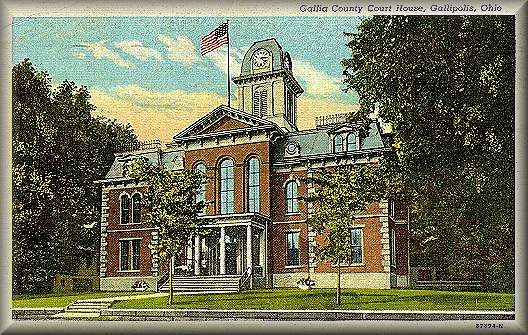
GALLIA COUNTY COURTHOUSE, GALLLIPOLIS, OHIO

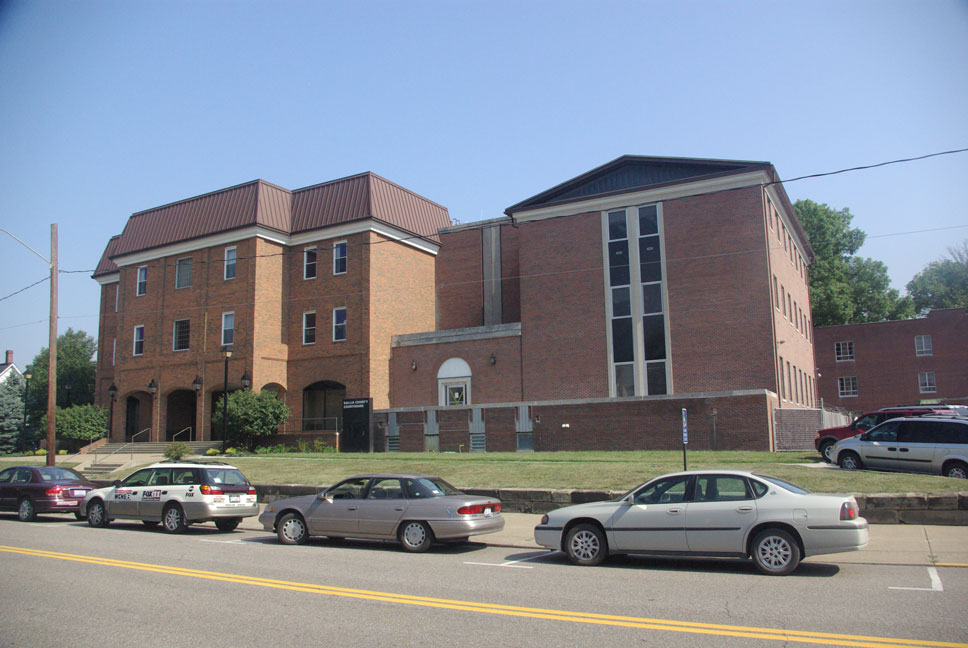
MUNCIPAL BUILDING (SEPTEMBER 30 2007)
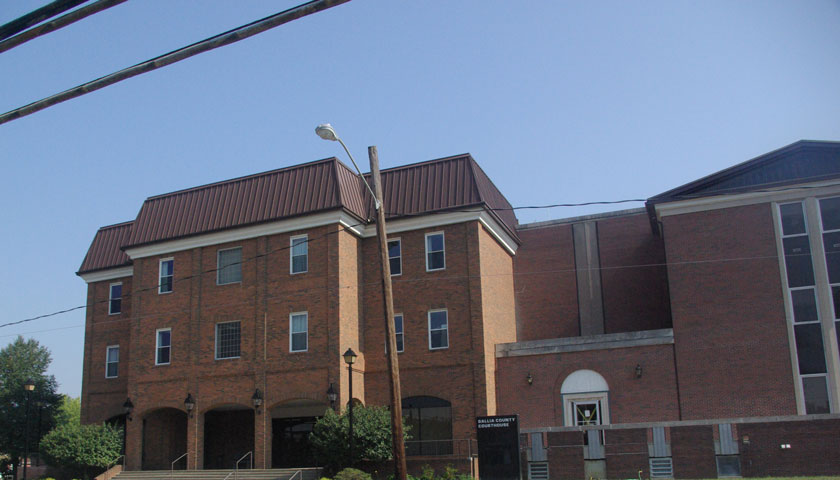
MUNCIPAL BUILDING (SEPTEMBER 30 2007)
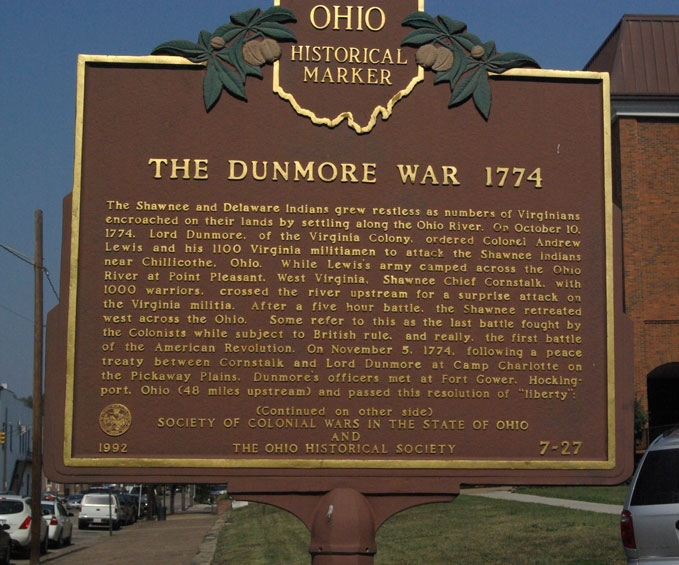
MUNCIPAL BUILDING - LORD DUNMORE WAR MARKER (SEPTEMBER 30 2007)
SEARCH ENGINE When you reach the page you have been referred to by the search engine, search this page by going to the top of your browser, click Edit and then click find on this page. Type in the desired search word and click. This will take you to the places on the page where this word is found. It will take you through all of the places that this word is found on this page
INTRODUCTORY HISTORY
More than a century had elapsed after Columbus had discovered the Western Continent before any permanent settlement was made in North America. The first was the colony of Virginia, in 1607, by the English ; and in the next year the French planted their first colony in Canada. The English settlements were confined for some time to the coast; while the French gradually extended theirs up the St. Lawrence, and up on the lakes.
It was not known that any white man had ever explored what was called the western country, until the year 1673, when a French missionary named Marquette, accompanied by M. Joliet, of Quebec, and five boatmen, set out on a mission from Mackinaw, at which place his countrymen had established it post two years before, and passed thence down the lake to Green Bay, and thence from Fox river they passed over to the Wisconsin, and down that river to its junction with the Mississippi. After having descended to the mouth of the Arkansas, and being satisfied from its course that the Mississippi discharged itself into the gulf of Mexico, they thought it imprudent to proceed further, and returned to the mouth of the Illinois, which they ascended, and passed over to Lake Michigan.
After Marquette's return he resided among the Indians until his death, in 1675. His discoveries were lost sight of, until La Salle, in 1679, built a vessel on Lake Erie which he named the Griffon, and in August embarked with his expedition. He sailed through Lakes Erie, St. Clair, Huron and Michigan to Green Bay. He then collected furs and sent back a load by the Griffon, which was never heard of afterward. His party then proceeded in canoes to the mouth of the St. Joseph river, where he established a trading-house called Fort Miami. He then ascended the St. Joseph, crossed to the Kankakee, and sailed down till he reached an Illinois village. In January, 1680, he formed an alliance with the tribe, and established a post near the present Peoria. After having sent father Hennepin on an exploring expedition to the mouth of the Illinois, he returned to Canada. After organizing another expedition he returned to Fort Miami, and on the 21st of December, 1681, he started from thence with his expedition, ascended the Chicago, crossed to the Illinois and descended to the Mississippi. Sailing down, he explored the three channels to the Gulf, and on April 9, 1682, set up a column with the French arms, at the mouth, and took formal possession of the country watered by that river. In November, 1683, he reached Quebec on his return. In August, 1684, he set sail from France, with an expedition consisting of 280 persons, in four ships, for the purpose of beginning a settlement at the mouth of the Mississippi. They entered the Gulf of Mexico, but miscalculating distances, passed their destined port, and anchored at the entrance of Matagorda Bay, where they disembarked. Here they undertook to cultivate the soil, but after two years, in January, 1687, the whole party was reduced to fewer than forty. La Salle, with half of these, set out to make his way to the Illinois, but was murdered by some of his own party, March 19, 1687, on the Trinity, Texas. It is probable he saw nothing of what now constitutes the State of Ohio, except, perhaps, some occasional landings on the shore of Lake Erie, in the begrnning of his expeditions. It is said, however, that in 1669 he reached the Ohio from the country of the Iroquois, and descended it to the falls where Louisville now stands.
Soon after La Salle's expedition, French missionaries began to traverse the country through which he had passed, and the government established military posts on the lakes. Several settlements were made on the Mississippi, above the mouth of the Ohio, and in the year 1702, a mission was established on the Wabash, at Vincennes, and a few years later a fort was built there.
Very little notice was taken of the country on the headwaters of the Ohio, by either the French or English governments, until about the middle of the last century. Both parties claimed it, but neither took any steps to occupy it. The French considered themselves as having the best right to it, because they had been the first to explore it; but they took no further measures to establish their claims, and made no other settlements in addition to those on the Mississippi and Wabash. The English claim to the country was founded upon the royal charters to the different colonial governments, which included in their grants all the country westward of the settlements on the Atlantic, within the same parallels of latitude, to the Pacific ; but this claim, like that of the French, was not carried into effect by any measures of formal occupation of the territory. About the year 1709, however, both nations began to be impressed with the importance of the country, and to prepare to establish their respective claims by sending out traders and surveying parties. A company under a grant from the crown of England, of six hundred thousand acres of land, on the waters of the Ohio, established a post on one of the branches of the Great Miami river, which was the first known establishment made by white men within the bounds of Ohio. This fort was taken by the French in 1752. The French, afterward, in 1754, build Fort DuQuesne, at the confluence of the Allegheny and Monongahela, where Pittsburg now stands. Washington was sent by the governor of Virginia with a letter to the French commandant remonstrating against these proceedings as an infringement of the rights of Great Britain; but neither Washington’s abiltities nor the operations of a powerful force under Geneal Bradcock, could overcome the French, who kept possession of the country until Canada and the whole country east of the Mississippi was surrendered by the treaty of 1763.
After the peace of 1763, and before the war of the revolution, the settlements were extended across the mountains into the western parts of Pennsylvania and Virginia, but none were made in Ohio. After the war, disputes arose between several of the States respecting the right to the soil of this territory, which was only allayed by Virginia ceding to the United States, in 1784, jurisdiction over the country northwest of the Ohio, retaining the right to the soil in the district between the Little Miami and Scioto rivers, for the remuneration of her own troops. In 1786 Connecticut surrendered all her rights of jurisdiction and soil to the general government, with the exception of the district known as the Western Reserve, the jurisdiction of which was also ceded, in 1800, the right to the soil being retained. The Indian titles to the rest of the State were bought up by the General Government. In this manner the territory became the property and care of the United States, and in 1787 Congress undertook its government. But many and bloody were the conflicts with the Indians until the signal victory over them of the army of General Wayne, in 1794, resulting in the treaty of Greenville, August, 1795.
The first permanent settlement in Ohio having been made in Marietta, April 7, 1788, it became the duty of Congress to provide civil government for its new and extensive territory. Accordingly the celebrated ordinance of 1787 was adopted on the 13th day of July, of that year, and was entitled, "An Ordinance for the Government of the Territory of the United States northwest of the river Ohio." This ordinance became the fundamental law of the Great Northwest, and to its wise statesmanship we may attribute much of our greatness and prosperity.
Congress, in October, 1787, appointed General Arthur St. Clair, Governor; Major Winthrop Sargent, Secretary, and James M. Varnum, Samuel H. Parsons and John Armstrong, Judges of the Territory ; the latter declining the appointment, John Cleves Symmes was appointed in his stead. On the 9th of July, 1788, Governor St. Clair arrived at Marietta, and finding the secretary and a majority of the judges present, proceeded to organize the Territory. The Governor and judges, or a majority of them, were the sole legislative power, until the Territory should contain an actual adult male population of five thousand. Such laws were adopted, some seventy-five in number, as the necessities of the inhabitants demanded. In 1798, it having been ascertained that the Territory contained the requisite population, a Territorial Legislature was elected, and held its first session in Cincinnati, January 22, 1799 ; its second session at Chillicothe, on the first Monday of November, 1800, and its third session in Chillicothe, November 24, 1801.
On the 27th of July, 1788, Governor St. Clair issued a proclamation, establishing the county of Washington, which included all the territory east of the Scioto river to which the Indian title had been extinguished, reach northward to Lake Erie, the Ohio river and the Pennsylvania line being its eastern boundary, Marietta, the seat of the Territorial Government, also becoming the county seat of Washington county. Ten counties were organized within the limits of Ohio, before being admitted into the Union as a State. Belmont county was organized September 7, 1801, being the last before the admission of the State. The other counties organized before that time were Hamilton, Wayne, Adams, Jefferson, Ross, Trumbull, Clermont and Fairfield.
On the 30th of April, 1802, Congress passed "An act to enable the people of the eastern division of the territory northwest of the river Ohio, to form a constitution and State government, and for the admission of such State into the Union on an equal footing with the original States, and for other purposes." An election was held for members of a constitutional convention, who met at Chillicothe November 1, 1802, and completed their labors and adjourned on the 29th of the same mouth. The members of the convention from the part of the State embracing the territory from which Gallia county was formed, were James Caldwell and Elijah Woods, of Belmont county, and Ephraim Cutler, Benjamin Ives Gilman, Rufus Putnam, and John McIntyre, of Washington county.
The Territorial Government was ended by the organization of the State Government March 1, 1803, pursuant to the provisions of the constitution framed at Chillicothe.
ORGANIZATION AND DESCRIPTION OF THE COUNTY.
On March 1st, 1803, the First General Assembly of the State of Ohio met at Chillicothe, about three months after the State was admitted into the Union. One of the first acts of the new legislature was the creation of eight new counties, of which Gallia was one of the first, from a vast territory known as Washington county, "Territory of the United States, North-west of the river Ohio," which then comprised a tract covering nearly half of the present area of the State, and including what is now divided into nearly forty separate counties.
“Gallia,” the ancient name of France, was given it in honor of the French settlers, who for nearly thirteen years had been located at Gallipolis, within its borders, and it was made a separate and distinct county April 30, 1803. It originally included the lands comprising the present
II - HISTORY OF GALLIA COUNTY.
counties of Gallia, Jackson, the greater part of Lawrence, about three fourths of Meigs and a part of Vinton county, which tract was covered partly by the "Congress lands" and the balance by the "Ohio Company" purchase, the western limit of the latter being a line running north and south through Gallia county, a short distance west of Gallipolis. All the titles of real estate in the city and the eastern part of the county came form this company, and it will be a matter of interest to introduce here an account of its origin, etc., copied from its original records.
OHIO COMPANY.
"On the 1st day of March, 1786, convened at the Bunch of Grapes Tavern, in Boston, as delegates from several of the commonwealths of Massachusetts, to consider of the expediency of forming an association or company to purchase lands and make a settlement in the western country the gentlemen whose names are underwritten."
Then follows the list of signatures of the members of the company, eleven in all, who elected General Rufus Putnam, chairman and Major Winthrop Sargent, clerk. The articles of agreement of the company decided that the " design of this association is to raise a fund in continental certificates for the sole purpose, and to be appropriated to the entire use of purchasing lands in the western territory (belonging to the United States), for the benefit of the company, and to promote a settlement in that country."
They soon after purchased the lands of Congress, as indicated, and opened their office at Marietta.
The price paid to the United States for the land was one dollar per acre, from which one-third of a dollar was to be deducted for bad lands, expense of surveying, etc.
After giving the boundaries of the land purchased by the company, it is recorded that " This tract to be extended so far northerly as to comprehend in its limits one section, of 640 acres, exclusive of above purchase in each township for the purposes of religion; one section for schools and two townships of 23,040 acres each, for a University, to be in the centre of the whole tract." The above lots were thus given by Congress, and appropriated for the above uses forever.
The agent of the Company, Reverend Menasseh Cutler, was the one who has the credit of securing this desirable arrangement from Congress. Whether he labored for this object from an unselfish desire to benefit the cause of religion and education, or solely to facilitate the sale of lands made b3, the company, is rather a doubtful question ; but as he was a good man as well as shrewd, he was probably influenced by both motives. In any event, the result has been beneficial to all parties. Section 29 in each township in the tract was set aside for religious, and section 16 for school purposes.
" December 9th, 1795, upon the petition of the French people at Gallipolis, unanimously resolved that the fractional miles square number twenty-eight and thirty-four of the third township of the fourteenth range be offered to them at one dollar and twenty-five cents per acre.
December 17th, 1795.—Whereas the agents and proprietors of the Ohio Company, on the 9th day of December last, did resolve that they would sell two fractional miles square lots, being numbered twenty-eight (28) and thirty-four (34), lying in township number three (3) and in the fourteenth range, to the inhabitants of Gallipolis ; and whereas the inhabitants of Gallipolis aforesaid, have agreed upon certain principles for the division of said lands, and for raising the money necessary to pay for the same,
Be it therefore unanimously resolved, that the two lots aforesaid, lying within a certain tract of land which has heretofore been considered as forfeited to the Ohio Company, be sold and released to certain persons in trust for the inhabitants of Gallipolis, according to the principles which have been adopted by them.
Resolved, that Paul Fearing and Return J. Meigs, Esquires, be a committee to whom the conveyance shall be made hi trust, and who shall execute conveyances of the like tenor to the several inhabitants of Gallipolis, they paying the trustees for the execution of their trust."
The following paper, found in the Recorder's office, written in French, and translated by 1). W. Jones, Esq., exhibits what was meant by the " principles" referred to in the above, and
THE PRICE AND DISTRIBUTION OF LOTS IN GALLIPOLIS.
Gallipolis, this, the 14th day of December, 1795. P. Bureau and J, M. Berthelot have published and given notice that Monday next they will render account to the French inhabitants of their mission as agents to treat with the Ohio Company.
To-day, Monday, the assembled inhabitants, after haying agreed to purchase the land of the Ohio Company, have proceeded to choose, by secret ballot, commissioners to examine the rights of pre-emption of the inhabitants to the city lots, and of four acres of cultivated land, and also to fix the price of city lots and of the four acres according to what they were worth before they were occupied. Whereupon the inhabitants have unanimously named for Commissioners: Marin Dupont, Mathieu Berthelot, Jean Parmentier, Christopher Etienne, Francis DeVacht, Jean Baptist, Le Tailleur, Jean Pierre, Roman Bureau.
Today, Monday, 6 o’clock P.M. The commissioners have unanimously appointed Marin DePort, moderator, and Christopher Etienne, secretary of the Committee. It has been resolved that Mr. Anzelm Tupper, surveyor, be chosen for any operations of surveying that may be found necessary.
Resolved, That Mr. Tupper, accompanied by Mr. Bureau, shall go to examine the line which separates the lands proposed to be bought from the reserved lands and from those belonging to the Ohio Company, in order to proceed immediately to such operations as they shall judge to be proper.
[NOTE.—By the reserved lands are meant those lands reserved for schools and ministerial purposes, being sections 16 and 29. Section 29 joins the lands proposed to be bought, on the north side.]
It has been resolved that the public be warned by notices to repair to the house of Messrs. Saugrain and Bureau, in order to make known their rights and claims to the property of Gallipolis.
Le Tailleur, Parmentier, M. Berthelot, J. G. DeVacht, M. DuPort, P. Bureau.
December 16th. The committee, after having been occupied during the entire day in receiving the claims of proprietors, have resolved to give new notice to those who have not yet presented their claims, to come to-morrow in order to finish the work.
December 16th. Resolved, That this plan shall hereafter be placed before the eyes of the people as the only one which appears proper in order to conciliate the different interests of the proprietors considering the position of the different pieces of land, in order that those persons who have few lots, and of which the situation is not advantageous, be not overcharged.
PLAN.
The banks of the river and the Commons not having been surveyed, and never having been regarded as property, we have thought it right that they be placed at a price proportioned to their importance by reason of their position. Lots on the bank of the river and of the Square [Public Square] being a source of wealth by reason of their position, we have thought that they should be placed at a price higher than the others. The lots on the banks of the river, more remote, have been placed at a price lower than the preceding, but higher than those which are remote from the river. The lands which remain to be divided, being for the greater part mountainous or hilly, have been in consequence placed at a low price.
BANKS OF THE RIVER.
From No. 1 to No. 73, inclusive, 1040 feet front, estimated at 2d per ft. From No. 73 to the lot reserved for the Square, making 240 ft., 9d " Fronting the reserved lots of the Square, making 160 ft., at 2d per ft. From 139 to 169 inclusive, making 480 ft., at is per ft Facing the 1. c. Square, 194 to 219 inclusive, making 640 ft. at 6d per ft. [NOTE.—The Square referred to here is not the Public Square, but a C Square, or that space lying between Locust and Cedar, and between Front street and the river.] Facing the Square, 244 to 273, making 640 ft. at 6d per ft From No. 300 to 331, forming 640 ft. at 2d per ft |
|
|
|
LOTS OF THE SQUARE RESERVED.
Eight lots divided into 18, each division being on the Square or on the
river, each division estimated af $4 72 0 0
Resolved, That the above lots shall be drawn by lot and that for each division the estimated price shall be paid. That the banks of the river shall be sold for the estimated price, givrng preference to the occupant.
LOTS ON RIVER AND AT THE BOTTOM OF THE SQUARE.
From No. 100 to 117, at $3 each lot, 6 lots Ten river lots on the two sides of Public Square, at $3 Six river lots, from No. 1 to 37, at $2 16 lots, from 206 to 331, at $0 12 lots, from 362 to 447, at $2 352 lots remaining, at $1 each |
|
|
|
LOTS OF FOUR ACRES, CULTIVATED.
21 lots at 7s 6d per acre A piece of land occupied by Madame LaForge, adjoining the lands of Autran, estimated at $6 Piece of land occupied by the late Mr. Pradel, valued as two cify lots Piece of land occupied by Mr. Ferrau, the younger, 2 One occupied by Mr. Piton One occupied by Mr. Slcnager, adjoining his four acres For the remaining lands, at the rate of four dollars per purchaser, the total number of purchasers amounting to eighty |
|
|
|
Resolved, For the public good, and for the interests of the inhabitants, the streets and the Public Square shall remain free, without being closed on the bank of the river by any building, or being sold.
Resolved, That the public be notified to meet to-morrow, to receive the report of the work of the committee.
Resolved, That the banks of the river shall remain open, facing each street, that lines shall be drawn in the direction of the streets without trespassing thereupon.
Plna accepted.
Etienne, Sec.
HISTORY OF GALLIA COUNTY - III
December 17th. Resolved, That the secretary be ordered by the committee to go to the house of Mr. Dhebercourt, to request him to declare if it is his intention to join himself with us for the acquisition of our property, as his partner, Dr. Petit, has done; and to say to him that the execution of the plan adopted by the inhabitants rewires a positive answer.
ETIENNE, Sec.
Mr. Dhebercourt has replied that he is disposed to agree to the acquisition of the lands of Gallipolis, paying for his property seven shillings sixpence per acre, and that he will not conform to the plan adopted until he has taken such steps as he believes his interests require.
ETIENNE, Sec.
Resolved, That Messrs. Berthelot and DuPort, whom we have appointed collectors, go to the houses of the inhabitants to receive the sums set down in the list made between us, according to the plan agreed on by the inhabitants,'December 17th, 1795.
Resolved, That Mr. DuPort is by us appointed cashier, and in this capacity the money remain in his hands until the time of payment for the lands.
December 19, 1795. According to the resolutions of the committee, on the 16th of this month, agreed to by the assembled inhabitants, reserved lots near the square, divided into eighteen equal portions, have been drawn by lot in the presence of the 'assembled inhabitants, and fell to Messrs. Vandenbemden, Chandiver, father, Chandiver, son, Vonschriltz, Gervais, Ferrare, jr., LaCour, Davoux, Villerain, Muqui, Quarleron, Michau, Brunier, Bureau, Lafillard, child of Vonschriltz, sr., Francis Valodin, and Pierre Richon.
December 22d. By virtue of the resolution of the committee of the 18th, Messrs. Marin DuPort and Mathieu Berthelot have been engaged in receiving the sums to be given by each proprietor, which sums have amounted to $594 5s 6d in money, and orders on Mr. Sproat for the appointments of spies, of which sum the money amounted to $91 3s 2d.
Bills, on different persons $203. Orders of spies on the current appointments $553, which sums form a total of $1042 2s 8d.
Resolved, That Messrs. Mathieu Berthelot, Romain Bureau, and Marin DuPort, DeVacht and Jean LeTailletur go to Marietta in the name of the committee of the inhabitants of Gallipolis, to conclude with the Ohio Company the acquisition of the two squares (of land) indicated in the plan Which has been given us by the agents of the Ohio Company.
ETIENNE, Sec.
PARMENTIER.
This was acknowledged before E. W. Tupper, Justice of the Peace, April 9, 1817. Recorded May 25, 1824.
"John Paul alias Jones," Commodore U. S. N. during the Revolutionary War, was one of the purchasers of five of the original shares in the Ohio Company's purchase. Part of his land was located near the northeastern line of the corporation, now owned by Mrs. Sarah Mott and the Gallia County Infirmary, and the T., C. & H. V. R. R. Co. has a gravel pit upon part of it, where Camp Carrington was located in 1861, and where a military hospital was subsequently built.
Soon after the establishment of the county a record was made, of which the following is a copy
DIVISION OF GALLIA COUNTY INTO TOWNSHIPS BY THE ASSOCIATE
JUDGES.
At a meeting of the associate judges of the county of Gallia, held at Gallipolis, on Tuesday, the 10th day of May, in the year of our Lord one thousand eight hundred and three, for the purpose of dividing the said county of Gallia into townships, and to apportion to each township a proper number of justices of the peace, and for other purposes. Present, Robert Safford and George W. Putnam.
The county was then divided into three separate townships : Le Tarts, Kyger and Gallipolis. The latter was divided as follows:
" Gallipolis township, beginning at the mouth of Campaign creek, and thence down the river Ohio to the county of Scioto, thence north with said county line to Ross county line, thence with said Ross line to the northwest corner of the seventh townships in the seventeenth range, thence east to where Campaign creek intersects the line between the sixth and seventh townships in the fifteenth range, thence down said creek with the meanders to the place of beginning. And that two justices is the proper number to be elected in said township, and that the election for said township be held at the house of John Bing."
The county and townships were afterward many times sub-divided and changed, and the present boundaries are indicated by the accompanying maps. The county, as now defined, is situated in that geological division designated as Coal pleasures; bounded on the north by Meigs, Vinton and Jackson, east by the Ohio river, south by Lawrence and the Ohio river and west by Lawrence and Jackson. The river margin in the county is 36.40 miles in length, divided as follows: Guyan township, 204 chains ; Ohio, 876 ; Clay, 498 ; Gallipolis, 666 ; Addison, 501, and Cheshire, 167.
Its area is about 430 square miles; surface, hilly, excepting a tract bordering upon the Ohio River and bottom lands along various other streams, where it is more level, and soil fertile. A great part of the county is covered with a black, sandy loam, well adapted to the growth of wheat, corn, which are quite extensively raised. The staple corps are wheat, corn, oats, rye, buck-wheat, and recently the cultivation of tobacco has been assuming prominence. Much of the land is excellent
for grazing purposes, and a great deal of attention is paid to the raising of cattle, sheep and hogs, and much interest is being developed in the introduction of blooded stock. The northern, western and southern parts of the county are underlaid with valuable, easily worked veins of iron ore, coal, limestone and fire clay which, since the advent of the Columbus, Hocking Valley & Toledo Railroad, in the spring of 1880, is being rapidly developed. This railroad has an incline side track to the river at Gallipolis for the convenient transfer of freight with the Ohio river boats.
The principal streams are Raccoon, Symmes', Chickamauga, Campaign, Swan and Kyger, all of which flow into the Ohio.
The population of the county in 1810 was 4,181 ; in 1820, 7,098; in 1830, 9,733; in 1840, 13,444; in 1850, 17,063; in 1860, 22,043; in 1870, 25,545, and in 1880, 28,124. The territory of the county was diminished, in 1849, by the formation of the new county, Vinton, on the north, by which Gallia lost Wilksville township, which went to the new county, and two tiers of sections off the west part of Raccoon township, and one tier off the north part of Greenfield township, which were ceeded to Jackson county, leaving fifteen townships. The following was the
POPULATION BY TOWNSHIPS IN 1870 AND 1880.
Balance of increase in ten years (about ten per cent) 2,579
STATISTICAL ITEMS.
Gallia county contains 286,108 acres of land, the agricultural portions of which are divided as follows: 72,771 cultivated ; 85,135 pasture, 61,982 wood-land; 10,447 waste. The number of acres sown to wheat for the crop of 1882 is 32,043. During the year 1881 there was produced 298,896 bushels wheat, 616,866 bushels corn, 34,254 bushels oats, 1,805 bushels buckwheat, 651 bushels rye, 226 bushels clover seed, 84,872 bushels potatoes, 11,095 tons hay, 189,690 pounds tobacco, 4,5,253 pounds wool, and a large quantity of fruits and dairy products. These figures, although taken from the Ohio Statistics for 1881, are probably not entirely correct, but they serve to give an idea of the staple agricultural products of the county. The total valuation of horses, mules, cattle, sheep and hogs is $545,466. During 1881, 3,500 tons of iron and 92,948 bushels of coal were also produced.
The 286,108 acres of land in the county is valued on the tax duplicate at an average of $12.23 per acre, or $3,499,531, and the buildings thereon at $354,564. Total, $3,854,095. The valuation of property outside of Gallipolis exempt from taxation for college purposes, is $31,270; common school, $34,434; churches, $20,071; charitable institutions, $7,665; others, $854. Total, $96,329.
During the year ending March 31, 1881, there were 318 marriages, 224 deaths and 616 births. The county had in charge 105 paupers, at a cost of 14 cents per day each, $8,752.61. The only railroad in the county is the Columbus, Hocking Valley & Toledo, which has a main track 30.91 miles in length, valued upon the duplicate at $168,880. The total duplicate for 1881 is $7,441,848, and the tax assessment $120,303.95.
GLEANINGS FROM THE COUNTY RECORDS.
The opening pages of the records of Gallia County Commissioners are lost, and the first item found of especial interest is the settlement with the first treasurer, Nicholas Thevenin, July 2, 1804, for the preceding year :
IV - HISTORY OF GALLIA COUNTY.
Commissioners present : Charles Mills, Charles Buck. J. P. R. Bureau, clerk.
July 7th, 1804.-Among other settlements made were the following : Robert Safford, salary as Associate Judge, $25.75; as appraiser of houses, $1.25. George W. Putnam, salary as Associate Judge, $12.93 ; Brewster Higley, salary as Associate Judge, $6.20. Joel Smith, for rent of house for Court of Common Pleas, July term 1804, $4.00.
July 17th, 1804, the duplicate amounted to $366.33, and was given to John- Robinson, collector. Bond, two sureties for $732.66. July 26th Nicholas Thevenin resigned as treasurer and Francis Le Clercq was appointed ; J. P. R. Bureau, Clerk Common Pleas Court, Orapha Strong, Commissioner.
June 10th, 1805.-The price of tavern license fixed for the county was : Gallipolis, $10; State road to county line, $6 ; on the road to the salt works, $6 ; other roads, $4. June 11th, the sheriff of Gallia county appeared and rendered his account for the taxes he collected for the year 1803, which being compared with the duplicates given him by the Associate Judges, and the receipts of the county treasurer, proved that said sheriff owes the county, for that year, six cents and one-half. Ferry license across the Ohio river : At Gallipolis, $4; Fair Haven to Point Pleasant, $6 ; any other place in the county, $2. Across the mouth of Campaign creek, or any other creek in the county, $1. Rates of ferriage across the Ohio : Foot, 8k cents ; man and horse, 16 2/3 cents ; loaded wagon and team, $1 ; four-wheeled carriage or empty wagon and team, 75 cents ; loaded cart and team, 50 cents ; empty cart, sled or sleigh and team, 37 1/2 cents ; horse, mare, mule, ass, head of neat cattle, 8k cents ; sheep or hog, 3 cents. Rates of Campaign Creek were somewhat less, and for Raccoon less than Campaign. June 29th, 1805, Francis Le Clercq re-appointed county treasurer and surveyor.
September 25, 1805, John Noland, contractor, turned over the gaol building to the commissioners for their acceptance. The contract price. was $400. September 3d, 1805, Robert Allen was given the contract to build an outside chimney on the northeast end of the gaoler's room for $30. The tax duplicate of Gallipolis township, amounting to $210.94, was given to Francis Le Clercq, collector ; C. Etienne, his "surety. November 5th, 1805, Joseph Fletcher became sheriff.
First Monday in June, 1806, Joseph Fletcher re-appointed sheriff and collector; Francis Le Clercq re-appointed treasurer; C. R. Menager, clerk. September 1st, 1806, the first order given for a wolf scalp was to James Burford, $3; the second one, the same day, to Andrew Friend, three scalps, $9.
December 14th, 1809, an order was given to J. Bodot for fifty cents in payment for a whipping post.
The cost to the county for wolf and panther scalps from September 1st, 1806, to April, 1817, was $829 ; for prosecuting expenses, 1805 to 1817, $1,672 ; for grand jury expenses, 1805 to 1817, $1,311.50 ; election expenses, July, 1804 to December, 1817, $1,087.25 ; contingent expenses, July, 1804, to April, 1817, $559.86 ; salary of common pleas judges, 1804 to 1817, $1,740.57; Esters and appraisers, 1804 to 1816, $991.85 ; board of commissioners, 1804 to 1817, $2,753.24.
The receipts of the county treasurer for 1804 were $320.81, 1805, $490.78 ; 1806, $753.43 ; 1807, $1,243.88 ; 1808, $1,199.26; 1809, $1,454.97; 1810, $1,626.77 ; 1811, $1,561.60 ; 1812, $1,153.13; 1813, $1,282.15; 1814, $1,491.57 ; 1815, $1,602.06 ; 1816, $1,986.39.
GALLIA COUNTY OFFICERS 1803 TO 1882.
Associate Judges-1803-8, George W. Putnam, Robert Safford, Brewster Hiegley ; 1809, Judges, Safford, Hiegley, Kerr; 1810, Robert Safford, Fulton Elliott, Joseph Fletcher ; 1811-13, John Thompson, President ; F. Elliott, Joseph Fletcher, Edward W. Tupper ; 1814-15, J. Thompson, President ; J. I letcher, F. Elliott, Thomas Rodgers ; 1816-19, J. Thompson, President ; F. Elliott, T. Rodgers, R. Safford ; 1819-23, Ezra Osborn, President; J. Fletcher, T. Rodgers, R. Safford ; 1823-26, Ezra Osborn, President; John Holcomb, T. Rodgers, R. Safford; 1826-29, Thomas Irwin, President ; J. Holcomb, T. Rodgers, R. Safford ; 1829-33, T. Irwin, President ; J. Holcomb, T, Rodgers, David Boggs ; 1833-37, T. Irwin, President; J. Holcomb, T. Rodgers, J. Fletcher ; 1837-40, T. Irwin, President ; Anderson H. Hughes, T. Rodgers, Robert Armstrong ; 1840-42, John E. Hanna, President ; A. H. Hughes; T. Rodgers, R. Armstrong ; 184244, J. E. Hanna, President; A. H. Hughes, Joseph W. Ross, R. Armstrong ; 1844-47, J. E. Hanna, President ; Daniel G. Whiton, J. W. Ross, Moses R. Mathews ; 1847-48, Arius Nye, President ; D. G. Whiton, J. W. Ross, M. R. Mathews ; 1848-49, William V. Peck, President; D. G. Whiton, J. W. Ross, M. R. Mathews; 1849-51, W. V. Peck, President ; D. G. Whiton, M. R. Mathews, Franklin Carel ; 1851, W. V. Peck, President ; Robert Carter, M. R. Mathews, Franklin Carel. The new constitution went into effect February, 1852, abolishing the office of associate judge, and establishing the court of probate.
Probate Judge-Samuel B. Rathburn, elected in the fall of 1852, served until 1858 ; William H. Morehead, 1858 to 1861 ; Alexander Logue, 1861 to 1870 ; Henry A. Kent, 1870 to 1879 ; S. D. Cowden, 1879, now in office.
Common Pleas Judges, for the Third subdivision of the Seventh Judicial district, including the counties of Gallia, Meigs, Washington and Athens, under the State institution that went into effect in 1752, 1852 to 1862, Simeon Nash; 1862-67, John Welch; 1867-74, E. A. Guthrie, after which date the following were elected or appointed, in the order named: W. B. Loomis, T. A. Plants, D. B. Hebard, John Cartright, S. S. Knowles and J. B. Bradbury-the latter two being the present judges.
Board of Commissioners-1803 to fall of 1805, Charles Mills, Charles Buck, Picket Marvin ; 1805-9, C. Mills, C. Buck, Orapha Strong; 1809-12, O. Strong, John Bing, S. W. Blagg ; 1812-14, inclusive, O. Strong, Samuel W. Blagg, Joel Hiegley, junior ; 1815, S. W. Blagg, O. Strong, Nehemiah Wood; 1816, O. Strong, N. Wood, John Kerr ; 1817, N. Wood, J. Kerr, J. P. R. Bureau ; 1818-21, J. Kerr, J. P. R. Bureau, Samuel Barlow ; 1821, J. Kerr, S. Barlow, John Bing; 1822, Edward McMillen, S. Barlow ; 1826, J. Kerr. S. Barlow, John Bing ; 1827, J. Kerr, J. Bing, John Cherington ; 1828-30, inclusive, J. Cherington, J. Bing, John Newton ; 1831, J. Cherington, J. Bing, David Lasley ; 1832, D. Lasley, George Eagle, J. Cherington ; 1833, D. Lasley, G. Eagle, Patrick Napier ; 1834, G. Eagles, P. Napier, John Kerr ; 1835, John Kerr, Patrick Napier, John Newton ; 1836, John Kerr, J. Newton, John Cherington; 1837, J. Cherington, David Lasley, J. Newton; 1838-40, inclusive, D. Lasley, J. Cherington, David Boggs; 1841, J. Cherington, Alexander Logue, D. Lasley; 1842, D. Lasley, A. Logue, John N. Kerr ; 1843, J. N. Kerr, A. Logue, Cyrus D. Green; 1844-5, J. N. Kerr, Nehemiah Atwood, Hiram Wilcox ; 1846, J. N. Kerr, N. Atwood, Samuel H. Gates; 1847-48, J. N. Kerr, S. Gates, John Roadarmour. [Alexander Logue appointed, vice S. Gates, deceased, March 26th, 1847]. 1849, J. Roadarmour, A. Logue, Henry Hannan; 1850-51, J. Kerr, H.. Hannan, Reuben Graham ; 1852, J. Kerr, R. Graham, Isaac Carter ; 1853, J. Kerr, I. Carter, Joseph Mauck, junior; 1854, J. Mauck, junior, J. Carter, J. T. Smith ; 1855, J. Mauck, J. T. Smith, Andrew Edminston ; 1856, A. Edminston, J. T. Smith, A. P. Rodgers; 1857, A. P. Rodgers, A. Edminston, Jacob Kerns ; 1858, J. Kerns, Nehemiah Hall, A. P. Rodgers ; 1859, J. Kerns, N. Hall, Valentine Switzer ; 1860, J. Kerns, R. P. Porter, V. Switzer; 1861-2, V. Switzer, R. P. Porter, Robert Carter ; 1863-67, R. Carter, V. Switzer, A. Barton ; 1868, A. Barton, R. Carter, A. J. Powell ; 1869, R. Carter, A. J. Powell, J. M. Clark ; 1870, A. J. Powell, J. M. Clark, R. P. Porter; 1871-2, A. J. Powell, R. P. Porter, S. McDaniel ; 1873, A. J. Powell, S. McDaniel, H. C. Niday ; 1874, S. McDaniel, H. C. Niday, John E. Mills ; 1875-77, H. C. Niday ; J. E. Mills, L. M. Beman; 1878, H. C. Niday, J. E. Mills, Jacob Coughenour ; 1879-80, J. E. Mills, Jacob Coughenour, Jacob Riggs ; 1881-82, J. E. Mills, Joseph Howard, Jacob Riggs, now in office.
Commissioner's Clerk and Auditor.-1803-11, J. P. R. Bureau ; 1811 to fall of 1820, Nathaniel Gates; fall of 1820, Robert Safford elected " Auditor " to fall of 1821; Nathaniel Gates to 1840, inclusive; Alexander Vance to 1842, inclusive ; Joshua N. Parker, to 1850, inclusive; David B. Hebard, to October, 1853, when Alexander Vance was appointed, ad interim; David B. Hebard, fall of 1854 to 1856, inclusive; E. A. Jackson, to fall of 1858; William Nash, to fall of 1866 ; John H. Evans, to fall of 1877 ; Joseph Stafford, 1877, now in office.
Treasurer.-1803, Nicholas Thevenin, who resigned July 26, 1804, and the Board of Commissioners appointed Francis LeClercq, who continued in office until ,1827, inclusive ; Joseph Drouillard, 1828-43 ; Robert Black, 1844-51 , Isaac Calohan, 1852-56 ; William Nash, 1856-58 ; John Sanns, Jr., 1858-62; Daniel H. Gates, 1862-64 ; Jacob Kerns, 1864-66; Daniel H. Gates, 1866-68 ; William H. H. Sisson, 1868-72; John L. Guy, 1872-76; William W. Martindale, 1876-80; William Cherington, 1880, now in office.
Clerk of the Court of Common Pleas.-1803-6, inclusive, J. P. R. Bureau; 1807-35, inclusive, Francis LeClercq; in the July term of Court, 1836, J. Drouillard, appointed Clerk pro tem., to fill unexpired term, then elected and served until 1858, when he retired, and James M. Campbell (Dem.) was elected ; Joseph Hunt, appointed vice J. M. Campbell, deceased, Sept. 8, 1850, who continued in office until 1875, when Wm. H. H. Sisson succeeded him; John L. Guy, appointed Jan. 4, 1877, vice Mr. Sisson, deceased, and continued until 1881 ; 1881-4, Horace R. Bradbury.
Recorder.-The first deed recorded is Weld to Mathew, December 12, 1803, Robert Safford, Recorder, who continued until September 4, 1807; Nathaniel Gates from that time until June 19, 1848 ; S. B. Rathburn to Oct. 20, 1848 ; S. B. Drouillard, to Oct. 23, 1854 ; Samuel Jolley, to Jan. 6, 1858 ; James Mossman, to May 31, 1862, when John Entsminger was appointed for his unexpired term, to Jan. 4, 1863; Caleb W. Cherington, to Jan. 4, 1870; Ira W. Booton, to Jan. 2, 1882; I. F. Chapman took the office Jan. 2, 1882, which he now occupies.
Sheriff.-1803-5, John Robinson; 1806-7, Joseph Fletcher; 1808-9, Nicholas Thevenin; 1810-13, John Robinson ; 1814-15, D. Ridgeway; 1816-19, Samuel R. Holcomb; 1820-2, James Jones; S. R. Holcomb, 1823-5 ; B. Curtis, 1826-7; Aaron M. Barlow, 1828-9; S. R. Holcomb, 1830-31 ; S. H. Coleman, 1832-33 ; D. Ripley, 1834 to fall of 1838 ; John White, 1838-41 ; Wm. G. Sisson, fall of 1841-43; James Mineare, fall of 1843-45 ; David Ripley, fall of 1845-53 ; Daniel H. Rose, 1858- 55 ; Aaron Rife, 855-57 ; Lewis Berthe, 1857-60 ; James Campbell, 1860-64; William Waddell, 1864-68 ; Richard Blazer, 1868-72 ; Amos Ripley, 1872-76; Charles Stuart, 1876-80; Cincinnatus B. Blake, 1880- 82-re-elected and present incumbent.
Prosecuting Attorneys were at first appointed by the Associate Judges at each term of court ; 1805, Mathew Backus ; 1806-9, Joseph N. Couch ; 1810-11, Nathaniel Gates’ 1812-16, Levin Belt; 1816-19, Richard Douglas, 1819-25, Samuel F. Vinton; 1825-26, Edward King; 1926-33, J. T. Brasee; 1833-35, Simeon Nash; 1835-38, A. Cushing; 1838-39, Simeon Nash; 1839-41, J. J. Coombs, 1841-43, Anselm T. Holcomb; 1843-44, Lemuel Petty; 1844-45, Anselm T. Holcomb; 1845-47, Lem-
HISTORY OF GALLIA COUNTY - V
uel Perry ; 1847-49, A. Cushing ; 1849-54, L. Perry ; 1854-56, Samuel A. Nash ; 1858-60, Joshua Lewis ; 1860-62, David B. Hebard ; 1862-64, Alonzo Cushing ; 1864-66, Samuel A. Nash ; 1866-68, Taylor W. Hamptow ; 1868-70, D. B. Hebard ; 1870-76, T. W. Hampton, 1876-78, Lemuel Perry ; 1878-82, Charles W. White ; 1882, W. H. C. Ecker, present incumbent.
Surveyor-1805 to 1810, Francis LeClercq ; 1813-18, Joseph Fletcher; 1818-24,. Wm. Preston ; 1824-30, Joseph Fletcher ; 1830-35, William Preston ; 1835-36, David Fletcher ; 1836-37, William Preston; 1837-40, Joseph Fletcher ; 1840-42, Samuel Miller; 1842-43, Joseph Fletcher; 1843-47, George House ; 1847-52, Reuben Rothgeb; 1852-55, Henry Grayum; 1855-58, Alexander Vance; 1858-61, Henry Grayum; 1861-65, E. T. Shepard ; 1865-72, James W. Gardner ; 1872-75, W. R. White; 1875-76, Henry Grayum ; 1876-77, W. R. White ; 1877-78, James W. Gardner ; 1878-82, W. R. White, present incumbent..
Infirmary Directors-A. 0. Shepard, Charles C. Wood, Alexander McDaniel, appointed by the Commissioners March 4th, 1861, and qualified March 25th, 1861 ; September, 1861, A. 0. Shepard, William Clark, C. C. Wood; fall of 1864, C. C. Wood, William Clark, A. S. Guthrie ; August, 1865, D. Y. Smithers, appointed vice A. S. Guthrie, deceased; December 5th, 1865, William Clark, J J. Pool, Samuel Cole ; December, 1866, Rufus Beman, J. J. Pool, Samuel Cole; December, 1867, James Mullineaux, Rufus Bemen, J. J. Pool ; December, 1868, Amos Ripley, J. Mullineaux, J. J. Pool; December, 1869, Aaron Rife, J. Mullineaux, J. J. Pool; Samuel Rothgeb, appointed March, 1871, vice Aaron Rife, resigned ; December, 1872, J. J. Pool, Andrew Watts, J. Mullineaux ; December, 1873, Jacob Kerns, Andrew Watts, J. J. Pool ; December, 1874, Alex. Logue, J. Kerns, A. Watts; December, 1875, Stephen G. Keller, A. Logue, J. Kerns ; December, 1876, Jacob Kerns, A. Logue, S. G. Keller; December, 1877, Andrew Watts, S. G. Keller, J. Kerns; December, 1878, J. Kerns, A. Watts, S. G. Keller; December, 1879, Thomas Wetherholt, S. G. Keller, A. Watts; December, 1880, J. J. Pool, Thomas Wetherholt, Pleasant Gills; 1881, J. J. Pool, Thomas Wetherholt, Pleasant Gills, the present board.
The present member of Congress from this district is Henry S. Neal ; State Senator, John H. Evans; representative, L. M. Beman ; Common Pleas Judges, S. S. Knowles and J. P. Bradbury ; County Auditor, Joseph Stafford; Treasurer, William Cherington ; Probate Judge, S. D. Cowden; Clerk Common Pleas Court, H. R. Bradbury ; Sheriff; C. B. Blake ; Prosecuting Attorney, W. H. C. Ecker; Recorder, I. F. Chapman ; Surveyor, W. R. White ; Coroner, J. T. Hanson ; Commissioners, Jacob Riggs, John E. Mills and Joseph Howard ; Infirmary Directors, John J. Pool, Thomas Wetherholt and Pleasant Gills.
GALLIPOLIS TOWNSHIP.
As a matter of peculiar interest in the history of this township, the following is copied from its original records, which are still in existence. It will be observed by a comparison of dates, that the township was organized and officers elected over a year before Gallia county was formed, and about a year before the meeting of the first general assembly of the State, (March 1,1803) :
OLD TOWNSHIP RECORDS.
" Records of the Township of Gallipolis, A. D. 1802. Territory of the United States, Northwest of the river Ohio, Washington county. At a township meeting begun and held for the township of Gallipolis, at the house of John Bing, in the township of Gallipolis on the first Monday of March, A. D. 1802. [This was the old Baxter House on Front street, the first frame building erected in the town, and now standing]. The electors of that township assembled and proceeded to elect as follows, to- wit:
" Robert Stafford, chairman; John Robinson, township clerk ; John P. R. Bureau, Hamilton Kerr, and Robert Safford, trustees or managers ; James Wearly and John Bing, overseers of the poor; Joshua Chitwood, Abraham Lessley and Michael Hammond, fence viewers; John P. R. Bureau and Joseph Devacht, appraisers of houses ; N. Thevenin, lister of property ; Joseph Fletcher, John Entsminger, John Bing, Nicholas Thevenin and James Smith, supervisors of roads; Peter Marret, Andrew Armstrong, and William McDonald, constables.
" Voted that the next annual meeting be at the house of John Bing, in the town of Gallipolis. Test., John Robinson, T. Clerk.
"The first day of May, 1802, the aforesaid constables were duly qualified according to law. Test., John Robinson, T. Clerk.
" May 3d, 1802, Nicholas-Thevenin ordered the ear-mark of his cattle, sheep, and hogs to be recorded, to-wit: Two swallow forks and his brand N. T. Test., John Robinson, T. Clerk."
Next follows the record of the qualification of officers and a long list of notices of the ear-marks of stock. Those giving the latter during the year 1802, are recorded as follows, in addition to the one above given : John Bing, Norman McCloud, Patrick Reed, Joshua Chitwood, Michael Ale- shire, John Duret, Abraham Lessly, Jacob Rousch, Edward McMillan, John Robinson, John Entsminger, David Rees, Samuel Rees, Andrew Irwin, Hamilton Kerr, Joseph Rife, Robert Safford, Shadrack Stillwell, Richard Brians, Hugh Daniels, Benson Jones and Alexander Armstrong.
Among the township officers elected in 1803 was Francis LeClercq, clerk, the subject of one of the following sketches. James Burford, who gained a national reputation as a most wonderful, story-teller, was chairman of the board of fence-viewers. There is no doubt but that he made
business lively for his associates, and was placed in the rail fence department as the one best adapted to his style of making reports.
On the first Monday of April, 1808, it is recorded that "the electors of the township assembled to the number of fifteen, and proceeded to elect."
J. P. R. Bureau is first mentioned as justice of the peace in 1808 ; Robert Safford, however, occupied that position in 1798. In 1808 Lewis Newsom was appointed clerk.
April 14th, 1812, it is again recorded that Mr. Bureau qualified as justice of the peace, giving Edward W. Tupper and Christopher Etienne as bondsmen. May 2d, of that year, the township was laid off into road districts.
March 1st, 1813, the trustees met at the court-house "pursuant to the 7th section of a law entitled An act for the incorporation of townships.'"
April 19th, 1823, the trustees met and passed the following resolution :
" Resolved, That from and after the first day of May next, no black or mulatto person be permitted to settle or reside within the bounds of the township of Gallipolis, unless he, she or they shall have fully complied with the statute entitled 'An act to regulate black and mulatto persons,' passed the 5th day of January, 1804, and the amendments thereto."
April 4th, 1831, the trustees appointed William Preston and J. W. Devacht a committee to defend the rights of the township in certain real estate, which they considered as " having escheated to this township for the use of the poor therein, by act of the legislature January 25th, 1816, against a claim made by the trustees of the Gallia Academy. W. Allen, afterward United States senator and governor of Ohio, was appointed their attorney on the 22d, who was to have been paid seventy-five dollars if he gained the suit, and nothing if he failed. As the matter was neglected by him he was discharged, and Mr. Murphy (who died while serving an appointment as minister to Mexico), was appointed upon the same terms.
This old book of records of Gallipolis township, dates from the first Monday in March, 1802, to May 28th, 1839, covering a period of over thirty-seven years.
By referring to the preceding history of the county, a statement can be found of the organizing and formation of the township, under the State government, May 10th, 1803. The officers of the township in 1882 are as follows: Trustees, J. M. Alexander, P. B. Pritchett, Samuel Kerr; treasurer, Captain John A. Hamilton ; clerk, George W. Heaton ; justices of the peace, William W. Martindale, Alexander Vance, J. G. Damron ; constables, L. J. Langley, Thomas Guyn.
The principal point of interest in the township and county is the old town of Gallipolis, and considerable space will be devoted to a detailed history of its settlement.
HISTORY OF THE EARLY SETTLEMENT OF GALLIPOLIS-INTRODUCTORY.
After the close of the revolutionary war, and the return of General Lafayette and his troops to France, in 1783, the French officers and soldiers discoursed freely upon the blessings in store for the citizens of the free and independent nation, which had won for itself the right to self-government in the New World. The French people, smarting under the misrule of Louis XVI., and influenced by the eloquence of the ambitious and talented Mirabeau, and of Robespierre, Danton, Marat, and other wild enthusiasts, were aroused into efforts to revolutionize that country and establish a similar form of government in France. Each succeeding year added supporters to the cause, and in 1787 the revolution was at its height, destroying all civil institutions and rearing upon their ruins the self-styled National Assembly. In 1788 the members of the late parliament were exiled. In 1789 the bastile was destroyed, the gospel was trampled under foot, Louis XVI. and his royal consort were brought to the scaffold, and infidelity and misrule seemed to control the destinies of France.
While this reign of terror existed, and the best blood of the nation was being sacrificed to the cruel passions of the lawless and misguided people, all who could left their native country for foreign lands.
At this time an office was opened on the streets of Paris, for the sale of lands owned by the "Scioto Company," "on the northwestern bank of the Ohio river, above the confluence of the Big Scioto river with the Ohio, in the Northwestern Territory of the United States, in North America."
The company alleged the ownership of three millions of acres of land, and in a general prospectus, set forth in glowing colors, the unparalleled advantages of an ownership in this new El Dorado-fine mill sites, with never-failing water power, banks of bituminous coal, iron, lead, gold and silver mines and a climate and soil unsurpassed. The price demanded was a French crown per acre. None questioned the validity of the title, as the office seemed to be under the supervision of Joel Barlow, the American Minister to France.
EMBARKATON OF THE EMIGRANTS.
In February, 1790, emigrants numbering over six hundred set sail from Havre de Grace. Five ships were chartered to take them to Alexandria, Virginia, and owing to adverse winds and a lack of nautical skill, many of them did not arrive until the following May.
They were cordially received by the people, as the valuable assistance which France had recently rendered them, in their struggle for independence had engendered a warm feeling of fraternity. With their title deeds in their possession, and with feelings of exultation and jovful anticipations, this adventurous bank landed, only to learn that they had been deceived and defrauded. The lands describe in their deed of conveyance were located far westward, in an unbroken wilderness, infested by savage
VI - HISTORY OF GALLIA COUNTY.
tribes of Indians, and their titles were worthless, the tract designated being owned by the Ohio Company, by purchase from the United States, the Scioto Company having failed to make payment, as per their contract with the government and therefore gained no title—a fact that must have been known to Joel Barlow, our Minister to France, although he afterward claimed that he supposed the title had been secured by the Scioto Company.
Earnest and well-directed efforts were made to compel the Scioto Company to reimbUrse these emigrants or establish them in their rights, and during the pending of the negotiations many became discouraged, some find' ing their way to New York and Philadelphia, others remained in Alexandria, while a few returned to France.
President Washington also interested himself personally in the matter, and the final agreement made with Colonel Duer, the company's agent at New York, was that the company, as far as the means tinder his control would enable it, should find ways and means, and transport and establish them upon the Ohio river, opposite the mouth of the Big Kanawha, where they expected their town to be located, erect suitable block-houses, for defence against the attack of hostile Indians, and to survey and lay out 'a town, to be divided among them in proportion to cash paid in Paris, by each individual, on their lands. A written agreement to this effect was made, and from that day the emigrants abandoned all claims upon the lands for which they held deeds.
As soon as wagons and supplies could be obtained, the remaining portion departed from Alexandria, taking the route by Winchester to Brownsville, on the Monongahela river. The roads proved to be almost impassable, supplies were short, the journey was prolonged far beyond their expectations, and they suffered untold privations before reaching Brownsville.
The Scioto Company had contracted with Colonel Rufus Putnam to erect buildings and furnish the settlers with provisions. The contract was filled by him, but the company failed in payment, by which he lost about two thousand dollars. He sent Major Burnham, with about forty men, for that purpose, among whom was Colonel Robert Safford, a companion and friend of Daniel Boone, the famous Kentuckian. These two men, with James Burford, were the first white men on the site of Gallipolis.
The first town, under the name of Fair Haven, had been laid out by the company, opposite the mouth of the Kanawha, and was intended as the point for the location of the French settlers, but as the ground was considered low there and liable to overflow, Major Burnham and party proceeded to a point four miles below, where the banks are well elevated above high water mark.
ARRIVAL OF THE SETTLERS.
On June 8th, 1790, Major Burnham and party landed at the site of Gallipolis, and Colonel Robert Safford sprang ashore with his ax and had the honor of felling the first tree. They soon cleared the ground and erected forts and cabins, and most of the colonists arrived during the last week in October, 1790, and took possession of the ones assigned to them.
Imagine five hundred emigrants from the thickly-populated districts of France, composed entirely of those who were in perfect ignorance of what would be required of them in a new country—physicians, lawyers, jewelers and other artisans, a few mechanics, servants to the exiled 'nobility, and many with no trade or profession—suddenly placed in a wilderness of this kind, infested by ferocious wild beasts, and still more murderous bands of lawless Indians. Great credit for pluck and energy must be given them for remaining, under the circumstances, when, at the time they purchased their lands in France, the country for which they were destined was represented in the most glowing terms, as a paradise abounding in beauty and all-that tends to make life a blessing.
At an early meeting of the settlers the town was named Gallipolis (town of the French.) On what is now' the Public Square, had been erected eighty log cabins, twenty in a row. At each of the corners were blockhouses, two stories in height. In front of the cabins, close by the river bank, was a small log breastwork, erected for defence while building the cabins. Above the cabins, on the square; were two other parallel rows of cabins, which, with a high stockade fence and block-houses at each of the upper corners, formed a sufficient fortification in times of danger. These upper cabins were a story-and-a-half in height, built of hewn logs and furnished in better style than those below, being intended for the wealthier class, and for those appointed to superintend and manage the interests of the colony. In one of these was a room used fbr a council chamber and a ball-room, in which balls, soirees, etc., were regularly given, at which the etiquette of St. Cloud was observed.
LEARNING TO FELL TREES.
A description of their early attempt to adapt themselves to the new life would be amusing, but doubtless was no joke to them. A number were seriously wounded and some lost their lives in learning to fell trees. Having no knowledge of the use of the ax, some two or three would tackle sonie huge monster of the finest from as many different sides, girdling the tree and giving the death blow at the heart; as can be readily seen, the tree would oftentimes slip from the stump upon the workmen, Or more frequently they (or the admiring group who were watching the proces), not being able to tell the direction in which the tree would fall, would be crushed to the ground under the heavy branches. A short experience of this kind sharpened their wits, and by placing strong men at the ends of two ropes, the other end being fastened to the tree, they found that they could guide it in its fall, and this operation thereafter became less dangerous. This fact is related to show that, although they were courageous and enterprising and willing to work, and mainly very intelligent, as a class, they were obliged to suffer by practical experience before they were able to adapt themselves to the new mode of living, or make much progress in rendering their situation comfortable.
As long as provisions lasted, life went comparatively smooth, and a determination prevailed to make the best of the circumstances. Early every Sunday morning all adult males were required to be on parade and practice tactical evolutions ; this was regularly followed by mass and other services of the church, and the afternoon was given to recreation. Their two great holiday's were the Fourth of July and the date of the destruction of the Bastile, both of which they celebrated with pomp and enthusiasm. Being cut off from the advantages of a court of justice, they called a general meeting, made laws and municipal regulations and appointed local officers or managers. Order and good government were by this method preserved, until superseded by laws emanating from higher authority.
Although the colonists were willing to work, yet this experience in the wilderness was so entirely new and unexpected, and their former pursuits were so entirely different from what they were required to do here, that for a time they were greatly bewildered, and many were discouraged. The Americans and hunters were paid to cut the timber and prepare the garden ground which was to receive the seeds brought from France, the immigrants assisting to the best of their ability, and with their natural intelligence and enterprise, rapidly adapting themselves to the situation, and thus the colony began to improve, and the surroundings assume an air of civilization and comfort.
GREAT SUFFERING AND PRIVATIONS.
It now became apparent that the Scioto Company could never obtain for them any further remuneration for the impositions that had been practiced upon them. The company had fulfilled nearly all their engagements during the first six months, after which they ceased their supply of provisions to the colonists, and it was given as a reason that one or two of their agents, who had received the funds in France for the purchased lands, had run off with the money to England, and the company were defrauded of the whole, without having purchased or gained title to any of the tract which they had sold to the deceived colonists. Winter had set in with uncommon severity ; the Ohio was frozen over, so that flat-boats could not come down with flour from above; the. hunters no longer had meat to sell ; they were destitute of almost everything excepting a scanty supply of vegetables, and almost a famine was produced in the settlement. The money and clothes they had brought with them were nearly gone ; they knew not to whom to apply to get their lands, and their utter wretchedness can better be imagined than described.
FINAL SETTLEMENT OF LAND TITLES.
Judge Ephraim Cutler, of Washington county, son of Rev. Dr. Manasseh Cutler, who was the agent for the New England Ohio Company, in making contract with Congress for their lands, is probably the best authority that can be had upon the subject of the action of the Ohio and Scioto companies, and the French colonists in settling the final title of the latter in the lands at Gallipolis. He says that 'William Duer, Royal Flint and Andrew Cragie, styling themselves " Trustees to the proprietors of the Scioto lands," applied to General Rufus Putnam and Dr. Manasseh Cutler, two of the directors of the Ohio Company, and bargained with them for the purchase of 148 "forfeited shares." The 8, 3 and 160 acre lots and the town lots had been already allotted and drawn. The undrawn portions—equal to 100, 262, and 640 acres to each share, were to be located in a body in the southwest corner of the purchase, in all 196,544 acres. This contract was ratified by the company. The lands of the French settlement of Gallipolis were located and occupied in consequence of this arrangement. General Putnam, as agent for Duer & Co., provided, at some $2,000 expense, for the accommodation of the French emigrants there, and lost most all of it by their failure.
The Scioto Company not only failed in securing the large purchase contemplated, but did not succeed in obtaining the interest for which they stipulated in the lands of the Ohio Company. They did not pay, and the contract with Putnam and Cutler became a nullity. All that was required by the contract was that the Scioto Company associates should pay as much proportionately as the Ohio Company were to pay to Congress, and relinquish to the Ohio Company the pre-emption right which the Scioto Company was understood to have in reference to lands lying north of the Ohio Company's location. All was failure on the part of the Scioto Company, but the French emigrants were planted at Gallipolis, and they secured the title to their lands in and about there by purchase from the Ohio Company at $1.25 per acre. Severe criticism has been made of this act of the company in thus demanding this price from the much-deceived and grossly defrauded people, but it was, in truth, an act of favor and courtesy in deference to their misfortunes. The Ohio Company were under no obligations to them, and had no agency in inviting or deceiving them. How much blame there was in the case, and to whom it belonged, it is now impossible to decide. Barlow was an enthusiast, but it is not known that he was intentionally false. Most probably the emigrants were greatly beguiled by their own vivid imaginations, and it is easy to
HISTORY OF GALLIA COUNTY - VII
suppose that there was more poetry than truth in the whole transaction.
Many of the colonists at this time, went off and settled elsewhere with the means that remained to them, and resumed their trades in more populous parts of the country, and others followed the pursuit of hunting and dealing in skins.
The occasional loss of cattle was about all the colonists suffered at the hands of the Indians, excepting the killing of one French settler, and one man and woman made prisoners, who had ventured some distance from town, although there were frequent losses sustained by the American troops in their frequent encounters with them in the vicinity.
ORGANIZATION FOR DEFENCE..
In 1791 flat-boats, loaded with troops, descended the Ohio river in an expedition against the Indians, commanded by General St. Clair, which met with signal defeat. The Indians were encouraged to greater depredations by their success in this encounter, but their efforts were directed mostly against the American settlements, and the Gallipolis colony was nearly free from their depredations, for the reason, no doubt, that being almost wholly French, the hostile tribes fortunately imagined them to be from the French settlers of Canada, with whom they held the most friendly relations. Immediately after St. Clair's defeat, Colonel Sproat, of Marietta, appointed four spies for Gallipolis, who were released after the treaty of Greenville, in 1795.
Honorable Rufus Putnam, at Marietta, was the acknowledged head of all the settlements in Washington county, which then embraced a territory now covered by nearly forty counties, and to him an application was made and steps were taken to organize a defensive force. By his orders Colonel Ebenezer Sproat appointed Captain Dr. Francis Hebecourt, a man of distinguished qualifications, to take command; a Frenchman named Malden was appointed lieutenant and C: R. Menager, ensign. A company of ninety colonists offered their services, who were sub-divided into squads of ten, and on each succeeding day, one squad, or patrol company, was to start out in the morning to act in conjunction with the scouts or spies, whose duty it was to return every night and report the presence or absence of Indians. In this way a defence was kept up until General Wayne defeated the Indians, at the battle of "Fallen Timbers," on the Maumee Rapids, five miles above Perrysburg, Ohio, August 20th, 1794, and the treaty of peace at Greenville with all the western tribes. After peace was declared, a free intercourse took place between them and the colonists from Massachusetts and other New England States, at Marietta and Belpre, and with settlements at Point Pleasant and Charleston, Virginia.
SECURING OF THE "FRENCH GRANT."
Six years had elapsed between the time of their embarkation at Havre de Grace, and the purchase of their land, and an enumeration showed that only about three hundred were left. These, however, resolved in a general assembly to make a memorial of their grievances and send it to Congress. The memorial claimed no rights from that body, but was a detail of their wrongs and sufferings, together with an appeal to their generosity, and they did not appeal in vain. Monsieur Jean G. Gervais started with the petition, and at Philadelphia met with a lawyer, M. Duponceau, through whose aid he obtained from Congress a grant of 24,000 acres of land, known by the name of the "French Grant," located opposite Little Sandy, for these people, who were still residents at Gallipolis. The act annexed the condition of settling on the lands for three years before the deed of gift would be given. M. Gervais received 4,000 acres of this land for his services in the matter, by previous agreement.
Each inhabitant had thus a tract of 217 1/2 acres of land ; but before the surveys and other arrangements could be made some time elapsed, during which those who had reclaimed the wilderness and improved Gallipolis, being reluctant to lose all their labor, and finding that a company, owning the lands of' Marietta, had met to divide lands which they had purchased in a common stock, the colonists sent a deputation with a proposal to sell to them the tract where Gallipolis is situated, and to be valued and paid for in proportion to the improvements made, which was accepted.
When at last the distribution of the lots of the French grant was achieved, some sold their share, others went to settle on it, while many sent tenants, and either remained at Gallipolis or went elsewhere. In fact, but comparatively few of them had the courage and hardihood to enter again into the trials, difficulties and dangers, after their previous sad experience, attending the establishment 'of a new home in the wilderness; but few, also, of the original settlers remained at Gallipolis.
Colonel Robert Safford, heretofore mentioned, was present at the drawing of these lots, and has thus related the circumstances: General Putnam appointed Mr. Martin to survey the grant, and after this was done and the lots numbered, Messrs. Manney, Putnam and Talmadge appointed a day when all who were to get land were to meet in the public square. The day came and all assembled. The names of those having an interest were written upon square pieces of paper, and as many like pieces were numbered. The papers were placed in two small boxes, two clerks were appointed and two disinterested men were selected, to each of whom one of the above boxes was given. When all was ready the boxes were shaken and then opened. Colonel Safford was selected to draw out the papers which were numbered. As he drew out one and announced the number the clerk took it down; then from the other box a name was drawn which, being announced, was taken down, as the owner of the number just drawn. They proceeded thus until the whole number was drawn which, being announced, was taken down, as the owner of the number just drawn. They proceeded thus until the whole number was distributed.
HISTORICAL SKETCHES OF SOME OF THE EARLY SETTLERS.
The history of the township would be incomplete and unsatisfactory without a brief sketch of the lives of a few of those early settlers, many of whose descendants are now living at Gallipolis and vicinity, and a large portion of them occupying prominent positions throughout the country. It is regretted that they must be mentioned thus briefly, and that it is impossible to obtain the facts connected with the eventful lives of many whose history should be recorded. A volume exceedingly interesting to the general reader, might be compiled from a detailed account of facts which can here be but briefly mentioned.
COLONEL ROBERT SAFFORD.
There is no one more early identified with the history of Gallipolis than the subject of this sketch. He belonged to that sturdy, courageous and enterprising class of pioneers who formed the advance guard of civilization, and who have now nearly all passed away. As will be seen by reference to the history of the early settlement of Gallipolis, he was a member of Major Burnham's party, who came on June 8th, 1790, in advance of the French settlers, and cleared the ground and erected block-houses, stockades and log-cabins upon what is now the public square, ready for the colonists, who came and occupied them over four months later.
After the selection of the site and landing, with that spirit to take the lead which characterized him through life, he sprang ashore with ax in hand and felled the first tree. As provisions were dear and game plentiful, he joined a band of thirty hunters, who were employed to furnish meat to the settlement, of which McMann, afterwards killed at Fort Recovery, was captain. Besides the wages paid; each man, as a stimulous to his industry was allowed the valuable skins and furs of the animals they killed. It was customary with the band to observe the Sabbath by resting froth the exciting chase, and spending the day in cleaning their guns, repairing their moccasins, and stretching and dressing their skins. Colonel Safford, while hunting on one occasion, killed a panther ten feet long. He was also one of the regularly appointed scouts, and has experienced many exciting adventures with the Indians. While on one of his scouting expeditions on Raccoon creek, in the winter of 1790-1, he discovered a cave near which were the remains of an old log-cabin, almost entirely decayed with age. It was a matter of wonderment to him all his lifetime as to who the builder and occupant could have been, and it remains a mystery still. In his first trapping expedition up the creek with Daniel Boone, he took him to this cave, and they occupied it together for some time. The smoke stains of their camp fires can be seen upon its roof to this day.
Daniel Boone, the famous Kentuckian, James Burford, the celebrated story-teller, and Colonel Safford were firm friends, and trapped together in 1792 on Raccoon creek, near Adamsville, where they caught one hundred beavers ; also at Beaver Dam, on the creek, near Vinton. When Boone took leave of his friend Safford, he presented him with the largest of his traps, which he had named " Old Isaac," also a tomahawk and a small ax. These Colonel Safford kept until his death, when they passed into the hands of his son, T. C. Safford, and they are now exhibited as very interesting relics. James Burford, mentioned above, gained a national reputation for relating remarkable stories in a bland, suave and impressive style that carried conviction with them, notwithstanding their absurdity. Many of these are related, not only at Gallipolis, but in all parts of the country. An attempt was made at one time to impeach his testimony on the ground of this remarkable characteristic, and Colonel Safford was called upon, who testified that he was a strictly truthful man and only told these stories for amusement. As an evidence of the confidence the people placed in him, the township records show that he was elected to the responsible position of Fence Viewer, in 1803, but there is no record of his ever being elected again to office. Mr. Burford, although unquestionably an honest man in all matters pertaining to business, and was never known to deceive a man to injure him, was, nevertheless, the most notorious sensation-yarner on the frontier. He claimed the championship in this, and well earned it, and when a Yankee named Jacobs came down from "Varmount" and beat him at it so palpably that he was forced to acknowledge his defeat, he became completely chagrined and dejected, and it so worked upon his feelings that he sold out his farm in Raccoon township and went to Indiana, where he soon after died.
Colonel Safford was chairman of the first board of township trustees, in 1802 ; was the first jilnior warden of the Free Mason Lodge No. 7, of Gallipolis; was a soldier in the war of 1812, and history informs us that he was a magistrate here in 1798, and officiated in several marriage ceremonies at that early date. He was a member of the Ninth General Assembly, in 1810, and was elected State Senator in 1828 to 1831, inclusive, when members were elected annually. Nearly all his lifetime he held positions of honor and responsibility, and his name appears as often as that of any other man in the history of this section.
On the second Tuesday of September, 1817, Jim Lane was hung—the only man ever executed in the county. Judge Thompson, of Chillicothe, presided at the trial,' but he managed to evade the painful duty of pronouncing the death sentence, and it devolved upon Associate Judge Safford, who did it in his characteristically prompt style. Samuel Holcomb was sheriff, and it is said that Rev. Gould, the Presbyterian minister, preached a sermon two hours long upon the occasion.
He was a remarkably active man in his old age, and when over eighty used a rifle with an accuracy and skill to be envied by the keenest-eye
VIII - HISTORY OF GALLIA COUNTY.
backwoodsman. In 1852, when eighty-six years of age, he eagerly accepted an invitation from Charles Creuzet to accompany him to Philadelphia to "see the elephant." Everything was new and full of interest to theoold gentleman. He tired out his young companion the first day, who tried to follow him in his sight-seeing. Arising in the morning at daylight, he perambulated until night, day after day, during their stay, attended the theatre at night and kept Mr. Creuzet up until midnight relating the wonderful things he had witnessed about town.
He died July 26th, 1863, in his ninety-eighth year, and his remains were buried in the family burial ground upon his farm, a few miles from Gallipolis. His descendants are numbered among some of the most prominent families in this part of the country.
JOHN PETER ROMAINE BUREAU
was born at Beton Bazoche, France, Province of Brie, March 21st, 1770. He embarked for this country February 19th, 1790, and arriving at Gallipolis, cast his lot with the French emigrants, the victims of the Scioto Company. He was unable to find employment, and went back to Marietta the following spring. The Indian war of 1791 had broken out, and the inhabitants were compelled to retire to their garrisons. Edward W. Tupper (about the age of young Bureau), sympathizing in the misfortunes of the young emigrant, invited him to his father's house, in Campus Martins, to stay until he could find something to do.
Horace Nye, esquire, an intimate friend from boyhood, writes of him, that in December, 1792, Mr. Bureau returned to Vrallipolis and was coinissary of troops there. After the close of the war, a little trade along the river and among the few scattered settlers around the village, was all that offered inducement to any other enterprise than cultivating the soil and hunting. His ill health unfitting him for the former, and having no taste for the latter, his natural talent soon caused him to be singled out for other and more responsible positions. He early obtained and ever afterward retained the confidence and respect of his fellow citizens, and very few men had so many offices conferred upon them, who have filled them with so much credit to themselves and satisfaction to their constituents. He was postmaster, justice of the peace, clerk of the supreme and common pleas courts, member of the legislature and also held other responsible positions. He was elected member of the House of the Sixth General Assembly (the first in which Gallia county had a representation), in 1807; re-elected in 1808; member of the Senate in 1809; re-elected to the Senate in 1810 and 1811 ; re-elected member of the House in the Fourteenth General Assembly, 1815, and again of the Thirty-Third in 1834. He was a member of the first board of trustees, and appraiser of houses, in Gallipolis township, in 1802, and for many years his name appears in the old records of the township in connection with positions of honor and trust.
The latter part of his life, for thirty years, he devoted to successful mercantile pursuits, until advanced years, and the death of his only son, rendered the task too arduous. Mr. Bureau had some knowledge of law, and his advice was much sought after in early times. He was also a good surveyor, and his business extended over a large extent of territory in this section of the State and in West Virginia. He always rode in a side-saddle, because of injuries he had received and a lameness in one knee.
February 19th, 1799, he was married to Madelaine Francoise Charlotte Marret. At that time there was no justice of the peace in this part of Ohio, and they were obliged to obtain one from Point. Pleasant, Virginia, and the ceremony was performed in a boat on the river, in order to be in the jurisdiction of Virginia. Mad. Bureau was the third daughter of Peter and Madelaine Marret, of the early French emigrants. She was but seven years of age when her father emigrated, and sixteen when she married. She was noted as a woman of great spirit, vivacity and wit, a fine swimmer and an excellent housekeeper. She died June 22, 1834, aged 51 years.
The children of this marriage were as follows: Madelaine Romaine, born Novemher 20, 1799, died 1873; Romaine Madelaine, born 1802, died 1831 ; Mary, born 1820, died in infancy; Charles Louis Valcoulon, born August 25, 1812, died March 20, 1848. Madelaine Romaine married Dr. Le Moyne, of Washington, Pennsylvania, a gentleman of distinction, education and wealth, the first candidate for Vice-President on the abolition ticket, and the founder of Le Moyne University, at Nashville, Tennessee, for the education of colored youth. Romaine Madelaine married Hon. Samuel F. Vinton, of Gallipolis, a member of Congress. She was a talented lady and a leader in society, and her early death was much lamented. Only one child survived her, Sarah, who married D. Converse Goddard, esquire, of Zanesville, and sometime after his death she was united to the late Admiral Dahlgren, U. S. N.
Hon. J. P. R. Bureau did more probably to build up the interests ot the town and county, and is more closely identified with them than any one else. He died at his home in Gallipolis, December 31, 1851, at the advanced age of 81 years and 7 months, and in the cemetery stands, a monument to the memory of himself and family.
CLAUDIUS CADOT
was born February 17th, 1793, in Gallipolis. He was probably the first male child born in Gallia county, and at the time of his death was the oldest male child born of the French colonists of Gallipolis. His parents Claudius Cadot and Jane Bastine, were married in Paris, Franch, in 1790, shortly previous to the emigration of the French colonists, with whom they embarked, arriving with them in the fall of that year at Gallipolis. On January 28th, 1791, Maria Louise Cadot was born, the first child born in Gallipolis; about two years later, as stated above, was born her brother Claudius, the subject of this sketch ; two years later a younger brother, Lemuel. For a time all went well with the young married pair, but Mons. Cadot early fell a victim to the malaria of the climate, leaving his wife with three helpless babes to struggle for an existence in this wild country, a life for which she was wholly unprepared, except with the energy inspired by a brave spirit. Within about three months she married a young Frenchman of the colony named Charles Francis Dutiel, who immediately made preparations and removed his family to their lots on the grant in the fall of 1797, being among the first families that went down. He was accompanied by Mons. Bureau, the subject of a former sketch.
Young Claudius was employed for a number of years in working on the farm in the summer, and in his father's distillery in the winter; distilling wines and liquors being a very general business among the early settlers of the grant. He had the advantage of eleven months of schooling at that time, which was all he ever obtained. In October, 1809, his sister Marie Louise married Mons. Francis Le Clercq, the subject of a following sketch.
In the spring of 1812 Governor Meigs issued a call for volunteers in defence of the frontiers from the depredations of the Indians, and war was then imminent with Great Britain. Two companies went from Scioto county, and Claudius, being at that time eighteen years of age, enlisted in one of them, commanded by Captain John Lucas, for one year. They received their arms at Chillicothe, from whence they marched to Dayton, where they were joined by volunteers from Cincinnati and the Miami Valley, and formed the 1st Ohio Regiment, under Duncan McArthur. They went to Urbana, which was the frontier town, and joined a detachment of United States regulars, under Colonel Miller. Here was organized that little army, which, under command of General Hull, marched through the wilderness to Detroit. While on this march war was declared by Congress against England. The dispatches notifying Hull, never reached him, as the messenger fell into the hands of the enemy. On the 16th of August Mons. Cadot was taken prisoner, being among the troops surrendered to the enemy by the traitorous Hull at Detroit. The prisoners were taken to Malden and paroled, and on transports sent to the mouth of the Cuyahoga river, the present site of Cleveland, and left to find their way home as best they might. Mots. Cadot, with some of his companions, walked across to the Ohio river at Georgetown, below Pittsburgh, and started down the river in canoes, the ordinary mode of traveling in that day. When they arrived at Gallipolis, Mons. Cadot stayed at the house of his sister, Mad. Le Clercq.
As his parole of honor had been given, and he was not exchanged, he soon went back to work upon the farm. When the war was over he followed keel-boating upon the river for four years, accumulating means with which he purchased a farm in Vinton township, paying the government therefor four dollars an acre. He was married in 1818 to Nancy Ball, and two years later moved onto his farm, and commenced the real business of his life. His first wife died in 1836, and he afterwards married Cynthia Stockham, who also died in a few years, and he then gave up the farm to his son Claudius, and lived with his oldest daughter, Mrs. Mary Hayward, at the grant. He afterwards purchased a home and lived at Wheelersburg, where he spent the remainder of his days.
He was noted as being the first male child horn at Gallipolis. He was among the last of the keel-boatmen, that peculiar class that was once very numerous, now nearly extinct. He drew a pension fin. his services in the war, and was the last of his company to survive. He had a family burial ground upon his farm where his remains were placed.
MONS. ANTOINE CLAUDE VINCENT
was one who came with the first settlers in 1791. With him came M. Antionme, with whom he joined himself, upon his arrival, in the jewelry business ; but the trade not being especially adapted to a new country, Antionme started in a boat for New Orleans, with all their combined stuck in trade, to establish business, whither his partner was soon to follow. When near the Big Sandy he was killed and all the goods were lost. Mons. Vincent, upon learning the fate of his companion and the loss of all his worldly goods, with pluck and energy, started to carve his fortune anew. He had studied and nearly learned the English language on his passage across the ocean, and commenced teaching school, raised chickens and gardened. He went to Marietta to study, after a time, and married in 1799. In a passage from Marietta to Belpre, in a canoe, he nearly lost his life by falling overboard and freezing, but recovered under the care of physicians at Gallipolis, although he was left in a crippled condition. He moved to the grant in 1801, where he continued to reside, although he made frequent trips to Gallipolis to visit friends, always going on foot.
His life was full of incidents. While at Marietta, and still unmarried, Louis Phillippe, then Duke of Orleans, came to this country incognito, and stopping at Marietta, became strongly attached to Mons. Vincent, and urged him to accompany him to New Orleans and share his fortunes, but he could not be prevailed upon to go. When, in 1830, Louis Phillippe was seated upon the throne of France, Mons. Vincent regretted that he had not been more easily influenced. He was a gentleman of culture, refinement and education, and was greatly respected here. A sketch of his life would make an interesting volume. He died August 22d, 1846, aged nearly 74 years.
HISTORY OF GALLIA COUNTY - IX
MONS. DUDUIT
was born near Paris, in 1770, and came to Gallipolis in 1790, one of the victims of the Scioto Company fraud, and with him his wife, a lady of a very wealthy and refined family. He lived seven years in Gallipolis, and while there. was variously employed. He was a great hunter, and known as the best marksman among the French settlers. He was also one of the four spies, heretofore mentioned, who scoured the country around Gallipolis on the watch for Indians, serving in this capacity about three years, Coronel Robert Safford, for a time, being his companion. M. Duduit went to the grant in 1796, being one of the first there, and assisted in erecting the log houses for the families, who came March 21st, 1797. He became busily engaged in improving his land, and soon had a fine place. His wife died July 11th, 1811, and he re-married July 3d, 1817. He was in the war of 1812, where he rendered efficient service, and died April 5th, 1836.
MONS. FRANCIS LE CLERCQ
was a man of fine educated and born in Annis, France, January 8th, 1773; came with the first colonists; taught school at Gallipolis, and married Eulalie C. Marret, about 1808, who died January 12th, 1809. Nine months afterward he married Marie Louise Cadot, a young lady whom he met at the Grant while engaged in surveying town lots of what was then Burrsburg, now Haverhill. For more than twenty-five years he was clerk of the court in Gallia county, and postmaster at Gallipolis for the same length of time. He was a Whig in politics and a .member of the order of Free Masons. He was a highly respected citizen during his active life, and died November 17th, 1837, in his 64th year, and with his first wife, is buried in the Gallipolis cemetery.
MONS. JOSEPH GUILLAUME DEVACHT
was born in the year 1761, in Ipres, Flanders. With other French he embarked from Havre de Grace in the ship " La Patrie," February 3d, 1790, arriving in due time at Gallipolis, where he worked at the silversmith business, and being a man of intellect and ability, he soon attained a position of high standing in the community, and considerable wealth. In March, 1798, he married
Madame Parmantier, a widow lady of good education, Robert Safford, esquire, officiating. He was well skilled in his business, and his reputation was widely extended. Orders for delicate workmanship were received by him from Cincinnati, Louisville, New Orleans, St. Louis, Pittsburgh, Philadelphia and Richmond. M. Devacht died May 12th, 1844, in his eighty-fourth year.
MADAME DEVACHT-was born in Paris, France, January 15th, 1775, and died January 17th, 1856, aged 81.
CAPTAIN JOSEPH W. DEVACHT-a son of the subjects of the above sketch, was born in Gallipolis, July 28th, 1803, where he has always resided, and is still living, in his 80th year, unmarried, a most social and agreeable gentleman, widely known and respected. It has long been a custon for Roman Menager and Franklin Card to meet at the house of Joseph Devacht on every Sunday afternoon, and after a pleasant hour, spent in recalling early scenes and incidents, start out together for a stroll. To one who is fortunate enough to be allowed to enter and listen, it is an hour of unalloyed pleasure, and seems a wonderful chapter of romance.
MONS. JEAN GABRIEL GERVAIS
was born in 1764 in Paris. His first visit was to the island of Cuba, and returning to France after accumulating considerable wealth, he came to this country, in 1790, with the French emigrants. The terrible disappointment which they experienced at the deception which had been practiced upon them discouraged him, and he soon went back, but returned again in 1792. From this time until the autumn of 1796, he was variously engaged, remaining most of the time at Gallipolis.
He was fond of hunting, a man of excellent culture, and gained some reputation as a poet. He was present at the wedding of General Newsom, an old resident of Gallipolis, and the next morning composed and presented to the town a poem, written in answer to a question which came up the previous evening, which was long sung and admired by the French, and is yet extant.
He was one who was most influential in procuring the 25,200 acres from Congress for the French settlers ; was the bearer of the petition, and his valuable and efficient services were recognized by an award of 4,000 acres in addition to the 2171 acres which were allotted to each. As the grant was awarded upon the condition that a settlement should be made within a specified time, M. Gervais settled upon his land for that purpose, erecting shanties in the fall of 1796, for the reception of his effects the following March, when he started for his new home, in company with Mons. Duduit, Bertrand, Lacroix and Duteil, landing at the grant on the 21st. He was at Gallipolis when the news of the proclamation of peace arrived, and celebrated the occasion by a grand display of sky-rockets of his own manufacture. He was fond of music and dancing, and a fiddle for which he paid fifty dollars, brought from Paris, and used by him for many years, is exhibited by the descendants of General Newsom.
The village of Burrsburg, now Haverhill, was laid out as a town in 1806. by M. Gervais, who employed M. LeClercu, the subject of a preceding sketch, as surveyor. He sold his lot of 4,000 acres in two parcels - 200 acres to P. S. Duponceau, the lawyer employed by him at Philadelphia in obtaining the grant, for $600, September 23, 1805 ; the balance, 3,800 acres, May 26th, 1806, to a Yankee named Samuel Hunt, for two dollars per acre, and also his grant of 2171 acres. The land for which he received about $8,750, is now worth over a quarter of a million.
After selling his land he spent the remainder of his sojourn in America at Gallipolis, in the society of his old friends. He deposited his money with Mr. Menager, a merchant, for safe-keeping, receiving his board for the use of it, and agreeing to give six months' notice when it would be required. He continued to reside here until June, 1817, when he returned to the land of his birth. Before leaving he presented his horse, which he loved and valued very highly to E. S. Menager. He died, unmarried, at Paris, in 1824, aged 60 years.
MONS. PETER SEROT
was a French sailor until he arrived at Alexandria with the emigrants. There, in 1790, he married Mary Catherine Avaline, a Parisian lady of education, after a courtship of five days. Mons. and Mad. Serot resided at Gallipolis, and by their industry received the respect of the community and gained considerable property. September 30th, 1796, M. Serot died, leaving four children : Mary, Leonard, John and Peter, and was buried in the public square at Gallipolis, six years after his arrival. February 12th, 1797, Mad. Serot married Andrew La Croix, a settler of the French grant.
JOSEPH VANDEN,
whose correct name is Vanden-bemden, was born in Amsterdam, Holland, April 1st, 1787. When four years of age he came to Philadelphia, and after a two years' residence in that moral city, he landed in the aggregation of log-cabins known then as Gallipolis. The heavy primeval forest. encircled the clearing, and the new Dutch arrivals found themselves among French, who had deserted their trans-continental homes for the same reasons-political unpleasantness.
The little colony was not quite three years of age when he came, and he lived to see the iron rail wind down the beautiful valley of the Chicamauga, and the iron horse puff and blow where the deer had lived a retired life in its sylvan home, and the Indian held undisputed sway. Three of his father's brothers had leaned on the block, and their gory heads been carried off in baskets, and here he had cast his lot in a country where the law has never claimed but one neck in its whole history, that of James Lane in 1817.
In the, war of 1812, Joseph Vanden placed himself at the head of the first company of patriots that volunteered in defence of liberty and independence. Not until the last clash of arms had echoed did the active young Dutchman come home and hang up his rifle and pouch over the broad mantlepiece. June 15, 1815, he wedded Mary Randall, the lassie of his choice, and merry flew the feet over the puncheon floor in honor of the occasion ; and it was the day when Blucher and Wellington became heroes and Napoleon met his defeat at Waterloo.
His life fro m this time was peaceful in the pursuit of home comforts. He was an intimate friend of Col. Robert Safford, the subject of a former sketch. He stood upon the bank and hailed the first steamboat that appeared upon the Ohio river, with gaping wonder. He was deputy- sheriff in 1817, at the time when James Lane, the only man ever executed in the county, was hung. The first president who obtained his vote was James Madison, and the last was the lamented James A. Garfield. He died Monday evening, May 16th, 1881, aged 94 years, and left a large family of children, grandchildren, and great-grandchildren.
MRS. ADELAIDE MAGUET
is, at the present writing, (1882), the only living representative of the original French settlers of Gallipolis. She was born in Havre de Grace, France, March 26th, 1787. Her father, Louis Le Clercq, was one of the first settlers of Gallipolis, arriving here in 1791, and was followed by his family one year later. Miss Adelaide was at that time nearly five years of age, and has continued to reside here ever since, with the exception of a short time when she was a captive among the Indians.
On January 27th, 1806, she was married to Anthony Rene Maguet, who was born in Paris, France, in 1788, by whom she was the mother of seven children. Mr. Maguet came here in 1792, where he continued to reside until his death, which occurred in January, 1829.
She is the surviving head of four generations, which are at present rep resented among the most respectable residents of Gallipolis.
Mrs. Maguet is very active, and retains her faculties in a remarkable degree. In 1882, at the age of 95, she is engaged in piecing a quilt for a great-grandchild, which is a very fine sample of needle-work. She has as beautiful a set of pearly teeth, and as keen eye-sight as any maiden of "sweet sixteen" would desire; is enjoying excellent health, and her descendants delight in doing her honor, frequently gathering about her with earnest congratulations and words of good cheer.
MONS. FRANCIS VALODIN.
The subject of this sketch was one who, despite an entire want of education, struggled successfully in the pursuit of wealth, until he was one of the most extensive land-owners, and by far the wealthiest man in the French grant.
He was born in 1765, and at the age of twenty-six, secreted himself on
X - HISTORY OF GALLIA COUNTY.
one of the American-bound vessels which brought the French emigrants from Havre de Grace. On their arrival at Alexandria he was sold to a hotel proprietor for one year, to pay his passage, at the end of which time he Arne to Gallipolis. He remained here until the distribution of lands at the French grant, when he accepted his portion about one mile below Haverhill, where he continued to reside, accumulating a large amount of property. He was a shrewd man of enterprise, and died August 8th, 1826, in the sixty-first year of his age.
MONS. JEAN BAPTISTE BERTRAND
was a fine Latin and French scholar, and came with the emigrants to Gallipolis, in 1791. He was occupied for some time as a miller in a mill near the village. One day, while absent, he procured a substitute, who, while occupied in the mill, was killed and scalped by a hostile band of Indians. He obtained a tract in the grant, and by his genial disposition became very popular. He died at his residence in French Grant, March 21st, 1855, aged' 94 years, the last man to survive of the original French of Southern Ohio.
RENE CAREL
was horn in Paris, France, and came to Gallipolis in the spring of 1803, accompanied by his wife and two children, Franklin and Virgil. On the way from Pittsburgh to Gallipolis, by river, he stopped to visit Blennerhassett at his island, and he was in after years fond of mentioning the cordial courtesy with which he was received ; the elegance, amounting to grandeur, of the palatial residence of Blennerhassett, its rich furniture and art embellishments, and the beauty of the grounds, the more remarkable from the fact that this section then was an almost unbroken wilderness. Mr. Carel immediately engaged in business pursuits after his arrival, establishing what was probably the first salt works in the State, the salt works being located just below Chicamauga creek, and the ground upon which it was situated is now within the corporate limits of the city. He lived a respected citizen, and died March 27th, 1843.
COLONEL LUTHER SHEPARD
was born in Hampshire county, Massachusetts, July 31st, 1777. He came with his father's family to Marietta, in 1790, and, in company with his brother Calvin (who is mentioned herein in connection with the history of the Methodist Episcopal church), arrived at Gallipolis shortly after the year 1800. In 1809 he married Margaret, a daughter of John Entsminger (whose name will be found in the extract published of the early records of the township, among its list of original officers, in 1802, and who came to Gallia county, from Virginia, in 1795.)
Colonel Shepard served as captain of a company in the war of 1812, during a portion of which service he was post commandant at Chillicothe, whither he was accompanied by his wife. He had under his charge at that point a large number of British prisoners, among whom was an artist of considerable repute, who, while there, painted finely executed portraits of himself and wife, on wood, which are now in the possession of one of his descendants, and highly prized, not only as interesting relics, but as valuable works of art. As a matter of interest, in this connection, a copy will be given of an old document which is found among the papers of Colonel Shepard, and now in the possession of one of his descendants. In contrasting the appearance of it with military papers of like import of the present day, one is impressed with the lack of modern red-tape and its business-like language:
CHILLICOTHE, April, 4th, 1814.
Sir: On receipt of this you will take charge of Camp Scioto, in which the British prisoners are confined. You will put all the prisoners in close confinement who have been concerned in the mutinous conduct to-day, in rejecting their provisions after they were passed as good by their own noncommissioned officers. You will keep them under guard for twenty-four hours, without suffering them to cook or eat. You will order out the one- half of your effective force on guard, this day and to-morrow, and have the guard well supplied with ammunition. If any of the prisoners become refractory, or insolent, you will order them to be tied.
Yours, with respect,
JOHN MILLER,
Colonel of 19th Regiment, Infantry.
CAPTAIN SHEPARD,
Commanding Ohio Militia.
Colonel Shepard, after the war, continued to reside at Gallipolis, an honored citizen, leading an active business life until his death, which occurred in 1852. Four of his children are vet living, viz. : Mrs. Alexander Vance, Mrs. Margaret Aleshire, Miss .Julia Shepard and Edward T. Shepard.
GENERAL LEWIS NEWSOM
was born in New London, Campbell county, Virginia, in October, 1785. He came to Gallipolis in April, 1807, where he continued to reside, a man of education and refinement, and one whose good qualities endeared him to those with whom he came in contact. The labor of this history is greatly indebted to him for many facts obtained from his published sketches of the lives of early settlers. His name will be found I connection with the history of many offices and institutions of the city and county. He was much interested in the success of the Gallia Academy, as will be found by reference to its history in the following pages.
He married a daughter of C. R. Menager, who was born in 1792, among the first children born in Gallipolis. Her mother, Mrs. Menager, outlived all but three of the original French settlers. Mr. Newsom has met Thomas Jefferson and James Madison, and had the good fortune to listen to some of the celebrated speeches of the eloquent Patrick Henry. He died March 17th, 1872. His wife died in 1868.
JUNIUS L. NEWSOM—a son of General Newsom, was born in Gallipolis in 1810, and has always resided in Gallia county, and is now a resident of the city, where he is well known and universally respected.
CHARLES CREUZET
was born in the city of Lyons, France, May 15th, 1793, and came to this country in 1803, at ten years of age, landing in New York. In the same ship, and of the same party, came Genevieve Pistor, who afterward became his wife. From 1803 to 1817 he lived in New York and Baltimore, and made several trips to the West Indies, where his mother was then living. He volunteered and served in the defence of Baltimore, when that city was threatened by the British during the war of 1812. In 1817 he was married in New York city, and at once started for the West, accompanied by his wife and her mother and family. Of the latter was the sister of Mrs. Creuzet, Mrs. Margaret Menager, who is still an honored resident of Gallipolis—the last one of those who crossed the ocean together and sought a home here. At Pittsburgh he embarked in a flatboat, and landing at Gallipolis, was induced to remain.
Here he lived all his life, and from 1825 in the same house. He engaged in mercantile pursuits, in which he prospered. Later-he became interested in manufacturing, and by careful and skillful management built up a large business, retiring from active life in 1863. He was enterprising and liberal, sympathetic and kind to the unfortunate, and rich in all those qualities which are the elements of complete manhood.
It was probably not until after his death that the great charity and unostentatious benevolence of the man was fully appreciated. He was never known to bestow anything for the sake of personal aggrandizement, or for gaining popularity. His favors were granted in a manner such that the recipients knew not whence they came, until by after investigation conclusive evidence was, without his knowledge, gained of their source. A score or more of men in this vicinity who are now enjoying the comforts of an ample fortune, testify to the fact that they owe it all to the unexampled and disinterested kindness of Mr. Creuzet, who was a friend in time of need.
It is sufficient to say of his wife, that, in all those noble benevolent attributes for which he was distinguished, she was fully his equal. Mr. Creuzet died at Gallipolis, on Saturday evening, July 31st, 1880, aged 87 years. His wife died February 17th, 1870, aged 77 years.
OTHER PROMINENT GALLIPOLISIANS AND ITEMS OF INTEREST.
Of the many others who have been closely identified with the interests of the city, a few will be here mentioned, and the attention of the reader is called to the personal histories of Gallia township families in the following pages.
HON. SIMEON NASH was born at South Hadley, Massachusetts, September 21st, 1804. His father was a millwright, and his mother a woman of more than ordinary mind and strength of character. He received his early education at the district school, near his home, and early developed an eagerness and thirst for knowledge, in which he was greatly encouraged by his mother. He spared no efforts nor wasted time in improving his mind, digesting and placing on paper whatever impressed him as being of value, which plan he pursued through life. The good results of this method became apparent in after life, during his career as a lawyer. It enabled him to become widely known as a ready and effective speaker, always prepared when called upon, to talk intelligently and impressively upon any subject of public interest, his extemporaneous speeches containing all the elements of one that might have been carefully written and the subject of long and intense study.
At the age of seventeen years he went to Hopkins' Academy, in Old Hadley, where he remained six months, beginning his preparation for college. In 1825 he entered Amherst college, and not having the means to meet all expenses, he taught school during the winters while there. After graduating, in 1829, he returned to South Hadley, where he remained for two years, studying law with the late Edward Hooker, and teaching a school for boys. Having finished his law course, he accepted an invitation from the late Honorable S. F. Vinton, a native of South Hadley, and came to Gallipolis, by stage, January 9th, 1832, where he continued to reside the balance of his life.
It was necessary to reside one year in Ohio before he could be admitted to the bar, and this time he passed with Mr. Vinton, who proved a wise friend and counselor. He was admitted to practice in 1833. For a time business was dull, but it steadily progressed, as he became better known, until he attained an extensive and lucrative practice.
He served as State Senator in the 38th, 39th, 40th and 41st General Assemblies-1839 to 1842 ; nearly two years he was upon the State Investigation Commission ; a member of the State Constitutional Convention of 1851, and for ten years occupied the bench as judge of the common pleas court, where he presided with ability and becoming dignity, commanding the respect which the position required, and in the disposition of many vexed questions his decisions were generally acquiesced in
HISTORY OF GALLIA COUNTY - XI
To his ability we are tc-day largely indebted for the systematic practice, which came out of the void produced by the abrogation of the most scientific system of pleading known to the world. He was the author of several literary works of ability. His work on pleading and practice has grown by revision into two octavo volumes, and is to be found in all the States of the Union having a Code practice. His Ohio Digest is also an excellent work.
Judge Nash died at his residence, in Gallipolis, Sunday noon, January 18th, 1879, in the seventy-fifth year of his age, and his memory was honored by resolutions of respect from the legal fraternity and other bodies.
HON. SAMUEL FINLEY VINTON
was born at South Hadley, September 2:5, 1792. In 1814 he graduated at Williams' College, and commenced studying law with Hon. Stephen T. Hosmer, of Connecticut. He was admitted to the bar in 1816, and soon proceeded to the young and growing State of Ohio, establishing himself in the practice of law at Gallipolis, where, at the end of a year, he was enjoying an extensive business. He soon became well and favorably known as a man of unusual ability and integrity, and without solicitation or effort of his own, became nominated by the Whig party for Congress, in the autumn of 1822, and elected by a flattering majority. He remained member of Congress until, in 1837, when he voluntarily withdrew from public life. During this long period of fourteen years' service, several important measures were originated and carried through by him, and he was looked upon as a leader of his party in the House.
After a retirement of six years, he was again, in 1843, chosen a member of Congress, where he remained until 1851, when he again voluntarily withdrew from active public life. Mr. Vinton was Chairman of the Committee on Ways and Means, where he rendered his country most excellent service. He proved himself a patriot in the broadest sense-caring far more that the many measures which he originated and perfected should be of value to the country than that his own name should be known or mentioned in their connection.
In September, 1846, the venerable ex-President, John Quincy Adams, said of Hon. S. F. Vinton, that he "knew him well; he was a man of decided ability ; very few, if any, in Congress, were his superiors ; when he spoke, it was to good effect; he was a maxi-not only of talents, but of integrity."
The Hon. Alexander H. Stephens, in a speech in the House of Representatives, March 3, 1880, thus speaks of him: "Samuel F. Vinton, of Ohio, whose acquaintance with the rules, great prudence and sound judgment, rendered him, perhaps, the most prominent leader on the Whig side."
After retirement from public life, Mr. Vinton resided continually (with the exception of one year, when he was chosen the first President of the Cleveland & Toledo Railroad), in Washington, where he died May 11, 1862, after a few days' illness.
In June, 1824, Mr. Vinton married Romaine Madeleine Bureau, who died the last of May, 1831. They had two children : John, who died when very young, and Madeleine Sarah, who still survives, the widow of the late Admiral Dahlgren. Mr. Vinton's last request was that his remains might rest beside those of his beloved wife, in Gallipolis cemetery, where they now lie, and on the lot is a granite monument, placed there by his fond daughter, Mrs. Dahlgren, bearing the inscription, " Bureau-Vinton."
JUDGE SAMUEL B. RATHBURN
was born in Granby, Hartford county, Connecticut, in 1803, his father and family coming to Rutland township, now a part of Meigs county, while he was yet a boy. A half century ago he came to Gallipolis and engaged as clerk with Beebe Le Clercq, and later with Messrs. Damarin, Bureau & Regnier, all of whom he served faithfully in that capacity. Still later in life he formed a business connection with H. H. Neal, of this city, which was sustained for some time. He afterwards engaged in business for himself in what is known as the Devacht building, on Front street. After retiring from mercantile pursuits, he was called upon to serve his fellow citizens in many important and responsible capacities. He was county assessor for many years, and appraiser of real estate before it was the custom to elect township assessors. He was the first to fill the probate judge's office, under the law creating that court. He has also creditably filled the office of mayor, justice of the peace, etc. He died October 3, 1877, in the 75th year of his age.
FRANKLIN CAREL,
son of Rene Carel, was born in Paris, France, in 1795, and arrived with his father's family in 1803, at Gallipolis. At an early age he engaged in mercantile pursuits, and afterward in manufacturing. He was engaged for a time with his father in the manufacture of salt, which gained a wide reputation for its excellent quality, and with others erected and put in operation the first steam saw mill in Gallia county and the first foundry. He was successful in business and retired from active pursuits many years ago. Mr. Carel has, during his life, held many important public positions. He was justice of the peace for twenty-one years, a long time city recorder, township clerk, etc., and also associate judge for Gallia county, being upon the bench when the new constitution took effect, abolishing the office. He has been trustee of Gallia Academy for near fifty years past, and was treasurer of the board over thirty years. Although 87 years of age, Mr. Carel is still living, comparatively robust and healthy.
ALEXANDER VANCE
was born in Shenandoah county, Virginia, January 21, 1812, coming to Ohio in 1815 with his father's family. He came to Gallipolis in 1832, where he has ever since continued to reside. He served as mayor in 1845, 1847 and 1849, for several years as county auditor, and for a time county surveyor. For the past nine years he has been a magistrate, in which position he still continues. His only two sons entered the army in 1861. He also volunteered his services, organizing Company I, 4th Virginia Volunteer Infantry, of which he was appointed captain. During the spring and summer of 1862 he held the important position of provost marshal of the Kanawha River Division, with headquarters at Charleston, West Virginia. In 1834 he married a daughter of Colonel Luther Shepard, the subject of a former sketch, who is also still living.
WILLIAM NASH
has long been identified with the newspaper interests of the city, and is the present proprietor of the Gallipolis Journal, and his name will be seen frequently mentioned in the history of that paper, herein published. He is the brother of Hon. Simeon Nash (the subject of a former sketch), has always been an earnest and consistent republican and was elected to the State Senate of the Sixtieth General Assembly in 1872. A more complete sketch of his life will be found among the personal histories of Gallipolis township.
ROMAN MENAGER
is the oldest native born citizen now living in the city, being 82 years of age, and honored and respected.
HENRY MILLER,
a well-known citizen of Gallipolis, came here about 1814 from Shenandoah county, West Virginia. He was long identified with its early history, and many of his descendants are now living in the city and vicinity.
HON. JOHN L. VANCE
was born in Gallipolis, Ohio, July 19, 1839; was educated in the common schools and at the Gallia Academy. At an early age he learned the art of printing ; studied law and graduated at the Law School of the Cincinnati college in April, 1861, where he was admitted to the bar. During the month of June, 1861, he entered the Union army as captain of Company B, 4th Regiment Virginia Volunteer Infantry, and served in West Virginia, being in command of the troops at Charleston during part of the summer of 1861. He participated, with the regiment, in engagements of the Vicksburg campaign, Mission Ridge and the march to Knoxville, Tennessee, to General Burnside's relief; and returning, was promoted to the command of his regiment, in 1864, at which time they took part in General Sheridan's campaign in the Shenandoah Valley. He was appointed a delegate to the National Democratic Convention at Baltimore. In January, 1867, he established The Gallipolis Bulletin, and has since been managing editor and proprietor. During the year 1870, and part of 1871, he was also engaged in the practice of law. In the fall of 1864 he was elected a member of the Forty-Fourth Congress from the Eleventh district, composed of the counties of Gallia, Hocking, Jackson, Lawrence, Scioto and Vinton. He has always been an earnest and consistent advocate of democratic principles, has served his party faithfully, and by his social qualities and genial disposition, gained popularity among all classes.
HON. WILLIAM ALLEN,
who afterward became governor of Ohio and a member of Congress, was admitted to the bar at Gallipolis and practiced law before the courts of Gallia county, at an early day, when he had the reputation of being a wild and reckless youth. The hotel building still stands on Front street, where he stopped when in the city. Many interesting stories are told by old citizens of the adventures of the young man when at court here, and one will be recorded, which goes to illustrate the determination and pluck that afterwards made him a great man.
A remarkably vicious and uncontrolable horse was owned in the town, and while Allen was standing on the front porch of his hotel, the animal was being, with difficulty, led along the street. He ordered a halt, and, seizing the horse by the bits, against the earnest protest of the bystanders, leaped upon the back of the infuriated animal, who sprang like an arrow from the bow up the river road, Allen belaboring him at every jump. For a number of miles the horse and rider flew up the road, when, turning about, he came back at the same pace, watched by the anxious crowd, who hastened to the right and left as he came dashing up, and leaped the horse up the steps into the door of the hotel to the bar, where he halted the subdued and panting steed, and quietly reaching over the counter, ordered a glass of-buttermilk (l)
LOUIS PHILLIPPE
King of France, (then Duke of Orleans, and in exile), when on his way down the Ohio river, arrived at Gallipolis in an open boat,
XII - HISTORY OF GALLIA COUNTY.
accompanied by two officers and a retinue of servants, landing near Peter Marret's bakery, on the river bank, where a supply of provisions was obtained. The Duke spent the night in a log house, which was located upon the property afterward owned by Francis Deletombe, now fronting on Fourth street, opposite the Gallia Academy. The property is now in possession of his son Edward, president of the First National bank, and they intend that it shall never go out of the family.
GENERAL LAFAYETTE
visited Gallipolis in 1824. He was met at the landing by Nicholas Thevenin, an old and honored citizen of the county, who accompanied him to the Our House, on Front street, where he stopped. Mr. Thevenin had formed the general's acquaintance while in France, and was immediately recognized and cordially greeted by the latter.
INCORPORATION OF GALLIPOLIS.
The first act of the Legislature to incorporate Gallipolis was passed February 17, 1804, which vested the corporate powers in five trustees, a president and recorder. In 1838 the office of " president" was changed to " mayor." Having a population exceeding five thousand inhabitants, it was, on February 10, 1865, advanced to a city of the second class, and elected a mayor and council. In 1873 they elected as additional officers, auditor, marshal, treasurer, commissioner, civil engineer and solicitor.
The officers elected for the incorporated village, in 1808, were J. P. R. Bureau, president; Francis Le Clercq, recorder; Thomas Rodgers, John Miller, Christopher Etienne, Joseph Devacht and C. R. Menager, trustees. The following is a list of city officials in 1882 : Mayor, W. W. Martindale ; marshal, Thomas Guyn ; auditor, John T. Hampton; city commissioner, William H. McCormick; civil engineer, William R. White; solicitor, R. E. Dunn ; city clerk, John T Hampton ; councilmen, Samuel A. Dunbar, Charles Simon, John A. Hamilton (president), John J. Maxon, Samuel B. Lasley, E. Betz, W. M. Ridenour and Charles A. Clendinen.
The tax duplicate of the city for the year 1820 was $64,954, and the tax collected thereon was $162.43., being at the rate of one-fourth of one per cent. Robert Worth and George House were assessors, and Alfred S. Oakes was marshal of the town and ordered to collect the taxes. The duplicate for 1881 shows a valuation of $2,007,003; the tax to be collected thereon is $47,766.67 and the rate twenty-three and eight-tenths mills
The original boundaries of the village comprised the territory of sections twenty-eight and thirty-four of town three, range fourteen, and about the year 1844, Hon. J. J. Coombs, member of the legislature from Gallia county, through action of that body, had the boundaries reduced, and they were then defined as follows : Commencing at the northeast corner of section twenty-eight, on the bank of the Ohio river; thence west on the north line of said section twenty-eight to the northwest corner of seven-acre lot number ten and the northeast corner of seven-acre lot number forty-one; thence due south to the southeast corner of seven-acre tract number twenty-one ; thence north, about forty-seven degrees east, following the meanderings of the river, to the place of beginning. Since that time the boundaries have been several times changed until they have assumed those as published in the accompanying map.
The city is located in latitude 38̊ 48' 5" north ; longitude 5̊ 11' 39" west from Washington. The length of the river margin from the centre of the town to Meigs county is 11.93 miles; to Lawrence county, 24.47 miles. The direction of the long streets is north 47̊ east; cross streets, north 43̊ west. The public square is 701 feet front on the river, extending back to Second street.
The population of the city, by the census of 1880, was as follows: First ward, 1,164; Second ward, 1,091; Third ward, 1,270; Fourth ward, 875; total, 4,400.
An interesting statement, taken from the records of the Ohio Company, followed by an account of the price and distribution of lots in the city, is given in the preceding pages.
THE NEWSPAPERS OF GALLIA COUNTY.
In 1818, a movement set on fbot for the establishment of a newspaper at Gallipolis, resulted in the founding of the Gallia Gazette, of which Joshua Cushing was managing editor. Those who aided in this object were Edward W. Tupper, Jacob Kittredge, John P. R. Bureau, Robert Worth, Nathaniel Gates, John Santis, C. R. Menager, N. L. Cushim, George House, Luther and Calvin Shepard, Thomas Rodgers, Francis be Clercq, J. W. Devacht, Lewis Newsom, C. Etienne, Samuel F. Vinton and Rene Carel, all of Whom are now (lead.
The paper was first issued in November, 1818, and from that time to the present, under different names, it has been a weekly visitor to its subscribers, with but few interruptions. The office was first located upon the lower side of the public square, on the lot now occupied by the brick house of Franklin Carel. The first press was home-made, built under the superintendence of Joshua Cushing, and the from wood. With slight alterations and improvements, it was kept in the office and used up to 1833. The first poatent lever press was brought into use in 1839, which was used until one of Well’s cylinder presses was brought to take its place. The first issue was small, and printed upon the very inferior paper of that. day, brown and rough, but its improvement in size and mechanical execution has kept pace with the advancement of the country, until it is now one of the largest country papers in Southern Ohio.
In 1825 its publication was continued as the Gallia Free Press, by Joseph Tingley, who died the same year, when it was taken by James Harper, senior, and published until 1831, when J. J. Coombs became proprietor, and its name was changed to the Gallia Phoenix. In 1832, it was enlarged and improved, H. Maxon being associated in its publication, and the name was changed to the Gallipolis Journal. In 1834 William Casey Jones purchased the office and changed the name to the Buckeye and Journal. In 1835 J. J. Coombs again took charge of it, and gave it the old name of Gallipolis Journal, by which it has since been known.
The same year, Alexander Vance succeeded to the management, and continued its publication until 1838, when William Nash purchased a half interest in the office, and in 1839 purchased the other half. James Harper, junior, afterwards securing an interest, Nash & Harper became the publishers; then James Harper, junior, followed by R. L. Stewart ; he by William Nash, then Nash and Harper ; then by William Nash, who is the present publisher and proprietor.
The second paper established was the Gallia Mirror, the publication of which was commenced in the spring of 1845, by C. W. Hoy, and continued about one year.
The third paper was the Gallia Courier, established in 1850 by Alexander Vance and J. Q. Gibson, and its publication was continued about four years, by A. Vance and E. T. Shepard.
The fourth paper was the Gallipolis Dispatch, commenced in 1857 by Benjamin R. Harrison, who was succeeded in a few months by J. L. Waller; he by G. D. Hebard, then H. M. Onderdonk, then Alexander Vance, followed by William H. Morehead, by whose death the publica tion ceased in 1868.
The fifth paper was the Gallipolis Bulletin, established in 1867, by John L. Vance, and it has been published regularly ever since. With the exception of a few months it has been under the control of its founder, and still continues so. It is also one of the largest weeklies in Southern Ohio.
The sixth paper, called The Locomotive, was established in 1871, by George D. Hebard, who, after a time, changed it to the Gallipolis Ledger. He was succeeded by James E. Hebard, and he by J. D. & S. H. Olmsted, who changed it to the Gallia Tribune, under which name it is now being published.
The last paper established and yet being published, is the Gallipolis. District News, a monthly paper in the interest of the Methodist Episcopal Church. The first issue was dated January, 1882. Revs Z. W. Fagan and C. F. Creighton are the editors.
In 1856, Anselm G. Holcomb established a paper in the village of Vinton, called the Gallia Republican, and continued its publication a little over a year, when it was suspended.
THE GALLIA ACADEMY.
This institution of learning is among the oldest in the State, at which not only nearly all the older residents of Gallipolis and Gallia county received their education, but many who afterwards became men of great prominence throughout the country, here took the first steps in learning which led them on to fame. The following statement of .its organization and history, compiled from the secretary's records, will therefore be read with exceeding interest:
At a meeting of a number of the citizens of Gallipolis and vicinity, on Tuesday, February 8th, 1810, for the purpose of taking into consideration the expediency of erecting a building in Gallipolis, to be appropriated to the instruction of the youth, and such other purposes as may be deemed of public utility, Robert Safford was chosen chairman and Nathaniel Gates clerk. A series of resolutions was passed at this meeting, the substance of which was as follows:
That the movement was expedient and proper ; that a subscription should be raised for shares at ten dollars each ; that the building when erected should be devoted to academical and other useful purposes for the benefit of the proprietors ; and that as soon as one hundred and twenty shares were subscribed, a meeting of subscribers should be called to fix upon a plan of structure and. its location, and to elect trustees, form by- laws, and for other necessary matters ; that all votes for the election of officers and the appropriation of moneys be by shares, each shareholder being entitled to one vote for each sare UD to ten shares ; twelve shares entitled to eleven votes, fifteen shares to twelve votes, and every two shares above that number one vote. That every shareholder may vote by himself or by proxy; that subscribers shall be suffered to make payments in materials suitable for the building—in carpenters' and joiners' work, beef, cattle, pork, hemp, flour and salt—excepting $1.50 to each share, which shall be paid in money ; and that Edward W. Tupper, Thomas Rodgers and Frani:is be Clercq be it committee to open subscriptions and circulate the same, and give notice of a meeting of subscribers so soon as one hundred and twenty shares should be taken.
Among the principal subscribers to this stock was C. R. Menager, fifty- five shares, $400 in county orders, and $150 in glass and nails : J. G. Devacht, five shares in carpenter and joiner work; Edward W. Tupper, ten shares in cash or lime and plastering, at the trustees’ option; Luther Shepard, five in brick and mason work; Calvin Shepard, five in brick and mason work; Elnathan Barlow, two in blacksmith work; Francis Le Clereq, one in cash; Phineas Matthews, two in pork; Lewis Newsom,
HISTORY OF GALLIA COUNTY - XIII
two in coarse upper and sole-leather ; Peter Ferrard, three in liquor or cattle; Charles Clendinen, one in pork or cash ; John Entsminger, two in labor, salt and pork ; Andrew Johnson, two in salt ; V. Bureau, six in salt and 'beef cat& ; Spencer E. Gibson, one in whisky; W. Clendinen, one in pork and hemp ; David Ridgeway, one in beef; C. Etienne, one in peach brandy and salt ; Samuel Logue, one in hemp ; Joseph Fletcher, one in salt. The balance were in cash, David Rees taking six shares; Robert Safford, three; David Irvin, twelve ; Nathaniel Gates, ten ; Alonzo Cushing, three; Andrew Johnson, eight ; John B. Ferrard, three ; Lewis Summers, two; Henry Cushing, one ; Junius Newsom, one; Augustin Le Clercq, one ; Madelaine Bureau, one ; John Kerr, two ; Peter Steenberger, two; N. S. Cushing, four John Hannan, one ; Matthew Buell, one; Thomas Rodgers, six ; A. Hutsinpiller, one ; S. F. Vinton, one. The foregoing are all remembered as being the progenitors of many of the present old citizens of Gallipolis.
The next meeting of which there is any record occurred March 6th, 1811, at which Nathaniel Gates was made collector of the corporation, to serve until the next May, or until his successor be elected and qualified; Lewis Newsom, treasurer for same term, and both bound by one or more securities; J. P. R. Bureau, clerk. The treasurer was ordered to pay over, as fast as he received, $150 to John Gabriel Gervais, and demand and receive from him a deed for the lot on which the house was to be built.
March 19, 1811, the trustees again met. Present, Andrew Lewis, William Clendinen, Edward W. Tupper and J. P. R. Bureau. It was made to appear that John Savary and Lewis Vimont, of Kentucky, had offered to convey to the corporation three town lots, to adjoin the one on which the building was to be erected, on the condition that they be allowed to hold six shares in said corporation. It was ordered that their proposition be accepted, and the lots taken for the six shares; that the lots remain an appendage to the academy, and not be disposed of separately, but if ever, with the lot on which the building is erected.
On the first Monday in May, 1811, an election was held for trustees, which resulted in Edward W. Tupper, Lewis Summers, Andrew Lewis, John Savary, Francis Le Clercq, Christopher Etienne and J. P. R. Bureau being chosen. June 7th, following, they were qualified and proceeded to organize. J. P. R. Bureau was elected president ; Nathaniel Gates, collector, with bond $1,500; Lewis Newsom, treasurer, with bond $1,500; Dr. Matthew Buell, secretary. Ordered that the president call on Thomas Rodgers, Adam Morrow, Peter H. Steenbergen, John Henderson, and Matthew Buell, or any three of them, to examine the building erected by Calvin H. and Luther Shepard, and to report their opinion thereon after comparing the same with the contract. At a meeting of the trustees, August 9th, 1811, the above committee reported in substance, that they had found the building to contain 80,512 brick, which, at $10 per thousand, amounted to $805.12, which was allowed, together with extras, amounting to $117, making the whole cost of erection $922.12.
At a meeting of the board, March 30th, 1812, it was resolved that Edward W. Tupper, Lewis Summers and Dr. Jonas Saffbrd be appointed a committee, on behalf of the board, to make contracts and superintend the completion of the academy, so far as the funds would warrant.
The board met April 28th, 1812, at which time John S. Miller conveyed the lot on which the building was erected to the corporation, and was given five shares, to be deducted from the purchase money. Henry Safford was elected secretary. May 4th, 1812, Lewis Newsom, Peter Steenbergen, John Savary, J. P. R. Bureau, C. Etienne, L. Summers and E. W. Tupper were elected trustees. Mr. Bureau was made president, which position he held until a meeting of the board, July 6th, 1815, when Edward W. Tupper was elected president; Wm. Preston, secretary, and Lewis Newsom, treasurer. At this meeting a letter was read from Claudius J. Menager, proposing to furnish, gratis, a seventy-five pound bell, so.soon as the institution was completed and furnished. This was highly complimented by the board as an act of great liberality. The lodge of Masons also made application for a portion of the building, in which to hold their meetings.
In 1816 it was resolved to open a subscription paper for a loan not exceeding $200. Also decided to allow the "Morning Dawn" lodge of Masons to use a portion of the building, and accept from them a loan of $100.
In August, 1818, steps were taken to ascertain what permanent support would be given a teacher of desirable qualifications, to take charge of the academy at a salary not exceeding $600. The price of teaching the dead languages not to exceed $30 per year, nor be less than $20; the number of students in that branch not to exceed thirty, and a committee to be appointed to take subscriptions and get the work started.
In October, 1818, the committee reported the following plan : First- One or more rooms to be opened as the " Senior School in which not more than thirty students would be allowed, unless by order of trustees; the tuition to be not less than $25, or more than $30; one instructed in any branch of English education shall pay not less than $20, or more than $25 per annum ; the teacher of this school to be paid exclusively from funds accumulating therefrom, and his pay shall not exceed $600 per year. Second-There shall be a "Junior Class," kept in a separate room, placed under the immediate charge of another teacher, employed by the trustees, and whose qualifications shall be sufficient to teach reading, writing, English grammar and arithmetic ; the manner of classing and instructing the school to be determined by the senior teacher; the price for teaching I this school to be not less than $250 per year, and if any funds should accumulate, without increase of tuition, it should be applied to repairs and improvements; all moneys for tuition, etc., to be paid to the trustees quarterly, who were to become bound for payment of teachers and all other obligations. About $400 was subscribed to this plan, and the first session was opened May 24th, 1819, the senior school under charge of Samuel Burrill, and the junior school under charge of Rev. Wm. R. Gould, the former (a graduate of Cambridge College), at a salary of $500, and the latter at $300.
July 3d, 1820, Peter Menager was appointed ,.ollector of the funds due the institution. October 7th, 1820, Edward W. Tupper was elected President, and the upper room of the academy was rented to the "Morning Dawn " lodge.
July 2d, 1821, the academy opened under Rev. Wm. R. Gould, as principal teacher, being the commencement of the fifth session, and rates of tuition as follows: Reading and writing, for session of five months, $4.00; same, with arithmetic and grammar, $5.00; same with arithmetic, grammar and geography, $7.50; Latin scholars, $10.00. June 22d, 1822, leave was given Mr. Preston to teach a common school in the academy.
March 26th, 1823, S. F. Vinton was elected president, and N. S. Cushing, secretary. At this meeting a committee on behalf of the " First Religious Society of Gallipolis," made application for a lease of land belonging to the institution, for the purpose of erecting a place of worship. The board decided to let them have one-half of lot one hundred and twenty, on State street, the improvements reverting to the institution.
July 2d, 1824, the last mentioned president and secretary were re-elected and Miss Howard was permitted to open a school for young ladies in one of the rooms. May 12th, 1827, Lewis Newsom received the appointment of trustee, vice Nathaniel S. Cushing, deceased. At the same meeting of the board the application of the First Religious Society, signed by Luther Shepard, Solomon Hayward and John Cating was presented. The board, in reply, agreed to sell lot No. 119 to the society for $100, in order to obtain money to repair the academy.
June 14th, 1828, S. F. Vinton was again made president and Nathaniel Gates, secretary. June 18th, 1829, Charles Damarin was made secretary, and C. Etienne, treasurer. At this meeting it was resolved that it was expedient to proceed to carry out the law respecting escheated lands, and Mr. Gates was appointed a committee to wait upon Messrs. Vinton and Brazee to engage them as counsel for the board. In October, 1830, it was resolved to begin suit immediately to obtain possession of escheated lands. The suit seems to have been successful, for May 27th, 1833, Lewis Newsom and Thomas Rodgers made a report to the board of the sale of escheated lands, which took place one week previous to this meeting of the board. Charles Creuzet was the auctioneer of the lots. The following bought lots at this sale: Matthew Walker, Lewis Menager, Nicholas Mahew, Luther Shepard, Edward Reynolds, Levi Booth, Wm. Shane, Isaac Browner, John Cating, Peter Menager, Elisha Barnes, John Givens, Robert Worth, John Miller, George House, Henry Miller, Moses Gates, and James Sprague. The proceeds amounted to above $800.
May 4th, 1835, a deed was ordered given to the First Religious Society, and the two academy lots adjacent to the Public Square divided into fbur or more lots and sold. May 15, 1835, it was ordered that the principal and interest of the academy fund arising from the sale of escheated lands, amounting to $1,235, be loaned to the corporation of Gallipolis, at the rate of six per cent., for a term of fifteen years.
May 15th, 1837, lots number 117 and 118 were ordered divided into six equal parts and sold. Lot number six was the only one sold, Wm. H. Langley, purchaser, at $600. Alexander Vance was allowed $1.87 for advertising a notice of the sale four weeks in the Gallipolis Journal. January 23d, 1838, Joseph Fletcher was employed to survey academy lots one and five, which were ordered sold, the former at not less than $1,000, and the latter at not less than $600. April 26th, 183 Lewis Newsom and Lewis B. Menager were employed to change the academy building so that the two lower rooms could be used for business purposes.
September 19th, 1838, Benjamin Gould, a graduate of the University of Vermont, made application for use of academy, and such other aid as the board could give, to establish a regular academy. It was leased to him at $75 per year. October 31st, 1838, Franklin Carel, now living, was made treasurer, which position he retained for over thirty years. November 4th, 1839, Benjamin Gould rented for another year, and his sister, Lydia Gould, became his assistant. Six hundred dollars was guaranteed to Mr. Gould, and Miss Gould was to have what she could make, although in 1841 the board gave her $25 additional, and one room for twenty-two weeks, free of charge. February 15th, 1843, J. C. Robinson, then teacher, leased the academy for another year on the same terms as the preceding year. In July, 1843, John H. Pratt was given all the room in the building not already occupied by said Robinson. In September, 1843, Julius Regnier bought lot number five for $600, and John H. Pratt took entire charge of the school.
September 25th, 1846, Charles J. Menager and J. C. Robinson were employed to take charge of the academy for one year. Sometime this year the academy was burned down. There is no record, but at a meeting September 28th, 1847, the brick and stone which composed the building were ordered to be sold on the public square, at not less than $125. Alexander Shepard afterwards bought the same for $80, and James Mullineaux bought two iron mantles for $1.45. This year E. S. Menager was appointed to fill the vacancy caused by the death of Nathaniel Gates, as a member of the board.
Simeon Nash was made president, December 20th, 1852. At this meeting it was resolved to sell the academy lots on the square. Regnier and Hutsinpiller were made a committee to superintend the sale. S. Nash was instructed to correspond with J. V. Cushing, concerning the purchase
XIV - HISTORY OF GALLIA COUNTY.
of lots on Fourth street. One condition of the sale of lots on the square, was that no wood buildings be erected thereon; they fronted on the square from tilt corner of State street to the Regnier building. They were purchased by S. T. & R. Langley, William C. Miller, L. B. Menager, and W.. H. Langley, and brought $9,195. May 9th, 1853, it was decided to accept a proposition from John Sanns for the purchase of his lot, at which time Julius Regnier was made president and R. Aleshire secretary.
May 27th, 1853, a meeting was held at the court-house, at which Simeon Nash presented the importance of erecting an academy building, and a committee was appointed to solicit subscriptions of stock, and proposals for erecting said building were advertised. The accepted proposals for carpenter work, plastering, painting, glazing, brick and stone work footed $2,685.41. Julius Regnier, John Hutsinpiller and R. Aleshire were appointed a building committee, June 6th, 1853.
May 3d, 1854, Simeon Nash, who had previously been appointed a committee for the purpose, reported that he had employed Mr. and Mrs. A. G. Sears to take charge of the academy, the building to be furnished them free of charge, and they to look to the scholars for their pay, and to furnish other teachers if necessary.
School opened in the present structure, May 17th, 1854, and at a meeting held July 29th following, it was decided that the academical year should commence the next 6th of September, and continue for twenty- two weeks ; then a vacation of two weeks, followed by another twenty-two weeks' term. The president was also authorized to buy maps and other supplies, which made the total cost of the building, furnished complete, exclusive of grounds, $3,685.50. During the next few years very much was added in the way of books, apparatus, etc.
In 1858, an arrangement was made that for the first six months after the union school went into operation, if the receipts to Mr. Sears fell below $900 per year, the trustees should make that amount up to him. It was decided that Mrs. Bethia S. Tupper intended in her legacy that Mr. Sears should receive $900 per year after all other teachers were paid.
Mr. Sears withdrew December 10th, 1862, and Bev. George B. Sturgis filled the vacancy for three months, when ill-health compelled him to resign, and James Henry Nash was appointed for one term. This year the lot opposite the Langley mill was sold to W. H. Langley for $3,000. In 1863 the lots were subdivided and sold for $1,907, and the surplus funds of the academy were invested in government bonds, the amount so invested in 1864, amounted to $6,300.
In 1863 the military took possession of the academy, throwing Mr. Nash out. In 1864, Mr. Sears was again employed. In 1866, $7,187.12 was expended upon an addition to the building, and July 11th, it was insured for $9,000. April 9, 1867, Mr. Sears was given leave of absence until fall, and Mr. Maxwell engaged for the interim. October 11th, 1867, Mr. Mills was employed as principal, who continued until July 19th, 1869, when Sidney T. Skidmore was appointed. March 29th, 1870, the old bell was sold, and a new one bought. August 23, 1870, E. A. Cooley was employed. April 3d, 1872, the death of General Lewis Newsom was anno need. He was aged eighty-seven years, having been a member of the board since its organization.. S. Y. Wasson was appointed in his place.
Mr. Cooley continued as principal until July 28th, 1873, when E. W. Chase, of Worcester, Massachusetts, was employed. March 27th, 1874, E. Deletombe was elected treasurer, Franklin Carel resigning after over thirty years of faithful service. Mr. Chase was superseded as principal, August 22d, 1876, by Rev. D. W. Cox, who resigned February 28th, 1877, and W. H. Mitchell was employed, who also resigned December 9th, 1878. February 27th, 1879, R. Aleshire was elected president and still continues to fill the vacancy caused by the death of Simeon Nash. The same day, Henry Collins, of Felton, Delaware, was appointed principal. A. Baird, the present principal, was appointed in January, 1880, and is assisted by his wife.
The academy is at present in a prosperous condition, and a credit to its founders. An outline of its interesting history has been given from which a fair conception can be formed of its small beginnings and gradual growth through a term of seventy-two years.
CHURCH SOCIETIES OF GALLIPOLIS.
There are ten church Organizations in the town, viz: Methodist Episcopal, Presbyterian, Baptist, German Lutheran, Catholic, Episcopal, Universalist, African Methodist Episcopal, Methodist church (colored), and Baptist (colored). The Baptist and also the colored Methodist societies have not at present church buildings of their own.
THE FIRST PRESBYTERIAN CHURCH.
The Presbyterian church of Gallipolis is an outgrowth of the "First Religious Society of the Township of Gallipolis," formed on the 15th day of March, 1815. Prominent among the founders of this society were General Edward W. Tupper, Dr. Jonas Saffbrd, Lewis Newsom, Nathaniel Gates, Thomas Rodgers and Nathaniel S. Cushing:.
No doubt these honored men and their associates felt the need of religious worship in the wild region of the west, to which they had emigrated.
They chose by ballot (mark the method) three trustees, to manage the fiscal concerns of the society, but limited their powers by one of the first articles adopted, as follows: “No rules or by-laws shall be made to levy any tax on the members: nor shall any regulation be made to levy any tax on the members; nor shall any regulation he made to effect or infringe the rights of conscience.” Thus carefully were their rights guarded in the early days, when freedom was better understood and appreciated.
The object of the society, as set forth in its constitution, was "to maintain the preaching of the Gospel in the town of Gallipolis." To aid them in this sacred duty, they were allowed the rent of one section of land in Gallipolis township, called the Ministerial Section. This section (twenty- nine) was set apart by congress for the support of religion in the Ohio Company's purchase. This grant by congress of one section for religion and one section for school, was largely due to the influence of Dr. Manasseh Cutler, agent of the Ohio Company.
Rev. William R. Gould was the first minister employed by the society, at a salary not to exceed two hundred dollars a year. A subscription was made in addition to the rents from the ministerial section for the pastor's support. General Edward W. Tupper acted as agent for the society from its organization until his death, in 1823. The old academy that stood near the present site of the Presbyterian church was the place of meeting.
In December, 1825, an agreement was made to divide the rent of section twenty-nine equally between the First Religious Society and the First Methodist Episcopal society of Gallipolis, to put a stop to any abuse "in the mode of procuring adherents to each society."
In 1827, Rev. James H. Brook was employed to preach part of the time, having been previously engaged to preach at Point Pleasant.
In 1828, at a meetinc, called for that purpose, the society was incorporated under the name of the "First Presbyterian Society of Gallipolis," according to the rules of the Presbyterian church of the United States. The Hon. S. F. Vinton presided at this meeting, and John T. Brasee was chosen secretary. A church lot was bought for one hundred dollars from the trustees of the Gallia academy in 1828. On September 16, 1828, the corner stone of the Presbyterian church was laid with appropriate ceremonies. Rev. A. Pomeroy was the laboring minister. At this time Gallipolis had a population of about seven hundred, and John P. R. Bureau was the mayor.
In 1829, Rev. Nathaniel W. Fisher began to preach, and continued two years. Rev. Ebenezer Hebard preached during the year 1832. Rev. P. S. McAboy was engaged to preach from 1833 to 1837, when Rev. William Baccus preached for one year.
In 1839, the first organ was bought from N. Gates. During the latter part of this year Rev. W. R. Gould again became the minister, and continued to preach until the autumn of 1846, when he was succeeded by Rev. Joseph B. Adams for one year, and he, in turn, by Rev. Sylvanus Warren. In May, 1849, Rev. C. B. Maday was engaged and continued until September, 1850. In May, 1852, Rev. Andrew Huntington was engaged and served for two years.
There were sixty-nine members in 1854. On the 5th of November, of that year, Rev. Warren Taylor became the minister, and during the year 1855 twenty-two members seceded and formed an old school branch. This division seriously interfered with the growth and usefulness of the church. Here began the schism between the old and new school bodies in Gallipolis that caused a division and kept the members in agitation for many weary years.
We find the following on the record: "June 15, 1855. Whereas, John Cating, with others, forcibly entered and took possession of the church building; Resolved, That the trustees repair to said church, open said building, and fit it for worship on Sunday next, if not forcibly resisted." They were not allowed to ‘!fit it" (unless they fought), evidently, for they had preaching at the Baptist church the next Sabbath. Surely the church was passing through a season of trial.
In 1857, Rev. A. A. Jimeson was called to the church and continued his labors until 1861, during which time twenty-five members were added to the church, when Rev. R. D. Van Dusen began to preach. He resigned, however, in August of that year to become the chaplain of the 12th Regiment, Ohio Volunteer Infantry.
Thus the war made its demands upon the pulpit as it did upon every department of human activity. Rev. R. D. Van Dusen returned to his people late in 1862 and remained with them until the spring of 1867. In December, 1867, the Rev. Walter Mitchell was called to preach to this church, and during his ministry of eight years the church grew in numbers until in April, 1873, there were one hundred and ten members. Great improvements were made in the church edifice. A new tower was constructed, new sittings furnished, new windows put in, and the interior changed, for which Rev. W. Mitchell is entitled to great credit.
In January, 1876, the Rev. E. Muse was engaged, and he remained until May, 1879. In the Centennial year (1876) the old schism that began in 1855, and was followed by a long suit in the courts, was settled upon terms mutually honorable to the representatives of the two parties to the contest-the old and new school bodies. By this union the church property and the Tupper legacy of two thousand dollars, bequeathed to the Presbyterian society by Bethia S. Tupper, widow of General Edward W. Tupper, was given to the present body. Mrs. Tupper was a most devoted woman, of large charity and broad sympathy, as her many bequests attest. A legacy of one thousand dollars was left to the Presbyterian Sunday-school, about this time, by one of the active workers in the church-Captain John B. Smithers, whose name is prominently mentioned in the records, and whose benevolence was often manifested in its behalf.
In July, 1879, the Rev. Maurice B. Wilson, a young graduate of the Western Theological Seminary, was employed for four months on trail, and at the end of that time he was called to become the pastor of this church. His labors were highly esteemed, and during his pastorate the
HISTORY OF GALLIA COUNTY - XV
church increased in numbers and power, and extensive improvements were again made to the building. In the fall of 1881, Rev. Mr. Wilson resigned, much to the regret of his flock, who had become warmly attached to him, and wit̊ rejoiced in his success as a minister in this, his first field of labor.
Rev. George J. E. Richards, the present pastor, was called February 8th, 1882; and continues to labor for this church that was founded in the wilderness and has outlived all its early adherents except Elder Solomon Hayward, whose name appears among its trustees as far back as 1825, and who is still to be seen, reverently engaged in worship, nearly every Sabbath morning, his bowed head and silver locks ripening for the glorious harvest, for which he patiently waits.
The church now (July, 1882), has a membership of two hundred. The present trustees are W. G. Fuller, Dr. W. S. Newton, E. L. Menager, Martin Brown and John L. Guy. The elders are Solomon Hayward, W. G. Fuller, H. A. McGonagle, D. S. Ford and W. T. Minturn. The prospects of the church are the best they have ever been, with flourishing Sabbath-school and prayer meeting and excellent harmony among the members and officers. The present enrollment of the Sabbath-school is two hundred and twenty-five.
THE METHODIST EPISCOPAL CHURCH.
An historical memoir of this society is given in the following extract from their committee's report, read before them at their jubilee held May 28th, 1882:
The first Methodist preaching in this vicinity was by the Rev. Henry Baker, about the year 1817, at the residence of Ahaz S. Morehouse-a log house located at the mouth of Mill creek, then outside the corporation. The reception of the Methodist itinerant was through the instrumentality of his wife, Lucinda Sisson Morehouse, the sister of Stephen Sisson, who is now living at Gallipolis, in the eighty-eighth year of his age. A letter from Luther Shepard informs us that the rowdies were so troublesome that the minister stated that Mr. M. could not have services there any longer, and unless some one else would open their house he would not come again. Calvin Shepard was present, and although not then a member, gave them an invitation to hold services at his house, and from that time they continued to hold regular services. The persecutions of those times were infamous, and many of the incidents are too foul and revolting to find a place in this record. The perpetrators were not all rowdies, and Satan himself seemed' to control public sentiment from those high in religious as well as in civil authority, down to the lowest in society, against the despised Methodists. It was considered fatal to every good to become a Methodist, and these opinions were enforced by stones and eggs and filth. Vehicles were thrown over the river bank, harness and saddles cut and smeared, and persons passing to and from the meetings were subjected to every annoyance. There are men and women living that, when children, were dubbed with the execrable title of " little Methodists." When Mr. Calvin Shepard opened his house to Methodism he invited annoyances and abuse, and he deserves an everlasting monument for the firmness with which he braved the storm and stuck to the ship. The largest memorial window in the church is deservedly decorated to his memory. His house was not only the home of Methodism for many years, but a welcome rest for God's embassadors. His name is found conspicuously in all the old records, and it is said that at one time he mortgaged his house to pay urgent claims against the church. The original class consisted of "John Knapp and wife, Calvin Shepard, Mahala Shepard, Chris. Randall and wife, Stephen Sisson, Mary Varian, and her two daughters, Abigail and Matilda ;" and of these only one is living, viz: Stephen Sisson. The society was speedily strengthened by the addition of James Hanson, Sarah Drouillard, Father Smithers of precious memory, and others. In 1820, under the labors of John and William Kent, a revival added twenty-five or thirty more. When the growing congregation could not be accommodated in the house, he applied for the school house, but a leading spirit in one of the churches opposed his petition, and it was denied. He then applied for the courthouse, but a leading official of the State stood up against him and that was denied. He then turned his attention to his barn, and hauled plank from his brick yard and made seats, and with plenty of room and a pure gospel, the little church prayed and prospered. At that time there was but one Methodist church in the county, a log house at Bethel. Now there are forty-six.
The circuit, of which this was but one appointment, extended from Letart Falls, thirty-six miles above us, to Wheelersburg, eighty miles below, embracing large territory on both sides of the river. Just what was its boundary, if it had any, we are unable to determine.
In 1821 the first church was built. It stood on ground now occupied by the parsonage, and the deed for the lot dates from May 7, 1793, from George Washingtonby Thomas Jefferson to Rufus Putnam, Rev. Manassah Cutler, Robert Oliver, and Griffin Green, for Ohio Company. Rufus Putnam and others to Return Jonathan Meigs, in trust for French inhabitants ; December 26, 1796, Fearing and Meigs to Lewis Le Clercq ; July 30, 1811, Lewis Le Clercq and wife to Anthony Magnet ; June 2, 1821, Anthony Maguet and wife to trustees of Methodist Episcopal church, viz : Calvin Shepard, Daniel Cowls, Christopher Randall, Moses Brown and John Knapp. For which was paid a consideration of $150 in specie.
Beginning with January 18, 1821, we have the record of the trustees carefully written un to July. 1849. The first entry contains a list of the members and adherents of the Methodist church, and the list comprises fifty-one names. The second entry is a copy of notice given for a meeting of the members of the church, "on Monday, the 5th day of February, at 9 o'clock A. M., then and there to elect trustees for said society." Rev. James Gilruth presided, and Calvin Shepard was elected secretary. His minutes, both in penmanship, neatness and care show that he made a good one. The trustees elected were Calvin Shepard, John Knapp, Moses Brown, Daniel Cowls and Christopher Randall.
The first church edifice, built in 1821, was 44 by 50 feet, one story, brick, and ceiling 12 feet high. After occupying this building about twenty-eight years, a storm blew the roof off, and otherwise damaged the property. The trustees resolved to repair, but it was found that it would cost $350 to make the necessary repairs, and the idea was abandoned. At a meeting held April 16, 1849, it was resolved to build a new church, and after canvassing the community the soliciting committee reported $1,398.50 subscribed. A committee of ladies was appointed, and at a subsequent meeting "it was found," says the record, " that they had enlarged our subscription over $200." The record contains a list of the subscribers, with the several amounts marked as in modern times, paid or not paid, as the case was. The building was of brick, 40 by 60 feet, inside measurement, two stories high, basement 9 feet high, upper story 16 feet, vestibule 8 feet wide ; 4 class-rooms 12 feet square ; lecture room 23 by 40 feet. The cost of this building, as near as we can ascertain, was $1,675. The pastor was Rev. W. T. Hand. The presiding elder was Rev. John Stewart.
LIST OF MINISTERS FROM 1817 TO 1882-LETART FALLS CIRCUIT.
1817, William Cunningham, to January, 1818; 1818, Abner Bowman; Henry Baker, September, 1819 ; John P. Kent, William Kent, July, 1820 ; James Gilruth ; 1821, Ebenezer Webster, January; - Taylor; 1823, James Gilruth ; 1824, John P. Kent ; 1825, Francis Wilson; 1826, Francis Wilson; 1827, Henry and Stephen Rathbun ; 1828, Jacob. Delay. [Gallipolis Circuit then was formed.] 1829, Jacob Delay and Ebenezer Webster ; 1830, John Ulen and - Callohan ; 1831, William Herr ; 1832, James Armstrong; 1832, David Whitcomb, February to June ; 1833, Elijah Field and Adam Miller, Benjamin Ellis and Abraham Miller ; 1834, Charles R. Baldwin, whose life is written by M. P. Gaddis, under the title, " Conversion of a Skeptic," a Member of the Bar; 1835, James Parcells and Benjamin L. Jefferson ; 1836, William P. Stricklen and - Martin ; 1837, Jacob Delay and Elijah Filcher. [In March, 1837, Gallipolis city became a station.] 1837, Elijah Filcher; 1838-39, W. P. Stricklen ; 1840, A. M. Alexander ; 1841-42, E. V. Bing; 1843-44, E. M. Boring; 1845, A. I. Lida ; 1846, C. C. Lybrand ; 1847-48, W T. Hand ; 1849-50, Samuel Bateman ; 1851-52, Andrew Carrell ; 1853-54, E. V. Bing ; 1855-56, T. J. N. Simmons; 1857-58, H. Z. Adams ; 1859-60, E. P. Hall ; 1861-62, I. T. Miller ; 1863-64-65, Joseph F. Williams, under whose pastorate the present parsonage was built, valued at from $3,500 to $4,000; 1866-67, Levi Cunningham; 1868, William Glenn ; 1869-70, F. S. Davis ; 1871-72-73, J. E. Moore; 1874-75, C. D. Battelle ; 1876, E. H. Hegler ; 1877-78, J. W. Dillon ; 1879, T. M. Leslie, 1880-81-82, C. F. Creighton.
NAMES OF PRESIDING ELDERS FROM 1816 TO 1882.
1816 to 1822, Jacob Young; 1822 to 1824, John Waterman ; 1824 to 1829, Zachariah Connell ; 1829 to 1833, Isaac C. Hunter; 1833 to 1835, Robert 0. Spencer ; 1835 to 1837, John Feree ; 1837 to 1841, Samuel Hamilton ; 1841 to 1842, Isaac C. Hunter, died June 18, 1842 ; 1842 to 1845, John Feree, died 1845; 184,5 to 1846, J. M. Jameson ; 1846 to 1850, John Stewart ; 1850 to 1853, Robert 0. Spencer, 1853 to 1854, Andrew Carroll; 1854 to 1856, N. Westerman ; 1856 to 1860, John Stewart ; 1860 to 1864, A. M. Alexander ; 1864 to 1868, H. Z. Adams ; 1868 to 1871, I. T. Miller; 1871 to 1875, John Dillon ; 1875 to 1877, J. W. Dillon ; 1877 to 1881, T. H. Monroe ; 1881 to -, Z. W. Fagan.
The new church which is now occupied was begun in the summer of 1875, under the pastorate of Rev. C. D. Battelle, with Rev. J. W. Dillon presiding elder. The building committee was D. Y. Smithers, John T. Halliday, and J. W. Gardner. The records of the time are accessible, and will give full information concerning members of the official board, and of the church, subscribers to the church, and all the items necessary to be preserved. During the interim between the destruction of the old church and the occupancy of the new, the congregation worshipped in the court-house, which was secured from the commissioners by the clerk of the court, W. H. H. Sisson.
January 1, 1876, the membership and friends of the church, headed by the board and the pastor, marched into the completed basement of the new church, Brother Battelle leading the congregation, with the long metre doxology. The audience room was completed, and June 25, 1876, the church was dedicated by Bishop R. S. Foster.
The measurement of the church is 70x86 feet, with a lecture room 45x50, six class rooms and a vestibule below. The upper room is equal to about 70 feet square; comfbrtable seating capacity, 700, with a gallery seating 150. Steeple, 150 feet high, and the bell hangs 80 feet from the pavement. The church speaks for itself. Brother T. S. Ford was the architect. Its value is estimated at about $25,000. In April, 1882, the society was free from debt.
THE EPISCOPAL CHURCH.
In 1840-41, Rev. James B. Goodwin, a missionary of the Episcopal Church of the Diocese of Virginia, held occasional services in the Court
XVI - HISTORY OF GALLIA COUNTY.
House. The first parish organization was effected December 22d, 1841. On that day the following persons were chosen as members of the vestry: Charles Creuzet, Darius Maxon, Peter Menager, A. Cushing, A. C. Farrington, E. Naret, James E. Eaton, Wm. Clendinen, E. Morgan, Augustine Le Clercq, Joseph Drouillard and Robert Black.
At a meeting of the vestry, held December 29th, 1841, Rev. J. B. Goodwin was chosen rector. On the 13th of January, 1842, a committee -of three was appointed by the vestry to procure a lot and erect a church thereon. Messrs. Wm. Clendinen, Elisha Morgan and Alonzo Cushing were appointed said committee. A lot was procured on Second street, and a building erected thereon, but it was never completed.
The next election for vestrymen, as appears by the record, was held April 8th, 1844, resulting in the election of J. B. H. Beal, A. Cushing, A. Vance, Julius Regnier and Thomas L. Perry. The vestry having failed to perfect the title to the lot upon which the church was erected, a compromise was effected with the person holding the legal title, and the church building was surrendered.
In May, 1858, the vestry purchased of the board of education city lot No. 217, with the old school house thereon, paying therefor the sum of $700. A building committee was appointed to erect a church edifice on said lot, which was accordingly done, and the new church building was opened for public worship Sunday, December 19th, 1858, Rev. A. B. Sturgess; rector of the parish, officiating. The church was consecrated April 12th, 1859, by Bishop. Chas. P. Mcllvaine. The total cost of lot and building was $2,341.
At a meeting of the vestry, held in the church, September 2d, 1868, the following communicgtion was received from an unknown source :
To the Vestry of St. Peter's Parish, Gallipolis, Ohio :
GENTLEMEN : There now stands in the vestibule of the church, a bell, weighing 632 pounds, with hangings complete, weighing 328 pounds, in the Sunday School room, from the foundry of the Marruley's, at West Troy, N. Y., and with the following inscription :
"Presented to St. Peter's Episcopal Church of Gallipolis, Ohio, July 1st, 1868. In Memoriam.
" Come ye and let us go up to the mountain of the Lord, to the house of the God of Jacob."-Isa. 2-3.
The conditions of the donor are as follows: That the bell is to be rung upon the occasion or celebration of no military, civil or political successes or defeats ; nor upon the celebration of the 4th of July, or other national holidays, nor as an alarm fire bell. In brief, its use is to be confined exclusively and strictly to religious services, under the auspices and direction of the rector and wardens of the parish. This donation, with its conditions, and with all charges paid so far, now awaits the action of the vestry."
At the same meeting, a motion of G. W. Jackson, that the donation be thankfully received, was carried.
The following persons are the present vestrymen : A. Vance, senior warden ; Wm. Cherington, junior warden ; W. R. Morgan, secretary ; William Cherington, treasurer ; S. A. Nash, E. S. Aleshire, A. L. Langley, Samuel Roberts.
The following ministers have officiated in the parish, in the following order, since its organization: Revs. James B. Goodwin, T. B. Dooley, A. Edwards, G. B. Sturgess, William Thompson, H. Judd, Mr. Johnson, John Gribble, H. E. Hayden, D. W. Cox, A. J. Yeater, W. T. Bowen, C. D. Barbour.
At the present writing the parish is without a rector.
THE CATHOLIC CHURCH SOCIETY.
By reference to the preceding history of the settlement of Gallipolis, it will be seen that the Catholic religion was the first observed. One or more priests came with the first settlers from France, arriving with them in October, 1790, and mass was held on every Sunday morning in the council room within the stockade upon the public square.
There are no early records of this church in existence, but the statements handed clown from that early (lay are to the effect that the form of religion was so intimately associated with the troubles that drove them from "La Belle France," and landed them in this strange, wild region with such feelings of sorrow, homesickness and regret, that they nearly all turned from it, neglected the duties incumbent upon them as good Catholics, and in a manner became alienated. The result was that the priests soon stood almost alone in their fealty to their church-" their occupation gone"-and they met with so little sympathy and support that they were almost reduced to the point of starvation and obliged to abandon their zealous effigts and depart. About the year 1812, a bishop was sent from Detroit to try to awaken an interest in the community in the cause, who held services in a log house on the bank of the river, nearly three squares above the public square, immediately below the present incline railroad side track to the river. He met with little encouragement or success and soon abandoned the field.
After that time nothing substantial seems to have been attempted until in 1852, when Bishop Purcell came here and purchased a site on Grape street, between Second and Third, of Mrs. J. G. Devacht, paying therefor the sum of five hundred dollars, fifty dollars of which was bestowed upon the church by Mrs. Devacht as a donation. A neat and pretyy edifice was erected on this lot, which they have since occupied. The contract was taken by James Mullineaux at a cost of about twelve hundred dollars, which was raised by subscription.
Father Allbrich was the first priest appointed to the charge, who divided his services between this point and Pomeroy, as did also all but two, who were afterward sent. He remained for four or five years and was followed by Father Gells; next came Father John Kallenberg, Father Jesseng, Father Loedig, Father Kramer, Father Quirk, Father Dorsey and Father Hartney. Those who devoted their entire services to this point were Father John McKernan and Father John Gamber.
Since about the first of January last no regular services have been held. The society is formed of sufficient numbers to sustain a flourishing church, but they are not blessed with sufficient means to enable them to do so, and they have never been self-sustaining.
BAPTIST CHURCH SOCIETY.
About the year 1852 the first society of Baptists was organized in the city. They erected a neat church on Third street, and for a time they grew and prospered, when, owing to some mismanagement, their building was sold to the German Lutherans and they ceased to exist as an organization. March 7th, 1871, a meeting was called at the German Lutheran church, and through the instrumentality of Revs. R. W. Davis and B. Cade, of West Virginia, another church was started, and the latter gentleman was called to the pastorate, but sufficient interest was not created and it lasted but about six months. In 1874 they inaugurated weekly prayer-meetings, which were held alternately at private residences, until 1878, when arrangements were made and they were continued in the basement of the Lutheran church. January 3d, 1879, a meeting was held and through the efforts of a number of zealous members, aided by Rev. W. L. Gear, secretary of the Baptist State Convention, a new society was formed, which met in the academy building, where every two or three weeks the pulpit was occupied by different ministers. The following October, Rev. W. E. Lyon was called, who remained pastor for two years, and the membership increased to thirty-eight.
February 1st,.1882, Rev. Charles Davis became the pastor, who still continues with them. The membership has increased to over fifty, the interest in the church is increasing, and the prospects for the future are bright. There is a prosperous Sabbath school connected with the church, which has an average attendance of eighty-five. They still continue to hold their services in the academy building, and receive liberal aid from the Baptist State Mission society.
UNIVERSALIST CHURCH.
Universalism was preached in Gallipolis as early as 1830, by Revs. Mr. Sweet, Waldo, and others, services being held at the Court House, which then stood in the Public Square. This was continued until 1850, when funds were raised by public subscription Mainly through the generosity and energy of the late Charles Creuzet, who also donated a lot for the purpose, a commodious church was erected, which was dedicated in October, 1860. The friends of the cause maintained preaching at regular intervals, and Ambers were received into fellowship with the denomination, although no church organization was in existence.
In April, 1877, Rev. Andrew Wilson, agent for the State Universalist Convention, visited Gallipolis, and a regular church organization was effected and officers elected, since which time the church has grown and prospered. The membership, although not large, includes some of the best and most cultivated people of the town and county.
THE AFRICAN M. E. CHURCH SOCIETY,
of the Ohio Conference, was organized about the year 1822, Henry Bell, William Napper, Thomas Scott, John Gee and - Paxton being the first trustees. Their first meetings were held in a school house, located upon Pine street, between Second and Third streets, every four weeks, the services being conducted by a circuit preacher. Their first regularly appointed pastor, of whom a record can be obtained, was John Gibbons, about 1840, who occupied the pulpit two years. The list of pastors from that date to the present is as follows : Rev. Coleman, one year ; Jeremiah Lewis, two years ; Rev. Williams, one year; John Gibbons, three years ; Arthur Howell, two years; Rev. Gellespie, one year; John Gibbons, three years. For a time, commencing at about the beginning of the late war, in 1861, they were without a pastor, and in 1863, Rev. Peters was appointed, who continued with them for two years ; Rev. Mortimer, nine months ; Rev. Morgan, one year ; Geo. W. Mason, nine months ; Rev. Lee, one year ; Rev. Hurley, one year; one year no pastor ; Rev. Smith, one year ; Rev. Cumberland, two years; Rev. Bell, three years. The present pastor, Rev, J. W. Barber, has been with them since 1880.
Their first church was built on the opposite side of the street from the school house on Pine street, first occupied by them, and completed in 1849. This building was torn down in 1868, and the neat little church edifice erected, under the supervision of their pastor, Rev. George W. Mason, which they have since owned and occupied.
The present church membership is about 150.
BAPTIST CHURCH (COLORED).
The society was organized in Isaac Lewis’ house, a short distance from the city, about the year 1833, and was called Paint Creek Church, taking its name from the small stream that empties into the Chickamauga, a short distance from its month. It was instituted by Elder James B. Stewart,
HISTORY OF GALLIA COUNTY - XVII
assisted by Elders Gabriel Hurgo and Conn. Among its original members were Gabriel Hurgo, Henry Howard, Isaac Lewis, Susan Ward, Judah Ward, Mrs. Howard and Mrs. Lewis.
Rev. J. B. Stewart served as pastor, and kept the records of the church as clerk until 1838, when Fielding Spears was elected clerk, who served in that capacity for fifteen years. Gabriel Hurgo served as deacon, and Henry Howard, Isaac Lewis and Gabriel Hurgo as trustees.
THE METHODIST EPISCOPAL CHURCH, (COLORED).
This society was organized in 1872, with George W. Mason, Henry Bell and Amos Black, trustees. Rev. George W. Mason was appointed pastor, who continued with them for four years.
They purchased a church edifice formerly owned by the colored Baptist society, on Third street, between Spruce and Pine streets. Rev. Daley was their second pastor, who continued in the pulpit for one year, when Rev. Thomas Owens was appointed, who remained in that capacity until 1878, when, the society failing to meet their obligations for the purchase money, their church building was sold.
They still exist as an organization, but have no regular pastor. The society belongs to the Washington conference, the largest in the United States, including the states of Ohio, Maryland, and East and West Virginia, and has a membership of about 30,000.
THE GALLIA COUNTY COURT HOUSE.
The first court house erected in Gallia county was upon the public square, below the centre and fronting on Second street. The following, in relation to the matter, is taken from the county records:
"November 9th, 1806. Ordered, That two thousand dollars be appropriated for the building of a brick court house; to use six hundred dollars out of the revenue of the present year, eight hundred out of the revenue of 1807, six hundred out of the revenue of 1808. Ordered, That the house will be forty feet long and thirty feet wide ; that the foundation, be of stones ; the stones to be hewed, and to be two feet above the ground; the remaining in brick. That from the ground to the first floor, two feet nine inches ; from the first floor to the joices of the second floor, seventeen feet. There shall be a chimney in the building of the foundation and of the walls of brick. It shall be let to the lowest bidder, and the making of the window frames."
The stone and brick work was offered to the lowest bidder, December 30th, 1806. The bidders were Robert Allen, J. P. R. Bureau, Levi Stedman and Charles Mills (one of the commissioners). The former opened with a bid of $1,800, and, after lively competition, it was awarded to Charles Mills for $1,325-the lowest bid. The balance of the work was then offered, William Bridges, Levi Stedman, Thomas Rodgers and Charles Mills competing for the contract. The highest bid was $1,800, and it was also finally given to Charles Mills for $825.
"July 12th, 1807. Ordered, that one dollar be paid to Samuel Barlow for whiskey to bidders, house room, &c., the day the court house was adjudged."
" February 13th, 1807. Ordered, that the commissioners of the county think that the court house undertaker [contractor] can have liberty to digg and make his brick on the publick square, and that for the purpose of filling up the holes twenty dollars is appropriated. Ordered, that order for two dollars be given to Francis Le Clercq for making the draft of the court house."
"September 2d, 1812. Orapha Strong, commissioner, attended three days to superintend finishing the court house."
The total cost of this building was $2,417.23, and it was several years afterward torn down and rebuilt upon the lots donated by J. P. R. Bureau and S. F. Vinton for that purpose, on the north side of Locust street, between Front and Second-the present site. On the night following the first day of the fall term of court, in November, 1858, this building was burned by incendiaries, who were apprehended, tried and convicted, at the same term of court, and sentenced to the penitentiary-two for fifteen years each and one for ten years. The court house was rebuilt in its old style and occupied the ensuing year, the county, in the meantime, using for a court room, and for the accommodation of the several officers, the building now known as the Sherman house. May 3d, 1877, this building was burned by incendiaries, who were arrested and sent to the penitentiary -one for twelve years, one for ten and one for eight years-the ten-year man having since been pardoned out.
The present magnificent structure cost the county forty thousand dollars, and was completed and occupied in the summer of 1879. During its erection the county officers were distributed about in various buildings in its immediate neighborhood and court was held in the German Lutheran church, on Third street. In the belfry of the new building has been placed, at considerable expense, a town clock of excellent workmanship.
MORNING DAWN LODGE NO. 7, F. & A. M.,
was chartered January 5th, 1810, by Lewis Cass, Grand Master. Charter members-Edward White Tupper, Andrew Lewis, Robert Safford, William Clendinen, Francis Le Clercq, Nathaniel Gates, Lewis Summers, Robert Hereford, Robert McKee, Joseph McMullin and William Jones.
Henry Brush, secretary of the Grand Lodge, duly deputed Deputy Grand Master for the work, did, on April 27, A.D. 1810, duly constitute, consecrate and install the said lodge. Andrew Lews was first Worshipful Master of the lodge ; Edward W. Tupper, S. W., and Robert Safford, J. W., and which was done at the house of J. B. Ferrard, on city lot No. 186, in Gallipolis, Ohio, which was a two-story brick house ; and the lodge continued to hold its meetings in the second story of said house for some time, until a room for the meetings was had in the Gallia Academy building, situated on lot No. 117, where the lodge met until it ceased active work, for prudential causes, owing to the anti-Masonic excitement, say about 1828. -Active work was resumed in 1848, in a second-story room on lot No. 101, and the lodge has continued its active work ever since, though having several times changed its room of meeting. Its name hints to spirit truth upon the event thereby mystically expressed and understood by the Master Mason.
The lodge has in its possession a fine likeness of Robert Safford, the first Junior Warden.
ARIEL LODGE, NO. 156, I. O. O. F.
The date of the charter of this society is January 17th, 1850, and the following is a list of its charter members: V. M. Firor, James McCromley, Samuel Bateman, James Harper, Henry Venier. It was instituted May 17th, 1850, when the following officers were elected : James Harper, Noble Grand ; Henry Venier, Vice Grand ; James McCromley, Secretary ; V. M. Firor, Treasurer.
The lodge is at present in a very prosperous condition, and has a membership of ninety-seven. They occupy a fine hall on Front street opposite the public square, and their regular time of meeting is Tuesday evening of each week. The following are the present officers: M. R. Gross, Noble Grand ; M. S. Hum, Vice Grand ; Charles T. Brown, Secretary ; John A. Hamilton, Treasurer.
NAOMI LODGE NO. 55 KNIGHTS OF PYTHIAS.
Naomi Lodge, No. 55, Knights of Pythias, was organized June 14th, 1873, by Chancellor Emerson, assisted by several brethren of Myrtle Lodge, No. 27, of Ironton, who instituted and installed the following members and officers : Charter members-George Alexander, James P. Hott, Peter B. Pritchett, E. L. Gills, J. R. Safford, John Mullineux, Ira W. Booton, William Gatewood, R. Ceiphy, E. S. Tippens. James Gills, J. F. Jenkins, S. Goetz, Joseph Kinghorn, Frank Souverain, A. D. Summers, H. H. Bolles, G. W. Heaton, S. A. Rathburn, S. S. Pritchett, Clarence Phelps. Officers-R. M. Cochran, C. C.; W. T. Minturn, V. C.; John T. Hampton, K. of R. and S.; C. H. McCormick, F. S.;. John C. Vanden, B.; John A. Vanden, V. P.; John L. Williams, P.
Since its first organization the lodge has had a healthy increase, and is now in a prosperous condition. The following are the officers for the current term : J. P. Hott, P. C.; G. W. Schenk, C. C.; Harry Gibbard, V. C.; W. G. Brading, Prel.; H. H. Bolles, K. of R. and S.; -L. Billings, M. of T.; M. Z. Cadot, M. of E.; J. F. Martin, M. at A.; Charles Martin, I. G.; A. C. Hughes, 0. G.
COURT HOPE, U. 0. FORRESTERS, NO. 74.
This order was organized under the name of Court Hope, I. 0. F., No. 7, in Gallipolis, January 12th, 1876. The names of the charter members were : A. Newton, F. M. Holloway, A. D. Summers, E. Skees, N. P. Fenner, Moses Mock, Hugh Thorn, James Bashaw, W. K. S. Hall, Daniel Williams, Thomas Ramsey, John Lupton, N. S. Angel, Dr. John Sanns, A. T. Brown, W. R. Morgan, Dr. J. A. Vanvleck. First officers-E. Skees, C. R.; A. D. Summers, V. C. R.; N. P. Fenner, R. Sec.; Moses Mock, Treasurer.
The order was reorganized September 1st, 1881, under the name of Court Hope, U. 0. F., No. 74. The charter members in the new order are as follows: F. M. Holloway, E. Skees, A. D. Summers, T. Ramsey, J. Lupton, J. Sanns, J. A. Vanvleck, A. T. Brown, J. Hamilton, M. Mock, T. Guyn, W. R. Morgan, F. Kessler, E. Ward, H. Selfredge, C. Watson, W. K. S. Hall, and P. A. Sanns. Present officers: T. Ramsey, C. R.; T. Guyn, V. C. R.; A. D. Summers, R. Secretary ; J. Sanns, Treasurer ; A. T. Brown, F. Secretary ; J. Hamilton, Chaplain ; J. Lindle, S. W.; W. S. K. Hall, J. W.; F. Kessler, S. B.; S. Black, J. B.; J. Sanns, J. Lupton, T. Ranney, Trustees. The present membership numbers about fifty, and the order is flourishing and successful.
KNIGHTS OF HONOR.
Gallipolis Knights of Honor, Lodge No. 535, was instituted March 23, 1877. The charter members Were : W. T. Minturn, A. M. White, L. F. Maguet, H. N. Ford, S. F. Neal, E. S. Campbell, W. H. Hutchinson, J. M. Alexander, J. R. Safford, W. W. Mills, D. W. Davies, E. S. Ale- shire, T. L. Bell, G. W. Clark, E. H. Neal, J. L. Guy, E. E. Spaulding, A. F. Moore, J. G. Cherington, and F. M. Boyle. Its first officers were as follows: E. S. Aleshire, P. D.; W. T. Minturn, D.; E. E. Spaul- ding, V. D.; D. W. Davies, A. D.; W. W. Mills, C.; J. M. Alexander, G.; A. M. White, R.; S. F. Neal, F. R.; J. L. Guy, Treasurer; J. R. Safford, Guardian ; J. G. Cherington, S.
Present officer: E. L. Gills, P.D.; T. W. Prose, D.: E. G. Alcorn, V. D.; A. F. Morre, A. D.; H. N. Ford, R.; J. T. Hanson, F. R,; S. H. Brossius, Treasurer; J. C. Schenk, G.; F. M. Holloway, C.; J. W. Cubbage, Guardian; D. H. Baldridge, S. The lodge was a present membership of fifty, and meets the first an third Fridays of each month, in
XVIII - HISTORY OF GALLIA COUNTY.
their hall, at the corner of Second and State streets. No deaths have occurred since its organization.
BLESSING POST NO. 126, GRAND ARMY OF THE REPUBLIC.
This post of the Grand Army was organized in August, 1881, the charter members numbering twenty-five. The time for their regular meetings is the first and third Mondays of each month, at the Knights of Pythias rooms, corner of Second and State streets. The present officers of the order are J. L. Guy, Post Commander; L. Z. Cadot, Senior Vice Commander; J. R. Safford, Junior Vice Commander; H. R. Bradbury, Adjutant; A. F. Moore, Quartermaster; W. B. Trump, Officer of the Day; Charles Stuart, Officer of the Guard; I. F. Chapman, Sergeant Major; C. B. Blake, Inner Guard, and D. S. Trobridge, Outer Guard.
A great deal of interest has recently been awakened among the ex-soldiers of the vicinity and the post is now in a flourishing condition and has a membership of seventy-one. They have recently undertaken, with the assistance of the patriotic citizens of the county, the erection of an appropriate monument to the memory of deceased soldiers. It is the intention of placing it upon the public square, near the center, and fronting on Second street, and the estimated cost is about four thousand dollars.
THE GALLIPOLIS FIRE DEPARTMENT.
The first fire company was organized in 1843, of which Alexander Vance was president, and D. B. Hebard, secretary. They held their first meeting at the Gallia Academy, and afterwards at Magnet's (now Regnier & Company's) drug store. It was called "The Ceres Fire Company," and they used an ordinary rotary force pump engine, with hose attached, which is now in the possession of John B. Clendinen. Their last meeting was held in 1845. About 1861, a breakdown engine was obtained, of which Hobson McClurg had charge, and a company was formed but no officers elected. During the time this engine was being used, the old courthouse was burned. In 1871, another engine called the Washington, was purchased ; J. C. Reeves acted as chief, and William Kling as captain. The only fire of importance which occurred, at which it was used, was the burning of the Le Clercq woolen mills.
In December, 1871, the city purchased a number two Silsby steamer, with two horses. This was in use at the largest fires the city ever had: the court-house, Waddell, Blazer & Company's warehouse, filled with manufactured goods and wool, and Henking, Allemong & Company's warehouse, filled with heavy groceries ; all of which fires occurred by incendiarism within a space of thirty days. The services of the fire department on these occasions were so well appreciated that the ladies raised $436 among the citizens by subscription and donated it to the department. Soon afterward the city purchased an Ahrens engine, which is still in use.
The fire department now owns two steamers and two hose carts, and, including the hook and ladder company, has fifty-five members. The present officers are as follows: P. B. Pritchett, chief; T. L. Bell, assistant ; T. W. Prose, secretary; T. F. Hott, treasurer; E. Geissler, engineer ; E. P. Ralph, assistant. Hose Company No. 1—E. McConnell, foreman ; M. Hern, assistant. Hose Company No. 2—C. S. Friend, foreman ; G. W. Shenk, assistant. Hook and Ladder Company—Frederick Kuhn, foreman ; Thomas Blackburn, assistant.
GALLIPOLIS MAILS AND GALLIA COUNTY POST-OFFICES.
The first regular mails to the city were brought in a canoe from Marietta. Joseph Fletcher, who was afterward employed to survey the government lands about Detroit, was the mail agent. He continued in this service for quite a long time, and was frequently obliged to cross the river to escape from the Indians. About the year 1830, or earlier, a daily mail was established, via Jackson, from Gallipolis to Chillicothe. Although the post coach was drawn by four horses, with plenty of relays, the mail, during the season of bad roads, was frequently delayed for two or three days. The difficulties and delays of overland travel in these days are well remembered by many who have experienced them. After the completion of the Portsmouth branch of the Marietta and Cincinnati railroad, mail was obtained daily and regularly via Oak Hill.
Since the completion of the Toledo, Columbus and Hocking Valley railroad, two years since, two mails are received daily from the north and two from. Pomeroy. There is also a daily mail by boat from Charleston and one from Huntington, West Virginia; one tri-weekly overland mail to Ironton, Ohio ; one semi-weekly to Quaker Bottom, Ohio, and one semiweekly to Rio Grande. The present postmaster is Samuel F. Neal, who has held the position nearly four years.
The following is a list of Gallia county post-offices:
Addison, Alice, Boggs, Bulaville, Bush's Mill, Chapman's Mills, Cheshire, Chestnut Grove, Clipper Mills, Cora, Crown City, Eno, Evergreen, Eureka, Ewington, Gallia Furnace, Gallipolis, Harris, Heatley, Kerr, Kyger, Leaper, Lincoln, McDaniels, Malaby, Mercerville, Moody, Northup, Patriot, Pine Grove, Rio Grande, Rodney, Rowlesville, Sand Fork, Saundersville, Sprinkle's Mills, Swan Creek, Thivenir, Thurman, Tycoon, Vinton, Wales and Yaho. Total, 43. Gallia county has mail facilities unexcelled in the State.
THE GALLIPOLIS GAS COMPANY
An ordinance was passed by the city council of Gallipolis, September 3d, 1869, and the gas company was incorporated on the 18th of the same month. The incorporators were Roman Menager, Peter A. Sanns, Wrn Shober, E. S. Aleshire and William Nash. The officers of the organization were, William Nash, president; E. S. Aleshire, secretary; P. A. Sanns, treasurer ; A. W. Allemong, William Shober, directors.
The works are located at the south end of Second street, and the city was first lighted by gas August 8th, 1870. The gas is of an excellent quality, and furnished to consumers at a less price than any other town in the State, in proportion to the inhabitants. The company is now paying dividends on the stock. Their present officers are : A. W. Allemong, president ; C. W. Henking, secretary ; William Shober, treasurer; A. Henking, John Sanns, directors.
YELLOW FEVER EPIDEMIC OF 1878.
Gallipolis has passed through many seasons of local excitement, that, given in detail, would make volumes of interesting history. Of particular note among them was the yellow fever visitation of 1878—the only severe epidemic that ever occurred in the city—when Charleston, Huntington, Ironton, Middleport, and other towns in the vicinity ware quarantined against her.
On July 18th, of that year, the tow-boat John Porter left New Orleans with eighteen barges and a crew of thirty-five men. The boat was one of the finest on the river, valued at $40,000, and her barges $30,000, all belonging to the Cumberland Tow Boat Company. Soon after starting, one of the firemen was taken with yellow fever, followed by two other cases. All that were supposed to be afflicted were put off at Vicksburg, but the epidemic again broke out, and the patients were continually sent ashore. Upon reaching Cincinnati, (which was quarantined), two young physicians, (Drs. Carr and Slough), came on board. After this the fever spread rapidly, and upon their arrival at Gallipolis, Saturday evening, August 17th, at 8 o'clock, ten were laid up with it, among whom was the commander, Captain Bickerstaff
The hardships up to this point were beyond description. People along shore avoided the boat as they would a wild beast—not permitting her to land for supplies, and threatening the crew with direful punishment whenever the attempt was made. Great blame was attached to the health officers at Cincinnati for allowing the boat to proceed up the river, knowing her condition, with the patients in charge of two inexperienced young physicians. Seventeen deaths occurred among those who were on the boat. On her arrival at the marine docks, one mile below Gallipolis, the authorities of the town were informed, and steps were immediately taken by Dr. Needham to have her quarantined by authority of the board of health. A committee was appointed to visit the Porter, and the crew was given every possible assistance, but notified that they must go out of the reach. of the city, which they agreed to do next morning, claiming they could not pass a difficult place in the channel, opposite Gallipolis island, that night, where lay the sunken wreck of the exploded steamer Brilliant.
The Porter started next morning, but her cylinder packing blew out and she fell back. This was soon repaired, and, starting again, she broke her shaft, and came drifting back in a helpless condition. Enos, Will & Co's large foundry was immediately put in blast, by order of the authorities, and a new shaft completed by twelve o'clock Sunday night. Two or three of her crew, however, died during the night, and when Monday morning arrived, all energy among them had given way to a hopeless state of demoralization, and they declared they could go no farther. Captain Porter, (one of the owners), was telegraphed to, and sent $1,000 for their relief. As soon as the crew obtained money, they began deserting until none were left but the helpless ones who could not get away. Captain Bickerstaff, Dr. Slough, and the mate, Andy Armstrong, who remained until the arrival of John T. Case, sent by the company to take command, when he was taken sick, but afterward recovered.
The Porter lay here for some time, in charge of Case, who guarded her by night, while a watchman on the bank, in a hut, guarded her by day. She was an object of great interest and curiosity, and, after having been disinfected, was visited by many who thought there was no danger, and in a very short time a number of these persons were taken with the yellow fever. The first to die in the city were two men who had been employed to clean the boat. The fever also commenced spreading among other families living near where the boat was anchored. The following is a list of the victims of the dread disease: Shepard Sheldon and James T. Myers, (the two first cases) ; Wellington Blazer, Mrs. J. J. Blazer, William Walker, Grant 'Walker, Laing Walker, Alice Walker, C. J. Brothers, Mrs. C. J. Brothers, James Brown, Mrs. Charles Forth, Mrs. Samuel H. Morton, Clay-tort Coffman, Charles Dehlman, William Buck, Joseph Martin, Hugh Plymale, senior, Mrs. Elizabeth Brothers, Simon Gibson, Richard Blazer, Max Harger, Mrs. Max Harger, William Hull, Mrs. Margaret Beard, Caroline Davis, W. J. Holcomb, J. W. Skinner, Sarah Kerns, 'S. B. Curry, George D. Curry, Margaret Brown, Thomas Gibson, Mrs. Claudius Roberts and Mrs. Captain A. M. Halliday —thirty-five in all. Besides these there were many other cases that recovered.
During this reign of terror, that occupied but a few weeks, there was an almost total suspension of business—hotels were closed, hundreds fled from the town, the streets were almost deserted, and the only chance of egress ws by private conveyance. Fires of coal tar were kept burning night and day at the corners of all the principal streets, and at each of the roads entering into the town, and all people from the afflicted region were compelled to submit to fumigation. Happily, several brisk frosts occurred early, which broke the epidemic.
HISTORY OF GALLIA COUNTY - XIX
In the meantime, until September 13th, the Porter and barges remained anchored two or three miles below. On this morning, a heavy rise in the river, accompanied by a heavy drift, broke all loose. Drs. Needham and Vance were on the steamer at the time, disinfecting her, and they succeeded in fastening her, but the barges were carried away. The Porter, now being declared freed from all taint of fever, a new crew was advertised for, and at Gallipolis and Mid dleport one was obtained! and the boat was supplied at Gallipolis warf. Crowds went to see the ill-fated steamer that had brought such desolation, but few ventured on board. As soon as possible she started down the river after the barges, securing all but three. The barge Mingo, which cost the company $5,000, was so badly infected that it was impossible to purify it, and it was burned by Captain Porter, just above Cincinnati. The two other lost barges were destroyed by the frightened people along the shores.
Thus ended the first and only visitation of yellow fever at Gallipolis, and it Will long be remembered. It cost the town and county thousands of dollars, carried away, almost entire, some of the most respected families, and for a period of about six weeks, put a stop to all business.
OHIO TOWNSHIP.
This township has the longest river frontage of any in the county, the Ohio river margin extending nearly eleven miles—the entire extent of its eastern and southern boundary. The soil is fertile, and well adapted to the growth of most all kinds of grain, which is raised to considerable extent.
There are sixteen full sections, and eleven fractional sections of land, the latter bordering upon the Ohio river. The hills fronting the river contain a fine stratum of coal, which is being quite extensively mined in the vicinity of Samples Landing, on the river. At onetime considerable iron ore was manufactured, but no attention has been given to this for many years. Charles Small, who owns and works one of the coal banks, has recently discovered a valuable vein of fire clay, two miles below the village of Bladensburg, which is soon to be developed.
The township was organized November 6th, 1804, and the first meeting held at the house of Captain Joseph Miller, February 18th, 1805, for election purposes. By the census of 1880 it had a population of 1,429.
The most important of its small streams is Swan creek, which rises in the northwest part of the township, in the north part of section five; its length is about eight miles, running some distance east, then almost directly south, emptying into the Ohio river. Horse creek, Sugar creek, Double creek and Big creek are small streams within the township.
In the year 1800, George and John Waugh first came, and settled at the mouth of Swan creek. The names of Timothy Hobbs, E. Belomy, David Blake and Daniel Campbell, are also given as among the early settlers. A man named Yount built the first cabin, but the first house of any note was built by John Sloan. The first marriage was that of Jane, a daughter of George Waugh, to Cornelius Cannady. The first child born was Ephraim, a son of Timothy Hobbs. An election was held at an early day in the Hobbs school house, near the mouth of Swan creek, and Timothy Hobbs and John Swindler were the first elected justices of the peace.
In 1803 Thomas Hannan erected a grist mill on Swan creek, built of logs, and containing one run of stones.
The first school was taught by a man named Richardson, in what was known as the Hobbs school house, near the mouth of Swan creek. The building was erected in 1802, of round logs, and they used slab benches for seats. They now have eight well appointed school buildings in the township, and each school has a good attendance.
The first postoffices established in the township were Swan Creek,•Alexander Campbell, postmaster, and South Newcastle, kept by George House. The present offices are Bush's Mill and Swan Creek.
At Hobbs school house, before mentioned, in an early day, Elder John Lee, of the Baptist church, held services. The first church organization was the Methodist Episcopal, which was established in 1831, Rev. Webster, a circuit minister,' officiating. Among the first members were Mrs. Henry Hannan, James Guthrie, Mrs. George Campbell, J. King and wife, E. King and wife, and Mrs. Henry Campbell.
THOMAS HANNAN AND "THE HANNAN TRACE."
Thomas Hannan (grandfather of Dr. William F. Hannan, now living in Ohio township, at the mouth of Swan creek), was born in Shenandoah county, West Virginia, about the year 1759. With a party of young men from that section he came to the mouth of the Kanawha river and joined the forces under General Lewis, engaging in the battle with the Indians at Point Pleasant in 1774. He remained in the fort at the latter point for a time, experiencing a number 'of encounters with the Indians, and entered the service of the United States, as a volunteer, in the revolutionary war, when about seventeen years of age. Being a skillful boatman, he entered what was known as the "row-galley" service—doing duty by water of about the same nature as was assigned to couriers or messengers by land— carrying despatches and messages, and engaged in secret service. He was stationed most of the time during the war at Hampton Roads, and other points in Virginia, and his position was a responsible and dangerous one.
Soon after the close of the war he married, and a few years afterward returned to the Ohio river, accompanied by his family, and lived in the fort at Point Pleasant for a number of years. While here he rendered valuable service against the Indians, and soon celebrated as a scout and hunter. He became a companion and warm friend of Daniel Boone, and they, in company with Robert Safford, James Burford, Andrew Friend, Vanbibber and others hunted game and trapped on Raccoon creek and other streams, and became a terror to the Indians of the vicinity. The scenes of their early adventures extend over southeastern Ohio, West Virginia, the Kanawha Valley, and for miles along the Ohio river and its confluent streams. Hannan's oldest son (a mere lad at that time), accompanied them on many of their expeditions, and his courage and good judgment so impressed Boone that he prevailed upon the father to allow young Hannan to accompany him to Kentucky, where he remained for two or three years, during which time he became his constant companion, and was with him in his celebrated scouting expeditions throughout Southern Ohio, and up to Lake Erie, an account of which is given in histories of the State.
His family, becoming tired of life in the fort, in the spring of 1786 he came to the head of Green Bottoms, on the West Virginia side of the Ohio, nearly opposite the mouth of Swan creek, where he erected a strong log cabin, and planted a field of corn. While building the cabin and planting his corn his family continued to live at the fort, whither he frequently went in his canoe and remained over night. He had two white men and two negroes in his employ—two to keep guard against a surprise from the Indians while the others labored, planting the corn with a mattock and grub hoe. In the fall of that year, when the corn was sufficiently ripened to admit of grinding, by use of the tin grater (an old fashioned contrivance made of tin, perforated with holes, over which the corn on the cob was rubbed into meal—the only available "grist mill" at that time), Mr. Hannan went to gather it, moving his family into the house, which was then ready for them.
Their house was well protected against Indian attacks, and they met with little trouble from that source, probably for the reason that Mr. Hannan's skill as an Indian fighter and marksman was well known to them. At this time he was the only settler on that side of the Ohio, from Point Pleasant to the present town of Greenupsburgh, Kentucky—Daniel Boone being his nearest neighbor in that direction. His freedom from any disastrous attacks from the Indians encouraged others to venture out from the forts and make the same attempt, as life there had become terribly tedious to them. Thus, a number of families, in the spring and fall of 1787, settled along the river, as far as Greenupsburgh, Kentucky, but they suffered greatly at the hands of the Indians, and many families were annihilated by them. This checked the settlement df the country somewhat, but in 1798 the emigrants from the east came and settled in such great numbers that roads and ferries soon became a necessity.
In answer to this demand Thomas Hannan, who, from his thorough knowledge of the country, was the man best fitted for the duty, in the summer of 1800 proceeded to the block-house on the Kanawha river, near the mouth of Coal river, and marked out what was afterward known as the " Hannan Trace " through the wilderness to Chillicothe, Ohio. The trace was made by blazing or marking the trees with the deep cut of an ax, and, starting at the mouth of Coal river, on the Kanawha, it went to the head of Green Bottoms, on the Ohio. By crossing the country in this manner, instead of proceeding down the Kanawha, several miles travel was saved. Taking up the trace at a point just below the mouth of Swan creek, opposite the point at which he struck the Ohio, he continued it, via Jackson, Jackson county, to Chillicothe. After completing the labor of making the trace, Mr. Hannan established a ferry across the Ohio at the mouth of Swan creek—the first one located between Greenupsburgh, Kentucky, and many miles above Point Pleasant It was started in 1802, and he continued to run it until about 1832, when he turned it over to his son Henry, who had located upon Swan creek in 1819. For many years this trace, and the ferry, was a part of the traveled route from Eastern Virginia to the interior of Ohio, and the ferry business became very lively. This continued until the turnpike was built down the Kanawha to Point Pleasant, when the route was changed via the latter place and Gallipolis, to Jackson.
Much of the old trace is now a well-traveled road, but where it went over some of the steep hills, especially near the Ohio river, the route was changed to avoid them. Along some of the high ridges, where the timber still remains undisturbed, can be seen the marks of the ax in the trees, cut eighty-two years since. The ferry was discontinued many years ago.
GUYAN TOWNSHIP.
This is the extreme southern township of the county. It has twenty- eight full and two fractional sections of land—the Ohio river cutting off the southeast corner of the township. Its population in 1880 was 2,277, being an increase of 998 during the preceding ten years. It was organized December 4th, 1826, and the first election was held at the house of John Swindler, on section sixteen, the first Monday in April, 1827, at which eleven votes were cast. Among the first officers elected were Elijah Fowler and John Swindler, justices of the peace ; Henry Swindler, constable and trustee ; Samuel Holley, trustee, and Guy Fry, one of the ministerial trustees.
The surface is very broken, some of the hills being quite high. The soil is very productive, and mostly a black loam, adapted for grazing purposes and raising all kinds of grain, and the cultivation of tobacco is recently receiving great attention. Iron ore and limestone are found in considerable quantities in the hills, but it has not yet been developed. Fine strata of
XX -HISTORY OF GALLIA COUNTY.
coal are also found, and in the neighborhood of Saundersville, a small village near the Lawrence county line, a vein four feet thick is being successfully worked for home consumption. Fine farms and farm buildings are seen all over the township, presenting a neat, tidy and thrifty appearance.
The first cabin was erected in 1814, by William Garlick and E. Hobbs, who settled at the present site of Crown City. A settlement was also made at an early date on Indian Guyan creek, at the mouth of Little creek.
Among the early settlers were William Sheets, James Brumfield, William Johnson, John Williams, John Brumfield, Elijah Fowler, William Fowler, John and Brice Henry, John Sheets, J. Johnson, Samuel Holley, Henry Radford, A. Chapman, John Swindler, Humphrey Brumfield, John Bay, Hugh Clark and Frances Blake. The latter was born in the block-house at Marietta, and had the honor of being the first female child born in the state, and married Mr. Wheeler.
The first child born in the township was supposed to be Mr. Blankenship. The first marriage was that of Seth Chase to Anna Garlick, the ceremony being performed by Elijah Fowler, justice of the peace. In those days they advertised, in lieu of obtaining a license.
Big Indian Guyan creek takes its rise in Harrison, and enters this township from the north, runs west of south, and passes out at section twenty- five. Williams creek, Georges creek, Rocky Fork and Johns creek, are small streams within the township.
In 1816 William Janson built a grist-mill, of logs, on Indian Guyan creek, which contained one set of stones and was run by water. In 1820 he attached to it a saw-mill.
The first school was taught at an early day by Elijah Fowler, in a small log 'cabin which stood one-half mile west of Crown City. The first building erected for school purposes was built of logs, in 1816, near the mouth of Georges creek. There are now twelve good frame school houses in the township, and the schools are well attended.
Mercersville was the first post-office, kept by Joseph N. Larry. There are now five in the township—Mercersville, Crown City, Saundersville, Chapman's Mill and Yaho.
Rev. John Lee, a Baptist minister, preached at the house of John Swindler at an early day, and a religious society (Baptist), was formed on Indian Guyan creek in 1832; among the first members were Elijah Fowler and John Henry. There are now nine church organizations in the township—three Missionary Baptists, with two houses of worship ; two regular Baptist organizations, one of which owns a church building; one Methodist Episcopal, with frame church edifice, at Crown City; the United Brethren have two organizations, and two buildings, one of which is in Mercerville. One of the Baptist churches is also Situated here, and one Camelite organizati6n, with church building. There was a Sabbath school organized in 1840, by Mr. Holley, and one at Mercerville in 1849, by John Clark and H. R. Jones. There are now four Sunday schools in the township.
The village of Crown City is located in the southeastern part of the township, upon the Ohio river. It was laid out by Hiram Rankins, assisted by Vincent Daley. In 1880 it had a population of
248.
Mercerville is a small village, located in section twelve, in the northeastern part of .the township.
CLAY TOWNSHIP.
This township is situated near the southeastern part of the county. It contains sixteen full sections and nine fractional sections, which latter are located along the Ohio river, the margin of which stream, through the township, is 498 chains. The surface is generally rough and hilly, but the soil is fertile, and fine farms are found in every part of the township, especially along the Ohio river and Raccoon creek. The 'township is noted for the large quantity and excellence of the fruit grown. Its timber is -different varieties of oak, hickory and poplar, with some pine. -
Raccoon creek enters front the west, takes a crooked course south of east, emptying into the Ohio river at a point a little north of the center of its margin in the township, just below Raccoon island. Long Run has a southeast course, across the north part of the township, emptying into the Ohio. Fullers Run, Darrells Run and Teens Run are small streams which rise within the township, and, running eastward, empty into the Ohio. Swan creek enters from the south, and, taking a crooked course to the southwest corner of the township, makes its exit again into Ohio township.
Among the first who came to settle in the township were Harley Sage, Joseph Hazelett, John Day, Phillip Cubbage, Ruben Hay and B. Angel, and a settlement was finmed on Raccoon bottom, Harley Sage taking the lead, \rho built a cabin in 1797, and shortly afterward pursued his trade as a blacksmith.
The township was organized December 6th, 1830, and the first election was held at the house of Edward Cottrell, on Raccoon creek. In 1880 it had a population of 1,507.
The first marriage of which there is any record, was that of Solomon Johnson to Mrs. Miller (a widow), in 1818. David Trotter, justice of the peace, also solemnized the marriage of David Lasky and Nancy Cottrell, at ail early (late.
John Ward, John Davis, N. Davis, James Riggs, Edward and Elijah Cottrell, John Nisbett, Henry Angel, George Northup, Giles Herrington, Ephraim Earwood, William Littleton, Samuel Cole and Henry Kinder were among the early settlers of the township.
The following is a list of the first township officers: Nehemiah Davis and David Trotter, justices of the peace ; William Golden, clerk ; John Gibson, George Northup, Melvin Lowrey, trustees; John D. Williams, constable.
A grist-mill was erected in 1820 by Dooner and Booth, and soon afterward, one by Edward Cottrell. They were both frame buildings, and contained one run of stone. Samuel Campbell built a saw-mill in 1815, to which the first mentioned grist mill was attached.
There was a school, taught by E. Patton, in a hewed log building which was erected near the mouth of Raccoon creek in 1815. This was the first attempt at school teaching in the township. There are now ten fine frame school buildings scattered through the township, where good teachers are conducting well-attended schools, and much interest is manifested in the subject of education.
A postoffice was established, at a very early date, upon Raccoon island, situated in the Ohio river, at the mouth of Raccoon creek, kept by John Davis. There are at present three in the township, viz : Eureka, Thivenir and Clipper Mills.
Religious services were held as early as the year 1817, and in 1833 a Methodist Episcopal society was formed, at the house of James Riggs, on Raccoon bottoms, by Rev. Elijah Fields. Among its first members were Mr. and Mrs. Phillip Cubbage, Mr. and Mrs. Patterson, H. Kinder, J. Riggs and wife, and Mr. and Mrs. Welsh. The first Methodist Episcopal society occupied a brick building, which they erected in 1834, 20x40 feet in size, unplastered, with two fire places, and seated with slab benches. A Baptist society was formed at the house of Ruben Hayes, on Raccoon bottoms, in the year 1828, and the first sermon was preached by Rev. John Lee. The following were among the first members : Mrs. Margaret Hay, Mrs. John Day, George Waugh and wife, John Davis and wife, and Daniel Beck and wife.
There are now three Methodist Episcopal societies in the township, all occupying good church buildings. Also one Baptist society and one Christian church, owning and occupying comfortable buildings. There is also a Camelite society, which has no church edifice.
A Sabbath school was established in 1835, by Melvin Lowrey, and Cecelia Davis was one of the first teachers.
CHAMBERSBURG.
This is a thriving village, situated upon the Ohio river. It was laid out in 1852, by John Chambers, and in 1880 had a population of 202. There are several saw-mills and planing-mills in the village, but the principal business is boat-building, which is carried on to quite an extent. It has a flourishing Methodist Episcopal church society, and a well-conducted school, also a Masonic lodge, Independent Order of Odd Fellows society, and Independent Lodge of Forresters.
HARRISON TOWNSHIP.
This township was first laid out December 10th, 1812, and organized March 6th, 1816. It contains thirty full sections of land, which have a broken and hilly surface. The soil is generally black loam, which is very productive, and grain of all kinds is raised in considerable qtiantities; much of the land is also excellent for grazing purposes. The township- is covered with well-improved farms, which have neat and commodious buildings. The citizens are industrious and enterprising and greatly interested in educational matters. The timber is sugar maple, white oak, beech, hickory, black walnut, black locust, poplar and lynn. .Coal is found in the hills, which is mined to some extent, but entirely for home consumption. Iron ore, limestone and sandstone also crop out, but no attempt is being made to develop it. The population, in 1880, was 1,426.
Big Raccoon creek runs through the northeast corner, southeasterly, through section twelve. Big Bull Skin creek rises in the extreme northern part of Guyan township, and running north, through the easterly part of Harrison township, turns east into Clay, and empties into the. Big Raccoon. Little Bull Skin rises in the southwest part of the township,. and running -nearly northeast, joins with Big Bull Skin. Big Clay Lick rises in section twenty-six, runs nearly north, and empties into Big Raccoon. Little Clay Lick rises near the center of the township, runs nearly north, then west, and empties into Big Clay Lick. There are a number of smaller streams that take their rise in the township. Along Big Clay Lick are excellent bottom lands of great width, and some along Big Bull Skin.
The first settlement was made in 1806. Among the early settlers were Frederick Bickel, Benjamin Williams, William Littleton, John Roadarmour, Henry Trion, Isaac Dewitt, William Carter, Jacob Laucks, Vernon Northup, James McCall, Elijah Howell, William Trotter, Jefferson Porter, George Waugh, John Day, William Smith, George Little, Charles Ward, Gilbert Gibson, John Dewitt, Solomon Baster, John Baster, Daniel Baster, Jonathan Baster, Stephen Martin, and Elkanah Cremeens. The first child born in the township was Haiinah,- a daughter of Mr. and Mrs. Isaac Dewitt. Among the first township officers elected was William Trotter, a justice-of the peace.
About the year 1845, c4eorge Waugh erected the first grist-mill. It was built on Raccoon creek, and run by water power. Ten years later the first saw-mill was built by Cornelius Waugh, which was also run by water, upon Big Bull Skin creek.
In 1835 James McCall taught a school composed of about twenty-five scholars, in an old house owned by him, and from which he had recently removed his family to a better residence. It was located on
HISTORY OF GALLIA COUNTY - XXI
Clay Lick, and furnished with seats made of small logs split in halves, and legs inserted in the ends. The first building erected for school purposes was the Smith school house, in 1830, built on Martin's branch, of round logs, containing a five foot fire-place, and split logs for seats, and the windows were small openings covered with oiled paper. There are now nine neat frame school houses in the township, painted white, and comfortably furnished. The attendance is as follows : District No. 1, 91 ; No. 2, 45; No. 3, 77 ; No. 4, 65 ; No. 5, 43 ; No. 6, 86 ; No. 7, 50; No. 8, 43 ; No. 9, 39.
The first postoffice was located on Big Bull Skin creek, and was kept by Cornelius Holley, postmaster. The present offices within the township are: Leaper postoffice, on Big Bull Skin creek ; Moody, on Little Bull Skin ; and Lincoln, situated on the Ironton and Gallipolis mail route; mail three times per week.
In 1831 Rev. John Strait, a Baptist minister, preached the Gospel at the houses of different citizens along Clay Lick creek. He was a man who accomplished great good, and was very highly respected in the community. Reverend Strait died at the advanced age of 104 years and 3 Months. His habits through life were such that he was quite vigorous in his old age. Upon his one-hundredth birthday he preached a sermon at the McCall school house, on Clay Lick, which made a lasting impression on the minds of the large number who assembled to listen to him. His chosen text was, " I am the way." In 1833 he organized a Baptist society at the residence of John Baster, on Big Bull Skin creek. Among the first members were Abigail Phelps, Ledocia Strait, Martha McCall, Hiram Dewitt, Barney Dewitt, Andrew Kerr, Henry Tillinger, and Moses Cremeens. Soon afterward a Missionary Baptist church and a Methodist Episcopal were organized. There are now four churches established in the township, viz : the Mount Carmel Methodist Episcopal, Macedonian Disciple Baptist, Hopewell Missionary Baptist, and Mount Pleasant United Brethren church. There is a flourishing Sunday-school connected with each of them.
On the farm of Charles Stuart, in section thirty-three, is located a poplar tree twenty-three and one-half feet in circumference. There is a sulphur spring upon the place whose water contains valuable medi?inal qualities, and which never runs dry.
ANN BAILEY
So interesting and romantic was the life of the subject of this sketch (a resident of Harrison township), many of whose descendants are now living here, that a brief reference to it can very appropriately be introduced. Her maiden name was Hennis. She was born at Liverpool, England, married Richard Trotter, at the age of thirty, and came with him to the American colonies ; both, on account of poverty, being " sold out" to service, according to custom, for the payment of the passage money, to a gentleman in Augusta county, Virginia. Having served him for the stipulated time, they became settlers. In the summer of 1774, Richard Trotter was a volunteer among the forces of Lord Dunmore, governor of Virginia, and accompanied the division under General Lewis, who was ordered to march to the junction of the Great Kanawha with the Ohio river, now the town of Point Pleasant. Before they could prepare proper defenses they were attacked by the Indians in large force, and, although they succeeded in repulsing the enemy, it was at the sacrifice of many lives, among them Richard Trotter. From the time of her husband's death, a strange, wild spirit seemed to possess the widow, who frequently expressed her hatred of the Indians, and her determination for revenge. She immediately abandoned the natural pursuits of a woman, but practiced with the rifle and tomahawk, rode about the country attending every muster of soldiers, and dressed in a hunting shirt, moccasins and leggins. She married a man by the name of Bailey, and several years afterward followed a party of soldiers sent to garrison a fort on the Great Kanawha, where Charleston is now located. Here she soon became renowned foi her skill with the rifle, and frequently acted as messenger between the fort and Point Pleasant. Her almost constant companion was her well-trained horse, which she named " Liverpool." Upon one of these excursions, being hotly pursued by the Indians, and in danger of capture, she slipped off her steed and sought refuge in a hollow sycamore log, the horse pursuing his onward course. The enemy soon came, leaping over the log in which she was concealed, and continued on the track of the horse, upon whose back they supposed she was still riding. When darkness approached, she in turn followed the Indians, and coming upon them while wrapped in slumber, took possession of her horse, which they had captured, and, leaping upon his back, sped on her way, arousing the enemy as she disappeared in the darkness with a triumphant shout.
The commander of the fort at Charleston received the news one day of a meditated attack from the Indians in force. This caused an examination of their stock of supplies, and to their consternation it was discovered that they were nearly out of powder. To obtain a supply necessitated a journey of many miles, through a country infested by cruel savages, and not a man in the fort could be 'found who was willing to risk his life in the venture. As soon as the facts became known to Mrs. Bailey, she fitted herself out in appropriate style, and mounting her faithful " Liverpool," rode boldly forth from the fort, and started upon the perilous mission without a moment's hesitation or a tremor of fear. She was seen by the Indians near the fort, but skillfully evaded them, and when darkness overtook her was many miles upon her iournev. To avoid the danger of an attack from wild beasts or venomous serpents, which were numerous, she
constructed a bed of poles placed in the ground, with forked ends, well elevated in which she laid cross-pieces, and on them placed green boughs. Reclining upon this rudely constructed, but luxurious couch, she was lulled to sleep by the savage cries of the denizens of the forest. One hundred and forty miles she rode, swimming streams and skillfully avoiding straggling bands of Indians, arriving safely at Camp Union, now Lewisburg, when, making known her errand, she was provided with an extra horse, fully laden; then she hastened on her return, arriving, after an exceedingly perilous journey, with her supplies to Charleston. The fort could not have been saved without the timely arrival of the ammunition, as the attack was made the next day, and the Indians were repulsed.
After the trouble with the Indians was over, Mrs. Bailey still retained her singular habits, spending much of her time hunting wild game and fishing. She received the name of " Mad Ann Bailey," on account of her eccentricities, which were regarded with great indulgence by the people, on account of the valuable services she had rendered during the war. Mad Ann" and her horse "Liverpool" were known far and wide, and wherever they went were greeted with gifts and smiles of welcome.
When her son came to Ohio, where he owned a large body of land, she came with him, and lived in Harrison township. She enjoyed solitude, and spent most of her time alone, but the neighbors would frequently gather about her and induce her to relate the story of her adventures. Her death occurred in 1825, when she was aged nearly 120 years. Her burial place is on a hill near her son's residence. She should have a monument of enduring granite erected in some appropriate spot.
WALNUT TOWNSHIP.
This township is situated in the geological formation belonging to the carboniferous age. It contains thirty-eight full sections of land and is the largest township in the county. The land is very rough, but, for the most part, fertile, and it is cultivated by a thrifty and industrious class of people. The central part is settled largely by a class of Germans who are noted for their skill in farming. The timber is of fine quality, but growing scarce. Sandstone rock abounds along the streams, and immense quantities of limestone and iron ore is found in the hills, but yet undeveloped, excepting in the quarrying of stone to a limited extent. Veins five to seven feet thick, of the best hard coal in the State, (according to the report of the State Geologist,) are found, underlying thousands of acres. It is being quite extensively worked in the southwest part of the township, in the vicinity of Waterloo, Lawrence county, A new railroad is surveyed and soon to be built, from Portsmouth to Gallipolis, through this rich coal country, which will probably be extended from Cincinnati to Pittsburg. In 1880, the township had a population of 1,892.
The first actual settler in the township was Henry McDaniel, who came in 1808, and built a cabin in section six, on Symmes creek, near the mouth of Camp creek. His son, Ephraim McDaniel, was the first child born in the township. Among other early settlers were John Louis, Giles Herrington, John Carter, Thomas Clark, Walter Neal, John Peoples, J. McDaniel, Charles Neal, John Lounds, William Williams, William Null, W. Long, Samuel Boggs and Alexander McDaniel.
The township was organized April 13, 1819, and the first election was held on Sand Fork creek, when Henry McDaniel and Thomas Clark were elected justices of the peace.
Symmes creek is a large stream, averaging fifty yards in width, in the township. It enters section five from Perry township at the north, takes a crooked course southwesterly, across the northwest corner of the township, through section twelve, into Lawrence county, emptying into the Ohio river. Very fertile bottom lands exist along this stream, which are in a high state of cultivation. Sand Fork enters the southeast part of the township, in section thirty-five, runs sluggishly northward, through the eastern part, enters Perry township from section three and empties into Symmes creek. This stream also contains very rich, well cultivated bottom lands, and is noted for being the creek on which most of the old settlers located.
In 1812, John Cornton erected a grist mill, built of logs, containing one run of stone, which was located upon Symmes creek and run by water. In 1818, he added to it a saw mill.
Robert Armstrong, Mr. Petty, Thomas Ray and Jacob Bosworth taught school, commencing in 1818, in a round log building near Henry Mc- Daniel's place. In 1822, the first building was erected for school purposes, about one mile south of where Sylvester McDaniel now lives. It was made of round logs, with a puncheon floor and oiled paper windows. There are at present twelve substantial frame school buildings in the township, and the schools are well attended.
The first postoffice established was Flag Springs office, kept by Charles Neal. There are now four located in the township, viz : McDaniels, Boggs, Sand Fork and Sprinkle's Mills.
In 1817, religious services were held at the residence of Walter Neal, on Symmes creek, conducted by William Kent, a Methodist minister. Also, the same year, at the residence of Charles Neal, sermons were delivered by Rev. John Lee, a Baptist minister. The first religious society organized was a Methodist Episcopal, at the residence of Benjamin Smith Among its first members were Benjamin McDaniel and wife, Benjamin Smith and wife, James McDaniel and wife, and John Ray and wife. The second society was organized at Flag Springs. There are now eight church buildings in the township, which are nearly all frame and in good condition; Methodist, Baptist and the Christian orders perdominate.
XXII - HISTORY OF GALLIA COUNTY.
The first Sabbath-school in the township was organized in 1825, by John McDaniels. There are now seven, viz: Flag Springs, Sand Fork, Olive, Bethesda, Mount Zion, Pleasant Valley and Fairview.
Flag Springs is noted for being the nucleus of the early population, and the center from which they extended to every part of the township. Representatives from this point are to be found in nearly every State in the Union.
John Lewis, one of the early settlers, made the first saltpetre, and sold it as an article of merchandise.
CHOLERA EPIDEMIC OF 1849.
As a matter of historical interest, it is proper to give an account of the terrible visitation of cholera which occurred in 1849. In the summer of that year, William Martt, of Walnut township, assisted in moving a family in Lawrence county, and returning home was taken sick early in July. He lingered in his illness for over a week, and his friends and neighbors kindly assisted in the care of him. It was not until it had spread to the families of all those who had been exposed, that the disease was discovered to be cholera of the most malignant type. The first victim to the dread disease was William Clark, who died after an illness of about four hours. The death of his wife and daughter quickly followed. The local physicians were inexperienced and unable to cope with the fearful epidemic, which spread rapidly.
To Mr. Middleswarth, a farmer of Clay township, is due the credit of checking and finally subduing the terrible scourge. Although unskilled in medicine, he had previously obtained a recipe for the cure of the cholera from a physician at New Orleans, and being a skillful nurse, he volunteered and did good service among the sick.
At one time, eight of Mr. Martt's family, including himself, were lying dead in the house, and five of them were buried in one grave, as assistance could not be obtained to dig a sufficient number. Owing to the inability to obtain coffins, many were buried without them. An excitement such as is seldom witnessed in any community fora time prevailed, and all who had been exposed expected to die. During the space of two weeks there were about one hundred cases in Walnut and the adjoining township of Harrison, thirty-seven of which were fatal, and the agonizing anxiety for the safety of the lives of dear ones in the minds of the people of the little community can be better imagined than described.
The epidemic was confined to a radius of about four miles. There is nothing in the locality that should have caused its appearance, only in the manner described, as it is exceedingly healthy, and nothing of the kind had ever occurred before or has been experienced since.
GREEN TOWNSHIP.
This township contains thirty-six full sections of land, and was set off from Gallipolis township and organized June 12th, 1809. September 4th, the same year, a part of Raccoon township was added to Green. The surface in the southern and eastern parts is hilly, and the center and northwestern parts are quite level. The soil is mostly very productive, and well improved farms are seen in all parts of the township. Considerable attention has been given to the raising of horses, cattle, sheep, and hogs—more than in any other part of the county. The timber is oak, pine, poplar, hickory, walnut, chestnut, sugar-maple, and cherry.
Raccoon creek is the principal stream, which takes a very erratic course across the southwest corner of the township. Clear Fork rises in section five, runs west of- south and empties into Raccoon. The west branch of Chickamauga creek rises in section twenty-tour, and runs east, through the northeastern part. North and south 'branches, Mud creek, are small streams which rise and run westward, through the west part of the township, into Perry, emptying into Raccoon.
The history of this township is closely allied to that of Gallipolis, from the territory of which it was taken, and a full sketch of the early settlement of the latter is given in these pages. The first actual settler in Green township was Frederick Kerns, who located upon what is now known as the Warren Hulbert titin, and erected a cabin there at an early date. John, a son of Frederick and Susannah Kerns, was the first child born in the township. Among the early settlers may also be mentioned Alexander, John, and James Waddell, Samuel Boggs, Abraham Hutsinpiller, Abraham and John Rader, and Abraham Blessing. The first election was held at the house of Nicholas Thevenin, June 24th, 1809, who was at that time elected a justice of the peace.
In 1810 Robert Saffimd built the first grist mill; it was a frame building and run by horsepower. Nicholas Thevenin, in 1816, erected the first saw-mill on the banks of Big Raccoon creek.
In 1816 a school was taught in a log cabin located upon the banks of Little Chickamauga creek. It is a matter of uncertainty whether Johannah Safibrd or Matthew Waddell was the first teacher. The schoolhouse was built in the most primitive style; the door was constructed of riven boards, the cleats were of half-round poles, an extension of which formed the hinges, and wooden pills were substituted fbr nails; the windows were openings in the bars covered with oiled paper. There are now thirteen school-houses within the township - eleven fine frame buildings for white scholars, and one frame and one log building for colored - and the schools are all well attended, illustrating the interest the citizens take in the subject of education.
There are two postoffices now established in the township—Rodney, which was the first one located, and Northup.
Religious services were first held in the house of one of the Waddells, in 1818, and the sermon was preached by Rev. Jacob Delay, a Methodist minister He formed a Methodist society at that time, of which Alexander, James, and John Waddell and Benjamin Mills were among the first members. Alexander Waddell, here spoken of, was the one for whom the church was named—" Alexander Church." Mr. Waddell was a man of considerable celebrity, and a brief sketch of his life is given in this history. The second church was organized in what is now called the McCormick settlement. The third is called the Centenary Church, located about three and one-half miles west from Gallipolis. There are now six Methodist Episcopal church societies in the township; five of them occupying substantial frame buildings, and one, located at Rodney, a brick. The ministers are Rev. A. O. Ebright, who resides at Rodney, and Rev. W. H. Gibbins. There are also two colored Baptist societies in the township. All the churches are in a very flourishing condition.
In 1828 Jacob Bosworth organized and superintendefl a Sabbath school. He was a man who was widely known and respected, and accomplished great good in the township. There are now ten flourishing Sabbath schools, all Methodist.
VILLAGES.
The village of Rodney was laid out in 1830, by Henry Coverstone, on section 30, in the northwest part of the township. It is not yet incorporated, and contains one store, blacksmith shop, wagon shop, Methodist Episcopal church, school house, and postoffice. Its population is about 100. The village of Northup is located in the south part of the township, on Raccoon creek. It was laid out by John S. Northup, and the village took the family name.
ALEXANDER WADDELL.
The subject of this brief sketch was born in Scotland, in 1732, and held membership in the Methodist Episcopal church for seventy-two years. He was one of those sturdy, sterling men of the class especially provided by Providence for the country in its time of need. He fought under George Washington, in the war of the revolution, and was also a soldier in the war of 1812. The battle at Point Pleasant, West Virginia, in October, 1774, is acknowledged in fact to be the first one fought in the Revolutionary War, for the reason that England had secured the Indians as allies, and incited them to this action against the American colonists, to distract them from the troubles arising between them, anticipating their defeat, consequent discouragement, and easy subjugation. The result was very different, however, as history records.. In this battle- Alexander Waddell was a participant, and did good service. His descendants in Green township exhibit, with just pride, a powder-horn which he carried upon the above occasion. He died in 1834, and consequently lived one hundred and two years. His remains were placed in a family burial-ground, which was located upon what is now the farm of Warren Hulbert. Upon his tombstone is the following inscription: "A man that fought for liberty, but now his soul doth rest in peace."
JOHN WATTS MCCORMICK
was born in Gallia county, December 20, 1831, and brought up on his father's farm, a part of which he now owns and resides upon ; the farm being situated five miles from Gallipolis, on what is known as the Chillicothe road. He was educated at the universities at Delaware and Athens, Ohio, being considered a close, practical student. He was licensed to preach by the Methodist Conference, in 1860; and was elected elder a few years ago. He was a member of the last Constitutional Convention of Ohio, and has for a number of years taken an active interest in public affairs. July 14, 1882, Mr. McCormick received the nomination for member of Congress from the Republicans of the Eleventh Congressional District, and, as that party has an acknowledged majority, he has a reasonable assurance of being elected.
PERRY TOWNSHIP.
This township contains thirty-six full sections of land. The surface is somewhat hilly, soil clay, which is quite fertile. The farms throughout the township, which are thoroughly cultivated, and contain good farm buildings, give evidence of the thrift of the proprietors, a large portion of whom are Welsh. An interesting sketch of the early settlement of the Welsh in the county will be found in the accompanying history of Raccoon township. The timber of Perry township is white oak, hickory, pine, sugar maple, black walnut, and considerable buckeye along the streams. There are some thin veins of coal found in the hills in the vicinity of Poplar Knob, which is mined for home consumption to a limited extent.
In 1803, Andrew Friend came to this township and built a cabin on Big Raccoon creek, three miles from the present village of Patriot. He was a squatter and roving hunter, and in the winter of 1814 he killed three hundred and sixty deer and five bears. He drew the second county order for scalps - nine dollars for three, on September 1st, 1806 - his companion, James Burford, the same day drawing three dollars for the first Friend occupied a cave on Dirty Face Creek, at an early date, in Greenfield township, which is called “Friend’s Rock House,” and another in
HISTORY OF GALLIA COUNTY - XXIII
Walnut township. This noted hunter made all his own powder by burning sumack into charcoal, then adding saltpetre and brimstone and grinding them in a mortar. In early times, he supplied a large portion of the settlers with game. Andrew Friend married Elizabeth Peragen, and their daughter, Mary, (who married Anthony Boggs) was the first child born in the township. The first marriage was that of Hannah Friend (Miss Mary's elder sister) to Samuel Allison.
The following were among the earliest settlers of the township : Alexander Boggs, Abraham Beaver, John Smith (1812); Robert Armstrong (1811) ; Elijah Carter, Jacob Prose (1811) ; Samuel Allison, Jacob Road- amour, Stephen Gates, John Prose, (1811) ; Leonard Weis, Jonathan Danner, Michael Danner, James Porter, Paul Prose (father to Jacob and John), Joshua Ripley (1810) ; Daniel Prose, George Smith and John Campbell. Stephen Gates (mentioned above) was a recruiting officer during the war of 1812, for soldiers to go to Lake Erie, under Oliver H. Perry.
Perry township was organized March 4th, 1816, and in 1880 had a population of 1,329. The first election was held at the house of Stephen Gates, April 1st, 1816, and from the township records it is found that Norman McLeod was appointed chairman ; Stephen Gates and Andrew E. Boggs, judges, and Robert Armstrong, clerk, who severally took the oath of office, according to the laws in such cases made and provided, and after the ballots were counted out, the undernamed persons were declared truly elected to the different offices Supervisors, John Bradburn, Stephen Gates, Jacob Roadamour, Henry McDaniel, Isham Garrison, John Lewis ; constables, Ignatius Bradburn, Benjamin Harborn ; treasurer, Samuel Boggs ; appraisers of property, Stephen Gates, Ignatius Bradburn ; fence viewers, Andrew E. Boggs, Elijah Carter ; justice of the peace, Stephen Gates. The number of votes cast at this election was twenty-four.
Big Raccoon creek enters the north line of this township from Perry, in the center of section two, runs south, through sections eleven, fourteen and twenty-three, thence east, through twenty-four, whence it flows through Green, Harrison and Clay townships, emptying into the Ohio river. Symmes creek enters this township from Greenfield in section eighteen, takes a crooked southeasterly course, across the southwest part of the township into Walnut, thence southwesterly into Lawrence county, emptying into the Ohio river. Sand Fork enters the south line of the township in section thirty-four, from Walnut, runs northwesterly and empties into Symmes creek. Beaver creek enters the township in section four, from Raccoon, takes a southeast course and empties into the Big Raccoon. Fork creek takes its rise in section nine, runs a southeasterly course and empties into the Big Raccoon. North Branch Mud creek enters the east line of the township on section thirteen, from Green, runs southwest, emptying into Big Raccoon. Rocky Fork rises in section thirty-five, runs northeast, across the southeast corner of the township into Green, emptying into Big Raccoon. Trace creek rises in Greenfield township, runs southwest through sections thirty, thirty-one and thirty- two of Perry, emptying into Symmes creek •near its south line.
In 1806, Nehemiah Wood erected a grist mill on Big Raccoon creek, which was built of logs and contained one set of stones, run by water and used for grinding corn. The first miller was William Cheeseman, widely known as a jovial, jolly good fellow. In 1814, the first saw mill was erected by Samuel Rawson. It was a frame building, made of hewn timber and lumber cut with a whip-saw and located on Big Raccoon creek.
At an early day, Robert Armstrong taught a school of about fifteen scholars in a small log cabin located on what is now the farm of Robert Carter. The building had openings covered with oil paper for windows. Wooden pins were used instead of nails, in the construction of the rude furniture used. The first building erected for school purposes was in 1818, upon, what is now the farm of Isaac Fry. It was made of logs and when school was first taught there, no floor had been laid ; the scholars sat upon the stringers, and a pole placed in the chinks between the logs in the corner was the seat of honor, occupied by the teacher. There are now eleven good frame school houses, well furnished, scattered over the township, with schools aggregating a membership of over six hundred.
The first postoffice in the township was called Greenville, but there being another of that name in the State, it was changed to Patriot, by which it is now known. There are three offices now in the township, viz : Patriot, in the southeast part of the township ; Wales, in the northwest part of the township, on section six, and Cora, situated on Big Raccoon creek, near Davies' mills, in section eleven.
The first religious services were held at the house of Andrew Friend, by Elder Fueston, a Missionary Baptist, who was the first minister in Perry township. A society was formed, among the first members of which were the following named persons, and their wives : John Carter, E. Boggs, Abram Brewer, Joshua Ripley, Samuel Boggs, Robert Armstrong, Jacob Prose and John Prose.
The second society organized was at Patriot, and was called Sand Fork church. It was afterward moved to McDaniel's settlement, and is still known by the original name. The denomination is Baptist, and their first minister was Elder Levi McDaniel.
The Welsh church was organized in 1841, by Rev. J. A. Davis. Their church building was erected in 1838. The members of the society were John Jones and Daniel Place, deacons; Mrs. Rodgers, Isaac Jones and wife, Evan Jones and wife, Evan Evans and wife, David Jones, his wife and two children, David Samuel, L. Evans and wife, and Mrs. Richards.
There are six religious societies now organized in the township, all occupying good frame church buildings, viz,: The Methodist Episcopal, Baptist, United Brethren and three Congregational.
The first Sabbath-school was organized by Elder Whitfield, at the houseof Stephen Gates. There is now a flourishing school attached to each of the church organizations in the township, six in all.
THE VILLAGE OF PATRIOT
was organized September 12th, 1827. It is situated about the center, north and south, of the dividing line between sections thirty-four and thirty-five—one-third in the former and two-thirds in the latter—in the southeast part of the township. It was surveyed and laid out by Joseph Fletcher, under the name of Greenville, for Jacob Roadamour and John McDaniel, proprietors, August 29th and 30th, 1827 ; plat recorded September 12th following. The name was changed to Patriot, for the reason that there was another postoffice in the State named Greenville. In 1832, it was incorporated, and Joseph Waddell was the first mayor ; Perry Gates, marshal. The village now has a population of 125, and contains three stores, three blacksmith and wagon shops, two hotels, two shoe shops, two physicians, I. 0. 0. F., Lodge of Free Masons, a fine school house and a flourishing Methodist church. The present village officers are as follows : Samuel Langley, mayor ; Mathew Payne, marshal ; George W. Eochus, clerk ; Marion Carter, street commissioner ; H P Simmerman, treasurer ; Dr. J. Eakins, Dr. Luban Bootor, H. C. Carter, Thomas Davis, John Davis and H. J. Carter, councilmen.
Wales, sometimes called Center Point, is a small village located on section six, in the northwestern corner of the township. It contains one store, one wagon shop, two blacksmith shops, a fine Baptist church and a well appointed school building. There is one physician and one justice of the peace in the village.
The highest hill in Southern Ohio is located a mile northeast of Patriot, and is called Poplar Knob. It is owned by John Bryan, and has a vein of coal six feet in depth which covers an area of forty acres. Banks have been opened in three different places from which is produced an excellent quality of coal, used only for home consumption.
GREENFIELD TOWNSHIP.
This is the extreme western township of the county, bounded north by Jackson county, east by Perry township, south by Lawrence county, and west by Lawrence and Jackson counties. It contains thirty full sections, five north and south by six east and west. The surface is somewhat hilly, and the soil is clay and sandy loam ; all good grain land. There is an abundance of iron ore, bituminous coal and limestone in the hills, which is being quite extensively worked. The principal timber is oak, hickory, beech and maple.
Symmes creek, the principal stream, enters the northern part of this township, from Jackson county, runs southwest into Perry township, thence south through Lawrence county, emptying into the Ohio river. Dirty Face creek rises in the southeast part of the township, runs northwest, and empties into Symmes creek. Grassy fork enters the township from Jackson county, runs southwest three-quarters of a mile, and empties into Symmes creek. Black fork also enters from the north, running south about one-half mile, then east, emptying into Dirty Face.
The first to settle in the township were Daniel Faulkner, James Rice (who died at the advanced age of one hundred and twenty years), and Andrew Faulkner. On the 22d of June, 1882, the latter gave an account of his early pioneer recollections to the one appointed to collect and record them for this work, and four days later he had "passed beyond the river," dying suddenly June 26th, 1882. The pioneers first settled at the forks of Symmes creek, Daniel Faulkner building the first cabin, in 1806.
Miss Jennie Faulkner was the first child born in the township; her parents were Daniel Faulkner, a native of Ireland, and Nancy (Dunlap) Faulkner, a native of Scotland. John Kershatt's marriage to Miss Elizabeth Faulkner, at the house of .the bride's parents, was the first in the township.
Among the first of the early settlers, the following names are given, in addition to those above recorded: Philip Lambert, Jerry Lambert, John Shelton, John Acord, Hamilton Harper, John McKenzie, James McMertry, P. Lambert, Vincent Bruce, John Symmes, George Chapman, Obediah Lee, S. Rose, and Thomas Johnson.
The township was organized March 20th, 1818; the first election was held at the house of Michael Shaffer, which then stood one-half mile east of what is now known as Gallia Furnace, and the number of votes polled was eight. Samuel Mertry was first elected a justice of the peace, and Ebenezer Donaldson, constable.
A grist-mill, erected in 1822 by Daniel Faulkner, was the first in the township. It was built of logs, and had one run of stone. In the year 1832 Samuel Hempenstall built a dam across Symmes creek, upon the Hempenstall farm, and erected a saw mill, which he run by water. The building was made of square timber, framed together, and the saw, which was an upright one, was attached to the same shaft as the water-wheel.
Joseph Price taught a school composed of twenty scholars, at an early day, in a building which stood upon what is now known as the James Norman farm. The school house was made of round logs, and oiled paper was pasted over an opening for windows. In 1824 was erected the first building for school purposes, near Center Point, on John Symmes place. There are now ten comfortably appointed school houses, and the schools conducted in each are all well attended.
For a number of years after the township was first settled, the nearest
XXIV - HISTORY OF GALLIA COUNTY.
postoffice at which mail could be obtained was located in Raccoon township. There is now a postoffice established at Gallia Furnace.
Religious services were first held in a log building, upon Daniel Faulkner's farm, for which object he donated one acre. A colored Baptist, Rev. James Stuart, was the first minister, and he is remembered with feelings of respect, as a thorough Christian, who labored earnestly for the good of the early settlers. Among the original members were Philip Lambert and wife, Mrs. C. Shelton, Minerva Crump, Hannah Shaffer, Michael Shaffer, William Faulkner, Sarah Faulkner, John Symmes and wife, and Mrs. Obediah Lee.
The second church building was erected of round logs, and located on Dirty Face creek, by a party of colored people who came from Tennessee. The third was also a log building, erected in the lower settlement, near John Symmes' farm.
There are now three churches in Greenfield township. The United Brethren church is a hewn log building, situated upon the Shaffer farm. 'The Baptist church building is also of logs, and stands upon the Souder farm, on the Day ridge, about two miles from Gallia Furnace. Its Calvinistic church is a frame building, situated on David Davis' farm, on Dirty Face creek.
Claiborn Shelton first established a Sabbath school in 1833. There are now two union schools established, one still superintended by Claiborn Shelton.
GALLIA FURNACE
is situated upon Dirty Face creek. It was established in 1847, and owned by a stock company which was organized the same year. Its present officers are John Campbell, A. L. Norton, and Joseph Stafford.
The company owns 6,000 aces of land, in which are extensive coal fields, and immense deposits of iron ore and limestone. Their furnace produces iron suitable for car wheels and machinery, and their capacity is three thousand tons a year. The Toledo, Cincinnati & St. Louis Narrow Gauge Railroad runs through the immense coal fields belonging to the company, which have a vein of superior iron smelting coal running through them of four feet in depth. They are preparing to erect a new furnace of larger capacity at an early day, and intend to engage extensively in the shipment of stone coal, iron and limestone. Gallia Furnace is an excellent shipping point, and well located for the establishment of works for the manufacture of agricultural implements, which will probably soon be done. The village was laid out in 1846, and in 1880 had a population of 136.
ADDISON TOWNSHIP.
This township, next north of Gallipolis, contains twenty-two full and eight fractional sections of land. In 1880 it had a population of 1,440, an increase of 100 during the preceding ten years. Its eastern border rests upon the Ohio river, whose margin within the township is six and a-quarter miles. .The surface is very hilly, but there is a large extent of bottom land along Campaign and Little Chickamauga creeks. The soil is a black loam and clay, very productive, and well adapted to grain and grass. Excellent farms, with good buildings, extend throughout the township, evidencing the thrift and industry of the farming community. The principal timber is oak, sugar-maple, pine, beech and hickory.
The first cabin was built about 1795, by Hezekiah Frazer, and the first settlement was on Little Chickamauga creek, near where the Bethel church now stands. Among the earliest settlers were Samuel Rees, who came in 1797; John and William Bing, 1800; John Trackler, 1802; William Charrington, 1805; James Maddy, 1814; McKay Ralston, born in 1815; James W. Maddy and Aaron W. George, 1817; James Martin, 1818; Augustus S. Guthrie, 1832 ; and Samuel H. Gates, 1834. The first child born in the township was William Frazer.-
The township was organized March 3d, 1811. The first election was held at A. Darot's mill, on Campaign creek, at which time Charles Buck was made justice of the peace. William Bing was elected justice of the peace in 1821, receiving twenty-one votes—the total number cast at the election.
Campaign creek rises in Springfield township, runs east, then southeast in a crooked course across Addison township, and empties into the Ohio immediately below the village of Addison. Georges creek rises in the southern part of the township, runs southeast, then northeast, emptying into the Ohio. Kyger creek enters from Cheshire township, at the north, runs south and empties into the Ohio a short distance above the village of Addison. Chickamauga creek rises in the western part of the township, in section 33, runs directly south, emptying into the Ohio at the southern part of the city of Gallipolis. Bryans run and Mill creek are small streams within the township.
The first grist mill was erected in 1808, by Joseph Rife. It was located on Campaign creek, in section 28, and run by water. In 1820 Robert Guy built the first saw mill, which was located on the same section, and run by water from Campaign creek.
In 1810 John Cherrington taught a school in a cabin, which was built in 1800, of round logs, containing oiled paper windows, located where the Bethel church now stands. Educational matters are now receiving great attention. Eleven school houses are scattered over the township - nine frames, one brick, and one log - all substantial buidlings, with comfortable appointments.
In 1837 the first postoffice, called Addison, was established at that village, of which J. W. Parker was postmaster. Orie additional office-las since been established, named Bulaville postoffice.
The first sermon delivered in the township was by John Bing, a Baptist. The first religious society was the Methodist Episcopal, organized at the house of William Charrington, near the present site of the Bethel church, in 1806. Among its original members were William Charrington and wife, Abraham Knapp and wife, James Jones and wife, and James Martindale and wife. There are now two church societies organized in the township. In 1817 Alexander Miller taught the first Sabbath-school. There are now four of them established.
THE VILLAGE OF ADDISON.
This village was laid out by Reuben Rothgeb, upon land owned by Robert Reynolds, John Lanks and William Watson. It is located eight miles north of Gallipolis, on the Ohio river, and the Pomeroy branch of the Toledo, Columbus & Hocking Valley Railroad passes through it. It is not incorporated, and its population in 1880 was seventy-nine.
SPRINGFIELD TOWNSHIP.
This township is composed of thirty-six full sections, six each way. The surface is somewhat hilly; the soil is a sandy loam and red clay, well adapted to the growth of wheat, and grain of nearly all kinds is raised.
Chickamauga creek rises in the township and runs southeast, through the town of Gallipolis, emptying into the Ohio river at the lower part of town. Campaign creek runs for a short distance southeast, through the northeast part of the township, and empties into the Ohio river just below Addison. Barren creek rises near the center of the township, runs nearly west, and empties into the Big Raccoon. Trace creek enters from the north, runs southwest across the northwest part of the township, and finds an outlet in the Big Raccoon.
By petition of the early settlers, the township was laid out and organized June 2, 1812. About nineteen votes were cast at the first election, which was held at the house of Charles Buck, the last week in September following, when Patrick Reed was elected a justice of the peace.
In the year 1800 Charles Mills came to the township ; Michael Womeldorff in 1801 ; David D. Varian in 1807; and Stephen Sisson in 1819. Thomas Sawyer erected a cabin in 1803, and the same year a settlement was begun on section thirty-five. David, a son of John and Mary (Richardson) Glassburn, was the first child born in the township. Among the early settlers, besides those above mentioned, were John Glassburn, 1804; David Glassburn, born in 1805 ; William Watkins, 1811; James D. Sprague, 1812; Lewis Denney, 1814; Jacob Fee, born in 1822; Peter Jarsan, 1824; John Cherrington, 1825; Andrew Watts, 1834; and Daniel Coverstone, 1835.
In 1815 Samuel Denney built a log grist mill, upon Barren creek, on section twenty-seven, which was run by water, and contained one run of stone. Moses Fee, at an early date, erected a frame saw mill upon the same creek, on section thirty-four, and run an upright saw by water power.
In 1810 a school was taught by Miss Barker, in a log cabin sixteen feet square, which had an opening in the walls, covered over with oiled paper, to admit light. This was the only school in the township at that time. Now there are thirteen comfortable school buildings—nine for white pupils, who have an enrollment of 459, and four for colored children, with 145 in attendance.
Pine Grove postoffice was the first one established, located in the village of Porter, of which George J. Paine was postmaster. There are now four within the township—Pine Grove, Heatly, Evergreen, and Kerr's postoffice.
In 1815 the first religious services were held, and a sermon delivered at the residence of William Miller. At that time there was no organized religious society. Now there are seven churches—three Methodist Episcopal, two Baptist, and two colored Baptist.
The village of Porter was laid out on March 1st, 1830, by Joseph Fletcher, surveyor, and it is not yet incorporated. Charles Russell was the proprietor. It is located on section twenty-four, one mile northeast of the Columbus, Hocking Valley & Toledo Railroad, and in 1880 had a population of 172.
The village of Evergreen was laid out in 1855, by Henry Graham, surveyor, and John Cherrington, original proprietor. It is located on section fifteen, on the Columbus, Hocking &ley & Toledo Railroad, and is not yet incorporated.
RACCOON TOWNSHIP.
This township was laid out March 24th, 1805, and fina!ly organized, June 12th, 1812. It contains thirty-six full sections of kn.1, surface generally hilly, excepting about Centreville, and along margin of the streams where there are broad bottom lands. The soil is a black loam and clay well adapted to grain and grass culture, and the timber is oak of different species, sugar maple, black walnut, poplar and buckeye. There are thin veins of coal in the hills, and there is some mining done for home consumption; there are also surface indications of iron ore and limestone in considerable quantities. The township is settled by a thrifty farming
HISTORY OF GALLIA COUNTY- XXV
community, largely Welsh, of whom a brief sketch is given in these pages.
Big Raccoon creek enters the northeastern part, and taking rather a crooked course runs across the township from north to south. Big Indian creek enters the northwestern part of the township, runs a southeasterly course and empties into the Big Raccoon. Little Indian, Big Deer, Little Deer and Beaver creeks are small streams within the township.
The first election was held at the house of Adam Rickabaugh, on the third Monday of April, 1805. Among the first settlers were Henry and John Rickabaugh, who came in 1800; David Ridgeway, 1803; Adam Rickabaugh, Patrick Reed ; Nehemiah Woods, 1805; W. M. Wood, 1805; William Ridgeway, 1804; Elnathan Barlow, 1803; Harrison Wood, 1805; William Steel, senior and junior, 1815; Jane Ridgeway, 1817; and Rufus Jacobs, 1819.
The first settlement was made on section one. In 1803, James Burford and Isaac Tyler settled and built a cabin on the banks of Big Raccoon creek. Daniel Boone, James Burford and Col. Robert Safford came to this township together as early as 1792, and engaged in trapping for two years, during which time they caught one hundred bears in the neighborhood of the present village of Adamsville, on this creek. In parting with Safford, shortly afterward, Boone presented him with his traps and other articles, which are now in the hands of the family of one of his descendants, the late Cameron Safford. As a matter of interest connected with the life of James Burford and the history of this township, the reader's attention is called to a sketch of the life of Robert Safford, published in the preceding pages.
In the year 1803, Adam Rickabaugh built a grist mill on the bank of the Big Raccoon, in what is now seetion twenty-six, the present village of Adamsville.- In 1805, this mill was purchased by Nehemiah Woods, who attached to it-a, saw mill, and also a carding and fulling mill for dressing cloth—the first mills in the township.
School was first taught by a man named Monday, in a little log building, with an opening covered with oiled paper for windows. There are now fifteen neat, school buildings—twelve for white and three for colored scholars—which are well supplied with modern school furniture and attended by about seven hundred scholars.
Nehemiah Woods was postmaster of the Woods Mills postoffice, the first in the township, which stood on the site of the present village of Adamsville. There are now four within the township : Thurman, Rio Grande, Harris and Lycoon offices.
Religious services were held at a very early date, at the house of Adam Rickabaugh, near the before mentioned mill. The township is now scattered over with neat churches of different denominations.
THE WELSH SETTLEMENT IN GALLIA COUNTY.
The first Welsh emigrants (Cymry) landed at Gallipolis, Ohio, in September, 1818. The men of the party, were John Jones, (father of Timothy Jones, who was the best known) John Evans, Evan Evans and Lewis Davis, who were called " old settlers" by those who came after them. They came down the Ohio river from Pittsburg in push boats, built for , moving families, sometimes one large family filling an entire boat. Their destination was Paddy's Run, near Cincinnati, but they went ashore at Gallipolis to get provisions, and being kindly treated by the inhabitants, and finding that, like themselves, they had come across the Atlantic, they soon became attached to the French settlers and were more easily persuaded to remain.
The men went out to where Rodney now stands and got work on the State road then being built from Chillicothe to Gallipolis, under David Varian. While thus employed they were told of a fertile and healthy region a few miles further west, and were thus led to settle near the present village of Centreville, now a part of Jackson county, but then within the limits of Gallia county. These original Welsh went into the forests and hewed out homes for their families, and had become almost like the natives before any of their countrymen followed, the first of whom came after them in about 1834, or sixteen years later. Prominent among these was Thomas Evans, whose house at Gallipolis was the headquarters for all the new arrivals.
For the next ten years, the Welsh poured into Gallia county and overflowed into Jackson county in such numbers as to form a large colony, and soon Welsh churches were built and Welsh preaching heard throughout the settlement. They proved to be industrious and frugal—soon owned farms and stock, and their community was noted for its prosperity. The iron furnaces afforded them opportunities to earn a little money by their labor, although the pay was mostly in goods, at high prices, and the salt wells of the Kanawha attracted some to that field of labor.
The Welsh added much to the general prosperity of the county, and were found to be less clannish and more readily Americanized than many other classes of foreigners. They appreciated the value of education ; strived to obtain it, and urged their children to seek it. They were taught religious truth from infancy, and became stout defenders of the church. Rarely is one of their descendants to be found in prison, or in the poor house, while their enterprise and activity have added much to the general welfare of the people.
As a matter of interest connected with the history of this township, the following sketch of one who was early and long identified with it will be given. Attention is also called to other sketches which are given in the following pages:
THOMAS EVANS,
of Centreville, was born April 14, 1809, on the seashore, near the village of Llanon, in Cardiganshire, South Wales. His school-days were spent in close application, and he soon became a fine scholar. He emigrated to this country at the age of twenty-five, came by canal from New York to Buffalo, by schooner across Lake Erie, thence to Chillicothe by canal, and on foot to a little Welsh settlement, about two miles west of Centreville, where he found his brother-in-law, Evan Evans, and John Evans "Rock." The whole settlement could only produce two wheels, and these were owned by John Hunt, who kindly loaned them to Mr. Evans, and with them he went back through the wilderness to Chilli, cothe, and returned with his wife and worldly effects to his new home. His first winter was spent in teaching, his scholars being composed principally of young men, among whom were William, James and Joseph Hunt. He then began the business of selling goods at Dr. Marvin's, now Winchester, in Jackson county, Ohio. Remaining there about two years, he removed to Gallipolis, where he sold goods for F. & A. Le Clercq, for six years, on the old corner on the square. Returning again to the country, he went into business for himself with Francis Sanns, who met his death by the explosion of the steamer Blue Ridge, on the Ohio river, almost within sight of home and friends.
He continued in business, at Centreville, from 1845 until the day of his death, which occurred January 22d, 1873, in his 64th year. During his long life he was an energetic Christian man, widely known and respected, and was a recognized leader in the church for over thirty years. He was an ardent Whig, voted for Harrison, and since the demise of that party has always been a Republican. A number of his descendants have occupied prominent positions in the vicinity.
CENTREVILLE
is located in section nineteen, about the center of the western line of the township, its western boundary being the line between Gallia and Jackson counties. It was laid out May 6th, 1835, by Reuben Rambo and Timothy Jones ; William Preston acting as surveyor. In 1880 it had a population of 272. John McColester was the first mayor. The present village officers are John J. Thomas, mayor; Thomas W. Williams, clerk ; David M. Evans, treasurer; L. D. Hutchinson, marshal; councilmen, John Morgan, Edward S. Jones, John E. Rosser, Lemuel Thomas, M. E. Beman and John S. Thomas.
The village contains a fine school building, two churches (one Baptist and one Methodist), a national bank, a number of good stores, two hotels and a large flour mill. It had considerable importance for many years, when it was located on the mail route from Gallipolis to Oak Hill, before the advent of the railroad into the former town.
THE METHODIST EPISCOPAL CHURCH AT CENTREVILLE.
Until the year 1868 this society was known as New Zion, and worshiped in a house about one-half mile west of the village. It was organized October 12, 1820, by the Rev. James Gilruth, the preacher in charge. Thomas Buck was appointed class leader. The names of the first members of the society were Thomas Buck, Nathan Perkins, Sallie Perkins, Barbary Hepingstall, Jane Buck, William Williams, Abraham Spencer, Susan Smith and William Cherrington. The society worshiped in the house of Thomas Buck, until in 1832, when the church was erected as above stated. Thomas Buck, Evan Evans and Josiah Cherrington were appointed trustees. The society continued to worship in that house until 1867, when a new house, now occupied by the society, was erected in the village of Centreville. Since the organization of this church there have been eighty-eight regularly appointed pastors from the conference, besides the "supplies," the writer of this, Rev. J. Q. Larkins, being the last appointee. The church now numbers about one hundred members and worships in a good house. It is what we call a half station, and in connection with Thurman circuit, Gallipolis district, Ohio Annual Conference.
ADAMSVILLE
is located upon the west bank of Big Raccoon creek, in section twenty- six, eleven miles west from Gallipolis. It was laid out by Adam and William Rickabaugh, November 20th, 1837, and has never been incorporated.
HARRISBURG
is located in section thirteen, on the eastern bank of Big Raccoon creek, twelve miles northwest of Gallipolis. It was laid out in 1837, by Samuel McCarley and Charles Tappin; Joseph Fletcher, county surveyor, and has never been incorporated.
THE HARRISBURG FREE-WILL BAPTIST CHURCH
was organized April 4, 1862, by a council consisting of Rev. H. J. Carr, J. Sherritt, Samuel T. Koons, J. C. Nye and R. P. Porter. Rev. J. C. Nye, I. Z. Haning, W. J. Fulton, Simeon Weed and T. E. Peden have successively filled the office of pastor. The church numbers sixty resident and thirty non-resident members. The society has never owned a meeting house, but is now engaged in building one.
XXVI - HISTORY OF GALLIA COUNTY.
GILBOA FREE-WILL BAPTIST CHURCH
was instituted in 1882, Rev. R. M. Cloud, O. H. Denney and T. E. Peden acting as council. Number of members, twenty ; Rev. R. M. Cloud, pastor.
RIO GRANDE VILLAGE
This village is located on section twenty-seven, and its principal object of interest is
RIO GRANDE COLLEGE.
This institution was founded by Deacon Nehemiah Atwood, born in 1792 in Shenandoah county, Virginia, and his wife, Permelia Atwood (later Wood), born in 1802. By their industry and good management they saved a considerable fortune by farming and keeping a tavern. They were baptized by the late Rev. I. Z. Haning, January 26th, 1851. Soon after this the desire became strong in Deacon Atwood's mind to use his property for some, worthy Christian purpose, and thus, after due deliberation and consultation with Rev. I. Z. Haning, the determination to build a college was formed.
Deacon Atwood died, in 1869, intestate, but his wife proceeded to carry out his wishes, by the erection of college buildings on a site previously selected by him.
The builders were Mullineux, Lawson & Co. of Gallipolis. The main building was erected in 1875. The boarding hall on the west side was completed in 1877. The first building was formally dedicated August 29, 1876, and school was opened on the 13th of September following. The faculty for the first year was as follows : Rev. Ransom Dunn, D. D., president and professor of mental and moral philosophy ; Albanus A. Moulton, A.M., professor of mathematics and instructor in Greek ; Rufus D. Jacobs, M. D., professor of chemistry ; Miss Nellie M. Phillips, B. S., preceptress and instructor in English and modern languages; Miss Ida B. Haning, teacher of instrumental music ; T. Jay Morgan, assistant teacher in mathematics. Of these Rev. R. Dunn and Dr. Jacobs gave instruction only occasionally in the form of lectures. Miss Nellie Phillips subsequently became a missionary to India. Dr. Dunn resigned the presidency in 1877, and in 1878 A. A. Moulton was elected to fill the vacancy. The following have been connected with the faculty in addition to the foregoing: Rev. J. M. Davis, A. M., Rev. Thomas E. Peden, Miss Helen A. Dunn, B. S. (later Mrs. Gates), Miss Gertrude W. Coplin, Ph. B., and H. A. Brandyberry.
The enrollment for the year ending June, 1882, was 130. The college has a well-sustained literary society and a strong Young Men's Christian Association organization, a library of a few hundred volumes, and about $100 worth of apparatus ; also a small geological and zoological collection. Additions are made to the library, apparatus and collections each year.
In accordance with the wishes of the donor, the institution is under the auspices of the Free-Will Baptist denomination—a clause in the constitution requiring that at least two-thirds of the trustees be members in good standing of the denomination. The constitution also provides that at least five of the trustees shall be citizens of Gallia county.
THE FREE-WILL BAPTIST CHURCH AT RIO GRANDE.
This church was organized in 1850, at a Presbyterian church called The Sanctuary, and was called the First Free-will Baptist church in Raccoon township.
The number of members at the organization was about thirty. About 1853 the church building now in use was erected, near the present village of Rio Grande. Some time afterwards Deacon Nehemiah Atwood gave the church an endowment fund of two thousand dollars, to secure preaching once a month, continually. Rev. Ira Z. Haning was pastor of the church from its organization until his death in September, 1878. Rev. John M. Davis has been pastor since October, 1879, with Rev. Thomas E. Peden as associate. The deacons are A. A. Moulton and D. W. Rickabaugh. There are at present eighty-one resident and thirty-nine non-resident members. A. A. Moulton is superintendent of the Sabbath school, which numbers seventy-five.
CHESHIRE TOWNSHIP.
This township was formed from Kyger township, March 3d, 1811. It contains twenty-eight full and two fractional sections of land—sections one and two, in the southeast corner of the township, being cut off by the Ohio river. The surface is generally level, excepting in the southwestern part, which is hilly. The soil is mostly a rich, black loam, exceedingly productive, and splendid crops of grain and vegetables are raised. It is especially noted for the large amount of potatoes raised every year especially in the eastern portion, the other portion being more devoted to grain, grass, and stock. The timber is oak, hickory, black walnut, poplar, ash, sugar-maple, and buckeye. There are extensive veins of limestone, sandstone and coal in the hills, and surface indications of iron ore and lead. The coal is principally mined for home consumption, but in the northeastern corner of the township it is being extensively mined and shipped both by railroad and river, and is found to be a good quality for fuel. The whole township is covered with well cultivated farms, fine farm buildings, churches and school houses. The Ohio river margin within the township is about two miles, The population in 1880 was 2,030.
Among the early settlers of the township were Abram Darst, who came in 1794; Samuel Wise, John Coughenour and George W. Putnam, about 1795; Adam Rousch and George Swisher, 1797; Joseph Rife, fall of 1800; Phineas Mathews, Joseph Mauck, Samuel R. Holcomb and Jacob Rothgeb in 1811. About the year 1794 a settlement was made upon the bank of the Ohio river, near the present village of Cheshire, land having been purchased of the Ohio Company's agent, P. Mathews. Three cabins were built about the same time by Paul and Abram Darst, Adam Rousch and Edward McMullen. Jonas McCarty, Christ. Coughenour, Samuel Wise, the Van Zant and Reynolds families, Peter Knopp, Jacob Halfhill, Joseph Bradbuiy, Sabert Scott and Jeremiah Hacket also settled here at a very early date.
An election was held on September 4th, 1814, at which there were fifteen votes cast. It was held at the house of John Shuler, and resulted in the election of the following officers: Joel Higley, chairman; George Swisher and D. Rathburn, judges; D. Rathburn, clerk of election; Daniel Rathburn, Charles Scott and Phineas Mathews, trustees; Benjamin Williams, treasurer. This was not the first election in the township, but the first of which any record has been preserved. The present township officers are as follows: Washington Thomas, John Evans and P. W. Swisher, trustees; Robert Mauck, treasurer; William Tate, clerk; W. S. Jenkins and M. R. Mathews, justices of the peace; A. Semly and. J. Blackburn, constables.
Kyger creek enters the northwestern part of the township, and taking a course south of east to section nine, runs south into Addison township, emptying into the Ohio river. Little Kyger, Turkey run, Jesse creek, Story s run, Silver run and Scott's run are small streams emptying into Kyger creek. Sunfish, salmon, pike, bass, suckers and yellow catfish are caught in these creeks.
One of the principal features of interest in this township is
THE OHIO BLUE SULPHUR SPRINGS.
For over half a century these springs have been regarded in the neighborhood of their locality as possessed of valuable medicinal qualities, but their peculiar value and adaptation to certain classes of disease has never been known until shownly recent analysis and opinion by Professor Wayne, whose reputation as a scientist is sufficient guarantee of scientific certainty, and no words of the writer could strengthen the confidence of the public in his utterances. After giving an analysis of springs numbers one and two, Professor Wayne, says:
" The water of number one, unquestionably is of medicinal value and well suited in the treatment of rheumatic affections, chronic affections of the bowels and affections of the stomach. It is a mild,. pleasant, sparkling water and may be used freely without any unpleasant consequences. The water of number two is very different from that of number one. The quantity of sulphate of lime and carbonate of lime is much larger, and the oxide of iron more than double and may be classed as a chalybeate medicinal water. It has a large quantity of iron, and this alone is sufficient to give it a value to the intelligent physician." The springs are highly recommended by James Johnson, M. D., and other physicians who have tested them.
February 5th, 1800, Benjamin, a son of Jonas and Catherine (Circle) McCarty, was born—the first birth in the township; about 1801, occurred the first marriage—that of Abram Darst to Kate Rife.
In 1815, Abram Rousch put up a horse-power mill for grinding grain, but the first grist mill building was erected in 1850, by Asa Bradbury, W. S. Jenkins and Isaac Patridge. L. C. Guthrie commenced building one the same year at Cheshire. The little grist mill built by Bradbury & Co. has since been enlarged fifty per cent. For the past twelve years it has been owned by J. C. Tate, and is now doing a fine business, principally custom work. Mr. T. is engaged in adding a spoke and felloe sawing machine of his own invention, which has proved a success.
David Tate built a water-power saw mill at an early date. The first steam saw-mill was erected in Cheshire by J. D. & William Coughenour. In 1848, G. W. Swisher built one near Blue Sulphur Springs.
At an early day, Mr. Slaughter and Francis Norwood taught a school of thirty to forty scholars who came for miles around. The school was located upon Joseph Mauck's farm—an 18 by 20 foot log building, with stick and mud chimney built outside, and a fire place for burning logs ten feet long. The door had wooden latch and hinges, and at the end was a row of window glass and oiled paper to admit light. It contained a puncheon floor, made of saplings split and hewed upon the upper side. One of the old scholars of the school relates that when the rules were broken, the offender was punished by being made to take up one of these planks and go under the floor, where he remained in " durance vile" fbr a length of time in proportion to the character of the offense. The tedium of this solitary confinement was relieved by poking sticks through the cracks, to the amusement as well as frequent consternation of some of the well- behaved pupils.
The first building erected for school purposes was in 1835, one-half' mile below the village of Cheshire. The township is now divided into ten school districts, in which are located twelve fine school houses, costing from five hundred to seven hundred dollars each. They are all frame buildings, excepting one in Cheshire village, which is a two-story brick, more particularly described in the following history of the that village. One of the township schools is for colored pupils. The total number of scholars is as follows: Male, 270; female, 238; male (colored) 12; female (colored), 5; attached school district, 11. Total, 536.
HISTORY OF GALLIA COUNTY- XXVII
There are two postoffices in the township—Cheshire and Kyger; the former being the first one established, with Phineas Mathews, postmaster.
RELIGIOUS SOCIETIES.
The first religious services were held at the residences of Jonas McCarty and Paul Darst, and the first church society (the Free-will Baptist) was organized at the house of the latter, December 15th, 1805, with Rev. Eli Stedman, pastor, and Edward McMillan, clerk. The following is a list of pastors to date ; Revs. Asa Stearns, William McDowell, Abijah Hubbell, Selah Barrett, Elisha Rathburn, James Shurlliff, Osborn Miles, D. C. Topping, S. S. Branch, Lem. Thorn, G. E. Stebbins, Jeremiah Carpenter, I. Z. Henning, P. W. Perry, 0. E. Barker, George Baker, A. D. Williams, William Stone, Goodwin Evans, G. W. Martin, W. J. Fulton, T. E. Peden and R. J. Norton, the latter being the present pastor. The following is a list of its members: Joseph and Margaret Rife, Daniel and Anna Romine, Paul and Sarah Darst, William and Taccy Butler, Esquire Bullock, Sarah Bullock, Henry Jones, David McCarty, Jessie and Rachel Fleshman, Anthony Van Sickle, Joseph Higgins, William McDowell, Jesse Carpenter, Timothy Smith, Sabert Scott, Jonas McCarty, Charles Shepard, George W. Putnam, Phineas Mathews, Elizabeth Aleshire, Catharine McCarty, Alsie Gray, Mrs. Eblin, Elizabeth Wright, Nancy Scott, Esther McCarty, Polly Smith, Rebecca Van Meeter and Polly Mathews.
The first church was a log building located upon the hill on Asa Bradbury's farm, erected by the Methodists, about 1820. No records of this church are to be found, but one of those who attended services there at an early date, says that the girls would go to church on Sunday, wearing calfskin moccasins on their feet in order to preserve their shoes, which they carried in their hands and put on their feet before entering. The Sunday uniform of the men and boys was a shirt and pair of pants.
THE FREE-WILL NEW BAPTIST CHURCH
is a brick building, thirty by fifty feet, erected in 1880, and cost about two thousand dollars. The society is entirely free from debt, and in a very prosperous condition. Since 1841 drinking to excess has been prohibited by the rules of the church, and the penalty of dismissal for the offense is rigidly enforced. The present pastor is Rev. R. J. Poston; David Coughenour, clerk. Membership, 163 resident and 95 non-resident; total, 258.
THE KYGER FREE-WILL BAPTIST CHURCH
was organized April 2d, 1843, by Elder D. C. Toping. The original membership numbered five, viz : Samuel 'Swisher, Sarah A. Swisher, Jacob Coughenour, Annie Coughenour, Jacob Swisher; with J. Coughenour, clerk. A list of pastors is as follows : 1845, S. S. Barrett, who served seven years; 1852, George Stebbins, six years; 1858, R. J. Poston, four years; 1862, O. E. Parker, one year ; 1863, R. J. Poston, seven years; 1870, J. W. Martin, two years; 1872, R. J. Poston, one year ; 1873, I. Z. Haning, six years; 1879, W. J. Fulton, two years; 1881,
J. W. Martin, present pastor. John Malaby, the present clerk, has held that position since 1866. The present membership is 223. The society has a nice church edifice, pleasantly located on Poplar Ridge, at a cost of one thousand. It is out of debt, having money out at interest, and in a prosperous condition.
There are five church buildings in the township, the Presbyterians of Cheshire village using the academy building there. In 1840 a union Sabbath school was established by Jacob Mauck, with about sixty scholars.
THE VILLAGE OF CHESHIRE
is located upon the banks of the Ohio river, eight miles below Pomeroy and twelve miles above Gallipolis. It has a fine brick academy building, now used by the Presbyterian Society for church purposes. It is two stories high, and was built in 1860, at a cost of six thousand dollars. Over seven hundred dollars have been expended in furnishing an excellent collection of astronomical and philosophical instruments, and anatomical, botanical and geographical maps. The village contains one hotel, several stores, flour mill and barrel factory, and not one saloon. In 1880 it had a population of 195.
KYGER VILLAGE
was laid out in 1842 by Asa Bradbury. It is situated four and one-half miles northwest of Cheshire, near the center of the township, on Kyger creek. Its population in 1880 was 199.
MORGAN TOWNSHIP.
This township was organized March 8th, 1818, and the first cabin was built by Dr. Ryan in 1800. Among the early settlers were William Denney, Hiram Wilcox, Francis Irwin, Abraham Darst, David Anderson, William Clark, John McGarland, Isaac Hill, John Grimes, William Miller, Kinsey Robinson, Jonas Robinson, Leonard Titus, Benjamin Stone, Samuel Logue, James Watkins, Thomas Graves, Jacob Colwell, James Asa, William Eblin, Thomas McLaskey, Thomas Vance, Samuel Rowley, I. Russell, William Clark and Jonathan Rife.
The township contains thirty full sections of land, surface hilly, with a limestone, sandy loam, red clay and some gravelly soil; some good farms, principally along Campaign creek. The timber is white oak, pine, poplar, beech, sugar tree, sycamore, hickory, elm, white and black ash, and some walnut and chestnut. Its population in 1880 was 1,465.
Campaign creek enters the township near the center of its north line, runs east of south, through the center of the township, and empties into the Ohio river, just below the village of Addison. White Oak creek rises and runs south, through the eastern part, and enters Campaign creek near the south line of the township. Other smaller streams are Little White Oak and Shepards White Oak, all running nearly south.
The first saw mill in the township was erected by William Ward, in 1847, and run by water power. A steam mill was several years after erected by Sherman, Parker & Stevens, at Morgan Center.
The first school house was built in the fall of 1839, but there was teaching in the township as early as 1828. This school-house was located in section number seven, and built of logs, with a board roof. The seats were made of slabs split from logs; holes were bored in the ends in which the legs were inserted. There was a large fireplace for heating the room, and the chimney was built of sticks and clay. There are now nine good frame buildings in the township, and the enrollment of scholars is as follows: district No. one, 53; No. two, 72; No. three, 76; No. four, 38; No. five, 51 ; No. six, 52; No. seven, 55; No. eight, 62; No. nine (colored), 63; total, 522.
Anselm postoffice was the first established in the township—kept by Obediah Ralph, on section nine. There are now three, viz : Eno post- office, Malaby and Rowlesville.
In 1840 was organized the Free-will Baptist church, by Elder Topping, the first church society in the township. Its original members were Abram Darst and wife, Jonathan Rife and wife, Thomas Armstrong and wife, Joseph Rife and wife, John Yeager and wife, Nancy Malaby, P. Erwin, Francis Erwin, Edward Erwin and wife, Abner Logue and wife, and Martin Logue.
The second church organized was the Methodist Pine Grove, by Rev. Francis Guthrie, in 1844, on section number twenty-three. Its members were Hiram Wilcox and wife, William Hutchinson and wife, Thomas Vance and wife, Joseph McFarland and wife, William Wilcox and wife, Jesse Denny and wife, Jacob Vance and wife, Samuel Rowley and wife, Isaac Rowley and Thomas Rowley.
In 1848, was established the Christian Order by William McDale and Mrs. McDaniel. Members of the society : George Palmer and wife, Asa Eblen and wife, Nehemiah Grover and wife, Nehemiah Grover, Jr., and wife, Thomas George and wife, and Mrs. Harris.
At present the township contains one Methodist church and three of the Christian Order, whose pastors are Revs. M. D. Vaughn, J. V. Smith, L. W. Eblen and J. W. Denny.
In 1850, a Sabbath-school was organized by Rev. John Elliot, which had an attendance of thirty scholars. There are now five in the township —the White Oak, Morgan Center, Pine Grove, Clark's and Union schools..
HUNTINGTON TOWNSHIP.
This is the extreme northwestern township of the county ; it was formed from Raccoon township, June 5th, 1810 ; organized June 2d, 1812, and the first meeting for election purposes was held at the house of Stephen Holcomb, on the last Saturday in July, 1810. The number of votes cast was about eighteen, and the following is a list of the voters : Stephen Holcomb, Phillip Shintaffer, John Robinson, George Tyler, Isaac Tyler, William Glenn, Joseph McKnight, William Ewing, Enoch McNeal, William Burrett, Benjamin Mills, William Woods, William Huax, Matthew Edmonson, Hugh Poor, William Traylor, Thomas Ewing and Samuel R. Holcomb.
The first settlement within the township was made on Raccoon creek, near the present village of Vinton, the first cabin being built by Joseph McKnight ; George Tyler, however, is said to be the first se tler. The first child born within the township, was John, a son to David and Elizabeth (McCarley) Daniels, and the first wedding was that of James Glenn and wife, in 1811.
The township is composed of thirty-six sections, the surface quite hilly, with the exception of the broad bottom lands along the creek, and the soil a sandy loam. Timber, white oak, hickory, pine, beech, sycamore, elm and some walnut. Veins of coal, limestone and iron ore crop out in the hills, but they are not being quarried to any extent.
The Big Raccoon creek takes its source in Hocking county, runs southeast through Athens and Vinton counties, strikes Gallia county in Huntington township and thence through the county, emptying into the Ohio river.
The Little Raccoon creek rises in Vinton county, runs nearly southeast through Jackson county and Huntington township, emptying into the Big Raccoon, one mile south of the village of Vinton.
Spring Run rises in the hills of Huntington township, runs southeast, about three miles, and empties into the Little Raccoon. Strong Run heads in Meigs county, runs west of south about six miles through this township and empties in the Big Raccoon. Durgan creek rises and runs five miles through the township, and empties into the Big Raccoon. Deer creek has its source in Raccoon township, runs northeast four miles, and empties into the Little Raccoon. Keaton’s Run heads in Jackson county, runs three miles east, and empties into the Little Raccoon.
XXVIII - HISTORY OF GALLIA COUNTY.
The first grist-mill was erected by Enoch McNeal, about the year 1815 ; it was built of logs and contained but one run pf small stones, which were used only for corn grinding. It was located on Big Raccoon creek, and run by water power. In 1819, Stephen and Samuel R. Holcomb erected the first saw mill for John Adney, at the village of Vinton, upon Big Raccoon creek. It was run by Mr. A. for a number of years and sold to James McGee for three thousand dollars.
In the year 1806, Ezra Barker taught a school composed of ten scholars, in a little log cabin with a board roof, located about one and one-half miles southwest of the present village of Vinton. It was seated with benches, had a wide board around the wall for a writing desk, and an opening in the wall covered with oiled paper for windows. This was the introduction of education into the township. They now have twelve comfortable school-houses, at each one of which there is a fair attendance.
There are now four postoffices within the township, vii: Vinton, (the first—established in 1835) Ewington, Alice and Chestnut Grove.
There was preaching in section twenty-four in 1811, about the time the township was first organized. In 1812, the Halcyon church society was formed, with Rev. Able M. Sargeant as pastor, among the original members of which were Matthias Gray and Christina Roop. The following are now the church organizations:
The Methodist Episcopal, at Ewington was established about the year 1856. They occupy a church building about twenty-five by thirty-five feet, and Rev. Jacob Hathaway presides as pastor. The Baptist society occupy a frame church at Ewington, about twenty by thirty feet. The Free- Will Baptists established themselves in the Brush settlement in 1873 ; and also have a small church building. The Christian church, in the west part of the township, is presided over by Rev. Jacob Smith, pastor. Rev. Thomas Ferguson preaches to the Free-Will Baptists, (colored) upon Little Raccoon creek. The Christian Antioch church was lo,ated near the center of the township in 1877; they own a neat little church building, thirty by forty feet, and their pastor is Rev. Joseph Sprague.
The citizens, in 1819, organized a Sabbath-school, all denominations uniting. In 1830, a Presbyterian Sabbath-school was organized by James Glenn.
William Glenn and Samuel R. Holcomb owned the first two yokes of oxen brought into the township ; Mr. Holcomb also built the first frame barn and owned the first two-horse wagon. Samuel Peden raised the first crop of wheat, which proved a failure on account of mildew.
Abel M. Sargeant, at an early day, surveyed the bottom land east of Temple Hill, and laid it out into city lots, many of which he sold, giving the name of " Leatyenia" to the new metropolis.
Joseph Fletcher first surveyed the township, and William Glenn made the first purchase of land. Bears, wolves, deer and turkey were plenty at an early date.
THE VILLAGE OF VINTON
was laid out in 1832, by Samuel R. Holcomb. It is located upon the Columbus, Hocking Valley & Toledo railroad, about sixteen miles northwest of Gallipolis, and has a population of two hundred. It contains a flour mill, a factory for carding and spinning wool, two stores, two hotels, and a neat church building has recently been completed by the Methodist Episcopal church society of the place.
EWINGTON
is a village located about two and one7half miles north of Vinton. It was laid out in 1852 by George Ewing, and had a population in 1880 of eighty-five. The great attraction here is the
SALT WELL,
which was discovered in 1866, during the oil excitement in the county, by parties who were boring for oil. After reaching a depth of seven hundred feet, they came to this medical water, which rushed up so violently that the idea of trying for oil had to be abandoned. The dryest season has no effect upon it, but it continues to flow just as rapidly as when it first commenced. The water of this well is very cold and contains gas, salt and iron, with so much of the former that it burns like oil by touching a lighted match to it. Many strangers visit it through curiosity, and it is believed that it will become one of the celebrated watering-places of the State, on account of the valuable medical properties of the water.
THE EWINGTON FREE-WILL BAPTIST CHURCH
was organized December 5th, 1870, with only eight members, by a council consisting of Rev. J. W. Martin and T. E. Peden. It now numbers nineteen. Pastors, T. E. Peden, B. V. Tewksbury, S. J. Weed, R. M. Cloud and M. L. Huntley. It does not own a church building.
HUNTINGTON FREE-WILL BAPTIST CHURCH
was organized by Rev. I. Z. Haning in 1851. It had been blessed with a great many revivials. Numbers at last report, 210 members. Pastors, Revs. I. Z. Haning, B. V. Tewksbury, J. M. Kayser, J. W. Martin, S. J. Weed, W. J. Fulton and T. E. Peden.
SECOND HUNTINGTON FREE-WILL BAPTIST CHURCH
was instituted in 1867, by T. E. Peden, A. Huntley, and A. Holcomb, Present number of members, thirty. Pastors, T. E. Peden, J. W. Stewart, J. Sherrett and T. J. Ferguson.
MT. TABOR FREE-WILL BAPTIST CHURCH
was organized by Prof. J. M. Davis, T. E. Peden and M. L. Huntley, in 1882. Number of members, thirty-five. Pastor, Rev. W. J. Fulton.
THE GALLIPOLIS SCHOOLS.
BY PROFESSOR M. E. HARD.
In September, 1849, a call was issued, by those interested in public education, to the qualified voters of the town of Gallipolis, to assemble and vote by ballot for or against the adoption of an act for the better regulation of the public schools, etc.—the act passed by the General Assembly of Ohio on the 27th of February, 1849.
In pursuance to this call an election was held, the result of which was in favor of the school law, whereupon the act of the General Assembly was declared adopted for the town of Gallipolis; but the opposition to public schools was so strong that the friends of the cause did not ask an appropriation for building a suitable house until the benefits arising from a system of well graded schools might become more thoroughly understood and appreciated by the people.
In 1857 it was put to a vote of the people as to whether a tax should be levied to buy a suitable lot and build a central building. The vote was in favor of the levy. The result of this election was very gratifying to the enlightened and public spirited men, who, for years, had endeavored to establish in Gallipolis as excellent a system of graded schools as existed anywhere in the State.
In the spring of the same year, Captain Alexander Vance was commissioned by the Board of Education to visit Marietta, Zanesville, Newark, Columbus, etc., for the purpose of examining school houses, and any and all matter connected therewith. Captain Vance returned from his tour of the cities full of enthusiasm in behalf of the plan of the present union school buildings.
July 8, 1857, the Board of Education, consisting of Thomas Wilkinson, A. W. Wood, L. J. Langley, Alexander Vance, Samuel Jolley, and D. B. Hebard, bought of Nicholas Mahew the lot where the union school building now stands, and the following year the building was completed— a fine and well built two story brick.
Heretofore the schools of the town were graded only so far as to give the older and more advanced pupils to men teachers, and the less advanced and younger to women teachers. Without school houses, with indifferent teachers, and with the influence of the largest number of the prosperous and more cultivated citizens against the public schools, these earnest and early friends of popular education struggled to raise the standard of the qualifications of teachers, and procure suitable accommodations for the children.
The union school building having been finished; the board saw that to make the schools efficient personal attention was needed. Not being able to give this themselves, they determined to create the office of superintendent, and selected for this place Stillman Rice. His efforts, under the direction of the board, were given to the classification of the schools and the arrangement of a course of study. He also taught some of the higher branches. The schools were divided into three general departments— primary, grammar, and high. But on account of the extreme apathy of the people toward public schools, the higher departments filled up slowly and came very tardily into that public favor which is so essential to their efficiency.
In 1872 all the subdistricts in Gallipolis township were attached to the city district. This gives six outer schools which are in session the same length of time as the city schools. Those pupils in these subdistricts who have reached the grammar school grade attend the- city schools. In the same year the board put a third story on the main building, to make room for the increased number of scholars. This is now divided in thirteqn rooms, and a large hall which will seat 600 persons comfortably. The building is heated by steam, generated in a boiler placed forty feet from the building, so that the entire building is comfortable and comparatively safe from any accident.
The following points of interest are condensed from Superintendent Hard's report for 1881: Number of schools—high school, 1; grammar, 4; primary, 7; district, 6; colored, 4 ; total, 22; total seating capacity, 1,162. Number of teachers—high school, 2; grammar, 4; primary, 7; district, 6; colored, 4; music teacher, 1 ; total, 24. Number of pupils registered—high school, 98; grammar, 181; primary,.477; district, 191; colored, 236; total, 1,183. During the year the schools received from the superintendent 1,787 visits; there were 1,312 visits from citizens, and 338 from strangers.
The present condition of the schools, as we gather from the interesting address of President Bailey, is highly prosperous. The efforts of the more advanced and public spirited of the citizens of Gallipolis have been crowned with deserved success. Her schools are the pride of parents, the
HISTORY OF GALLIA COUNTY - XXIX
admiration of strangers, and a sure and lasting foundation for future usefulness to' the rising generation of the day ; and to those that shall come after us they will be, we may hope, a guide marking the way to yet higher and greater things.
The following is a complete list of the members of the Board of Education, giving their term of service, since the organization of the schools : Thomas Wilkinson, 11 years; A. W. Wood, 10 years; L. J. Langley, 9 years; Alexander Vance, 3 years ; Samuel Jolley, 3 years; D. B. Hebard, 11 years; James Vanden, 21 years; Henry Graham, 1 year ; H. R. Bell, 5 years; S. B. Rathburn, 6 years; A. Cole, 2 years ; George W. Jackson, 2 years; W. G. Fuller, 3 years; J. C. Vanden, 8 years. J. T. Halliday. 3 years; L. Z. Cadot, 12 years ; James Priestly, 3 years; T. W. Hampton, 1 year; C. H. McCormick, 3 years; W. T. Minturn, 10 years ; L. Perry, 4 years ; James Gatewood, 3 years ; C. D. Bailey, 5 years; A. W. Allemong, 4 years; W. W. Martindale, 3 years; Charles Stuart, 2 years.
The organization of the present board: C. D. Bailey, president ; Charles Stuart, vice-president; L. Z. Cadot, clerk ; W. T. Minturn, treasurer; A. W. Allemong, J. M. Kerr.
The following is a list of the superintendents since the organization of the schools: 1858-60, Stillman Rice ; 1860-3, H. C. Howland ; 1863-4, J. A. Smith ; 1864-6, W. B. Putney ; 1866-71, H. J. Caldwell ; 1871-5, J. S. Wilson ; 1875-9, E. E. Spalding; 1879-81, M. E. Hard.
GALLIA COUNTY IN THE WAR OF THE REBELLION.
The first men who enlisted in Gallia county, at the breaking out of the rebellion in 1861, were for the three months' service. One company was organized at Gallipolis during the latter part of April, and formed a part of the 18th Regiment Ohio Infantry, winch was sent to Parkersburg, and thence to the interior of West Virginia. , During May, 1861, application was made to Governor Denison for authority to raise another company, but the one making the application was told by the governor that applications were already on file, tendering more men than the State could ever expect to use in crushing the rebellion. At the suggestion of the Governor, who gave a strong letter upon the subject, an interview was had with General George B. McClellan, then stationed at Cincinnati. General McClellan, after listening to the representations made, gave authority for the organization of loyal Virginians. Under this authority the enlistment of men for three years was begun, with headquarters at Mason City, Virginia. Gallia county supplied many men for this service before Ohio began organizing three years' regiments. Three hundred of them were probably mustered into the 4th Virginia Infantry, under command of officers from Gallia county. During the spring and summer of 1861, an equal number entered other than Ohio regiments.
The location of Gallipolis had much to do with the early enlistments of her sons in the Union army. For many years before the war, the town had been the depot of supplies for the entire-Kanawha (Virginia) Valley, and at the inception of the rebellion the Confederates looked upon the possession of this valley with a jealous eye, and at an early day Governor Henry A. Wise, of Virginia, was sent as the commandant of the rebel troops, with his headquarters at Charleston. Officers and troops from his command were sent to Buffalo, twenty miles up the Kanawha from Gallipolis, and steamboats were in daily communication between Gallipolis and Charleston, passing Buffalo. Arms and munitions of war were purchased by Confederate emissaries in Cincinnati and brought to the Kanawha, passing, unheeded on steamboats and by private conveyance. Early in the history of the war, extensive rifle-pits were constructed upon the hills surrounding Gallipolis, and every road entering the town was properly defended. During the seasons of greatest excitement, messengers would be sent throughout the country and the citizens would respond, promptly assembling at Gallipolis by hundreds, armed with rifles. A constant guard was kept, and the citizens, old and young, each had thus more or less experience in the pleasing pastime of lying in the rifle-pits, during all kinds of weather, waiting for some one to shoot at.
Soon after the opening of hostilities, Hon. Albert Gallatin Jenkins, a member of Congress and a popular man, engaged in the organization of troops for service in the rebel army, at a point a few miles below Gallipolis. Among his recruits were many who had attended school at Gallipolis, and were familiar with every avenue of approach ; hence the people looked with alarm upon the probable events of the future, and Gallipolis became one of the prominent points upon which the accumulating storm clouds that were enveloping the country were expected to burst.
The Gallia. Guards, a compony of 77 men, were organized in April, 1861, for home duty. Henry Graham, captain ; James Harper, firt lieutenant; H. N. Ford, second lieutenant. Captain Graham soon entered the United States service, and James Harper became captain. This company rendered valuable service to the city during the war.
THE FIRST TROOPS AT GALLIPOLIS.
About the 23d of May, 1861, Companies A and F, of the 21st Ohio Infantry, (three months' service) came to Gallipolis, and were received by the citizens with unbounded applause. The were fed at the old market house on the evening of their arrival, and afterward until the arrival of the remainder of the command, on the old wharf boat. At five o’clock P. M., on the 27th of the same mouth, the balance of the regiment arrived under command of Colonel Jesse S. Norton, of Perrysburg, Ohio, (now a resident of Toledo.) Their reception was an ovation long to be remembered. The troops marched to the public square and stacked arms, and were immediately surrounded by hundreds of the citizens, who received them with thanksgiving. The memory of that eventful day is yet cherished by all the people of Gallipolis. Colonel Norton, Lieutenant Colonel Neibling, and many others of the officers and privates of that regiment, gained friends while stationed here who have never forgotten them.
On the 29th of May, the 21st Regiment went into camp in a wheat field, on the Barlow farm, at the upper end of the city, naming it " Camp Carrington." The government afterward erected a general hospital upon this lot, which was maintained until the close of the war. At one time there were fully four thousand patients in this hospital, and the exertions of the brave men and self-sacrificing women of Gallipolis, in behalf of the sick, wounded and suffering, is part of the history of our country.
The regiment remained here, doing guard duty, until about the first of July, when a portion of them, under command of the Colonel, made a reconnaissance up the Kanawha, and captured about thirty prominent rebel citizens, as hostages for the good treatment and safe return of some loyal Virginians previously captured by General Jenkins. These latter prisoners were released as speedily as possible after this act of retaliation, and the rebel victims of this little unpleasantness, after a trip to Camp Chase, under guard of a squad of the Gallia Guards, in command of Captain McGowan, of the 21st Ohio Regiment, were allowed to return to their homes. This little episod'e of .the war has since been frequently related by many of the victims with considerable mirth, but at the time of its occurrence it was considered quite a serious affair. On the 3d and 4th of July, the regiment made a forced March to Ripley, Virginia, intending to surprise the enemy who were stationed there, but they fled before the town was reached, and the regiment returned to Gallipolis. On the 11th of July, the 21st Regiment with the 11th and 12th Ohio, and 2d Kentucky Infantry, and Captain C. S. Cotter's Battery A, of the 1st Ohio Light Artillery, of two guns, was formed into a brigade, under command of General J. D. Cox, and commenced the march up the Kanawha river, with the intention of driving the enemy, in command of General H. A. Wise, from the valley.
On the morning of the 17th, a battle was fought at Scarey creek, in which, although the enemy were repulsed, Colonel Norton was wounded and made prisoner, and Captain Allen and Lieutenant Pomeroy, of Company D, were killed. This was noted as being among the first battles of the war. At this time, also; Colonel DeVilliers, of the 11th Ohio, Colonel Woodruff, of the 2d Kentucky, and Lieutenant-Colonel George W. Neff; of the 1st Kentucky, approaching the battle-field, and mistaking their enemies for their friends, were captured. The brigade proceeded up the valley, driving-the Confederate forces, the 21st accompanying them as far as Charleston, where they remained a few days and then returned to Gallipolis. They remained here a few days beyond their term of enlistment, and then returned home to reorganize for three years. Captain Cotter, who was very popular with the regiment named them the " TwentyOnesters." by which they were known through the service. The balance of the brigade proceeded up the valley and overtook and defeated the troops of General H. A. Wise at Gauley bridge.
In the fall of 1861, Companies A and B, of the 31st Ohio, under command of Major Leffingwell, came to Gallipolis, and were superseded by the Trumbull Guards, a company enlisted in Trumbull county, especially for the purpose of serving at Gallipolis. They came in the spring of 1862, and were commanded by Captain C. W. Smith.
Gallipolis was early made a general depot for the quartermaster and commissary supplies for the army of West Virginia, and during the progress of the war, became one of the most important points in the country. Knowing this to be the case the Confederates endeavored, on many occasions, to capture and destroy the supplies. The Union troops continued to occupy Charleston, Virginia, headquarters having been established there, but the valley between that point and the Ohio for a long time, continued to be occupied more or less by detached bands of Confederate troops. Between Point Pleasant and Charleston, the boats in the United States service, transporting supplies to the latter point, were constantly threatened and frequently attacked by the enemy—the object of the Confederates being not only to capture supplies, but to obtain possession of a boat for the transportation of troops to Gallipolis, before any alarm could be given. After the capture of this city and the immense amount of government stores there, the evident intention was to make a general raid through the State. Nothing could have prevented this if they had succeeded in the design of capturing a boat, as Gallipolis at this time was almost devoid of defense. The danger of the service on the Kanawha river boats at this time, can be readily understood. The services of many Gallia county men on the Kanawha and other river boats, and in the naval and gunboat service, deserve particular mention, but it would take a volume to record them and do the subject justice. A large number of experienced steamboat men resided in the city, who entered this branch of the service, and by reason of this knowledge of the rivers, and familiarity with the duties, as well as their eminent courage and good judgment in times. of danger, rendered invaluable service.
BURNING OF THE GOVERNMENT STEAMER B. C. LEVI.
On February 1st, 1863, Captain Charles Regnier, commander of the government steamer B. C. Levi, received a dispatch from General Scammon, ordering him to report with his steamer at Point Pleasant, for the
XXX - HISTORY OF GALLIA COUNTY.
purpose of transporting himself and staff to Charleston. The order was immediately obeyed, and on the evening of the 2d, General S. and staff arrived from Wheeling and got aboard Captain R.'s boat, which immediately started on its trip up the Kanawha. They arrived at the Red House chute about one o'clock A. M., and, owing to the darkness, they were unable to pass. General S. informed the captain that his scouts had reported that the enemy were nowhere in the neighborhood, and consequently there was no danger to be apprehended. He therefore laid at Red House, intending to await the approach of daylight to enable him to proceed. Between four and five o'clock, on the morning of the 3d, a band of twenty-eight rebels, under command of Major James Knowning, attacked and drove in the few sentinels who had been placed on guard and took possession of the steamer without resistance, as there was no one to oppose them. The general and staff, thirteen unarmed soldiers (who were on their way to Charleston to rejoin their regiment after a furlough), and the officers of the boat were all taken prisoners, and a few boxes of hospital supplies (all the merchandise there was on board) were secured. Placing the officers of the boat under guard, she was run over to Winfield, where a few more rebel troops were taken on board, when she proceeded about four or five miles below, to Vintroux Landing. Upon arriving here, all but General S. and staff were released and given five minutes to leave the steamer, when she was burned. General S. and staff were placed on bare-backed horses and conducted, via the Hurricane road en route for Richmond. The furloughed soldiers found their way to Charleston, and the boat's crew proceeded to the village of Buffalo, where they remained until a steamer, which they telegraphed to Gallipolis for, arrived and took them to that city. Captain R., as soon as possible, reported the affair to Colonel R. B. Hayes, then in command at Charleston, with the 23d Ohio Infantry, and was fully exonerated in the matter. He immediately entered the transport service at Mobile, Alabama, and rendered valuable aid during the entire war.
SKIRMISH AT POINT PLEASANT.
On the 29th of March, 1863, General Jenkins, with a brigade of troops, established a'blockade on the Kanawha river, for the purpose of capturing the steamer Victor No. 2, in command of Captain Fred. Fold, on which was Paymaster B. R. Cowen,,with a large supply of government funds. After a severe encounter, the boat eluded the enemy and found its way to Point Pleasant, which was then occupied by a company of Union troops, under command of Captain J. D. Carter. Captain Ford reported the approach of the enemy, and Captain C. made the best preparation that he could, with his small force, to receive them, occupying the court house.
On the 30th, the Confederates entered the town and took possession of it, as little opposition could be offered them, the Union troops still occupying the court house, from which they were not dislodged. An attempt was at once made to obtain possevion of the wharf-boat, where were stowed an immense amount of government supplies, but Captain Ford ran his boat in, and, under a heavy fire from the enemy, succeeded in detaching it and towing it safely to Gallipolis. Here he obtained a battery of guns from the steamer General Meigs, and, with what reinforcements he could hastily obtain, returned to the assistance of Carter. The Gallia and Trumbull Guards, under command of Captain James Harper, marched up the river and were ferried across to Point Pleasant, but as they entered the town, the enemy were fleeing over the hills. A number of the citizens of Gallipolis accompanied the Guards. The artillery opened fire upon the enemy from the boat, and, with the assistance of the land forces, succeeded in soon driving them from their position. In their retreat, they left behind them twenty-four of their number as prisoners. The steamer, after the battle; was found to be completely riddled with bullets, and its appearance spoke eloquently of the severity of the strife and the courage of those participating in it. Thus was Gallipolis saved from capture and probable pillage, and a general raid throughout the State prevented by the prompt action of a few courageous men.
Colonel A. G. Jenkins was killed in a skirmish at Cloyd Mountain, by the 9th West Virginia Infantry in command of Colonel I. A. Duval, May 9th, 1864.
MORGAN'S RAID.
John Morgan and his " merry men " paid Gallia county a visit while on their raiding 'expedition through the State in 1863. July 23d, of that year, they came through Raccoon township, thence across Huntington, Morgan and Cheshire townships to the Ohio river, where an attempt was mad to cross, but seeing a tow-boat lying above Eight Mile Island, and supposing it to be a gunboat, the raiders turned down the river, and were overtaken by Union forces who were in pursuit of them. Over two hundred of their number were captured in the upper end of Addison township. Morgan, with the main body of his troops, passed up Campaign creek, through Addison, Morgan and Huntington townships, going through Ewington early in the morning of the 24th, where he captured a company of militia from Portsmouth and took their ammunition, which at that time he was badly in need of. After obtaining this, the prisoners were released and he proceeded rapidly north, by a circuitous route, until he reached Columbiana county, where he was captured by Union forces in command of Major Way. Morgan was confined in the Ohio penitentiary, from which he escaped by tunneling out, and was subsequently killed in Tennessee.
On his first entrance into this county, on the evening of July 23d, the principal body of his troops passed through Vinton, where a large number took supper, paying for the same with goods taken from the various stores. On leaving this village, they burned the bridge over Raccoon creek. This includes the principal damage done in the county. They made a great number of horse trades, invariably obtaining the best of the bargain. The horses they left were afterward gathered up by government officials. By this means, the farming community, who were forced into the trade, were readily enabled to compute their profits in the transaction, as the government agents did not go through the formality of leaving anything in place of them.
Upon the approach of Morgan, the militia from all parts was called to Gallipolis, where a vast amount of quartermaster and commissary goods were stored, and which it was thought he would undertake to destroy. It was astonishing with what alacrity the call was responded to. Before Morgan set foot in the county, nearly all the men and boys capable of bearing arms reported for duty, in command of their newly elected officers, who were ready and willing to throw themselves into the breach. At the time, there were several officers in Gallipolis, who had seen service in the field, and they were assigned to duty. By the time the men would have been needed, they were sufficiently well drilled for all practical purposes, and would doubtless have given Morgan a warm reception. There is no event in the history of our country which so fully and practically illustrates its vast resources and the patriotism of its people, as that of the Morgan Raid through Southern Ohio.
After Morgan had left the county, those of his troops that had been captured, numbering two hundred and nine, were sent to Cincinnati on the steamer Bertha. The companies of Captains Meikle and Clark, numbering eighty to one hundred men, were detailed as guard, under command of Alexander Vance, an ex-army officer. In the passage down the river, when the boat would pass near the Kentucky shore, the temptation was strong among the prisoners to attempt an escape. The water was low, and at Portsmouth the boat was obliged to lay to on account of fog. While here, three more Morgan men were taken prisoners and placed with the others. Arriving at Cincinnati at three o'clock P. M., the landing of the prisoners was delayed until the next day, and the boat was anchored in the middle of the stream. During the night one man escaped by climbing through the wheel and swimming to the Kentucky shore, where he was recaptured, and one was drowned in making the attempt. The balance-211 in all—were turned over to United States officials at Cincinnati.
It is impossible to give a full account of the adventures of Morgan and his men in Gallia county in a brief space. Some of the details will be found among the personal histories of the county, herein published. Many of them were encountered in detached squads, a number gave themselves up, and some escaped by crossing the river. Citizens of the county were pressed in as guides to conduct them to the Ohio river. A squad of them entered Crown City, where several were killed and a number drowned in attempting to cross.
GALLIA COUNTY AND VIRGINIA.
There is probably no point upon the Ohio river, from Pittsburg to Cairo, where the intercourse of the inhabitants upon both sides of the stream— the dividing line between slavery and freedom—had been so free and friendly as between Gallia county and the opposite territory in Virginia, before the breaking out of hostilities in the war of the rebellion. There were .close ties of kinship, as well as friendship, extensive business connections, and all those elements existed which tend, in the greatest degree, to draw communities together by the closest bonds of fraternity. For this reason, the difference which grew up between them at this time, (when each was obliged to take a decided stand upon the important issues then agitating the country,) rendered the antagonistic feeling between individuals on opposite sides all the more bitter. Yet much of this friendly feeling existed during the entire war, and when it closed, to the great relief of all, they were prepared, with few individual exceptions, to return to their old allegiance to each other, and to-day the warmest hearted fraternity exists between them, even in a greater degree than ever before.
It has been impossible to ascertain the names of the various commands in which the men of Gallia county served. Many of them enlisted in Virginia and Kentucky, as well as Ohio regiments, and all branches of the service were represented. Many individual cases might be mentioned of men and regiments, in which the county was largely represented, that rendered signal service to their country, to which a volume ought to be especially devoted. The records show that Gallia county responded promptly to all calls for troops; she furnished as ninny men as any county in the State, in proportion to population, and the conduct of her soldiers, upon the battle-fields of the war, was unsurpassed for bravery and devotion to country.
PERSONAL HISTORY DEPARTMENT OF GALLIA COUNTY,
SPRINGFIELD TOWNSHIP.
SAMUEL J. BLAKE -a farmer and carpenter of this township, was born in this county May 5, 1838. His parents are Samuel and Nancy (Switzer) Blake. He was united in marriage with Ahnira H., daughter of James and Barbara A. (Fry) Philips, in Gallia county, May 8, 1860. She was born in the same county January 8, 1839. She is the mother of eight children, namely : William E., born' April 14, 1861 ; Mary A., October 3, 1864; Areus S., July 30, 1866; Effie B., April 3, 1868; George H., January 7, 1872; Hattie M., February 3, 1874; Lottie E., December 17, 1877 ; Bertha 0., August 29, 1880; all at home. Mr. Blake enlisted in the late war in 1861 in the 36th Ohio Volunteer Infantry. He was sergeant of Company A, served three years and received an honorable discharge at New Orleans, October 27, 1864. He had two brothers who were in the war also, Philip S., enlisted in 1865 in the 185th Ohio Volunteer Infantry and received an honorable discharge at the close of the war. Areus L. enlisted in 1861 in the 56th Ohio Volunteer Infantry for three years. He was wounded in the siege of Vicksburg, and died in the hospital at Memphis, Tennessee, July 11, 1863. Mrs. Blake's father enlisted in the 56th Ohio Volunteer Infantry in 1861, served to the close of the war and received an honorable discharge. Her brother, John R., enlisted in the 23d Ohio Volunteer Infantry and served to the close of the war. Address, Mr. S. J. Blake, Kerr postoffice, Gallia county, Ohio.
JEAN FRANCIS JULES BLANC -was born in Lausanne, Switzerland, May 29, 1822, and is the son of Sebastian Jean and Jeanne Marie (Schnider) Blanc. He has been married twice. His first wife, Marguerite, daughter of Jean Emanuel and Marie.Madelaine (Jaguerod) Echenard, was born in Aigle, Switzerland, November 10, 1824. They were married in Lausanne county, Switzerland, January 23, 1843. They have had six children : Julius Augustus Francis Henry, born September 25, 1843, lives in Gallia county; Louisa Henrietta, November 6, 1845, resides in Gallia. county ; Mary Louisa Alice, March 8, 1849, resides in Gallia county ; Eliza, May 3, 1853, died January 8, 1855; Edward, January 19, 1857, resides in Pittsburgh, Pennsylvania ; Laura C., April 26, 1861, at home. Mr. Blanc is a resident of Springfield township, and settled here with his wife and four oldest children in 1855. His wife died November 16, 1863. He was united in marriage with his second wife, Francis Fanny Soupine, April, 1864, in this county. She was born in Bordeaux, France, in 1846, and died April 30, 1876. The following are the children of this marriage : Emma, born May 27, 1865; Lewis, August 29, 1867; Nora, May 15, 1869; all at home. Julius A. F. H., son of Mr. Blanc, served in the late war, enlisting in Gallipolis October 10, 1862, in Company M of the 7th Ohio Volunteer Cavalry. He was taken prisoner November 19, 1864, at the battle of Franklin, Tennessee. He remained a prisoner in different Southern prisons until the close of the war, and was discharged June 10, 1865, at Cincinnati, Ohio. Business, farmer and carpenter. Address, Gallipolis, Gallia county, Ohio.
WILLIAM BRAY -resident and farmer of this township, has been married twice. His first wife, Clarinda, daughter of Thomas and Charlotte (Hale) Barton, was married to him in Jackson county, Ohio, November 7, 1848. She was born in 1823, and died May 8, 1850. One child was the result of this marriage, Wilson S., born October 1, 1849, and residing in California. His second wife, Sarah, daughter of William and Sarah (Hill) Denney, who settled here in 1812, was united in marriage with him in Gallia county, April 28, 1853. She was born in the same county, September 22, 1815. She has had four children, namely : Sarah E., born March 4, 1854, died February 7, 1862; Martha L., April 23, 1856, died December 3, 1859; Theodosia E. (Jackson), May 27, 1858, lives in Gallia county; Mary L. (Langdon, later Hecker), died May 24, 1882. Mr. Bray was born in Gallia county, January 10, 1817, and is a son of William and Elizabeth (Denney) Bray. His father, son of Little Berry Bray, was born in Surry county, North Carolina, in 1777. He was married to Elizabeth Denhey in 1801, and came to this county, and landed in Gallinolis, October 17, 1811. The following year he was drafted into the army, and while in service was taken with camp fever and nearly lost his life. He was taken home in 1813, where he recovered from his sickness. He bought and cleared a large farm in Springfield township, where Mr. Bray, the subject of this sketch, now lives. He joined the Springfield Missionary Baptist church in 1850, and lived a devoted christian until his death, April 20, 1861. Address Mrs. William Bray, Heatly postoffice, Gallia county, Ohio.
JOHN W. BLOSSER, Junior-died December 17, 1864. He served as a private in the late war with the 100-day men, and received an honorable discharge at the expiration of his time. He was born in Gallia county April 11, 1831, and was a son of John and Catherine (Strichler) Blosser, who settled here in 1830, being among the earliest settlers, and are still living with their grandson, David M., a son of John W. Blosser, junior, on the same farm on which he settled when he came to this county. His father was a wagon-maker by trade, and probably made the first wagon in Gallia county. His wife, Louisa, was born in Gallia county, Ohio, October 27, 1836, and was married to him in the same county, December 15, 1857. She is the mother of four children : David 51., born November 16, 18 , residence, Gallia county, Ohio ; Julia R., January 9, 18 , died July 30, 1862 ; George L., December 12, 18 , died July 3, 1862; Margaret J., June 11, 1863, lives in Gallia county, Ohio. John W. Blosser’s wife’s parents are Hiram D. and Julia A. (Fulton) George, who settled in this county in 1818. Her brother Archibald served in the late war, and was killed in the battle of Champion Hill, May 16, 1863. He enlisted in 1861 in the 56th Ohio Volunteer Infantry. Mr. Blosser's son, David, was united in marriage with Laura V. Mauck in Gallia county, April 20, 1881, and is the father of one child, Nanna, born May 9, 1882. His wife was horn in this county, September 21, 1858. Her parents are James and Barbara (Rothgeb) Mauck, the father dying May 4, 1881. Mr. Blosser was a resident of Pine Grove, Springfield township, Gallia county, Ohio. His business was farming and wagon- making. David M. was a merchant, but is now living on and farming the old farm. Address, Pine Grove, Gallia county, Ohio.
JULIUS AUGUSTUS FRANCIS HENRY BLANC -a resident and farmer of Springfield township, was born in Lausanne, Switzerland, September 25, 1843. He settled in this county with his parents, Julius and Marguerite (Echenard) Blanc in .1854. His wife, Maria Dorothee, was born in Allegheny, Pennsylvania, February 22, 1850. She came to this county with her parents, John Henry and Margaret (Ecker) Bolte, in 1866, and was married to Mr. Blanc in Allegheny City, Pennsylvania, Juns,, 17, 1872. Mr. Blanc enlisted in the late war in Gallipolis, in Company M of the 7th Ohio Volunteer Cavalry, October 10, 1862, and remained in his company until captured by the enemy, November 19, 1864, at the battle of Franklin, Tennessee. He was kept in different Southern prisons until the close of the war, when he was discharged June 10, 1865, at Cincinnati, Ohio. Address, Gallipolis, Gallia county, Ohio.
WILLIAM JEFFERSON CARRELL -a resident and farmer of Springfield township, was born in Point Pleasant, Mason county, West Virginia, September 9, 1825, and settled in this county in 1845. His parents, William F. and Elizabeth Ann (Steed) Carrell, came to this county June 10, 1837. Elizabeth A. deceased. He was united in marriage with Hannah B., daughter of John and Caroline (Bishop) Smith, in Gallipolis, Gallia county, Ohio, December 7, 1847. She was born in Warren township, Washington county, Ohio, July 5, 1832, and came to this county with her parents in April, 1835. She is the mother of five children : John W., born December 12, 1848; Emma C., May 3, 1852; Lizzie C., May 26, 1862 ; Samuel C., February 10, 1865; George R., August 17, 1870, all of whom except George, who is at home, reside in Gallipolis, Gallia county, Ohio. John Smith died September 15,1840. Mr. Carrell served as pilot on a government transport in the United States service from May 12, 1861, to the close of the war in 1865, on the Great Kanawha, Ohio and Cumberland rivers. He was at the battle of Scary Creek, in July, 1861, under command of General J. D. Cox, and at the battle of Fort Donelson, in a fleet of 153 steamboats, laden with troops. Postoffice, Pine Grove, Gallia county, Ohio.
DANIEL COVERSTON -a farmer and miller of Springfield township, was born in Shenandoah county, Virginia, October 2, 1805, and came to this county with his wife and three oldest children in 1835. His parents are Jacob and Elizabeth (Miller) Coverston. Elizabeth, his wife, was born in Shenandoah county, Virginia, November 7, 1811, and is a daughter of Jacob and Margaret (Hisey) Niswander. They were married in Franklin county, Pennsylvania, May 8, 1828. Eight children are the result of this union : Franklin, born January 25, 1830, died April 5, 1848 ; Silas, March 9, 1832, lives in Gallia county ; Samuel A., March 3, 1834, died April 19, 1864; Lucy A. (Frederick), August 13, 1836, resides in Gallia county ; Mary E. (Davis) January 5, 1839, lives in Gallia county ; Caroline J., March 19, 1841, died April 29, 1844; William H., June 7, 1843, died March 31, 1844; Rebecca L., August 16, 1846, resides at home. His wife died August 31, 187,7. Mr. Coverston's son, Samuel A., served in the late war, enlisting in 1863, in the Trumbull Guards. They were stationed at Gallipolis and engaged in provost duty. He took sick while in service and returned home on a sick furlough, and died April 19, 1864. Address Mr. David Coverston at Rodney postoffice, Gallia county, Ohio.
JOSEPH DELILLE -a resident of Springfield township, was a soldier in the late civil conflict. He enlisted in 1862 in the 7th Ohio Volunteer Cavalry, and serving till the close of the war, received an honorable discharge. His brother John enlisted in the 4th Virginia Volunteer Infantry, in 1861. He was given the office of second lieutenant, and in 1863 was promoted to captain and transferred and put in command of a battery of artillery. Mr. Delille is a on of Antwine and Sarah (Snyder) Delille, and was borne in Brooke county, West Virginia, February 20, 1827, settling in this county in 1838. His wife, Isabella, daughter of George and Helen (Johnston) Martin, was born in Gallia county, Ohio, May 28, 1823. They were married in this county, March 5, 1845, and have had nine children : Andrew, born May 17, 1846, resides in this county ; Sarah L., February 10, 1848, resides at home ; James L., January 31, 1850, died February 8, 1850; Helen (Philips), February 3, 1851, lives in Vinton county, Ohio; George W., June 29, 1853, died October 27, 1854; George W., October 17, 1855, died October 24, 1873; Margaret E., October 31, 1857, resides at home ; James J., October 2, 1860, died May 7, 1872; Mary B., September 24, 1862, resides at home. Business of Mr. Delille is farming. Address, Evergreen postoffice, Gallia county, Ohio.
LEWIS DENNEY -son of James and Rebecca (Vanderpool) Denney, was born in Surry county, North Carolina, December 26, 1797. He was united in marriage with Felicia, daughter of Lewis and Constance Lecklare, in Gallia county, May 23, 1821. She was born in the same county August 14, 1803. Twelve children are the result of this union, namely William a., born -March 18, 1822, lives in this county; Ira A., March 8, 1824, lives in Jay county, Indiana; Mary J. (Russel), December 10, 1825, deceased; Sophoia, August 28, 1827, resides in Jay
2 - PERSONAL HISTORY DEPARTMENT-GALLIA COUNTY.
county, Indiana; Melisia, March 21, 1829, died August, 1851; Angeline, March 5, 1831, died in Jay county, Indiana; Royel, March 1, 1833, lives in Jay county, Indiana ; Daniel, January 8, 1835, resides in California; Margaret, February 26, 1837, deceased; Sarah (Glassburn), March 26, 1839, lives in Gallia county ; Senith E. (Glassburn), August 25,1843, lives in Gallia county; Elizabeth C. (Glassburn), May 27, 1847, resides in Nebraska. Mr. Denney came to this county with his parents in 1814. They were among the earliest settlers in the county, and settled on section twenty-nine, where they lived until their death. Mr. Denney still lives on the homestead. His wife's parents emigrated from France to this county with the French colony that settled in Gallipolis in 1792, it being the first settlement in the county. Mr. Denney is a resident and farmer of Springfield township, and has held the office of supervisor for several terms. Address, Heatly postoffice, Gallia county, Ohio.
JOSEPH S. DYER, Senior-son of Stephen and Esther (Spaulding) Dyer, was born in Waldo county, Maine, January 20, 1823, and settled in this county in 1855. His wife, Sophronia J., was born in this county January 22, 1833, her parents, Melvin and Harty (Cole) Lawry, settling in this county in 1820. Joseph S. and Sophronia were married in Gallia county, November 22,1855. They have had ten children, namely: Melvin L., born February 9, 1857, died August 18, 1858; Joseph S., August 16, 1858, resides at home; William C., May 11, 1860, resides at home ; Leonidas B., March 12, 1862, resides at home ; Daniel M., January 8, 1864, died June 30, 1865; Benjamin F., December 19, 1865, resides at home; Laura S., August 31, 1867, died October 11, 1867; Orpha J., October 11, 1868, resides at home ; Amos O., April 5, 1871, resides at home; Libbens C., Septembe-r 13, 1876, resides at home. Mrs. Dyer had three brothers in the late war. Oscar enlisted in 1861, in the Indiana Volunteer Infantry, and was promoted sergeant of his company. He reenlisted in the same company, and was appointed first lieutenant; and served to the close of the war, when he resigned, having received one wound in the war in the battle of Winchester. Alonzo enlisted in 1863 in the 7th Ohio Volunteer Cavalry, and served to the close of the war, receiving an honorable discharge. William W. enlisted in 1863, in the 91st Ohio Volunteer Infantry, served to the close of the war, and received an honorable discharge. Both grandfathers of Mr. Dyer were in the war of the revolution. Mr. Dyer is a resident of Springfield township. His occupation is farming; his address, Evergreen, Gallia county, Ohio.
SILAS DANIELS -son of John and Delilah (Estel) Daniels, was born in Fayette county, Pennsylvania, November 20, 1829, and came to this county with his parents in 1842. He was united in marriage with Mary P. Bing, in Gallia county, April 13, 1854. She was born in Gallia county, October 24, 1838, and is the daughter of Samuel R. and Lydia (Sawyer) Bing, who came to this county in 1805. They have had five children, namely: Mary S. (Minx), born February 18, 1855, lives in this county ; John S., May 14, 1856, resides in this county; Laura E. (Blake), April 10, 1858, lives in Gallia county; Margaret E., October 9, 1860, died March 11, 1866; Alice M. (Shaffer), December 18, 1861. Mr. Daniels served in the late war, enlisting in 1864, in the 179th Ohio Volunteer Infantry, and serving till the close of the war, was honorably discharged. He also had three brothers in the war. Abraham H. and Madison enlisted in 1864 in the 173d Ohio Volunteer Infantry. Both served till the close of the war and were honorably discharged. John Q. A. enlisted in 1861, in the 56th Ohio Volunteer Infantry, and was taken prisoner in the battle of Vicksburg, and returned home at the close of the war. Mr. Daniels was one of the pioneer gold-seekers, going to California in 1852, in a wagon drawn by oxen. He met with many hardships during his stay, and returned home by water. He has bought a farm and settled on it, and is now a farmer in good circumstances. Address, Pine Greve, Springfield township, Gallia county, Ohio.
GEORGE B. EWING -was born in Gallia county, August 17, 1829. He took part in the late civil strife, enlisting August 16, 1863, in the 107th Ohio Volunteer Infantry. He was taken sick at Nashville, Tennessee, and (lied in the hospital, January 12, 1864, leaving a wife and four children to mourn his loss. His brother, Joseph H., enlisted in Company B, 36th Ohio Volunteer Infantry, August 11, 1861, was taken sick and (lied in the hospital at Summersville, West Virginia, December 12, 1861, at the age of twenty-one years, six months and two days. Mrs. Ewing's brother, George, also served in the war; enlisting in 1862 in Company L, of the 7th Ohio Volunteer Cavalry, for three years. He was captured in the. latter part of 1863, and confined in Andersonville prison about seven months. He was then taken to Libby prison, Richmond, Virginia, where he died in 1864 of starvation. Mr. Ewing's father, Abraham M. Ewing, came to this county, in 1810, from Bath county, Virginia, and settled near what is now the village of Ewington in this county. It is said he built the first hewed log house in the county, also built the first stone chimney. The house yet stands on the old Ewing homestead, near Ewington. His mother, Elizabeth (Bowman) Ewing, came to this county, in 1816, from Shenandoah county, Virginia, and settled near the town of Vinton, on Raccoon creek. She was married to his father October 31, 1828. Mr. Ewing's wife, Lucinda H., daughter of Nathan and Sarah (May) Shields, was born in this county May 16, 1827, and was married to him in Evergreen, Gallia county, December 27, 1856. She has had four children, namely : John H., born October 27, 1857, lives in Evergreen, Gallia county; Frank E., March 16, 1859, died April 4, 1882; Rufus A., February 14, 1861, died February 15, 1882; Sallie H., March 4, 1864, at home. Her oldest son, John H., is township clerk, having been elected in the April election in 1881 and 1882. Mr. Ewing was a carpenter and joiner. Address of J. H. Ewing is Evergreen Gallia county
DAVID FREDERICK -and Mary E. Young were married in Gallia county September 23, 1856. He is a farmer in Springfield township, and was born in Columbiana county, Ohio, March 21, 1835, moving to this county the following year-with his parents, Henry and Hannah (Ewens) Frederick. His wife was born in Columbiana county, Ohio, June 14, 1832, and came to this county with her parents, Richard and Sarah (Bard) Young, in 1844. She is the mother of four children : William H. H., born June 21, 1857, lives in Gallia county; Sarah E. (Kelly), February 8, 1860, resides in Gallia county; John M., March9, 1865, at home; Dora M., February 8, 1872, at home. Mr. Frederick formerly held the office of school director for twelve years. He is at present supervisor, which office he has held for several years. Address, Heatly postoffice, Gallia county, Ohio.
DAVID GLASSBURN -was born in this county January 28, 1805, and was the first white child born in Springfield township. His parents, John and Mary (Richerdson) Glassburn, were among the first settlers in the county, settling here in 1804, and possessing. one horse, a cow and gun. David Glassburn was united in marriage with Polly, daughter of Phineas and Catherine (Lasley) Sawyer, in Gallia county, June 2, 1831. She was born in this county, December 2, 1810, and died December 26, 1853. Her parents settled in this county in 1803. Their family consisted of seven children: Mary C. (Prefftzs), born August 29, 1832, lives in this county; Lewis, March 14, 1834, resides in Illinois ; Daniel, June 24, 1837, lives in Gallia county ; Nathanial, January 10, 1839, lives in Gallia county; Arius and Alonzo, twins, March 27, 1842, the former residing in Nebraska, the latter died August 8, 1864; L., March 11, 1844, resides in this county. Mr. Glassburn held the office of supervisor for about twenty-eight years. He is now occupied at farming. Address, Heatly postoffice, Gallia county, Ohio.
HENRY GRAYUM -deceased January 26, 1877. He was united in marriage to Mary E. Day in this county, June 12, 1854. She was born in the same county June 8, 1835, and her parents are Hamilton and Cynthia A. (Hall) Day. The former was born in this county in 1810, and the latter in Mason county, West Virginia, in 1812. Mr. Grayum, son of Joseph and Mary (Entsminger) Grayum, was born in this county November 14, 1818. He is the father of eight children, namely: Cynthia E. (Cherrington), born August 31, 1856, resides in Gallia county; Joseph E., February 10, 1857, resides at home ; Esther M., December 12, 1859, resides at home; Mattie A. M., August 20, 1861, resides at home ; Harry U., May 30, 1864, resides at home; William G., November 14, 1867, resides at home; Howard R., October 18, 1872, died July 3, 1873 ; Edna E., July 19, 1874, resides at home. Mr. Grayum and his brother William were in the late war, William enlisting in Gallipolis, Gallia county, in Company G, 4th Virginia Volunteer Infantry, 1861, Mr. Grayum being captain of this company, which he formed at Mason, West Virginia. He was wounded at the battle of Vicksburg, May 19, 1863, and returned home on a furlough, remaining about two months, when he joined his regiment again, and was appointed major to fill the vacancy of the former major who had been killed in battle. He served as major about fourteen months, when he was compelled to resign and return home on account of the wound he received in the battle of Vicksburg. William, soon after enlisting, was appointed lieutenant of Company G, and after the battle of Vicksburg was appointed captain, serving to the close of the war, when he resigned and returned home. Mr. Grayum has held the following offices : township trustee, United States revenue collector one term ; county surveyor, three terms, until his death. He also held several other offices. His occupation was that of a civil engineer. His widow, Mary Grayum's postoffice address is Kerr, Gallia county, Ohio.
HENRY F. HILL -is a son of Edward Wiley Hill and Sarah (Coverston) Hill. He was born in this township June 25, 1848, and at Rodney, this county, on April 7, 1874, was married to Percy A. Tracy, who was born in Jackson county, Ohio, May 17, 1852, being a daughter of Daniel and Mary (Keck) Tracy. Mr. and Mrs. Hill have the following children : Charles W., born May 17, 1875, resides at Porter, this township; Anna Maud, November 7, 1877, resides at Porter. Mr. Hill is a physician and surgeon residing in Springfield township. He came to Porter in the spring of 1877 ; graduated from the Ohio Medical College at Cincinnati, the spring of 1878, and has been engaged in the practice of medicine and surgery ever since. The postoffice address of Mr. Hill is Pine Grove, Gallia county, Ohio.
SAMUEL HALLIDAY -settled in this county in 1818. He was born at Auchencairn, Parish of
Kerkmahoe, county Dumfries, Scotland, October 17,1799, and died August 25, 1880. He was a son of Alexander and Jean (Halliday) Halliday. He was married twice. His second wife, Jennie S., daughter of Thomas and Jean (McMaster) McKnight, was born in New Brunswick, British America, December 9, 1831, and was married to him in Salem township, Meigs county, Ohio, April 29, 1866. Their only child, Anna J., was born January 6, 1868, and is at home. His first wife, Eliza, daughter of William and Elizabeth (Wyatt) Parker, was born April 7, 1805, in Rutland township, Meigs county, Ohio, and was married to him in Meigs county, April 7, 1822. She died February 18, 1861. The following children are the result of this union : Alexander W., born February 2, 1825, died August 24, 1830; William P., July 21, 1827, resides in Cairo, Illinois ; Jane, January 29, 1830, resides in Cairo, Illinois; Samuel B., July 19, 1832, died December 1, 1868; Edwin W., Slay 11, 1836, lives in Cairo, Illinois; Eliza S., August 2, 1839, resides in St. Louis, Missouri ; henry L., March 7, 1842, lives in Cairo, Illinois; Thomas W., June 10, 1844, lives in Cairo, Illinois; Mary C., April 2, 1847, resides in Athens county, Ohio. Mr. Halliday’s second wife was formerly married to James E., son of Ruel and Scynthia (Rathburn) Braley, in Rutland township, Meigs county, Ohio. He was born in the same place, December 10,
PERSONAL HISTORY DEPARTMENT - GALLIA COUNTY - 3
1828, and died April 4, 1864. The following children are the result of this marriage: Emma Braley, born October 31, 1848, resides in Fayette county, West Virginia; Willis M., October 29, 1851, died January 31, 1852; Willie, November 16, 1854, died August 10,1872; Sarah A., January 13, 1857, died March 9, 1859; James E. and John B., July 22, 1861, reside in Gallia county, Ohio. Mrs. Halliday's brother, William McKnight, served in the late war, enlisting as orderly sergeant, in 1862, in Company K of the Ohio Volunteer Cavalry. He was soon promoted to first lieutenant, and afterwards (the captain of the company being killed in battle), was appointed captain. While in command of his company he was killed at the battle of Scynthiana, Kentucky. Mr. Halliday held the office of auditor in Meigs county, Ohio, for twenty-three years in succession. His business was farming and teaching. His widow, Jennie Halliday's address, is Rio Grande postoffice, Gallia county, Ohio.
JOHN IRWIN -was born in this county August 8, 1819. His parents were David and Mary (Fletcher) Irwin ; the former was born in county of Tyrone, Ireland, and emigrated from there and came to Pennsylvania in 1794. He then moved and settled in this county in 1809. He married Mary Fletcher at Marietta, Washington county, Ohio. They were among the earliest settlers, settling first in Gallipolis, then in this township in 1827. He then bought section five, which is now owned by his children, Mary J., Lucinda, James F., John, David and Edward S. John Irwin's wife, Mary, is a daughter of William and Elizabeth (Sheppard) Clark, who were both born in England, and married in St. Paul's Chapel in the city of London, in 1817, and came to New York, where they remained about two years, and settled in this county in 1820. She was born July 19, 1826. She was married to Mr. Irwin June 30, 1844, in this county. They have had eleven children. They are : Agnes A. (Thaxton), born June 8, 1846 ; Daniel, September 10, 1847; Lucinda M. (Martindal), October 3, 1849; Mary E. (Rees), September 3, 1852; Alice, July 19, 1855, died September 3, 1855; Laura A. (Berry), August 28, 1856, John H, October 31, 1858 ; Kate G., February 5, 1861 ; Lizzie B., March 27, 1863; Edward S., Octobar 9, 1863; Irena I., December 23, 1870. All living resides in this county. Mr. Irwin is at present township trustee; he was elected land appraiser in the fall of 1880, served as justice of the peace from October 19, 1867, to October 19, 1879, twelve years in' all, and is now notary public. Mrs. Irwin had a brother, Daniel Clark, who served in the late war. Business of Mr. John Irwin is farming. Address, Pine Grove, Gallia county, Ohio.
SAMUEL J. KERR -has been twice married. His first wife, Sarah E., daughter of Benjamin F. and Agnes Mills, was born November 6, 1845, and died October 21, 1872. Two children were the result of this marriage : Benjamin F., born March 6, 1868, resides at home ; Anna B., May 20, 1871, died April 12, 1873. His second wife, Margaret A., daughter of Ross S. and Susan (Bunger) Watts, was born in this county, May 23, 1853. Her parents came to the county in 1852. She was married to him in Gallia county, Ohio, November 10, 1874. They have three children, all residing at home : Nellie M., born March 27, 1876 ; Augustus P., December 26, 1878; Ibbie, July 7, 1880. Mr. Kerr was born in this county, January.25, 1843. He is a son of John and Isabella (Morrison) Kerr, who were born in this county in 1804. He served in the late war, enlisting in the 7th Ohio Volunteer Cavalry, August 28, 1862. He was taken prisoner at Rogersville, Tennessee, November 6, 1863, and confined in the following Southern prisons : First, at Belle Island, Virginia, where he remained four months. He was then taken to Andersonville, where he was kept about seven months ; thence to Savannah, Georgia, from there to Millen Station, at Camp Kotton, then again to Savannah, where he was paroled, November 26, 1864; returned home, remaining there until exchanged, when he returned to his regiment, and served to the close of the war receiving an honorable discharge July 7, 1865. Mr. Kerr is a resident of Springfield
township, and his occupation is farming. Address, Kerr postoffice, Gallia county, Ohio.
CHARLES W. KERR -a resident of Springfield township, is a son of John N. and Caroline (Cherington) Kerr, and was born in this county April 22, 1851. His wife, Ibbie J., daughter of Ross S. and Susan (Bunger) Watts, was born in Greenbrier county, West Virginia, April 2, 1855, and married to him in this county November 6, 1873. They have four children, all of whom are at home : Frank, born August 20, 1874; Homer, April 24, 1876; Ross, February 5, 1879; Merrill, November 16,1881. Mrs. Kerr's parents settled in this county in 1852. Mr. Kerr has a grocery and provision store at Kerr Station, on the Hocking Valley & Toledo Railroad. He is employed by that railroad company as ticket and freight agent, and is also postmaster at that station, is an active and honorable business man and is liked by all who know and deal with him. Address, Kerr postoffice, Gallia county, Ohio.
JOHN NISEWANGER KERR -a resident of this township, has been married twice. He married his first wife, Isabella Morrison, in this county, April 11, 1827. She was born in Gallia county, Ohio, and died September 16, 1845. Her parents, William and Ann (Ireland) Morrison, are both deceased. The following are his children by this marriage : Mary A. (Powell), born January 23, 1828, resides in Gallia county, Ohio ; Augustus P., August 12, 1829, died April 8, 1878; John R., April 25, 1831, died February 13, 1841; Maria C. (Walker), September 27, 1833 ; James M., December 15, 1835; Susan C. (Blake), August 6, 1838, resides in Gallia county ; William M., July 22, 1840; Samuel J., January 25, 1843, lives in Gallia county. His 'second wife, Caroline, daughter of John and Ruth (Knox) Cherrington, was married to him in this county August 25, 1846. She was born in Gallia county, October 6, 1821. Seven children are the result of this union, namely : Charles W., born July 15, 1847, died July 8, 1848 ; Harriet I. (Mills), July 10, 1849, resides in this county ; Charles Warren, April 22, 1851, lives in this county; Fannie H. (Hutsinpillar), February 4, 1853, resides in Ironton, Lawrence county, Ohio; Edward E., March 16, 1855, lives in Gallia county ; Cassius C., April 15, 1857, residence in this county ; Aleri M., January 27, 1860, died August 15, 1865. Mr. Kerr's son Samuel, enlisted as a private in the late civil conflict, August 28, 1862, in the 7th Regiment Ohio Volunteer Cavalry. He was taken prisoner at Rogersville, Tennessee, November 6, 1863, and was confined in the following Southern prisons : First, at Belle Island, Virginia, where he remained four months. He was then taken to Andersonville, where he was kept about seven months ; thence to Savannah, Georgia ; from there to Millen Station, at Camp Kotton ; then again to Savannah; there he was paroled, November 26, 1864, returned home, remaining there until exchanged, when he returned to his regiment and served to the close of the war. He was honorably discharged July, 1866. Mr. Kerr is a son of John and Christina (Nisewanger) Kerr, and was born in this county December 15, 1804. Both his and his wife's parents settled here in 1802. His father is one of the earliest settlers in this county, and cut the first tree in Green township on the farm where he lived. John N. Kerr held the office of county commissioner for twelve years. Business, farming. Address, Kerr post- office, Gallia county, Ohio.
FREDERICK H. J. KEYE -son of Henry and Frederica (Nierenberg) Keye, was born in Hasselfeld, Brunswick, Germany, February 10, 1824. His wife, Christina F. W., daughter of and Wilhelmiena Kroter, was born in Rothzithe, Warningerrode, Germany, 1828. They were married in Hasselfeld, Brunswick, Germany, June, 1852. She died in 1867 in Germany. Their children are : Frederick G. T., born March 19, 1855, at home ; Charley T. F., March 22, 1857, at home ; Frederica J. W., March 8, 1859, died June 13, 1859; Wilhelmiena A. J. (Rose), April 27, 1860, lives in Gallia county; Dora W. K., June 10, 1863, at home. Mr. Keye removed his family (all of his children having been born in Germany), from Germany to Gallipolis in 1868, living there four years, when he bought a farm in Springfield township, and has been farming ever since. His son, Charles T. F., was elected supervisor in Springfield township, in 1879, for one year, and was again elected in 1882. Address, Heatly postoffice, Gallia county, Ohio.
ELZA F. MILLS -a resident of this township, was united in marriage with Sarah E. Titus, in this county, May 6, 1856, and is the father of seven children, namely: Henry W., born February 14, 1857, resides in Green township, Gallia county, Ohio; Hattie M., August 6, 1862, at home; Mary B., August 12, 1864, at home; Bert F., October 31, 1867, at home ; Fannie W., January 6, 1870, died April 12, 1878; Fred K., August 23, 1873, at home ; Helen, March 29, 1876, at home. Mr. Mills was born in Gallia county, Ohio, February 16, 1833, and is the son of John N. and Mary A. (Waddell) Mills. His father was born in this county in 1800, and his mother in 1806. His wife's parents, Leonard and Maria V. (Becker) Titus, settled in this county in 1835. His wife was born in Onondagua county, New York, February 8, 1835. Her brother, Richard L. Titus, served a short time in the late war. He was discharged on account of sickness and disability. Business, farming. Address, Gallipolis, Gallia county, Ohio.
JOHN E MILLS -has held the office of commissioner in this county for nine years. He was born in this county February 23, 1840, and is the son of John N. and Mary A. (Waddell) Mills, who were born in this county in 1800, and 1806 respectively. He married Lydia Hutsinpiller in Gallia county, April 3, 1861. They have had five children : Anna B., born March 3, 1862, died September 17, 1863; Ross H., September 7, 1864, died November 9, 1864; Frank H., April 27, 1866, at home ; Charles S., June 6, 1869, died May 3, 1870; William C., June 10, 1872, at home. Mr. Mills' wife is a daughter of David and Maria (Windsor) Hutsinpiller, and was born in this county November 16, 1843. Mr. Mills' brother, Dr. W. W. Mills, was the surgeon of the 18th Regiment, Ohio Volunteer Infantry, in the war of the rebellion. His wife's brother, Reuben L. Hutsinpiller, enlisted in the 7th Ohio Volunteer Cavalry, 1862, and was taken prisoner at Rogersville, Tennessee, thence taken to Belle Island, and from there to Andersonville prison, where he was confined until he died of starvation. Business of Mr. Mills is farming. Address, Gallipolis, Gallia county, Ohio.
DANIEL W. MOREHOUSE -a farmer and resident of Springfield township, was born in Gallia county, November 18, 1835, and is a son of Charles S. and Lucinda (Sisson) Morehouse, who settled here in 1812. He married Letitia E., daughter of Letitia (Laughlin) and Edward Owen, in Gallia county, Ohio, June 28, 1859. Two children were the result of this marriage : Ida B. (Kerr), born July 29, 1860, residence Gallia county, Ohio ; Edward A., 'May 18, 1864, resides at home. His wife was born in Beaver county, Pennsylvania, February 9, 1837, and moved to this county with her parents in 1846. Mr. Morehouse has held the office of township assessor for two years. Address, Pine Grove, Gallia county, Ohio.
THOMAS MOSSMAN -was born in Rockingham county, Virginia, January 25, 1823. He is the son of John and Grace (Oddell) Mossman, who settled in this county in 1828. His marriage with Sarah B. Womeldorff, daughter of Daniel and Sarah (Bing) Womeldorff, took place in this county September 12, 1860. His wife's parents came to this county in 1801 and 1799, respectively, and she was born December 28, 1827. They have three children, all at home : Edgar J., born November 2, 1862; Daniel E., December 2, 1864; and Thomas B., March 12, 1868. Mr. Mossman had two brothers in the late war, John and Andrew J., both of whom served and were honorably discharged. John Mossman, the father of Thomas, was born in Ireland in 1790, and came to America in 1811. He enlisted in the war of 1812 as a private, serving until the close, and receiving an honorable discharge. He first settled in New Jersey, then moved to Rockingham county, Virginia, remaining there several years, and then moved to Spring-
4 - PERSONAL HISTORY DEPARTMENT-GALLIA COUNTY.
field township, Gallia county, where he resided at the time of his death, October 20, 1842. His wife died in December, 1860. Mrs. Mossman's father, Colonel Daniel Womeldorff, was born in Berks county, Pennsylvania, in 1781, and with his father removed to Augusta county, Virginia, remaining there until grown, when he moved to Springfield township, Gallia county, in 1801, where he resided until his death, April 15, 1847. His age was 66 years. In the war of 1812, he was captain of the Light Horse Company, and was promoted to major. He aided Governor Meigs in defense of the Northwestern frontier, and after three months' service received an honorable discharge. In 1814 he was elected colonel of the militia in his own county, which position he held for many years. He and Miss Sarah. Bing were married June 7, 1821. She was born in Augusta county, Virginia, September 6, 1793, and moved to Gallia county with her parents in 1799, and is still living, at the advanced age of 89. Colonel Womeldorff was a member of the house of representatives of Ohio in 1819 and 1826; also a member,of the senate in 1820, 1824 and 1825, and held many other positions of honor and trust. Mr. Thomas Mossman is a farmer and stock-raiser, and his address is Rodney, Gallia county, Ohio.
JOIIN J. TREFFTZS -a resident of Springfield township, was born in Wertenberg, Germany, October 24, 1829. He came to this county with his parents, Gabriel and Mary (Fadderer) Trefftzs, in 1837. He was united in marriage with Mary C. Glassburn, in Gallia county, September 22, 1853. She was born in the same county August 29, 1832, and is the daughter of David and Polly (Sawyers) Glassburn. Their only child is Mary C. (Dyer), born December 3, 1854, lives in Gallia county. His brother, Lewis Trefftzs, served in the late war, enlisting in an Illinois regiment. He was wounded in the battle of Champion Hill, Tennessee. He was a prisoner in the Rebel prison, but was finally exchanged, and returning to his regiment, served till the close of the war and received an honorable discharge. Mr. Trefftzs has held the offices of assessor, supervisor and school director. Business, farming, stock-raising and carpenter. Address, Heatly postoffice, Gallia county, Ohio.
JAMES SHAVER -a resident of Springfield township, was born in this county December 27, 1816. His parents, Thomas and Susan (Clark) Shaver, came to this county in 1815. His wife, Mary A., daughter of William and Mary A. (Kerr) Edwards, was born in Dumfarland, Scotland, June 17, 1813, and settled in this county with her parents in 1836. She was married to Mr. Shaver in Gallipolis, April 27, 1841, and is the mother of six children, who are: William E., born February 10, 1842, resides in this county; Abraham C., July 21, 1843, lives in Kanawha county, West Virginia; Mary J., May 8, 1845, at home; Susan (Fergason), June 18, 1847, lives in this county ; James L., February 20, 1850, resides in Kanawha county, West Virginia; Thomas J., October 12, 1857, at home. Mr. Shaver had two sons, William E. and Abraham C., who enlisted in the late war. William enlisted in 1861, in the 19th United States Regulars, served to the close of the war and received an honorable discharge. He was wounded twice during his service, once in the battle of Chickamauga and again in the battle of Bull Run. Abraham enlisted in 1865 in the 194th Ohio Volunteer Infantry. He was first sergeant of Company C, but was taken sick and never went out in the service. Mr. Shaver has held several public offices, and is now engaged in farming. Address, Pine Grove, Gallia county, Ohio.
JAMES D. SPRAGUE -has been married three times. He was united in marriage with his first wife, Jane, in Gallia county, October, 1836. She was the daughter of John and Grace (Oddell) Mossman, born March 14, 1817, and died March 14, 1839. She had one child, John E., burn October 6, 1838, resides in this county. His second wife, Elizabeth, daughter of John and Margaret (Short) Denney, was married to him in this county in 1849. She was born in thimi county, and died March 25, 1868. She had eight children : George; Margaret, born December 9, 1859, died in 1869; Lawrence ; Augustius, October 7, 1856, lives in Gallia county; James, Charley ; Ruth, February 8, 1864, reside at home; Joseph, April 24, 1867, resides at home. He was united in marriage with his third wife, Nancy Murray, in Gallia county, October, 1870. She was born in Columbiana county, Pennsylvania, and is the daughter of Peter and Nancy (McBride) Murray. Mr. Sprague is a resident of Springfield township, and was born in Sidney, Maine, December 18, 1806. He came to this county with his father in 1812. His mother was Louisa (Davis) Sprague. He and his father were among the earliest settlers in the county settling first in Gallipolis township. When he was twenty-one years old he bought a farm of eighty-eight acres in that township, and in 1842 bought land in Springfield township, and now owns two hundred and eighty-eight acres in that township. His son, John E., enlisted in the late war, in 1863, in the 36th Ohio Volunteer Infantry, and served nine months. He realisted in 1864, in the 179th Ohio Volunteer Infantry, and served to the close of the war, when he received an honorable discharge. Mr. Sprague is a a stone-mason and brick-layer by trade, but is now occupied at farming. Address, Evergreen, Gallia county, Ohio.
DR. NELSON B. SISSON -was born in Gallipolis, Ohio, July 17, 1820. His parents were Stephen Sisson, born in New York State in 1795, and Matilda (Varian) Sisson, who (lied in May, 1828, aged 28 years. The former came to this county in 1818, the latter in 1807. At Porter, Springfield township, on July 4, 1849, Lucevia Blakely became time wife of Dr. Sisson, she being a daughter of Zerah Blakely who died at Rising Sun, Indiana, in 1865, and Laura (Wells) Blakely, who died at Wilkesville, Ohio, in 1841. The two last named came from Pennsylvania in 1832. Mrs. Lucevia Sisson was born in Conneaut village, Crawford county. Pennsylvania. Mav 14. 1826. Mr. and Mrs. Sisson's children are: Mary Jane, born April 19, 1852, died January 28, 1853; Charles H., December 18, 1855, died at Marietta, Ohio, October 18, 1870; Caroline M., August 24, 1859; Nelson E., February 2, 1863. The two latter reside in Porter, Gallia county, Ohio. Mr. Nelson B. Sisson, who resides in Springfield township, is a merchant, physician and farmer by occupation. William H. H., a brother of the doctor, enlisted in 1861, in the 4th Virginia, was promoted to first lieutenant, wounded at the battle of Winchester in 1864, and died in Gallipolis, December 24, 1877. Benjamin W. enlisted in 1864 in the 173d Ohio Volunteer Infantry, contracted disease, and is now permanently disabled. The subject of this sketch, Nelson B. Sisson, M. D., was also a participant in the war of the rebellion. He was commissioned as assistant surgeon, August 14, 1862, in the 92d Ohio Volunteer Infantry, resigned at Atlanta, Georgia, August 15, 1864, on account of dangerous domestic affliction, and returned home, suffering from partial deafness. He was one of the succsseful electors of President James A. Garfield in the year 1880. Studied medicine and graduated at the University of Louisville, Kentucky, in 1846. The first wife of Dr. N. B. Sisson was Mary Jane Cable, who died April 28, 1848, a daughter of Samuel and Catherine Cable, both of whom died in Louisville, Kentucky. They were married in Louisville, Kentucky, October 30, 1846, being the place of her birth, and the date August 13, 1829. They had one child by this marriage, Samuel Stephen, born April 24, 1848, resides at Harper, Harper county, Kansas. Samuel Stephen Sisson graduated at Marietta College in 1870, and was a tutor in the same for two years, studied law and was admitted to the bar at Pomeroy, Meigs county, Ohio, in the year 1876, moved to Kansas and engaged in the practice of law where he still resides. The postoffice address of Dr. Nelson B. Sisson is Pine Grove.
GEORGE SIDERS -and Nancy Wolfinberger were married in this county August 5, 1832. They have had five children, namely : Mary J., born February 7, 1834, lives in Leavenworth county, Kansas; Noah. February 25, 1837, resides in Butler county, Kansas ; Julia A., October 8, 1839, died June 17, 1840; Davis, June 1, 1841, died in Georgia, 1864; Kate, December 2, 1844, lives in Butler county, Kansas. Mr. Siders is the son of Henry and Catherine (Motherspaugh) Siders, and was born in Rockbridge county, Virginia, February 14, 1812, settling in this county with his parents in 1828. His wife was born in this county December 2, 1814, and her parents, John and Mary (Shoemaker) Wolfenberger, settled in the county in 1812. Mr. Siders' two sons, Noah and Davis, were in the 7th Ohio Volunteer Cavalry in the late civil conflict. Noah, after serving three years, received an honorable discharge and returned home. Davis was taken prisoner at Rogersville, Tennessee, November 6, 1863, and confined in the prison at Belle Island, Virginia, where he remained for four months. He was then taken to Andersonville priso't and kept seven months ; finally he was taken to Savannah, Georgia, where he died from disease in 1864. Mr. Siders has held the office of township trustee for three terms; he has also been postmaster at Morgan Center, Gallia county. Business, farmer and cooper. Address, Evergreen, Gallia county, Ohio.
ROSS S. WATTS -and Elizabeth Cherington were united in marriage in this county December 8, 1859. His children by this marriage are : William R., born September 25, 1860 ; Mary C., May 10, 1862 ; Jefferson C., January 4, 1864; Martha H., September 3, 1866 ; Frank, July 31, 1869; Millie J., January 19, 1873; Artie L., June 20, 1875; all live at home. Mr. Watts is a resident of this township, and was born in Greenbrier county, Virginia, January 10, 1828. He settled in this county with his parents, John and Isabell (Waddell) Watts, in 1852. His wife, daughter of Jefferson and Mary (Hank) Cherington, was born in this county, November 22, 1837. Her father was also born in this county, in 1806. Mr. Watts was formerly united in marriage with Susan Buller, in Greenbrier county, West Virginia, June 8, 1.852. She was born in the same place June 7, 1833, and died September 2, 1858. Her parents are Michael and Margaret (Hutsinpiller) Runger. Two children were the result of this marriage : Margaret A., born May 23, 1853, resides in this county ; Isabella J., April 2, 1855, also resides in this county. David C. Watts, a brother of Mr. Watts, served in the late war, enlisting in 1862, in the 7th Ohio Volunteer Cavalry, and received an honorable discharge at the close of the war. Mrs. Watts had two brothers in the war. Caleb enlisted in the ninety-day service in 1861, then reenlisted and served till the close of the war, and received an honorable discharge. Charles served until the close of the war, receiving an honorable discharge. He was wounded in the battle of Cedar Creek, Virginia. Business of Mr. Watts is farming and stock- raising. Address, Kerr postoffice, Gallia county, Ohio.
DAVID WATTS -was a soldier in the late war. He enlisted in the 141st Ohio National Guards, 1864, and served' about five months, when he was honorably discharged. Mr. Watts is a son of Andrew and Mary A. (Thompson) Watts, his father settling in this county in 1817. He was born in Gallia county, March 27, 1845. He is a resident of this township, and was united in marriage with Eliza Cherrington in this county March 19, 1867, and is the father of five children : William A., born December 28, 1867 ; George H., May 22, 1870 ; Charles E., February 20, 1872; Perly A., July 6, 1876; David A., March 6, 1882, all residing at home. his wife was born in this county December 7, 1843, and is the daughter of William M. and Jeannette (Martin) Cherrington. Business, farming. Address, Kerr postoffice, Gallia county, Ohio.
ANDREW WATTS -son of David and Elizabeth (Morrison) Watts, was born in Greenbrier county, West Virginia, June 7, 1807, settling in this county with his parents in 1817. His first wife, Martha G., daughter of William and Mary (Ross) Waddell, was married to him in Gallia county, Ohio, October 3, 1833. She was burn in Gallia county June 25, 1814, and died March 12, 1841. Their children were : Mary E., burn November 3, 1835, died December 21, 1856 ; Sarah E., June 2, 1837, resides in Karnes county, Texas; William W., March 29, 1839, resides in Gallia county. His second wife, Mary A., was married to him in Gallia county, Ohio, September 12, 1841. She was born in this county March 6, 1819, and is a daughter of John and Miriam (Waddell) Thompson, who settled in the
PERSONAL HISTORY DEPARTMENT-GALLIA COUNTY - 5
county in 1801. The following are the children of this marriage : John A., born October 1, 1843, lives in Dewitt county, Texas ; David, March 27, 1845, resides in Gallia county; Martha E. (Ramsey), April 4, 1847, lives in this county ; Miram M. (Hott), August 6, 1848, lives in Gallipolis; James A., January 20, 1851, died December 16, 1854; Charles E., January 26, 1853, died May 9, 1854; Charles A., December 5, 1857, resides in Gallia county. Mr. Watts had three sons in the late war. William W. enlisted in 1862, in the 117th Ohio Volunteer Infantry, served till the close of the war and received an honorable discharge. John A. enlisted in 1862, in the State Guards, doing State duty. He served till the close of the war. David enlisted in 1864, and served about five months, when he was honorably discharged. Mr. Watts has held a number of public offices, among which were infirmary director for six years, justice of the peace twelve years, and township treasurer for several years. Business, farming and stock-raising. Address, Gallipolis, Gallia county, Ohio.
J. A. C. WATTS -was born in Greenbrier county, West Virginia, July 28, 1839. He settled in this county with his parents, John and Isabella (Waddell) Watts, in 1852. He is a resident of Springfield township and follows the occupation of farming. He was united in marriage in this county, October 31, 1860, with Margaret A., daughter of James and Diantha (Chamberlain) Donnally, who came to Gallia county in 1801. She was born in this county, August 10, 1840, and is the mother of six children: Anna D., born December 15, 1861, at home; Homer F., April 2, 1863, died March 11, 1882 ; Clara D., June 4, 1867, at home ; Ibbie J., October 30, 1874, at home; Sally M., August 23, 1876, at home; Myrtie I., April 19, 1880, died February 14, 18 . David C., brother of Mr. Watts, enlisted in the late war in the 7th Ohio Volunteer Cavalry, in 1862, and was honorably discharged at the close of the war. Mrs. Watts had four brothers in the war. James L. enlisted in 1862 in the 7th Ohio Volunteer Cavalry, and was taken prisoner at Rfigersville and confined in Andersonville prison, where he died August 11, 1864. John P. enlisted in 1861 in Company F, 33d Ohio Volunteer Infantry, and was taken prisoner at Chickamauga September 19, 1863, and died in Danville prison, April 11, 1864, aged twenty-one years. Charles W. enlisted in 1864 in the 179th Ohio Volunteer Infantry, Company D, and was taken sick in camp and soon died at Nashville, Tennessee, December 14, 1864, aged eighteen years and four months. Joseph A. enlisted in 1862 in Company L, 7th Ohio Volunteer Cavalry ; was captured in September, 1863, on a raid and lodged in Castle Thunder, at Richmond, from whence he escaped by tunneling, and joined his regiment. Few, if any, families in this county can give greater evidence of loyalty and devotion to the cause of their country. Address J. A. C. Watts at Kerr post- office, Gallia county, Ohio.
JAMES W. WATTS -a physician and surgeon of Springfield township, studied medicine under the instruction of his father in Webster, Scioto county, Ohio, for eight years. He then attended lectures at the Ohio Medical College, in Cincinnati, for three winter terms ; also about half a term at Louisville, Kentucky. He graduated at the Ohio Medical College, March 4, 1880, and located at Rio Grande, Gallia county. He afterwards moved to Rodney, this county, where he is now practicing medicine. Mr. Watts was born in Rodney, Gallia county, January 19, 1851. His parents are Dr. W. M. Watts and Mary (Campbell) Watts. His wife, Euphernia S., daughter of Wiley and Sarah E. (Coverston) Hill, was born in Green township, Gallia county, March 3, 1856, and was there married to him September 22, 1878. Their only child, Mary, was born May 6, 1881, at home. Mr. Watts' brother, H. W. Watts, enlisted in the late war in the 91st Ohio Volunteer Infantry, 1863. He was appointed orderly sergeant of his company, and soon after was promoted to first lieutenant. He served as such till the close of the war, when he received an honorable discharge and returned home. Mrs. Watts' brother, George Hill, also served in the late war to the close, and received an honorable discharge. Address Dr. J. W. Watts at Kerr postoffice, Gallia county, Ohio.
WILLIAM WATKINS -formerly a farmer and resident of Heatly, Springfield township, this county, died May 18, 1871. He was born in Surry county, North Carolina, September 4, 1790, and came to this county with his wife, Mary, in 1811. They were married in Surrey county, North Carolina, in 1810. His parents, James and Lydia (Vincet) Watkins, and her parents, Presley and Anna (Harrison) Lawles, came to this county in 1811 also. His wife died April 25, 1877. She was the mother of twelve children, namely : Jefferson, born July 11, 1811, died November 19, 1844; Lucinda (Hayes), June 17, 1813, lives in Meigs county, Ohio ; Sarah (Radikius), February 27, 1815, lives in Nebraska; Mary (Sprauge), March 9, 1817, deceased in Illinois ; Johnson V., March 9, 1819, lives in Gallia county, Ohio ; Jane, April, 1821, died in 1830; Presley, 1823, died August, 1830; Francis ("Sprauge), lives in Illinois ; Alvy H.. August 13, 1827, died in 1862; Eliza, September 20, 1829, died in 1830; Junius L., May 7, 1831, lives at the old homestead in Gallia county ; Anna (Young), March 11, 1833, died November, 1855. Junius L., the youngest son of Mr. Watkins, married Olive Randolph, in this county, June 7, 1855. She is the daughter of James F. and Lettes Randolph, and was born in this county October 8, 1838. They have had six children : 0. J., born July 8, 1856, died March 18, 1857 ; E., October 20, 1857, died same day; India, April 19, 1857, at home; James J., October 30, 1861, at home ; Edward, May 11, 1865, at home; Willie D., July 20, 1872, and Nettie (Randolph), adopted, July 25, 1875, both at home. Mrs. Watkins, wife of Junius, had two brothers who were in the late war. Job F. Randolph enlisted in 1862 in the 7th Ohio Volunteer Cavalry, and was taken prisoner at Rogersville, Tennessee, and confined in Libby prison, Richmond, Virginia; he was then taken to Andersonville prison, where he was kept about nine months, when he was exchanged and returned home. He was so reduced in health that he could not join the army again. James Randoph enlisted in 1861 and served till the cloe of the war. He was taken prisoner at Harper's Ferry, but was immediately exchanged. William Watkins, while living, held the office of justice of the peace about twelve years. The postoffice address of J. L. Watkins is Heatly, Gallia county, Ohio.
FRANCIS M. WOMELDORFF -farmer and railroad contractor, was born in Gallia county, Ohio, January 12, 1838, and is the son of Michael and Jane (Waddell) Womeldorff. His wife, Silvina V., daughter of William and Lousia C. (Pilcher) Morrison, was born in Gallia county, Ohio, May 23, 1836, and was married to him in the same county March 16, 1859. They have had eight children : Lulu B., (Cushman), born December 24, 1859, resides in Gallipolis; Lewis M., February 1, 1861, died March 27, 1862; Carrie D., March 25, 1863, at home; Harry M., September 29, 1864, at home; Lue A., September 26, 1866, died August 24, 1867; Fred M., September 18, 1868, at home ; George E., May 16, 1871, at home; Osie V., August 20, 1879. Mr. Womeldorff's father came to this county in 1801, and married Jane Waddell in 1812, and had twelve children, seven boys and five girls, of whom three girls and two boys are deceased. Address, Mr. Womeldorff, Gallipolis, Gallia county, Ohio.
RACCOON TOWNSHIP.
GEORGE BANDY -is the son of Andrew and Rebecca ( Wooldridge) Bandy, and was born in Boditot county, Virginia, December 26, 1818. His parents came to Gallia county in 1828; his father died in 1867, and his mother in March, 1879. Mr. Bandy has been twice married. His first wife was Elizabeth Caully, born in Greenup county, Kentucky, in 1819, and married in Lawrence county, Ohio, in 1839. Her parents were Allen and Mary (Siner) Caully. She was the mother of the following children : Lafayette, born in 1840, died in 1871; Julia A., in 1842, resides in Gallia county ; Malinda A., in 1844, resides in Lawrence county, Ohio. Mr. Bandy's son, Lafayette, was a soldier in the late war, enlisting in 1861 in the 18th Ohio Volunteer Infantry, and served three years, after which he received his discharge and returned home. In 1871 he was killed by a tree, which he was cutting, falling on him. Mr. Bandy was married the second time in Lawrence county, November 16, 1876, to Emma Stein, who was born in Gallia county in 1854. Her father, Henry Stein, died in 1875, and her mother in 1857. Mr. Bandy has held the office of justice of the peace for twelve years at different times. He is a farmer, merchant, and also a charcoal manufacturer. He resides in Raccoon township, having come to this county in 1878. His postoffice address is Rio Grande, Gallia county, Ohio.
MOSES W. DAVIS -and Sarah Buck were married in Gallia county July 27, 1839. He is a native of Cabel county, West Virginia, born January 17, 1810. His wife was born in this county January 3. 1817. Mr. Davis is a retired farmer residing in Raccoon township. His father, Paul Davis, died May 9, 1851, and his mother, Mary (Gilkeson) Davis, died August 15, 1879. The parents of Mrs. Davis are Thomas and Susannah (Cherrington) Buck, who settled in this county in 1800. Her father died May 14, 1855, and her mother April 8, 1840. Mr. Davis settled in this county before he was married. In 1852 he removed to Lawrence county, remained there 24 years, and returned to Gallia county. Mr. Davis has held the following offices in Lawrence county : coroner for nine years, deputy sheriff for eight years, also, supervisor, assessor, and street commissioner of Ironton. He was appointed deputy United States marshal and held the office for seven years. Mr. Davis had a brother in the late war. William G. Davis enlisted for three years and served to the close of the war. After returning home he was taken sick, and his death ensued. Mr. Davis came to Gallia county in 1832. His postoffice address is Thurman, Gallia county, Ohio.
WILLIAM CLENDENIN EAGLE -is the son of George and Susanna (Williams) Eagle, settlers of this county in 1813. His father died July 4, 1869, having been born in Greenbrier county, Virginia, October 15, 1789. His mother, Susanna, was also born in the same county July 20, 1788, and died July 23, 1864. William C. Eagle, the subject of this sketch, was born in Gallia county November 24, 1830. His first marriage was to Anna Jones, which took place in this county October 4, 1865. She was a daughter of Evan and Ann (James) Jones, and was born November 9, 1840, and died June 30, 1875. She was the mother of two children : Elmer E., born August 14, 1866, died August 21,1867 ; and Ajestia, March 4, 1868. Mr. Eagle was married to Flora E. Williams, in this county, June 11, 1878. She was born inWapello county, Iowa, October 31,1856. She is the daughter of William J. and Rachel J. (Morgan) Williams. She is the mother of Ethel, born April 18, 1882. Mr. Eagle is at present school director in this township, and has held the same office for two years. He is also trustee.of the Rio Grande College. He is engaged in farming in Raccoon township. His addres is Rio Grande, Gallia county, Ohio.
GEORGE W. EAGLE, Senior -is a farmer and stock-raiser of Raccoon township. He is a native of this county, born December 15, 1821. His father, Henry Eagle, was born in Greenbrier county, West Virginia, in 1787, and came to this county in 1813, locating on the farm where the subject of this sketch now lives. He was married in this county to Elenor Lewis in October, 1817. They were parents of four boys and two girls. Two of the boys live in this county, two are deceased, and the two girls live in Illinois. He died July 30, 1842, in his fifty-sixth year, and his wife died July 3, 1869. George W. was married in this county December 31, 1845, to Leantha Glenn, who is a native of Gallia county, born August 8, 1830. She is a daughter of Hugh T. and Seneth (Pruit) Glenn. Her father died in January. 1862. and her mother still resides in this county. Mrs. Eagle had three brothers in the late war. Gilbert W. Glenn and Meredith P.
6 - PERSONAL HISTORY DEPARTMENT-GALLIA COUNTY.
Glenn were members of the 36th Ohio Volunteer Infantry. They were both taken prisoners at Harper's Ferry, and shortly after being exchanged they got their discharge. George W. Glenn enlisted in 1864 in the 91st Ohio Volunteer Infantry, and served to the close of the war. The children of Mr. and Mrs. Eagle are : Marietta (Cole), born April 27, 1847, resides in this county ; William H., January 5, 1849, resides in this county; Permilla E., December 24, 1852, died November 22, 1864; John F., June 11, 1855, resides in Gallia county, Ohio; Hortense (Welker) July 15, 1858, resides in Gallia county ; Sarah, Aetober 8, 1862, resides at home; Luella, March 11, 1866, resides at home; Adalate, December 18, 1867, resides at home ; George W., junior, July 13, 1870, resides at home. The address of Mr. Eagle is Vinton, Gallia county, Ohio.
DAVID MILTON EVANS -was born in Gallipoli. in 1843. He commenced business in February, 1873. On the 17th of March following the great fire occurred in Centreville, by which his dwelling and store were burned, but he saved a portion of his stock. He rebuilt in a few years, and has been in business ever since, keeping a general country store, and dealing in all lomds of country produce. He was appointed postmaster of Thurman in 1876, and still holds the office; he is also treasurer of the village of Centreville. He was married in Centreville September 22, 1874, to Amelia, daughter of Edward and Elizabeth (Evans) Jones, who was born in Pittsburgh, September 8, 1848. They have the following children : Daniel Gilbert, born October 20, 1875, died June 22, 1876; Edward, April 10, 1877 ; Charlotte, February 14,1.879 ; Margaret, March 26, 1881. Mr. Evans had a brother in the late war, named John H. Evans. He enlisted in 1862, in the 56th Ohio Volunteer Infantry, and served to the close of the war. Two brothers of Mrs. Evans also served in the war. Thomas J. Jones was a member of the 56th Ohio Volunteer Infantry, and John S. Jones in the 179th Ohio Volunteer Infantry. The father of Mr. Evans died in February, 1873. Mr. Evans should be addressed at Thurman, Gallia county, Ohio.
JAMES GLASSBURN -is a native of this county, born February 6,1818. He is a son of David and Rachel (Fox) Glassburn, who settled in Gallia county in 1816. Mr. Glassburn's first marriage was to Rebecca Russell, in this county, October 28, 1841. She was a daughter of William and Susan (Denney) Russell, and was born March 10, 1817, and died June 29, 1874, leaving her husband and the following children : Charles L., born August 19, 1842, died October 12, 1868 ; Louisa E., October 28, 1843, died July 2, 1863; Lemuel P., June 4, 1845, resides in the State of Nebraska ; Emily C., February 5, 1847, resides in Pike county, Ohio ; Lucretia J., August 10, 1849, died August 3, 1850; Amos B., June 21, 1851, resides in Mason county, Virginia; Amanda M., October 2, 1853, died July 14, 1854: Silvanus D., July 11, 1856, died June 20, 1882; Sarah A., July 19, 1860, died May 23, 1869 ;. Rosa D., an adopted child, May 12, 1865, resides at home. The second wife of Mr. Glassburn is Asenith E. Denney, who was born in this county August 25, 1843. They were married by the Reverend Hiram Howe, in this county, September 24, 1874. She is a daughter of Lewis and Philisty (Lachlair) Denney, settlers of this county in 1814. She is the mother of the following children: Clara P., born July 7, 1875; Laura I., September 7, 1877, died September 28, 1877 ; Arthur J., September 16, 187$. Mr. Glassburn is a resident of Raccoon township, and is a farmer. His address is Harris, Gallia county, Ohio.
JOHN COLBY GROSS -and Catherine J. Fulton were married in Gallia county, Ohio, June 1, 1854. They are both natives of this county ; he was born November 20, 1832, and his wife July 20, 1833. He is engaged in merchandising and is also a farmer. His parents, Jacob and Lydia (Rife) Gross, were among the early settlers of this county, settling here in 1812. The parents of Mrs. Gross also came here when the county was a wilderness, in 1805. Their names are James and Esther (Sawyer) Fulton. The following are the children of Mr. Gross: Alphius A., born December 3, 1855, died September 15, 1856; Laura E. (Smith), July 23, 1857, resides in Rio Grande; John Charles, December 12, 1858; Lewis E., October 31, 1861; Howard F., July 25, 1869; Lydia S., July 27, 1872. The last four reside at home. Mr. Gross was a soldier in the late war. He enlisted in 1861 in the 56th Ohio Volunteer Infantry, and reenlisted in the same regiment in 1864; he was promoted to commissary sergeant of his regiment in 1863; he served four years and three months, and participated in the following battles : Fort Donelson, Pittsburg Landing, siege of Corinth, in the White River and Yazoo Pass expeditions, battles of Jackson, Champion Hill, and the siege of Vicksburg under General Grant. He was also in the Red river expedition under Banks, and in other engagements. Two of his brothers also served in the war; Abner Gross enlisted in 1861 in the 56th Ohio Volunteer Infantry, and was discharged for disability January 17, 1863 ; Martin Gross was a member of the 2d Ohio Heavy Artillery, and served three years. Mr. Gross has been a republican since he has been old enough to vote, and he is also a member of the Temperance, Law and Order party, having attended the meeting held at Columbus, Ohio, in March,1882, in the interest of that party. Both himself and wife have been members of the Freewill Baptist church since 1854. The postoffice address of Mr. Gross is Rio Grande, Gallia county, Ohio.
RUFUS D. JACOBS, M. D. -is the son of Rufus and Mary (Dupre) Jacobs, settlers of this county in 1819. The doctor was born in Gallia county, Ohio, August 6, 1832. He commenced the study of medicine in 1853, and in 1856 he started practicing; he is a graduate of Charity Hospital Medical College of Cleveland, in the year 1869 ; he also received a diploma from the Medical Department of the University of Wooster, in the year 1871. He has been practicing his profession continuously for twenty-six years. He first located in this county in 1856, and removed to Vinton, Gallia county, in 11860, and remained there until the year 1877, at which time he removed to Rio Grands, where he still resides. His first marriage was to Jemima, daughter of Willima C. and Elizabeth (Trotter) Iron. She was born December 27, 1837, and died May 24, 1864. She was the mother of the following children : Mary E., born December 20, 1857, died in 1881; Ira W., February 6, 1860, resides at home ; Eliza E., January 12, 1862, died June 2, 1864; infant son, May 9, 1864, deceased. The doctor's present wife is Mary J. Dupre, who is a native of this county, born October 8, 1836 ; her parents are Abraham and Mary (Deckard) Dupre. The children of this marriage are: Charles S., born December 20, 1865, and Sarah A., February 22, 1868, both reside at home. The postoffice address of Doctor Jacobs is Rio Grande, Gallia county, Ohio.
RUFUS JACOBS -was born in Barnadstown, Franklin county, Massachusetts, April 27, 1804. His parents settled in this county when it was sparsely settled, in 1819. His father, Abel Jacobs, died in 1864, and his mother, Asenath (Briggs) Jacobs, in 1866. In 1829 Mr. Jacobs bought the farm he now lives on. In 1830, March 13th, he was married in this county to Mary Dupry; she was a daughter of Abraham And Mary Dupry, and vgas born on the Island of Jersey, England, November, 1811 ; she died June 22, 1835. She was the mother of the following children Abraham, born July 13, 1831, died August 6, 1831; Rufus D., August 6, 1832, is a physician in Rio Grande; Abel A., August 7, 1834, died February 3, 1842. The second marriage of Mr. Jacobs was to Gottleaben Federar, who is a native of Wurtemberg, Germany, born January 17, 1813; they were married in this county, July 28, 1839. They have the following children : Lewis, born February 4, 1841, died February 11, 1841; Joseph F., December 5, 1843, resides at home; Mary L. (Woodruf), December 2, 1851, resides in this county; was married to Ira Woodruf, August 15, 1874; George W., August 15, 1854, was married to Mary Sannar, January 24 1877, died June 27, 1882; Sarah C. (Sannar) March 27, 1857, resides in this county. The parents of Mrs. Jacobs were Mathias and Mary A. (Black) Federar; her father is deceased, and her mother died in Germany in 1826. Joseph F., one of Mr. Jacobs' sons, was married in Jackson county, Ohio, April 9, 1867, to Elizabeth J. Turner. She was a daughter of Samuel and Elizabeth (Wilmore) Turner, and was born in Jackson county, Ohio. Only one child was born to them, Albert E., born February 13, 1868, and who resides at home. Joseph F. is living on the farm with his father. Joseph Jacobs, an uncle of Rufus Jacobs, was a soldier of the war of 1812, and died while in service, nine days before the battle of Plattsburg. Mr. Jacobs held the office of school examiner in 1832, and several other offices at different times. Mr. Jacobs' address is Tycoon, Gallia county, Ohio.
REVEREND JAMES Q. LAKIN -was born in Fairfield county, Ohio, May 29, 1815; is a son of Daniel and Theadosia (Shreves) Lakin; his father died March 2, 1839, and his mother July 6, 1824. The first marriage of Mr. Lakin occurred in Fairfield county, Ohio, June 22, 1836, to Eliza White, a daughter of Jesse and Sarah White; she was born December 11, 1813, and died, June 22, 1846. She was mother of the following children: Jesse W., born March 12, 1837, resides in Terre Haute, Indiapa ; Mary J. H., January 6, 1839, died January 13, 1862; William H. S., August 19, 1840, died November 4, 1840; Francis A., October 12, 1841, died January 22, 1847; Sarah A., December 30, 1843, died July 9, 1849; Catherine, June 7, 1846, died June 10, 1846. The second marriage of Mr. Lakin was to Martha A. VermillionrFebruary 23, 1847; she died August 27, 1862. She had the following children ; Delay F., born November 25, 1847, died March 7, 1848; Cyrus B., February 20, 1849, resides at Des Moines, Iowa ; Karleen, July 29, 1850, resides at Dresden, Ohio ; Ann Jennet, May 15, 1852, resides at Columbus, Ohio; James E., November 27, 1853, resides at Independence, Missouri; Alice Grant, September 7, 1856, resides in Franklin county, Ohio; Uriah H., June 16, 1858, resides in Columbus, Ohio; Eddie C., June 25, 1860, resides in Columbus, Ohio. The present wife of Mr. Lakin is Martha A. Black, who was born in Ross county, Ohio, June 15, 1827; they were married in that county, January 28, 1864. She is a daughter of Charles and Anna (Rittenhouse) Black ; her father died May 3, 1836, and her mother, March 25, 1844. Two of the sons of Mr. Lakin were soldiers in the late war. Francis A. served as first lieutenant, and was in duty during the whole of the war ; he was taken prisoner, and confined at Libby prison eighteen months. Cyrus B. served about eighteen months ; they both got their honorable discharge at the close of the war. Mr. Lakin came to this county in 1881, and has charge of the Methodist Episcopal Church in Centreville, Ohio, with his postoffice address at Thurman, Gallia county, Ohio.
BENJAMIN LEWIS -was born in Cardiganshire, Wales, where he was married to Esther Jones, who is also a native of that shire. His parents are Evan and Elizabeth Lewis, both of whom died in Wales. John Jones, the father of Mrs. Lewis, died in New Jersey, and her mother, Mary Jones, in Wales. The children of Mr. and Mrs. Lewis are as follows: Evan, deceased March 31, 1876; John, resides in Clinton county, Missouri; David, deceased February 19, 1859; Mary (Davis), died in Jackson county, Ohio, August 1, 1866; Daniel, died in Clinton county, Missouri, March 16, 1860; Elizabeth (Davis), resides in Gallia county, Ohio ; Margaret (Garland), resides in St. Louis, Missouri ; Sarah, deceased October 15, 1861; Benjamin B. and Anna reside on the homestead where their parents settled in 1841. Their niece, Sarah Jane Davis, also resides with them. She is the youngest child living of William W. and Mary Davis, the latter of whom died August 1, 1866. Benjamin Lewis, the subject of this sketch, died June 10, 1866, at the age of seventy-two years, and his wife died March 26, 1882, at the age of seventy- nine years. They were both thorough Christians, and members of the Congregational church. as were both thorough Christians, and members of the Congregational church, as were parents before them and children after them. The postoffice address of Benjamin B. Lewis is Thurman, Gallia county, Ohio.
ALBANUS A. MOULTON - was born in Roxbury ( now included in Boston, Massachusetts), March 23, 1848. His parents are Albanus K. and Julia A. (Hall) Moulton. Mr. Moulton graduated from Yale College in 1871, havig
PERSONAL HISTORY DEPARTMENT-GALLIA COUNTY - 7
entered the junior class two years before. He then studied engineering in the Michigan University. He did service in the employ of the Milwaukee & St. Paul Railroad Company. He was elected professor of mathematics in Rio Gr'ande College at its opening in 1876, and was elected president in 1879. He was appointed county examiner in Gallia county in 1878, and re-appointed in 1879. He was also a notary public. His father was connected with the Christian Commission during the war. Mr. Moulton and Laura L. Allen were married in North Linndale, Ohio, September 11, 1876. She is a daughter of Walter J. and Laura A. (Hoyt) Allen, and was born in Amherst, Ohio, July 16, 1852. They have the following children : Harold Hoyt, born August 1, 1877; Hugh Kimbal, August 1, 1877; Ernest Phillips, January 2, 1879, and Gertrude Evelyn, June 5, 1880. Mr. Moulton came to this county in 1876. His address is Rio Grande, Gallia county, Ohio.
THOMAS E. PEDEN -is a son of John and Elizabeth (Ewing) Peden. He was born in this county September 13, 1832. His father came to this county in 1811, and his mother was born here. Mr. Peden is a minister and teacher, residing in Rio Grande. He was married in Albany, Athens county, Ohio, February 27, 1858, to Loueasy Martin, who was born in Monroe county, Ohio, February 28, 1837. Her parents are James H. and Tacy (Triplet) Martin. M-. Peden was a soldier in the war of the rebellion. He enlisted in August, 1864, becoming a member of Company I, 173d Ohio Volunteer Infantry; he served till the close of the war. His brothers, Henry and Jordan Peden served in Company B, 36th Ohio Volunteer Infantry ; they were in the following engagements: South Mountain, Antietam, Chickamauga, Mission Ridge and others. They were both wounded at the battle of Mission Ridge. They received their discharge at the close of the war. Address Mr. Peden at Rio Grande, Gallia county, Ohio.
JAMES ROSE -was born in Monroe county, Virginia, April 8, 1840. His parents are Jackson and Ruth M. (Woolf) Rose. At the breaking out of the war Mr. Rose still resided in his native county, and, being a thorough Union man, was arrested by the rebel authorities in February, 1862. They took him to South Carolina, where they forced him to join the army, and on March 9, 1862, he was sent to the 60th Virginia Infantry. He remained with his regiment until the 17th of October.1862, when he escaped to the Union lines, and came to this county, his family following him. After working for a short time on the Ohio river boats he engaged in farming, which lie has followed ever since. His brother, Joseph, was also forced into the rebel army, but made his escape after staying a short time. Jackson Rose, theiather of James, was also arrested in 1862 and sent to prison at Richmond, and from there to Saulsbury, North Carolina, and died there I:cember 5, 1862. He was a native of Allegheny county, Virginia, born December 17, 1815. Mrs. Rose had two brothers who were also forced to enlist in the Southern army. W. C. Newman served about one year and was taken prisoner by the Union forces and died in prison in 1863. William Newman served in the rebel army a short time and made his escape. James Rose and Elvira A. Newman were married in Uniontown, Monroe county, Virginia, August 11, 1857. She is a daughter of William H. and Elizabeth F. (Arthur) Newman. They have the following children : Martha V., born June 20, 1858; William J., July 26, 1860 ; James W., August 22, 1833; Viola A., March 22, 1468 ; Marion U., April 16, 1870 ; Everette G., June 12, 1878. The first three were born in Monroe county, Virginia, and the last three in this county. Mr. Rose has held the office of supervisor one year and school director three years. His postoffice address is Tycoon, Gallia, county, Ohio.
WILLIAM RIDGWAY -was born near the Indian Nation, in the State of Georgia, June 1, 1800. He is a son of David and Elizabeth (Wagoner) Ridgway. William came to this county with his parents at the very early date of 1803 Mr. Ridgway was married in Gallia county, Ohio, November 7, 1825, to Jane Dougherty, who is a native of Monroe county, West Virginia, born June 28, 1801. She is a daughter of John and Hadasie (Alder) Dougherty, and settled in this county with her parents, in 1818. The children of Mr. and Mrs. Ridgway are : David A., born May 15, 1828, died April 28, 1853; Augustus W., March 7, 1830, resides in Harrisburg, Gallia county, Ohio ; John J., January 22, 1832, resides in Gallipolis ; Edward N., November 6, 1833, resides in Fayette county, Ohio ; Junius N., April 26, 1835, resides in Harrisburg, this county ; William H., March 19, 1837, deceased; Permelia J., December 22, 1838, deceased; Mary J., May 16, 1840, deceased. Mrs. Ridgway was married previous to her marriage with Mr. Ridgway to Mr. Nehemiah Wood, junior, which occurred in this county, August 11, 1821. He was d son of Nehemiah Wood, senior, and was born in Shenandoah county, Virginia, in the year 1770, and died in 1824, leaving his wife and two children : Nancy, born June 20, 1822, resides in Gallia county, and Magnitia, December 2, 1824, died September 6, 1873. Mr. Ridgway held the office of justice of the peace for two years in this township. His death took place March 3, 1882. His son, Augustus W., served in the war of 1861 ; he enlisted in 1863 in the 1st Ohio Heavy Artillery, Company G. He was appointed regimental commissary sergeant, and served as such eight months, after which he was promoted to second lieutenant and assigned to Company H, same regiment. He served as lieutenant until July 1, 1865, when he received his discharge. The address of Mrs. Ridgway is Harris postoffice, Gallia county, Ohio.
HENRY RICKABAUGH -was one of the earliest settlers of Gallia county, coming here in 1800, with his parents, when he was only thirteen years old. He was born in Shenandoah county, Virginia, December 13, 1786. His parents are John and Elizabeth (Griffith) Rickabaugh. Henry was a soldier in the war of 1812, and his death occurred in this county April 1, 1869, at the age of
eighty-three years. The wife of Mr. Rickabaugh was Elizabeth Dammer, who was born in Pennsylvania, February 16, 1810. They were married in Gallia County, September 20, 1828. They have the following children : John J., born September 20, 1829, resides in this county ; David W., July 2, 1832, resides in this county; Henry, April 25, 1824, resides in Jackson county, Ohio ; Elizabeth, October 28, 1836, died October 10, 1845; Margaret M., January 8, 1844, died October 2, 1862; Julia A. (Edwards) July 16, 1846, resides in Gallia county ; Wesley A., January 26, 1850, resides on the farm with his mother, who is seventy-two years of age. The parents of Mr. Rickabaugh are Jonathan and Elizabeth (Moyer) Danner, settlers of this county in 1819. Henry Rickabaugh was a soldier in the late war. He enlisted in 1862 in the 7th Ohio Volunteer Cavalry, and served three years. The postoffice address of Wesley Rickabaugh is Rio Grande, Gallia county, Ohio.
BENJAMIN F. SWANSON -came to this county with his parents in 1818. He was born in Augusta county, Virginia, June 10, 1814. His father, Dennis Swanson, died in 1861. His mother, Sarah (Freeholder) Swanson, died November 18, 1842. Mr. Swanson was the first township assessor elected in Raccoon township. He has held the office of township trustee several terms. Mr. Swanson and Hannah Kyre were married in this county in April, 1836. She was born in Greenbrier county, Virginia, April 27, 1814. They have the following children : Henry C., born January 17, 1837, resides in Gallia county, Ohio ; Martha J., October 21, 1839, died July 5, 1841 ; John W., November 17, 1842, died May 29, 1863; Margaret A., November. 17, 1844, died December, 1844; Catherine R. (Decard), February 17, 1848, resides in this county ; David, A., April 28, 1851, resides in Rio Grande, Gallia county, Ohio ; Jordan N., June 16, 1853, died July 16, 1860. Mr. Swanson had two sons in the late war. Henry C. enlisted in 1863 in the 60th Ohio Volunteer Infantry, and served to the close. John W. enlisted in 1862, in the 7th Ohio Volunteer Cavalry,. but was taken sick at Somerset, Kentucky, and died there May 29, 1863, and he .was buried at Bethel Church in Somerset, Pulaski county, Kentucky. Two of Mr. Swanson's brothers were also soldiers in this war. John W. Swanson enlisted in 1861, in the 56th Ohio Volunteer Infantry, and served about five months, and was discharged for disability. Ami Swanson served in the same regiment, and was also discharged on account of disability. They both died of disease contracted in the army. The parents of Mrs. Swanson are Nicholas and Sarah (McMillan) Kyre. They cameo this co nty in 1818, and died in 1856 and 1861, respectively. Mr. Swanson is a farmer and bricklayer. His address is Rio Grande postoffice, Gallia county, Ohio.
WILLIAM STEEL -is a native of Augusta county, Virginia, born October, 1808. He is a son of William and Elizabeth (Hanger) Steel, settlers of this county in 1815. They are both deceased. Mr. Steel was married in this county in October; 1835, to Sarah Barlow, who was born in Gallia county February 27, 1808. She is a daughter of Elnathan and Anna (Morehouse) Barlow, who were among the very early settlers of this county, coming here in 1803. Her father died in 1814, and her mother is also deceased. They came here from Connecticut, and her father served in the war of 1812, and died while in the service. Aaron Barlow, grandfather of Mrs. Steel, was a colonel in the revolutionary war, and his brother, Joel Barlow, was one of. the land agents of Ohio. He was a poet, philosopher, politician, and a chaplain in one of the regiments in the revolutionary war. After the war he was sent as United States Minister to France, and he was one of the persons who induced the French colony to settle at Gallipolis. The family of Mr. and Mrs. Steel are Leander C., Sylvester B., deceased; Sarah V., Henry C., Augustus W., and Alonzo C., deceased. Henry C. Steal is keeping a general store in the village of Centreville, and is doing a good business. He was married in Delaware county, Ohio, November 5, 1879, to Mattie C. Holmes. She is a daughter of Peter and Elizabeth (Bixler) Holmes. She was born in Delaware county, December 14, 1850. Her father was born in Rockingham county, Virginia, and died in Delaware county, Ohio, February 10, 1863. Her mother was born in Perry county, Ohio, and died in Allen county, Ohio, December 1, 1872. Mr. Steel, the subject of this sketch, came to Gallia county in 1815, and was engaged as a merchant and hotel-keeper in Centreville. He died January 14, 1861. The address of Mrs. Steel is Thurman postoffice, Gallia county, Ohio.
WESLEY TOBIN -was born in Guernsey county, Ohio, May 3, 1831. He is a son of Isaac and Matilda A. (Benton) Tobin. Isaac Tobin was born in Loudoun county, Virginia, July, 1800, and died on the 9th day of October, 1881. His loss was mourned by all who knew him. He was married to Matilda A. Benton in 183,4. Wesley was married in this county March 4, 1854, to Mary A. Danner, who is a native of Gallia county, born June 12, 1832. They have the following children : Sonorah (Swanson), born November 4, 1854, resides in Jackson county, Ohio ; John W., June 5, 1856, resides in this county ; Wesley R., April 4, 1858, resides at home ; Mary A., February 2, 1860, resides at home ; Lolia C., February 5, 1862, resides at home. The parents of Mrs. Tobin are Jacob and Sarah A. (Gaskin) Danner, natives of this county. Mr. Tobin's brother, Robert, enlisted in an Illinois regiment and served to the close of the war. Mr. Tobin has six brothers and one sister, namely : William, deceased ; Edward W., James, John, Elizabeth E., Isaac R. and Samuel. Two brothers of Mrs. Tobin were also soldiers in the late war ; James and John Danner. They both died in the service in the State of Tennessee, after serving about one year. Mr. Tobin came to this county in 1851, settling in Raccoon township, where he was engaged in merchandising and also as a farmer. His postoffice address is Rio Grande, Gallia county, Ohio.
JACOB VAUGHN -was born in Fayette county, Pennsylvania, December 20, 1814. His father, Thomas Vaughn, was born in the State of Pennsylvania, September 2, 1787, and died at his home in Jackson county, Ohio, March 7, 1871, aged 83 years, 6 months and 5 days. He volunteered as a private soldier in the war of 1812, under the command of General Harrison, and he was in the charge
8- PERSONAL HISTORY DEPARTMENT-GALLIA COUNTY.
at Fort Meigs under the command of Colonel Dudley. He continued with the command until the British and Indians were reinforced, surrounding and overpowering Colonel Dudley, and capturing him and nearly all of his men. Mr. Vaughn was present when the great Indian chief, Tecumseh, was killed. After his return to his native State he married Rebecca Dunham, a native of the same State, and moved to Jackson county, Ohio, in 1822. He there bought the farm which he occupied the remainder of his life. He was one of the associate judges of Jackson county for about seventeen years, and filled various offices of trust for nearly forty years, always attending to their duties with promptness and accuracy. His wife died November 29, 1846. They were parents of ten children, seven boys and three girls, all, with one exception, Samuel, who died December 4, 1849, are now living. Judge Vaughn was a strong believer in the Christian religion, a good citizen,.a kind neighbor, and a very affectionate father, and in his death the family and the community lost a true friend. Jacob Vaughn was married, in Jackson county, Ohio, February 19, 1839, to Julia A. Fowler, who is a native of Monongahela county, West Virginia, born March 24, 1820. She is mother of the following children : Thomas, born November 27, 1839, died September 26, 1863; Mary A. (Ratekin), February 3, 1843, resides in Richardson county, Nebraska; John F., February 23, 1846, resides in this county ; James W., April 2, 1849, resides in this county; Margaret J. (Wilcox), August 17, 1852, resides in this county; Susan C. (Hanger), March 9; 1854, resides in this county ; Sarah M. (Glassburn), September 5, 1857, resides in this county; Amanda C. (Kelly), November 29, 1859, resides in this county; Phebe J., July 14, 1862, resides at home ; Cynthia A., October 1, 1863, resides at home. The parents of Mrs. Vaughn are Nehemiah and Mary (Thomson) Fowler, settlers of Gallia county in 1864. Mr. Vaughn had two sons in the late war. John F. enlisted in 1863, in the 79th Ohio Volunteer Infantry, and served to the close of the war. Thomas was a member of a militia regiment, and was called into service at the time of Morgan's raid into Ohio. Mr. Vaughn is a farmer residing in Raccoon township. His address is Tycoon postoffice, Gallia county, Ohio.
AUTH1UR WELLESLEY WARNER -was born in Washington county, Ohio, September 27, 1813; is a son of Anaximander and Lucretia (Porter) Warner. His father died May 31, 1843, and his mother in 1859. Mr. Warner was married in Harrisburg; this county, March 1, 1837, to Mary J. McCarley, who is a native of Harrisburg, Gallia county. Her parents are Samuel and Elizabeth (Boggs) McCarley, both of whom were born in this county. Mr. McCarley died March 11, 1841, and his wife is also deceased. Mr. McCarley was one of the proprietors of the land where Harrisburg now stands. The town was laid out by him and Charles Topping, the survey being made by Joseph Fletcher, who was county surveyor at that time. The children of Mr. and Mrs. Warner are : Virginia, born January 29, 1841, died September 13, 1841; Francis E. (Kerr), September 13, 1842, resides in this county; Emma L. (Howe), June 19, 1845, resides in Athens county, Ohio ; Florence J. (Cerr), February 27, 1848, resides in Gallia county, Ohio; Cyrus IS., June 8, 1851, resides in Harrisburg, this county ; Mary B. (Weed), January 11, 1856, resides in this county. The wife of Mr. Warner died July 7, 1878. Mr. Warner's son, Cyrus I)., was married August 9, 18 , in this county, to Malinda A. Frederick, who was born in this county in 1847. She is a daughter of henry and Hannah (Ewing) Frederick, and is mother of the following children : Lulu L., born May 27, 18 , died September 2, 1876; Bennie A., February 26, 18 ; Howard E., June 28, 18 ; Lorena E., March 12, 1881. Warner has been postmaster of Harrisburg since 1856, and is at present the oldest postmaster in this county. He has been a notary public for nine terms ; also justice of the peace and other offices, at different times. By trade Mr. Warner is a blacksmith, and also a farmer. Address bins at Harris, Gallia county, ()him
DAVID B. WILLIAMS -was born in Canarvonshire, Wales, June 14, 1828. His parents are William Williams and Elizabeth (Thomas) Williams. A remarkable fact in connection with this couple is that they were born on the same date and year, both joined the Presbyterian church at the same time, both died the same day, in October, 1862, and they were Loth buried in the same grave at Oakhill, Jackson county, Ohio. Anna .1. James became the wife of Mr Williams in Gallia county, December 28, 1860. She is a daughter of William and Amelia (Meredith) James, and was born in Pittsburgh, Pennsylvania, April 6, 1838. Her father settled in this county in 1854, and remained until 1870, when he moved to Nebraska, where be (lied in 1872. Two brothers of Sirs. Williams were soldiers in the late war. David W. James enlisted in 1861, in the 56111 Ohio Volunteer Infantry, and reenlisted as a veteran in 1864 in the same regiment, serving until the close of the war. John M. James enlisted in 1861 in the :Plot Ohio Volunteer Infantry, and served for three years. William M. James was in the employ of the government as a teamster during the war. He was taken prisoner, and was sent to Andersonville prison, where he was kept three months, when he died of general debility in 1863. The children of Mr. and Mrs. Williams are as follows : Wellington W., born September 17, 1861; William M., October 6 1885 ; Ellie A., November 28, 1869; Charles E., October 9, 1875:, ; Nellie M., May 8, 1879 - they all reside at home. Sir. Williams resides in hiatus oil township, where he is engaged in farming. His postoffice address is Rio Grande, Gallia county, Ohio.
HARRISON WOOD -was born in Charleston, West Virginia, September 7, 1802, and came to this county with his parents in 1805. Ilk father, Nehemiah Wood, died September 21, 1824, and his mother, Eva ( Buttner) Wood, on January 29, 1821. Mr. Wood has been married three times. His first wife was Mary Rickabaugh, who was born Gallia County, February 9, 1806. Her parents, Adam and Mary (Koontz) Rickabaugh, came to this county in 1800. She was married in this county, September 18, 1825, and was mother of the following children: Bethsama, born January 2, 1827, resides at home; Andrew J., December 30, 1829, died February 1, 1863; John H., February 18, 1831, resides in Gallia county; Caroline, December 30, 1832, resides in Gallia county; David R., January 12, 1835, died February 20, 1871. Mrs. Wood died July 15, 1835. Mr. Wood's second marriage was to Mary (Mauck) Bing, which occurred in this county April 6, 1840. She was a daughter of Joseph and Elizabeth (Buzwell) Mauck, who was born April 19, 1806, and died February' 9, 1868. She had been formerly married to William Bing, by whom she had two children : Nancy, born July 13, 1828, resides in Gallia county ; and Elizabeth, February 14, 1830, deceased. The third wife of Mr. Wood was Permelia Ridgway (Atwood), who was born, in this county in 1802. She is a daughter of David and Elizabeth (Wagoner) Ridgway. Their marriage occurred November 1, 1870. She had been previously married to Nehemia Atwood, who died in December, 1869. She had no children by either marriage. She still resides in this county. John H. Wood, a son of the subject of this sketch, was married in this county April 8, 1868, to Amantha S. Roach, a daughter of Simeon and Diana (Koontz) Roach, and was born in this county June 2, 1839. Her father came to this county from Rockingham county, Virginia, in 1828. She is mother of the following children : Harry A., born May 5, 1869; Mary D., July 27, 1872; Carrie E., April 21, 1877; Nellie A., August 28, 1879. Andrew J. Wood, a brother of John H., was a soldier in the war of 1861, and was killed at Memphis, Tennessee. Mr. Wood died February 12, 1877. The address of his widow is. Rio Grande, Gallia county, Ohio.
LEWIS R. WOOD -and Elizabeth Brandbury were married in Gallia county, Ohio, April 17, 1856. He is a native of this county, born May 17, 1833 ; his wife is also a native of Gallia county. The parents of Mr. Wood are William M. Wood, who died January 2, 1880, and Mary (Koontz) Wood, who died April 5, 1857. They were among the early settlers of this county, coining in 1805. The parents of Mrs. Wood are Henry and Mary (Blagg) Brandbury. William M. Wood, the father of the subject of this sketch, was born in the State of Virginia, August 7, 1804, and was married to Mary Koontz, March 29, 1827, in Rockingham county, Virginia, and removed from there to Gallia county, where they had four boys and three girls born to them, of whom the three daughters and the youngest son died here; the rest of the family still live here. William M. Wood was married the second time to Sarah Shiers, December 16, 1858; she was the mother of two children, Winifield S., born October 10, 1859, died in childhood; Julia W., June 28, 1861, resides in this county. The father of Lewis R. served as justice of the peace in Raccoon township for twenty-seven years, and in Green township, this county, for three years. Lewis R. Wood is engaged as a general merchant and also as a farmer. He has the following children : William P., born January 19, 1857, died February 28, 1877 ; Harrison H., March 7, 1859; Laura E. and Flora M., twins, October 30, 1866; Charles E., February 11, 1869. The postoffice address of Mr. Wood is Harris postoffice, Gallia county.
SYLVESTER P. WOOD -is the son of William M. Wood, who was born in the state of Virginia, August 7, 1804, and married to Mary Koontz March 29, 1827, in Rockingham county, Virginia, and settled in this county where they had a family of seven children, four boys and three girls; the three girls and the youngest son died in this county ; the remainder still reside here. Mr. William M. Wood's wife died April 5, 1857. His second wife was Sarah Shiers; they were married December 16, 1858; she is the mother of the following children: Winfield S., born October 10, 1859, died in childhood, and Julia W., July 28, 1861, resides in this county. William M. Wood died January 2, 1880. Sylvester P. Wood has been twice married. His first wife was Elizabeth Bing, who was born in this county, February 14, 1830. 'They were married September 22, 1852. She was a daughter of William and Mary (Mauck) Bing, and died July 7, 1869. She was mother of the followin,g, children: Mary A., born June 28, 1854, resides at home; Will i:nu L., November 5, 1856, resides at home; Margaret E., January 24, 1859,. died March 26, 18(i7; Nanny P., August 11, 1861, died January 3, 1880; Elinor E, July 3, 1864, resides at home; Ida. B., July 2, 1868, resides at home. The second wife of Mr. Wood is Lucretia Cahoon. She is a daughter of William C. and Evaline (Wood) Cahoon, and was born in this county, February 18, 1843. Their marriage took place in Gallia county, May 14, 1871. The parents of Mrs. Wood came to (1allia county in 1808; her father died June 5, 1860, and her mother November 22, 1870. Mr. Wood has held the office of postmaster at Rio Grande for nine years, and he is at present postmaster at Tycoon. He has also held several public offices ever since he was twenty years old. He is engaged as a farmer and also as a miller and dealer in grain and flour. His postoffice address is Tycoon, I :Alia county, Ohio.
HUNTINGTON TOWNSHIP.
JOHN HENRY BARD -and Sarah Jane Turner were married in Huntington township, tiallia comity, Ohio, April 12, 1868. He was born in Columbiana county, Ohl(), August 8, 1838, and his wife was born in this township, January 31, 1832. The parents of Mr. Bard were Henry and Winfred (Hueston) Bard, settlers of this county in 1847, and who are both deceased. The subject of this sketch is engaged in farming in Huntington township. He has three children: Emily Margaret, born June 21, 1876; William Allen, September 1, 1872; Mary Ellen, April 13, 1876, deceased. The parents of Mrs. Bard were Jonathan and Mary Dawson (Collins) Turner. They settled in this county in 1828, and are both deceased. Jonathan Turner was in the service of the United States during the war of 1812, serving one year. The postoffice address of Mr. Bard is Ewington, Gallia county, Ohio.
PERSONAL HISTORY DEPARTMENT-GALLIA COUNTY - 9
WILLIAM FRANCIS BUTLER -is a native of this county, born January 13, 1838. He is a son of Fleming and Elizabeth (Eagle) Butler, who came to this county in 1816, when it was nothing but a wilderness. Fleming Butler was a soldier in the war of 1812, serving till its close. William was married to Anna Jane Kerr, in Gallia county, November 28, 1866 ; she was born in this county September 6, 1845. They have the following children : Maggie, born November 8, 1867; Nellie, December 1, 1877 ; Howard Kerr, April 4, 1879. Mrs. Butler's parents are Richard and Nancy (Wood) Kerr ; they were both born and raised in Gallia county. Mr. Butler was elected trustee in 1863, and served three years; in 1871 he was reelected, and served seven years. Mr. Butler had one brother in the late war ; he was a lieutenant, and enlisted in Missouri in 1862. Mr. Butler makes a specialty of raising cattle in Huntington township. His address is Vinton, Gallia county, Ohio.
JOHN BERNHARD BUCK -was born in Germany, May 6, 1844. His parents are John Bernhard and Agnes (Steinhilber) Buck. Mr. Buck was married, in Vinton, July 18, 1872, to Agnes Jane Holcum, who was born in Huntington township September 28, 1843. They have the following children : Agnes B., born July 26, 1873; Samuel H., December 28, 1875, deceased; Edward B., December 10, 1878 ; Mary B., September 15, 1881. The parents of Mrs. Buck are Abner J. and Ann S. Holcum, who were among the pioneers of this county, settling here in 1817. By trade Mr. Buck is a stone-mason. He is a resident of Huntington township. His post office address is Vinton, Gallia county, Ohio.
JAMES CALHOON -is the son of James and Elizabeth (Stephenson) Calhoon, both of whom are deceased. He was born in Huntington township, March 4, 1852. He still resides in the township, where he is engaged in farming. He was married to Esther A. Deckard, in this township, April 13, 1879; she is also a native of Huntington township, born February 20, 1859. Her parents are Julius N. and Eliza (Price) Deckard, settlers of this county, May 13, 1853. Mr. Calhoun was elected supervisor in this township for one year in 1877, and school director for one year in 1882. Mr. and Mrs. Calhoon have one child, Pearly, born January 25, 1880. Mr. Calhoon is engaged in farming; his postoffice address is Thurman, Gallia county, Ohio.
CLEM W. CHERINGTON -is a son of John M. and Lydia (Waddell) Cherington, both of whom are natives of Gallia county, and who still reside here. The former was born August 5, 1820, and the latter, August 4, 1820. Clem is also a native of this county, born in the year 1851. He is now engaged in farming in Huntington township, and teaching. In this township, on the 22d of May, 1878, he was married to Carrie McGrath, who was born in Berlin, Jackson county, Ohio, in 1857. She is a daughter of Martin and Lucinda (Soule) McGrath, who settled in this county in 1870. The children of Mr. Cherington are : Lola L., born January 22, 1880, and Grace, June 4, 1881. The postoffice address of Mr. Cherington is Ewington, Gallia county, Ohio.
RICHARD DECKARD -is a farmer residing in Huntington township, Gallia county, Ohio. He was born in the township, November 6,1816. His parents are Richard and Hannah (Eagle) Deckard, both of whom are deceased. Mr. Deckard was married in Huntington township, May 9, 1839, to Jane Woods, who is also a native of this township, born May 18, 1819. They have the following children: Sarah Hulda, born February 25, 1840, resides in this township ; Carm - bell, October 1, 1841, deceased; Polly E. (Hull), March 2, 1844, resides in Jackson county; Susan H. (Macomber), January 4, 1848, resides in Huntington township ; Kent Jacob., February 5, 1850, resides at home. The parents of Mrs. Deckard were William and Rebecca (Edmanson) Woods, both deceased ; they came to this county about the year 1812. Campbell Deckard, one of the sons of Mr. Deckard, was a soldier in the late war ; he enlisted in 1864, in Company I, 173d Ohio Volunteer Infantry. He died with the small-pox in Tennessee. The address of Mr. Deckard is Vinton, Gallia county, Ohio.
ENOCH R. DICKERSON -is the son of John and Mary (Russell) Dickerson, both of whom are deceased. Enoch was born in Jackson county, September 5, 1822. Mahettable Holcomb became the wife of Mr. Dickerson in Huntington township, August 15, 1840. She was born in this county March 5, 1822. They have the following children : Reuben H., born November 17, 1841, deceased; John W., February 14, 1844, deceased; Thomas A., May 31, 1849, resides in Hamdon, Ohio ; Niles N., April 22, 1851, deceased; Riley R., August 22, 1853, deceased; Rebecca, March 22, 1857, resides in Hamdon, Ohio ; Enoch R., April 9, 1860, resides in this county ; Sarah Ann, July 10, 1863, resides at home. The parents of Mrs. Dickerson are Reuben W. and Rebecca (Niles) Holcomb, settlers of this county in 1811. The oldest son of Mr. Dickerson, Reuben H., enlisted in Company II, 27th Ohio Volunteer Infantry, in 1862. He served about six months, and was discharged for disability. He reenlisted in 1864, was taken sick at Nashville, and died the same year.;, John W., another son, enlisted January 23, 1864, and was discharged April 17, 1865, at Camp Dennison. He was wounded, July 4, at the battle of Kenesaw Mountain. He was sent to the hospital, but he was afterward sent home, where the wound caused his death. Mr. Dickerson was elected school director in 1855 for three years. He is a resident of Huntington township, where he is engaged in farming. His postoffice address is Alice, Gallia county, Ohio.
WILLIAM H. EAGLE, Junior -and Elizabeth M. Allen were married in Ross county, Ohio, December 28, 1871, and are both natives of Gallia county. He was born January 5, 1849, and his wife March 9, 1849. They have two children: namely. Jessie Bernice. born November 20. 1872. and Wilbertia. November 23, 1875. The parents of the subject of this sketch are George W. And Leantha (Glenn) Eagle, who are both natives of Gallia county, and who still reside here.
William and Ellen (Dupra) Allen, both of whom are deceased, were the parents of Mrs. Eagle. Farming is the occupation of Mr. Eagle, and his farm is located in Huntington township. His postoffice address is Vinton, Gallia county, Ohio.
FRANCIS M. EDMISTON -was born in Huntington township, May 29, 1837. He is a son of William and Margaret (McGhee) Edmiston. His father was born in 1808, and came to this county in 1810. His mother was born in 1818. Mr. Edmiston was married June 3, 1869, to Catherine Cherington, who was born in Gallia county, Ohio, January 17, 1845. She is a daughter of John M. and Lydia (Waddell) Cherington. Her father and mother were both born in 1821, and still reside in this county. The children of Mr. and Mrs. Edmiston are : William Eddie, born April 25, 1870; Virginia Margaret, August 23, 1872; Elbert E., February 9, 1874; Mira M., August 24, 1875; Lydia Ellen, May 12, 1879. Mr. Edmiston served as trustee from 1872 for nine years. He was a soldier in the late war, enlisting, August, 1862, in the Independent Company of Trumbull Guards, and was discharged July 2, 1865. He is a resident of the township of Huntington, where he is engaged in farming. His postoffice address is Vinton, Gallia county, Ohio.
RICHARD D. EDWARDS -was born in Wales, England, December 12, 1836. He is a son of David and Hannah (Evans) Edwards, the former of whom is deceased. Mr. Edwards and Sarah H. Macomber were married in Gallia county December 19, 1861. She was born in Vinton county, Ohio, January 18, 1843. They have the following children : Hannah N., born December 10, 1862, resides in Ewington ; Lindsay A., April 25, 1864 ; Calphurnia A., May 18, 1866 ; William D., March 8, 1868; Sarah B., September 22, 1869; David B., May 3, 1872, deceased; Richard C., September 27, 1873 ; Otho E., May 20, 1876 ; Elizabeth H., September 29, 1878. The parents of Mrs. Edwards are Lindsay A. and Calphurnia (Holcomb) Macomber. Her father came to this county in 1852, and her mother is deceased. Mr. Edwards has filled the offices of supervisor, trustee and assessor. Mr. Edwards enlisted in the 173d Ohio Volunteer Infantry, September 13, 1864. He was sergeant of Company I. He received his honorable discharge at Nashville, Tennessee, on the 26th of June, 1865. He came to this county in 1838, settling in Ewington, where he is at present engaged in building and contracting. His postoffice address is Ewington, Gallia county, Ohio.
ASHER B. HAMILTON -was born in Columbiana county, Ohio, September 21, 1833. His parents are James C. and Eliza (McGhee) Hamilton, who settled in this county in 1834. Mr. Hamilton is engaged in the mill and woolen manufactory business. He was married in this county June 10, 1860, to Emily Kent, who is a native of Gallia county, born November 22, 1835. She is a daughter of Samuel and Mary (Stebbins) Kent, who were among the early settlers of this county, coming here in 1815; her father is deceased. The children of Mr. Hamilton are : Ella, born January 1, 1861, deceased; Frank K., May 11, 1863, deceased; Edwin A., November 28, 1865; Homer M., July 27, 1868; Emma, August 30, 1872. The postoffice address of Mr. Hamilton is Vinton, Gallia county, Ohio.
EDWARD T. HOLCOMB -was born in Vinton, Gallia county, January 4, 1822. His father, Samuel R. Holcomb, moved into Huntington township in April, 1805, carrying all his household goods on a horse behind him. He lived in a tent until they erected a log cabin ; in the same year he started a settlement on the very ground where Vinton now stands. He continued to reside in the neighborhood until his death, which took place in the year 1867, at the age of 90 years. He was a native of Columbia county, New York. He was representative several terms in the Ohio legislature ; was also sheriff of the county for eighteen years, besides holding several other county offices, among them county commissioner and treasurer. He was a brigadier-general in the late war, and he was also elected a presidential elector. During his life he accumulated considerable property, gave his children a good schooling, and he enjoyed a good reputation in Huntington township. He raised a family of ten children ; two died in early life. A. T. Holcomb, the eldest of the family, died in his seventy-seventh year ; he was also a man of some note, having been elected to the legislature of his native State three terms ; he was a legal gentleman ; both himself and wife were of the hardy pioneer class. Sarah (Ewing) Holcomb, the mother of Edward, died in 1850, aged 68 years. Edward Holcomb and Elizabeth Mitchell were married in Vinton, February 23, 1847. She is a native of England, a daughter of John and Mary Mitchell, both of whom are deceased. The children of this union are : Victoria, born December 12, 1847; Chauncey, September 4, 1849; Elizabeth, August 17, 1853; Walter, March 20, 1856; they all reside in Vinton. Mr. Holcomb was elected trustee of Huntington township in 1862. His son-in-law, C. Fogg, was a soldier in the late war; he enlisted in the 38th Ohio Volunteer Infantry, and was wounded at the battle of Winchester, July 24, 1864, and he died from the effect of his wound, April 26, 1882; he was an invalid pensioner. He leaves a wife and two children. Mr. Holcomb is engaged in farming in Huntington township. His address is Vinton, Gallia county, Ohio.
SAMUEL R. HOLCOMB -and Catherine Dickey were married in Vinton, April 15, 1842. He is a native of this township, born September 7, 1820. Mrs. Holcomb was born in the State of Pennsylvania, May 7, 1820. The parents of Mr. Holcomb were among the pioneers of this county, settling here at the early date of 1817. Their names are Abner J. and Ann S. Holcomb. Samuel Dickey is the father of Mrs. Holcomb. To show the respect and confidence in which the subject of this sketch is held in this township, it is only necessary to say that he has held the office of constable two years, township trustee one year, and township clerk from 1872, for six years. He is engaged in farming in Huntington township. His address is Vinton, Gallia county, Ohio.
10 - PERSONAL HISTORY DEPARTMENT GALLIA COUNTY.
WILLIAM LEWIS -is a native of the township of Huntington, born December 30, 1835. His father, Samuel Lewis, came to this county in 1834. He is still living, and during Morgan's raid into Ohio in 1864, he served his country by joining the force organized to drive him out. The grandfather of William Lewis was a soldier in the war of 1812, serving about one year. He died September 9, 1855, aged 82 years and 5 months. Hannah Lewis died March 23, 1853, aged 79 years. Electa (Wilcox) Lewis, the mother of William, is deceased. William Lewis was married in this township January 1, 1857, to Sarah Jane Cardwell, who is also a native of Huntington township, born May 17, 1836. She is a daughter of James D. and Mary (Wood) Cardwell, who settled in this county in 1831. The grandfather of Mrs. Lewis was in the war of 1812, and three of her brothers enlisted in the Ohio Guards at the time of Morgan's raid in 1864. Mr. Lewis was also a soldier in the war of the rebellion. He enlisted in August, 1862, in Company H, 27th Ohio Volunteer Infantry, and reenlisted as a veteran December 28, 1863. He received his discharge at Louisville, Kentucky, July 11, 1865. Captain Stephen Attison was his commanding officer. Mr. Lewis was trustee of Raccoon township one year, and school director three years. The children of Mr. and Mrs. Lewis are : Mary Ellen, born January 11, 1858, resides near Rodney ; Almira Malance, May 11, 1860, resides in this township ; Nancy Cora, August 4, 1866, resides at home ; Eric Samuel, October 17,'1868, deceased, November 29, 1870 ; Thomas Simeon, September 8, 1871, resides at home ; Isadora, November 21, 1875, resides at hone; Charles Dixon, January 5, 1879, died October 12, 1880; Carrie Arminta, April 2, 1880. Mr. Lewis' brothers, Hovey died September 19,1858, aged 3 years and 9 months, and Aaron died June 12, 1855, aged 6 years and 6 months. Mr. Lewis' brothers, Perry and Alfred, were in the late war. Perry enlisted in the 27th Ohio Volunteer Infantry, served about eighteen months, and reenlisted in the same company and regiment, and served to the close of the war. Alfred enlisted in the 60th Ohio Volunteer Infantry and was taken prisoner at Harper's Ferry, and was held about one month, when he was exchanged. He was then discharged. Mr. Lewis is a farmer of Huntington township. His postoffice address is Vinton, Gallia county, Ohio.
ANDREW C. McCARLEY -is a son of William and. Sarah (Boggs) McCarley, both of whom are deceased. He was born in Jackson county, Ohio, February 27, 1823. His marriage to Susanna C. Woods took place in Gallia county, April 18, 1852. She is a native of this county, born February 28, 1822. She is a daughter of William and Rebecca (Edminston) Woods, both deceased. The following comprise the children of Mr. and Mrs. McCarley : William W., born July 25, 1853, resides in Huntington township ; Mary, September 7, 1855 ; Jennie, September 5, 18:57, deceased; Ella, January 30, 1861, deceased; Franklin E., 'April 1, 1867. Mr. McCarley came to this county in 1836, where he is engaged in merchandising in Ewington, where he should be addressed.
A. E. McCARLEY & SON,
DEALERS IN
GENERAL MERCHANDISE,
EWINGTON,OHIO.
JONAS MACOMBER -and Sarah McMillin were married in Gallia county, September 24, 1859, where they were both born. The date of leis birth is January 13, 1840, and his wife's, January 17,1834. They have the following family: Myra E., born October 19, 1860; Samuel M., February 23, 1863; Edward L., May 29, 1865; Linna C., June 19, 1868; Jonas T., September 2:3, 1871. The subject of this sketch is a son of Lindsay A. and Calphurnia (iiolcomb) Macomber. His mother is deceased. His father came to this county in 1852. The parents of Mrs. Macomber are Edward J. and Laura (Holcomb) McMillin, both of whom are residents of Gallia county. Mr. Macomber was a soldier in the late war. lie enlisted in the 60th Ohio Volunteer Infantry in 1862, in Company E. He served one year in that regiment, and then reenlisted in the 195th Ohio Volunteer Infantry, Company D, in 1864. Ile served to the close of the war. lie was corporal in Company G, and sergeant in Company I); was mustered out December 20, 1865, at Alexandria, Virginia, and received his honorable discharge at Camp Chase, Ohio, December 24, 1865. He is a resident of Huntington township, and is engaged as a sawyer. His postoffice address is Ewington, Gallia county, Ohio.
ALVIN R. MARTLNDALE -is a native of Gallia county, born .January 16, 1814. Ike is a son of John and Sarah (McMillen) Martindale. The former was born in North Carolina and the latter in Virginia, both of whom are deceased. John Martindale was a soldier in the war of 1812. his father, James Martindale, was a lieutenant-colonel in the revolutionary war, and drew a pension during leis life. Julia Ann Howell became the wife of Alvin R. Martindale April 12, 1838, in Huntington township. She was born in Jackson county November 5, 1819, and is a daughter of Levi and jannett (Ewing) I Iowan, both of whom are deceased. The children of Mr. and Mrs. Martindale are: John A., bore, March 21, 1833, resides in Springfield township; William W., May 26, 1841, is at present mayor of Gallipolis: Niles Q., October 7, 1844, resides in Vinton county, Ohio ; Mary, December 24, 1847, resides in Vinton county, Ohio ; Virgil C., October 4, 1850, resides in Jackson county, Ohio. Three of the sons were soldiers in the late war. William W. Enlisted in 1861, in Company E, 53d Ohio Volunteer Infantry. He served three years and lost one of his eyes in the service. John enlisted in 1862 in Company A in the 194th Ohio Volunteer Infantry, and served to the close of the war. Mr. Martindale has filled the following offices: Constable in 1847 and 1848 ; township clerk one year; township assessor one year ; justice of the peace three years ; township trustee one year. He is engaged in farming in Huntington township. His address is Vinton, Gallia county, Ohio.
JAMES McNEAL -was born in West Virginia, April 18, 1811, and came to this county in 1814. He is a son of Enoc and Jane (Moore) McNeal, both of whom are deceased. He was married to Sarah Dodrill in Huntington township, April 3, 1835; she is a native of this township, born October 11, 1816. They have the following family : Eliza, born January 29, 1837, deceased ; Mary M., January 18, 1839, deceased; Elizabeth J., January 20, 1841, deceased; James F., July 28, 1844, deceased; Charlotte, May 6, 1846, deceased; Martha, July 21, 1848, resides at home ; Alvira, October 16, 1850, deceased; Almira, June 14, 1852, resides in Vinton county ; Ellen, June 18, 1855, deceased; Margaret, November 9, 1857, resides at home ; Emma, June 27, 1859, resides at home. The parents of Mrs. McNeal were George and Elizabeth (Ewing) Dodrill, both of whom are deceased. Mr. McNeal is a farmer, residing in Huntington township. His postoffice address is Alice, Gallia county, Ohio.
JAMES OILER -is a son of Samuel and Polly (Caldwell) Oiler, who came to this county from Virginia in 1811, when it was a wilderness. James was born in this county December 13, 1828. He was married to Eva Shiveley in Huntington township, September 18, 1853; she is a daughter of John and Hannah (Woollem) Shiveley, both deceased. Mrs. Oiler had been previously married, and the mother of five children, namely : Debora, born July 5, 1838, lives in Iowa; Hannah, September 19, 1840, lives in Vinton county ; Henry, May 7, 1843, resides in Perry county; Jeremiah, February 1, 1845, resides in Kansas ; Eliza Jane, June 16, 1848, resides in Gallia county. The name of her husband was Jacob Bard. Mr. Oiler enlisted March 7, 1864, in Company A, 27th Ohio Volunteer Infantry, and served until July 11, 1865. He was wounded in the jaw by a minnie ball at the battle of Atlanta, and after staying in the hospital only thirteen days he returned to his regiment, and served the remainder of his term. Mrs. Oiler is a native of Columbiana county, born September 3, 1814. Mr. Oiler is engaged in farming in Huntington township. His postoffice address is Chestnut Grove, Gallia county, Ohio.
RUFUS P. PORTER -and Mary A. Butler were married in Gallia county, July 28, 1864. He was born in Athens county, March 22, 1821, and his wife is a native of this county, born June 13, 1840. Their children are : Carrie E., born May 11, 1865; William P., December 28, 1866; Luther E. B., June 20, 1876; Kate, October 18, 1878; they all reside at home. The parents of Mr. Porter are Solomon C. and Phebe K. (Burnham) Porter ; his father was born in 1798, and came to Gallia county in 1836; the mother of Rufus was born in the year 1801. The first wife of Mr. Porter was Elizabeth Heaton, who died December 10, 1863. To show the respect in which Mr. Porter is held by the residents of this township, it is only necessary to say that he served as county commissioner six years ; justice of the peace, nine years; school director, fifteen years; and township treasurer, five years. The parents of Mrs. Porter are Fleming and Elizabeth (Eagle) Butler, settlers of this county in 1816. Mr. Butler was a soldier in the war of 1812, and drew a pension during his life. Mr. Porter is a fanner, residing in Huntington township. His postoffice address is Vinton, Gallia county, Ohio.
REUBEN A. RUSSELL -is the son of Randal and Martha, (Graham) Russell, and was born in
Jackson county in the year 1840. He was kicked by a horse June 14, and died June 16, 1882. Both of his parents are deceased. Mr. Russell was a resident of the township of Huntington, where his widow is engaged in fanning. He was married in Gallia county, Ohio, October 1, 1871, to Elizabeth R. Wilcox, who is a native of this county, born in the year 1843. Site is a daughter of Stephen and Rebecca W. (Butler) Wilcox, who was married in this county on a very patriotic day, July 4, 1840. Mr. Russell was elected township trustee for one term in 1879. Mrs. Russell's postoffice address is Vinton, Gallia county, Ohio.
GEO. W. SHACK. / A. B. HAMILTON.
SHACK & HAMILTON,
Manufacturers of and Dealers in
FLOUR, FEED AND GRAIN OF ALL KINDS.
Also Manufacturers of Woolen Yarns of Every Description.
VINTON, OHIO.
GEORGE W. SHACK -was born in Columbiana county, Ohio, May 11, 1832. Ile is a son of John I). and Mary Ann (Met dice) Shack, who settled in this county in 1832. The former was born in Baltimore, Maryland, he 1807, the latter in Columbiana county, Ohio, in 1803. The first wife of Mr. Shack was Hannah Shivly, to whom the following children were born : Virginia, born February 8, 1857 ; George E., August 17, 1858 ; John D., September 23, 1860 they all reside in Vinton. The second wife of Mr. Shack is Catherine Robinson. She is a daughter of Kinsey and Hannah (March) Robinson. Her was born in Columbiana county, May 6, 1835. There is one child by this union: Sarah M., born October 2, 1865. Mr. Shack is engaged in the mill and woolen manufacturing business. His postoffice address is Vinton, Gallia county, Ohio.
PERSONAL HISTORY DEPARTMENT-GALLIA COUNTY - 11
JOHN SHIVELY -was born in Columbiana county, Ohio, April 18, 1818. His parents, both of whom are deceased, were John and Hannah (Wallum) Shively. The subject of this sketch was married in Columbiana county, Ohio, November 15, 1838, to Elizabeth Bard, who is also a native of Columbiana county, born March 15, 1821. They have the following children : Henry, born December 28, 1842, resides in section 22 of this township ; Jeremiah, August 22, 1845, deceased; George, May 1, 1851, resides at Vinton ; Richard Campbell, November 22, 1855, resides in Pickaway county ; Mary Elizabeth, June 12, 1858, deceased; Daniel Devore, December 3, 1860, resides in Pickaway county ; John J., July 23, 1863, deceased. The parents of Mrs. Shively were Henry and Winford (Hueston) Bard, both deceased. Mr. Shively is a farmer of Huntington township. Address, Vinton, Gallia county, Ohio.
SHACK & TANNERY,
VINTON, OHIO.
Cash Paid for Hides and Bark.
WILLIAM HENRY TURNER -is a native of the county of Gallia, born July 4, 1829. He is a son of Jonathan and Mary D. (Collins) Turner, who settled in this county in 1828, and who are both deceased. Jonathan Turner was a soldier in the war of 1812. Annis Thompson, daughter of Elizabeth (Beeson) and Pierce Thompson, became the wife of William Henry Turner in Meigs county, Ohio, April 24, 1861. She is mother of one child, viz : Luther B., born May 4, 1862. She was born in Meigs county, February 22, 1838, and is deceased. Mr. Turner was elected justice of the peace in 1870 for three years ; in 1861 he served as constable for one year ; and he was elected as trustee in 1873, which office he has filled for nine years. He is a resident of Huntington township, where he is engaged in farming. His postoffice address is Ewington, Gallia county, Ohio.
ABNER JOHNSON HOLCOMB TYLER -is a native of Huntington township, born August 24, 1844. He is a son of George and Olive (Holcomb) Tyler, who were both raised in Gallia county. Abner Tyler was married in Huntington township, November 18, 1866, to Sarah Elizabeth Bard, who was born in Columbiana county, Ohio, July 20, 1848. They have two children, namely : Eve Abagail, born November 13,1870, and George Elmer, March 31, 1874. The parents of Mit. Tyler, George and Levina Jane (Pancake) Bard, came to Gallia county in 1853. Mr. Tyler was a soldier in the war of the rebellion. He enlisted in Company D, 91st Ohio Volunteer Infantry, in 1862, and served until July, 1865, when he received an honorable discharge. He was elected school director in 1879. He is by occupation a farmer. His address is Vinton, Gallia county, Ohio.
OHIO TOWNSHIP.
ROBERT BARKER -a resi dent of Ohio township, settled in this county in 1828, and was born in Indiana, September 3, 1823. He is a son of Thomas W. Barker, born in Berkshire, England, in 1782, died February 5, 1854, and Dannah (Weece) Barker, born in Hardy county, Virginia, in 1786, who came to this county in 1828. William Thompson, born in Greenbrier county, West Virginia, in 1808, and Elizabeth Campbell, born in Jackson county, Ohio, in 1807, and coming to this county in 1840,,were the parents of Mary A. Thompson, born in Ross county, Ohio, December 13, 1827, who became the wife of Mr. Robert Barker in Ohio township, April 22, 1847. They have the following children : Sarah A., born January 22, 1848, resides in Ohio township ; William T., March 18, 1849, in Mason county, West Virginia; John R., Febritary 25, 1851, in Chambers- burg, this county; Luella J., July 6, 1852, in Kentucky; Isaac, January 31, 1854, died April 28, 1855; Elizabeth, June 1, 1855, in West Virginia; Mary, November 27, 1856, at home; Louisa, August 15, 1858, in Ohio township ; Charles, February 18, 1860, died February 21, 1861 ; Ella, May 1, 1861, died September 5, 1866; James, June 23, 1866, at home; Nora, February 10, 1870, died April 5, 1878. David Campbell was a soldier in the war of 1812. Mr. Robert Barker is engaged in merchandising and farming, with postoffice address at Bush's Mills, Gallia county, Ohio.
HORACE C. BARGER -was born in Gallia county, Ohio, November 21, 1827. He is a son of Adam and Anna (Clark) Barger, settlers of this county in 1815. They died October 23, 1856, and July 31, 1880, respectively. His father was among the first settlers in the township ; they had to go about twenty-four miles to a mill, which took two days; they grated and pounded their corn ; their meat was mostly deer and wild turkey; they had no roads except blazed paths ; the school was two or three miles distant. Mr. Barger was married in Lawrence county, Ohio, January 6, 1859, to Ruhama Tull, who was born in Cabell county, West Virginia, March 7, 1828. Her parents were William and Hannah (Coyle) Tull. Her father died August 18, 1875, and her mother October 31, 1874. The children of Mr. and Mrs. Barger are: John born April 29, 1861; Ellen, July 22, 1863; William, July 9, 1866; Martha, October 8, 1870; they all reside at home, Mr. Barger is a farmer, and also a shoemaker. He is a resident of Ohio township, and his postoffice address is Swan Creek, Gallia county, Ohio.
ANSELM T. BLAKE -was born in Washington county, Ohio, October 23, 1801, and came to this county with his parents, David and Martha (Dagett) Blake, in the year 1817. He located in Ohio township, where he is engaged in farming. Mr. Blake was married in Athens county, Ohio, December 10, 1826, to Hannah P. Trobridge, who was born in Fairhaven, Rutland county, Vermont, July 6, 1802. She is a daughter of Levi and Hannah (Smith) Trobridge. The following are the children of Mr. and Mrs. Blake : William D., born November 2, 1827, resides in Louisiana ; Cincinnatus B., January 8, 1830, resides in Gallipolis ; Harriet N., August 7, 1833, died May 14, 1858; Julia A.., August 17, 1836, resides in Lawrence county, Ohio ; Hannah D., June 29, 1839; resides in Gallipolis ; Martha, June 2, 1846, resides in Gallipolis. Mr. Blake has held the office of township trustee for a number of years. He had two sons in the late war. Cincinnatus served two years and was discharged for disability. William enlisted for three years and was discharged on account of disability. The postoffice address of Mr. Blake is Swan Creek, Gallia county, Ohio.
GEORGE CAMPBELL -was born in Culpepper county, Virginia, April 7, 1806. He is a son of Daniel and Ellen (Ross) Campbell, who settled in this county in 1806. His father was born in Culpepper county, Virginia, and died in this county in 1851. His mother died in 1813. During the war of 1812 the family of Mr. Campbell were in great danger from the Indians, and his mother has often hid the children through the day under a drift at the bank of the river. They had to do their trading at Gallipolis, and their mill was twenty-seven miles distant ; the corn for their bread they ground by hand ; their meat consisted of deer and wild turkeys ; the bears would not allow them to raise any hogs, and the wolves used to destroy all their sheep. Whenever they went to church or to visit a neighbor they had to carry their rifles. The father of Mr. Campbell was drafted in the war of 1812. George Campbell and Cassey Campbell were married in Ohio township May 27, 1830 ; she was born in Mason county, West Virginia, September 11, 1813. She is the mother of the following children: Thomas J., born January 19, 1832, resides in Cincinnati ; Elias, January 24, 1836, resides in Ohio township ; Charles, April 24, 1839, died October 31, 1844 ; Francis M., May 26, 1841, died July 10, 1852; Chloe E., December 27, 1843, died August 18, 1869; George A., June 22, 1851, resides at home. The parents of Mrs. Campbell are Elias and Chloe (Swindler) Campbell, settlers of this county in 1814. Mr, Campbell is a cooper and also a farmer. His postoffice address is Swan Creek, Gallia county, Ohio.
JOHN CAMPBELL -was born in Gallia county, Ohio township, on the farm where he now lives, November 20, 1823. His father, Henry Campbell, was born January 1, 1796, and died September 24, 1865. His mother, Nancy (Swindler) Campbell, was born January 31, 1804, and died April 25, 1879. When the subject of this sketch was a boy, he and his father would row a boat up the river two and a-half miles with two sacks of corn and take them on their backs and carry them half a mile to a horse-mill, where they would get it cracked ; they pounded and grated their corn to make bread ; the children had to go to school two miles by blazed paths through the woods ; their house was made of round log slabs; schools were held three months in the year, and were supported by subscription; preaching was had occasionally at neighbors' houses and at Hobbs' school house ; their wagons were made entirely of wood, the wheels being blocks sawed off a round log; all their clothing was home-made and the material raised on the farm ; all their plows were wholly wood. John Campbell was married to Juliet Kennedy in this county May 7, 1856. She is a native of this county, born November 13, 1833, the same night in which occurred the great meteoric shower. The following are the children by this marriage : Lewis E., born February 23, 1857, resides in Oregon ; Willie F., November 7, 1861, resides at home; Jennie N., December 21, 1864, at home ; Mary E., June 10, 1869, at home. The parents of Mrs. Campbell are Cornelius and Jane (Waugh) Kennedy. The father was born in 1790, and the mother October 8, 1795. Mr. Campbell has held the office of township treasurer three years, and also filled the office of township clerk. Mr. Campbell served his country during the Morgan raid in 1864. The postoffice address of Mr. Campbell is Bush's Mill, Gallia county, Ohio.
ELIAS CAMPBELL -and Rachel Wellington were married at Bladensburg, Ohio, July 9, 1864. He is a native of Gallia county, born January 24, 1836; his wife was born July 11, 1846, in Jefferson county, Ohio. They have two children: James, born June 10, 1865, and Ella, November 22, 1869. Elias Campbell is a son of George and Cassa Campbell, settlers of this county in 1806. The parents of Mrs. Campbell are John and Mary E. (Jarvis) Wellington, who came to this county in 1858. Mr. Campbell is a cooper and farmer, his farm being located in Ohio township. His postoffice address is Eureka, Gallia county, Ohio.
CHARLES E. FRY -was born in Gallia county, Ohio, March 21, 1840. He is a son of Guy and Sarah (Holley) Fry, settlers of this county in 1823. Mr. Fry was a soldier in the late war, serving two and a-half years, being disabled, and was discharged ; but he reenlisted and served to the close of the war. Ile enlisted as a private in the 33d Ohio Volunteer Infantry and was promoted to sergeant. He has held the office of constable in Guyan township for seven years, and was elected trustee of Ohio township in 1882. Mr. Fry was married to Ida M. Martin in this county. She was born in Meigs county, Ohio, January 25. 1859. Her parents are Daniel and Mary (Postlewait) Martin, settlers of this county in 1866, She is the mother of one child, Emma E., born November 27, 1878. Mr. Fry is a farmer, his land being located in Ohio township. His postoffice address is Eureka, Gallia county, Ohio.
12 - PERSONAL HISTORY DEPARTMENT-GALLIA COUNTY.
WILLIAM FRANKLIN HANNAN -is a native of Ohio township, born October 30, 1827. He is a son of Henry and Catherine M. (Madison) Hannan, who settled in this county in 1819. His father was born March 4, 1796, and died October 16, 1852. William F. Hannan was married in Gallipolis, May 4, 1857, to Matilda Caroline Grayum, who is a native of Meigs county, Ohio, born October 28, 1828. She is a daughter of Charles and Martha E. (Vanzandt) Grayum. Mr. Hannan has been township trustee for a number of years, and his father was one of the first to hold that office in the township. The children of Mr. Hannan are : Mary F., born March 3, 1858, resides in Ohio township ; Emma J., July 30, 1860, resides at home; Flora E., March 24, 1863, resides at home; Laura K., March 6, 1865, resides at home. Mr. Hannan is a physician and is also engaged in farming. His postoffice address is Swan Creek, Gallia county, Ohio.
HENRY H. HANNAN -and Sarah Arbuckle were married near Lewisburg, Greenbrier county, West Virginia, June 2, 1868. He was a native of this county, born February 7, 1844 ; and his wife was born in Greenbrier county, West Virginia, January 4, 1845. They have the following children : Mary M., born September 13, 1869; Kate A., July 2, 1871 ; James H., March 5, 1873; John C., December 25, 1875; Rosa M., April 15, 1878. The parents of Mr. Hannan were Henry and Rhoda (Henderson) Hannan, settlers of this county in 1819. His father died October 16, 1852, and his mother April 2, 1879. The parents of Mrs. Hannan are James H. and Mahala F. (McPherson) Arbuckle, who are residents of West Virginia. Mr. Hannan held the office of justice of the peace two years, and was holding theoffice at the time of his death, which took place January 18, 1879. His wife is managing the farm, which is located in Ohio township. Her postoffice address is Swan Creek, Gallia county, Ohio.
HENRY HOLLEY -is a son of Samuel and Letta (Thomas) Holley, who settled in this county in 1820, enduring all the privations of a pioneer life. His father was born May 11, 1799, and died March 24, 1882; his mother was born in 1804, and died in January, 1869. Henry Holley and Anna Sheets were married in this county August 3, 1852. They are both natives of Gallia county; he born April 11, 1827, and his wife September 9, 1829. Mrs. Holley is a daughter of John and Susan (Henry) Sheets. The children of Mr. Holley are: Lavanna, born April 13, 1853, died March 20, 1858; Thomas J., June 10, 1854; Elizabeth J., December 17, 1856 ; James B., October 26, 1858 ; Emily F., November 30, 1861 ; Eliza A., July 14, 1864; John S., -April 28, 1866; William H., August 7, 1869. Mr. Holley had five brothers in the late war, serving from four months to over one year; their names are William, James T., Samuel, Benjamin F., and Cornelius E. Mr. Holley is a physician and farmer, residing in Ohio township. Eureka, Gallia county, Ohio, is where he should be addressed.
CORNELIUS W. KENNEDY -is a native of Gallia county, born February 1, 1826. His father, Cornelius Kennedy, was born in 1790, and died July 3, 1833. His mother, Jane (Waugh) Kennedy; was born October 8, 1795, and died-September 2, 1865. They were among the veryearliest settlers of this county, coming here in 1800. In the boyhood days of the subject of this sketch; they had to go to Raccoon creek, a distance of fifteen miles, on horseback, to have their corn ground ; through the woods they had to mark their path by blazing. The grandparents of Mr. Kennedy had to pound corn for bread, and when the corn was soft they had to grate it on a tin grater made from some old pan. All their clothing was made from flax wool, and when they threshed wheat they laid it on the ground and had their horses tramp it out, and cleaned it with a linen sheet. Mr. Kennedy was about twenty-one years old before he saw a cook stove, his mother becoming the possessor of the first in the neighborhood. The house in which Mr. Kennedy saw his early days was constructed of hewed logs, was 16 by 18 feet, and still stands on his farm. It was the best house in the neighborhood at that time. Their principal food was corn bread and venison. They would chase deer with dogs into the river and there capture them. All their trading was done at Gallipolls and Guyandotte, West Virginia, seventeen and twenty miles distant. The first physician in the neighborhood was Joseph Shallcross, and his first patient the father of Mr. Kennedy. Mr. Kennedy was married in Harrison township, this county, November 14, 1850, to Frances E. Smith, who is a native of this county, born August 31, 1831. Her father, William Smith, was born August 15, 1786, and died November 26, 1849. her mother, Margaret (Waugh) Smith, was born December 22, 1794, and died June 6, 1860. The children of Mr. and Mrs. Kennedy are: Sallemma A., born October 18, 1851, resides in this township ; Franklin M., December 27, 1853, resides in this township ; Charles D., March 25, 1856, resides in Oregon ; Andrew J., December 29, 1858, resides in this township ; Elizabeth F., January 8, 1865, resides at home; Emma F., November 12, 1867, resides at home; Leslie W., March 12, 1872, resides at home; Fannie M., August 11, 1875, died May 18, 1877. The grandfather of Mr. Kennedy, George Waugh, died March 8, 1858, aged 88 years, and Susan, his wife, May 10, 1855, aged 93 years. The father of Mr. Kennedy was a soldier in the war of 1812, and the subject of this sketch was a soldier during Morgan's raid in Ohio. He is a farmer, with his address at Swan Creek, Gallia county, Ohio.
JOHN T. MOONEY- and May R. Wetherholt were married in Gallia county, Ohio, July 4, 1878. Ile is a son of Matthew and Susan (NVaugh) Mooney, settlers of this county in 1825. Mr. and MN. Mooney are natives of Gallia county. He was born October 9, 1855, and his wife June 4, 1856. They have one child, Bertie V., born April 12, 1879. The parents of Mrs. Mooney are Jacob and Sarah (McKean) Wetherholt, who came to this county in 1845. The subject of this sketch has filled the office of clerk of the township of Ohio since 1880. He is still filling the office. Mr. Mooney is a farmer and he is also engaged in teaching. His postoffice address is Swan Creek, Gallia county, Ohio.
MATHEW MOONEY -is a son of John and Elizabeth (Norman) Mooney, settlers of this county in 1824. He was born in this township September 5, 1825. He is engaged in farming. He has held the office of clerk of the school board for over twenty years. Mr. Mooney married Susan Waugh March 14, 1848. She was born in Gallia county, November 14, 1830. She is a daughter of John T. and Anna (Sloan) Waugh, who settled in this county in 1800. Mrs. Mooney died July 20, 1882. The children of this marriage are as follows : Elizabeth A., born December 22, 1848, died July 14, 1854; Missouri E., February 18, 1850, resides in this township; Mary J., December 11, 1852, resides in this township ; John T., October 9, 1855, resides in this township ; Lora A., June 14, 1858, resides at home ; Thomas J., June 10, 1860, resides at home; Emily, March 24, 1863, died May 9, 1866; James M., February 17, 1866, resides at home; Charles W. and Etta, October 18, 1868, both reside at home ; Walter J., May 15, 1872; Clarence, June 1, 1875. J. W. Mooney, a brother of Mathew, was a soldier in the. Mexican war, and also in the late war. Mrs. Mooney had two brothers who served in the late war. The address of Mr. Mooney is Swan Creek, Gallia county, Ohio.
WILLIAM G. PARMLEY -and Margaret J. Small were married in Gallipolis, Gallia county, Ohio, October 3, 1864. He was born in Lycoming county, Pennsylvania, in 1838, and his wife in Pittsburgh, Pennsylvania, in the same year. They have one child, Annie L, born September 22, 1865, resides at home. The parents of Mr. Parmley were George and Ann (Watson) Parmley, who came to- this county in 1833. His father died in 1856, and his mother in 1840. The parents of Mrs. Parmley are Richard and Mary (Edwards) Small, settlers of this county in 1847. Her father died in May, 1854. Mr. Parmley has held the offices of postmaster, justice of the peace, assessor and supervisor. The first postoffice in this neighborhood was South Newcastle, and the postmaster George House. Mr. Parmley is a farmer and stock-raiser. His farm is located in Ohio township. His postoffice address is Bush's Mill, Gallia county, Ohio.
STEPHEN POLLOCK -was born in Ohio county, West Virginia, February 11, 1822. He came to Gallia county in 1843. His parents were Stephen and (Dunham) Pollock. His father was born February 26, 1790, and died July 28, 1862. His mother was born December 28, 1793, and died December 5, 1875. Barbary Hay became the wife of Stephen Pollock, in Gallia county, May 25, 1847. She is a native of this county, born April 4, 1828. Her parents were Rubin.and Margaret (Aleshire) Hay. Her father was born June 22,1793, and died April 16, 1875. Her mother was born in 1790, and died May 12, 1861. They came to Gallia county in 1817. They have the following children: Hamilton, born March 15, 1848; John W., April 16, 1851; Ruben H., February 14, 1853; Ann D., November 2, 1855 ; Stephen K., August 27, 1857 ; Maggie J., March 28, 1860; Thomas M., March 23, 1865. Mr. Pollock has held the office of trustee for several years. He did service for the government during the Morgan raid in 1864. Mr. Pollock is a resident of the township of Ohio, where he is engaged as a farmer. His trade is that of a moulder. He receives his mail at Bush's Mill, Gallia county, Ohio.
THOMAS A. POLLOCK -is a son of Stephen and Ann (Dunham) Pollock, and was born in Fayette county, Pennsylvania, June 30, 1815. His father was born February 26, 1790, and died July 28, 1862. His mother was born December 28, 1793, and died December 5, 1875. They settled in Gallia county in 1843, Mr. Pollock was married to Elizabeth A. Kennedy, in this county, February 16, 1847 She is a native of this county, born August 14,1828. Her parents were Cornelius and Jane (Waugh) Kennedy. Her father died July 3, 1833, and her mother September 2, 1860. They came to this county in the year 1800. The children of Mr. and Mrs. Pollock are : Mary F., born October 4, 1847, resides et home ; Hortense A., March 20, 1849; Thomas A., February 25, 1851, at home; Edgar S., September 12, 1853, resides in Illinois ; Norman, November 24, 1855, at home; Emma, March 27, 1858, at home; John S., November 21,1860, at home ; Elizabeth, November 3, 1864, at home; Charles, November 24, 1867, at home ; Salemma, April 10, 1870, at home ; Ernest G., June 1, 1872, at home. Mr. Pollock has held the office of justice of the peace for six years, and has been a trustee for a number of years. Ile is by occupation a farmer, and aMo a moulder. His postoffice address is Bush's Mill, Gallia county, Ohio.
DANIEL PORTER -a son of Thomas and Ann (Topas) Porter, who came to this county in 1837, was born in Cabell county, West Virginia, in 1824, and settled in this county the same year his parents came, residing in Ohio township. He was married in Ohio township, in 1853, to Nancy Wilson, who was born in McMinn county, Tennessee, in 1833, a daughter of Elijah and Elizabeth (Van Zhandt) Wilson, who came to this county in 1836. The following are their children: Thomas, born in 18 , resides in Nelsonville, Ohio; Alonzo, in 18 , in West Virginia; Emma, in 18 , died 1879; Daniel, in 18 ; Melissa, in 1858; Walter, in 1860; John, in 1861 ; William, in 1864; Elizabeth, in 1866; James, in 1872; Robert, in 1874---the eight last named reside at home. Mr. Daniel Porter is a miner by occupation. Postoffice address, Mercer bottom, Mason county, West Virginia.
CALVIN EDWARD ROACH -is a son of Jacob and Mary Ann (Shelenbarger) Roach. Ile was born in Jefferson City, Missouri, June 25, 1855. Ile is a farmer of Ohio township. Ile was married in this township March 12, 1875, to Elizabeth Halley, who is a native of this township, born December 17, 1856. She is a daughter of Henry and Ann (Sheets) Halley, who settled in this county in 1826. Mr. Roach has one son, Samuel born November 4, 1876. The subject of this sketch has held the office of constable and assessor in this township; the first office he filled for two years, and the last for one year. Mr. Roach came to this county in 1872. His postoffice address is Eureka, Gallia county, Ohio.
PERSONAL HISTORY DEPARTMENT - GALLIA COUNTY - 13
BENJAMIN SIBLEY -was born in Tolland county, Connecticut, March 28, 1812. He came to this county in 1838, and settled in this township in 1839, and since that time there has been a great change ; there are but two families here now who were residents at that time; real estate has advanced since he came here about 500 per cent.; the number of schools have doubled. Mr. Sibley was married to Mary Reynolds in Cabell county, West Virginia, January 25, 1839. She was born in Washington county, Ohio, October 19, 1819. She died March 28, 1879. She is mother of the following children : Marshall L., born December 13, 1839, resides in this township ; Joseph A., October 23, 1841, died June 6, 1869; Charles W., twin, October 23, 1841, died in infancy ; Charles W., August 6, 1843, died June 6, 1869 ; Zuba L., November 17, 1845, died June 6, 1869; Benjamin F., April 6, 1848, resides at home ; Lorongo D., April 9, 1850, resides in Scott county, Missouri ; Ira E., January 10, 1853, resides in Wappello county, Iowa ; Harvey F., September 30, 1854, resides at home ; Mary E. (Crum), September 25, 1856, resides in this township; Tryphena I., February 11, 1859, at home ; Sarah C., May 6,1861, died March 26, 1867; Julia G., August 20, 1863, resides at home. Three of the above named children, viz.: Joseph A., Charles W., and Zuba L., were drowned while boat-riding on the Ohio river, with four others, who also were drowned. The parents of Mr. Sibley are Aaron and Tryphena (Agard) Sibley. Mrs. Sibley's parents are Luke and Isabel (Bar) Reynolds, settlers of this county in 1839. Mr. Sibley has been justice of the peace three years, and township trustee for a number of years. He is engaged in farming. His postoffice address is Swan Creek, Gallia county, Ohio.
RICHARD SMALL -was born in Pittsburgh, Pennsylvania, in 1807, and came to this county in 1848. He is a son of Simon and Margaret (Smith) Small. Mary Edwards became the wife of Richard Small in Pittsburgh, October 26, 1828. She is a daughter of John and Mary (Jones) Edwards, and was born in South Wales, England, August 17, 1810. Her parents came to this county in 1833. Mr. Charles Small is a coal dealer and a farmer. They have discovered what is supposed to be good furnace clay on their farm, which is located one mile south of Bladensburg, and there is also coal located there. The children of Mr. and Mrs. Richard Small are as follows : John E., born July 17, 1829, resides in Indiana ; Richard H., April 10, 1831, drowned in the Ohio river March 24, 1849 ; Simon S., January 10, 1833, resides in Urbana, Illinois ; Finley E., December 6, 1834, resides in Allegheny, Pennsylvania; Mary A., December 21, 1836, resides in Crown City; Margaret J., December 15, 1838, resides in this township ; Virginia H., March 27, 1841, resides in Stark county, Ohio ; Elizabeth, January 12, 1843, resides in Meigs county, Ohio ; Henry C., December 26, 1845, died April 3, 1854; William P., October 26, 1846, resides in Gallipolis; Winfield S., July 21, 1848, resides in Ohio township ; Charles R., February 25, 1850, resides at home ; Catherine, February 15, 1852, died March 30, 1861. Mr. Small had two sons in the late war. Finley and William served three years in the 36th Ohio Volunteer Infantry, Company I. William was wounded in the battle of Chickamauga, on the 18th of September, 1863. Richard Small died in 1854. His widow is now on the old homestead. The postoffice address of Mr. Charles Small is Bush's Mill, Gallia county, Ohio.
GEORGE R. SMITH -was born in Gallia county, Ohio, May 10, 1848. He is a son of Brice H. and Nancy E. (Dickey) Smith, who were both born in this county in 1821 and 1825, respectively. Mr. Smith was married to Belle L. Kinder in Chambersburg, this county, November 4, 1873. She is a native of this county, born September 22, 1854. The following comprise their children: Ninna, born August 31, 1874 ; Tenny, May 7, 1876 ; Levie, December 11, 1878; Twelvy, August 2, 1881. The parents of Mrs. Smith are Noah R. and Elizabeth (Overall) Kinder. Her father was born September 18, 1819 ; came here when he was seven years old, and his death took place February 28, 1882. Her mother was born in this county in 1832. Mr. Smith keeps a general merchandise store in Bladensburg. He has filled the office of clerk in Ohio township for five years and treasurer three years. His postoffice address is Eureka, Gallia county, Ohio.
THOMAS URWIN -was born in Falling Rock, West Virginia, July 15, 1850. His parents are John and Elner (Baker) Urwin, who came to this county in 1815. The subject of this sketch is engaged in mining and a general laborer. He came to this county in 1852. His postoffice address is Bush's Mills, Gallia county, Ohio.
THEODORE WAUGH -was born in Gallia county, Ohio, November 19, 1847. He is a son of Amos and Mariah J. (Ross) Waugh, settlers in this county in 1814. His father was born March 10, 1814, and died September 16, 1868. His mother was born July 2, 1820. Mr. Waugh is by trade a stone-mason and also a blacksmith. He was married to Mary Sowards, in this county, April 1, 1869. She is a daughter of George and Rachel (Burchem) Sowards, and was born in Lawrence county, Ohio, April 3, 1844. They have the following family : Eza R., born January 13, 1870 ; Mamie M., July 28, 1872 ; George A., December 20, 1873; Wilbert H., June 28, 1876; they all reside at home. Mr. Waugh held the office of justice of the peace three years, constable one year and school director two years. His postoffice address is Swan Creek, Gallia county, Ohio.
CHARLES L. WAUGH -and Elvira Gillmore were married in Gallia county, Ohio, April 21, 1867. They are both natives of this county. He was born July 21,1845, and his wife September 20, 1842. The parents of Mr. Waugh are Amos and Mariah J. (Roos) Waugh. His father was born March 10, 1814, and died September 16, 1868. His mother was born July 2, 1820. The parents of Mrs. Waugh are John and Sarah (Trotter) Gillmore. The children of Mr. and Mrs. Waugh are: Elmer E., born October 30. 1869, resides at home ; Emma J., October 15, 1871, at home; John L., September 15, 1873, at home; Levi R., May 7, 1875, died July 3, 1876 ; Sarah E., November 27, 1878, died August 3, 1879 ; Edith, January 1, 1879; Albert F., July 24, 1881. Mrs. Waugh's great-grandmother was a great Indian fighter, carrying ammunition to the white's into fort when not a man in the company would venture out. She rode her horse " LiN:erpool," through showers of shot fired by the savage red men. She was determined to have revenge for the murder of her husband. A biography of her life, which was full of romantic incident, written and published under the title of "Mad Ann Bailey," (a name given her at an early date), and a brief sketch is given in connection with the preceding history of the township. Mr. Waugh has held the office of trustee in Ohio township. He is engaged in smithing and farming. His postoffice address is Bush's Mill, Gallia county, Ohio.
THOMAS WAUGH -was born in Gallia county, May 27, 1807. He is a son of Henry and Elizabeth (Brown) Waugh, settlers of this county in 1801. At that date the county was a perfect wilderness, and they had to endure many privations ; they had to go up the Guyan 27 miles to a mill ; most of their corn for bread was ground by hand, and grated on a tin grater. They had lots of wild game, mostly deer and turkeys. They had no churches on the Ohio side of the river, and they attended church in Virginia, at what was called the Green Bottom Baptist church. The house in which Mr. Waugh lived was burned in 1840, in the middle of winter, destroying all of their clothing, and they were left in the deep snow destitute. Their next house was a small cabin, in which they had to put boards on the top of benches for a table and make their beds on the floor. Mrs. Waugh has shed many a tear thinking of their destitute condition, but they now have one of the finest residences in the township, and plenty of this world's goods. Thomas Waugh was married in this county August 1, 1833, to Miriam Slone, who is a native of this county, born March 3, 1815. She is a daughter of John and Sarah (Henry) Slone, settlers of this county in 1802. Her father was born October 31, 1778, and died February 5, 1831. Her mother was born September 13, 1780, and died October 17, 1838. The children of Mr. Waugh number eleven, as follows: March C., born June 21, 1834, resides in Ohio township ; Sarah J., April 8, 1836, died June 10, 1858; William S., March 19, 1838, died January 15, 1840; George E., February 22, 1840, died May 18, 1841; John H., May 23, 1842, resides in this township ; Elizabeth S., March 5, 1845, resides in Kansas ; James T., March 5, 1845, died September 12, 1865; Matilda A., January 5, 1848, resides in Walnut township ; Mary F., October 21, 1849, resides at home ; Thomas J., February 8, 1851, resides at home ; Eliza A., May 29, 1854, died October 27, 1865. Mr. Waugh was elected representative in 1857, and served two years. He has held the offices of township treasurer, clerk, trustee, and assessor for a number of years each. The house where Mrs. Waugh was born is still standing on their farm. It was built in the year 1811, and was known as the first house of any note in Ohio township. The farm of Mr. Waugh is located in Ohio township. His postoffice address is Swan Creek, Gallia county, Ohio.
JOHN H. WAUGH -is a native of the county of Mason, West Virginia, born May 23, 1842. He is a son of Thomas and Miriam (Slone) Waugh, who came to this county in 1843. Mr. Waugh was seven months old when he came to this township. Wealthy Lusher became the wife of Mr. Waugh in Gallia county March 10, 1870. She was born in this county July 27, 1847. She is mother of the following children : Sebert L., born April 22, 1871; Minnie F., August 28, 1873 ; Carrie A., August 1, 1878. The parents of Mrs. Waugh are John L. and Elizabeth J. (Smith) Lusher, who settled in this county in 1830. Mr. Waugh is a resident of the township of Ohio, where he is engaged in farming. His postoffice address is Swan Creek, Gallia county, Ohio.
JOSEPH WILKENSON -was born in Durham county, England, March 19, 1814. He emigrated with his father to Gallia county in 1842. His parents are Matthew and Elizabeth Wilkenson. She came to this county in 1832. Matthew Wilkenson discovered the first coal on the farm where the family now reside in 1832. Mary Workman became the wife of Joseph Wilkenson in Westmoreland county, England, January 6, 1842. She was born in that county June 12, 1816. Her parents ait George and Jane (Decker) Workman. The children of Mr. Wilkenson are : George W., born November 24, 1842, resides in New Mexico ; Thomas C., May 28, 1845, died September 4, 1878; Joseph, February 24, 1848, died September 5, 1880 ; William W., December 28, 1851, resides in Arkansas; Mary J., December 4, 1854, resides in Indiana ; Coradelia, October 12, 1857, resides in Middleport ; Matthew D., May 13, 1860, resides at home. Mr. Wilkenson has filled the office of United States-assessor in this township. Previous to the war he published a paper for fourteen years in New Lisbon, Columbiana county, Ohio. George Wilkenson, a son of the subject of this sketch, served four years in the war of the rebellion, and had some very narrow escapes, but did not receive a scratch ; he participated in twenty-two battles. Thomas, another son, served eight months; was detailed as a printer at Washington. Mr. Wilkenson is a coal dealer and a printer. His address is Eureka, Gallia county, Ohio.
CHESHIRE TOWNSHIP.
THOMAS ASHWORTH -is a farmer and stock-raiser, residing in Cheshire township. He was born in Meigs county, Ohio, June 15, 1821. His parents were David and Frances (Dixon) Ashworth. His father died November 16, 1846, and his mother April 5, 1854. Catherine Mauck became the wife of Mr. Ashworth in this township December 25, 1848. She was born in Cheshire, June 14, 1823. The following are their children : Isaac D., born June 26, 1853, deceased;
14 - PERSONAL HISTORY DEPARTMENT-GALLIA COUNTY.
The parents of Mrs. Ashworth were Joseph and Elizabeth (Buswell) Mauck, both of whom are deceased. Mr. Ashworth has filled several township offices with credit to himself and the people whom he represented. He came to this county in 1852. His postoffice address is Cheshire, Gallia county, Ohio.
ISAAC BOATMAN -was born in Columbiana, Ohio, April 30, 1840, and came to this county in 1846 with his parents, Barney and Eliza (Ward) Boatman. Mr. Boatman enlisted as a private November 5, 1861, in Company I, 53d Ohio Volunteer Infantry, and was assigned to the 2d division under General W. T. Sherman. He was at Shiloh, April 6, 7 and 8, at Pea Ridge and siege of Corinth. From Memphis he was detailed by Sherman to build Fort Pickering at that city with one hundred colored contrabands. In September, 1862, he was taken with typhoid fever, and transferred January 1, 1863, to Mound City hospital. He left the hospital March 1, 1863, and joined his regiment at Lagrange, Tennessee. In June he was detailed by Brigadier-General W. S. Smith to assist in organizing a colored regiment, which was completed June 7, and Mr. Boatman was commissioned by President Lincoln second lieutenant ; was on Colonel Edward Bouton's staff, stationed at Memphis; was assigned to Brigadier-General Sturgis (a traitor), and marched 150 miles to Guntown, where a battle was fought June 10, 1864. The rebels captured and took prisoners over half the command, the remainder retreating to Memphis. Mr. Boatman was then placed in the command of Major-General A. J. Smith; went to Harrisburg, Mississippi, where August 14 and 15, they had a two-days fight and came out victorious. He was then stationed at Memphis until the close of the war, and was mustered out January 31, 1866. After receiving his discharge he returned to Mississippi, where he was elected sheriff of Tunica for three years, 1867-8-9. He returned to Gallia county in 1870, where he has a splendid farm, consisting of 373 acres, over 100 of which is bottom land that is valuable. Mr. Boatman was married at Austin, Mississippi, September 12, 1866, to Jennie E. Ellison, who was born in Adams county, Ohio, April 1, 1847. Their children are : Arthur E., born June 7, 1867, at West Union, Ohio, and resides at home; Mary E., at West Union September 30, 1869; John S., in Cheshire township July 13, 1875. The parents of Mrs. Boatman are Thomas and Mary (McNelan) Ellison. Her mother was born in Ireland. The former died July 16, 1868, and the latter resides in Adams county, Ohio. The grandfather of Mr. Boatman, Barney Boatman, served in the revolutionary war, and remained for fifteen years in the American army. At the age of sixty he was married to a girl of sixteen, and raised a family of ten children. He lived to the advanced age of 110 years. Mr. Boatman is engaged in stock-raising in addition to his farming. His postoffice address is Kyger, Gallia county, Ohio.
JOHN A. BROWN -was born in Butler county, Pennsylvania, November 12, 1825, and came to this county in 1851. His parents are John Oliver and Jane (Strain) Brown, who were residents of Pennsylvania. His father died in Texas. His grandfather, John Brown, died at the age of 105 years. The first wife of Mr. Brown was Susan Wine, who died October 13, 1852, at the age of 31 years. She was the mother of one child, Lucinda Jane, who was born October 16, 1849. The present wife is Mary A. Reynolds, who was born in Milton, Delaware, June 14, 1827. They were married in Gallia county April 5, 1853. The following are the children by this marriage : Joseph Alexander, born June 14, 1860 ; John Henry, August, 1862; Mary Catherine, August 14, 1866; Nancy Jane, May 14, 1869 ; William Milton, April 14, 1871; they all reside at home. The parents of Mrs. Brown are John and Nancy (Massa) Reynolds; who came to this county from the State of Delaware in 1842. John A. Brown was a soldier in the late war. He enlisted in 1861 in the 7th Ohio Cavalry, Company K, serving to the close of the war without receiving as much as a scratch. He was taken sick with diarrhea and laid in the hospital for eight months; three of the months he was totally blind, and his eyesight is very poor at the present, still he does not receive a pension. Mr. Brown is a farmer, his land being located two and a-half miles northeast of Kyger and four miles from Middleport. He has about two and a-half acres of coal land. Mr. Brown had a half-brother, William M. Campbell, who was killed in the late war, in 1861, at Beaufort, South Carolina, by a bullet. The address of Mr. Brown is Middleport, Meigs county, Ohio.
ASA BRADBURY -was born in Penobscott county, Maine, November 22, 1805. He came to this county with his parents in 1816. His father, Joseph Bradbury, was born August 21, 1774, and died September 1, 1828. .Elizabeth (Stevens) Bradbury, the mother of Asa, was horn April 21, 1776, and died October 4, 1838. Mr. Bradbury was married in Cheshire township, October 21, 1835, to Electa B. Harding, who was born in Ontario county, Rich township, New York, August 19, 1816. The following are their children : Sarah S., born August 26, 1836, married to D. V. Buckston, and lives in Mason county, West Virginia; Joseph P.,.February 21, 1838, married to Dolt Wood, and lives at Pomeroy, Meigs county, Ohio, where he is judge of the court of common pleas; Augusta, February 11, 1840, married to Dr. Johnson, of Gallipolis, who is practicing medicine at that city; William, May 1, 1842, married to Belle Smith, of Athens county, William being a merchant at Kyger; Frances A., September 26, 1844, married to Louis W. Mauck, and resides in Cheshire; Horace H., September 26, 1847, married Annie Ellison, and resides at (hdlipolis, where he is clerk of courts ; infant female, February 13, 1851, died same day ; Mary A., March :31, 1854, died in October, 1857. The parents of Mrs. Bradbury were Perry and Mary (Smith) Harding, settlers of this county in 1823. Her father was born .January 7, 1773, and died
April 16, 1851. Her mother was born January 7, 1774, and died March 6, 1862. Mr Asa Bradbury started the village of Kyger, and has done all in his power to advance the interests of the town and the county. He has a farm of one hundred and seventy acres of land and a very comfortable residence at Kyger, where himself and wife reside. He refused to accept any offices in the gift of the people except township or district offices. His three sons were all in the late war, servered till the close and each receiving an honorable discharge. The postoffice address of Mr. Bradbury is Kyger, Gallia county, Ohio.
ISAIAH COUGHENOUR -was born in Augusta county, Virginia,Janurary 14, 1808. His father, Christian Coughenour, came to this county from Eastern Virginia in 1830. Jacob Coughenour, father of Christian, was married to a Miss Kline, of Pennsylvania. The mother of Isaiah was Margaret (Dice) Coughenour. Her father's name was Christian Dice, and he was married to Margaret Reed, of Pennsylvania. Isaiah Coughenour was married to Margaret Swisher, in 13,6ckbridge county, Virginia, June 4, 1828. She was born in that county July 24, 1810. She is a daughter of Jacob and Sarah (Harry) Swisher. The following comprise the family of Mr. Coughenour: Washington, born December 15, 1829, resides in this township ; John, February 19, 1832, resides in this township; William, September 21, 1834, resides in Missouri; Mary, December 24, 1837, resides in this township; Martin V., September 12, 1840, resides in this township ; Selah F., December 7, 1843, resides in Cheshire township ; Harriet, April 11, 1847, resides in this township; Margaret, January 14, 1849, died August 3, 1849; Melissa, June 24, 1851, resides in Cheshire township ; Perry, May 11, 1857, resides at home. Mr. Coughenour had a farm of about- 600 acres, which he has divided between his children, and all are comfortably located around him but William, who lives in Missouri. Mr. Coughenour has been a member of the Freewill Baptist church for a great many years, and has filled the office of clerk for a considerable time. He has attained his seventy-fifth year, and is respected by all classes of citizens. He filled the office of township assessor for three years, in 1872-3-4. He had two sons in the war of 1861: Martin and Selah. Martin served three years, until the close of the war, and Selah was in the 100-day service. Mr. Coughenour has retired from attending to the duties of a farm. His postoffice address is Malaby, Gallia county, Ohio.
DAVID COUGHENOUR -and Rachel McCarty were married in Cheshire, October 26, 1843. He was born in Augusta county, Virginia, August 6, 1820, and his wife in this township February 4, 1822. Their children, numbering eleven, are as follows : Mary J., born August 2, 1844, resides at home ; Augusta, January 31, 1846, married December 25, 1872, to Flournoy C. Bowling, and he died August 20, 1878 ; Marilla, March 12, 1848, married December 19, 1866, to J. Q. Evans, resides in Cheshire; John M., March '22, 1850, married April 11, 1874, to Milessa Butcher; Derthula, June 1, 1852, married May 10, 1882, to Clement Hooper, of Athens, Ohio ; Albert A., October 27, 1854, married April 7, 1880, to Susan S. Kent; Annie E., June 24, 1857, resides at house ; Jennie E., April 22, 1859, resides at home; Luella, August 25, 1861, married February 15, 1882, to James L. Butcher, resides in Cheshire township ; Abie M., May 26, 1.864, died August 26, 1864; Minnie A., January 25, 1867, resides at home. The parents of Mr. Coughenour were Christian and Margaret (Dice) Coughenour, who came to this county in 1830 from Augusta county, Virginia. His father died January 1, 1873, aged 87 years, and his mother October 11, 1859, 67 years old. The parents of Mrs. Coughenour are Jonas and Esther S. McCarty, who came to this county in 1800 from Greenbrier county, Virginia. Her father died May 28, 1852, and her mother, who was born March 23, 1791, is still living, in good health, in Cheshire township at the age of 91 years. Mr. David Coughenour has accumulated a very pleasant and comfortable home, consisting of 140 acres of which thirty contain coal, the balance being principally bottom land. He is an earnest worker in the Baptist church. Besides attending to his farm duties he is engaged in milling, and also in stock-raising. The date of Isis arrival in this county is 1830. His address is Cheshire, Gallia county, Ohio.
JACOB COUGHENOUR -was born in Augusta county, Virginia, December 5, 1816, and came to this county October 20, 1830, the trip occupying fourteen days. He located in Cheshire township where he engaged in farming, and now has accumulated a splendid property. Located on his farm is a coal mine, turning out from forty to sixty tons a day, on which Mr. Coughenour receives a royalty of one-half cent per bushel. The mine is operated by C. A. Carl under a lease. The number of acres in the farm is 240, 100 of which are unmined coal, and 140 farming land. It is located on the county line of Meigs county. Among the relics located on the farm is the grave-stone of George Washington Putnam, who was buried here in 1812, having come here from Brooklyn, Connecticut, a number of years before. The parents of Mr. Coughenour are Christian And Margaret (Dice) Coisghenour, who settled in this county in 1830. Jacob Coughenour was married in Cheshire, on his farm, September 26, 1839, to Ann Rothgeb, who was born in Page county, Virginia, October 2, 1815. She is a daughter of Joseph and Mary (Spitler) Rothgeb, settlers of this county in 1828. The children of Mr. Coughenour are : Charlotte, born .July 8, 1840, died March 22, 1876 ; Mary M., February 4, 1842, married to Wesley King, and lives in Cass county, Missouri ; Samantha, February 4, 1844, married to G. W. Bing, resides in Addison ; Esther Ann, February 14, 1846, died March 11, 1854 ; Orin, September 15, 1848, married February 3, 1878, and resides in Cass county, Missouri ; Joseph C., January 19, 1851, was married to L. E. Morton, who died January 18, 1879-Joseph C. resides at home; John .J., July 31, 1853, was married November 24, 1880, to Miss S. J. Swanson, and resides on his father's farm ; Laura A., May 2, 1856, resides at home : Lela E.,September 28, 1859, resides at home. Mr. Coughenour has held the office of county commissioner for three years, trustee of Rio Grande College. He was one of the four abolitionists who first cast their votes in Cheshire township. Mr. Coughenour is a considerable raiser of stock. His postoffice is Cheshire, Gallia county, Ohio.
PERSONAL HISTORY DEPARTMENT-GALLIA COUNTY - 15
GEORGE A. FIFE -is a son of John. K. and Catherine E. (Ripe) Fife, who settled in this county in 1801 from Shenandoah county, Virginia. George is a native of this township, born August 1, 1822. He was married to Margaret F. Rowley, in Cheshire township, June 27, 1843. She is also a native of this township, born October 15, 1825. Her parents are Isaac and Rachel (Lemlie) Rowley, who came to Gallia county in 1801. The children of Mr. and Mrs. Fife are : Joseph W., born March 8, 1846, resides in this township; Rachel E., May 2, 1847, resides in West Virginia ; William, January 1849, died October 13, 1861 ; Mary J., April, 1851, resides in Cheshire; George W., in 1853, resides at home; Sarah Katharine, in 1857, resides in West Virginia ; Margaret E., May 2, 1859, resides in Cheshire township ; John, May 15, 1861, resides in Morgan township. Mr. Fife and his son, J. W., were soldiers in the war of the rebellion. Mr. Fife enlisted August 7,1861, in Company I, 4th West Virginia Volunteer Infantry, serving three years, three months and three days. His son, J. W., enlisted in 1863 in Company G, 13th West Virginia Volunteer Infantry, and served till the close of the war, both receiving honorable discharge. Mr. Fife is a carpenter, joiner, and is also engaged in farming. His postoffice address is Kyger, Gallia county, Ohio.
WILLIAM H. GROVER -is a farmer and stock-dealer, residing in Cheshire township, where he has a farm of 200 acres, ninety of which is coal. He was born in Essex county, Massachusetts, April 2, 1818, and came to this county from there in 1820. His parents are deceased. The first wife of Mr. Grover was Elizabeth Catherine Weekes, who was born in London, England, in 1812, and died in the fifty-fourth year of her age. She was mother of the following children : John R., born February 17, 1838, resides in this township ; William B., in June, 1841, resides in this township ; Mary M., in May, 1844, married and lives in Gallipolis ; E. Catherine Price, March 26, 1847; Sophia E., January 31, 1849, married to Dr. A. J. McCann, died May 31, 1830, of consumption ; Thomas E. W., July 11, 1853, resides in Glenwood, West Virginia, where he is practicing medicine. The present wife of Mr. Grover is Sarah Williams, who was born in New Haven, Connecticut, September 13, 1833. They were married in Rutland township, Meigs county, January 23, 1867. They have had one child, Eliza, who is deceased. The parents of Mrs. Grover are Hezekiah P. and Eliza (Allen) Williams. They are both natives of Connecticut, born in 1802 and 1800 respectively , they came to this county in 1836. Mr. Grover had two sons in the late war. W. B. and J. R. served all through the service with much credit, and received their honorable discharge at its close. A brother of Mr. Grover died of measles while in the service of the government. The address of Mr. Grover is Kyger, Gallia county, Ohio.
CHARLES A. GUTHRIE -has an interesting genealogy. Previous to the revolutionary war, about 1705, three brothers named Robert, James and John Guthrie came to America from Scotland. John settled in Litchfield county, Connecticut. His third son, Joseph, was married in that county, in 1795, and moved to Newbery settlement, Washington county, Ohio, where they made their home in a block house. He died in 1808. By a marriage previous to this he had two sons, Abagail and Truman. The last named came to Ohio July 1, 1788, and in the fall of that year he returned to Connecticut, where he remained a year, returning to Ohio the next summer. On his route he stopped at Yohagany river, Pennsylvania, where he helped in the harvest, and received as part pay a peck of wheat, which he brought on the saddle behind him to Harmer, Washington county, Ohio, on the Muskingum river, where he sowed it, covering it with a hoe, and from this seed sprang the first wheat grown in Ohio. He was married to Elizabeth Stone in 1796, and Charles Lysander Guthrie, the father of the subject of this sketch, was one of his sons, there being a family of seven boys. Charles L. settled in Cheshire township in 1835. He was born September 16,1806, and was married to Almira Dunham, who was born November 20, 1812. They are both still alive, and reside in this township. Charles A. Guthrie was born in Cheshire township April 15, 1840. He was behind the counter as a clerk, book-keeper and partner in a general supply store for fifteen years. He was also interested in a flouring mill. In 1871 he went to Nebraska on a prospecting tour, returning in about two months, when he bought and settled on a part of the old Lindsey homestead, situated on Story's run, three miles west of the Ohio river. He was married to Sarah Lindsey in this township, April 15, 1863. She is a native of the township, born June 23, 1842. They have the following children : Augustus Lindsey, born February 24, 1866; Almira, November 5, 1867, died November 5, 1872 ; Homer Hiram, June 3, 1874 ; Hannah Laura, March 18, 1878. Mr. Guthrie was a soldier in the war of 1861. He enlisted in Company D, 141st Ohio National Guards, and served three months. Mrs. Guthrie's half-brother, James Lindsey, was a member of the 116th Ohio Volunteer Infantry, and was killed by a shell at Lynchburg, Virginia, in 1865. He left a wife and three children. Mr. Guthrie is interested in stock-raising, besides his farming. His wife's parents are William and Hannah (Lewis) Lindsey. Her father was born July 19, 1793, and her mother March 6, 1798. They came to this county in 1838. The postoffice address of Mr. Guthrie is Middleport Meigs county, Ohio.
DAVID R. JACOBS -and Mary Stowe were married in Meigs county, Ohio, August 29, 1844. He was born in Plymouth county, Massachusetts, July 24, 1817, and came to this county from Pomeroy, Meigs county, April 16, 1880. His wife was born in Meigs county August 28, 1824. They have the following family : Emma, born August 28, 1851, resides at home; Hannah, April 17, 1852; Theophelus, September 28, 1854, resides at home ; David H., November 17, 1855, died January 2, 1880; Mary Rittie, July 9, 1858, resides in Cheshire township ; Jennie, June 17, 1861, resides at home; Fannie, March 15, 1866, resides at home. Mr. Jacobs was elected county commissioner in Meigs county for two years, in 1854-5; he was also township trustee for several years. He was a soldier in the war of 1861, enlisting in the fall of that year in th 7th Ohio Battery Light Artillery; was elected as first lieutenant and mustered out in 1863. He is at present located at the farm' of H. B. Smith, known as the Blue Sulphur Springs, a summer pleasure and health resort ; he is the sole manager of the estate. A brother, and his son, of Mrs. Jacobs was in the late war, and her father, Erastus Stowe, was in the war of 1812. His father, Gilbert Stowe, was an early settler in New York, and was killed by the Indians with a tomahawk, while he was scaling the pickets of a fort. Erastus, being a weakly infant, was taken by the Indians, and after search was found in his cradle in a corn field, their house being burned. The parents of Mr. Jacobs were Joshua and Hannah (Cushing) Jacobs ; they were both born in Massachusetts, his father in 1769 and his mother in 1875; they died in 1840 and 1824 respectively. Mrs. Jacobs' parents were Erastus and Jane (Smith) Stowe. Her father was born in Cooperstown, New York, and died in February, 1845. Her mother was born in New Hampshire, and died in May, 1870. Besides attending to the Springs, Mr. Jacobs is engaged in farming. His postoffice address is Kyger, Gallia county, Ohio.
WILLIAM S. JENKINS -was born in Bath county, Virginia, September 13, 1811. He is a son of Daniel D. and Mary (Sively ) Jenkins. His father was born in Virginia in 1774, and came to this county with his family in 1815. Mr. Jenkins and Cynthia Scott were married in Cheshire township. She is a native of this county, born April 1, 1812. Their children are : Mary, born May 7, 1836, married Alexander D. Fraser, and resides in Nebraska ; George W., August 1, 1837, resides in Cheshire township ; Amanda, December 25, 1838, married to Rodney Roush, and resides in Cheshire ; Sarah Anne, November 27, 1840, resides in Cheshire, where she is married to Thomas J. James ; Charles S., May 3, 1842, resides at home ; Benjamin, June 23, 1845, married to Lucy Evans, and resides in Cheshire township ; William Alonzo, September 6, 1849, resides at home. The parents of Mrs. Jenkins are Charles and Mary (Darst) Scott, who reside in this county. William S. Jenkins was elected justice of the peace in Cheshire township in 1842, and has held the office ever since, his term expiring in 1884, making forty-two years of continuous office service. Charles S. Jenkins, a son of the subject of this sketch, was a soldier in the late war. He enlisted in 1862 in Company B, 91st Ohio Volunteer Infantry. He was wounded on the 19th of September, 1864, at the battle of Winchester, receiving a shot on the left side of his head. He remained in hospital until March, 1865, when he returned to his regiment and served until the close of the war, when he received his honorable discharge. The father of Mrs. Jenkins, Charles Scott, served in the war of 1812. Mr. Jenkins has lived in this county since 1815, and has acquired a fine property of 500 acres. He has about fifty acres of coal land near Kygerville, in Cheshire and Morgan townships. His address is Kyger, Gallia county, Ohio,
DAVID LASLEY -is the third son of a family of eight, all of whom, at this date are living. He was born in Cheshire township July 14, 1843. He is a son of Matthew and Rebecca (Eakin) Lasley, who were born October 6 and 16, 1815, respectively. Mr. David Lasley enlisted on the 23d of October, 1861, as a private of Company H, 53d Ohio Volunteer Infantry, and served as a private and non-commissioned officer, holding nearly all the offices in his company. He was commissioned first-lieutenant by Governor Brough May 20, 1865, and mustered into Company F, 53d Ohio Volunteer Infantry, He was in a great number of battles and was slightly wounded in the groin at the battle of Ezra Chapel, Georgia, but he did not leave his company. The fight occurred July 28, 1864. Mr. Lasley had four brothers in the service. Jonathan H. was second lieutenant; Joseph was in the 18th Ohio Battery ; Matthew was a private in the 53d Ohio Volunteer Infantry. He was taken prisoner before Atlanta on the 22d of July, the same day McPherson was killed. He was in Andersonville two months. David was with him when he was captured. James L., the youngest brother who was in the service, was a member of the 3d Ohio Cavalry. Jonathan H. was shot in the left thigh, and it was considered a mortal wound, but did not prove so. David Lasley was married to Rilla Mauck in Cheshire township, January 1, 1866. She is a native of the same township, born January 24, 1849. Her parents, Newton E. and Annie (Rothgeb) Mauck, came to this county from Virginia. Mr. Lasley is father of two children : Amos Baker, born March 11, 1868; and Thaddeus Frederick, June 26, 1869. Mr. Lasley has held several township offices, such as trustee, etc., at different periods. He is engaged in farming and stock-raising. His postoffice address is Cheshire, Gallia county, Ohio.
WILLIAM LINDSEY -has 500 acres of land in Cheshire township, which is stocked with thirty head of blooded horses, twenty-one head being of the Clydesdale and Norman breed. He has also 430 head of sheep and twenty head of cattle. About 400 acres of his land contain coal, and is located one mile east of Kyger and four miles west of Middleport. The subject of this sketch was born in Warren county, Pennsylvania, May 22, 1828, and came to this county in 1838. His parents are William and Hannah (Lewis) Lindsey, who also came here in 1838. His father was born July 19, 1793, and his mother March 6, 1798. Their marriage took place December 29, 1825. He had been previously married to Margaret Wilson, September 8, 1814, and whose death occurred October 12, 1825. Mr. Lindsey had a half-brother who was in the late war, a member of the 116th Ohio Volunteer Infantry, and he served until the closing battle of the war, when he was killed by a shell, and buried in the cemetery at Richmond, Virginia. A strange fatality of deaths from accident appears in this family history, who were composed of seven members, four full brothers : William, Lewis, Isaiah and Wilson ; and three half-brothers : David, James, and Wesley. David was killed by a tree while cutting logs with an Indian, his death occurring about four hours after the accident; James was killed in the army by a shell; Wesley was killed by a bold in a lath-mill, and died twenty-four hours after the accident; Wilson was drowned in the Ohio river at Story’s run, the body being recovered
16 - PERSONAL HISTORY DEPARTMENT-GALLIA COUNTY.
in three-quarters of an hour afterwards he was only eleven years of age. Mr. Lindsey is mainly engaged in raising blooded stock, in which he deals quite extensively. His postoffice address is Middleport, Meigs county, Ohio.
GEORGE F. MITCHELL -is a son of John and Anna (Plumer) Mitchell, who came to this county in 1836. He was born in Washington county, Ohio, July 19, 1819. He was married in Gallipolis July 12, 1846, to Mary Lasley, who is a native of this county, born June 24, 1824. She is mother of the following children: Mary E., born July 23, 1847, resides in Cheshire ; Charles B., May 2, 1851, resides at Point Pleasant, West Virginia ; Viola M., December 3, 1854; George, October 16, 1856, died June 18, 1859 ; Edward R., October 1, 1863, resides in Cheshire; Milo L., December 20, 1866, resides in Cheshire. The parents of Mrs. Mitchell are Abraham and Nancy (Reynolds) Lasley, who came to this county in 1797. Mr. Mitchell was a soldier in the late war, serving in the 100-day volunteers. The mother of Mrs. Mitchell was a sister of Reverend W. S. Plumer, D. D., LL. D., of Harmony Presbytery, North Carolina. Mr. Mitchell's grandfather was a soldier in the revolutionary war, and 'when peace was restored settled in Marietta, Ohio. Mr. Mitchell is a carpenter and joiner, residing in Cheshire, where he should be addressed.
JONAS McCARTY, Junior-is residing on the family homestead, that has been their property for eighty years. Jonas, junior, was born in Cheshire township February 19, 1827. His father, Jonas McCarty, senior, was born October 7, 1791. He came from Shenandoah, Virginia, and his death took place in this county June 20, 1851. Esther S. (Rife) McCarty, the mother of Jonas, junior, was born in Greenbrier county, Virginia, March 23,1791, and is at this date, 1882, living with her son at the advanced age of 92 years; she has all her reasoning faculties and is smart. Mr. McCarty was married in Cheshire October 1, 1846, to Sophfrona Jones, who was born in Alexander township, Athens county, Ohio, August 29, 1825. She is mother of the following children : infant, born June 29, 1847, died September 6, 1848; Charlotte Esther, March 2, 1848, died May 10, 1850 Alonzo S., December 3, 1849, resides at home; Charles M., April 8, 1851, resides in Cheshire township ; Missouri, May 7, 1853, died July 28, 1853; Cecelia A., August 16, 1855, resides in Cheshire township; Adrann, July 1, 1858, resides in Cheshire; Serena A., September 10, 1859, resides in Cheshire. The parents of Mrs. McCarty were Elias and Charlotte (Smith) Jones. Her father was born in Essex county, New York, and died May 4, 1838, "at the age of 44 years. Her mother was born in Vermont, and died October 4, 1871, at the age of 74 years. George McCarty, an uncle of Jonas, junior, was a soldier in the war of 1812. Mr. McCarty is a farmer and stock-raiser. His postoffice address is Cheshire, Gallia county; Ohio.
JOHN PARK -was born in Brook county, West Virginia, September 14, 1830. His parents were William and Jane (Adams) Park, who came to this county in 1880. His father was born August 16, 1808, and died September 19, 1864 ; and his mother February 14, 1811, and died July 24, 1882. They were married November 8, 1829, in Brook county, West Virginia, and had the following children : John, the subject of this sketch ; Robert A., born September 23, 1832 ; Nancy M., April 11, 1835, resides in Meigs county, Ohio ; William, April 27, 1838, resides in Marshall county, West Virginia ; A. J., April 7, 1840, resides in Meigs county ; Martin V. B., August 27, 1842, resides at home ; T. B., January 1, 1845, resides in Portland, Meigs county ; Jane I., May 22, 1848, married to Dr. J. G. Hamilton, and resides in Duvall county, Florida. The paternal grandparents of Mr. John Park were Robert and Margaret (Erwin) Park. Robert was born in Ireland. The maternal grandparents were William and Nancy (Cox) Adams, and they were born in England and Virginia, respectively. John Park's mother moved with four of her children from Virginia to Kentucky in 1873, and from there to Cheshire in 1880. The postotfice address of Mr. Park is Cheshire, Gallia county, Ohio.
JAMES H. PAKE, M. D. -is a son of Philip L. and Melissa A. (Hopkins) Fake, and was born in Zanesville, Muskingum county, Ohio, April 10, 1857. His father died when he was six years of age, leaving his wife and two caller boys. James was the oldest, and with the assistance of his mother the family was educated, it requiring the greatest economy and industry. Mr. Pake is a practicing physician, and although a resident of the town but a short time, he has a host of friends and a splendid practice. The paternal grandfather of Mr. Pake, James H. Hopkins, served in the war of 1812, and served to the close of the war. He was born in Pennsylvania in 1790, and moved to Morgan county, Ohio, with his father, George Hopkins, in 1806, where he was married in 1818 to Jane Alderman ; from there he moved to Meigs county, in 1839. He had nothing but a team of young oxen to haul all his household goods. He had fifty dollars in cash, with which he purchased a farm of 350 acres. Marietta, sixty-five miles northeast, was the nearest trading point; with the exception of a neighbor one mile away, none were Within five miles ; he raised a family of sixteen children. All, with one exception, were healthy. The mother of Mr. Pake resides in Meigs county. Mary E. Armstrong, who was born in Pagetown, Meigs county, Ohio, November 20, 1859, was married to James H. Pake at Pagetown, November 9, 1879. Her parents are William and Jane (Bowers) Armstrong, who reside in Meigs county. Philip L. Pake, father of the subject of this sketch, was a soldier in the late war. He enlisted March 6, 1861, in Company I, 101st Ohio Volunteer Infantry. He served until the battle of the Wilderness, where he was killed. Mr. Pake came to Cheshire in 1882, and he should be addressed at that place.
THOMAS W. PAULIN - and Emma M. Reed were married in Chesire township at her home, December 25, 1881. They are both natives of county of Meigs, he born June 20, 1856, and his wife March 14, 1863. The parents of Mr. Paulin are Solomon and Julietta (Hamilton) Paulin, who settled in this county in 1879, coming from Meigs county. His wife's parents are Reuben and Elizabeth (Mauck) Reed, who came from Meigs county in 1867. The grandfather of the subject of this sketch was a soldier in the war of 1812. Thomas W. Paulin was engaged in Pittsburgh as a brick-mason until the 11th of May, 1882, when an accident occurred to him by falling, dislocating his knee, but after a short time he recovered sufficient to return to his avocation. His postoffice address is Middle-port, Meigs county, Ohio.
SILAS M. REED -a farmer residing in Cheshire township, was born in Meigs county, Ohio, June 28, 1860. He is a son of Reuben and Elizabeth (Mauck) Reed, who came to this county in 1876. He married Hannah M. McElhinny at her home in Meigs county, Ohio, on July 16, 1880, she being a daughter of Robert and Sarah (Calhoun) McElhinny, who were early settlers. Mrs. Reed was born in Washington county, Ohio, July 17, 1856. They have one child, Nellie, born September 23, 1881, who resides at home. David Reed, the great-grandfather of Silas M., served in the war of 1812, to its close. Postoffice address, Middleport, Meigs county, Ohio.
RUBEN REED -is a native of Washington county, Ohio, born October 13, 1830. He is a son of William R. and Pemelia (McAtee) Reed. His father was born October 19,1801, and died June 16,1864. His mother is still living. Ruben was married in Meigs county, Ohio, April 7, 1853, to Elizabeth Mauck, who is a native of Meigs county, born December 9, 1833. Her parents, John and Mary (Knopp) Mauck, came to Gallia county in 1818. Her father is a native of Virginia. The family of Mr. Reed are : John Augustus, born November 7, 1854, resides in Meigs county ; Virginia 0., deceased; Charles M., April 4, 1857, killed May 1, 1878, by a log rolling over him, living only thirty minutes after the accident, which occurred in Cheshire township ; Silas M., June 28, 1860, resides at home ; Emma M., March 14, 1863, resides at home; infant, died two days after its birth ; Walter, C., February 26, 1870. Mr. Reed has a farm of 200 acres, eighty of which is coal land, located four miles west and two miles east of Cheshire. Mr, Reed had two brothers in the late war; James and Park Reed. They participated in many battles, and the latter served during the entire war and .came through-without a scratch. David Reed, the grandfather of Ruben, was a soldier in the war of 1812, serving until its close. The date of Mr. Reed's arrival in Gallia county was 1867. He is engaged in stock-raising as well as farming. His postoffice address is Middleport, Meigs county, Ohio.
CHARLES A. RIFE, M. D. -is a graduate of Sterling Medical College. He attended one regular course at the Medical College of Ohio, at Cincinnati. He graduated at Columbus, Ohio, February 23, 1882. He is a practicing physician and surgeon at Kyger, where his abilities are appreciated by a host of citizens. He is permanently located there. He is a natural genius, handling tools well with his one hand, he having lost his left when six years of age. He is a native of this county, born November 26, 1858. His parents are Jonathan and Rosetta A. (Rowley) Rife, who were born and raised in Gallia county. Mr, Rife had four half-brothers in the late war. Their names are Edward S. and A. H. Shuler, and Jona and Stephen Rife. They were participants in a great number of battles. Edward Shuler died of heart disease at Chickamauga. Jona Rife was taken sick with measels on the Big Sandy river, Kentucky, and discharged for disability, and died soon after he reached home. Charles Rife and Lydia L Matthews were married in this township March 24, 1880. She is a daughter of Charles W. and Taphena (Holcomb) Matthews, and together with her parents was born in this county. They have one child, Clara V., born May 1, 1881. The. address of Mr. Rife is Kyger, Gallia county, Ohio.
ADMIRAL RODNEY ROUSH -has a farm in Chester township, Gallia county, Ohio, containing fifty-four acres, twelve acres of which is coal land. It is situated one and a-half miles from Kyger and three miles from Cheshire. He is a native of this township, having been born here January 25, 1836. His parents are Gideon and Sarah (Roush) Roush. His first wife was Rosella Scott, who was the mother of one child, John H., born October 6, 1864 ; he lives at home with his parents. The present wife of Mr. Roush is Amanda J. Jenkins, who was born in Cheshire township December 25, 1838. Their marriage occurred in this township. Her parents are W. S. and Cynthia Jenkins. Mr. Roush served his country all through the war. He enlisted in Company F, 192d Ohio Volunteer Infantry, and served to the close of the war, when he received his honorable discharge. He was considered by his officers as one of the best soldiers in the regiment. George Roush, the grandfather of the subject of this sketch, was a soldier in the revolutionary war, and served until its close. Mr. Roush is engaged in farming and stock-raising. His postoffice address is Kyger, Gallia county, Ohio.
DAVID ROTHGEB - a son of Jacob and Barbara (Wideth) Rothgeb, was born in Shenandoah county, Virginia, April 11, 1809, coming to this county with his parents in 1810 ; his mother was a German by birth. David Rothgeb was married in Cheshire, by Alexander Frazier, July 28, 1836, to Elizabeth Scott, who is a native of this township, born January 8, 1810. She is a daughter of Charles and Mary (Darst) Scott. The only offspring of this marriage is Mary Jane, born May 26, 1837, and who now resides on the homestead, managing all her business. The farm has a beautiful location, and is located three miles northwest of Cheshire, and about two and one-half miles from the Blue Sulphur Springs ; she has about fifty acres of land, a portion of which contains coal. Her grandfather, Charles Scott, served in the old Indian war, leaving his wife and three children alone while he went to protect the settlement. He held the office of justice of the peace about 1830, for several terms. As uncle of Miss Rothgeb, also named Charles Scott, enlisted in Company A, 2d Virginia Cavalry, in 1862, was in great number of
PERSONAL HISTORY DEPARTMENT-GALLIA COUNTY - 17
engagements, and was mustered out shortly before the close of the war ; his health was destroyed in the service. The parents of Mary Jane Rothgeb were Christian members of the First Kyger Free-will Baptist church for nearly forty years before they died, and, although they were afflicted nearly ever since she could remember, they always put their trust in God. Mary Jane Rothgeb became a member of the Second Kyger Free-will Baptist church in the eleventh year of her age, and still remains a steadfast believer in the verity of the religion of Jesus Christ, and has faith in Him as her never-failing friend. The address of Mary Jane Rothgeb is Cheshire, Gallia county, Ohio.
WILLIAM SYMMES -is a son of Edward and Mary A. (Bush) Symmes. He was born in Jackson county, West Virginia, April 14, 1817. In Addison, Gallia county, Ohio, November 2, 1838, William Symmes was married to Eliza Matthews, who was born in Cheshire, Gallia county, Ohio, April 18, 1820. She is a daughter of Phineas and Abigail (Nobles) Matthews, who came to this county in 1798. Mr. Symmes has held the office of township clerk and chattel assessor for several years, from 1846 to 1852; real estate appraiser in 1853, in Huntington township; justice of the peace in Cheshire township from 1873 to 1879 ; member of the decennial State Board of Equalization of Ohio, 1880-0881, at Columbus, Ohio. Mr. Symmes, who resides in Cheshire township, settled in this county in 1828. He is now a farmer, having been engaged in merchandising from 1854 to 1875. Postoffice address, Cheshire, Ohio.
GEORGE W. SWISHER -is a native of the township of Cheshire, born November 10, 1831. He is a son of Peter and Sarah (Mauck) Swisher. His father was born in 1806, died August 11, 1876, and his mother died in 1864 ; they were both born in this township. Mr. Swisher has seventy-five acres of bottom land, and twenty-two acres of coal land, nicely situated on the Ohio river. He was married to Samantha J. King in this township November 28, 1850. She was born in Cheshire township April 4, 1833. Her parents were Newel and Clarissa (Darst) King. Mr. King was born in North Carolina in 1805, and came to this county in 1812, and died March 28, 1853. The mother of Mrs. Swisher was born in 1811 and died February 23, 1882. The children of Mr. Swisher are : Henry G., born September 25, 1852, resides at home; Curtis J., November 10, 1854, was married January 1, 1882, to Laura Rothgeb; Julia A., May 10, 1857, resides at home ; Rinaldo, September 13, 1859; Clara B., January 27, 1862; Wesley E., July 31, 1864. Mr. Swisher has helped to advance the interests of the county and township by holding different offices. Mrs. Swisher had two brothers in the war of 1861. Newel and Wesley King enlisted in 1862 in Company B, 91st Ohio Volunteer Infantry. Captain Nida commanded the company until his death, and was succeeded by Captain Blazer. Both of the boys served till the close of the war. Mr. G. W. Swisher had two brothers in the war. P. W. and D. W. were in the same company and regiment as the King boys. D. W. was discharged for disability and P. W. served to the close of the war. Mr. Swisher is engaged in farming. His postoffice address is Cheshire, Gallia county, Ohio.
SILAS W. SWANSON -came to Gallia county in 1818, from Augusta county, Virginia, where he was born November 11, 1816. He is a son of Dennis and Sarah (Freeholder) Swanson. His father died in 1848, and his mother October 25, 1841. Silas was married in Huntington township, this county, November 25, 1841, to Ruth M. Holcomb, a daughter of Abner F. and Ruth (Burdick) Holcomb, who was born in Chenango county, New York, May 9, 1820. Her parents came to this county in 1822. The family of Mr. and Mrs. Swanson are : George W., born August 10, 1842, died July 5, 1875, of inflammation of the stomach ; Zephenia J., September 15, 1844, died December 24, 1852, from the effects of a fall from a horse ; Henry B., December 1, 1846, died April 17, 1870; Franklin F., March 23, 1849, resides in Wellston, Jackson county, Ohio, where he is a general agent; Mary M., September 27, 1851, resides in Wellston ; Leonidas W., August 12, 1855, resides at Cheshire, where he is engaged in the marble business ; Serepta J., January 24, 1857, married to J. T. Coughenour, November 24, 1880, and resides on his father's farm in Cheshire township ; Gusta R., June 28, 1862, resides at home. Leonidas W., one of the sons, was married September 24, 1879, to Ina M. Day, and they have one child, Ora D., born July 17, 1881. His wife is a daughter of Alfred and Maria (Anderson) Day, and they reside in this township. George W., another son, was a soldier in the late war. He enlisted in the three months' service, and was discharged for disability. The father of Silas W. Swanson was a soldier in the war of 1812, serving till the close. Mr. Swanson has held several township offices when it could not be avoided, such as clerk, etc. The business which Mr. Swanson follows is the tin and hardware. His wife died January 24, 1882. The address of Mr. Swanson is Cheshire, Gallia county, Ohio.
WILLIAM TATE -and Nancy B. Tenney were married in Cheshire township June 13, 1858. He was born in Venango county, Pennsylvania, October 9, 1835. His wife was born in Trumbull county, Ohio, January 23, 1835. The parents of Mr. Tate are David and Letitia (McLahaney) Tate. His father was born May 6, 1799, and his mother June 15, 1802, Jonathan and Sarah K. (Yemmons) Tenney are the parents of Mrs. Tate. They settled in this county in 1841. Her father was born in 1801, and her mother in 1798. Mr. Tate has held the office of township clerk for six years, at intervals, and is at present filling the office. He is also an operator in coal, and is a farmer. James C. Tate, a brother of William, served in the war of the rebellion. The children of Mr. Tate are as follows: Celia M., born March 26, 1859, resides in Cheshire ; Joseph, December 8, 1860, died December 20, 1860; Luny M., June 27, 1862, died July 20, 1873; Wallace, December 13, 1863, resides at home; Laura, June 1, 1867, resides at home; Harry, October 10, 1873, resides at home. Mr. Tate came to this county in 1839. His postoffice address in Kyger, Gallia county, Ohio
JAMES C. TATE -was born in Venango county, Pennsylvania, May 26, 1833, and came to this county from there in 1839. His parents are David and Letitia (McLahaney) Tate. His father was born May 6, 1799, in Center county, Pennsylvania, and his mother was born June 15, 1802. Mr. Tate's grandfather, James Tate, was a soldier in the war of 1812. He was shot through the breast and a silk handkerchief was pulled through the wound, His death occurred a few years after from the effects of the wound. The subject of this sketch was a soldier in the late war. He enlisted February 15, 1865, in Company F, 192d Ohio Volunteer Infantry, and was in the command of General Hancock in the Shenandoah Valley. He participated in all the campaigns of the regiment, and was honorably discharged at the close of the war, in September, 1865. Mr. Tate is owner and proprietor of the Kyger flouring mills for the past twelve years, and at present is putting in a spoke, felloe and buz saw, the former of his _mu invention, in connection with the mill. The first wife of Mr. Tate was Mary Sisson, by whom he had one child, Laura, deceased. The present wife of Mr. Tate s Nancy Jane Morrow, who was born in Jackson county, Ohio, January 27, 1840. She is a native of Meigs county, Ohio. They have the following children : Lillie, born March 6, 1858, resides at home; Homer, October 11, 1859, died July 7, 1860; Mary A., June 19, 1861, died October 17, 1862; Sarah F., October 1, 1864, resides at home ; Hugh, January 1, 1867; Harriet E., June 11, 1869; Grace, October 20, .876. The parents of Mrs. Tate are John and Elizabeth (Tidball) Morrow. Her father was born in July, 1794, and died January 22, 1878. Her mother was born March 31, 1800. They are both natives of Pennsylvania. The address of Mr. rate is Kyger, Gallia county, Ohio.
JESSE WALKER -was born in Athens, Ohio, April 8, 1806, and came to Gallia county in 1850. He is a son of Obadiah and Casandra (Halsey) Walker. gr. Walker's first wife was Permelia Richardson, who was born in 1809, and died September 21, 1833, of cholera. She was mother of two children : Oscar, born August 21, 1830, lives in Nevada, where he is married ; and Milton R., June 26, .832, died June 13, 1871. Margaret Mauck became the wife of Mr. Walker in Cheshire, April 21, 1847. She is a daughter of Joseph and Elizabeth (Whaley) Mauck, and was born in Cheshire, November 3, 1817. She is mother of the followng children : Perlie M., born December 6, 1850, resides in Cheshire, where he is married to Miss T. B. Flower ; Amos L., June 2, 1858, resides at home. Mr. Walker had three brothers in the war : Ansel, Vincent and Obadiah F. They served through the war and received their honorable discharge. Mr. Walker is a farmer, his farm being located in Cheshire and Addison townships. His postoffice address is Cheshire, Gallia county, Ohio.
JAMES WINEGAR -is a son of John and Lucinda (Starling) Winegar. the former was born January 25, 1804, and died March 10, 1862 ; the latter was born February 5, 1798, died May 6, 1867. He was born in Augusta county, Virginia, January 14, 1830, and came to this county in 1845 with his parents. His 'arm is located on Poplar Ridge, five miles northwest of Cheshire. He was married to Susannah, daughter of Eli and Elizabeth (Shafer) Hix. She was born in Addison township July 15, 1855, and their marriage took place in Cheshire township March 6, 1851. They have the following children : Margaret D., born February 3, 1852, died July 23, 1852; William H., February 17, 1854, is married and resides at home ; Eli C., Marcia 25, 1856, is also married and resides at home; Sarah L., August 26, 1858, married and deceased; Elizabeth Jane, May 17, 1860, married and resides in Cheshire; James F., July 21, 1862, resides at home ; Andrew Johnson, March 20, 1865, resides at home; Lillie Belle, August 11, 1867, resides at home ; Chancey J. Edward, April 9, 1870, resides at home ; Charles Fremont, November 27, 1873; Oscar Perry, October 22, 1876 ; Clarence E., June 3, .879. Mr. Winegar was a soldier in the late war. He enlisted September 20, 862, in Captain W. J. Matthew's Company, H, 13th Ohio Volunteer Infantry. le served two years, and was honorably discharged, on account of disability, from he hospital at Gallipolis. He was reduced in weight from 175 pounds to 119 pounds. Since his return he has not been able to do a hard day's work. He is a tore-keeper, and also farming. His address is Kyger, Gallia county, Ohio.
GUYAN TOWNSHIP.
W. E. BARLOW -was born in Pocahontas county, West Virginia, slay 6, 1847, and came to this county in 1849. *He is a son of John and Emily Ewing) Barlow. His father died in Schuyler county, Missouri, in 1858. Mr. Barlow was a soldier in the late war. He enlisted in Company B, 91st Ohio Volunteer Infantry, in 1863, and was discharged at the close of the war. He participated in twelve battles; was on the Lynchburg raid. The most important battles in which he took part were Cloyd Mountain, Stephenson Depot ; Winchester, July 24, 1864; Martinsburg ; Winchester, September 19, 1864; Fisher's Hill, September 22, 1864, and Cedar Creek. Mr. Barlow was married to Elizabeth J. Sanders in this county, June 28, 1868. She is a daughter of Joseph and Sarah Sheets) Sanders, and was born in Lawrence county, Ohio, September 2, 1849. She s mother of the following children : W. Sheridan, born April 20, 1869; Sarah Emily, December 18, 1870; John Joseph, August 7, 1872; Henry Alfred, October 10, 1874; James Grant, April 20, 1877; Ida May, February 18, 1879; Cretie lane, July 28, 1881. Mr. Barlow is a farmer, his land being located in Guyan, township. His postoffice address is Saundersville, Gallia county, Ohio.
18 - PERSONAL HISTORY DEPARTMENT GALLIA COUNTY.
Barry in Noble county, Ohio, August 10, 1856. She was born in Noble count; Ohio, December 4, 1834. She is a daughter of Levi and Elizabeth (Smith) Devoid. The children of Mr. and Mrs. Barry are : George W., born September 16, 1857, died May 13, 1858 ; Martha A., September 11, 1858, died April 2 1869; Nancy, January 1, 1860, resides in this county ; Lianas, June 10, 1861, home ; William, November 24, 1864, at home; John D., April 25, 1865, at home Elzy, June 28, 1866, at home ; Rosey, December 6, 1868, at home; Mary, Fel ruary 6, 1872, died April 5, 1876; Lafayette, March 4, 1874, resides at horn( James, January 9, 1876 ; Levi, November 4, 1877. Mr. Barry held the office ( township trustee for six years in Center township, Noble county, Ohio. He is resident of Guyan township, where he is engaged in farming. His postoffice address is Crown City, Gallia county, Ohio.
MILES L. BLAKE -is a native of Putnam county, West Virginia, bor December 12, 1840. His parents, Miles and Sarah (Henson) Blake, died Decen ber 31, 1878, and February, 1849, respectively. Mr. Blake's first marriage was to Alice G. McKnight, who was born in 1846, married March 25, 1865, and died October 23, 1867. She left two children : Gertrude, born April 19, 1866, and Alice October 3, 1867. She was a daughter of W. F. and Margaret (Higgins) McKnight Susan M. Hall became the wife of Mr. Blake at Point Pleasant, West Virginia June 3, 1868. She was born in Ritchie county, West Virginia, January 26, 184: She is mother of the following children: George M., born June 28, 1869, die July 19, 1871; Myrtie E., July 16, 1873, died April 8, 1875; John W., junior October 12, 1878, died January 21, 1879. The parents of Mrs. Blake are Jesse I and Catherine A. (Louther) Hall, both natives of West Virginia. Her father was born December 20, 1814, and still resides in West Virginia. Her mother was bor December 12, 1820, land died February 18, 1854. Mr. Blake was justice of th peace from 1867 to 1871 in Rome township, Lawrence county, Ohio, and from 187 to the present time in Guyan township. He was postmaster at Millersport, Law rence county, Ohio, in 1867 and 1868, and the same office in Crown City, Galli county, Ohio, in 1880. Mr. Blake enlisted at Camp Dennison in the three-month service in Company E, Independent Guthrie Grays, as a private. He reenlisted in the same company and regiment June 18, 1861, for three years. The name o the regiment was changed to the 6th Ohio Volunteer Infantry. At the end o his term he was appointed by Governor Brough second lieutenant, and in August 1864, he was promoted to captain and assigned to the command of Company F 173d Ohio Volunteer Infantry. He took part in several engagements; among them Shiloh, Tennessee, April 6 and 7, 1862; siege of Corinth, Mississippi, April an( May, 1862; Chickamauga, September 19 and 20, 1863; Brown's Ferry, Tennessee October 25, 1863; Mission Ridge, Tennessee, November 23, 24 and 25, 1863; skin mishes at Garrick's Ford, Virginia, July 6, 1861 ; Elkwater, Virginia, Septem ber, 186,1 ; Woodbury, Tennessee, August, 1862 ; Chapman Hill, Tennessee, Octo ber 8, 1862; near Chattanooga, Tennessee, October and November, 1863; Dan dridge, East Tennessee, January 16 and 17, 1864; Nashville, Tennessee, Decem ber, 1864; Paris, Tennessee, May, 1865. Mr. Blake was wounded and taker prisoner at Stone River, and he was wounded at Chickamauga. He came to thi county in 1875, and resides in Guyan township. He is a farmer. His address i Crown City, Gallia county, Ohio.
THOMAS J. BAY -is a native of this township and county, born April 15 1840. His father, John Bay, died July 7, 1841, and his mother, born in 1804 died in 1870. They came to this county in 1837. Louisa Plymale became the wife of Mr. Bay in this county October 25, 1863. She was born in Clay township this county, August 16, 1843. The following are their children: Alta A., bort July 30, 1864, died September 9, 1868: Alice E. (twins), July 30, 1864, resides a home; Emma H., April 26, 1868; Effa A., May 24, 1870; Curtis B., August 19 1873; John M., October 6, 1875; Minnie and Harry (twins), January 7, 1879 they all reside at home. The parents of Mrs. Bay were Hugh and Catherin (Cottrell) Ply male. Her father was born in 1806 and died in 1878. Her mothe was born in 1812 and died in 1853. They were settlers of this county in 1825. Mr Bay had a brother in the late war, Davidson P. Hay, who died in prison at For Taylor, Texas. Mr. Bay resides in Guyan township, where he is engaged in farm ing. His postoffice address is Crown City, Gallia county, Ohio.
JOHN L. BERRIDGE -and Missouri A. Lewis were married in thi county October 25, 1866. They are both natives of Gallia county. He was bon December 24, 1844; she, February 17, 1848. Their children are : Claudius E. born August 1, 1867 ; Joshua, August 2, 1869 ; Christopher C., November 2, 1871 Alphonso and Alonzo, (twins), October 26, 1875; Deborah, February 29, 1878, die. August 17, 1879. The parents of Mr. Berridge are Christopher C. and Deboral (Joseph) Berridge, settlers of this county in 1818. His father was born in 1817 and his mother August 8, 1821. The latter died November 15, 1848. The parent of Mrs. Berridge were Joshua and Ann (Wetherholl) Lewis, who came to thi county in 1810. Her father was born in 1808 and died in 1859. He obtained al his education after his marriage, and was elected state attorney, which office It was filling at the time of his death. The mother of Mrs. Berridge was bon August 17, 1812, and died July 25, 1874. At the time of their settlement in this county it was nothing but a wilderness. John L. Berridge served three months in the latter part of the war. His brother, Colodius served three years, and was taken prisoner and incarcerated in Libby prison, where he was almost starved t( death, aUd, after being exchanged, he died on his way home in Baltimore, Mary land. Mr. Berridge is farming in Guyan township. His postoffice address i Mercerville. Gallia county. Ohio.
NAPOLEON BURNETT - was born of parents not blessed with much of this world’s goods, therefore he was not favored with the facilities requisite for the acquiring of an education such as he would have liked to have had. He had to endure many hardships in his boyhood, not having the opportunity to attend school until he had reached the age of 10 or 12 years, but by his own exertions he secured a limited teacher's education, and has, by diligent study, followed the profession for fourteen years, having taught thirty terms of three months each. He is a native of this county, born May 10, 1847, his parents being Murwood and Mary A. (Parish) Burnett. Mr. Burnett was married to Eveline J. Halley in this county, December 29, 1870, by John B. Lewis. Mrs. Burnett was born in this county May 2, 1850. She is a daughter of William R. and Caroline (Drummond) Halley; who settled in this county in 1821 and 1828, respectively. The children of Mr. and Mrs. Burnett are : Bertha Belmont, born September 30, 1871 ; Avery Douglas, March 5, 1873, died October 20, 1874; Lenora Ernestine, December 10, 1874; Ross Alonzo, .June 13, 1876; Jerome Ewing, April 8, 1878; Miles Blake, June 10, 1880; Emma Felicia, March 9, 1882. Mr. Burnett filled the office of township clerk in the years 1871 and 1882. His brother, Lafayette Burnett, was a soldier in the late war, serving three years in the 23d Ohio Volunteer Infantry. Mr. Burnett is a farmer, besides attending to his duties as a teacher. His farm is located in Guyan township. His postoffice address is Mercerville, Gallia county, Ohio.
ISAAC BRUMFIELD -was born in Lawrence county, Ohio, August 5, 1841. He is a son of Squire and Polly (Sheets) Brumfield. They were among tilt earliest settlers of this township, grinding their corn by hand and killing wild game for food. Mr. Brumfield was married in this county Dr June,1863, to Emily Sheets, who is a native of Gallia county, born in September, 1841. She is a daughter of John and Susan (Henery) Sheets, settlers of this county in 1806. Her father died in 1862, and her mother July 21, 1876. The children of Mr. Brumfield are : Henry L., born May 18, 1864; James M., March 19, 1866; John P., March 10, 1868 ; Susan F., December 12, 1870 ; Mary E., March 12, 1872 ; Annie E., March 8, 1875; Samuel F., April 4, 1877; Celestia, August 18, 1879; Vesta, December 24, 1881; they all reside at home. Mr. Brumfield was a soldier in the war of the rebellion. He served one year in the 60th Ohio Volunteer Infantry, and was taken prisoner at Harper's Ferry. Mr. Brumfield is a resident of Guyan township, where he is engaged as a farmer. His postoffice address is Saundersville, Gallia county, Ohio.
GEORGE L. CHAPMAN --is a native of Gallia county, Ohio, born August 11, 1844. He is a son of John and Jane (Garlic) Chapman, natives of this county, the former born in 1816, when it was nothing but a wilderness. Sarah L. Lewis became the wife of George L. Chapman, in Lawrence county, Ohio, October 6, 1864. She is a daughter of Samuel and Rodia (Miller) Lewis, and was born in Lawrence county, Ohio, March 24, 1844. She is mother of the 'following children : William H., born September 3, 1865, died September 12, 1865; Louis M., February 5, 1867, resides at home ; Thomas J., May 17, 1871, died December 7, 1871; John W., January 17, 1873, died August 13, 1874; Amos W., June 28, 1875, resides at home ; Sarah J., June 29, 1878, resides at home. Mr. Chapman is a carpenter, residing in Crown City, Gallia county, Ohio, where all communications should be addressed.
JOHN CHAPMAN -was born in the county of Gallia, June 28, 1816, the year that his parents came to the county. At that date the township was pot organized ; there were no schools except those supported by subscription ; they had to go fifteen miles to mill, which was situated on Raccoon creek ; they grated and pounded full half of their corn for bread ; meat was mostly wild venison and turkeys ; the trading point was Gallipolis ; deer were very plenty, and Mr. Chap- man has seen one hundred in a flock; he has stood in one place, and shot three without moving. His parents names are Archibald and Elizabeth (Mills) Chapman. Jane Garlic became the wife of Mr. Chapman, in Guyan township, June 24,. 1841. She is a native of Ohio township, born October 14, 1814. She is mother of the following children : George L., born August 11, 1844; William H., January 31, 1846 ; Thomas J., September 25, 1847 ; John H., October 2, 1849 ; Eliza J., May 26, 1852. Mrs. Chapman's parents are William and Elizabeth (Cook) Garlic, settlers of this county in 1814. Mr. Chapman has held the office of township trustee for a number of years ; he was captain of the 6th Rifles for a number of years. He has a farm which he tills, located in Guyan township. His postoffice address is Crown City, Gallia county, Ohio.
LOUIS CAMPBELL -was a son of Henry and Nancy (Swindler) Campbell, who died September 22, 1866, and April 25, 1879, respectively. Louis is a native of this county, born March 9, 1821. He was married to Harriet C. Kennedy, in Gallia county, November 6, 1849. She was also born in this county April 19, 1830. Her parents were Cornelius and Jane (Waugh) Kennedy. Her father was born in 1790, came to this county in 1800, and died July 3, 1833. Her mother was born October 8, 1795, and died September 2, 1865. The parents of both Mr. and Mrs. Campbell were among the pioneers of this county, settling here when it was nothing but a wilderness, and they endured many hardships. The children of Mr. and Mrs. Campbell are : Thomas H., born September 25, 1850, resides in Gallia county, Ohio; Lucetta F., May 17, 1853, resides at home ; Juliet K., March 12, 1856, resides in this county ; John L., June 9, 1858, resides in this county; Charles H., April 15, 1861, died January 16, 1863 ; Joseph E., October 29, 1863, resides at home; George H. P., December 11, 1867, died February 27, 1868; Jane A., April 22, 1869, resides at home. Mrs. Campbell has a farm located in Guyan township. Her postoffice address is Mercerville, Gallia county, Ohio.
REV. AUGUSTUS A. CHAPMAN was born in this county December 17, 1844. He is a son of Isaac and Sarah C. (Dawson) Chapman, settlers of this county in 1817. His father was born April 10, 1812, and died September 8, 1878; his mother was born in 1818. Mr. Chapman and Dorcas Sowards were married in Gallia county October 30, 1871. She was born in Lawrence county,
PERSONAL HISTORY DEPARTMENT-GALLIA COUNTY - 19
Ohio, January 31, 1853. Their children are : infant daughter, born and died October 12, 1872; Sallie, September 26, 1873; Nannie (twins) September 26, 1873; Bertha, August 13, 1875 ; Barnard 0., September 29, 1877 ; Archie F., August 28, 1879, died March 3, 1880; Alwilda, September 13, 1880. The parents of Mrs. Chapman were Isaac and Nancy (Burcham) Sowards ; they died in 1880 and 1859, respectively. Mr. Chapman served three years in the late war in Company G, 4th West Virginia Volunteer Infantry. He was wounded by grapeshot, at the battle of Vicksburg, on the 18th of May, 1862; he also participated in the famous Lynchburg raid, battle of Lookout Mountain, and others. His grandfather, Archie Chapman, was one of the early settlers of this township, and endured all the privations of a pioneer life. Mr. Chapman is a farmer, and is also engaged in teaching in Guyan township. His postoffice address is Chapman's Mills, Gallia county, Ohio.
REV. JAMES E. CALDWELL -was born in Giles county, Virginia, July 28, 1823. His father, Henry Caldwell, was born May 27, 1781, and died January 16, 1859. His mother, Mary (Ferrier) Caldwell, was born May 14, 1785, and died February 4,1855. Mr. Caldwell has been twice married. His first wife was Nancy E. Montgomery, a daughter of Thomas and Tacy (Swindler) Montgomery. She was born September 25, 1826, and died March 26, 1863. She is mother of the following children : Felix M., born July 25, 1846, died October 23, 1852 ; Chloe P., May 19, 1848, died January 17, 1867 ; Madison G., December 13, 1849, resides in this township ; Leathy S., February 11, 1851, died January 27, 1867; Alexander L., June 5, 1853, died July 27, 1854 ; Jasper N., June 28, 1855, resides in this township; Vienna V., January 21, 1857, died January 22, 1869; Laura E., February 5, 1859, died October 21, 1859 ; Theadocia A., August 28, 1860, died April 1, 1867. The second wife of Mr. Caldwell is Climena E. Haskins, who was born in this county February 28, 1836. They were married in Gallia county July 26, 1863. The children are : Rosannah E., born July 14, 1864, died February 3, 1867; Arson S., November 12, 1865, died January 31, 1867; James S., October 25, 1867, resides at home ; Francis S., August 3, 1869, died August 4, 1870; Minnie E., September 25, 1871, resides at home ; Emery A. C., June 4, 1874, resides at home ; Willie W., November 20, 1875, resides at home; Carey, December 25, 1878, resides at home. The parents of Mrs. Caldwell are Hiram and Elizabeth (Garlick) Haskins, settlers of this county in 1805. Mr. Caldwell has held the office of justice of the peace three years, assessor a number of years, constable five years, clerk two years, treasurer three years, ministerial treasurer, and, in short, all the township offices except trustee. He was licensed to preach in the Providence Missionary Baptist church in 1848, was ordained in the same church in 1857, by Levi McDaniel, Thomas Harrager and A. J. Warner. In 1829 Mr. Caldwell came 'to this county, settling in Guyan township, where he is engaged as farmer and minister. His postoffice address is Mercerville, Gallia county, Ohio.
REV. CHESTER B. COFER -was born in Montgomery county, southwestern Virginia, April 16, 1834. He is a son of Joseph and Margaret (Dobbins) Cofer. Cynthia A. Allison became the wife Of Mr. Cofer in Pulaski county, Virginia, October 3, 1855. She was born, in Wythe county, Virginia. July 25, 1834. Their children are : Margaret J., born November 18, 1856 ; Martha E., April 7, 1858; Nancy A., December 30, 1859; Joseph S., April 27, 1863; Mary C., December 16, 1864; Francis R., January 1, 1867; Charles E., October 2, 1869; Sarah A., September 11, 1871; Chester N., August 5, 1875; Hinton P., August 21, 1878-the last seven reside at home, and the first three in Gallia county. The parents of Mrs. Cofer were Francis and Martha (Howard) Allison. Her father was born in April, 1805, and died June 6, 1879. Her mother was born January 5, 1803, and died in March, 1875. Mr. Cofer came to this county, in 1866, where he is engaged in farming. His postoffice address is Mercerville, Gallia county,
JOSEPH T. COLWELL -and Imogene Towbridge were married in Gallia county, Ohio, June 4, 1876. They are both natives of this county, he born October 7, 1856, and she March 2, 1858. They have the following children: Lottie M., born May 29, 1877 ; Cora 0., March 22, 1879 ; and Richard E., January 2, 1881. The parents of Mr. Colwell are William F. and Jane (Sheets) Colwell, settlers of this county in 1829. His father was born November 19, 1812, and his mother May 19, 1817. The latter died May 6, 1881. Mrs. Colwell's parents are Ferguson and Ruth (Crawford) Towbridge, settlers of this county in 1831. Her father was born September 9, 1821, and died December 1, 1864. Her mother was born April 9, 1825. Mr. Colwell had five brothers in the late war. Four of them served four years each, and one of them served one year. Mr. Colwell is occupied in Guyan township as a farmer. His 'postoffice address is Mercerville, Gallia county, Ohio.
WILLIAM N. DAILY -was born in Noble county, Ohio, September 19, 1850. He is a son of John J. and Eliza (Caple) Daily, His father died in 1855, and his mother in 1869. The subject of this sketch was married to Anna M. Ensley, in Noble county, June 22, 1870. She was born in Belmont county, Ohio, December 8, 1851. She is a daughter of Asa and Clarinda (Wellons) Ensley, settlers of this county in 1878. The children of Mr. Daily are: Laura L., born February 10, 1871; Cora J., December 14, 1872, died October 22, 1877; Mary Eliza, November 22, 1875. Mr. Daily has a farm located in Guyan township. His postoffice address is Crown City, Gallia county, Ohio.
REV. VINCENT DAILY -was born in the county of Monroe, Ohio, December 11, 1832. He has been acquainted with this neighborhood since boyhood, when, with the exception of the farm of John Champan, there were no improved farms in this section. All the farms have been improved since 1849. The parents of Mr. Daily are John H. And Catherine (Sutherland) Daily. His his father was born in West Virginia, December 25, 1797 ; his mother was born November 13, 1797, and died December 11, 1863. His father resides in Lincotn county, West Virginia, but at the time of her death he resided in Lawrence county, Ohio. Mr. Daily was married in Lawrence county, Ohio, April 4, 1852, to Burthana J. Rose, who is a native of this county, born November 28, 1828. She is mother of the following children : John H. W., born August 22, 18 , resides in this county ; James L., May 26, 1854, resides in this county ; David S., December 31, 1855, resides in this county ; Margaret A., December 16, 1857, died April 19, 1876 ; Vincent F., who resides at home; Windfield C., and Mary L., (who both died in infancy), January 31, 1860; Jasper F., April 22, 1862, resides at home; Sarah J., November 11, 1867, resides at home ; Rosen C., March 8, 1869, died June 23, 1871. The parents of Mrs. Daily were William and Mary (Adkins) Rose, settlers of this county in 1813 ; her father died July 22, 1867, and her mother in 1829. Mr. Daily was a soldier in the late war, serving two years and nine months in the 91st Ohio Volunteer Infantry ; was first corporal, enlisting August 6, 1862, discharged April 28, 1865. He participated in several battles and skirmishes. He was prostrated by a sunstroke in Morgan's raid, which caused palpitation of the heart and bronchitis of the throat. Mr. Daily has had relatives in every war of America. Mr. Daily belongs to the Mount Pleasant Association. He is a resident of the township of Guyan, where he is engaged in preaching and farming. He settled in this county in 1875: He has relatives in nearly every State in the Union. His postoffice address is Crown City, Gallia county, Ohio.
ROBERT EDWARD -and Nancy Hobbs were married at Gallipolis, Ohio, February 2, 1851. He is a native of Blackmass, Scotland, born February 8, 1816, and coming to this county with his parents in 1833. His wife was born in Gallia county April 15, 1832. She is a daughter of Elisha and Elizabeth (Lane) Hobbs, who were among the early settlers of this county, coming in 1800. The parents of Mr. Edward are William and Maroon (Kier) Edward. The children of Mr. and Mrs. Edward are as follows: William, born February 14, 1852, died June 17, 1855 ; Mary E., October 5, 1854, died November 30, 1854; James, December 17, 1856, resides in Guyan township ; Sarah (Rose), June 14, 1858, resides at home ; Arnetta, August 3, 1860, died August, 1862. Mr. Edward filled the office of township trustee for five years, and school director four Nears. Mr. Edward has a farm which he is engaged in tilling, located in Guyan township. His post-office address is Crown City, Gallia county, Ohio.
WILLIAM DONNALLY -is a son of William and Sarah (Graham) Donnally, who settled in this county in 1814. The counly at that time was destitute of roads, mills, schools and churches. William Donnally is a native of this county, born September 30, 1820. He was married the first time to Abagail Goldsby, who was born in 1822, and died in July, 1853. She was mother to the following children : Louis, born February 23, 1848; Anneta, January 19, 1850; Sarah J., July 15, 1852, died in January, 1855. The second wife of Mr. Donnally is Rebecca R. Cochran. They were married in this county November 16, 1854. She was born in Pocahontas county, Virginia, August 26, 1836. Her parents are William H., and Mary (Grimes) Cochran, settlers of this county in 1846. The children of the second marriage are as follows : Elizabeth M., born October 11, 1855, died December 1, 1855 ; Mary F., October 3, 1857, resides at home ; Albert P., March 14, 1860, resides at home ; Ada A., July 21, 1863, resides at home ; Charles W., April 20, 1865, resides at home ; Xenophon E., July 30, 1867, resides at home ; infant, August 27, 1869, and died same day ; Sabra E., August 19, 1870, resides at home ; Harry A., April 3, 1872, resides at home ; Manford, February 3, 1874, resides at home ; Hattie E., January 28, 1876; Pearl, February 12, 1880. Mr. Donnally served several terms as school director. Mr. Donnally's occupations are farmer, physician and carpenter. His postoffice address is Crown City, Gallia county, Ohio.
THOMAS IRVIN ELLIOTT -and his wife, Mary F. Harbour, are both natives of Gallia county. He was born February 20, 1855, and his wife December 2, 1855. They were married in this county September 27, 1877. The parents of Mr. Elliott are Jacob and Catherine (Irion) Elliott, settlers of this county in 182(1. The parents of Mrs. Elliott are Richard and Clarinda (Stover) Harbour, who came to this county in 1824. The children of Mr. and Mrs. Elliott are : Clarinda C., born October 28, 1878 ; Lecta F., February 9, 1880, died September 19, 1881; Charlotta F., September 17, 1881. Mr. Elliott had three brothers in the war of 1861. William H. and Ancel Elliott served three years, and James A. Elliott served one year. Mr. Elliott's farm is located in Guyan township. His postoffice address is Crown City, Gallia county, Ohio.
ASA ENSLEY -was born in Belmont county, Ohio, January 15, 1824, and died in this county September 7, 1881. He was a son of George and Mary (Clinniman) Ensley. Clarinda A., daughter of Asa and Asenath (Davis) Wellons, because the wife of Mr. Ensley, in Belmont county, February 26, 1846. She was born in the same county August 2, 1828. Their children are : Mary F., born January 17, 1847, resides in Belmont county ; Laura I., June 4, 1849, resides in
the same county ; Ann Amanda (Dailey), December 8, 1851, resides in this county, as do all the remainder ; Addison F., September 17, 1854; George L., September 27, 1857 ; Florence J., February 28, 1860 ; Charles E., October 14, 1863 ; James A. W., July 18, 1865. Mr. Ensley came to this county in 1878, and at the time of his death was engaged in farming in Guyan township, which his wife still manages. Her address is Crown City, Gallia county, Ohio.
HARTWELL C. EASTHAM -was born in Lawrence county, Kentucky, November 2, 1847, and settled in Gallia county in 1879. He is a son of Robert Eastham, who resides at Catlettsburg, Kentucky, and Julia (Roberts) Eastham, who died October 26, 1866. Mr. Eastham is engaged in farming in
20 - PERSONAL HISTORY DEPARTMENT-GALLIA COUNTY.
Guyan township. He was married to Rachel Knight in Lawrence county, Ohio, July 15, 1873. She was born in that county July 15, 1856. They have three children, namely: Myrta M., born November 23, 1474; William R., November 28, 1876; Mary F., November 3, 1881. The parents of Mrs. Eastham are William Knight, who resides at Millersport, Ohio, and Rachel (Miller) Knight, who died July 25, 1856. The postoffice address of Mr. Eastham is Crown City, Gallia county, Ohio.
JONATHAN L. FILLINGER -and Mary F. Wilicoxon were married in Gallia county, Ohio, October 1, 1868. They are both natives of this county, he born April 7, 1848. and his wife February 4, 1846. The parents of Mr. Fillinger are Louis and Elizabeth (Williams) Fillinger ; his father was born May 1, 1801, and died December 25, 1874; his mother was born June 16, 1809. They came to this county in 1822, and endured the privations and hardships incident to a pioneer's life. The parents of Mrs. Fillinger were Henry H. and Nancy A. (Legett) Wilicoxon, settlers of this county in 1842. Her father was born May 2, 1807, and died October 12, 1879 ; her mother was born November 9, 1812, and died December 30, 1852. The children of Mr. and Mrs. Fillinger are : Alonzo M., born July 21, 1869; Louis H., December 18, 1870; Lorena B., October 5, 1872; Minnie A., March 19,1874; Nettie M., February 10, 1876 ; Willie C., April 20, 1879; Rosco W., December 4, 1880. Mr. Fillinger has been trustee of Harrison township for one year. He is a resident of Guyan township, where he is engaged in farming. His postoffice address is Mercerville, Gallia county, Ohio.
GUY FRY -was born in Giles county, Virginia, March 17, 1809, and came to this county in 1822. At that date the county was in a very wild state, there being no roads, mills, schools, or churches; most of their corn for bread was pounded, they having to go twenty miles to a mill, and carry their corn on their backs. There was plenty of wild game, Mr. Fry killing on an average of twenty- five deer a year ; he killed no less than five in one day ; wild turkeys were also very plentiful. The inhabitants of the county at that time enjoyed life, and were also friendly to one another, going as far as fifteen miles to help each other raise their log cabins. Mr. Fry has a farm of between 400 and 500 acres, and he bought it by hard, laborious work on Ohio river boats, earning fifty cents a day. He has now one of the most approved farms located in Guyan township, and in his old age is very comfortably settled. He is a son of Henry and Catherine (McCoy) Fry, both of whom died in Kentucky. Mr. Fry was married in Gallia county, September 21, 1830, to Sarah Halley, who was born in Virginia, February 4, 1813. She is the mother of the following children : Lucinda A., born February 23, 1832, died April 18, 1851; Mary C., March 12, 1833, resides in Bladensburg, Gallia county; Elizabeth J., July 5, 1834, resides at home ; William II., March 23, 1836, died in Louisiana in 1859 ; James H.; October 9, 1837, supposed to have been killed in the war ; Charles E., May 21, 1840, resides in Bladensburg ; John M., July 29, 1849, died December 8, 1848; Sarah C., April 28, 1849, died in December, 1857; infant, born and died in 1850; Charlotte F., November 30, 1852, resides in Charlestown, Virginia. The parents of Mrs. Fry are Giles and Sarah Halley. Mr. Fry has filled the office of township trustee for twenty years. He was elected first lieutenant of the Light Horse Cavalry, and was afterward promoted to captain. He had two sons in the late war; James enlisted in the regular army, and was sent to California, and he has never been heard of since; Charles E. enlisted for three years, and after serving nine months was discharged for disability. He afterward enlisted and served to the close of the war ; he was in the battle of Bentonville, the day before peace was declared. Mr. Fry is engaged in farming and gunsmithing. He came to this county in 1823, and located at Mercerville, where he should be addressed.
HARRISON FOWLER - was born in Kanawha county, West Virginia, June 8, 1812, and came to this county with his parents in 1815. His parents were Elijah and Jane (Bogan) Fowler. When they settled in Gallia county it was in a very wild state; no roads, mills, or any conveniences. His father taught school, and was the first justice of the peace elected in Guyan township. Harrison Fowler, by hard work and careful management, has obtained a large farm, located in Guyan township, which is in first-class condition. He was married in this county, October 10, 1840, to Aromenta Mart, who was born in Giles county, Virginia, June 16, 1818; her death took place in December, 1863. Her parents were Nathaniel and Lydia Mart, settlers of this county in 1825. The children of Mr. Fowler are : Ands, L., born October 7, 1841, died in January, 1864; William F., May 13, 1843, died in September, 1863; Mahala J. (Clary), January 5, 1845, resides in Lawrence county, Ohio ; Elijah, July 21, 1847, died December 3, 1871; Henry, November 16, 1848, died February 5, 1863; Lydia C., December 9, 1850, died in January, 1866; Charles M., April 11, 1854, resides in this township ; Thomas J., October 18, 1855, died in infancy ; James H., November 9, 1860, resides at home; John R., September 9, 1861, resides at home. Mr. Fowler's father was born March 25, 1770. The subject of this sketch has held the office of justice of the peace for many years. Mr. Fowler had two sons who lost their lives in the late war; Anda Lewis served six months, and died of typhoid fever in Tennessee ; William served two years and six months, and died from disease brought on by hardships endured in the Lynchburg raid. Mr. Fowler's postoffice address is Crown Cily, Gallia county, Ohio.
WILLIAM. L. GARLIC -and Emily Wise were married in Gallia county, Ohio, September 24, 1876. He is a native of Guyan township, born November 28, 1842, and his wife was born in Monroe county, Ohio, September 4, 1845. They have one child, Lelie C., born June 24, 1877. The parents of Mr. Garlic are William and Susan (Sheets) Garlic. Mr. Garlic was elected to the office of justice of the peace in 1877, and he is still acting in the capacity. Jonathan and Martha (Antill) Wise are parents of Mrs. Garlic. The step-father of Mr. Garlic William J. Sanders, was a soldier in the war of the rebellion ; he enlisted for three years, and died in the service, at Ashland, Kentucky. Mr. Garlic's farm is located in Guyan township. His address is Saundersville, Gallia county, Ohio.
JAMES R. GOTHARD -and Mary J. Smith were married in Gallia county, Ohio, March 3, 1880. They have one child, Charles, born January, 1881. Mr. Gothard was born in this county January 16, 1852, and his wife is a native of Noble county, Ohio, born November 28, 1859. John R., and Rachel A. (Clark) Gothard are the parents of the subject of this sketch. They came to this county about 1850. The parents of Mrs. Gothard are James and Elizabeth (Wise) Smith. Mr. Gothard is a manufacturer of wagons and buggies, and is also engaged in blacksmithing. He warrants all his work. His postoffice address is Crown City, Gallia county, Ohio.
WILLIAM R. HALLEY -comes of the best pioneer stock of this county. He is a native of Ohio township, born September 15, 1821. His father, Samuel Halley, was born in 1799, and his mother, Lettie Halley, July 10, 1803. They came to this county in 1816. William R. was married in Walnut township, this county, to Caroline Drummond, who was born in that township April 17, 1828. She is a daughter of Thornton and Lucy (Stover) Drummond, settlers of this county in 1816. Her father was born in 1796. The parents of both Mr. and Mrs. Halley endured all the privations of an early settlement in the wilds of Ohio. They had to grind their corn on a hand-mill and grate it on a grater. They thought they were having a luxury when they had biscuits for Christmas. They had to herd their sheep and hogs to protect them from the wild beasts. Deer were plentiful and they used to keep about 1,003 pounds of venison on hand nearly all the time. There were no public roads, and they had to travel by Indian trails and blazed paths. Samuel Halley was one of the "pioneer hunters," killing deer, turkeys, wolves, etc. William R. Halley served eleven months in the 33d Ohio Volunteer Infantry, Company F, and was discharged on account of disability, and afterward joined the 173d Ohio Volunteer Infantry, and served to the close of the war. He was at the battle of Nashville, Tennessee. His son, Samuel F. M., was in the 33d Ohio Volunteer Infantry. Company F, eighteen months, and was wounded at the battle of Peach Tree creek, Tennessee. He was discharged at the close of lhe war. The children of Mr. Halley number thirteen, as follows: infant, born and died in 1846 ; Samuel Francis Marion, born December 24, 1847, died February 6, 1872; Eliza Jane, December 28, 1848, died March 17, 1849 ; Eveline J., April 2, 1850, resides in Gallia county ; Harriet S., March 30, 1852, resides in this county ; Ross, August 5, 1854, resides in this county ; Letitia E., July 27, 1856, resides in this county ; Louisa F., April 15, 1858, died July 17, 1869; Robert F., May 11, 1860, resides in this county ; John S., November 11, 1862, resides at home ; Emily S. T., March 17, 1865; Charles E., April 7, 1867; James H., November 6, 1871. Mr. Halley resides on his farm in Guyan township. His postoffice address is Saundersville, Gallia county, Ohio.
ROSS HALLEY -is a native of this county, born August 5, 1854. He is a son of William R. and Caroline (Drummond) Halley. His father was born in this county, September 15, 1821, and his mother April 17, 1828. The subject of this sketch commenced to teach school in 1873, and has taught thirteen terms, teaching in winter and farming in summer. He was married in Mason township, Lawrence county, Ohio, October 17, 1875, to Melissa Phillips, by J. C. McAllister, justice of the peace. Mrs. Halley was born in Lawrence county, Ohio, March 14, 1858. Her father, Solomon Phillips, was born in 1825, and her mother, Elizabeth (Shafer) Phillips, was born in Germany in 1835. Mr. Halley is father of three children, namely : Eddie Elmer, born September 26, 1876; Lorenzo Dow, February 26, 1879; Cecil Cortez, July 27, 1881. Mr. Halley's father was a soldier in the United States army in the late war, serving two years. His father-in-law, Solomon Phillips, served one year, being with Sherman on his march to the sea. Samuel F. M. Halley, a brother of Ross, served eighteen months in the 33d Ohio Volunteer Infantry, Company F, and was wounded at the battle of Peach Tree creek. The postoffice address of Mr. Halley is Saundersville, Gallia county, Ohio.
RICHARD HARBOUR -and his wife are both natives of this county. He was born February 25, 1824, and his wife, Clarinda Stover, August 3, 1823. They were married in this county January 12, 1845. The following Comprise their family: Thomas J., born October 1, 1846, resides in 1owa ; Elizabeth J., November 11, 1847, resides in this county ; George W., August 5, 1850, resides in West Virginia ; Nancy L., March 24; 1853, resides in this county ; Mary F., December 2, 1855, resides in this county; Clarinda, February 9, 1858, resides in this county ; Malinda S., January 18, 1861, resides in Lawrence county, Ohio; William, July 30, 1864, resides at home. The parents of Mr. Harbour were Benjamin and Elizabeth (Runels) Harbour, settlers of this county in 1811, when it was in a wild state. There were no roads, mills, or any of our modern conveniences. His father died in 1874, and his mother in 1860. The parents of Mrs. Harbour were Elijah and Mary (Scarbery) Stover, settlers of this county in 1812. Her father died in 1824, and her mother in 1842. The subject of this sketch has twenty-nine grandchildren living and two dead. Electa F. Elliott died September 19, 1881, aged 19 months and 10 days. Mahala C. Sheets, born January 22, 1877, died January 30, 1877. The father of Mr. harbour was a soldier in the war of 1812, and he contracted a disease in the service for which he drew a pension during his life. Mr. Harbour is a farmer residing in Guyan township. His postoffice address is Crown City, Gallia county, Ohio.
JOHN HESSON -is a native of Belmont county, Ohio, born April 5. 1814. His parents are John and Jane (Radden) Hesson. August 2, 1847, Mr. Hesson and Maria J. Pryor were married in Belmont county. She was born in that county April 15, 1817. She is a mother of the following children: Mary, born
PERSONAL HISTORY DEPARTMENT-GALLIA COUNTY - 21
November 14, 1849, resides in Lawrence county, Ohio ; William, November 26, 1851, resides in this county ; Samuel, July 3, 1853, resides in this county ; James E., Emmet C., Henley G., John P.; Nancy J., July 22, 1858, resides at home ; Margaret A., February 4, 1860, resides in Lawrence county, Ohio. The parents of Mrs. Hesson are Isaac and Lucy (Richardson) Pryor. One of Mr. Hesson's sons, William, was a soldier in the late war, serving three years. In 1862, during the war, there were two attempts made to rob Mr. Hesson. The first attempt was made at night, and the robbers got so far as to remove a bureau out of the house, but Mr. Hesson was awakened and gave chase, and the robbers dropped their plunder and escaped. The second attempt was only a few days after, when five colored men came, and quite a battle ensued, one of them leaving his revolver, but they secured no money. Mr. Hesson is a farmer, residing in Guyan township. His postoffice address is Saundersville, Gallia county, Ohio.
ELISHA HOBBS -may be justly styled " the " pioneer of this county. He was born in Randolph county, Virginia, April 27, 1793, and came to this county with his parents in 1800, having to endure all the hardships to the life of a first settler. Indians at that time were very numerous, but friendly. Mr. Hobbs served in the war of 1812 for three months, being stationed at Urbana, Ohio. The names of his parents are Timothy and Hannah (Bell) Hobbs. The first wife of Mr. Hobbs was Hannah Francis, who was a native of New York city. She was mother of one child, Susan, born May 12, 1819. The second wife is Elizabeth, daughter of Thomas and Sarah Lane, who was born in this county July 26, 1810. Their marriage took place in this county. They have the following children : Hannah J., born August 14, 1830, resides in Illinois ; Nancy E., April 15, 1832, resides in this township ; Squire T., March 15, 1834, resides in West Virginia ; Thomas D., April 26, 1836, resides in this township ; Henry W., November 28, 1838, resides in West Virginia ; Caroline A., July 17, 1841, at home ; Leathy F., November 27, 1843, died September 1, 1845; Mary R., April 27, 1847, resides in West Virginia; William F., June 8, 1852, resides at home. The last named son, William, is married to Romain Collins, who was born January 26, 1862. They have two children : Nellie N., born March 9, 1878 ; Harry, September 31, 1881. Mr. Hobbs held the office of constable in this township for a number of years. Three of his sons were in the late war. Henry was promoted to captain, and served four years; Thomas served four years; Squire also served four years; Henry was wounded at the battle of Pittsburg Landing. Mr. Hobbs' farm is located in Guyan township. His postoffice address is Mercerville, Gallia county, Ohio.
WALTER JOHNSON -was born in Fluvanna county, Virginia, April 4, 1835, and came to this county in 1857. His father, Henry Johnson, was born in the county of Fluvanna, July 4, 1772, and died in the same county in June, 1850. His mother, Mary C. (Strong) Johnson, is a native of the same county, born April 15, 1792, and died August 3, 1877. Walter Johnson was a soldier in the war of 1861. He enlisted in a Virginia regiment and served three years. He was a participant in the battle of Vicksburg from the first to the last, forty-seven days in all. In the retreat from Lynchburg to Kanawah Valley, he was five days and nights without food or sleep, being in General Hunter's command. Mr. Johnson was married in this county, June 6, 1869, to Annie E. Williams, who is a native of this county, born April 28, 1845. She is a daughter of John and Lucia (Sartin) Williams. Her father died February 18, 1879, and her mother in October, 1876. The children of this marriage are : John J., born May 5, 1870 ; Ernsey S., November 3, 1871; Lucy M., February 3, 1873; Lu Altea, December 16, 1874; William H., August 25, 1876; Elijah C., January 11, 1878; Walter E., October 11,'1879; Charles U., August 26, 1881; they all reside at home. Mr. Johnson is a farmer, residing in the township of Guyan. His address is Crown City, Gallia county, Ohio.
WILLIAM JOHNSON -and Frances Martt were married in Gallia county, Ohio, September 25, 1873. They are both natives of the same county, he born in 1836, and his wife in 1854. They have the following children : Edward, born July 12, 1874, died September 20, 1880; Leroy, July 8, 1875; Arazona, October 4, 1876; Levina A., June 11, 1878, died August 12, 1878; Amy, August 12, 1879. The parents of Mr. Johnson are Joshua and Amy (Hawkins) Johnson ; his father was a soldier in the war of 1812. Isaac and Mary A. (Cremeens) Martt are the parents of Mrs. Johnson. Mr. Johnson had been previously married to .Transylvania- Burnett, who was born December 28, 1842, and died March 27, 1873. She was mother of the following children : William T. S., born April 26, 1866; Joshua, September 20, 1867; Harvey, November 13, 1869, died August 24, 1870; Jerome, March 22, 1871; Hattie, September 8, 1872. Her parents were Murwood and Mary A. W. (Parish) Burnett, who were born August 12, 1821, and October 20, 1820, respectively. Their fathers were Jesse Burnett and John H. Parish, both of whom were soldiers in the war of 1812. Mr. Johnson has filled the office of trustee in Guyan township for three years. He was a soldier in the late war ; he enlisted in 1861, under Captain Harry Graham, in Company G, 4th Virginia Volunteer Infantry, at Mason City, Virginia ; he reenlisted as a veteran at Larkinsville, Alabama, in 1864, and was discharged after serving four years. He was in the following engagements : Lightburn retreat, siege of Vicksburg ; Jackson, Mississippi; Chattanooga, all the battles of the Shenandoah Valley, and the great Lynchburg raid, and many minor engagements. His farm is located in Guyan township. His address is Crown City, Gallia county, Ohio.
THOMAS J. L. MONTGOMERY - is a son of Thomas and Tacey (Swindler) Montgomery. who came to this county at a very early date, enduring many hardships. The subject of this sketch was born in this county, October 28, 1835. He was married in this county, August 27, 1857, to Lucretia Haskins, who is a native of Gallia county, born May 23, 1834, and died March 14, 1875. The parents of Mrs. Montgomery are Hiram and Elizabeth (Garlick) Haskins, settlers of this county in 1814. The children of Mr. Montgomery are Deniza F., born August 7, 1858, resides in Guyan township ; James P., March 28, 1860, resides at home ; John H., March 21, 1861, resides in this township; Charles L.,September 16, 1862, died October 22, 1865; Tacy E., April 7, 1864, resides at home ; Clara E., November 5, 1865, died April 5, 1867 ; Eliza and William M., (twins), November 17, 1867, resides at home ; Eugene A., September 2, 1869, resides at home; Lauria E. November 7, 1872, resides at home ; Decatur, July 11, 1874, died October 5, 1874. Mr. Montgomery filled the office of assessor for one year ; he is ministerial treasurer at present. One of his brothers served as a lieutenant in the late war ; he served about four years, and was badly wounded ; he was promoted to lieutenant- colonel. Mr. Montgomery has a farm located in Guyan township. His postoffice address is Crown City, Gallia county, Ohio.
DANIEL G. MAUPIN -was born in Albemarle county, Virginia, June 7, 1822, and came to this county in 1869, locating in Crown City, where he is engaged as a physician and druggist. His parents were Ambrose and Lucy (Telman) Mau- pin, both of whom died in Albermarle county, Virginia, August 15, 1850, and December 3, 1853, respectively. Mr. Maupin has been twice married. His first wife was Margaret C. Johnson, who was born in Trumbull county, Ohio, August 11, 1825, and died September 21, 1863. She was the mother of the following children : Sarah 51., born July 24, 1848; Henry K., November 4, 1850 ; Ambrose T., March 23, 1852; Wesley A., March 25, 1854, died in 1862; Josephine J., March 11, 1856; Lura M., April 1, 1858; Addie M., January 5, 1860; Minie A., March 2, 1862. The second wife is Sarah D. Bickel, who is a native of this county, born September 24, 1841. They were married in Gallia county, February 7, 1865. She is a daughter of Rev. Aaron and Savannah C. (Porter) Bickel. She is mother of the following children : Artie F., born May 8, 1866; William A., October 7, 1868; Carrie B., June 8, 1871, died September 15, 1873; Clinton M., August 29, 1874; Lucy, December 4, 1877 ; Lucilla, May 26, 1880. Mr. Maupin was a member of the legislature of Missouri from Calaway county, Missouri, in the years 1860 and 1861 ; and he also represented Lincoln county, West Virginia, in the legislature in 1868. He was appointed postmaster of Scottown, Lawrence county, Ohio. He is of French descent, who settled in Virginia at an early date, enduring many privations. His grandparents were Zackrin and Elizabeth (Gorman) Maupin. They died about sixty years ago. The postoffice address of Dr. Maupin is Crown City, Gallia county, Ohio.
JESSE A. NOTTER -was horn in Lawrence county, Ohio, January 17, 1852. He is a son of Francis and Mary C. (Rich) Notter, settlers of this county in 1840. When his father came to this county it was thinly settled, and they had to journey several miles to neighbors, to help them raise their cabins. They had no mills, so they had to pound and grate their corn to make their bread. Wild game was very plentiful. Mr. Notter was married in Gallia county, October 30, 1873, to Elizabeth A. Houck, who is a native of this county, born October 14, 1855. She is a daughter of John and Mary E. (Montgomery) Houck. She is the mother of the following children: Oscar, born August 29, 1874; Laban, May 19, 1876; Wilbur, March 19, 1878, died May 15, 1879; Francis, April 15, 1880. Mr. Notter had two brothers in the late war ; John J. Notter served three years, and Andrew G. Notter died in the service, after serving two years. Mr. Notter came to this county in 1876, locating in Guyan township, where he is engaged in farming. His postoffice address is Saundersville, Gallia county, Ohio.
FRANCIS T. NIDAY -is a son of Peter S. and Delila (Colwell) Niday, born February 8, 1800, and November 30, 1805, respectively. They settled in this county in 1828. The brothers and sisters of Mr. Niday are as follows: Hugh C., born August 5, 1825, resides in this county ; Mary A., August 28, 1827, resides in Virginia ; Elizabeth E., November 24, 1829, resides in Gallia county ; Lewis S., September 1, 1831, died September 11, 1852; John L., March 8, 1834, resides in this county ; James E., July 25, 1836, died April 18, 1863; Harvey W., August 23, 1838, killed in battle September 10, 1864 ; Stephen E., February 17, 1841, resides in this county ; George W., December 18, 1843, resides in this county ; Francis T., January 18, 1847, the subject of this sketch. Elizabeth T. Sheets became the wife of Mr. Niday in this county January 4, 1872. She is a daughter of John H. and Jane (Fowler) Sheets, and was born in this county November 16, 1852. Her parents settled in this township in 1824. The children of this marriage axes Hattie F., born February 19, 1873 ; Clemen G., November 8, 1875 ; John H., March 5, 1877 : Delila, June 11, 1879; Eugene D., August 27, 1881. Mr. Niday has filled the office of trustee in this township. He had four brothers in the late war, as follows: John L., James E., Harvey W., and Stephen E. James E, was a captain in the 91st Ohio Volunteer Infantry, and died in the service at Fayette, Virginia. Harvey W. was killed in a battle on the Potomac river. Farming is the occupation of Mr. Niday, his farm being located in Guyan township. His postoffice address is Mercerville, Gallia county, Ohio.
HUGH C. NIDAY -is a resident of the township of Guyan, where he is engaged in farming. He was born in Giles county, Virginia, August 25, 1825. He came to this county with his parents in 1827. His father, Peter S. Niday, was born March 8, 1800, and his mother, Delilah (Caldwell) Niday, was born November 30, 1805. Hugh was married in Harrison township, this county, April 22, 1855, to Eleanor R. Porter, who is a native of Gallia county, born August 3, 1834. They have the following children : Alfonzene D., born January 29, 1856, resides at home; Hortense E., March 8, 1857, resides in Guyan township; Edwin C,, April 11, 1858, died August 9, 1858; Jefferson P., July 27, 1859, resides at home; Frank B., April 3, 1861, resides at home; John L., August 14, 1862, resides at home; Ellen R., June 21, 1864, resides at home; James E., December 19, 1865, resides at home; Hubert C., April 2, 1867, resides at home; Vesta L., November 13, 1869, resides at home; Viola E., November 27, 1875, resides at home. The parents
22 - PERSONAL HISTORY DEPARTMENT-GALLIA COUNTY
of Mrs. Niday are Thomas J. and Ellen (Dewitt) Porter, settlers of this county in 1810. Her father was born in 1807, and died June 9, 1875. Mr. Niday has held the office of township clerk one year, and treasurer five years, constable one year, trustee one year, postmaster sixteen years, commissioner of Gallia six years. Mr. Niday had four brothers in the late war : John L. Niday served three years in the 91st Ohio Volunteer Infantry, Company B he was orderly sergeant of his company. James E. Niday enlisted in the same regiment for three years, and after serving two years died-he held the commission of captain. Harvey W. Niday was in the same regiment, and was killed at the battle of Winchester. Stephen E. Niday served his full term of three years in the same regiment. The postoffice address of Mr. Niday is Mercerville, Gallia county, Ohio.
DR. WILLIAM K. PATTON -and Barbara A. Boston were married in Pittsburgh, Pennsylvania, August 9, 1840. Mr. Patton was born in Canada in 1816, and settled in this county in 1853. His wife was born in Sunfish, Ohio, October 2, 1823, and died July 27, 1878. She was the mother of the following children: Catherine L. L., born June 4, 1841, resides in this township ; Mary Jane, June 15, 2044, died November 16, 1848; Elizabeth, October 5, 1846, died November 27, 1848. The parents of Mr. Patton were John H. and Elizabeth (Willson) Patton. His father was born in 1789, and died January 7, 1834. He was a teacher by occupation. Mr. Patton's mother was born in 1797 and died August 20, 1850. They both died in Pittsburgh, Pennsylvania. Mrs. Patton's parents were Jacob and Catherine (Risher) Boston. Her father was born in 1788 and died March 12, 1857; her mother was born March 12, 1786, and died February/11, 1869. Mr. Patton is a physician, residing in Mercerville, Gallia county, Ohio, where he should be addressed.
HIRAM RANKIN -is a native of Lawrence county, Ohio, born November 15, 1818. He is not residing in Guyan township, Gallia county, where he is engaged as a farmer, and also as a counselor-at-law. He came to this county in 1840. His father, Armstrong Rankin, was born May 23, 1797, and died July 18, 1849. His mother, Hannah (Dilley) Rankin, was born March 27, 1797, and died July 18, 1849. They were married in Lawrence county, Ohio. Hiram Rankin has held the office of justice of the peace six years, and he has been mayor of Crown City for six years, and still fills the otfice. Mr. Rankin was married in Gallia county, December 12, 1839, to Susan Drummond, who is a native of this county, born July 10, 1823. She is a daughter of Thornton and Lucy (Stover) Drummond, settlers of this county in 1823. The children of Mr. Rankin are : Alamander T., born June 9, 1841, died July 12, 1849; Vinton A., June 28, 1843, resides in Crown City ; Clarinda E., June 18, 1845, died May 14, 1846 ; Mary M., March 1, 1847, resides in Crown City ; Hiram L., August 28, 1849, died February 20, 1852 ; John D., June 26, 1851, died March 17, 1853; Matilda (Sieber) June 20, 1853, died April 22, 1878; Tacy A., April 2, 1856, resides in Guyan township; Asberna, June 29, 1859, died July 30, 1866. Vinton A., one of Mr. Rankin's sons, was a soldier in the late war, enlisting for three years and serving till the close of the war. Mr. Rankin's brothers and sisters are : Mary, born January 13, 1813; John, October 26, 1821 : Penina, August 16, 1823; Sarah, December 18, 18 ; William J., October 21, 1827 ; Asberenna, October 18, 1829; Matilda, January 24, 1831 ; Mahala, October 30, 1834; Tompson, December 27, 1836; Barnett, November 15, 1837; Dinanah A., September 15, 1839; James L., June 31, 1834. The postoffice address of Mr. Rankin is Crown City, Gallia county, Ohio.
JOSEPH SANDERS -is a native of Fluvanna county, Virginia, where he was born July 3, 1823. His father, William Sanders, was born September 26,1786, and died May 8, 1861. He served through the war of 1812. Sarah (Strong) Sanders, mother of Joseph, was born February 4, 1798, and died September 2, 1863. They settled in this county in 1835. The paternal grandparents of Mr. Sanders are John and Ann (Cothen) Sanders. Both ,his paternal and maternal grandfathers were in the war of the revolution, and were both at the surrender of Lord Cornwallis. His maternal grandfather, John Strong, was taken prisoner by the British. The brothers and sisters of Joseph Sanders are: Samuel H., born June 27, 1816 ; Elizabeth C., May 22, 1818; John M., April 18, 1820; William J., February 7, 1821; Sarah A., June 6, 1825; Thomas B., April 23, 1827 ; Susan M., November 14, 1829; Juoy M., June 24, 1831; Lucy J., August 14, 1834; Stephen E. and Jacob J., December 23, 1835; Eliza F., February 4, 1838; Hezekiah H., July 6,1840; Zachariah P., June 26, 1842. Joseph Sanders was married in Gallia county, January 7, 1846, to Sarah Sheets, who is a native of this county, born February 9, 1828. She is mother of the following children : Manerva M. (Whitrock), born December 7, 1846, died November 23,1878 ; Bettie Jane (Barlow), September 2, 1849, resides in Guyan township ; Mildred A. (Sanders), September 20, 1851, died in 1852; Sarah A. (Barlow), February 14, 1854, resides in Guyan township ; Ida A., .January 9, 1856, resides in Mason township, Lawrence county; .Judi, December 20, 1857, died May 1, 1859; Alfred W'., January 11, 1860, resides in Grlpin township ; Charlotte L., December 14, 1861, resides in Mason township, Lawrence county, Ohio; Emily S., October 14, 1863; Joseph W., January 10, 1866; Clarence U. G., December 16, 1867; Gideon E., November 4, 1871; infant son, borU and died August 28, 1848. The grandchildren of Mr. Sanders are: Noah E. Whitrock, born May 8, 1869 ; Sarah J., December 18, 1870 ; Joseph C., May 10, 1875, (lied January 3, 1881. Mr. Sanders had five brothers in the late war, cm the Union side. Two of them died in the service. Stephen E. at Memphis, Tennessee, and William .1. at Covington, Kentucky. Mr. Sanders is engaged in farming in Mason township, Lawrence county, Ohio. His postoffice address is Saundersville, Gallia county, Ohio.
EDWARD SHEETS - was born July 13, 1855 in Gallia County, Ohio. His father, George W. Sheets, was born March 25, 1830, and his mother, Susan M. (Sanders) Sheets, was born December 14, 1829, and died in 1874. They settled in this county in 1830. George W. was a soldier in the late war, serving ten months. The brothers and sisters of Mr. Sheets are: William J., born July 17, 1853, died March 4, 1879; Albert W., July 16, 1857, died August 30,1858 ; Sarah J., April 13, 1859, resides in this county ; Elizabeth M., March 25, 1861, resides in this county; Susan C., August 10, 1864, died March 1, 1869. Mr. Sheets was married in this county, August 2, 1876, to Virginia E. Warren, who was born in Glenwood, Mason county, Virginia, July 2, 1855. She is mother of the following children: Adonirum J., born June 25, 1877, resides at home; Fanny A., January 23, 1879, died September 16, 1880 ; Andrew H., February 4, 1880. The parents of Mrs. Sheets are Andrew J. and Mary A. (McCoy) Warren, who came to this county in 1864. Her father was born February 4, 1821, and her mother June 16, 1821. The farm of Mr. Sheets is located in Guyan township. His postoffice address is Mercerville, Gallia county, Ohio.
LOUIS M. SHEETS No 2 -was born in this county December 14, 1837. He is a son of Brice H. Sheets, No. 1, and Mahala (Fowler) Sheets, settlers of this county in 1832. Nancy L. Harbour became the wife of Mr. Sheets in this county September 5, 1869. She is a native of this county, born March 24, 1853. The following comprise their children: Richard H., born January 25, 1871; Bertha A., February 18, 1872; Sherman, February 20, 1873; Lenora F., March 11, 1874; Teressa J., August 10, 1875; Mahala C., January 22, 1877, died January 30, 1877; Letha C., January 16, 1878; Matilda S., September 25, 1880; Sarah E., March 11, 1882 ; they all reside at home. The parents of Mrs. Sheets are Richard and Clorinda (Stover) Harbour. They settled in this county in 1824. Mr. Sheets is a farmer, residing in Guyan township. His postoffice address is Crown City, Gallia county, Ohio.
BRICE H. SHEETS, No. 1 -is a native of this county, born July 11, 1823. He has been twice married. His first wife was Mahaly Fowler, who was born May 17, 1823, and died March 26, 1864. She is mother of the following children : Rebecca J., born January 2, 1846; Louis M., December 14,1848; Sarah A., June 26, 1851; Susan F., April 20, 1853; John F., April 12, 1855; Rhody A., May 2, 1857 ; Elizabeth E., March 7, 1862, (lied August 20, 1876. Mr. and Mrs. Elijah Fowler are the parents of the first Mrs. Sheets. The second wife is Sarah S. Sanders, born in this county February 10, 1838. They were married in Lawrence county, Ohio, August 27, 1865. She has the following children : Lorena B., born October 2, 1866; Araminta, October 17, 1868; George R., January 20, 1871; Chloe F., January 29, 1873 ; Faraby, September 30,1876; Retha 0., March 5, 1878; Vilony E., November 5, 1881; they all reside at home. The parents of Mr. Sheets are John H. and Susan (Henry) Sheets, settlers of this county when it was nothing but a wilderness, in 1816. The parents of Mrs. Sheets came here in 1820. Their names are Jesse and Nancy (Strong) Sanders. Her father died in 1865, and her mother in May, 1858. A brother of Mr. Sheets was a soldier in the war of 1861, serving one year. Mr. Sheets is a farmer, residing in Guyan township. His postoffice address is Crown City, Gallia county, Ohio.
LEWIS M. SHEETS -and Nancy C. Drummond were married in Gallia county July 26, 1868. He is a son of John H. Sheets, No. 1, and Jane (Fowler) Sheets, settlers of this county in 1824. Lewis was born in Gallia county November 11, 1847, and his wife is also a native of this county, born June 12, 1850. They have the following children : Harriet C., born August 2, 1869 ; Elizabeth J., March 8, 1871; Lela Vo., September 2, 1873; Franklin T., August 4, 1876,; William E., December 10,1878 ; Chloe F., July 25, 1881; they all reside in Guyan township. The parents of Mrs. Sheets are Sylvester and Elizabeth (Earwood) Drummond. Mr. Sheets filled the office of assessor in Guyan township one year. He is engaged in teaching school, having followed that profession for sixteen years. He got his education by his own efforts at home. The postoffice address of Mr. Sheets is Saundersville, Gallia county, Ohio.
GORY W. SHEETS -is a resident of Guyan township, where he is engaged in farming. He is a native of this county, born January 18, 1838. John Sheets, the father of Gory, was among the very early settlers of this township, enduring all privations incident to a pioneer life ; he died in 1862. The mother of the subject of this sketch, Susan (Henrey) Sheets, died July 21, 1876. The date of their settlement in this county was 1806. The first wife of Mr. Sheets was Becky Wilicox. The second marriage took place in Gallia county, September 28, 1861, to Eliza A. Martt, who was born in this county, January 15, 1843. She is a daughter of William and Elizabeth (Page) Martt. The children by this marriage are: Hulda E., born August 14, 1862, resides at home ; America F., October 21, 1863, resides in this township ; John W., March 26, 1865 ; James M., April 3, 1867; Emily S., July 28, 1868; Jerry, July 30, 1870, died November 6, 1874; Electa J., April 7, 1872; Eura A., March 11, 1874; Amos H., September 11, 1876; Herbert Eugene, March 31, 1878; Bertha A., March 7, 1880. Mr. Sheets has been school director in this township for twelve years. The address of Mr. Sheets is Mercerville, Gallia county, Ohio.
BRICE H. SMITH -is a resident of Guyan township, and is engaged in farming. He is a son of William Smith. who was born in North Carolina, August 15, 1786, died November 26, 1849, and Margaret (Waugh) Smith, who was born in West Virginia, December 22, 1794, died June 6, 1860. They came to this county in 1808. Mr. Smith was born in this county June 27, 1831. His wife, Nancy L. Dickey, was born in Harrison county, Ohio, and is a daughter of Wilson S. and Elizabeth (Riley) Dickey, the former born in Centers county, Pennsylvania, October 17, 1794. and died December 23, 1860; the latter was born February 11, 18902, in Washington county, Pennsylvania. They settled here March 9, 1832. Mr. Smith married Nancy Dickey in Harrison township, this county. Their children are: George R., born May 10, 1848, resides at Bladensburg, Ohio; Orlander W., August 18, 1851, died October 18, 1852; Viola A., May 2, 1854, resides in Ohio
PERSONAL HISTORY DEPARTMENT-GALLIA COUNTY - 23
township ; Willson R., November 26, 1856, resides at home; Margaret E., Apri1 25, 1859, died September 23, 1861; Henry Mc., August 23, 1861, resides at home ; Mary E., February 26, 1864, resides at home; Andrew J., April 26, 1866; William B., February 25, 1869, resides at home. Mr. Smith's parents were married March 24, 1814, in this county. His father was in the war of 1812, most of the time along the Maumee river, and Mr. Brice Smith served his country during Morgan's raid for about nineteen days, and helped to capture about eighty-two men at Old: town and thirty at Crown City. Mrs. Nancy Riley, of Greenup county, 1ndiana, was born sixteen miles from Fort Duquesne, Washington county, Pennsylvania, February 20, 1778. She had a distinct recollection of seeing Washington and some of the generals of the revolutionary war. It was a rare treat to hear her relate her early recollections of Indian wars. Mr. Brice Smith's postoffice address is Mercerville, Gallia county, Ohio.
CHARLES G. SIMS- was born in Culpepper county, Virginia, August 9, 1829. He is a son of Terrell and Harriet Sims. He came to this county in 1848, settling in Crown City, where he is engaged in merchandising. Mary A. Small became the wife of Mr. Sims, in Gallia county, January 5, 1861. She was born in Pittsburgh, Pennsylvania, December 21, 1837. Her parents are Richard and Mary (Edwards) Small, settlers of this county in 1849; her father died in 1854, The children of Mr. and Mrs. Sims are: Albert G., born March 2, 1862, resides in this county ; Capitola, January 29, 1864, resides at home; William T., December 29, 1866, resides at home ; Laura and Loria (twins), June 27, 1869, the first died September 24, 1873, and the latter resides at home ; Charles R., May 18, 1871 ; Nelly, April 18, 1873, died September 16, 1873 ; Eustice H., November 18, 1876. Mr. Sims has filled the office of township treasurer for nine years, and in 1881 he was appointed postmaster. His address is Crown City, Gallia county, Ohio,
JOHN L. STEVERS -was born in this county February 29, 1846. His parents came to this county at an early date, when there were no roads, mills, schools or churches; they grated their corn on a grater, and sieved it through a grater; wild beasts were very plentiful, and Mr. Stevers' mother says she has heard the panthers scream at night, and the howl of the wolf ; they had to use a great deal of care to raise their sheep. They made their own clothing out of flax and wool. The parents of Mr. Stevers were John C. and Elizabeth C. (Wetherholt) Stevers ; his father was born November 18, 1816, and died December 7, 1875; his mother was born February 1, 1824. Maria Evans became the wife of Mr. Stevers, in this county, November 4, 1869; she was born in Gallia county, July 26, 1852. She is a daughter of Evin and Eliza (Edwards) Evins, settlers of this county in 1830. The children of Mr. Stevers are: John W., born September 25, 1871; Myrta G., May 25, 1873 ; Edward C., April 13, 1876; Alta M., December 18, 1877; Charles B., January 19, 1880; Lester A., March 27, 1882. Mr. Stevers was elected justice of the peace November 22, 1880, and served as township trustee for three years. He is engaged in farming, his farm being located in Guyan township. His postotfice address is Crown City, Gallia county, Ohio.
JUBEL STOVER -and Mary J. Doughty were married in this county March 22, 1842, and are parents of thirteen children, as follows : Mary M., born October 11, 1843, resides in this county; Phebe J., July 14, 1845, died August 11, 1847; Marinda, November 26, 1847, resides in this county; Charles, August 11, 1849, died August 22, 1832; Elijah, March 31, 1851, died August 20, 1852 ; Rachel E., July 18, 1853, resides in this county; Lewis M., October 8, 1855, resides in this county ; Melinda A., December 1, 1857, resides in this county ; Clarinda C., March 2, 1860, resides in Lawrence county, Ohio; Sarilda C., February 19,1862; Jubel M., November 26, 1864; Cynthia, January 1, 1867; Elza, August 12, 1870. Mr. Stover, the subject of this sketch, was born in Lawrence county, Ohio, October 11, 1817, and his wife was born in Elizabeth, Pennsylvania, July 22, 1826. The father of Mr. Stover, Elijah, came to this county in 1819, when it was a wilderness, overrun with wild beasts, when they had to grind their corn by hand ; they threshed their wheat with a flail, and a sheet, with a person at each end, constituted a fanning mill ; they had to go three miles to school, which was supported by subscription ; what preaching they had was conducted at private houses ; the first sermon Mr. Stover heard was preached by the !Rev. Mr. Strait. Mr. Stover's father died October 8, 1824, and his mother, Mary (Scarberry) Stover, June 21, 1843. The parents of Mrs. Stover were John and Phebe (Compton) Doughty, both of whom were born in Pennsylvania, and both died in 1853 and 1836, respectively. Mr. Doughty was occupied as a boat builder, and helped to build the boats used by Commodore Perry, on Lake Erie, in the war of 1812. Mr. Stover had two sons-in-law in the late war. William Gladman served three years and veteranized, and Augustus Harless served one year. Mr. Stover is a farmer, and his farm is located in Guyan township. His address is Saundersville, Gallia county, Ohio.
OTHE SWAIN -is a son of William and Eliza A. (Burls) Swain, who died in 1852 and 1876, respectively. Mr. Swain was born in Prince George county, Maryland, October, 1829. He came to this county in 1877. He was married in Noble county, Ohio, January 3, 1851, to Emily Artis, who was born in Belmont county, Ohio, May 15,1834. She is a daughter of Stephen and Mary E. (Walker) Artis. Her father died in 1837. The children of Mr. Swain are : Amanda E., born November 14, 1852, resides in this county ; William H., January 1, 1855, resides in this county ; Clarinda J., December 14, 1856, resides in this county ; Eliza A., May 15, 1859, resides in Lawrence county, Ohio ; Samuel R., December 23, 1862, at home ; James A., May 15, 1864, at home; George W., April 15, 1866, at home; Martha M. August 25, 1869, at home; Elsworth E., March 15, 1872, at home; Marion L., November 5, 1874, at home; Lonea W., May 5, 1878, at home. Mr. Swain was a soldier in the late war, serving ten months in the 186th Ohio Volunteer Infantry. His heald was permanently ruined in the army. He has been a member of the Methodist Episcopal church for nineteen years, and he stili stands firm in the faith, and always expects to be found doing his duty. Mr. Swain resides in Guyan township, where he is engaged in titling his farm. His postoffice address is Crown City, Gallia county, Ohio.
WILLIAM H. SWAIN -is the owner of a farm, located in the township of Guyan. He was born in Noble county, Ohio, January 1, 1856, and came to this county with his parents. His parents are Othey and Emily (Artest) Swain. The subject of this sketch was married in Gallia county, Ohio, December 25,1881, to Lucy A. Williams, who was born in this county April 9, 1861. She is a daughter of Elijah and Eliza (Griffith) Williams. The father of Mr. Swain was a soldier in the war of 1861. The postoffice address of Mr. Swain is Crown City, Gallia county, Ohio.
JOHN H. SHEETS, No. 1-is a native of this county, born June 14, 1824. His father, William Sheets, was born 1795, and died March 7, 1871, aged 76 years. Elizabeth (Henry) Sheets, his mother, was born in 1793, and died March 2, 1864, aged 71 years. They came to this county in 1806. The first wife of Mr. Sheets was Jane, daughter of Elijah and Jane (Bogen) Fowler, who was born July 18, 1824, and died June 19, 1871. She is mother of the following children : William F., born March 20, 1846; Louis M., November 11, 1847; Elijah W., January 16, 1850; Elizabeth F., November 16, 1852; Brice M., April 28, 1856; John J., December 28, 1859 ; James S., December 21, 1861; Luther W., February 28, 1863. They are all residents of Gallia county. The father of Mr. Sheets came to this county when there were no roads, schools, churches or mills. Everything was done by hand. Game was very plentiful, and he killed a few bear in this township. Sarah E. Niday became the wife of Mr. Sheets in this township July 4, 1872. She was born in this county January 21, 1833. Her parents are Jacob and Unes (Colwell) Niday, settlers of this county in 1827. Mrs. Sheets is the mother of two children, viz : Caony F., born January 20, 1876; Mary C., January 28, 1878. Mr. Sheets has been trustee of this township for four years. Mr. Sheet's son, William F., served one year in the war of 1861. Mr. Sheets is a farmer, his farm being located in Guyan township. His address is Saundersville, Gallia county, Ohio.
BRICE H. SHEETS, No. 2-is a son of William and Elizabeth (Henry) Sheets, who came to this county in 1806. His father was born in 1795 and died in 1871, aged 76 years ; and his mother was born in 1793, and died March 2, 1864, aged 71 years. The subject of this sketch was born in this county on the farm where he now resides, February 28, 1834, and he was married in this county to Samantha Wilicoxon, who was born in Carroll county, Ohio, May 21, 1834. She is a daughter of Henry H. and Nancy A. (Legget) Wilicoxon, who came to this county from Maryland in 1842. Her father was born May 2, 1807, and died October 12, 1879; her mother was born November 9, 1812, and died December 30, 1852. The family of Mr. Sheets are : Sarah F., born May 1, 1855, died January 5, 1877; Ira J., February 22, 1857, resides in this county ; Silas H., March 7, 1859, resides in this county ; Elza S., February 25, 1861, resides at home; Nancy E., February 18, 1863, resides in this county ; Emma R., January 16, 1865, resides at home ; Pauline I., May 2, 1867, resides at home ; Celestial A., September 6, 1869, died August 7, 1870; Etta M., May 25, 1872, resides at home ; Alphonse C:, November 25, 1874, resides at home. Mr. Sheets was a soldier in the war of the rebellion. He enlisted February 14, 1865, in the 195th Ohio Volunteer Infantry, and received his discharge July 6, 1865, at Cumberland, Maryland. His brother, William J. Sheets, was in the same regiment, and served till December same year. His brother, George W., served in the 173d Ohio Volunteer Infantry one year. Mrs. Sheets had five brothers in the war. Samuel Wilicoxon enlisted for three years, and has never been heard of ; Richard Wilicoxon served three years in the heavy artillery ; William Wilicoxon served three years in the 60th Ohio Volunteer Infantry, the whole regiment being taken prisoners, and after his exchange he reenlisted in the 195th Ohio Volunteer Infantry. Sutton Wilicoxon served in the 60th Ohio Volunteer Infantry, and reenlisted in the 173d Ohio Volunteer Infantry, Anthony Wilicoxon served three years in the 33d Ohio Volunteer Infantry, being slightly wounded. The father of Mr. Sheets was one of the first settlers in Guyan township, emigrating here from Virginia in 1806. He had to endure many hardships. Mr. Sheets is a farmer, residing in Guyan township. His postoffice address is Mercerville, Gallia ounty, Ohio.
JOHN H. SHEETS, No. 2-is a farmer, his land being located in Guyan township. He was born in this township, in February, 1830. His father, John Sheets, was a native of Virginia, coming to this county when it was very thinly settled, having no roads, mills, schools or churches. Game was very plentiful ; the year of his arrival was 1806. He died in 1862. Susan (Henry) Sheets, mother of the subject of this sketch, was born in Virginia and died in this county in 1876. John Sheets and Frances C. Sanders became husband and wife in Lawrence county, Ohio, June 30, 1853. She was born in Highland county, Virginia, January 25, 1833. She is a daughter of Jesse and Nancy (Strong) Sanders. Her father emigrated to this State from Virginia at a very early date, when there were very few settlers in this county. The mother of Mrs. Sheets was born in 1800. The children of Mr. and Mrs. Sheets number twelve, as follows : Nancy S., born April 12, 1854, resides in Guyan township ; Albert M., January 6, 1856, resides at home ; Elizabeth J., August 17, 1858, died January 1, 1875 ; John J., January 1, 1860, resides at home ; Tennessee, January 4, 1862, resides in this township ; Gory J., October 3, 1864, resides at home ; Louis J., December 10, 1867, resides at home ; James W., June 10, 1868, died August 3, 1869; Noah, September 20, 1869, resides at home; Leroy, November 7, 1871, died in 1882, Emma F., July 10, 1873, resides at home; Sarah E., July 2, 1874, died February 9, 1875. The postoffice address of Mr. Sheets is Crown City, Gallia county, Ohio.
24 - PERSONAL HISTORY DEPAR7MENT-GALLIA COUNTY.
DAVID D. WELLS - and Rebecca J. Sheets were married in Gallia county, Ohio, April 22, 1866. He was born in Monroe county, Ohio, September 8, 1845, and his wife is a native of this county, born January 2, 1845. They have the following children: Sarah P., born April 12, 1867 ; Louis M., May 18, 1869; Armett M., March 1, 1871; Celestia C., February 12, 1873; Thomas M., July 30, 1875; Franklin M,, January 6, 1878; Minerva F., January 2, 1880; all of the children reside at home. The mother of Mr. Wells is Malinda Wells, who came to this county in 1869. Mr: Wells served as a soldier in the late war. He was a member of the 60th Ohio Volunteer 1nfantry, serving two years and five days. He participated in a number of battles, and was taken prisoner at Harper's Ferry. Brice H. and Mahaley (Fowler) Sheets are the parents of Mrs. Wells. Mr. Wells is a farmer, residing in Guyan township. His postoffice address is Crown City, .Gallia county, Ohio.
ELIJAH WILLIAMS -was born in Guyan township, November 4, 1820. His father, John Williams, was born February 20, 1796, and was one of the first settlers of this township, enduring many privations. They had to grind their own corn by hand, and had to grate and pound it to make bread; all the schools they had were supported by subscription ; wild beasts were very plentiful, often destroy. ing what little stock the farmers had ; game, such as deer, turkeys, and wild hogs, was abundant. Louisa T. (Sartin) Williams, the mother of Elijah, was born April 20, 1803, and died November 19, 1876. Mr. Williams had three brothers in the late war. John S. Williams enlisted for three years, and, after serving two years, he died of measles ; William P. and James H. Williams both served three years, and the latter died in the hospital at Washington after the war had closed. Elijah Williams and Eliza Griffith were married in Lawrence county, Ohio, June 1, 1853. She is a native of that county, born February 10, 1835. Their children are : Angaline, born December 2, 1854, resides in this township ; John W., September 31, 1856, resides in this township; James M., February 10, 1859, died October 12, 1881; Lucy A., April 9, 1861, resides in this township; Louis B., January 12, 1864, at home; Mary E., December 7, 1868, at home; Elijah S., February 10, 1870, at home ; Murtie M., July 10, 1872, at home ; Albert R., March 1, 1874, died March 21, 1874; Letha E., April 5, 1876, at home; Charles W., September 22, 1880, resides at home. The parents of Mrs. Williams are John and Mary (Gwinn) Griffith, who were born in 1793 and 1800, respectively. Mr. Williams is engaged in farming in Guyan township. His postoffice address is Crown City, Gallia county, Ohio.
WALNUT TOWNSHIP.
SIMEON J. ALLISON -son of David J. and .Mary J. (Williams) Allison, was born in thrs county February 4, 1853. He was united in marriage with Mary M. Clyse, in Walnut township, March 25, 1875, and is the father of three children : Clarence B., born December 5, 1876 ; Frank L., February 1, 1879 ; Olie C., July 21, 1881. His wife is the daughter of Henry W. and Sarah J. (Boggs) Clyse, who came to this county in 1833, and she was born in this township September 8, 1857. Mr. Allison formerly held the otfice of township clerk for two years. Business, farming. Address, Boggs, Walnut township, Gallia county, Ohio.
DR. JOHN W. BELCHER -a physician in Walnut township, commenced the study of medicine in 1860, under the tutorship of J. R. Hendricks, M. D., of Hansonville, Russell county, Virginia. He graduated at the Miami Medical College, Cincinnati, Ohio, and has been a successful practitioner ever since. His wife, Mary A., daughter of John and Sally (Neal) Stewart, chose the profession of teaching at the early age of 16, and for more than eight years was a teacher in the public schoots, being quite successful. Her literary attainments are not excelled by any one, having the same advantages. She is an eminent scholar, a loving mother, and is respected by all who know her. She was born in Gallia county, Ohio, August 19, 1843, and was married to Mr. Belcher in the same county, November 9, 1867. She is the mother of six children : John F., born September 25, 1868 ; Charles E., February 4, 1870 ; Sarah F., December 6, 1871; William P., February 2, 1875 ; Ralph H., May 19, 1877 ; George H., May 9, 1880 ; all at home. Mr. Belcher was born in Pike county, Kentucky, January 12, 1840, and is the son of William and Mary (Powell) Belcher. He settled in this county in 1880. He served as a druggist in the late war fifteen months, at the end of which time he was honorably discharged. Address, Waterloo,.Lawrence county, Ohio.
JAMES A. BOGGS -and his wife Matilda, daughter of Thomas and Miriam (Stone) Waugh, were married in Gallia county January 25, 1877. They have three children: Orie May, born March 4, 1878; William E., January 20, 1880; Thomas A., October 18, 1881. Mr. Boggs was born in this county August 15, 1844, His parents, James and Mary (Williams) Boggs, were among the earliest settlers here, settling in 1818. His wife was born in Ohio township .January 5, 1848. He was in Company F, 141st Ohio National Guards, in the late war, and was honorably discharged at the close. He is a farmer and stock-raiser, and has held the office of treasurer and postmaster. Address, James A. Boggs, Gallia county, Ohio.
ANDREW A. BOSTICK -and Isabel W. Watts were married in Walnut township, Gallia county, in 1844. They have had five children : Elizabeth J., born September 20, 1846; Michael W., January 9, 1849; John T., December 1, 1852; Mary A., December 8, 1854, died August 16, 1855; Thomas Vinton, August 16, 1856; those living reside in Walnut township. Mrs. Bostick was born in Greenbrier county, West Virginia, January 28, 1826, and is the daughter of
born September 20, 1846 Michael W. David and Elizabeth (Morrison) Watts, who settled here in 1818. Mr. Bostick was born in Monroe county, West Virginia, May 8, 1820, and came to this county with his parents, Moses and Abigail (Thomas) Bostick, in 1824. He served in the late war in the 173d Regiment, Ohio Volunteer Infantry, and was honorably discharged at the close of the war. He formerly held the office of justice of the peace twenty-four years, and constable four years. Mr. and Mrs. Bostick's parents were among the early settlers of the township, and took an active part in developing the growth of the same. Business, farming and stock-raising. Address, Sand Fork, Gallia county, Ohio.
ASA DRAKE -has been twice married. His first wife, Nancy Dupre, was born November 13, 1814, on the Island of Jersey, and died May 1, 1877. He had nine children by this marriage: Suprema, born September 25, 1835, died October 6, 1835 ; Jane November 8, 1837, died July, 1870 ; Edward A., June 23, 1841, lives in Ross county, Ohio ; Mary E., April 5, 1844, resides in Saline county, Missouri ; Eliza, March 8, 1846, died July 22, 1849 ; Rachel A., May 4, 1849, died September 8, 1879; Elizabeth, September 23, 1851, died June 20, 1878; Lafayette, October 27, 1853, died June 1, 1856 ; Sarah, March 21, 1858, died June 4, 1860. His second wife, Mary J., was also married twice. She was married tirst to Thomas Huggins, who died April 26, 1865, and had eight children. She was married to Mr. Drake in Walnut township, Gallia county, Ohio, December 12, 1877. She is a daughter of John and Rebecca (Light) Kitchen, and was born in Floyd county, Virginia, October 28, 1828. Mr. Drake was born in Onondaga county, New York, April 15, 1814, and is the son of Alpheus and Eunice (Fuller) Drake, who came here in 1836. He is a minister of the gospel, and also a jeweler. He settled here in 1832. He has held the office of justice of the peace of Huntington township, this county for six years. Mr. Drake's son, Edward, was in the late war during the entire service, and was honorably discharged at the close. Mrs. Drake's first husband was also in the war. He volunteered in the 173d Ohio Volunteer, Infantry and died at Johnsonville, Tennessee. Address Mr. Drake at Waterloo, Lawrence county, Ohio.
SAMUEL DRAKE -and Mary Tipton were married in Morgan county, Ohio, February 8, 1849. They have had nine children, namely : George D., born April 22, 1851, died October 14, 1852; Lucinda, January 30, 1853, lives in Lawrence county, Ohio ; Margaret A,, April 19, 1855, died June 24, 1860; Charles E., June 9, 1857, resides at home; John N., March 21, 1859, died July 10, 1860; Mary E., August 11, 1861; Martha E., August 12, 1863; Catherine I., March 19, 1866; Willie R., September 10, 1869. Mr. Drake, son of George W., and Catherine (Beckett) Drake, was born in Jefferson county, Ohio, January 15, 1828, and settled in this county in 1855. He has held the following public offices: township trustee ten years, assessor two years, and school director nine years.. His wife, daughter of Joshua and Mary (Allen) Tipton, was born in Harrison county, Ohio, February 12, 1828. There have been great improvements in agriculture in Walnut township since he moved there, he having introduced the first two-horse plow in that locality, Business, farming and stock-raising. Address, Sand Fork, Gallia county, Ohio.
THOMAS DRUMOND- was born in this county May 10, 1825. His parents, Samuel and Mary (Holley) Drumond, were among the early settlers of the county, settling in 1823, and endured all the hardships and privations of pioneer life. He was united in marriage with Jennetta Lambert in Lawrence county, Ohio, March 25, 1847. She was born in the same county January 8, 1828, and is the daughter of Thomas and Mary (Sampson) Lambert. They have had ten children: Allen T., born December 25, 1847, lives in Nebraska; Mary M., August 10, 1849, died August 16, 1856 ; Harriet M., March 1, 1851, died June 29, 1880 ; Samuel H., August 18, 1852, lives in Gallia county ; William B., March 10, 1854, died September 1, 1856 ; Elma A., February 7, 1856, lives in Lawrence county ; Evaline R., December 19, 1857, died June 17,1862 ; Mahala F., December 20, 1861, resides in Gallia county ; Thomas U., May 17, 1865, resides at home; John, January 18, 1867, resides at home. Mr. Drumond has held the otfice of trustee three years, and constable one year. He served in the late war in the 100-day service. Business, farming. Address, Sprinkle's Mill, Gallia county, Ohio.
WILLIAM L. EAKINS -and Minerva Gates were married in this township October 20, 1868. They have had three children : Ida B., born May 24,1870 ; Bertie W., July 26, 1874; Earl J., May 5, 1882, died July 20, 1882. Mr. Eakins was born in Walnut township November 2, 1845, his parents, Joseph S. and Alcy J. (McDaniel) Eakins, settling here in 1841. His wife was born in this township February 3, 1848. Her parents are David M. and Mahala B. (Armstrong) Gates, who settled here in 1816. Mr. Eakins gains a livelihood by farming and stock- raising. Address, McDaniels, Gallia county, Ohio.
HIRAM W. EAKINS -son of Joseph S. and Alcy J. (McDaniel) Eakins, was born in this county February 18, 1843. He was united in marriage with Naomi Griffith, in Lawrence county, Ohio, February 11, 1869. They have two children : Nina M., born October 31, 1869; Maud R., October 24, 1872. She is the daughter of John 0. and Amy. (McCartney) Griffith, and was born in Scioto county, Ohio, January 5, 1851. John 0. Griffith was born in 1823, and Amy Griffith in 1826. Joseph S. Eakins, the father of Hiram Eakins, occupies probably the oldest farm in the township. He is one of the pioneer settlers, and has acted an important part in developing the resources of the township. Hiram Eakins is a farmer in Walnut township. His address is McDaniels, Gallia county, Ohio.
DAVID M. GATES - and Mahala B. Armstrong were married in Patriot, Gallia county, in April 1842. They have had thirteen children; Jerusha A., born April 28, 1843, resides in Douglas county, Illinois; Mary E., May 5, 1845, died
PERSONAL HISTORY DEPARTMENT-GALLIA COUNTY - 25
November 2, 1872; James R., June 27, 1846, resides in Douglas county, Illinois; Minerva C., February 3, 1843, lives in Walnut township ; Joseph P., July 10, 1849, lives in Champaign county, Illinois ; Stephen, January 27, 1851, resides in Champaign county, Illinois ; Albert V., December 1, 1853 ; John M., January 29, 1856, resides in this township; Howard M., March 22, 1858, lives in Champaign county, Illinois ; Irene C., April 2, 1860, at home; Alice L., April 1, 1861, resides in this township ; Franklin S., February 14, 1863, at home; Anna B. B., June 2, 1865, at home. Mr. Gates was born in Perry township, Gallia county, Ohio, December 8, 1816. He is a son of Stephen and Jerusha (Perry) Gates, who settled here at an early date. His wife was born in Walnut township, Gallia county, June 7, 1822, and was the daughter of Loudon and Berthsheba (Ray) Armstrong, who also came to this county at an early date. Mrs. Gates died September 2, 1872. Mr. Gates' son, James R., served in the 91st Ohio Volunteer Infantry, in the late war, for one year, and was discharged honorably. Mr. Gates has held the office of trustee and land appraiser. His business is farming and stock-raising. Address, Patriot, Gallia county, Ohio.
WILLIAM D. HALL -son of William and Catharine (Barkhurst) Hall, was born in Jefferson county, Ohio, May 15, 1838, and settled here in 1865. He has been twice married. His first wife, Mary J., daughter of Ziba and Deborah Fox, was born December 4, 1844, and died May 21, 1879. She was the mother of seven children: John F., born July 4, 1866; Rinda C., June 24, 1868; Mary E. October 23, 1870 ; Albert P., February 10, 1873, died February 11, 1873; Elmer D., December 30, 1873; Anna B., March 28, 1876; Everet E., May 17, 1878, died February 28, 1879. His second wife, Sophronia A., was born in Gallia county, April 25, 1861, and was married to him in this county, October 15, 1879. She has one child, Joseph 0., born February 25, 1882. Her parents, Andrew and Hannah (Pine) Wiseman, settled in this county hr 1837. The former was born in West Virginia, May 6, 1830, and the latter November 23, 1831, and died October 29, 1863. Mr. Hall served one hundred days in the 141st Regiment Ohio Volunteer Infantry, and then volunteered for one year, and served to the close of the war. He was in the battle of Franklin, Tennessee. He formerly held the office of township clerk two years, treasurer two years, and at present is justice of the peace, which office he has held three years. William Hall was born January 7, 1814, and Catherine (Barkhurst) Hall, October 16, 1814. William D. Hall's first wife's parents-Ziba Fox was born March 26, 1811, and Deborah (Bird) Fox was born July 19,1818. The business of William D. Hall is farming and stock-raising. Address, Waterloo, Lawrence county, Ohio.
JOSEPH HOWARD - has been twice married. His first wife, Nancy, daughter of John and Nancy (Meloy) Bird, was born August 17, 1830, and died August 1, 1874. She left four children : Willis T., born May 5, 1853, lives in Barren county, Wisconsin; Davis W., April 19, 1857, resides in Barren county, Wisconsin ; John J., May 28, 1859, lives in Springfield, Ohio ; Emma F., June 9, 1868, at home. He married his second wife, Mary IV. Neal, in Gallia county, July 13,1876. Three children are the result of this marriage: Alta B., born June 27, 1877; Cora May, February 8, 1879; Chester F., April 13, 1881. She was born in Gallia county, March 18, 1841. Her parents, Thomas and Belinda (Allison) Neal, came to this county in 1817. Mr. Howard was born in Morgan county, Ohio, January 18, 1828, and settled in this county September 18, 1855. His parents are James and Ann (Moore) Howard.- He enlisted in the late war, in Company K, 173d Regiment Ohio Volunteer Infantry, He formerly held the office of trustee for three years. He was elected county commissioner in the fall of 1880, for three years. Business, farming and stock-raising. Address, McDaniels, Gallia county, Ohio.
FREDDRICK KLAGES -a farmer and stock-raiser in Walnut township, was born in Dorste, Ostrode county, Germany, April 1, 1846, and settled in this county with his parents in 1862. He was united in marriage with Augusta, daughter of Edward and Elizabeth (Schrieber) Wedemeyer, in Gallia county, September 3, 1868. Four children are the result of this union : Lena J., born May 10, 1869 ; Henry W., May 10, 1869 ; Freddrick H., March 14, 1872 ; Albert, April 14, 1881. His wife was born in Dorste, Ostrode county, September 12, 1846, and came to this county in 1862, with her parents. Mr. Klages enlisted in the late war, in Company B, 173d Regiment Ohio Volunteer Infantry, in 1864, and served to the close. When his parents, Freddrick and Justine (Wese) Klages, settled on their farm it was nearly all heavily timbered. They knew nothing about farming, but soon succeeded in clearing it up nicely. They have two hundred and thirty acres of land. Address, Patriot, Gallia county, Ohio.
GEORGE B. LITTLE --son of John and Sarah (Beatie) Little, was born in Temple Village, Ireland, March 9, 1830, and settled in this county in 1857. He was united in marriage with Eleanor J., daughter of John and Mary Ann (Wiseman) Powers, in Lawrence county, May 14, 1857. She was born in this county, August 9, 1841, and is the mother of three children, all of whom are at home : George A., born July 9, 1859 ; Mary A., April 21, 1862 ; John P., March 6, 1865. John Powers was born in this county March 5, 1817, and Mary A. Powers in Virginia, May 27, 1818. The latter came to this county in 1830. Mrs. Little has three brothers. James and Richard were both wounded in the late war. Richard lives in Lawrence county. James and Robert reside in New York city. Mr. Little is a merchant, farmer and stock-dealer. Address, McDaniels, Walnut township, Gallia county, Ohio.
HENRY LEAR - a resident of Walnut township, was born in Dorate, Ostrode county, Germany, October 21, 1839. He emigrated from Hanover, Germany, and landed at Philadelphia, in 1854; thence he went to Pittsburgh, remaining there till 1859, when he moved to this county. He was united in marriage with Caroline Klages, in this county, December 28, 1862. She is the mother of six children, namely : Caroline, born March 22, 18 , lives in Perry township; Augusta, November 20, 1864; Frederic, September 18, 1866; Gustav, February 8, 1869 ; Henry A., January 1, 1872; John, June 15, 1874; the five youngest live at home. She was born in Dorste, Ostrode county, Germany, January 22, 1843, and is the daughter of Frederic and Agustine (Wise) Klages, who settled in this county in 1862. Mr. Lear's parents, August and Caroline (Klages) Lear, settled in this county in 1859. He was a soldier in the late civil conflict, in Company B, 173d Ohio Volunteer Infantry, and, serving till the close, was honorably discharged. He formerly served as township trustee for three years. Business, farming and stock-raising. Address, Patriot, Gallia county, Ohio.
JAMES L. MARTT -a farmer of this township, was born in Lawrence county, Ohio, April 8, 1849. He settled in this county with his parents, Joseph H. and Lyda F. (Thornton) ) Martt, in 1854. He married Florence Colwell in this county, March 19, 1873. Three children are the result of this marriage : Ora F., born March 20, 1874; Ottie C., September 22, 1875 ; Emmet J., January 29, 1877; all at home. His wife was born in Gallia county, January 22, 1853. Her parents, Stevan and Minerva (Sheets) Colwell, came to this county in 1831. Address Mr. Martt at Boggs, Gallia county, Ohio.
FRANK McDANIEL , Junior-teacher and farmer in this township, was born in Gallia county, February 2, 1850. His parents are Friend and Margaret (Wiseman) McDaniel; the former settling here in 1816, the latter in 1830. His wife, Euphemia, daughter of John and Sally C. (Neal) Stewart, who settled here in 1839, was born in Gallia county, November 28, 1851. She was married to him in this county September 7, 1873. They have four children, namely : Dorah F., born January 22, 1877; Nilla, August 13, 1878; Daisy May, May 4, 1880; Frankie L. R., December 12, 1881. Address, McDaniel's postoffice, Gallia county, Ohio.
SYLVESTER McDANIEL -a farmer in. Walnut township, was born in this county March 7, 1818. His wife, Mahala, was born in West Virginia, April 2, 1821, and died June 16, 1871. She was married to him in this county, March 8, 1838, and had four children : William H. H., born March 3, 1840, lives in Gallia county ; Mary E., December 11, 1841, lives in this county ; Jehu L., January 18, 1844, resides in this county ; Melissa E., November 19, 1850, at home. His wife's parents, Joshua and Mary (Row) ) Louks, settled here in 1822. Mr. McDaniel formerly held the office of township treasurer one year, township clerk three years, and commissioner of the county four and a-half years. His son, Jehu L., enlisted in the late war in the 173d Regiment Ohio Volunteer Infantry, in 1864, and served to the close. His father was in the war of 1812, his grandfather in the revolution. His parents Jehu and Elizabeth (Boggs) McDaniel, settling here in 1807, were among the very earliest settlers. They were compelted to grate and pound their own corn, and their meat consisted of wild game. They raised their own flax, and spun and wove it for their clothing. Address, Sylvester McDaniel at Sprinkle's Mill, Gallia county, Ohio.
WILLIAM H. H. McDANIEL -a farmer in Walnut township, was born in Gallia county, March 3, 1840, and is a son of Sylvester and Mahala (Louks) McDaniel. He was united in marriage with Araminta D., daughter of Samuel and Mary (Keller) Copland, in this county, April 27, 1869. She was born in this county August 12, 1841, and is the mother of four children : Fred., born March 4, 1870, at home; Lucy, July 25, 1871, died 'January 24, 1873; Gertrude, February 12, 1873, at home ; Clarence, September 2, 1874, at home. Mr. McDaniel has held the office of census-taker. Address, Sprinkle's Mill, Gallia county, Ohio.
MARION McDANIEL -was born in Gallia county, September 18, 1834. His parents, Ephraim and Elizabeth (Shumate) McDaniel, settled in this county in 1811. His wife, Phoebe E., daughter of George and Mary B. (Briggs) Bird, was born in this county June 15, 1843. She was married to him in the same county, January 1, 1862. They have eight children, all of whom are at home : John W., born December 28, 1862 ; George, September 29, 1865 ; Mary E., September 13, 1867 ; Anna S., July 11, 1870; Albert, March 2, 1873; Marion R., October 17, 1875; Joseph E., October 10, 1878 ; Minnie, September 11, 1881. Mr. McDaniel is a farmer and stock-raiser in Walnut township. Address, McDaniel, Gallia county, Ohio.
REV. JOHN P. MUELLER - minister of the gospel in Walnut township, was born in Metternich, Germany, July 26, 1838. His parents, Christian and Gertrude (Hamacher) Mueller, live in Germany. He was united in marriage with Elizabeth C. Lauer in Parkersburg, West Vsrginia, November 20, 1877. She was born in Washington county, Ohio, September 10, 1846, and her parents, John and Margaret (Berg) Lauer, were born in Germany. Mr. Mueller settled in this county, March 17, 1877. Besides the profession of a minister he also follows that of teaching. Address, Sprinkle's Mill, Gallia county, Ohio.
JOHN WILLIAM MYERS -was born in Walnut township, May 25, 1839. His parents are John and Mary (Fralix) Myers, the former settling here in 1828, the latter in 1833. His wife, Mary E., was born in Alleghany county, Pennsylvania, November 11, 1839, and was married to him in this county, March 7, 1861. They have had eleven children: M. Florence, born December 26, 1861, resides in Porter, Gallia county, Ohio ; Dora M., hay 22, 1864, died April 25, 1867; S. Ellen, November 1, 1866; Robert F., October 6, 1868 ; Jemima C., August 1, 1870; Asa M., March 29, 1872; Nettie V., February 8, 1874, Fronie C., May 31, 1876; Oscar C., June 21, 1878; Lizzie D., July 27, 1880; Ada P., March 21, 1882; the nine last named are at home. His wife’s parents, Ephram L., and Catherine (Turner) Handlin, came to this county in 1849. Mr. Myers was a soldier in the
26 - PERSONAL HISTORY DEPARTMENT GALLIA COUNTY
late war, serving in the 141st Regiment Ohio National Guards, and was honorably discharged.- Business, teaching and farming. Address, Waterloo, Lawrence county, Ohio.
ENOCH. B. MYERS -was born in Gallia county September 3, 1851. He was united in marriage with Maggie J. Stewart, in Gallia county, February 16, 1876. She was born in Muskingum county, Ohio, August 13, 1851. Her parents, George S. and Catherine (Wear) Stewart, settled here in 1853, Mr. Myers' parents are John and Mary (Fralix) Myers. Ile former came to this county in 1828, the latter in 1833. His father was born in Gites county, Virginia, Febru ary 7, 1810 ; his mother in Pittsylvania county, Virginia, June 12, 1810; they were married in Gallipolis June 24, 1833. Mr. E. B. Myers' business is farming. Address, Sand Fork, Gallia county, Ohio.
JOHN THOMAS NEAL -son of Henry and Mary A. (Mossbarger) Neal, and E. Ida, daughter of David J. and Mary J. (Williams) Allison, were united in marriage in Gallia county, August 23, 1877. They have three children, namely : Ollie A., born October 31,1.878 ; S. Jennie, October 9, 1880 ; Mary H., April 23, 1882. Mr. Neal was born in Gallia county, April 25, 1857. His wife was born in Wapello county, Iowa, September 30, 1858. His occupation is farming and stock-raising. Address, Boggs, Walnut township, Gallia county, Ohio.
JACOB Y. NEAL -son of Thomas and Belinda (Allison) Neal, was born in Gallia county, Ohio, March 30, 1853. His wife, Melissa J., daughter of John H. and Nancy E. (Halley) Clark, was born in Gallia county December 25, 1853. She was married to him in Gallipolis, Gallia county, August 16, 1876. They have two children : Chattie A., born November 2, 1877; Albert A., December 19, 1880. Business, teaching, farming and stock-raising. Address, Sand Fork, Walnut township, Gallia county, Ohio.
STEPHEN E. NIDA -son of Peter and Delilah (Colwell) Nida, who settled here in 1827, was born- in Walnut township February 17, 1841. He was united in marriage with Elizabeth A. Boggs, in Gallia county, February 6, 1867. She was born in Walnut township, November 8, 1847. They have six children, and all at home : Mary D., born October 19, 1868; Annie 1), August 13, 1870; James E., October 2, 1872 ; Alvin H., Aprit 25, 1877 ; Oberlin C., July 13, 1879 ; -Chauncy W., July 22, 1881. His wife's parents, James and Mary (Williams) Boggs, settled in this county in 1818. Mr. Nida was a soldier in the late war, enlisting in Company B, 91st Ohio Volunteer Infantry, served three years and was discharged honorably. He participated in fifteen battles, the most noted of which were Cloyd Mountain, New River Bridge, Lynchburg raid, two days' battle at Winchester, Fisher's Hill and Cedar Creek, making in ali over 1,500 miles of marching. Business, farming and stock-raising. Address, Boggs, Walnut township, Galtia county, Ohio.
JOHN J. NOTTER -was a soldier in the late civil conflict three years. He enlisted in 1862 in Company G, 1st Ohio Heavy Artillery, and was discharged honorably. In Lawrence county, Ohio, November 1, 1860, he married Nancy C. Bartley, daughter of Thomas and Eliza A. (Knox) Bartley, who settled here in 1817. Five children are the result of this marriage: Leroy M., born August 1, 1862; Lenora B., July 30, 1866; Eliza C., March 29, 1868 ; Herbert A.,. May 29, 1870; Sarepta E., September 8, 1873; all at home. Mr. Notter was born in Lawrence county, Ohio, September, 1839, and settled in this county in 1868. His parents, Francis and Mary C. (Rich) Notter, settled in this county in 1847. His wife was born in Lawrence county, Ohio, September 27, 1840. He is a farmer in Walnut township. Address, Saundersville, Gallia county, Ohio.
W. D. NULL -Professor of mathematics and natural sciences, was born in Gallia county, Ohio, August 27, 1817, and is the son of William and Rebecca (Neal) Null, who came to this county at an early date. The father was born April 21, 1813, and the mother October 27, 1818. He graduated at the Normal University, August 14, 1874, with high honors, and held the chair of mathematics and natural sciences in the Glasgow Normat, Glasgow, Kentucky, three years. He has devoted his entire life to the cause of education, and is ode of the foremost instructors in the county. I le is a practical geologist, and has quite a cabinet of geological collections. Mr. Null is also a stock-raiser. His address is Waterloo, Lawrence county, Ohio.
DANIEL PATTERSON, M. D. -a physician and surgeon, studied medicine six years under James H. C. Miller, M. D., of Jackson, Ohio. He afterward graduated at the Starling Medical College, Columbus, Ohio, and has been a successful practitioner for twenty-five years. Ile was born in Canada East (Stan- stead Plain), May 27, 1823, and settled in this county in 1850. He is the son of Daniel and .Jane (Fox) Patterson. his wife, Mary S. K., daughter of Jehu and Elizabeth ( Boggs) McDaniel, who settled here in 1807, was born in Walnut township, May 29, 1830. They were married in Gallia county October 10, 1856. Doctor Patterson's ancestry were front Connecticut and Massachusetts. His grandfathers, Mr. Patterson and Major Sitas Fox, were soldiers in the revolutionary war. The former (lied in Canada East and the latter in Vermont.
JOHN STEWART --a farmer and stock-raiser in Walnut township, settled in this county in 1839. He was born in Muskingum county, Ohio, February 16, 1818, and was united in marriage with Sally Cook Neat, in Gallia county, April 14, 1842. Nine children are the result of this union : Mary A., born August 19, 1843, lives in Gallia county; James R., July 1, 1846, died October 3, 1851; Sarah E., October 17, 1849, died September 8, 1880; Euphemia, November 28, 1857, lives in Gallia county; John T., April 14, 1854, lives in this county; Charles P., September 16, 1856, lives in this county; Archibald, February 8, 1859, died November 28, 1860; Grace, August 31, 1861, resides in Lawrence county ; Joseph, August 2, 1864; at home. Mr. Stewart's wife was born in Monroe county, West Virginia, July 17, 1821. Her parents, Charles and Martha (Arnot) Neal, were among the early settlers, settling here in 1824. They endured many hardships and privations, having to pound and grate their own corn. 'Mrs. Stewart's father, when he settled here, had but seventy-five cents and a large family. He and his wife worked hard' and soon earned enough to buy a small piece of land. Their meat consisted of wild game, such as deer, turkey and bear. Her father afterwards prospered enough to buy land for all his children. There were no churches or schools when her father first came, and the first preaching was in his house. The first school was held six years after he came, in a log cabin. Mr. Stewart formerly held the offrce of trustee for six years. He is now justice of the peace, which office he has held eight years. Address, Waterloo, Lawrence county, Ohio.
JOSEPH WALTER -was born in Manchester, England, November 22, 1826, and settled in this county with his parents, William and Ann (Dick) Walter, in 1849. He was united in marriage with Hannah Null, in this county, October 31, 1852. Their children are: William J., born December 25, 1853, lives in Harrison township ; David H., June 22, 1855, lives in this township; Elizabeth J., December 5, 1856, lives in this township; George F., June 30, 1858, died June 8,1859; Sarah A., May 24, 1860, resides at home ; Mary A., January 2, 1862, died June 7, 1862; Hannah E., June 6, 1863, lives in Harrison township; John A., October 31, 1865, resides at home ; Missouri A., December 14, 1867, resides at home ; Julia C., June 8, 1870, resides at home; Ada F., June 4, 1872, resides at home. Mrs. Walter was born in Gallia county September 6, 1830. Her parents, William and Abigait (Massie) Null, came to this county in 1823. Mr. Walter served in the late civil conflict as corporal in the 100-day service, and served four months and three days, when he was honorably discharged. He is a farmer and stock-raiser of Walnut township, and has served as trustee for one year. Address, Lincoln, Gallia county, Ohio.
ENOCH WHITE -son of Job and Catherine (Hamilton) White, was born in Baltimore county, Maryland, February 20, 1822. He was united in marriage with Elizabeth M. Burgee, July 1, 1847, in Anne Arundel county, Maryland. She was born in Prince George county, Maryland, January 6, 1824, and is the daughter of Elisha and Mary (Harvey) Burgee. She has had one child : phraim, born July 23, 1853, died August 24, 1854. They adopted Margaret E. Clark, born October 13, 1859. Mr. White settled in this county in 1849, and is a farmer in Walnut township. He is a machinist by trade. He served as trustee two years, first in 1856, second in 1863. Address, Sand Fork, Gallia county, Ohio
ISAIAH S. WILLIAMS -was united in marriage with Mary E. McDaniel, in Gallia county, March 7, 1861. She is the daughter of Sylvester and Mahala (Looks) McDaniel, and was born in this county December 11, 1841. She is the mother of four children, namely : Roma W., born February 1, 1863, resides at home; Elmer S., April 22„1866, resides at home; Edwin E., July 28, 1869, resides at home ; Charles T., November 17, 1872, died February 24, 1879. Mr. Williams was born in this county November 2, 1837. His parents, Joseph and Isabel (Phillips) Williams, came to this county in 1834. He is a farmer in Walnut township. Address, Sprinkle's Mill, Gallia county, Ohio.
JAMES K. WILLIAMS -a resident and farmer of Walnut township, was born in Gallia county, Ohio, August 11, 1840. His parents, William and Lucinda (Allison) Williams, settled in this county in 1817. Mr. Williams was a soldier in the late war, serving in Company I, 18th Regiment Ohio Volunteer Infantry. At the expiration of seventeen months he was honorably. discharged. He participated in the following batttes: Athens, Short Mountain, Cross Roads, Stone River and several other minor engagements. His wife, Lucy, daughter of Uriah and Nancy (Corn) Vermillion, was born in Lawrence county, Ohio, September 8, 1838. She was married to him in Lawrence county, March 20, 1864, and is the mother of eight children, namely: William W. T. and Effie H. (twins), born February 8, 1865; Edith L., July 2, 1867 ; Sarah J., November 19, 1869, died April 29, 1871; Area K., September 6, 1873; Osa B., January 17, 1876, died November 7, 1881; John 1-1., July 4, 1878; Flora L., January 4, 1882. Address, Boggs, Gallia county, Ohio.
JOSEPH G. WORTHINGTON -enlisted in the late war in Battery B, 1st West Virginia Light Artillery, October 1, 1861. He reenlisted January 19, 1864, and was mustered out of service June 28, 1865. He participated in the following battles: Droop Mountain, West Virginia; Winchester; Leetown; Harper's Ferry, and others. He was born in Lawrence county, Ohio, June 26, 1841, and settled in this county in 1868. He was united in marriage in Lawrence county, Ohio, December 2, 1866, with Julia A. Bandy. She was born in Lawrence county; November 5, 1841, and is the daughter of George and Elizabeth (Cindy) Bandy. She has four children, nil at home : George A., born October 19, 1867 ; Arch. T., June 4, 1870; Annie E., April 1, 1873; Winnie E., March 9, 1876. Mr. Worthington is a son of Alexander and Ann Eliza (Rutter) Worthington. He is a merchant salesman in the general store of Smith Brothers. He is also a farmer. Address, Sprinkle's Mill, Gallia county, Ohio.
REV. ANDREW WISEMAN--a minister of the Gospel, was born in Monroe county, West Virginia, May 6, 1830. lie settled in this county in 1837 with his parents, Isaac and Sarah (Ramsey) Wiseman. He has been married twice. Hannah, his first wife. daughter of John and Mary (Becket) Pine, was born November 23, 1831, and died October 29, 1863. She was married to him January 6, 1853, and was the mother of six children. Mary A. Born December 26, 1859, lives in Gallia county; George F., September 6, 1856 lives in Lawrence county, Ohio; John N., August 21, 1857, lives in Gallia county; Sarah A.,
PERSONAL HISTORY DEPARTMENT-GALLIA COUNTY - 27
June 12, 1859, lives in this county ; Sophronia A., April 25, 1861, lives in this county ; Hannah V., December 13, 1862, died January 17, 1864. His second wife, Margaret, daughter of Ephraim and Elizabeth (Shumate) McDaniel, who settled here in 1820, was born in this county, September 22, 1842, and was married to him October 12, 1864. Mrs. Wiseman was formerly married to Joshua Hall, in 1859. He died in hospital at Gallipolis, December 5, 1861. Mr. Wiseman served in the 100-day service in the late war: He held the office of justice of the peace for two years in Perry township. He has a farm, and his address is Sprinkle's
Walnut township, Gallia county, Ohio.
CLAY TOWNSHIP
WHEELER BROTHERS -son of John and Susan (Groves) Brothers, who settled in this county in 1847, was born in Ohio county, West Virginia, July 23,1845. He is a cooper and farmer; his address, Gallipolis. He married Nancy S., daughter of William H. and Sarah V. (Filinger) Markin, in Gallia county, September 13, 1866. She was born in Gallia county March I, 1845. They had four children: Augustus, born August 26, 1867, died August 27, 1867; John W.. July 21, 1870, at home; Leota M,, July 14, 1873, at home ; Mary B., June 2, 1876, at home. He was elected school director three years. His father served three years in the 7th Ohio Volunteer Cavalry, and made some very narrow escapes. A shot passed through his hair and hand. He was in several very hard-fought battles, and came home all safe with the exception of rheumatism. He had a brother and wife who died with the yellow fever in 1878. His father spent twenty-three days in the midst of the fever, but did not take it: His wife's parents moved to this county in 1839.
JOHN BROTHERS -son of John, deceased; and Ruthy (Sprague) Brothers, was born in Brook county, West Virginia, October 11, 1822. He is a cooper and farmer, and settled in Gallipolis in 1847. June 11, 1844, he was united in marriage with Susan, daughter of Jacob and Nancy (Wastel) Groves, both deceased. She was born in Ohio county, West Virginia, June 9, 1827. ,They were parents of seven children: Wheeler, born July 23, 1845, lives in Gallia county ; Martina, September 15, 1847, resides in Gallia county ; Roman and Claudius (twins), December 17, 1849-Roman died January 24, 1859, Claudius died September 12, 1878; Isabelle, November 28, 1857, at home; Edward, August 3, 1859, resides in Gallia county. He served three years in the 7th Ohio Volunteer Cavalry, and fought in many hard battles :aid met with many narrow escapes. He had his clothes riddled with bullets and one ball passed through his hair, carrying the most of it away. He was with Sherman's raid and returned home with his health impaired. He now suffers with rheumatism contracted in the service. When he came to this place he bought forty acres of land and by hard labor, economy and good management soon reached two hundred acres. He had no team to help him and had to carry his rills and do his milling on his back. He would chop and grub while his good wife would gather up the brush and burn it, and at night his wife would lay a quilt on the; ground to rest, and often they had to do without bread rather than go in debt for corn. They lived on potatoes; and now they have plenty of this wortd's goods to live comfortably the rest of their days. He spent twenty-three days as nurse amid the yellow fever in 1878. He lost his son, and wife and son-in-law. Postoffice address, Gallipolis, Gallia county, Ohio.
WILLIAM COON -farmer, came to this county in 1854, He was united in marriage with Letitia Thornily in Washington county, Ohio, August 7, 1842. He was born in Green county, Pennsylvania, August 27, 1819. His wife was born in Pittsburgh, Pennsylvania, February 28, 1817 They have five children: Evelyn, born November 30, 1843, lives in Gallia county ; Walter, March 22, 1845, lives in Gallia county ; Caleb E., May 13, 1846, resides in Laclede county, Missouri ; Augusta, May 15, 1851, lives in West Virginia; William J., February 11, 1858, resides at home. He is a son of William and Margaret (Stackhouse) Coon; and his wife's parents, Letitia (Archer) and Caleb Thornily, both died in 1823. He had one son, Caleb, who served in the 133d Regiment Ohio Volunteer Infantry six Months. Address, Eureka, Gallia county, Ohio.
AMOS CLARK -has been married twice. His first. wife, Frances H., daughter of James and Mary Riggs, was married to him June 2, 1863, and died November 24, 1874. She was the mother of three children : Mamie Laura, born July 23, 1864; James Stephen, March 8, 1869; Ada Frances, November 7, 1871. His second wife, Mrs. Sallie B. Harper, was married to him in Gallipolis, Ohio, October 19, 1881. She was born in Gallia county, Ohio, October 24, 1851, and is the daughter of Jesse and Mary A. (Waddell) Ingels. Her father came to this county in 1826. Her mother was born here in 1830. Mr. Clark is a resident of Clay township, and settled in this county in 1859. He was born in Frankfort, Maine, December 8, 1839, and his parents, Stephen and Prudence M. (Martin) Clark, now deceased, were residents of Waldo county, Maine. He entered the late war July, 1861, and was appointed orderly sergeant of Company I, 36th Ohio Volunteer Infantry. He was commissioned second lieutenant of Company 0, 36th Ohio Volunteer Infantry, in March, 1862, resigned April, 1863, on account of &liability. Occupation, farming. Address, Eureka, Gallia county, Ohio. .
SAMUEL V. CLARK -residing in Clay township, was born in Gallia county Ohio March 25, 1833. He is a son of Isaac and Annie (Lee) Clark, who were early settlers in this county, and was married in Gallia county, on December 20, 1860, to Elizabeth Dickey, born February 7, 1840, in the same county as her husband. Her parents are Wilson L. and Elizabeth (Riley) Dickey, who were also early settlers. The children of Mr. and Mrs. Clark are: Mary E., born April 28, 1861; Elms. L., March 10, 1864; Annie A., July 3, 1866; Edgar M., October 21, 1868; Emit H., March 19, 1871; Cora F., August 11, 1874; 'Curtis, October 26, 1878; Arthur, November 2, 1881 all reside at home. Mr: Clark has held the office of justice ca the peace for several years, and holds the same office at present. He enlisted in the late war, in 1865, for one year, and served about five months, when he was discharged on account of sickness and returned home; the regiment in which he served was the 193d Ohio Volunteer Infantry, in Company B. Mr. Clark is a farmer and school-teacher. Postoffice address, Eureka, Gallia count, Ohio.
ALEXANDER CLARK -was born in Clay township, Gallia county, June 23, 1838. His parents are William and Mary (Ward) Clark, who settled in this county in 1824. He married Mary M., daughter of Isaac and Eleanor (Northup) Jeffers, in Gallipolis, September 13, 1865. Her parents settled in this county in 1435. They have five children to bless their union : Emily F., born October 20, 1866; William J., April 5, 1870; Mary E., February 20, 1872 ; Alice G., September 5, 1877 ; John E., August 20, 1881 ; all tive at home. His residence is Clay township, Gallia county, and postoffice is Mercerville, Gallia county, Ohio. He is a teacher and farmer, and held the office of assessor one year of Clay township. He had one brother, George W. Clark, who served in the 193d Regiment, Company B, Ohio Volunteer Infantry, seven months. His parents were among the early pioneers of this county, and endured all the privations and hardships of early settlers.
NATHAN EARWOOD -son of Ephraim and Laodicea (Williams) Earwood, was born in Gallia county, December 18, 1818.. He is a farmer and stock- dealer in Clay township, Gallia county, Ohio. April 23, 1844, in Lawrence county, he married Ida, daughter of Andrew and Hannah (Hankins) Blankinship. She was born in Lawrence county, May 15, 1826. Twelve children were born to them : Ampuda, born March 8, 1847, lives in Gallia county; Mary J., June 23, 1848, lives in Gallia county ; Laodicea, December 13, 1851, died January 25, 1862; Edward, October 18, 1852, lives in Gallia county; Aldernise, March 6, 1854, died August 7, 1861; Albert, July 3, 1856, deceased; William P., April 24, 1858, dead; Levicy, July 2, 1860, died June 9, 1874; Timothy, October 9, 1862, at home; Lawsom, May 12, 1865, died September, 1877; Emet, November 17, 1867, died September, 1877 ; Seamore, December 10, 1869, died September, 1877. HS had one son, Ampuda, who served three years in the 7th Ohio Volunteer Cavalry. He was in several very severe battles, and Wounded in the battle of Atlanta, Georgia, and lost an eye in the service. His parent, were among the first settlers in the county, and were compelled to endure all the hardships and privations incident to pioneer life, such as grinding their own meal and packing their salt a distance of sixty-five miles, from, the Kanawha. Panthers, bears, squirrels, coon, deer and turkey were plenty, and were very annoying. I remember when there were but two wagons in the township, and hauling was done on sleds or packing on horses. Postoffice address, Thivener, Gallia county, Ohio.
WILLIAM J. FLETCHER, M. D. -son of Julia A. and David R., Fletcher, was born in Chambersburg, Gallia county, September 26, 1857, and wits married to Loraine E., daughter of Josiah Cornwell, in Chambersburgh, Gallia county, March 21, 1880. Business, physician and druggist. Address, Eureka postoffice, Gallia county, Ohio.
HENRY AUSTIN GILLETTE -physician in Eureka, Clay township, came to this county in 1870. He was born in Rome township, Lawrence county, Ohio, April 8, 1839. His father, Alanson Gillette, was born in Schenectady county, New York, August, 1802, and lives in Rome township, Lawrence county, Ohio. His mother, Sarah F. (Radford) Gillette, wasborn in Somersetshire, England, June 12, 1812, and died February 26, 1866. He was united in marriage with Anna D., daughter of Alexander B. and Amanda F. (Moss) Sollers, in Clay township, Gallia county, Ohio, November 27, 1862. She was born in Jefferson county, Kentucky, August 2, 1845, and has had only one child : Effie A., born November 9, 1863, who lives at home. Dr. Gillette held the office of corporation clerk from 1877 to 1879. He has also been a member- of the school board for six years, from 1876 to 1882. Postoffice address, Eureka, Gallia county, Ohio.
WILLIAM D. GRAHAM -son of Reuben and Nancy Graham, was born in Eureka, Gallia county, October 18, 1839. He is a farmer and has been married twice. His first wife was Martha E. McCormack, born in this county in 1842, and died in 1870. She was a daughter of John and Sarah E. McCormack. She had one child: Clara A., born January 12, 1864. He married his second wife, Laura F. (Riggs), daughter of Jacob and Elizabeth M. (Guthrie) Riggs, in_ Clay township, November 19, 1872. She was born in Clay township, May 20, 1849. They had three children, as follows: still-born baby, born May 14,1874; John E., July 22, 1875; Fred. R., January 24, 1881, both live in Clay township. His father was born in Rockbridge county, Virginia. His mother's maiden name was Hutsinpiller, and she was born in Greenbrier county, Virginia. Postoffice address, Eureka, Gallia county, Ohio.
COLUMBUS C. GHRIST-son of Peter W. and Maria (Morton) Ghrist, was born in Lawrence county, Ohio, January 15, 1846, settled in this county in 1866. His business is farming and milling. He was united in marriage with Mary Jane, daughter of Nathan and Ida (Blankenship) Harwood, in Gallia county, May 24, 1866. She was born in Gallia county June 23, 1848. Her parents settled in this county in 1818. Nine children blessed their marriage: Nathan E., born March 7, 1867, resides at home; Oliver P., September 22, 1868, resides at
28 - PERSONAL HISTORY DEPARTMENT-GALLIA COUNTY.
home ; Peter W., April 2, 1870, lives in Lawrence county, Ohio; Sophronia L., February 5, 1872, lives in Gallia county ; Roena, March 23, 1874, died the same day ; Millard C., October 1, 1875, resides at home; John S., April 2, 1878, resides at home ; Nettie E., August 16, 1880, died August 6, 1881 ; Columbus C., May 18, 1882, resides at home. He served in the 1st Ohio Heavy Artillery eighteen months, was promoted from the ranks to first lieutenant of Company K, 5th Tennessee Mounted Infantry, and served to the end of the war, participating in the engagements of Strawberry Plain, Mossy Creek, Bull's Gap, Carter's Station, Bean Station, Knoxville, and several other engagements. He was elected township clerk in 1881 and 1882. Address, Thivener, Clay township, Gallia county, Ohio.
HAMILTON HAY -son of Reuben and Margaret (Alisher) Hay, who moved to this county in 1817. They are both deceased. He lives in Eureka, Clay township. He is a farmer, and was married twice. His first wife, Elizabeth, daughter of Ward and Jeyney (Ward) Shaw, died September 2, 1874, aged 43 years 7 months and 6 days. He was born in Gallia county, November 18, 1833, and married Nancy, daughter of Peter and Mary A. R. (Buckley) Pravo, in Wood county, West Virginia, November 1011873. She was born in Wood county, West Virginia, April 31, 1851. He settle in this county in 1823, and was trustee four years and school director fifteen years. His parents came here in 1817, and second wife's parents in 1865. He had no children with his second wife. The names of his children by the first wife are: infant, born January 18, 1853, died same day; Emery, January 18, 1855, lives at Millersport and is a merchant; Mary A., January 25, 1857, lives in Dakota Territory ; Lydia L., May 13, 1859, lives in Dakota Territory; America, September 3, 1861, at home; Ruben, October 4, 1863, resides in Dakota Territory; Elizabeth, November 4, 1865, died August 22, 1869. His parents were among the early 'pioneers and had to undergo the privations Allotted to early settlers. They had to grind their breadstuffs on hand-mills and their meats were all wild. On Sunday they had a luxury of wheat bread and coffee, but no churches or schools. The first sermon was preached in his father's house, bj Rev. John Lee, a Baptist minister. He was born and always lived in Raccoon Botfom. At his birfh fhere were only five houses where now there are fine farms and a great many improvements. Only one man, Graston Davis, is now living of the old pioneers. Address, Mr. Hay, Eureka Postoffice, Gallia county, Ohio.
JACOB D. HATHAWAY -minister of the Gospel, was born in Washington county;
Pennsylvania, January 22, 1815, and settled in this county in 1874. His parents are David P. and Elizabeth (Bennett) Hathaway. Mr. Hathaway has been twice married. His first wife, Belinda, daughter of Charles and Charlotte (Pennston) Smith, was born November 17, 1815, and died May 25, 1881. They had nine children, as follows: George W., born July 14, 1839, residence, Columbus, Ohio; Charlotte, July 4. 1841, residence, Iowa ; Charles H., Sepfember 12, 1843, lives in Chicago; Elizabeth J., March 22, 1846, resides in Chillicothe, Ohio; Nancy 0., September 18, 1848, died Sepfember 11, 1854; Jacob P., April 1, 1850, died February 10, 1853; Eliza S., December 30, 1852, residence, Millersport, Lawrence county, Ohio; Lovett T., July 9, 1856, died September 17, 1878; Mary Linda, May 5, 1858, lives in Canada. He was united in marriage with his second wife, Mrs. Elizabeth Coffman, in Gallipolis, October 20, 1881. By her first husband, James M. Coffman, born July 30, 1823, deceased February 4, 1873, she had nine children, namely: Andrew B., born August 9, 1847, residence, Shelbyville, Indiana ; Stephen C., September 12, 1849, died September 14, 1878; James 0., November 30, 1851, resides in Canada ; Harriet J., February 27, 1854, lives in this county; George W., March 15, 1857, lives in Canada; Della A., June 27, 1859, died December 7, 1879; Effie B., August 9, 1862; Mary Kate, October 2, 1864; Charles M., June 27, 1869. Mr. Hathaway's first wifels father was born in Maryland, and died in Hampshire, Virginia ; her mother died in 1843. His second wife was born in Gallia county, December 17, 1828, and her parents, Charles and Nancy (Turner) Chick, settled in this county in 1818. Charles M., son of Mr. Hathaway, enlisted as a private in the 133d Ohio Volunteer Infantry, and served until fhe surrender of Richmond, when he received an honorable discharge and returned home without a wound. Address, Gallipolis, Gallia county, Ohio.
JESSY HALLEY -son of Cornelius and Mary (Drummond) Halley, both deceased, was born in Guyan township, Gallia county, February 13, 1828. He was united in marriage with Theodosia, daughfer of Hugh and Catherine (Cottrell) Plymale, both deceased, in Gallia county, September 2, 1852: The result of this marriage was thirteen children : Galena, born August 11, 1853, residence in Ohio township, Gallia county ; Panola, December 3, 1856, died September 6, 1857; Lucretia, February 24, 1857, lives in Gallia county ; Louisa T., March 30, 1859, resides af home ; Lafayette, March 6, 1861, resides at home ; Robert A., August 20, 1863, died August 1, 1864; Mary C., May 12, 1865, resides at home; Ernest, May 1, 1867, resides at home; Victoria, May 14, 1869, resides at home; Sanford W, June 1, 1871, resides at home; Rodah A., June 5, 1873, resides at home; Emma t., and Emery H. (twins), November 8, 1876. His wife was born in Clay township,' Gallia county, January 21, 1834. Her parents moved fo this county in 1822, and endured the privations and hardships of a pioneer life, having to pod and grate the most of their corn for bread. Their meafs consisted of wild game, such as wild hogs, bears, deer, and wild turkeys. There were no schools, churches or roads. His father served, in the war of 1812. Postoffice address, Thivener, Gallia county, Ohio.
WILLIAM A. KING - farmer, was born in Ohio township, Gallia county, February 29, 1845. His parents, Enos, deceased, and Elizabeth (Sanders) King, moved to this county in 1825. He was united in marriage with Mary A., daughter of Evan and Elias (Edwards) Evans, the former deceased, in Gallia county, October 20, 1868. She had a child by a former husband, Cornelius Chambers, born May 10, 1865, living at home. She had six children by her second husband, as follows: Louisa, born November 10, 1869, lives at home; John H., February 16, 1871, at home; Charles L., August 11, 1873, at home; Albert, April 29, 1875, at home; Carrie G., April 14, 1877, at home; Samantha A., February 19, 1880, at home. His wife was born in Ohio township, Gallia county, November 25, 1840. He served nineteen months in the 33d Ohio Volunteer Infantry. He fought in several very hard contested battles, and contracted disease that will remain with him through life. Postoffice address, Eureka, Gallia county, Ohio.
JEHU L. McDANEIL -served one year in the war for the Union, in the 173d Ohio Volunteer Infantry. He was born in Gallia county, Ohio, January 1844, and is the son of Sylvester and Mahala McDaniel. His wife, Martha A., daughter of Truman and Hannah (Knowles) Guthrie, was born in Gallia county, Ohio, June 26, 1844, and was married to him in the same county, June 21, 1869. Their children are: May, born June 14, 1870; Ethel F., September 12, 1877. Her parents settled in this county in 1834. Mr. Mc Daniel's occupation is farming. Address, Eureka, Clay township, Gallia county, Ohio.
HENRY C. NORTHUP -is a carpenter and farmer, and settled in Clay township in 1842. He is a son of George V. and Hannah (Gilbert) Northup, who moved to this county in 18C6. He was born in Gallia county, Ohio, August 4, 1842, and was united in marriage with Elizabeth, daughter of Charles F. and Hannah (Grafton) Gillingham, in Gallia county, October 24, 1866. She was born October 14, 1848. They have one child to bless their union: Mary A., born October 7, 1867, lives at home. He was elected township trustee in 1875, and still holds the office. He served fhree years in the 7th Regiment Ohio Volunteer Cavalry, was taken prisoner at Rogersville, East Tennessee, November 6, 1863, and was released December 13, 1864. He participated in a number of hard-fought battles. His grandfafher moved here before the battle of Point Pleasant, and his grandfather's brother was captured by the Indians. After he was with them six years he was found, but became dissatisfied and returned and remained three years longer. He has a gun-barrel that was used in the battle of Point Pleasant, that has been in the family ever since. Address, Thivener, Gallia county, Ohio.
ARCHELAUS PIERCE -farmer and resident of Eureka, Clay township, settled in this county in 1840 ; was born in Mechlingburg, Tompkins county, New York, September 4, 1817; was united in marriage with Mary C. Cribbage, in Gallia county, May 22, 1850. She was born in Clay township, April 1, 1830. They have three children: Edward, born August 24, 1851, lives at home ; William C., March 4, 1859, lives at home, Albert, November 6, 1862, lives at home. His parents were Horace and Anna (Robbins) Pierce. Her parents were Phillip and Catherine (Jeffers) Cribbage, both deceased. Mr. Pierce has the first grindstone that was brought to the township in his possession. It measured seven feet and one- half when new, and is now about twenty inches. Many came from adjoining townships to use it.
JACOB RIGGS -came to Eureka, Clay township, in 1832, with his parents, James and Mary (Bare) Riggs; the former died July 14, 1870, the latter lives with her son, Jacob. He is a farmer, and was horn in Monroe county, Ohio, January 23, 1824. On March 28, 1848, in Gallia county, he was united in marriage with Elizabeth Mary, daughter of Truman and Hannah (Knowles) Guthrie. They moved to this township in 1834. His wife was born in Washington county, Ohio, August 24, 1828. He has been commissioner of Gallia county from 1877 to 1882. He still resides in Eureka, Clay township. They have eight children, all living in Gallia county : Laura F., born May 20, 1849; Edward A., December 28, 1851; Mary H., November 11, 1854; Rosa B., August 3, 1857; James T., December 7, 1859; Jessie F., April 11, 1860; Celia E., August, 1864; Ernest J., June 19, 1873. Postoffice address, Eureka, Gallia county, Ohio.
WILLIAM RODGERS -son of James and Margaret (Wright) Rodgers, was born in Jefferson county, Ohio, December 27, 1827. He was united in marriage with Amanda C., daughter of Timothy and Anna (Smith) Whife, in Jefferson county, Ohio, June 26, 1851. She was born in Bruck, West Virginia, March 29, 1824. They moved to Mercerville, Guyan township, in 1852. They have a family of six children ; Louisana, born May 1, 1852, lives in Green Bottom, West Virginia ; Mary E., October 26, 1853, lives in Ohio township, Gallia county ; Margaret A., September 20, 1856, lives in Clay township ; James H., August 2, 1859, lives at home; Frank E., September 18, 1861, lives in Ohio township; Winfield, January 11, 1869, died March 21, 1869. He is a carpenter and farmer, and has one son married wifh Emma D., daughter of Jesse A. and Elizabeth (Amos) Wells, who was born June 21, 1863, and had one child, Myrtle M., born September 15, 1880. This township was quite a wilderness, and very thinly settled when he moved here. Postoffice address, Mercerville, Gallia county, Ohio.
JAMES K. SCOTT -farmer, son of Robert and Mary A. (Keeble) Scott 'both deceased, was born in Morrow county, West Virginia, January 7, 1809. settled in Gallia county, Ohio, hi 1862. lie died August 27, 1868. He was united in marriage with Clarissa A., daughter of Thomas and Prucilla (Craft) Black, both deceased, in Greenbrier, West Virginia, May 11, 1841. She was horn in Lycoming county, Pennsylvania, January 25, 1823. They had two children : Samuel A., born May 6, 1848, resides in Lewisburg, West Virginia; Sarah E., May 11, 1851, lives at home and is a school-teacher. He held the position of captain of militia from 1840 to 1849. Postoffice address, Gallipolis, Gallia county,
WILLIAM ALONZO STRAIT - teacher and farmer, settled in this county with his parents in 1858. He served as township clerk one year, in 1879. He was son of John Phelps and Rebecca (Lewis) Strait, and was born in Lawrence
PERSONAL HISTORY DEPARTMENT-GALLIA COUNTY - 29
county, Ohio, December 2, 1857. He was united in marriage with Alzina, daughter of Giles S. and Mary Perkins Harrington, in Gallia county, September 3, 1879. She was born in Gallia county, June 2, 1861. They have one child : Bertha, born April 1, 1881, lives at home. His father served three years in the 71st Ohio Volunteer Infantry. He contracted disease that caused his death. Address, Thivener, Gallia county, Ohio.
WALTER S. THORNILEY -settled in this county in 1853. He is the son of Philip V. and Nancy C. (Martin) Thorniley, and was born in Washington county, Ohio, September 22, 1832. His father was born December 14, 1799, and died May 6, 1881 ; his mother was born in 1810. He has had two wives. His first wife, Mary J. Williamson, born March 26, 1833, died September 20, 1872. Her parents are both deceased, her father, Charles Williamson, having died in 1857, her mother, Martha Martin, in 1859. By this marriage Mr. Thorniley had seven children. They are : Charles W., born January 17, 1855, resides in Gallia county; Philip V., February 1, 1857, resides in Cabell county, West Virginia ; Walter, November 3, l859, and Anna A., twin to Walter, both living at home; Martha M., October 19, 1863, died January 12, 1864 ; Willis A., August 23, 1865; Mary B., July 13, 1867. His second wife, Sallie A. Racer, daughter of Dennis and Roena (Jett) Racer, was born in Washington county, April 26, 1835, and was married to him in Washington county, August 10, 1864. She has had one child : Lucinda, born August 24, 1875. Mr. Thorniley has held the office of township trustee for four years. His father came here in 1822, and sawed the lumber for the steamboat Scioto. Occupation, farming. Address, Eureka, Clay township, Gallia county, Ohio.
GEORGE WISE -was united in marriage in Belmont county, January 27, 1842, with Julia A. (Hamilton), daughter of Thomas and Elizabeth (Wise) Ham- liter). Her parents came to this county in 1843; both deceased. His parents, John and Jane (McMillo,n) Wise, moved to ,Belmont county in 1800; both deceased. He was born in Belmont county, Ohio, January 3, 1820. His wife was born in Belmont county, August 9, 1823. He is a farmer in Clay township, moving there, with his bride, in 1842. Five children were born to them: Anna M., born February 3, 1843, lives in Gallia county ; Elizabeth J., August 6, 1844, lives in Gallia county ; Mary M., November 5, 1845, died August 27, 1874; Josephine, March 2, 1851, died June 2, 1870; William, September 28. 1853, lives in Doniphan county, Kansas. Postoffice address, Clipper Mills, Gallia county, Ohio.
JOHN WILLEY -son of Thomas and Maria (Alexander) Willey, was born in Delaware county, Delaware, September 14, 1836. He is a farmer in Clay township. He married Frances R., daughter of Jacob and Hannah (Coffman) Smith, in Gallia county, April 7, 1862. She was born in Mason county, West Virginia, December 16, 1840. They have five children: Edward F., born October 17, 1863; Jane T., November 9, 1865; Wesley B., February 3, 1867; Lotta A., April 1, 1871 ; Lizia M., September 12, 1874. They all live at home. He served three years in the 36th Ohio Volunteer Infantry, taking part in a great many severe engagemenfs. Postoffice address, Clipper Mills, Gallia county, Ohio.
WILLIAM WILHELM -was born in Jefferson county, Ohio, December 8, 18,38. He was united in marriage with Catherine T., daughter of Sarah J. (Scarlett) and John C. Miller, in Carroll county, Ohio, June 27, 1867, and settled in this county, March, 1868. She was born in Carroll county, Ohio, August 26, 1849. They have three children : Winnie Wilhelm was born June 8, 1868 ; Maggie M. Wilhelm, February 28, 1870; Otho, February 9, 1872. His parents are Henry and Margaret (Russell) Wilhelm. His father was born in 1814 and his mother in 1813. He was elected mayor of the incorporated village of Chambersburg, Gallia county, Ohio, in 1876, and served four years. He was also elected justice of the peace in April, 1877. Business, lumber merchant. Address, Eureka, Clay township, Gallia county, Ohio.
MARSHALL & WILHELM,
MANUFACTURERS OF
FLOORING, WEATHERBOARDING, SHINGLES,
And Dealers in Building Material of all Kinds.
CHAMBERSBURG, OHIO.
ANDREW J. WHITAKER -son of Isaac and Sarah (McNeal) Whitaker, was united in marriage with Anamira, daughter of John W. and Susan (Lighter) Stine in Allegheny City, Pennsylvania, June 8, 1837. The result of the marriage was ten children : Isaac W., born October 12, 1838, lives in Gallia county ; James M., April 26, 1840, killed in the war September 20, 1863; Adam J., February 16, 1843, killed in the war September 19,',1863 ; Louis T., May 8, 1845, lives in West Virginia ; Andrew J., January 3, 1848, murdered in Arkansas April 19, 1878; George W., March 13, 1850, lives in Gallia county ; Dacter B. F., January 21, 1853, drowned in the Ohio river August 15, 1869; Jasper M., May 25, 1855, resides in Gallia county ; Francis M., February 4, 1858, lives in Laclede county, Missouri ; Major W., May 18, 1861, lives in Butte county, California. Mr. Whitaker is a carpenter and farmer, and was born in Allegheny county, Pennsylvania, June 20, 1815. His wife was born in Baltimore, Maryland, October 17, 1816. He had three sons in the war. Isaac enlisted for three years and served six months; James M. served in the 36th Ohio Volunteer Infantry three years, reenlisted, and was killed in battle of Chickamauga, September 20, 1863; Adam J. served nearly three years in the 18th Battery, and was killed September 19, 1863, at the battle of Chickamauga.
JAMES M. WETHERHALT -son of Thomas and Anna H. (Ward) Wetherhalt, the latter, who died October 6, 1862, moved to this county in 1824. James M. was born in Clay township, Gallia county, September 21, 1842. He married Sarah E., daughter of John and Clarinda (Waugh) Campbell, in Gallia county, November 7, 1866. She was born in Ohio township, Gallia county, June 27, 1847. They have three children : Sherman L., horn November 28, 1867, lives at homs; John H., January 27, 1870, lives at home ; Thomas E., September 9, 1872, lives at home. He is a farmer and lives in Clay township. He served eight months in the 193d Ohio Volunteer Infantry. His brother, John W., served the same time in the same regiment. Address, Eureka, Gallia county, Ohio.
SAMUEL WISE -was born in Belmont county, Ohio, April 25, 1815. Ile was united in marriage with Margaret, daughter of Christopher and Sarah (Keyser) Hinkele, in Belmont county, January 10, 1837. She was born in Belmont county, August 9, 1816. They are the parents of six children : Sarah E., born in Licking county, November 8, 1837, resides in Belmont county, Ohio ; Jacob, in Belmont county, October 2, 1839, lives in Putnam county, West Virginia; Susannah, in Belmont county, July 22, 1841, died July 28, 1850; Thomas H., in Belmont county, July 31, 1843, lives in Gallia county ; John W., in Belmont county, September 1, 1848, died September 26, 1850; Samuel D., in Belmont county, February 11, 1850, lives in Putnam county, West Virginia. His parents are Jacob and Elizabeth (Colvin) Wise. He settled in this county in 1856. His business is undertaker and farmer. Address, Eureka, Clay township, Gallia county, Ohio.
THOMAS WETHERHOLT -farmer, and son of John and Rebecca (Clark) Wetherholt, both deceased, settled in this county in 1824. He was born in Wythe county, West Virginia, October 17, 1814. He married Anna H., daughter of Jacob and Mary Ward, in Gallia county, January 1, 1837. Her parents settled in this county in 1816; both deceased. She was born in Gallia county October 10, 1816. They had eleven children : John W., born May 19, 1838, lives in Ohio township, Gallia county ; Jacob W., September 24, 1839, lives in Clay township ; Eliza A., March 21, 1841, lives in Clay township ; James M., September 21, 1842, lives in Clay township; Rebecca J., June 6, 1844, lives in Ohio township ; Charles A., February 10, 1846, lives in Clay township; Harvey J., April 21, 1847, lives in Harrison township ; Thomas J., November 20, 1840, lives in Harrison township; Sarah L., March 16, 1851, lives in Harrison township ; infant, March 29 1854, died same day ; Amma C., January 8,-1856. He was trustee in Clay township twenty years, and infirmary director three years. He had two sons who served in the war seven months each, John W. and James M. He settled in Clay township when but twelve years old, and had to endure the hardships and privations of a pioneer life. He married and raised his family, and by industry had plenty, although he frequently ground his corn in a hand mill for bread. He married a second time, Sarah S., daughter of Henry H. and Amelia (Bellomy) Angel, April 23, 1868. They had one child, Mary C., born May 2,1869, and died July 24, 1869. Stephen 0., a grandson whom he took to raise, born September 4, 1871, who lives with his grandfather, the subject of this sketch. Address, Eureka; Clay township, Gallia county, Ohio.
MORGAN TOWNSHIP.
WILLIAM W. CLARK -and Christenia Caldwell were married in Morgan township July 1, 1852. They are both natives of this township, he born February 21, 1828, and his wife December 23, 1835. The following comprise their children: Joseph R., born April 9, 1853, resides in Morgan township ; Jacob, December 4, 1855, resides in Huntington township; Mary R., July 14, 1857, died February 8, 1864 ; Elmer E., July 17,1861, resides in Morgan township; Eva, August 29, 1865, resides in Morgan township ; Alpha, December 8, 1868, resides in Morgan township ; John W., June 28, 1870, resides in Morgan township ; Arthur, January 28, 1872; Stella, August 25, 1875. The parents of Mr. Clark Pare Joseph and Rachel (Watkins) Clark. Mrs. Clark is a daughter of Jacob and Christenia (Vance) Caldwell. Mr. Clark was a soldier Hi the late war, enlisting in Company C, 194th Ohio Volunteer Infantry, February, 1864, and was discharged on account of disability after serving six months. Mr. Clark is engaged in farming in Morgan township. His address is Pine Grove postoffice, Gallia county, Ohio.
CASSIUS M. FISHER -and Mary E. Guinn were married in Springfield township July 9, 1872. Both of them were born in Gallia county ; Mr. Fisher, December 1, 1844, and his wife in Springfield township, June 21, 1858. They have the following children : Waldo A., born August 17, 1873; Augustus, May 30, 1875, died August 3, 1876; Charley R., March 22, 1877 ; Blanche, July 19, 1879; Hal., March 19, 1881. The parents of Mr. Fisher are Nathaniel A. and Sarah (Eagle) Fisher. Mrs. Fisher is a daughter of Robert and Mary (Morehouse) Guinn. Mr. Fisher served his country in the war of the rebellion. He was a member of the 194th Ohio Volunteer Infantry, Company C. He is engaged in farming VI Morgan township. His postoffice address is Pine Grove, Gallia county, Ohio.
HENRY FREDERICK -was born in Columbiana county, Ohio, June 8, 1812, and was married in the same county, May 17, 1834, to Hannah Ewing, who was also born in Columbiana county, January 2, 1815. They are parents of the following children : David, born March 21, 1835, resides in Gallia county, Ohio; Joseph, July 26, 1836, resides in Mississippi; Jacob, November 1, 1857, resides in this county; Sarah A. (Jackson), June 9, 1839, resides in this county; Nancy M., October 9, 1840, died October 20, 1841; Margaret J., July 31, 1842, died
30 - PERSONAL HISTORY DEPARTMENT-GALLIA COUNTY.
July 6, 1863 ; Lydia E. (Fee), November 27, 1843, resides in this county ; John C., October 13, 1845, resides in Price county, Ohio; Malinda A. (Warner), April 22, 1847, resides in Gallia county, Ohio; Noah, August 27, 1848, resides in Mississippi ; Mary S., December 10, 1850, resides in this county ; William H., July 15, 1852, resides in this county; Hannah E., September 19, 1854, died September 22, 1855; George W., August 30, 1856, resides in this county. The father of Henry, George Frederick, was born in Lancaster county, Pennsylvania, July 6, 1775, and died in Gallia county, Ohio, June 11, 1840. Barbary (Smith) Frederick, the mother of Henry, was also born in Pennsylvania September 20, 1778, and she died in Columbiana county, Pennsylvania, June 20, 1866. Henry Frederick's great-grandfather, Noah Frederick, emigrated from Germany and settled in Lancaster county, Pennsylvania, and while plowing in the field one day, (two of his sons being with him, one named Thomas, seven years oid, and a younger brother whose name is not known), the Indians came and killed the old gentleman, and took his two sons as prisoners. Thomas, the oldest, was released with the treaty with the French. His mother' could not recognize him only by a scar on the back of his neck. The youngest brother was never heard of to this day. Thomas was a prisoner among the Indians fourteen years, during seven years of which time he never saw a piece of bread, living entirely on fish, game, roots and herbs. The parents of Mrs. Frederick are Joseph and Sarah (Gilbert) Ewing. Mrs. Frederick had two brothers in the late war named George and John Ewing. Mr. Frederick is located in Morgan township, where he carries on a farm. He came to the county in 1837, his parents having preceded him a year. His post-office address is Eno, Gallia county, Ohio.
DAVID T. LEWIS -is a son of Stephen and Mary (Gardner) Lewis. He was born in New York, May 8, 1827, and came to this county in 1840. He was married in this township March 23, 1854, to Lucy J. Ward, who was born in Monroe county, Ohio, January 21, 1835. The following are their children : Eleanor S. (Highley), born May 15, 1856, resides in Athens county, Ohio ; Harvey Wilson, October 16, 1856, resides in Morgan township ; Libbie, September 21, 1858, died October 3, 1860:; John L., September 3, 1860, died December 14, 1865; Emma I., October 14, 1862, died January 20, 1864; Samuel M., August 9,1864, drowned June 14, 1879; Martha J., October 10, 1866, resides in Morgan township; Charles E., August 16, 1869, resides in Morgan township; David E., April 19, 1872, resides in Morgan township. The parents of Mrs. Lewis are Benjamin and Nancy (Burns) Ward, settlers of this county in 1852. Mr. Lewis served in the late war, enlisting in Company I, 173d Ohio Volunteer Infantry, August 11, 1864, and was discharged at the close of the war. Mr. Lewis is a farmer, and his land is located in Morgan township. His address is Pine Grove postoffice, Gallia county, Ohio.
JAMES MILLER -was born in Beaver county, Pennsylvania, March 29, 1836; is a son of John and Sarah (Haines) Miller. He came to this county in 1871, and has helped administer the affairs of the county by filling the office of township treasurer three years and land appraiser in 1880, and also other offices. Mr. Miller's first marriage took place in Meigs county, Ohio, June 14, 1840. His wife was Harriet E., daughter of David and Elizabeth (Cummings) Grapes. She was born June 2, 1842, and died November 17. 1866, leaving three children, viz: Arnefta J., born May 24, 1861, resides at home, as do the other two; John E., February 14, 1863 ; David S., August 29, 1865. The second wife of Mr. Miller is Julia A. Barton, who was born in Columbiana county, Ohio, December 26, 1835. They were married in Gallia county, March 8, 1868, and have the following children : James A., born April 22, 1F69; Isaac E., March 29, 1871; Cora L., January 25, 1873. Mrs. Miller was formerly married, in this county, to Dennis G. Armstrong, April 2, 1857. He was born in Washington county, Ohio, July 5, 1832. He was a son of Theodosia and Mary (Sprague) Armstrong. His death occurred June 21, 1864. The following are his children : Austin T., born January 3, 1858, resides in Meigs county, Ohio ; Winafred M. (Coulter), September 16, 1859, resides in Meigs county; Dennis A., February 3, 1862, resides in Meigs county. Mr. Miller's brother, William B., served in the war of the rebellion, enlisting in 1862 in the 7th Ohio Volunteer Cavalry for three years, and was discharged at the close of the war. Mrs. Miller's first husband, Dennis G. Armstrong, was also a soldier, enlisting in 1861 in the 53d Ohio Volunteer Infantry. He was wounded in a skirmish at Alatona Pass, Georgia, and died there in the hospital of his wounds, June 21, 1864, leaving a widow and three children. She had also a brother, Thomas A. Barton, who served in the late war, enlisting in 1862 in the 91st Ohio Volunteer Infantry. He joined Captain Maser's sharp-shooters and was killed in an engagement near Harper's Ferry, in 1864. Mrs. Miller's grandfather, Thomas Barton, died on the farm where Mr. Miller now resides, in 1860, and her grandmother died in 1862, the former at the age of 84 years, aUd the latter at 86 years. Mr. Miller is a farmer and proprietor of a saw-mill. His postoffice address is Alberta, Meigs county, Ohio.
SAMUEL ROBINSON -was born in Columbiana county, Ohio, April 9, 1829, and came to this county with his parents, Kinsey and Hannah (March) Robinson, in 1840. His father was boro February 11, 1798, and his mother July 21, 1804. Mary C: Titus became the wife of Samuel RobinsoU, in Gallia county, Ohio, April 9, 1857. She is a daughter of LeoUard and Maria ( Becker) Titus, and was born in Onondaga county, New York, February 17, 1831. Her father was born March 24, 1791, and hen mother June 3, 1805, they settling in Gallium county in 1835. The children of Mr. Robinson are: Flora H., born June 1, 1858; Elmer H., September 29, 1861 ; Titus, May 23, 1864 ; Joseph M., June 27, 1866. They all reside in Morgan township. To show the respect in which Mr. Robinson is held by his neighbors, it is only necessary to state that he has filled the office of assessor nine years, township clerk three years, and justice of the peace fifteen years. He is engaged in farming, his land being located in Morgan township. His postoffice address in Eno, Gallia county, Ohio
WILLIAM Y. ROWLES -was born in Columbiana county, Ohio, July 2, 1838, and settled in Gallia county in 1876. His parents are Elisha and Susan (Young) Rowles. Malinda, daughter of Wilson and Betsey (Davis) Liston, was married to William Rowles, in Gallia county, December 26, 1863. She was born in Vinton county, Ohio, February 28, 1836. The following are her children : Laura H., born September 23, 1864; Frank L., July 31, 1866; Ellen, May 6,1868; John E., April 27, 1872. They all reside in Morgan township. Mr. Rowles was drafted during the late war. He was assigned to Company F, 43d Ohio Volunteer Infantry, and served eight months, when the war closed. Mr. Rowles is a merchant, and also postmaster of Rowlesville, Gallia county, where all communications should be addressed.
DAVID WILT -was born in Springfield township in October, 1833. His parents, Jacob and Mary (Cook) Wilt, settled herein 1815. David was married in Morgan township, December 24, 1856, to Martha Lewis, who was born in New York, May 19, 1837, and died July 2, 1865. She was a daughter of Stephen and Mary (Gardner) Lewis, settlers of this county in 1840. The following are Mr. Wilt's children : Homer, born January 2, 18 , died September 10, 1859; John F., December 2, 1859, resides in Morgan township; Mary K., November 8, 1862, resides in Morgan township. Mr. Wilt has held the office of trustee in this township for five years. He was a soldier in the war of the rebellion, enlisting in Company I, 194th Ohio Volunteer Infantry, February 16, 1865, and served to the close of the war. Mr. Wilt is by occupation a farmer and carpenter. His address is Pine Grove, Gallia county, Ohio.
PERRY TOWNSHIP.
JOHN H. CARTER -is a native of the township of Perry, Gallia county, Ohio, born May 10, 1832. His parents are Isaac and Alice (Armstrong) Carter, settlers of this county in 1812. His father was born in Virginia, October 4, 1805, and died April 16, 1876. His mother was born in Virginia, March 22, 1808. Abigail D. James became the wife of Mr. Carter, in this township, August 16, 1865, the Rev. J. D. Ray performing the ceremony. She was born in Green township, Gallia county, October 3, 1846. Her parents are Isaac and Mary Ellen (Gouldsby) James. Her father was born in Virginia and her mother in Gallia county, Ohio. Mr. Carter was master of transportation during the rebellion, and held that office in Atlanta, Georgia ; he commenced at Chattanooga, Tennessee, in 1864. The children of Mr. and Mrs. Carter are: Oscar Moore, born May 20, 1866; Sopha Alice, October 13, 1867, died January 20, 1870; Laura Effie, March 11, 1870; Isaac Newton, February 5, 1872. Mr. Carter is a farmer and stock-dealer and raiser. His postoffice address is Patriot, Gallia county, Ohio.
REV. JOHN A. DAVIES -is a son of Richard and Elizabeth (Savage) Davies, and was born in Montgomeryshire, North Wales, September 5, 1805, and came to Gallia county in 1859. His father was born in 1781, and died in January, 1823. His mother was born in 1773, and died in 1851. John A. was married to Eliza Reese, in New York city, May 24, 1841. She is a native of Carmarthenshire, South Wales, born December 26, 1814. Her parents were David and Eleanor (Richards) Reese. Her father was born in 1785, and died in 1850; her mother was born in 1785, and died in 1857. The children of Mr. Davies are: Eleanor, born March 4, 1842, resides in Perry township; John A., March 31, 1844, died in June, 1860; William A., September 24, 1846, at home ; Mary, May 25, 1849, resides in Perry township; Thomas E., October 22, 1851, resides in Patriot ; Benjamin C., October 25, 1853, died July 24, 1854; Anna B., July 23, 1855, resides in Perry township; Robert B., June 11, 1859, at home. By a former marriage to Elizabeth Morgan, Mr. Davies had two children: Elizabeth, born January, 1837, died September 2, 1873; Mary, born in 1839, died in October, 1839. William Davies, a son of the subject of this sketch, was a soldier in the late war, in the 100-day men, under Captain Amos Ripley, who now resides near Patriot. The Rev. John A. Davies has been a successful worker in the ministry for fifty-three years, and now, at the age of 77, attends to his work in that line. His son and daughter, Robert B. and Anna B., were surprised, at their becoming of age, to each receive a check for $300. One hundred dollars had been given them at their birth, and with the accumulated interest amounted to $300 apiece at their maturity. The church of which Mr. Davies is minister is the Welsh Congregational church. His postoffice address is Patriot, Gallia county, Ohio.
GRIFFITH D. GRIFFITHS -was born in Cardiganshire, Wales, in March, 1804. He settled in Gallia county in 1845. His parents, David and Sarah Griffiths, died in Wales. Mr. Griffiths has been thrice married, and has a family of nine children. His first wife was Elizabeth Davies, and she was mother of the following children : David, born March 25, 1831, resides in Perry township; Mary, in 1833, resides in Kansas ; Sarah, January 28, 1830, resides in Perry township; Elizabeth, in 1838, resides in Jackson county, Ohio. Mary Davies was the second wife of Mr. Griffiths, and she was the mother of one child, who is deceased. The present wife of Mr. Griffiths is Margaret Herbert, who was born in Cardiganshire, Woks, in March, 1840. They were married in Perry township, in July, 1866. She is mother of the following children : David H., born June 27, 1867; Rachel G., AprIl 28, 1873; Samuel, February 7, 1875 ; Annie, March 30, 1877 ; they all reside at home. The parents of Mrs. Griffiths are David and Mary (Evans) Herbert. Her mother is deceased, aUd her father lives in Wales. Mr. Griffiths is engaged in farming in Perry township. His address is Cora, Gallia county, Ohio
RICHARD ISAACS - is a son of Isaac and Margaret (Morgan) Isaacs, both of whom are natives of Wales. Richard was born in Wales, July 1, 1839. He was married in this township, January 29, 1863, to Anna Jones, born in Oak
PERSONAL HISTORY DEPARTMENT-GALLIA COUNTY - 31
Hill, Jackson county, Ohio, March, 1844. Her parents were William W. and Elizabeth (Jones) Jones. They were both born in Wales ; her father died in 1847, and her mother in 1877. The following are the children of Mr. Isaacs William J., born February 1, 1864; Isaac, September 10, 1866; Elizabeth, March 28, 1869; John, June 26, 1872; Margaret, July 26, 1874; Catherine J., November 10, 1876; Daniel W., March 4, 1879; they all reside at home. Mr. 1saacs has held the office of school director for two years. Mr. 1saacs has served as deacon in the new Welsh church for four years. His occupation is farming, and his address Sprinkle's Mills, Gallia county, Ohio.
DAVID E. JENKINS -and Sarah Griffifhs were married in Cincinnati, Ohio, January 18, 1866. He was born in South Wales, Cardiganshire, June 26, 1836, and his wife in Brooklyn, New York, January 28, 1836. The parents of Mr. Jenkins are Evan and Elizabeth (Davies) Jenkins. His mother died in 1870, and his father resides in Wales. Mrs. Jenkins is a daughter of Griffith D. and Elizabeth (Davies) Griffiths, settlers of this county in 1845. Her father was born in Wales in 1804, and her mother is deceased. The children of Mr. Jenkins are: Evan, born October 14, 1866 ; Mary E., October 26, 1870 ; Griffith, March 3, 1872. Mr. Jenkins in his early days followed the sea for a living. He has made one trip from Chicago to Liverpool with a cargo of wheat. At different times he has sailed from the upper peninsula of Lake Superior to the mouth of the St. Lawrence river. He has also sailed through fhe Mediterranean, and all through the East Indies, reaching Constantinople at the fime of the Crimean war. He has also followed milling, both grist and saw-mill. He is still engaged in the saw-mill business, and also in farming, the latter consisting of 204 acres, which he purchased of the heirs of Evaline Boggs. He settled in fhis county in 1866. His postoffice address is Wales, Gallia county, Ohio.
ROBERT N. KELLER -was born in Perry township, Gallia county, Ohio, January 22, 1837, and died August 14, 1877. His parents were Abraham and Susannah (Newsom) Keller. They both came to this county at a very early date. His father was born in 1787, and died July 11, 1846. His mother died March 21, 1851. An obituary printed in the county paper at Gallipolis, in 1846, gives the following: " Mr. Abraham Keller, aged fifty-nine years, died at his residence in Perry township, this county, on Saturday, the 11th of July. On the Monday previous, about an hour or two before sunset, he commenced cutting grass on his meadow with a sharp scythe, and with smooth ground and good grass, he indulged in fhe pleasure of seeing how much he could cut by sundown. The consequence was, with the thermometer at ninety, he became very much heafed, and took large droughts of cold spring water, after which he laid down on the fresh cut grass, where he remained until nightfall. On getting up he felt a vivid pain in his back and went to his dwelling, complaining of great prostration. Medical aid was procured, but to no purpose. A reaction could not be produced, and he gradually sank until the Saturday following, when he closed his eyes in death, leaving a wife and seven sons and seven daughters fo mourn their irreparable loss. In the various relations of life Mr. Keller, performed his duty with strict fidelity. He had for many years been a member of the Methodist Episcopal church, and died with a full assurance that he had received in his last sickness an evidence that when fhe trumpet shall sound summoning the dead to judgment, that he will hear the welcome sound, ` Enter thou into the joy of thy Lord.' " Robert N. Keller was married to Adeliza P. Ripley, in Perry township, August 9, 1855. She is a daughter of Ammon and Pamelia (Rekard) Ripley, and was born in Perry township, Gallia county, Ohio, August 11, 1837. She is mother of the following children : Mary, born August 4, 1856, resides at home ; Calvin L., November 23, 1857, resides at Oakdale, Antelope county, Nebraska ; John, August 28, 1859, resides in this township; Anise, October 31, 1861, resides at home ; Robert A., May 4, 1867, at home; Birdie, October. 6, 1871, at home ; Rosa G., March 14, 1875, at home. Robert N. Keller was in the 100-day service in the late war, under Captain Amos Ripley. He took part in a few skirmishes with bushwhackers, but was in no regular engagements. Joshua Ripley, the grandfather of Mrs. Keller, an early settler of Perry township, served in the war of 1812. Orville Ripley, a brother of Mrs. Keller, served as drum-major in the 4th Virginia Volunteer Infantry, Company G, for three years, and then reenlisted for another term, but was discharged at the close of the war. He contracted a disease of the lungs of which he has been a great sufferer ever since. His clothes were shot full of holes, but he received no wounds. The address is Sprinkle's Mills, Gallia county, Ohio.
DR. SOLOMON LONG -was born in Ash county, North Carolina, May 8, 1821. He graduated at Jefferson Medical College, Philadelphia, Pennsylvania, in 1855, and has taken an active part in the profession ever since. He is the only docfor in fhe village of Wales, and has been for a number of years. His parents are John and Susannah (Stamper) Long. His father was born September 30, 1783, and died in April, 1876. His mother was born in June, 1790, Dr. Long was married by Rev. S. Stamper in the city of Wilksborough, North Carolina, December 4, 1844, to Nancy E. Abshire, who was born in Wilkes county, North Carolina, February 18, 1826. She is mother of the following children : Candace J., born June 18, 1845, resides in Perry township ; Alfred C., October 27, 1847, died January 19, 1848 ; Nancy V., August 25, 1849, resides in Perry township; William R., March 12, 1852, died May 30, 1868. The last named came to his death by drowning while bathing. Mr. Long filled the office of justice of the peace in North Carolina for twenty years. The parents of Mrs. Long are William and Elizabeth Abshire. Her father was born in 1793, and died in 1847 ; her mother was born in 1790. The date of Dr. Long's settlement in this county is 1868. His postoffice address is Wales, Gallia county, Ohio.
LEE LOWRY - was born at Gap Mills, Monroe county, West Virginia, June 18, 1841. His parents are William L. And Catherine D., (Humphreys) Lowry. They were both born in Monroe county, Virginia, where his mother died, Mary M. Patterson became the wife of Lee Lowry, at Salem, Greenbrier county, West Virginia, February 26, 1861. She is a native of the same place, born May 3, 1838. Her parents are Joseph and Mary B. (Puckett) Patterson. Her mother was born in Nelson county, Virginia, and both her parents reside in Greenbrier county, West Virginia. Mr. Lowry was in the government employ for three years, conveying supplres to the army. Mr. Lowry has the following children : Mary A., born June 22, 1862, resides at home ; .Joseph W., January 20, 1865, in Kanawha county, Virginia ; Andrew C., March 4, 1867, in Fayette county, West Virginia ; Lee A., December 26, 1871, in Greenbrier county, West Virginia; John H., March 17, 1872-Sarah C., March 17, 1872 (twins); Charles I. G., July 29, 1879. Mr. Lowry's son, Lee A., received injuries which caused scrofulous sores on his knee joinf, causing him intense pain ever since 1877, since which time he had to carry himself on crutches. He is now being attended by Dr. S. B. Hartman, of Lancaster, Pennsylvania, who is relieving him of his suffering. Mr. Lowry is engaged in farming and stock-raising. His postoffice address is Sprinkle's Mills, Gallia county, Ohio.
ROBERT B. McLEOD -was born in Perry township, Gatlia county, Ohio, April 8, 1839. His parents are Norman and Irena (Gates) McLeod, settlers of this county in 1810. His father was born March 28, 1799, and died April 20, 1853; his mofher was born March 26, 1806, and died March 21, 1849. In the memory of Mr. McLeod, an old stockade stood on a knoll near Symmes' creek. It was about twelve feet high, built of white oak, 20x22 inches through. From the nature of its construction it was supposed it was used as a fort, and it was named Fort Field by the early settlers. The date of John Cleve Symmes' operations in Ohio was about the year 1778. In that year be organized a colony of thirty families and in eight four-horse wagons they started for the west to Ohio, and the stream that courses through Gallia county was, no doubt, named after this man. Robert B. McLeod was married in Green township, Gallia county, December 25, 1861, to Lucinda Waddell, who was born in the same township, January 29, 1844. Her parenfs are John and Lucinda (Armstrong) Waddell, settlers of Gallia county in 1810. Her father was born October 13, 1799, and died January 18, 1875; her mother was born March 31, 1802. She is the mother of two children: Thomas E., born May 10, 1863, and Irena L., born March 27, 1867. Thomas B. McLeod, a brother of Robert, was a volunteer in the let Nebraska Infantry, and served two years. He contracted a disease in the army which was the cause of his death in 1869. Mr. McLeod is a farmer and stock-raiser, with Cora, Gallia county, as his address.
DAVID J. MORGAN -was born in Cardiganshire, Wales, September 8, 1821. He is a son of John and Catherine (Jones) Morgan. His father was born in 1785, and died August 7, 1858; his mother was born in 1787, and died February 14, 1871. They came to this county in 1842. Mr. Morgan has held the office of road supervisor for six years, school director for eight years, in Perry township. He was married in this township, January 29, 1853, to Mary Davis, who was born in Cardiganshire, Wales, January 29, 1834. She is a daughter of John K. and Mary (Frances) Davis, settlers of this county in 1842. Her father was born February 1, 1802, and died May 1, 1879; her mother was also born February 1, 1802. The children of Mr. and Mrs. Morgan are as follows: Magdaline, born October 31, 1853, was married to H, C. Priestley, in May, 1874, and resides in Green township ; John F., March 26, 1855, graduated at the Columbus Medical College in 1881, and resides at Jaesan, Ohio; Catherine J., November 22, 1856, resides at home; Hannah, October 6, 1858, at home; James F., April 22, 1860, at home; Charles F., February 11, 1862, at home; Mary Ann, July 31,1863, at home; David Grant, March 31, 1865, died June 7, 1878; Margaret E., April 6, 1867, at home; Deborah, July 14, 1869, at home; Sarah Eunice, June 6, 1871, at home; Richard T., March 25, 1873, at home; Jenkins Garner, December 6, 1874; Everett H., August 10, 1876; Clara B., March 27,1878. Hannah Morgan was married to William R. Womeldorff, September 16, 1880, and he was killed October 8, 1880, by the running away of his team and a barrel of oil rolling on him and breaking his neck, death being instantaneous. He had just started housekeeping, and had only lived in his home one day. The first and only death among Mr. Morgan's children was David Grant, who died at the age of thirteen from peritonitis. He survived only twenty days from the time he was taken ill. This is the only death among fifteen children up to this date, August 9, 1882. Mr. Morgan is a farmer, his land being located in Perry township. His postoffice address is Cora, Gallia county, Ohio.
JACOB MOSSBARGER --was born in Raccoon township, Gallia county, Ohio, July 4, 1822. His parents were John and Mary (Wheelbarger) Mossbarger. His father died in 1876, and his mother in 1865. The first wife of Mr Mossbarger was Nancy Cherrington. They were married March 23, 1845, and she died November 14, 1849. She was mother of the following children : Mary, born January 22, 1846, resides at Oakdale, Antelope county, Nebraska ; William, February 2, 1848, resides at same place. The second wife of Mr. Mossbarger is Martha McCarley. She was born in Raccoon township, December 21, 1824. She was formerly married to Thomas Warner, who was born in Marietta, Ohio, December 21,181-9, and died December 5,1849. She is the mother of two children by him, viz: Anaximander, born March 30, 1846, resides in Oakdale, Antelope county, Nebraska ; Moses J., January 17, 1849, resides in same place. The parents of Mrs. Mossbarger were Moses and Sarah (Hartsook) McCarley, settlers of this county in 1812. Her father died in 1851, and her mother, who was born in 1791, died in 1880. The children by Mr. Mossbarger's second wife are: Sarah A., born March 25, 1857 ; Samuel E., September 15, 1860; John E., April 2, 1863; Effie E., February 1, 1866. They all reside at home. Mr. Mossbarger’s son, Anaximander Warner, was a soldier in the late rebellion, serving in Company C, 173d Ohio Volunteer Infantry, for ten
32 - PERSONAL HISTORY DEPARTMENT-GALLIA COUNTY.
months, and was discharged at the close of the war. Mr. Mossbarger's farm consisfs of 300 acres of choice farming land, situated on the banks of Symmes' creek, on section 16, Perry township. His address is Wales Postoffice, Gallia county, Ohio.
LEWIS PARRY -is a son of David and Mary (Davies) Parry, who settled in this county in 1852, and who are both deceased. Lewis was born in Cardiganshire, Wales, May 26, 1844. He has held the office of supervisor in this township for a number of terms. His brother, Evan Parry, was a soldier in the late war, enlisting in the 60th Ohio Volunteer Infantry, and serving eighteen months, when he was discharged for disability.l Mr. Parry was married in Oak Hill, Jackson county, May 9, 1872, to Annie Davies, who was born in Madison township, Jackson county, Ohio, September 16, 1847. Her parents, Jenkin J. and Mary (Morgan) Davies, were both natives of Wales, and are both deceased. The children of Mr. and Mrs. Parry are: Mary E., born February 16, 1873; Maggie Eunice, October 30, 1875; David C., September 8, 1879; Jenkin Albert, November 9, 1880. They all reside at home. Mr. Parry is engaged in farming in Perry township. His postoffice address is Cora, Gallia county, Ohio.
WILLIAM PROSE -was born in Walnut township, Gallia county, Ohio, August 7, 1821. His parents were John and Polly (Calhoun) Prose, settlers of this county in 1811. His father was born July 9, 1796, died March 15, 1868; his mother was born in November, 1800, and died October 6, 1874. The brothers and sisters of William Prose are: Paul, born July 7, 1823; Sarah J., June 13, 1825; Mary, June 26, 1827; Betsey, April 1, 1829; Jacob D., March 11, 1831; Nancy, November 22, 1832; Daniel B., August 29, 1834; Mark, March 19, 1836; Rebecca A., June 12, 1838-Catherine M., June 12, 1838 (twins) ; John J., June 9, 1839; Wilsina, June 6,1841; Miriam, June 29, 1848. William Prose was married to his first wife, Rhoda Wright, in this township, September 3, 1840. She was born July 4, 1818, and died September 27, 1866. Her children are: Louvisa, born June 6, 1841, resides in Kentucky: Mary, September 11, 1843, deceased ; Elizabeth, May 7, 1846, resides in Walnut township ; Rhoda, December 2, 1848, died August 8, 1866; Witliam B., September 5, 1851, resides in Kentucky ; John F., March 3, 1854, resides in Gallia county; Jacob M., July 28, 1857, resides in Walnut township; Moses F., January 27, 1860, died September 24, 1866 ; infant daughter, October 30, 1862, died October 31, 1862; Pluma, July 5, 1864, died July 19, 1864. The second wife of Mr. Prose is Sarah Jane Harriger, who was born in Clarion county, Pennsylvania, December 14, 1844. They were married at Gallipolis, August 15, 1871. She is mother of the following children : Bertha, born July 13, 1872; Jehu, Eebruary 8, 1874; Electa, November 20, 1875; Brook T., October 15, 1879; Albert, August 6, 1882. The parents of Mrs. Prose are George and Lavina (Wensel) Harriger, who settled in this county in December, 1840. Her father was born December 11. 1818, and died November 4, 1866; her mother was born January 18, 1825. The second Mrs. Prose had been previously married to Jehu Boggs, by whom she had the following children : infant son, born April 15, 1866, died April 16, 1866; Luella, July 10, 1867, resides at home; Mary L., September 8, 1869, resides at home. Jehu Boggs served in the 1st Ohio Heavy Artillery fhree years, commencing his army life at the beginning of the rebellion. He contracted a disease in the army which developed into consumption, and he died December 23, 1869. He was born in Gallia county, June 24, 1837. Mr. Prose was also a soldier in the late war. He is by trade a stone-mason, and is also engaged in farming. His address is Patriot, Gallia county, Ohio.
REV. RICHARD RICHARDS -was born in Glamorganshire, Wales, July 21, 1821, and settled in Gallia county in 1876. His parents, John and Margaret (Rees) Richards, died in Wales. Jane Davies became the wife of Reverend Richards, in Perry township, April 19, 1877. She is a daughter of Jenkins and Eleanor (Edwards) Davies, settlers of this county in 1838; her mother is deceased. Mrs. Richards was formerly married to William I. Jones, who was born in March, 1830, and died October 18, 1868. The following are his children : Isaac, born November 1, 1857, died November 17, 1859; Jenkins, October 2, 1859, resides at home ; Eleanor, January 16, 1862, died February 1, 1862; Isaac W., January 10, 1863, resides at home ; Mary Ellen, May 4, 1865, resides at home ; Thomas, November 27, 1867, resides at home. Mrs. Richards had two brothers in the rebellion, named William J. and Daniel J. Davies. William was a member of the 91st Ohio Volunteer Infantry, and Daniel of the 56th, William participated in a great many battles. Rev. Richards has been a successful worker for Christianity since the year 1850, and still continues his labors in both Congregational churches, (Welsh) Tynrhos and Nebo. His postoffice address is Cora, Gallia county, Ohio.
ABRAHAM THOMAS -was born in Cardiganshire, Wales, October 22, 1830. He died October 27, 1876. He was a son of David and Jessie Dinah (Gray) Thomas, who settled in this county in 1837. They are both deceased. Elizabeth Jones became the wife of Mr. Thomas in Perry township, February 19, 1858. She was born in Cardiganshire, Wale's, March 12, 1834. She is mother of the following children: Samuel, born August 24, 1861; David, January 23, 1863; Lizzie, April 18, 1865; Jessie D., August 5, 1866; John, March 5, 1868; Daniel, December 31, 1869; Gomer, January 8, 1874; Abraham, August 23, 1876; they all reside at home. The parents of Mrs. Thomas were John and Elizabeth (Samuel) Jones, settlers of Gallia county ih 1838; they are both deceased. Her father's family were the first Welsh settlers in Perry township. Mr. Thomas by trade was a stone mason, and his work all done in a first-class manner. He was respected by all who had the honor of his acquaintance. The first Welsh church organized in Perry township was instituted by Rev. J. A. Davies, and the grounds, one and a half acres, for church and cemetery, were donated by Mr. Thomas’s father, and was called after his farm in Wales Tynrhos. The postoffice address of Mrs. Thomas is Cora, Gallia county, Ohio.
RUFUS WHITE -was born in Millersport, Lawrence county, Ohio, October 30, 1812.. He is a son of Alfred and Mary (Perry) White, who died in 1853, and 1868, respectively. Rufus White's tirst wife was Lucinda Childers, who was born December 26, 1822, died January 26, 1868. The second wife of Mr. White is Margaret Daniels, who was born in Greenbrier county, Virginia, September 20, 1835. They were married at Gallipolis, January 27, 1869. The following are the children of the first wife : Abraham, born December 24, 1839, resides in Lower California; Levi, July 24, 1841, resides in Idaho ; Alfred, December 9, 1843, died October 9,1858; Julia A., February 4, 1846, died March 5, 1847 ; Sarah L., January 5, 1848, died August 27, 1864; Mary E., May 7, 1850, resides in Wellston, Jackson county, Ohio ; Martha Ellen, September 22, 1852, resides at Grape creek, Vermillion county, Illinois; John R., November 14, 1854, resides at home ; Mahala J., April 16, 1858, resides in Wellston, Jackson county, Ohio; Charles L., June 15, 1861, resides at home; Rachel M., April 20, 1863, died February 27, 1864; Emma L., April 5, 1866, resides at home. Mr. White has held the office of supervisor since 1855. His son, Abraham White, served in the late rebellion, enlisting July 1, 1861. He was in the following battles: Shiloh, Corinth, Perryville, Stone River, Chickamauga and Sound creek, and was five months in Libby prison. After the close of the war he volunteered to scout for the army among the Indians. A singular act of Abraham was when they encountered 1200 Indians, and one warrior made a dash at him with his tomahawk, which struck his sabre six inches from the end ; that was his closest escape. Sixty soldiers were all there were to fight the 1200, and only a few Indians escaped, while but a few soldiers were killed and wounded. Abraham passed through the war and never was injured, but encountered a great many conflicts. While in the west he was chased by an Indian seventy-five miles, and it being very cold weather he froze his legs up as far as his knees, some of his toes dropping off at the joints. A neighbor of Rufus White's father, named Jacob Miller, living in Miller's bottom, on the Ohio river, now called Millersport, encountered a couple of Indians while plowing corn. He would hang his hat on a stick and hold it out a little from the tree where he was hiding, and shoot with his other hand. He shot one and commenced a scuffle with the other. While the Indian attempted to draw his knife, Mr. Miller drew it from him, and plunged it deep into the Indian's body, killing him instantly. He then took their skins and made drum heads from them after tanning them. Mr. White's father came down the Ohio river to Millersport in 1809 on a raft made of white pine lumber. The lumber was sawed on the Brokenstraw, a branch of the Allegheny river, the families landed and when they awoke the next morning the raft was sunk to the-bottom of the Ohio. There were two families who came at that time on this structure, that conveyed their household goods. Mr. White is a farmer and stock-raiser, and his address is Wales, Gallia county, Ohio.
JOHN W. WRIGHT -was born in this township April 17, 1839. His parents are Wyatt and Eliza (Porter) Wright. His father was born August 1, 1807, and his mother died July, 1851. Mr. Wright was married in Wales village, Gallia county, June 16, 1858, to Martha Love, who was born in Raccoon township, this county, November 17, 1833. They have the following children: Samuel R.. W., born November 28, 1866 ; Mary R. J., February 8, 1869 ; Charles N., July 5, , 1872; James P., December 13, 1875; they all reside at home. Mr. Wright has held the office of school director for three years, and is now serving another term. The parents of Mrs. Wright are Robert and Rosaline (Willmore) Love. Mr. Wright was engaged during the Morgan raid, in 1862, and later drove team for the government, carrying supplies to the army, the water in the Kanawha river being so low boats could not run. Mr. Wright is a farmer residing in Perry township. His postoffice address is Patriot, Galtia county, Ohio.
ADDISON TOWNSHIP.
JOHN J. BING -is a son of William and Nancy (Phelps) Bing, settlers of Gallia county in 1800. John J. was born in this county October 31, 1820. He was married to Mary J. Rathburn, in this county, October 10,1844. She was born in Meigs county June 29, 1821. They have the following family : Almira M., born November 19, 1845; William H., March 2, 1848 ; Alonzo E., September 22, 1850; James F., December 12, 1854. The parents of Mrs. Bing are John and Jane (Rieson) Rathburn. James P. Bing, a brother of John J., was a soldier in the late war. He served as regimental surgeon, holding the office of captain in the 56th Ohio Volunteer Infantry. He resigned and returned home. He was engaged at. the battle of Shiloh and others. Mr. Bing has held the following township offices: justice of the peace two terms, from 1854 to 1860; township trustee for several terms, and at present holds the office of township assessor. He is by occupation a farmer. His postoffice address is Cheshire, Gallia county, Ohio.
WILLIAM BUNCE -was born in Mason county, West Virginia, July 7, 1836, and is a son of Richard and Mary Bunce, who came to the county in 1837. He was married April 22, 1874, in Gallia county, Ohio, to Mary Jane Daniel, who is his second wife, a daughter of Sylvester W. and Margaret Daniel, who came to this county in 1812. Mary Jane was born in Gallia county, Ohio, January 15, 1845. Children as follows: Jennie B., born February 14, 1875, resides in Addison; Thurman D., October 23, 1877, in Addison ; Stanley A., May 30, 1819, in Addison; Floyd E., December 22, 1880, died September 30, 1881. William Bunce was a soldier in the 100 day service, in Captain Rothgeb’s company, 142d Ohio National Guards. A brother, Richard, enlisted in the 23d Ohio Volunteer Infantry and served till end of the war. Both were honorably discharged. Sarah Jane Cramer was the first wife of William Bunce, by whom he had the following children:
PERSONAL HISTORY DEPARTMENT-GALLIA COUNTY - 33
Mary Ella, born August 7, 18$3; Clara Vesta, November 27,1865; George Elmore, February 17, 1868; William Perry, August 14, 1870. Mr. Bunce is a resident of Addison township, and is a farmer and stock-dealer by occupation. Postoffice address, Bulaville, Gallia county, Ohio.
PENNEL CHERRINGTON -is a native of the county of Greenbrier, West Virginia, born November 20, 1802. He came to this county with his parents when he was but three years of age. Things in the county at that time were very primitive; there were no roads nor mills. Pennel's father made the first hand-mill in the township, and neighbors used to come for miles around to grind their corn. Salt was a very scarce article and it was hard to get any. At that date there were but two stores in Gallipolis. Tea sold for three dollars per pound and coffee brought fifty cents, and other things were in proportion. Leather was hard to secure, and the family had to make a pair of shoes last them a year. All the schools were supported by subscription, and it was impossible to obtain a good education. William Cherrington, the father of Pennel, was born in Pennsylvania, and died in 1833. His mother, Lettitia (Douglass) Cherrington, was also a native of Pennsylvania, her death occurring in 1849. Mr. Cherrington was married in Gallia county, August 2, 1825, to Jennette Jonston, who was born in the city of Melrose, Scotland, April 14, 1802; she died February 11, 1881. She was the mother of the following children : James J., born January 13, 1827, died June 13, 1833; William, August 7, 1828, resides in Gallipolis; Margaret, February 14, 1830, resides in Gallipolis; Edward, June 7, 1831, died in California, December 19, 1881; John G., February 9, 1833, resides in Gallipolis; Eliza, February 22, 1835, resides in Gallipolis; Thomas, March 21, 1837, resides in Ironton, Lawrence county, Ohio; Lettitia, December 4, 1838, resides at home ; Mary, May 1, 1840, died September 20, 1850; Jennette, February 6,1842, resides at home. The parents of Mrs. Cherrington were James and Margaret (Cowen) Johnston. They were both born in Scotland, and died in 1820 and September 17, 1836, respectively. They came to this county, from Scotland, in 1818. Mr. Cherrington has served two terms in the State legislature, has been justice of the peace for six years, township trustee three years, and was a lieutenant-colonel of militia during the early days. His son Thomas served in the first call for volunteers during the late war. After the expiration of his term he recruited a company and served as their captain during the whole of the war. Mr. Cherrington's farm is located in Addison township. His postoffice address is Gallipolis, Gallia county, Ohio.
EARL M. FULTON -son of William and Jane (Lotherage) Fulton, who came to this county at a very early date, was born in Gallia county, April 17, 1828. He married in Meigs county, Ohio, in 1865, Eliza Jane Gorby, born in Columbiana county, Ohio, August 9, 1838, a daughter of Jacob and Ann Heustis Gorby. Their children are as follows : Frank L., born August 19, 1866, resides at home; Maggie Fu February 28, 1868, at home; Marcus A., December 20, 1870, killed by a tree falling on him while cutting it down, April 12, 1881 ; Samuel E., May 18, 1872, at home ; Cally, January 15, 1875, died February 5, 1875; Addie E., June 18, 1876; Sylvester H., May 16, 1878; Irma J., April 15, 1881-last three .at home. Mrs. Fulton was previously married to William Gorby, who died June 30, 1864. The children by this marriage are : Alfaratta, born April 29, 1862 ; Willmetta, July 20, 1864, died August 17, 1866. Mary E. Malaby was the first wife of Mr. Fulton ; she died May 28, 1864. Her children were : Celeste, born June 17, 1850, in Ross county, Ohio ; John R., July, 1852, teaching in Gallia county ; Mary L., November, 1854, in this county ; William L., March 4, 1857, in Madison county, Ohio; La Fayette, June 5, 1859, in Fayette county ; Alfred N., May, 1860, deceased 1863; Bettie F., March 17, 1864, in this county. John R. has been teaching school about eight years. He obtained his education in a district school by hard studying, and is now teaching with success, being liked by all his acquaintances. Earl M. Fulton is a farmer, and his postoffice address Addison, Gallia county, Ohio.
SAMUEL H. GATES, Junior -is a native of Washington county, Ohio, born October 29, 1832. His parents were Samuel H., senior, and Mary T. (Wheeler) Gates, who came to this county in 1834; they died in March, 1847, and April, 1854, respectively. The father of Samuel H., junior, was one of the pioneer mail-carriers of this county. He carried the mail from Marietta, Washington county, Ohio, to Gallipolis, Gallia county, on horseback, going around by the way of Jackson. He was a county commissioner of Gallia county at the time of his death, at 54 years of age. Samuel, junior, was married in Gallia county, October 17, 1866, to Frances M. Guthrie ; she was born in Gallia county, February 21, 1836. Her parents were Augustus S. and Cynthia A. (Knowles) Guthrie, settlers of this county in 1832; her father died July 11, 1865, and her mother May 8, 1859. Mrs. Gates had a brother, Sidney L. Guthrie, who served in the late war. He enlisted in 1862, in the 91st Ohio Volunteer Infantry, and served to the close of the war. Mr. Gates is at present serving as school director, and has filled the same office for six years. He is now filling his second term as township trustee. He is a farmer by occupation. His postoffice address Addison, Gallia county, Ohio.
SAMUEL JOHNSTON -came to this county with his parents in 1818. He was born in Melrose, Scotland, September 25, 1805. At the time his parents came here there were none of the modern conveniences. Sometimes their corn for bread was pounded by hand. The names of his parents were James and Margaret (Cowen) Johnston. They were both born in Scotland, and his father died in 1820, and his mother September 17, 1836. Mr. Johnston was married to Elizabeth Cherrington, in Gallia county, August 25, 1826. She was born in Greenbrier county, West Virginia, April 14, 1804. Her parents were William and Lettitia (Douglass) Cherrington, settlers of this county in 1805. They were both born in Pennsylvania, and died in 1833 and 1849, respectively. The children of Mr. Johnston are: William, born June 4, 1827, died July 16, 1827; Harriet, July 11, 1828, resides in Springfield township; Lettitia, September 30, 1829, resides at home ; Eleanor, November 30, 1830, died September 18, 1852 ; Margaret, July 12, 1832, resides in Gallipolis; James, May 12, 1834, resides in Gallipolis; John, March 14, 1836, died August 11, 1836; Samuel, February 3, 1837, resides in Gallia county ; Robert C., March 22, 1839, resides in this county ; Mary E., October 22, 1841, resides at home. James Johnston, a son of Samuel, was a surgeon in the war of 1861. He served two years and was discharged on account of disability. Mr. Johnston is a farmer residing in Addison township. His postoffice address is Gallipolis, Gallia county, Ohio.
ROBERT C. JOHNSTON -is a son of Samuel and Elizabeth (Cherrington) Johnston. He was born in Gallia county March 22, 1839. His father was born in Scotland, September 25, 1805, and his mother in West Virginia, April 14, 1804. They settled in this county in 1814, when it was in a very wild state, and they had to endure a great many privations. Robert Johnston was married to Ada Hutsinpiller, in Gallia county, May 23, 1869. She was born in this county, August 2, 1847, and is a daughter of David and Mariah (Winsor) Hutsinpiller. Her father was born in 1818, and died February 10, 1881, and her mother was born in 1823. Mr. Johnston had one brother, James, in the late war. He was assistant surgeon in the 116th Ohio Volunteer Infantry. Mr. Johnston is a farmer, and resides in Addison township. His postoffice address is Gallipolis, Gallia county, Ohio.
JAMES W. MADDY -was born in Gallia county March 25, 1817. He is a son of James and Elizabeth (Lowry) Maddy. His father was one of the earliest settlers in this county, coming to Addison township with his wife and child in 1814. He settled on the farm now owned by James W. He was born in Monroe county, Virginia, September 2, 1791, and died in this township, on his farm, May 15, 1854. Elizabeth, the mother of James W., was born in Stafford county, Virginia, in 1796, and died in 1875. James W. Maddy and Mary A. Hardy were married in Gallia county April 16, 1846. She is a daughter of William and Clarissa (Cole) Hardy, settlers of this county in 1840, and was born in Ohio county, West Virginia, June 8, 1823. She is mother of the following children : Edwin F., born January 20, 1848, resides in Gallipolis; William A., borm May 4, 1850, resides in Pomeroy ; Lewis L., September 29, 1853, resides at home ; Sarah E., September 15, 1857, died November 19, 1877 ; James J., May 23, 1860, resides at home ; John T., July 31, 1866, died February 24, 1867. William Hardy, the father of Mrs. Maddy, was born in the State of New Jersey, in 1796, and died in this county June 6, 1880. Clarissa, his wife, was born in New York State in 1799, and died in this county February 27, 1879. Mr. Maddy has served his township in the following offices: assessor, school director, member of the board of education and treasurer. He is by occupation a farmer. His postoffice address is Gallipolis, Gallia county, Ohio.
JACOB MINK -was born in this county, January 26, 1812. His parents, Abraham and Barbara (Lawrence) Mink, settled here in 1811. The first was born in Pennsylvania in 1790, and the latter in the same State in 1792. When they settled in this county it was destitute of roads, schools, mills and churches. 'They did mostly all their grinding of the grain by hand. Their meat consisted chiefly of wild turkeys and deer, with which the country abounded. Hogs and cattle ran wild in the woods, but there was no market for them. Corn used to bring fifteen cents a bushel, and wheat was sold for thirty cents. All their clothing was homemade. Jacob Mink was married in Gallia county, March 15, /1840, to Mahalea Jonson, who was born in Mason county, West Virginia, February 14, 1818. They have the following children : Annias, born January 8, 1841, died January 20, 1874; Enas A., September 27, 1842, resides at home ; Margaret V. (Mackall), October 8, 1844, resides in this county ; Barbara A. (Kincaid) and Rachel A. are twins, January 2, 1847-Barbara lives in West Virginia and Rachel resides at home ; Jacob J., August 4, 1849, died April 15, 1877 ; Amos E., April 20, 1852, resides at home ; John L., November 4, 1854, resides in Hardin county, Ohio ; Thomas, October 14, 1857, resides at home ; Augusta, January 7, 1860, resides at home ; Edmond, October 27, 1862, resides at home. Mr. Mink has two grandchildren named Viola M., born September 28, 1867, and William E., November 22, 1870. Mr. Mink has held the office of township trustee five years, and school director six years. Mr. Mink is engaged in farming in Addison township. His address is Gallipolis, Gallia county, Ohio.
JAMES MARTIN -and Isabella Askin were married in Meigs county, Ohio, February 20, 1854. He was born in Gallia county, July 13, 1827, and his wife in Antrim county, Ireland, August 19, 1833. His parents were George and Helen (Johnston) Martin. They were both natives of Scotland, born in 1799 and 1798, and died November 7, 1880, and July 4, 1828, respectively. Richard Askin, the father of Mrs. Martin, was born in Ireland in 1780, and died in 1850, and her mother, Agnes (McCartney) Askins, was born, in Belfast, Ireland, May 16, 1805. They came to Meigs county in 1835. When the. parents of Mr. Martin settled here they were forced to endure all the privations and hardships incident to a pioneer life. They had to grind their corn by hand, and their schools were supported by subscription. The children of Mr. Martin are : Eliza H., born November 21, 1854; William A., October 31, 1859; and James J., January 1, 1864. Mr. Martin is an engineer ; he is now engaged in farming. His postoffice address is Gallipolis, Gallia county, Ohio.
THOMAS R. MORTON-was born in New York city, May 20, 1811. His father, Thomas T. Morton, was born February 14, 1777, and died October 18, 1842. His mother, Ann (Lamb) Morton, died April 15, 1855. They came to this county in 1818. Mr. Morton came to Gallia county when he was only eight years of age, and by his own exertions he has acquired a farm of 320 acrs, and does not owe a dollar. His farm is well improved and under good cultivation. He
34 - PERSONAL HISTORY DEPARTMENT-GALLIA COUNTY.
has kept a daily account of his receipts and expenses since 1819. He was married in this county, January 4, 1844, to Martha Y, Womeldorff, who is a native of this county, born November 19, 1825. She is mother of the following children: Carrie M., born September 7, 1844 ; Fanny S., July 5, 1852; Lilly E., August 9, 1854; Thomas W., November 8, 1857 ; they all reside at home. The parents of Mrs. Morton are Daniel and Sarah B. (Bing) Womeldorff. They are both natives of Augusta county, West Virginia, and came to Gallia county in 1800. Mr. Morton held the office of township trustee for one year. Mr. Morton's farm is located in Addison township. His postoffice address is Gallipolis, Gallia county, Ohio.
JOHN A. MARTINDALE -was born in Meigs county, Ohio, March 6, 1824. He came to this county with his parents in 1830. His father, David Marfindale, was born in 1798 and died April 30, 1837; his mother, Mary (Darst) Martindale, was born, in Gallia county, June 3, 1800, and died March 10, 1879. John A. was married to Rhoda Plymale in Gallia county, July 25,1846. She was born in this county December 16, 1827. Her parents were Hugh Plymale, who was born December 25, 1807, and died September 17, 1878, and Catherine (Cottrell) Plymale, born August 16, 1810, and died September 3, 1852. They settled in this county in 1810. The children of Mr. and Mrs. Martindale are: David D., born August 9, 1847, resides in Nebraska ; Hugh H., born November 2, 1848, resides in this county ; Mary E (Toman), August 11, 1850, resides in Nebraska ; Sarepta C., August 11, 1850, died January 7, 1851; Elizabeth C. (Davis), January 31, 1853, resides in Gallia county ; Joseph J., December 16, 1854, resides in Colorado; Rebecca L., September 16, 1857, resides at home ; Orinda J., November 16, 1860, resides in Gallia county ; Missouri B„ December 8, 1862, resides at home ; America L., July 28, 1865; John A., May 28, 1867, died October 10, 1868; Minnie A., July 14, 1869, resides at home. Mr. Martindale has held the office of township clerk four years, justice of the peace three years, and trustee one year. He and two of his sons were soldiers in the late war; he served four months in the 141st Ohio National Guard, and his son David served four monfhs in the same regiment, while Hugh was discharged for disability after serving five months. Mr. Martindale is a farmer, residing in Addison township. His postoffice address is Bulaville, Gallia county, Ohio.
McCOY RALSTON -and Sarah E. Gaston were married in Gallia county, Ohio, February 17, 1847. They are both natives of this county, he born January 7, 1815, and his wife December 23, 1825. The father of Mr. Ralston, Andrew, came to this county in 1805, and died here January 25, 1845. His mother, Elizabeth (Bing) Ralston, came here in 1800, and her death took place April 8, 1837. The parents of Mrs. Ralston were Jonathan and Selucia (Morton) Gaston, who died in August, 1825, and October, 1865, respectively. The children of Mr. and Mrs. Ralston are: Morris W., born November 27, 1847; Jonathan A., September 21, 1849; Arthur M., October 13, 1854; Selucia E., December 15, 1866. They all reside at home. Mr. Ralston has held the office of township trustee for several terms, and has filled the position of township assessor for three terms. J. R. Bing, a brother of Mrs. Ralston, was a soldier in the war of the rebellion. He enlisted in a Missouri regiment and served -during the war. He got his honorable discharge and returned home. Mr. Ralston follows farming, his land being located in Addison township. His postoffice address is Cheshire, Gallia county, Ohio.
SAMUEL REES, Senior -was born in Gallia county, June 7, 1809. His fafher, Samuel Rees, was born in the State of Virginia, in 1764, and was one of the earliest settlers of this township, coming here in 1797. His death occurred in 1832. Mary (McCalester) Rees, mother of the subject of this sketch, was born in Virginia, in 1775, and died in this township in 1850. Adeline McCoy became the wife of Samuel Rees, at Gallipolis, September 12, 1861. She was born in Putnam county, West Virginia, February 7, 1832. They have the following children: Samuel, junior, horn October 3, 1862, died October 9, 1862; Mary J., June 28, 1865; Charles C., July 14, 1866; Anna B., November 5, 1867. Samuel McCoy, the father of Mrs. Rees, was born in Virginia, in 1807, and died in Putnam county, Virginia, in 1867. Virginia (McAlister) McCoy, the mother of Mrs. Rees, was also born in Virginia, in 1809, and died in Putnam county, Virginia, in 1879. Mrs. Rees had three brothers in the late war in the Confederate army. Lewis and Samuel McCoy enlisted in 1861, and Columbus McCoy enlisted in 1862. All three served fo the close of the war and returned home. Samuel Rees, senior, the subject of this sketch, died March 12, 1870. The postoffice address of his widow is Addison, Gallia county, Ohio.
DAVID R. SEVERENUS SHAFFER -was born in Page county, Virginia, October 23, 1837, where he worked on a farm with his father, attending school two or three months each year, until he was twenty years of age. During the winter of 1857-8 he got the benefit of a six months' term of school at the Luray academy in Page county. By close application and hard study he learned something about geometry, surveying, algebra and chemistry. He taught school during the winter of 1858-9. He left Page county for Missouri on the 3d of March, 1860, arriving at Tipton, Moniteau county, Missouri, the 7th of the same month. He worked in a flouring milt the most of the time that he was there. He was within eighteen miles of Booneville when General Lyon fought the rebels there. He remained in Missouri during 1860-61 and part of 1862, the war excitement running very high at that time. He left Missouri, June 7, 1862, starting from Tipton by rail, and spending several days in St. Louis. From there he took passage on the steamboat Izetta for Cheshire, at which place he landed June 13, 1862. He taught school in the winter and worked at the Carpenter’s trade in the summer, which was varied by a two weeks’ service in the Ohio National Guard during the Morgan raid in Ohio. He also served ten days with the militia termed "Squirrel-Hunters." His regiment was encamped in the Chickamauga bottoms, known to us as "Camp Hard-scrabble." They were stationed there during General Lightburn's retreat down the Kanawha valley. Mr. Shaffer also served four months in the 141st Ohio National Guard in the summer of 1864. In the spring of 1865 he entered into a partnership with Captain Samuel Rothgeb in the mercantile business at Addison. They continued the business until 1872, when Mr. Shaffer bought the whole business, which he is still carrying on. He acted as assistant postmaster from June, 1865, until February, 1880, when he was appointed postmaster, which office he still holds in 1882. The parents of Mr. Shaffer are Isaac and Mary (Rothgeb) Shaffer. Mr. Shaffer was married in this county, June 8, 1865, to Louisa Roush, who Was born in Gallia county September 6, 1839. Her parents are William and Esther (Rothgeb) Roush. Her father was born in this county and her mother in Page county, Virginia. Her mother came to this county in 1827, with her parents. The following are the children of Mr. Shaffer : Joseph V., born February 26, 1866; Vesta D., May 5, 1870; David H., December 13, 1874; they all reside at home. Their mother died November 1, 1881. Mr. Shaffer was treasurer of Addison township in the year 1874. His address is Addison, Gallia county, Ohio.
LEWIS C. SHARON -is a native of Jefferson county, Ohio, where he was born November 22, 1823. His grandfather came to this country in the Mayflower from England, and settled with his parents near Carlisle, Pennsylvania. During the revolutionary war he came with Zane to the forf opposite Wheeling, and helped support it. The parents of Mr. Sharon were William and Susan (Kirk) Sharon. His father was born in 1794, and died April 5, 1879. His mother was born in 1796, and died in 1862. William Sharon emigrated to' Jefferson county, Ohio, with his parents in 1806, being the first settlers opposite Wheeling. The grandfather of Lewis served eight years in the revolutionary army under Washington ; he was a second lieutenant. Lewis' grandmother Sarah Smiley gave him a present which he still retains, which was given her by Washington in the year 1782, at Carlisle, Pennsylvania. The father of Lewis served in the war of 1812. Lewis Sharon was married to Philena Jones in Meigs county, Ohio, October 5, 1858. She was born in that county November 16, 1823. They have one child : William A., born October 11, 1859, and who resides at home. The parents of Mrs. Sharon were Phillip and Mary (Higly) Jones, who died in 1870 and 1866, respectively. Mr. Sharon held the office of township clerk in Jefferson township for one term. The subject of this sketch is a brother of Senator Sharon, of California, whose name is, perhaps, more closely identified with the Great West than that of any other single individual now living. Though, like most other men, he has seen times when fickle fortune has turned her back upon him temporarily, yet his life has throughout been marked by a degree of success which it is the happy lot of but very few men to attain. Nor has this been due to good luck alone. Ability, shrewdness, and unlimited spirit of enterprise, and a strict adherence to the laws of fair dealing, have made Senator Sharon what he is-whether he is judged as a millionaire or a social and political magnate. The amount of good which he has done for San Francisco and California, it is beyond our power to compute. For many years past all the most important enterprises in the State have either been originated or substantially encouraged by him. If he had done nothing else but build the Palace Hotel, that alone would be a long enduring monument to his business sagacity and pluck, and the magnificent scale on which he bases his ideas of enterprise. But he has done far more than this for the Golden State. Her mills, factories, railroads, and nearly all her other leading and prosperous industries testify in his praise. He has worked for the people and with them, as only one man in a generation can work, and almost every interest that he has touched and supported has grown and ftourished as if by magic. For the State of Nevada he has done as much. With his wealth he has developed her mines, and with his railroads he has brought her remotest silver regions and other resources into communication with the outer world. Nevada rewarded him by making him her senator; but even that great honor by no means cancels the debt of gratitude she owes him. A man with a record like Sharon's has reason to be prouder of his life ,than any monarch, and certainly has a stronger hold upon the affections of the people than the mightiest sovereign could have. Lewis Sharon came to Gallia counfy in 1864, locating in Addison township, where he is engaged in farming. His postoffice address is Gallipolis, Gallia county, Ohio.
JOSEPH TRACKLER -was burn in this county June 1,1850; his father, John Trackler, is one of the oldest settlers of this county, coming here in 1802. He was born in the Shenandoah valley, and was only nine years old when he came here. He is now eighty years old and very feeble. He lives on the same farm where he settled when he settled here. Hannah (Fisher) Trackler, the mother of Joseph, was born in Germany, and came to this country when she was nineteen years of age, and since her husband has become so feeble she has attended to the duties of the farm herself. Joseph Trackler was married to Amanda E. (Mason) Fisher, at Gallipolis, June 1, 1880. She is a native of Putnam county, West Virginia, born July 13, 1853. She was married previously in the same county to William M. Fisher, November 17, 1872. He was born in Germany, and came to this country when he was three years old. He died February 22, 1880. He was father of the following children : Carrie, born August 26, 1873; and Ernest, February 21, 1877. The parents of Mrs. Trackler are Isaac and Charlotte (Robertson) Mason. Her father died .July 15, 1866. Mrs. Trackler had three brothers in the late war. A half-brother, Charles H. Dury, enlisted in 1861 in the 8th Virginia Volunteer Infantry, and two brothers, Stephen D. And Theador, both served in the Confederate army. All three returned home after the close of the war. Mr. Trackler is engaged in farming. His postoffice address is Addison, Gallia county, Ohio.
PERSONAL HISTORY DEPARTMENT-GALLIA COUNTY - 35
ANDREW M. TUCK -is a son of Anthony and Jane (Richey) Tuck, settlers of this county in 1840. Andrew was born in West Virginia, September 27, 1828. He was married to Eliza A. Rice, in Mason county, West Virginia, October 10, 1878. She was born in Putnam county, West Virginia, September 27, 1839. Her parents are Jacob and Lucy (Williams] Rice. The following are the children of Mr. Tuck by his first wife: Sarah J. (Carter), who was born March 7, 1840, and died May 11, 1871; Jeanette, February 28, 1860, resides in this county ; Henrietta B., August 15, 1862, resides at home ; Sarah V., June 27, 1864, resides at home; Mary J., September 30, 1867, died May 12, 1870. Farming is the occupation which Mr. Tuck follows, his farm being located in Addison township. His post- office address is Gallipolis, Gallia county, Ohio.
GREENFIELD TOWNSHIP.
JOHN BOGGS -and Mary E. Meloon were married in Greene township, Gallia county, Ohio, August 13, 1865. He was born in Perry township, September 20, 1843, and his wife in Greene township April 7, 1840. They have the following children : Ella, born June 18, 1866; Elza, December 6, 1867; Aquilla, March 19, 1870; John F., March 23, 1874; Waly Garfield, July 11, 1881. They all reside at home. The parents of Mr. Boggs are Alexander and Evaline (Prose) Boggs; his father was born in 1799, and died September 8, 1867 ; his mother was born in 1812. Mrs. Boggs is a daughter of Mark and Azuhah (Martin) Meloon, settlers of this couoty in 1820. Her father was born April 8, 1809, and died December 5, 1863; her mother was born July 20, 1807, and died July 10, 1877. Mr. Boggs was constable in the years 1872 and 1873, and also served as school director for two years. Alexander W. Boggs, a brother of John, served three years in the war of the rebellion, a member of the 7th Ohio Cavalry. A half-brother, Robert Boggs, also served three years. Mr. Boggs is engaged in farming, carpentering and joining. His postoffice address is Sprinkle's Mills, Gallia county, Ohio. Mrs. Boggs had three brothers in the war of 1851: Augustus Meloon enlisted in 1861 and served three years; Samuel B. enlisted in the 7th Ohio Volunteer Cavalry, in 1862, was taken prisoner, and died in prison. Lewis enlisted in 1863, was taken sick, returned home and died.
DAVID T. DAVIES - is a son of Thomas and Elizabeth (Jenkins) Davies, and was born in Cardiganshire, Wales, February 13, 1819. His father was born in 1789 and died in 1876; his mother was born in 1790 and died in 1823; both of their deaths occurred in Wales. Mariah Davies became the wife of Mr. Davies, April 1, 1840, in Cincinnati. She was born in Wales, January 23, 1814. Her children are : Catherine, born January 16, 1841, died February 6, 1843; Thomas T., July 3, 1842, resides in Rice county, Kansas ; John D., June 15, 1844, resides at Fort Davis, Texas ; Mary Elizabeth, February 14, 1846, resides in Ashland, Boyd county, Kentucky ; Griffith D., February 18, 1848, resides in Ashland, Boyd county, Kentucky ; Catherine Ellen, March 17, 1850, resides in Ironton ; Daniel D., September 3, 1852, at home; David R., October 30, 1854, resides in this township. The parents of Mrs. Davies were Enoch and Catherine Davies, both of whom died in Wales. Mr. Davies has held the office of treasurer of this township for nine years, and school director for twenty years; he was also supervisor for one year during the war, when he was the only person they could find to fill the office. Thomas and John. sons of Mr. Davies, served in the late war. Thomas received injuries on a railroad train near Covington, Kentucky, which crippled him for life. He was a member of the 1st Heavy Artillery, and John was in the 167th Ohio Volunteer Infantry. Mr. Davies is engaged in farming in Greenfield township, having settled in this county in 1853. His address is Gallia Furnace, Gallia county, Ohio.
JOHN E. EDWARDS -a resident of Greenfield township, came to this county in 1855. He was born in Cardigan, Wales, October 21, 1829, and married in Perry township, Gallia county, Ohio, July 7, 1854. His wife, Mary Jones, daughter of Jenkins and Catherine (Richards) Jones, was born in Cardigan, Wales, in January, 1835. Their children are eleven in number, as follows: Margaret Ann, born February 7, 1855, resides in this township ; Isaac, December 14, 1856, resides at Golden City, Colorado; Catherine Ellen, October 30, 1858, resides in Jackson, Jackson county, Ohio; Mary Jane, November 12, 1860; Thomas, March 25, 1863; Maria Belle, September 4, 1865; Dinah Elizabeth, December 8, 1867; Sarah Emma, December 18, 1869 ; Evan, December 3, 1871; Emma Florence, June 27, 1874; John, December 5, 1877; the eight last named live at home. Mr. Edwards' father was Evan T. Edwards, born November 12, 1792, died December 12, 1881 ; his mother was Margaret (Jones) Edwards, who died in 1865. Mrs. Edwards' father died in December, 1867, and her mother in 1865. Mr. Edwards has served as township trustee and supervisor for a number of years, and his present occupation is farming. His postoffice address is Gallia Furnace, Gallia county, Ohio.
EVAN EDWARDS -was born in Wales, in February, 1836, and came to Gallia county in 1839. He is a son of Edward A. and Magdalene (Edwards) Edwards, who also came to this county in 1839. Mr. Edwards was married to Talitha Shelton, in Greenfield township, January 13, 1870. She is a daughter of John and Katharine (Mosbarger) Shelton, both of whom are deceased, and
was born in this township January 11, 1841. The following are the children : John G., born March 27, 1871; Edward S., September 30, 1872; Katharine Ellen, March 28, 1874; Annie Violie, January 13, 1876; Charles Albert, July 8, 1879; William Tecumseh, December 6, 1881; they all reside at home. Mr. Edwards served his country in the late war, having been a member of Company C. 56th Ohio Volunteer Infantry, serving four years six months and seven days, and is now residing on his farm, which is located in Greenfield township, hale and hearty. His postoffice address is Gallia Furnace, Gallia county, Ohio.
REV. WILLIAM R. EVANS -was born in Gallia county, January 24, 1845. He is a son of John R. and Eleanor (Williams) Evans, settlers of this county in 1842. His father was born in 1806 and his mother in 1805. In William's eighteenth year he attended two terms of school at Ewington academy, and one term at Lebanon, Ohio, the following year, at the Southwestern Normal school. He taught school in the regular districts in this and adjoining counties during the winter seasons for twelve years. He is now minister of the Welsh Presbyterian church. Mr. Evans was married to his first wife, Mary A. Jones, February 13, 1873. She was born in 1849, and died in 1873. She is the mother of one child, John R., born November 29, 1873. The present wife of Mr. Evans is Margaret Ann Edwards, who was born in Cincinnati, February 7, 1855. They were married in this township March 4, 1875. The following are their children : Mary Jane, born November 29, 1875; Evan W., December 12, 1877; Rowland Hill, January 2, 1880; Everett J., February 1, 1882. Mr. Evans was elected township clerk for four years and filled the office by appointment for one year. He was also assessor one year and enumerator of the census in 1880. He has been a minister of the gospel since 1877. The parents of Mrs. Evans are John and Mary (Jones) Edwards, settlers of this county in 1856. His father was born in 1829 and her mother in 1835. The address of Mr. Evans is Gallia Furnace, Gallia county, Ohio.
SETH FOSTER -a prominent citizen of Gallia county, was born in Greenfield township on February 11, 1822. His parents were John and Elizabeth (Shaffer) Foster. The father first settled in Gallia county in 1822, where he died in September, 1826. The mother, born November 24, 1798, survived until March 20, 1868, when she, too, laid down the burdens of life to enter upon her promised reward. Seth Foster assumed the bonds of matrimony on the 26th day of February, 1843, uniting his fortunes with those of Colinda Sheldon. His wife was born in the same county where she at present resides, on the 26th day of November, 1824. Fourteen children were the fruits of this union, as follows: Francis M., born July 17, 18 , died May 5, 1865 ; infant son, November 20, 1844, died November 22, 1844; Marquis L., January 2, 1846, resides in Mercer county, Missouri ; Jasper N., January 25, 1847, resides at Monroe Furnace, Jackson county, Ohio ; Abbott B., February 12, 1849, died October 12, 1866; Sumter M., October 30, 1850, resides in Springfield township, Gallia county, Ohio ; Lucinda E., November 5, 1852, lives in Madison township, Jackson county, Ohio ; Oscar A., June 26, 1854, resides in Madison township, Jackson county, Ohio ; Sirena N., April 13, 1856, lives in Wisconsin ; and Mary L., February 28, 1858, resides in Greenfield township, Gallia county, Ohio; L. H. D., January 8, 1860, resides at home ; Lydonia M. J., June 14, 1862, resides in Jackson county, Ohio ; Ida N. J., June 26, 1864, resides at home ; Thurston S., April 17, 1868, resides at home. Mrs. Foster is the daughter of Henley and Hannah (Rice) Shelton, both deceased, the former born December 16,1790, died April 20, 1868. The subject of this biographic sketch has held the office of justice of the peace for three terms, and was elected for his fourth term on July 5, 1882. He has also served the township as assessor for eight terms. He is a farmer by profession, and is very highly respected in the community where he resides. His postoffice address is Gallia Furnace, Gallia county, Ohio. Mr. Foster's father was in the war of 1812. One son, Francis M., served in the 173d Ohio Volunteer Infantry during the rebellion, and died in 1865 from chronic diarrhoea. He was buried in Greenfield township, Gallia county, Ohio, on May 13, 1865.
GEORGE WASHINGTON HAMER - is a son of John and Margaret (Newbold) Hamer. He was born in Trumbull county, Ohio, October 26, 1842. He was married to Sabina Crump, in this township, April 28, 1870. She was born in Greenfield township October 27, 1851. The following embrace their children : Leeoinell, born February 15, 1871, died March 13, 1871 ; Minerva Rubea, February 19, 1872 ; Joseph Oscar, December 21, 1873; Walter, August 6, 1876, died January 8, 1877; Lillie Blanche, April 8, 1877, resides at home ; George W., November 9, 1880, died November 30, 1880; Sabina, January 7, 1882, The parents of Mrs. Hamer are Joseph and Minervia (McLaughlin) Crump. ' Her father was born in 1803, and died September 28, 1877. Her mother was born June 8, 1818, and lives in tkis county. John Hamer, a brother of George, served in the late war four years in the 91st Ohio Volunteer Infantry, Company C. He participated in several battles, but escaped harm. He now resides in Pike county, where he is engaged in farming. Mr. Hamer is engaged in farming in Greenfield township. His postoffice address is Samsonville, Jackson county, Ohio.
DAVID T. JENKINS -was born in Jackson county, Ohio, May 6, 1843, and settled in this county with his parents in 1857. He married Jane Isaac, January 13, 1870, in this county. She was born in Wales, April 20, 1847. The children of this marriage are: infant, born August 19, 1870, died August 22, 1870; Leah Ann, July 20, 1871, died August 21, 1873; Mary Jane, February 11, 1873; Elizabeth Florence, February 26, 1875; infant, March 14, 1877, died same day ; John Isaac, February 27, 1878; Leah Alice, February 3, .1881. Mr. Jenkins' parents, settlers in Gallia county in 1857, are Thomas and Leah (Evans) Jenkins ; the latter died January 7, 1873. His brothers and sisters are : Wizliam T., Evan T., Mary, John T., Thomas T., Walter T., Daniel T., and Elizabeth. All are living except Mary, who died January 10, 1877. The parents of Mrs. Jenkins were John Isaac, who died September 6, 1867, and Mary (Phillips) Isaac. Mr. and Mrs. Isaac settled in Gallia county in 1848. Mrs. Jenkins’ brothers and sisters are : John I., David, Elizabeth, William, Isaac N., Mary A. David died February 9, 1859, and John died February 19, 1859. Mr. Jenkins enlisted for service in the late war, September 1, 1864, in Company C., 179th Ohio
36 - PERSONAL HISTORY DEPARTMENT-GALLIA COUNTY.
Volunteer Infantry. He was appointed corporal by Colonel H. H. Sage, September 27, 1864. Serving until the close of the war he received an honorable discharge, June 30, 1865. His brother, William T. Jenkins, served in the same regiment and company. David T. Jenkins is a farmer, residing in Greenfield township, with his postoffrce address at Gallia Furnace, Gallia county, Ohio.
EVAN T. JENKINS --was born at Cambria Furnace, Jackson county, Ohio, December 22, 1848. His parents are Thomas and Leah (Evans) Jenkins, settlers of this county in 1857. His mother was born in 1818, and died February 7, 1873. Mary Ann Evans became the wife of Mr. Jenkins in this township, October 27, 1870. She was born in Greenfield township, April 14, 1851. The following are their children : Anna L., February 24, 18 ; Leah Belle, July 26, 1873 ; Margaret, November 19, 1875; David, July 12, 1878 ; Mary, October 24, 1881. The parents of Mrs. Jenkins are David and Ann Evans. Her father died in October, 1851, and her mother was born in 1812. David T. and William T. Jenkins served in the late war in the 179th Ohio Volunteer Infantry, ten months, being discharged at the end of the war. Richard D. Evans served one year and eleven months in the 56th Ohio Volunteer Infantry, and was discharged for disability, and has not seen a well day since. David C. Evans was also a member of the 56th Ohio Volunteer Infantry, Company C, and was killed June 16, 1863. He was wounded the May previous at the battle of Champion Hill, and it terminated fatally, as stated. His wound occurred the day after capturing the flag from Fort Gibson. John A. Evans was a member of Company E, 27th Ohio Volunteer Infantry, enlisting July 22, 1861. He served through the whole of the rebellion and did not receive a wound, and retained good health. He enlisted as a private, and for his fidelity and manly qualities was promoted step by step to captain. He resides in Frazeysburg, Muskingum county, Ohio, where he is engaged as a merchant. The subject of this sketch, Evan T. Jenkins, is a farmer, his land being located in Greenfield township. His postoffice address is Gallia Furnace, Gallia county, Ohio.
WILLIAM E. LESLIE -was born in Lawrence county, Kentucky, November 13, 1837. He is a son of William and Nancy (Hall) Leslie, who were born in 1795 and 1803, and died in 1844 and 1867, respectively. William had three brothers in the late war, named John B., Robert P. and James E. Robert and James served three years in the 5th Virginia Volunter Infantry, and John in the 49th Kentucky Mounted Infantry. They were all honorably discharged. James is superintendent of infirmary in Boyd county, Kentucky ; Robert is at Hecla Furnace, Lawrence county, Ohio ; John is in Minnesota. Mr. Leslie has work the office of supervisor in this township for one year. The first wife of Mr. Leslie was Elizabeth Rose. She was born April 3, 1845, died January 11, 1871. She was mother of the following children: Margaret G., born August 30, 1863; John E., August 5, 1865 ; Charles R., April 4, 1867 ; Andrew T., November 1, 1868; Francis M., December 9, 1870, died July 22, 1871. The present wife of Mr. Leslie is Henriette Wigner Simmons, who was born in Perry township, March 17, 1844. They were married in Greenfield township January 14, 1872. The following are her children : Ada A., born April 17, 18 ; Florence E., May 18, 18 ; Emeret H., March 1, 1875; Eugene H., May 17, 1877; William R., January 18, 1879; Nellie J., June 4, 1881. The parents of Mrs. Leslie are John and Margaret (Wigner) Simmons. Her father is deceased. Mr. Leslie came to this county in 1862, and engaged in farming. His postoffice address is Gallia Furnace, Gallia county, Ohio.
THOMAS L. LLOYD -was left without his parents when twelve years of age, and since then he has had to support himself. He worked about eight or nine months of the year to clothe himself and pay for his schooling, which he attended in the winter months. He educated himself so that he was competent to teach school, and has taught for seventeen terms in adjoining counties. He commenced mercantile business on his farm July 4, 1876, and has continued in that business most of the time. He also carries on the business of saw-milling and coaling for the last three years. He was born at Howard Furnace, Scioto county, Ohio, January 24, 1853. He is a son of Evan and Hannah (Davis) Lloyd, settlers of this county in 1853, both deceased. Mr. Lloyd was married June 24, 1880, to Martha M. Williams, in Gallipolis. She was born in Walnut township, Gallia county, November 7,1858, and died May 9, 1881. Her parents are John and Mary (Knox) Williams. Mr. Lloyd has filled the office of township treasurer four years and clerk one year. He is engaged in merchandising and farming. His postoffice addresses are Gallia Furnace, Gallia county, and Samsonville, Jackson county, Ohio.
FRANCIS E. MORRELL -was born in Stanton, Newcastle county, Del- mare, January 14, 1851. His parents were William M. and Mary Jane (Everett) Morrell. His father died in June, 1867. His mother preceded her husband to the spirit land, departing this life February 17,1866. Francis E. Morrell was married in Greenfield township, Gallia county, Ohio, on September 13, 1876, to Sarah Jane Lambert. Three children are the product of this union, as follows : Irvin, born July 5, 1877, died July 7, 1877; Margery M., December 30, 1878, at home; Ida E., September 6, 1881, at home. Mrs. Morrell was born in Greenfield township, Gallia county, Ohio, October 31, 1860. She is the daughter of Jeremiah and Mary (Felty) Lambert, who first settled in this county in 1800. The subject of this sketch first settled in Gallia county in 1870, where he follows the pursuit of farming for a livelihood. His postoffice address is Gallia Furnace, Gallia county, Ohio.
HENRY C. MILLER, and Permelia Hycel were married July 11, 1867, in Lawrence county, Ohio. He was born in West Virginia, February 17, 1846, and is the son of Adam and Martha (Ward) Miller, both deceased. Mr. and Mrs. Miller’s children are: Adam E., born April 24, 1868; Arthur C., July 24, 1869; Cordelia, January 21, 1871; Sarilda, October 30, 1872; Ralph T., January 28, 1874; Effa L., October 20, 1875; Clarca E., February 26, 1877; Jasper S., December 6, 1878; Verna E., July 24, 1880. All reside at home. The father of Mrs. Miller were Thomas Hycel, deceased ; her mother is Clarca (Massie) Hycel. Mr. Miller was a soldier in the war between the States, enlisting February 23, 1865, in Company I, 195th Ohio Volunteer Infantry, and serving until the close of the war, when he received an honorable discharge, December 18, 1865. He is a resident of Symmes' township, Lawrence county, and is engaged in business as a farmer and collier. His postoffice address is Waterloo, Lawrence county, Ohio.
JOHN OLIVER -was born in Jefferson township, Jackson county, Ohio March 1, 1838. His parents were Charles and Hulda (McIntyre) Oliver. His father was born in Virginia, and died in October, 1868 ; his mother died in December, 1844. John Oliver and Sarah Ann Crump were married May 22, 1874. She was born in Greenfield township March 1, 1838. Her parents are Joseph and Minerva (McLaughlin) Crump, settlers of this township in 1818. Her father was born in 1803, and died September 28, 1881. Her mother was born June 8, 1818. Mr. and Mrs. Oliver have one child: Minerva, born March 16, 1875. Mr. Oliver is a farmer and practical collier and miner. He came to this county in 1847. His postoffice address is Samsonville, Jackson county, Ohio.
EVAN PHILLIPS -and Elizabeth Herbert were married in Cincinnati, January 8, 1853. They are both natives of Cardiganshire, South Wales. He was born in 1821, and his wife in March, 1826. They have the following children: John Herbert, born December 12, 1853, resides in Gallipolis: Thomas Everton, December 13, 1856, resides in Big Stone City, Dakota; Jane Eliza, October 5, 1858, resides in Columbus, Ohio ; Daniel Everett, January 26, 1860, resides at home ; Elizabeth E., October 29, 1861, resides at Columbus, Ohio; Caroline Anna, March 31, 1864, resides at home ; James Hughes, November 18, 1867, resides at home ; Anna, January 26, 1870, resides at home. Mr. Phillips had been previously married to Mary Powell, who was born in 1821, and died in Portsmouth, Ohio, in 1849, leaving one child, Mary Ann, born December 31, 1845, resides in Scioto county. J. Herbert Phillips, the oldest son of the subject of this sketch, graduated at Marietta college in 1880, and is at present principal of Gallipolis high- school. The second son, Thomas E., attended one term of school at Gallia academy, and one term at Rio Grande, Lebanon, and resides in Dakota. D. E., the third son, attended one term at Rio Grande and one at Waterloo, and one at Oak Hill, and is teaching. The parents of Evan Phillips were John and Ann Phillips, both of whom died in Wales. Mrs. Phillips' parents are John and Jane (Jones) Herbert. Her father was born in 1802, and died November 16, 1881. Her mother was also born in 1802, and is living in Jackson county. Mr. Phillips held the office of trustee for two years, school director nine years, and supervisor one year. He came to this county in 1866, and is by occupation a farmer and worker in iron. His address is Gallia Furnace, Gallia county, Ohio.
FRANKLIN PARKINS -was born in Perry township, Gallia county, Ohio, November 24, 1857. His parents are William J. and Rebecca (Wickline) Parkins. They first settled in this county in 1839, where they still reside. Franklin Parkins was married to Anise Pease on the 25th day of December, 1879, in Perry township, Gallia county, Ohio. The fruits of this marriage are two children: William S., born October 30, 1880, deed June 7, 1881 ; and Lester N., March 30, 1882. Mrs. Parkins is the daughter of James B. and Rebecca (Shelton) Pease. James B. Pease served his country faithfully and well during the dark hours of the great rebellion. The subject of this sketch is a faithful worker in the Master's vineyard, in the capacity of a minister of the Gospel, in the Methodist Episcopal church. His education was acquired entirely by dint of energy and hard labor, as his advantages were exceedingly limited. His postoffrce address is Wales, Gallia county, Ohio.
PLEASANT ROSE -is a son of Sebird and Annie (Lambert) Rose. He was born in Greenfield township, this county, May 15, 1820. His father was born April 20, 1799, and died July 5, 1855; his mother was born March 22, 1797, and died March 4,1875. Mr. Rose was married to Amanda Yugling, in this township, November 4, 1841. She is a daughter of John and Catherine (Delong) Yugling, and is a native of Lawrence county, Ohio, born April 8, 1820. She is mother of the following children : John D., born December 26, 1844, resides in this township; Annie J., February 16, 1846, resides in this township; William I., August 21, 1847, resides in this township ; Rhoda E., July 24, 1849, resides in Lawrence county, Ohio; Candace A., December 26, 1851, resides in Lawrence county; Margaret, August 26, 1853, resides in Lawrence county ; Amanda E., December 1,1857, resides in Lawrence county ; Minnie B. Cross, an adopted child, born December 13, 1872. Mr. Ross has served as constable and township assessor three terms, clerk one term, trustee two terms. He was elected justice of the peace in 1873, and held the office for six years. He was enrolling clerk during the late war. He also served his country during the rebellion, enlisting in the last call for troops, and serving ten months. He is engaged in farming. His postoffice address is Gallia Furnace, Gallia county, Ohio.
JOSEPH W. ROSE -was born in this township October 2, 1851. He commenced business in 1872, in Montgomery county, Ohio, working at private work. In 1873 he taught school in Buffalo township, Putnam county, West Virginia, and his father being taken sick at that time he had to relinquish teaching and attend to the duties of his father’s farm. He afterward took a clerkship with Mr. T. L. Lloyd, in his store, in 1876, and in the fall of 1879 he commenced the mercantile business for himself on section 23, Greenfield township. He still continues in the businss. His parents are John and Margaret (Johnston) Rose. His father was born May 5, 1842, and died in 1879. Elizabeth Bloebaum
PERSONAL HISTORY DEPARTMENT-GALLIA COUNTY - 37
became the wife of Mr. Rose in Symmes' township, Lawrence county, Ohio, November 7, 1878, Constantine Hanly, justice of the peace, officiating. Mrs. Rose was born at Center Furnace, Lawrence county, Ohio, November 15, 1850. She is mother of one child : Fannie May, born June 16, 1882. Her parents are William H., and Elizabeth (Beinker) Bloebaum ; the first is deceased, and her mother resides in Lawrence county, Ohio. The postoffice address of Mr. Rose is Gallia Furnace, Gallia county, Ohio.
JOHN D. ROSE -was born in Greenfield township December 26, 1844. He is a son of Pleasant and Amanda (Yingling) Rose. His father was one of the pioneers of this county, and had to endure a great many privations. He was a justice of the peace for six years, from 1873. He was also a soldier in the late war, entering the service at the age of forty-four. He served one year in the 173d Ohio Volunteer Infantry, and was discharged at the close of the war. John D. Rose was married to Amanda M. McCormick, in this township, July 1, 1864. She was born in Mercer county, Virginia, July 19, 1844. The following are her children: William S., born January 10, 1865; Pleasant L., December 26, 1868; Allwilda C., February 6, 1871; Trinvilla C., November 16, 1873 ; Nellie M., December 17, 1875; Effie E., December 1, 1877; John E., July 17, 1880. They all reside at home. Mrs. Rose's father, Samuel McCormick, drove a team from Lynchburg to Richmond, Virginia, in 1841. They afterward removed to Kentucky where Mrs. Rose was compelled to leave her home and seek refuge in the Union lines in 1863. It was shortly afterward when she met Mr. Rose, to whom she was married. He was a poor but honest man, and their combined fortune amounted to $25 to start in life with, but by hard toil and economy they have secured a place they call home. Mr. Rose has held the office of school director for five years, and trustee for one year. The parents of Mrs. Rose were Samuel and Maria D. (Harmon) McCormick. Her father died in 1846, and her mother in February, 1867. Mr. Rose follows the business of collier and farmer. His address is Gallia Furnace, Gallia county, Ohio.
CLAIBORN SHELTON -was born in this township and county August 1,1816. His parents, John and Catherine (Mossbarger) Shelton, settled in Gallia county in 1810, coming from Virginia. They endured a great many privations incident to a pioneer life, having to pound their corn for bread. His father was born in 1792, and died in 1864 ; his mother is also deceased. The first wife of Mr. Shelton was Nancy C. Booton, who was born in Jackson county, Ohio, June 28, 1823, and died June 20, 1863. She is mother of the following children : John, born June 16, 1842, resides in this county ; Catherine, March 29, 1844, resides at home; Tobitha, March 5, 1850 ; Elizabeth, October 27, 1852, resides at home ; Anna S., August 2, 1854, resides in West Virginia ; Mary A., March 6, 1856, resides at home ; Mariah, October 1, 1858, resides at home. The present wife of Mr. Shelton is Anna Jones, who was born in Wales, May 30, 1834. The following are her childreo: Thomas J., born August 8, 1864, resides at home, as do all the rest ; William E., August 23, 1866; Claiborn, January 12, 1869; Tallitha, November 10, 1871; Anna, February 1, 1874; Benjamin F., August 4, 1876: David, February 1, 1880. The parents of Mrs. Shelton are Evans and Jane (Lewis) Jones, settlers of Gallia county in 1841. Mr. Shelton has filled the offrce of justice of the peace twenty-one years. He was the first assessor and land appraiser, and has had the office of clerk about twenty years, treasurer three years, and trustee two years. His postoffice address is Gallia Furnace, Gallia county, Ohio.
MICHAEL SHAFFER -was born in Wythe county, Virginia, October 16, 1803, and came to this county with his parents, Michael and Hannah (Miller) Shaffer, in 1813. His father was born in Shenandoah county, Virginia, and died in 1829. His mother died January 26, 1850. At the date of settlement of the county it was in a very wild state, and the parents of Mr. Shaffer had to endure a great many hardships and privations. Emily McCoy became the wife of Mr. Shaffer in this township May 31, 1836. She is a daughter of William and Catherine (Merredi) McCoy, and was born in Wythe county, Virginia, March 5, 1818. Both of her parents are deceased. The following are the children : Hannah Maletha, born July 7, 1837, resides in this township; Catharine Amanda, September 21, 1838, resides in Greenfield township; Luke, September 19, 1840, died June 20,1842; Elizabeth Margaret, September 13, 1842, resides in Oak Hill, Jackson county, Ohio ; William Allen, October 10, 1846, resides in Palo Alto, Hamilton county, Illinois ; Lewis Cass, November 5, 1848, resides in Oak Hill ; Franklin Pierce, July 23, 1851, resides in this township; Mary Jane, October 5, 1844, resides in this township ; Martha Adaline, March 17, 1853, resides at home; Sarah Emeline, February 11, 1855, resides in Oak Hill ; David Ransom, February 19, 1857, resides at home ; Ellen, September 21, 1859, resides at home; Anna Belle, January 9, 1862, resides at home ; Michael Sherman, August 20, 1864, resides at home. Mr. Shaffer held the office of supervisor and trustee for a number of years. His son, William Allen, was in the war of the rebellion. He enlisted in the 73d Ohio Volunteer Infantry, going out at the last call and serving one year. He was in proximity to the battle of Nashville, but his regiment was not called into action. Sir. Shaffer died March 19, 1881, after an illness of ten months, with paralysis. His funeral discourse was preached by Reverend B. W. Mason, the text being taken from the sixth and seventh verses of the fifth chapter of Job. His wife survives him, and is residing on the homestead at the age of sixty-four, hale and hearty at this date, 1882. The duties of the farm are attended to by the sons and daughters who remain at home. The farm contains three hundred acres. David R. Shaffer is pursuing the study of anatomy, and has in his possession the skeleton of an European lady, which he purchased to aid him in his studies. Michael Shaffer was by trade a blacksmith. The postoffice address of Mrs. Shaffer is Gallia Furnace, Gallia county, Ohio.
JOHN J. STEWART -was born in Gallipolis township, Gallia county, July 6, 1818. His parents were James B. and Fannie (Dungey) Stewart ; his father was born in 1792, and died in 1852. He was the first minister that preached a sermon in Greenfield township ; he acquired a good education by his own exertions, as has also his son. The mother of John died in 1868. Eliza Ann Harris became the wife of Mr. Stewart, in Greenfield township, January 5, 1844. She was born in Virginia, June 13, 1823. The following are her children : James C., born December 1.2, 1814, resides at Vesuvius Furnace, Lawrence county, Ohio; John S., October 18, 1846, resides in Fulton county, Kentucky; Calvin L., September 30, 1848, resides in Greenfield township ; Mary M., October 19, 1850, died September 16, 1872. Mr. Stewart is a farmer, residing in Greenfield township. His postoffice address is Samsonville, Jackson county, Ohio.
JOHN SHELTON -was born in Greenfield township, Gallia county, Ohio, May 7, 1846. His parents were Claiborn and Nancy C. (Booton) Shelton, who settled in Gallia county in 1816. The mother died in June, 1863. John Shelton was married to Isabella Wickline, in Raccoon township, Gallia county, Ohio, on the 10th day of November, 1864. This fitting and happy union gave birth to ten children, as follows : Phoebe C., born October 5, 1865, resides at home ; Tabitha E., October 4, 1867, died July 18, 1868; Virginia C., March 21, 1869, resides at home ; Lucy E., January 5, 1871, resides at home; Mary A.., October 28, 1872, lives at home ; William A., November 17, 1874, died November 19, 1874; Sarah F., December 27, 1875, resides at home ; Thomas E., March 20, 1878, resides at home ; Claiborn J., April 24, 1880, resides at home; Vinnie J., April 23, 1882, resides at home. Mr. Shelton's father, Claiborn Shelton, was born in Gallia county, Ohio. Mrs. Nancy C. Shelton is the daughter of David and Phoebe (Wiseman) Wickline, who died June 28, 1863. The subject of this brief biography is a farmer by profession, and possesses the respect and esteem of all who know him. His postoffice address is Gallia Furnace, Gallia county, Ohio.
ZACARIAH SPENCE -was born in Carrol county, West Virginia, August 24, 1840, and settled in Gallia county in 1866. His parents were James and Nancy (Watson) Spence. On May 1, 1874, in Putnam county, West Virginia, Zacariah Spence was united in marriage with Rachel E. Lambert, who is a daughter of Jeremiah and Mary (Fetty) Lambert. The children of Mr. and Mrs. Spence are : Martha J., born March 21, 1875; James R., May 26, 1877; Jeremiah, September 26, 1879. Martha, the eldest, was born in West Virginia; James R. and Jeremiah in Ohio. Mr. Spence is a stonecutter, and his postoffice address is Gallia Furnace. Gallia county, Ohio.
GEORGE E. WILLIAMS -was born in Greenfield township, Gallia county, Ohio, August 10, 1847. His parents were George and Catherine (Davies) Williams. His father was born April 19, 1822, and moved to this county in 1847, where he died in 1878. His mother was born August 10, 1825, and is still living. The subject of this sketch was married, August 10, 1847, to Jane A. Jones, in the same township where he at present resides. One child, Annie, was the fruit of this happy union, which terminated only with the death of the faithful wife, which occurred in April, 1882. Mrs. Williams was born in Cardigan, Wales, in 1846. She was a daughter of John P. and Annie (Lewis) Jones. George E. Williams follows the pursuit of agriculture, and has acquired a goodly competency during a somewhat busy life. His postoffice address is Gallia Furnace, Gallia county, Ohio.
WILLIAM G. WILLIAMS -was born in Cardington, South Wales, February 16, 1816. His parents were. George W. and Hannah (Lewis) Williams, settlers of this county in 1839. His father died in 1872, and his mother in 1870. The first wife of Mr. Williams was Ann Rollins, who was born in Wales in 18 . She is mother of the following children : Rolland and Ann, born August 6, 1840, both deceased; David R., November 6, 1841, deceased 1865; Ann, November 9, 1843, resides in Cincinnati; Hannah V., August 15, 1845, resides in this township ; Rolland W., July 17, 1847, resides in Covington, Kentucky ; Arthur W., January 1, 1849, resides in this township ; Benjamin W., July 27, 1851, died in October, 1875-Edward W., July 27, 1851, (twins), resides in Shawnee, Ohio ; Sarah W.,. July 5, 1854, resides in this township; William S., May 6, 1857, died June 29, 1859. The present wife of Mr. Williams is Mary Isaacs, who was born in Cardington, South Wales, March 16, 1827. They were married at Gallipolis, March 14, 1871. Her parents are John and Jane (James) Phillips, who at present reside in Wales. Mr. Williams held the office of supervisor one year. David R., one of his sons, served four years in the late war, a member of the 56th Ohio Volunteer Infantry, and he died of consumption soon after his discharge. Mr. Williams' farm produces iron ore and coal in large quantities. He has a large lime-kiln, with which he furnishes burned lime to Gallia Furnace, and also supplies the township. The narrow gauge road crosses his farm. The postoffice address of Mr. Williams is Gallia Furnace, Gallia county, Ohio.
JACOB WAGONER -was born in Beaver county, Pennsylvania. February 5, 1859. His grandfather, Jacob Wagoner, came from Germany to this county in 1840, and settled in Gallia county with his wife and four children, three boys and one girl, Jacob, Phillip, Adam and Catherine. Jacob lives in Kentucky, Phillip, father of the subject of this sketch, resides in Greenfield township; Catherine resides in Beaver county, Pennsylvania, and they are all hale and hearty. Adam died May 1, 1880. The subject of this sketch was married to Harriet A. Norman, who was born in Greenfield township, April 8, 1844. She is mother of the following children : James D.. born March 25. 1862, died June 9, 1863; Annie R., November 9, 1863, resides in Perry township; Charles M., January 14, 1866, resides at home; Calvin F., February 13, 1868, resides at home; Rosco C., April 4,
38 - PERSONAL HISTORY DEPARTMENT-GALLIA COUNTY,
1872, resides at home. The parents of Mr. Wagoner are Phillip and Ellen (Caleher). His father was born October 1, 1810, and at present is attending to his duties on his farm at the age of seventy-two, and is hale and hearty, as a man of thirty. Jacob's mother was born in 1808, and died August 3, 1860. Mrs. Wagoner's parents are James and Rachel (Haptonstall) Norman. Mr. Wagoner held the office of assessor in this township for one year. Phillip, Adam and James Wagoner, brothers of Jacob, were soldiers in the late war. Phillip was a member of the 36th Ohio Volunteer Infantry, Adam of the 91st Ohio Volunteer Infantry, and James in the 2d Ohio Heavy Artillery. Adam died in Fayette hospital, West Virginia, June 20, 1863. The other two were honorably discharged, and are living in Washington Territory. The postoffice address of Mr. Wagoner is Sprinkle's Mill, Gallia county, Ohio.
PHILIP WAGONER -was born in Husburg, Germany, October 1, 1810, and settled in this county in 1848. His parents were Jacob and Margaret (Nichols) Wagoner. His father was born March 30, 1786, and died March 3,1873. His mother was born April 8, 1791, and died March 3, 1860. The first wife of Mr. Wagoner was Ellen Caliher, who was born in 1808, and died August 3, 1860. She is mother of the following children : Jacob, born February 5, 1839, resides in this township ; Phillip, April 19, 1840, died April 22, 1840; Catherine, July 19, 1841, resides in Junction City, Lane county, Oregon ; Phillip, No. 2, January 11, 1843, resides in Washington Territory ; Adam, June 3, 1844, died June 20, 1863; James February 1, 1846, resides in Farmington, Whitman county, Washington Territory; Daniel, October 31, 1848, resides in Greenfield township. The second wife of Mr. Wagoner is Ann Reynolds. She was born in Westport, Mayo county, Ireland, in August, 1836. She is mother of the following children : John, born September 9, 1862, resides at home ; Annie, June 27, 1864; George F., April 30, 1866, died July 7, 1878; Mary E., March 21, 1868; Joseph H., July 24, 1870, died July 7, 1878. George F. and Joseph H., two of Mr. Wagoner's sons, were drowned in Symmes' creek, while bathing. Mrs. Anna Wagoner was formerly married to Edward Cayton, whose occupation was stonecutting. He was sunstruck and died the same evening. They were married in July, 1857. Their children are : Malaca, born May 1, 1858; Anthony, December 8, 1853; Catherine, November 22, 1860. Three of Mr. Wagoner's sons were in the late war. They faithfully served their country for three years, one dying in the Fayette hospital, West Virginia, and the other two were honorably discharged. Mr. Wagoner has filled the office of school director and trustee. The parents of Mrs. Wagoner were Lawrence and Marget (Cannon) Reynolds. Her mother died November 11, 1877, and her father is also deceased. Mr. Wagoner is engaged in farming. His postoffice address is Gallia Furnace, Gallia county, Ohio.
GEORGE G. WILLIAMS --is a son of George and Hannah Williams, settlers of Gallia county in 1840. He was born in South Wales in 1817, and came to this county in 1842. In 1846, in Pittsburgh, Pennsylvania, he was married to Catherine Davis, also a native of South Wales, where she was born in 1825, her parents being David and Mary Davis. The following are the children of Mr. and Mrs. Williams : George E., born August 9, 1847, resides in Greenfield township ; David, February, 1849, lives in .Jackson county, Ohio ; Matthew H., February, 1851, deceased; Owen J., February, 1853, deceased; Benjamin, February, 1855, resides in Jackson county, Ohio; Abel, February, 1857, resides in Jackson county ; Mary J., February, 1859, resides in Jackson county ; William R., January, 1861, resides in Columbus, Ohio ; Hannah E., January, 1866, lives at home; James A., January, 1868, deceased. Mr. Williams is a farmer in Greenfield township, and his postoffice address is Gallia Furnace, Gallia county, Ohio.
GREEN TOWNSHIP.
HENRY J. BEARDSLEY -was born February 3, 1821, and settled in this county in 1833. His parents were Andrew J. and Alice (Newton) Beardsley, well known and highly respected citizens of Gallia county. His father was born October 20, 1788, and is now dead. His mother was born August 16, 1788, and died July 19, 1850. The subject of this sketch was married December 18, 1857, to Eliza J. Roach, a native of this county, the Rev. Horlocker performing the holy ceremony. This union was productive of eight children, as follows: Ruhama A., born January 10, 18 and still living in this county ; Diana M., March 14, 1860, died January 14, 1881 ; Eflie A., February 10,1863; Frank L., May 21, 1864; Nellie A., September 6, 1866; Mary F., March 14, 1870; Harry E., November 6, 1873; and Katie E., January 1, 1878. Mrs. Beardsley's parents were Simeon and Diana (Koontz) Roach. Her father was born in Berkeley county, Virginia, in 1803, and died in 1876. Her mother was born in Rockingham county, Virginia, May 13, 1801, and died .June 3, 1860. Mr. Beardsley held the office of justice of the peace for six years, during which time he faithfully performed all duties which devolved upon him. Andrew .J. Beardsley enlisted in the 91st Ohio Volunteer Infantry, serving his country faithfully until the close of the rebellion. Mr. Beardsley is a farmer and stock-raiser by profession, and can be addressed at Gallipolis, Gallia couUty, Ohio.
HENRY BLAZER -a life-long resident of Gallia: county; was born February 5, 1821. His parents were Phillip and Elizabeth (Kingsley) Blazer, who sought a home in this county in the long ago days of 1805. The subject of this sketch was married to Rebecca A. Jackson, January 11, 1849, by the Reverend M. Shelton. From this union in wedlock sprung ten children, as follows: Elizabeth J., born January 15, 1850, still living in this county; Thomas C., December 5, 1853, died December 13, 1872; Charles A., December 23, 1855, died January 23, 1873; Henry C., December 5, 1857, died December 18, 1S57; Sarah A., December 4, 1858, died March 15, 1859 ; Phebe A., March 29, 1860 ; George K., January 9, 1862 ; Maurice E., November 28, 1863, died November 28, 1863 ; and Addis A., December 1, 1866, died March 21, 1868. The parents of Mrs. Blazer were Thomas and Jane (Fibbs) Jackson. Mr. Blazer is a farmer by profession, and can be addressed at Gallipolis, Gallia county, Ohio.
ADAM BLAZER -a prominent farmer and extensive stock-raiser of this county was born on the 10th day of July, 1815. His parents were Phillip and Elizabeth (Kinsley) Blazer. They settled in Gallia county in 1805. The subject of this brief personal history was married to Mary Z. P. Warner on the 2d day of April, 1846, the Reverend Hiram R. Howe performing the ceremony which made them one for life. Mrs. Blazer was born at Point Harmer, Washington county, Ohio, July 6, 1826. From this union of hearts and hands, came five children, in the order given below : Warner, born January 31, 1847, still living in this county ; Mary M., October 23, 1850; Arthur A., June 25, 1856; infant son, July 25, 1859, died July 2.5, 1859, and Hannah A., July 15, 1864. The parents of Mrs. Blazer were Anaximander and Lucretia (Porter) Warner. Her father was born in 1794, and died in Lee township, Athens county, Ohio, May 31, 1843. Her mother was born at Ashfield, Massachusetts, September 13, 1795,'and died in this township, July 19, 17358. Mr. Blazer has been constable for two years, and held the office of supervisor for several terms. His postoffice address is Gallipolis, Ohio.
A. BLESSING -an important factor in the population of Greene township, was born in Gallia county, March 14, 1833. His parents were Gideon and Laura (King) Blessing. He was married on the 22d day of March, 1864, to Harriet A. Gilbert. As a result of this union, three children have been born, as follows : Lauretta, born January 5, 1865; Morgan T., August 5, 1866 ; and 011ie M., June 23, 1868. Mrs. Blessing was born in Gallia county, April 20, 1844, and died January 4, 1882. She was the daughter of Theodore and Marietta (Burlingame) Gilbert, a worthy couple, much respected for their uprightness and kindness of heart. Mr. Blessing has honorably discharged the duties of the following offices during the past decade : township assessor, for the term of one year ; township trustee, for' the term of four years ; and also filled the responsible position of justice of the peace. He is by profession both a teacher and a farmer, and is in every respect both a trustworthy and responsible man. His postoffice address is Northup, Gallia county, Ohio.
JOHN W. ECKER -was born in Allegheny county, Pennsylvania, March 23, 18:52. He first settled in this county in 1855. His parents were Henry and Caroline (Weihe) Ecker. His father was born in Hanover, Germany, December 14, 1822, and his mother was born in Prussia, December 22, 1827. They also settled in Gallia county in 1855. The subject of this sketch was married to Emma C. Waddell, on the 19th day of November, 1879, by Reverend T. H. Monroe. Mrs. Ecker was born in this county March 17, 1860. They have one child, Charles Albert, born September 6, 1881. Mrs. Ecker's parents were Janice P. R. and Harriet (Lovett) Waddell, who settled in Gallia county in 1825. Her mother was born May 16, 1835, and her father, March 13, 1825. Her father died December 3 1877. Mr. Ecker has held the office of township clerk for one year. He is a farmer and stock-raiser by profession, with postoffice address at Gallipolis, Ohio.
HENRY ECKER -is one of the residents of Greene township, without mention of whom this record would be incomplete. He was born in Hanover, Germany, On the 14th day of December, 1822, and first settled in Gallia county in 185:5. His parents were Conrad and Dorothea (Nordhausen) Ecker. They settled in the county in 1854. His father was born September 9, 1797. His mother's birthplace was Kirchspiel, Arta Hoga. The subject of this sketch was married at Pittsburgh, Pennsylvania, July 1, 1847, to Caroline Weihe, who was born in Prussia, December 22, 1827. This marriage was productive of four children, as below: William, born May 27, 1848, died January 12, 1851; John W., March 25 1850, still resides in Gallia county, Ohio ; Eliza C., February 9, 1855, and Charles L., September 7, 1856. The parents of Mrs. Eckel were John C. and Sophia (Myers) Weihe, who were born in Scharenburg Sippi, and died in Stadt Hagen. Mr. Ecker has held the office of township treasurer for three terms. He is a farmer by profession, with postoffice address at Gallipolis, Gallia county, Ohio.
DAVID HUTSINPILLER -an influential citizen of Green township, was born July 11, 1817. He is a native of Gallia county, having been born and reared within its limits. His parents were Abraham and Magdalena (Wax) Hutsinpiller, both now deceased. The subject of this sketch was married January 5, 1841, to Maria Winsor, Jacob Blazer, justice of the peace, performing the holy ceremony. Eleven children resulted from this fitting union, in the order given below : Reuben L., born January 28, 1842, died May 15, 1864; Lydia R., November 16. 1843, resides in Springfield township, this county; Ina, M., August 27, 1845 ; Ada E., August 2, 1847, resides in Addison township, this county ; Charles A., June 18, 1849, lives at Ironton, Lawrence county, Ohio; Simeon D. a Methodist Episcopal minister, September 10, 1851, lives now at Athens, Ohio; Jesse W., November 16, 1853 ; Anna D., June 1, 1856 ; William M., March 2, 1858, lives at Kansas City, Missouri ; Rose W., March 24,1860; and Jessie F., August 11, 1867. The parents of Mrs. Hutsinpiller were Mathewson and Nancy (Potter) Winsor. Her father was born in-1785 and died in 1843. Her mother was born in 1787, and died in 1860. Reuben Hutsinpiller, the eldest son, enlisted in the 7th Ohio Cavalry in 1862, and was taken prisoner in Kentucky, in November, 1863; he was taken to Andersonville prison, where he died May 16, 1864. He was also in the Libby prison before he was to Andersonville. Mr. Hutsinpiller is a farmer and stock-raiser, and may be addressed at Rodney, Gallia county, Ohio.
PERSONAL HISTORY DEPARTMENT -GALLIA COUNTY- 30
JOHN IRION -an old and highly respected resident of Green township, was born in this county in 1811, and remained steadily at his post of duties until he died. His parents were Henry and Jemima (Hutchinson) Irion. They first settled in Gallia county during the pioneer days, with all their hardships and privations, of 1800. The subject of this sketch was married November 15, 1857, to Charlotte Wilson, who has faithfully shared in the joys and sorrows of her husband ever since. Mrs. Irion is a native of Courtland county, New York, having been born 'there in 1830. From this marriage has sprung but one child, John A., who was born October 9, 1858, and still lives in Gallia county. The parents of Mrs. Irion were Andrew L. and Sally (Locke) Wilson. They settled in this county in 1854. John A. Irion, the son of John, is a farmer, with postoffice address at Northup postoffice, Gallia county, Ohio.
JOHN J. KNIGHT -was born in Wittenburg, Germany, January 25, 1838, and moved to America in 1852. His parents were Jacob and Barbara (Hummel) Knight. They first settled in Gallia county in 1860. On the first day of September, 1863, the subject of this biographical sketch took unto himself a wife, io the person of Hannah Goff, who was born in Canada, August 31, 1846. Eight children blessed their union, in the order given below : Charles, born September 10, 1864, resides in Gallia county, Ohio ; Barbara, December 27, 1866, resides at home ; Mary, January 13, 1868 ; Viola, December 29, 18__ ; Albert, May 25, 1872; Effie, May 15, 1875; Caroline, June 24, 1878, and Christian, December 14, 1880, died December 20, 1880. The parents of Mrs. Knight were Abraham and Mary (Fair) Goff. Mr. Knight's brother, Martin, served in the Union cause during the late war, enlisting in the 2d Ohio Volunteer Cavalry. John J. Knight follows the pursuits of agriculture for a livelihood, and may be addressed at Gallipolis, Gallia county, Ohio.
JOHN RODGERS McCORMICK -a native of Gallia county, residing in Green township, was born August 5, 1806. He was a son of James and Irene (Rodgers) McCormick, who came to this county about 1803. William and Mary (Ross) Waddell, who also came to the.county about 1803, were the parents of Sarah Ross Waddell, born April 19, 1810, in Gallia county, and united in marriage to Mr. John Rodgers McCormick, in that county, September 20,1827. The following children have been born to them : William Hervey, born October 22, 1828, resides in Gallipolis, Ohio ; James Alexander, July 23, 1830, died February 3, 1831; John Watts, December 20, 1831, in Green township, Gallia county ; Mary Waddell, August 17, 1833 ()tee Halliday), in Gallipolis, Ohio ; Samuel Rodgers, January 6, 1836, died September 13, 1836 ; Sarah Elizabeth, September 12, 1837, (nee Mills), in Springfield township ; Irene Eliza, November 24, 1839, (nee Miles), in Columbus, Ohio; Martha Ellen, June 16, 1843, died May 15,1871; Charles Henry, April 13, 1847, in Gallipolis, Ohio ; Isabella Caroline, March 11, 1850, died November 24, 1850 ; Romaine Evaline and a twin brother (the latter died at birth), June 25, 1852--the former is now Mrs. Dr. Ricketts, residing in Portsmouth, Ohio. Charles H. McCormick enlisted in the 141st Ohio National Guards, May 1, 1864, at seventeen years of age; served full time and was discharged at Gallipolis, September, 1864, after which he enlisted and was mustered in as sergeant Company B, 193d Ohio Volunteer Infantry. His regiment immediately after being mustered was sent to the Shenandoah Valley, under General Hancock; was mustered out at Winchester, Virginia, and discharged at Camp Chase, August 14, 1865. Mr. John R. McCormick was a man of many excellent traits of character. His facilities for acquiring an education were 'those of the common branches taught in the little log school house of the pioneer settlers. Temperate, truthful and conscientious, he lived an exemplary, moral and religious life. By industry, energy, honesty and frugality he rose from the log cabin to the comfortable home and surroundings of the thrifty, intelligent farmer. By his genial, accommodating disposition he gained the confidence and esteem of all good citizens of the community. He was a member of and held official position in the Methodist Episcopal Church for many years, and gave of his means liberally to ,charity and the support of the Gospel-he died September 7, 1854. Mr. J. R. McCormick was a farmer by occupation, and his postoffice address, Gallipolis, Ohio.
ANDERSON NEAL -the father of the subject of this sketch, was born in this county, October 11, 1821, and died July 15, 1882. The place of Mr. Neal-will be hard to fill ; his family has lost a faithful husband and father, the county a noble citizen, and the church a devoted member. But our loss is his gain. May our last end be like his. Thus ended the life of one long and favorably known in this county in social, business, and religious circles. His parents were Walter and Deborah (Arnott) Neal, who first came to Gallia county in 1820. On the 24th day of December, 1840, Anderson Neal was married to Levina Allison, with whom he traveled the dusty highway of life for forty-two years. Of this union were born five children, namely: Susan C., born December 31, 1841 ; Robert D., February 4, 1844; Rebecca E., March 21, 1846, died January 29, 1871; John M., December 25, 1849; and Harriet L., September 21, 1855, died April 14, 1856. Mrs. Neal's parents were John and Rebecca (Carter) Allison, who first settled in this county in 1802. By energy and prudent management Mr. Neal had acquired a liberal competency in the world, and was one of the thriftiest of farmers. He was converted, and joined the Methodist Episcopal church in the year 1840, a few months before his marriage, and continued a consistent Christian up to the time of his death. His son, Robert D., the subject of this sketch, is a highly educated farmer of Green township. He was married to Eliza J. McCormick, January 30, 1867, by Rev. J. W. McCormick. From this well-advised union in wedlock, have sprung six children, in the order given below : Anna R., born February 6, 1868; Samuel Harry, April 14, 1870; James Bundy, April 11, 1872; Maggie L., April 5, 1874; Daisy, August 4, 1878; and Katie V., October 15, 1881. The parents of Mrs. Neal were James and Margaret A. (Waddell) McCormick, who were residents of this county. The subject of this sketch is both a farmer and teacher by profession, with postoffice address at Gallipolis, Ohio. He was a soldier in the war of the rebellion, enlisting as a private in Company B, 91st Ohio Volunteer Infantry, at Gallipolis, Ohio, August 8, 1862. He was mustered into the service September 10, 1862, at Portsmouth, Ohio, for three years, unless sooner discharged. He spent the fall and winter. of 1862 with his regiment in its various movements and expeditions, most of which were of minor importance, the greater portion of the time being occupied in drilling and discipline, this being the necessary preparation for the brilliant but sanguinary campaigns of 1863 and 1864. The events of these campaigns, the long, weary marches, the suffering from hunger and privations, the hard-fought, bloody battles, through winch he passed with his command, have already passed into history, and become part of the cherished heritage of future generations. He was mustered out of the service on June 24, 1865, at Cumberland, Maryland, and honorably discharged at Camp Dennison, Ohio, June 30, 1865.
L. M. SAFFORD -was born in Green township, Gallia county, Ohio, August 22, 1830. His parents were Robert and Almira (Cabbage) Safford. He was married to Johanna Spicer, in Gallipolis, Ohio, December 31, 1856, by the Reverend T. L. N. Simmons. Eleven children have resulted from this union, as follows: Elizabeth K., born October 12, 1857, resides in Gallia county, Ohio ; Charles E., February 16, 1859; Lydia C., October 12, 1860; Mattie L., November 22, 1862 ; Alice L., September 19, 1864; David R., September 29, 1866 ; Lena M., January 17, 1868; Thomas C., January 26, 1871; Emma D., September 26, 1872; Nolia S., October 21, 1874; Edna P., December 19, 1878, died December 22, 1878. Mrs. Safford is the daughter of David and Elizabeth (Rial) Spicer. She was born in Lawrence county, Ohio, September 5, 1835. Her parents settled in Gallia county in 1848. The subject of this sketch was elected to the office of constable sixteen years ago, and has held the same uninterruptedly ever since. Ile follows farming as a profession. His postoffice address is Gallipolis, Gallia county, Ohio,
EPHRAIM E. WADDELL -one of the oldest residents of Green township, was born in this county, September 29, 1831. his parents were William and Eliza (Eddy) Waddell, who first settled in Gallia county as far back as the year 1812, and have been closely identified with its best interests ever since. His mother died May 13, 1882. The subject of this brief history was married to Jennie Grayum on the first day of May, 1855, by Ira Eddy. Mrs. Waddell was born in Meigs county, Ohio, November 29, 1831. This marriage was blessed with six children, as described below : Charles W., born March 5, 1856, now a resident of the State of Missouri ; Eliza E., November 3, 1858, living in this county; Robert B., February 13, 1862, living at home ; Harry F., December 13, 1864; Mary March 4, 1867 ; and Jennie G., October 9, 1871. The parents of Mrs. Waddell were Charles and Martha (Van Sant) Grayum, both deceased. The Waddell ancestry settled in Gallia county as far back in its history as 1803. Mr. Waddell is a farmer, with postoffice address at Gallipolis, Ohio. He was a township magistrate for six years.
HARRISON TOWNSHIP
JOHN HENRY BAKER -who resides in Harrison township, and is engaged in teaching, is a son of Newton Alexander and Mary T. (Hinely) Baker. He is a native of this county, born December 7, 1858. Nancy Thornton, born in Gallia county, Ohio, July 20, 1860, a daughter of Henry W. and Susanna (Dewitt) Thornton, became the wife of John Henry Baker, February 23, 1878, in Gallia county. Their children are : Newton Albert, born November 24, 1879, at home; Ira Wilson, November 3, 1880, at home. Mr. Baker settled in this county in 1858. Postoffice address, Lincoln, Ohio.
WILLIAM A. CARTER -and Fannie Spangler were married in Clay township, this county, August 1, 1867. He was born in Harrison, February 15, 1840. His wife was born in Clay township, November 26, 1819. They have the following children : Effie, born May 26, 1868; Mary M., January 19, 1870; Annie L., April 3, 1872 ; Nora C., November 2, 1874. They are all residents of Harrison township. The parents of the subject of this sketch are William and Caroline (Halley) Carter. John F. and Mary J. (Loucks) Spangler are the parents of Mrs. Carter. Mr. Carter enlisted in the late war in the three mouths' service, under Captain J. S. George, of Lawrence county, Ohio, which was an independent cavalry company. He served three months in West Virginia under General Cox ; he received his discharge at Ironton, Ohio. After his return home he sail continued to work on the farm of his father until September, 1862, when lie volunteered for three years in Captain J. Gatewood's company, G, 117th Ohio Volunteer Infantry. He was mustered in the service at Portsmouth, Ohio. He served in that regiment until February, 1863, when they were sent to Covington, Kentucky, and were transferred into the lot Ohio Heavy Artillery, in which regiment they did garrison duty, and were engaged in building forts, until February, 1863, when they took up the line of march for Knoxville, Tennessee, by way of Lexington and Burnside Point, on the Cumberland river. They arrived at Knoxville, March 28, 1863, a few days after the battle of Fort Saunders. The regiment was never in any regular engagement, but performed some hard service in East Tennessee, from Knoxville to Carter's station, where Company (1 lost two men in a skirmish. They served in Tennessee until peace was declared, receiving their discharge at Nashville, Tennessee, July 3, 1865, He went right at his old avocation, farming, on his return home. His address is Moody postoffice, Gallia county, Ohio.
40 - PERSONAL HISTORY DEPARTMENT-GALLIA COUNTY.
DAVID D. DAVIS -an influential citizen of Harrison township was born in Wales, December 25, 1848. His parents were John D. and Mary (Richards) Davis. The subject of this sketch was united in the holy bonds of matrimony with Catherine Griffiths, in February, 1872. Mrs. Davis was born in Wales in 1850. Four children have come to bless and brighten their home, in the order given below : Reese, born May 31, 1873, John, August 10, 1875; Daniel, August 11, 1877; and Mary, March 5, 1880. The parents of Mrs. Davis were Rees D. and Mary (Davis) Griffiths. They settled in Gallia county in 1854. Mr. Davis was in the late war, enlisting in Company D, 117th Ohio Volunteer Infantry, August 15, 1862, serving with that command about one year, when he was transferred to the 1st Ohio Heavy Artillery, and served until the close of the war. He is a farmer by profession, with postoffice address at Patriot postoffice, Ohio.
SAMUEL DRUMMOND -is a son of Thornton and Lucy (Stover) Drummond. He was born in Walnut township, this county, February 2, 1826, and married in Lawrence county, Ohio, June 16, 1850, to Lucinda Saunders, who is a native of East Virginia, born November 16, 1831. Her parents, Jacob and Elizabeth (Strong) Saunders, came to this county in 1826. The children of Mr. Drummond are: Mary E., born May 3, 1851, died August 27, 1852; Stephen B., January 21, 1854, died March 21, 1854; Sylvester A., January 5, 1855, resides in Harrison township ; Evaline M. A. (Stewart), September 19, 1856, resides in Harrison ; Emily 'J., December 8, 1858, died August 20, 1860 ; Eliza A., September 26, 1860, died November 22, 1862 ; Lincoln F., March 7, 1862, resides in Harrison township ; Hattie M., September 9, 1865, resides in Harrison ; Walter E., February 5, 1869, resides in Harrison township; Charles E., November 19, 1877, resides in Harrison township. Mr. Drummond has been justice of the peace from 1865 to 1871, and in 1881 he was again elected to that office for the term of three years. He has also held the office of trustee for one term. Mr. Drummond took part in the late war. He enlisted in Company G, 117th Ohio Volunteer Infantry, where he was commissioned second lieutenant. He was then transferred to the 1st Ohio Heavy Artillery, and after serving two years he was forced to resign on account of disability. Mr. Drummond has a fine farm, located in Harrison township. His address is Lincoln, Gallia county, Ohio.
JOHN W. HOWELL -and Cirene Northup were married in Green township February 16, 1860. He was born in Harrison, July 6, 1837, and his wife in Green township, April 3, 1840. They have the following children : Charlotte R., born May 13, 1861; Mary C., December 17, 1862; Cirene F., August 17, 1867; William E., November 11, 1869; Hattie B., December 21, 1872; they all reside in Harrison township. The father of Mr. Howell, Elijah, was born May 10, 1797. His mother, Rebecca (Roadarmour) Howell, was born June 10, 1806. Mr. Howell was a soldier in the war of the rebellion. He enlisted in Company G, 117th Ohio Volunteer Infantry, August 23, 1862, and served one year as infantry ; the regiment was then turned into the let Ohio Heavy Artillery, serving as such until the close of the war. The parents of Mrs. Howell are Henry C. and Charlotte (Gilbert) Northup, settlers of this county in 1816. Mr. Howell is a farmer, residing in Harrison township. His postoffice address is Lincoln, Gallia county, Ohio.
JOSIAH IRWIN -was born in Gallia county, Ohio, April 11, 1839. His parents are Samuel and Biddy (Ham) Irwin. His mother was born in Virginia, August 12, 1804. Mr. Irwin and Sally Ann Copeland were married in Perry township, February 8, 1862. She was the daughter of Samuel and Mary (Keller) Copeland, and was born in Gallia county, December 2, 1843. They have the following children : Dora B., born December 7, 1862; May B., December 7, 1864; Samuel E., September 14, 1867, died August 17, 1870; William E., July 17, 1870; Rosa N., July 30, 1873; Eddie V., July 20, 1876; Charlie W., January 4, 1880. They all reside in Harrison township. Mr. Irwin was a soldier in the late war. He enlisted in the 141st Ohio National Guard, Company F, May 2, 1864, and after serving his time he reenlisted in Company C, 194th Ohio Volunteer Infantry, and served to the close of the war. He is a resident of Harrison township, where he is engaged in hunting. His address is Moody, Gallia county, Ohio.
JESSE INGELS -who was born in Uniontown, Fayette county, Pennsylvania, August 6, 1811, is a son of George and Mary (Ramey) Ingels. He was married October 27, 1850, in Gallia county, Ohio, to Mary A. Waddell, who was born in .Gallia county, June 28, 1830, a daughter of William and Elizabeth (Hughes) Waddell. Their children are: Sarah A. (Clark), born October 24, 1851, resides in Clay township, Gallia county, Ohio; William V., June 5, 1853, in Green township; Jasper C., March 21, 1855, in Green township; Ella, R., September 10, 1857, in Clay township ; Jesse F., December 18, 1859, in Clay township ; Herbert M., January 16, 1862, in Harrison township; Berton H., January 11, 1865, in Harrison township; Ina C., October 4, 1866, died August 24, 1868; Alwilda P., July 11, 1869, in Harrison township; Lyda L., December 9, 1875, in Harrison township. Mr. Ingels was sheriff of Gallia county four years, justice of the peace four years, captain of Independent Company, Rifle Regiment, five years, and colonel of the same two years. He settled in this county in 1834, resides in Harrison township, and isengaged in farming. Postoffice address, Thivener.
GEORGE W. JENKINS -was born in Scioto county, April 6, 1837. He is a son of William and Elizabeth (Williams) Jenkins. lie was married in the city of Gallipolis, September 20, 1858, to Abigail, daughter of Nicholas and Mary A. (Angel) White. She is a native of Clay township, born February 9, 1838, She is mother of the following children: George W. M., born March 11, 1859, resides in Harrison township; John T., November 1, 1861, died July 19, 1880; Dora B., August 9, 1863, resides in Harrison township; Charles A., November 1, 1872, resides in Harrison township. Mr. Jenkins is engaged in farming, his farm being located in Harrison township. He came to Gallia county in 1843. His postoffice address is Thivener, Gallia county, Ohio.
WILLIAM LOUCKS -is a son of Jacob and Ledocia (Langford) Loucks. He was born in this county January 23, 1822. Frances M. Canterbury became the wife of Mr. Loucks in Harrison township, June 12, 1871. She was born in Harrison township, February 5, 1851. They have the following children: Waldo D., born April 20, 1872; Olive, December 22, 1874; Zella, August 17, 1879. The parents of Mrs. Loucks are Hugh and Louisa (Golden) Canterbury. The first wife of Mr. Loucks was Susanah Campbell, to whom he was married July 13, 1846. The children by this marriage are: John R., born May 26, 1848, resides in Harrison township ; Lexaville (Martin), August 16, 18.51, resides in Harrison ; Emily (Catrell), October 29, 1853, resides in Clay township ; Jaunt S., February 2, 1857, resides in Harrison ; 'William E., August 4, 1859, resides in Harrison township ; Francis M., April 2, 1863, resides in Harrison. Mr. Loucks enlisted in the 18th Ohio Cavalry, August 5, 1862; and was discharged June 20, 1865, at the close of the war. He is a resident of Harrison township, where he is engaged in farthing. His address is Thivener postoffice, Gallia county, Ohio.
JESSE B. LEWIS -is a son of Samuel and Mary (Burcham) Lewis, who settled in this county in 1830. Jesse was born in Lawrence county, Ohio, November 18, 1827. He was married to Levina Drummond, who was born in Gallia county, July 28, 1833. Her parents are Thornton and Lucy (Stover) Drummond. Their marriage took place in Walnut township, November 7, 1850. They have the following children: Eliza E. (Gillilan), born December 22, 1851, resides in Walnut township; Susan C. (Stewart), January 11, 1854; resides in Harrison; Lucinda C. (Champer), November, 22, 1855, resides in Walnut township ; Evan J., January 31, 1859, resides in Harrison ; George S., May 7, 1863, resides in Harrison ; Evaline I., April 15, 1867, resides in Harrison ; Clara V., November 10, 1871, resides in Harrison. Mr. Lewis came to this county in 1849, where he is engaged in farming, his farm being located in Harrison township. His postoffice address is Saundersville, Gallia county, Ohio.
JOSIAH McCALL -is a farmer residing in Harrison township, where he was born June 24, 1837. His parents are James and Martha C. (Phelps) McCall, settlers of this county in 1806. Josiah vas married to Annie E. Northup, in Green township, February 9, 1859; she was born in the same township, August 7, 1838. They have the following children: Roena E, born August 7, 1860, died March 24, 1861; Cyrus H., October 2, 1862, resides in Harrison ; Josiah C., March 16, 1864, lives in Harrison township ; Cora A., August 13, 1866, lives in Harrison township ; Theodore S., May 9, 1870, died November 21, 1880; Edward O., July 19, 1873, resides in Harrison. The parents of Mrs. McCall are Henry C. and Charlotte (Gilbert) Northup, who came here in 1816. Address, Mr. McCall at Lincoln, Gallia county, Ohio.
JOHN P. McFADEN -was born in Loudoun county, Virginia, July 1833. He is a son of Timothy and Mary (Ellis) McFaden. His father was born in 1802, and his mother in 1807. John P. was married in Harrison township, October 27, 1867, to Margaret R. Waugh, who is a native of this township, born October 17, 1844. Their children are Sarah E., born December 19, 1869 ; Mary D., May 29, 1872; William A., January-29, 1874; Edna M., May 22, 1876; John 0., August 2, 1878, died March 22, 1879; Charles H., February 8, 1880; Arthur B., February 10, 1882. Mrs. McFaden's parents are William T. and Sarah A. (DeWitt) Waugh. Mr. McFaden is a farmer and is also engaged in school teaching. He is a resident of Harrison township. Mr. McFaden came to this county in 1852. His postoffice address is Merceryille, Gallia county, Ohio.
WILLIAM H. MARKIN -was born in Lawrence county, Ohio, December 17, 1816, and he came to this county in 1838. He was married in Harrison township the 5th of April, 1838, to Sarah V. Fillinger, who was born in Virginia, September, 1814. Her parents, Henry and Elizabeth (Ferriel) Fillinger, came to this county in 1832. Mr. Markin has been constable in this county from 1857 to 1868, with the exception of two years. He held the office of justice of the peace from 1867 to 1870. He has been trustee of the township for one year. Mr. Markin was a soldier in the war of the rebellion. He enlisted in Company I, 18th Ohio Volunteer Infantry, in September, 1861, and was discharged March 2, 1862, on account of disability. Henry H., his son, enlisted in 1863, in Company G, 117th Ohio Volunteer Infantry, and was then transferred to the First Ohio Heavy Artillery, where he served three years. Jefferson, another son, was a member of Company G, 23d Ohio Volunteer Infantry, enlisting in February, 1864, and was discharged at the close of the war. Henry was wounded in the thigh with a piece of shell, at the battle of Carter's Station. The children of Mr. Markin are: Martha (Stone), born January 13, 1839, died in August, 1875; Elizabeth (Harbour), November 20, 1840, resides in Lawrence county; Henry Ii., March 23, 1841, died April 26, 1868; A. M. (Stewart), October 4, 1844, died February 15, 1876; Nancy S. (Brothers), March, 1, 184:5, resides in Clay township ; Jefferson T., July 18, 1847, resides in Clay township ; Sarah K. and William W., August 23, 1849, Sarah resides in Harrison-William died September 3, 1852; John M., December 7, 1854, died January 30, 18 ; Marinda S., September 27, 1856, resides in Harrison. Mr. Markin is a resident of Harrison township, where he is engaged in farming. His address is Lincoln, Gallia county, Ohio.
FRANKLIN D. NIDA - and Martha C. McCall were married in Harrison township, Ohio, June 8, 1865. He was born in Walnut township, December 19, 1840, while his wife was born in Harrison, December 7, 1845. She is the daughter of James and Martha (Phelps) McCall. Lewis and Jane (Blankinship)
PERSONAL HISTORY DEPARTMENT - GALLIA COUNTY - 41
Nida are the parents of the subject of this sketch. The children of Mr. and Mrs. Nida are : Eugene, born March 14, 1866, died September 24, 1874; Emery, December 22, 1868, resides in Harrison ; James F., June 20, 1870, died November 13, 1877; Victor J., May 9, 1372, resides in Harrison ; William L., May 1, 1874, resides in Harrison ; Blanche J., September 29, 1876, resides in Harrison ; Chancey G., December 26, 1879. Mr. Nida is a resident of Harrison township, and is engaged in farming. Address, Lincoln, Gallia county, Ohio.
GEORGE SERRIERE --is a resident of the township of Harrison, where he has an extensive farm. He was born in the city of Gallipolis, February 18, 1817. He is a son of Francis and Nancy (Sanns) Serriere They came to this county in the year 1818. Clarinda Cottrell became the wife of Mr. Serriere in Clay township, April 14, 1856. She was born in that township December 19, 1830. They have the following children : James, born November 28, 1856, died August 27,1857 : George I., February 26, 1859, died January 10, 1878; John S., August 21, 1862, died November 16, 1863; Eliza, November 16, 1864, died March 7, 1882; Henry, May 3, 1866, resides in Harrison township ; Edward, November 9, 1868, resides in Harrison township ; Francis, June 9, 1871, resides in Harrison. The parents of Mrs. Serriere are Edward and Rhoda (Langford) Cottrell, who settled in fhis county in 1809, when it was nothing but a wilderness. Mr. Serriere came fo this county in 1825. His postoffice address is Thivener, Gallia county, Ohio.
JOHN L. SHOEMAKER -is a native of the township of Harrison, born July 9, 1836. He is aeon of John and Nancy (Carter) Shoemaker. John L. was married in Gallipolis, February 3, 1877, to Rachel S. Irvin, who was born in Jefferson county, Ohio, May 4, 1852. She is the daughter of John G. and Jerushie (Seiner) Irvin. They have the following children : Effie J., born December 29, 1877; John R., November 22, 1879; Katie E., July 29, 1881. Mr. Shoemaker was a soldier in the war of the rebellion. He enlisted in Company B, 173d Ohio Volunteer Infantry in 1864, and was discharged at the close of the war in 1865. Mr. Shoemaker is a farmer, residing in Harrison township. His address is Northup postoffice, Gallia county, Ohio.
WILLIAM TROTTER -was born in Virginia, April 25, 1808, and came to fhis county in 1817. His parents are William and Mary (Cooper) Trotter, who also settled here in 1817. William was married in Harrison, December 27,1832, to Rosannah Houck, who was born in Bedford county, Virginia, March 28, 1814. The parents of Mrs. Trotter are Felty and Susan (Kerns) Houck. The children of Mr Trotter are : Frances, born December 13, 1833, died June, 1834; Elizabeth (Gilmore), December 25, 1835, resides in Harrison ; Mary ( Waugh), February 20, 1837, died February 5, 1882; Armena (Lindle), April 5, 1840, resides in Harrison ; John, March 20, 1842, resides in Missouri ; Marion, January 24, 1844, died August 13, 1869; Nancy S. (Frownfelter), April 4, 1846, resides in Harrison ; Sarah, December 24, 1848, deceased; Phebe, (Harwood), April 6, 1851, resides in Clay township ; William H., April 20, 1854, resides in Harrison ; Thomas M., February 28, 1857, resides in Harrison township. Two of Mr. Trotter's sons were in the late war. John Trotter enlisted in 1862 in the 91st Ohio Volunteer Infantry, Company B, and served till the close of the war ; Marion Trotter enlisted at Columbus in 1865, and was discharged at the close of the war. Mr. Trotter is a resident of Harrison township, where he is engaged in farming. His postoffice address is Leaper, Gallia county, Ohio.
FRANCIS WALTER -was born January 5, 1830, in Duchess county, New York. His parents were from Dublin, Ireland; his father was a cloth finisher and came from Ireland to America in 1828 ; resided in New York for nine years ; they then removed to Jefferson county, Ohio, where they lived on a farm twelve years; then removed to Gallia bounty, where Francis was married March 5, 1854 to Sarah Blackburn, who was born in Virginia, March 5, 1830. Francis had four brothers ; the elder two, William and John, were mechanics; William made the first cotton- mill in Tennessee. Mr. Walter has lived on the same farm in Harrison township since 1849. He volunteered in the company which was organized and mustered in the 117th Ohio Volunteer Infantry, September 15, 1862, reorganizing as Company C, 1st Ohio Heavy Artillery, August 10, 1863, where he held the position of first lieutenant ; he was mustered out of service July 25, 1865, at Knoxville, Tennessee. The company traveled by railroad 1,378 miles, by water 725 miles, and marched 1,289 miles ; all the above travels were made during ten months ; total number of miles 3,392. The children of Mr.Walter are : John H., born January 14, 1855, died August 25, 1866; Rhoda A., July 8, 1859 ; Joseph B., August 18, 1860; Mary C., January 5, 1862; H. Augusta, January 26, 1866; Charles W., March 3, 1868; Lucy E., June 8, 1870; they al] reside in Harrison township. William Walter, the father of Francis, was born November 25, 1790, and his mother, Ann (Dick) Walter, May 30, 1794. They settled in this county in 1849. The parents of Mrs. Walter are John and Sarah (Walden) Blackburn, who came to this county in 1836. The postoffice address of Mr. Walter is Lincoln, Gallia county, Ohio.
GALLIPOLIS TOWNSHIP,
JOHN M. ALEXANDER -was born in Delaware county, Ohio, May 17, 1841. He is a son of John and Mary (Wise) Alexander, both of whom are deceased. Mr. Alexander was married to Eliza H. Hill, in this county, October 29, 1868. She was born in Yates county, New York. She is a daughter of Thomas and Elizabeth (Murphy) Hill, the former of whom is deceased, and the latter resides in Gallia county, where she settled in 1852. The children of Mr. Alexander are Edgar H., born May 3, 1870; Oscar C., June 23, 1875, and Mary H., June 2, 1879. Mr. Alexander is at present filling the office of trustee in Gallipolis fownship, having been elected in 1880; he was township trustee in 1879. Mr. Alexander served his country during the late war. He was a member, of Company A, 91st Ohio Volunteer Infantry ; was first sergeant of that company, and was wounded at the battle of Fisher Hill, in the Shenandoah Valley, Virginia, September 22, 1864. He is in the mercantile business in Gallipolis, having settled here in 1859. His postoffice address is Gallipolis, Gallia county, Ohio.
DR. E. G. ALCORN -is a physician and surgeon of Gallipolis, Ohio, making the treatment of the eye and ear a specialty. He was born in Cincinnati, Ohio, July 16, 1844, his parents being Eli and Louisa (Winter) Alcorn. He was married in Hamlin, Lincoln county, West Virginia, to N. A. Bickel, who was born in Gallia county, July 31, 1846. They have the following children : Albert D., born June 24, 1870; John B., January 20, 1873; Bertha G., October 15, 1874; Edgar G., December 4, 1876; Robert S., October 12, 1878; James Garfield, March 7, 1881. The father of Mrs. Alcorn is Aaron Bickel. Mr. Alcorn came to Gallia county in 1873. His postoffice address is Gallipolis, Gallia county, Ohio.
IRA W. BOOTON -was born in Gallia county, Ohio, May 6, 1833. He is a son of Travis and Sarah (Donnelly) Booton. His father is deceased, and his mother came to this county in 1804. Mr. Booton's first wife was Rowena Blankenship, by whom the following children were born : Minnie, December 31, 1865; James W., February 21, 1868; Rowena, April 14, 1870. The second wife of Mr. Booton is Sarah Elizabeth Welker, who is a native of this county, born November 7, 1850. She is mother of the following children : Chauncy H., born July 26, 1874; Orland H., November 7, 1876; Ira W., September 14, 1878. The parents of Mrs. Booton are Silas and Areminta (McMillen) Welker. Mr. Booton was elected recorder of Gallia county in 1869, and held the office for twelve consecutive years. He was a soldier in the war of the rebellion, enlisting in Company C, 73d Ohio Volunteer Infantry, on the 26th of December, 1861, and was mustered out at Columbus, Ohio, January 5, 1865. He was wounded and captured by the rebels at the second battle of Bull Run. The date of Mr. Booton's second marriage was September 18, 1873. He is a resident of Gallipolis, where he is engaged in merchandising. His postoffice address is that city.
CINCINNATIS B. BLAKE -is a native of Gallia county, born January 8, 1830. His parents are Anselm T. and Hannah P. (Trowbridge) Blake. His father came to Gallia county about 1818. Mr. Blake and Gratia T. Fuller were married in Lawrence county, Ohio, April 22, 1858. She is a daughter of Alphonso T. and Mary (Swayne) Fuller, and was born in Lawrence county, Ohio, October 26, 1835. Her father is deceased, and her mother still resides in Lawrence county, Ohio. The following are the children of Mr. and Mrs. Blake : Alphonse F., born April 30, 1859, in Marshall county, Illinois, resides in Gallia county, Ohio; Charles 0., October 29, 1861 ; Edward E., January 6, 1864; Clarence A., October 6, 1865, deceased; Ernest E., October 15, 1868; Cincinnatus B., September 20, 1871. Mr. Blake was elected to the office of sheriff of Gallia county, Ohio, in October, 1879, for a term of two years, and was reelected in 1881 for a second term, and is still holding the position. He was a soldier of the late war, enlisting in August, 1861, at Mason City, West Virginia, and was elected second lieutenant by the company, and in November, 1862, he was promoted to first lieutenant of Company G, 4th West Virginia Volunteer Infantry. He served in Virginia, Kentucky, Tennessee and Louisiana, and was discharged in April, 1863, at Young's Point, Louisiana, on account of disability. The postoffice of Mr. Blake is Gallipolis, Gallia county, Ohio.
B. S. BARLOW. / B. F. BARLOW.
BARLOW BROTHERS,
DEALERS IN
BOOTS, SHOES & SLIPPERS
Manufacturers' Agents for the Best Boston, New York and
Philadelphia city made goods.
BETZ' OPERA HOUSE, CORNER 2D AND STATE STS.
GALLIPOLIS, OHIO.
CHARLES D. BAILEY -is a native of Washington county, Ohio, born January 4, 1828. His parents are Emery and Sophronia (Maxon) Bailey ; his father settled in this county in 1832; his mother is deceased. Mr. Bailey was married in Gallia county, Ohio, May 12, 1852, to Margaret Cherrington, who is a native of this county. Her parents are Fennel and Jenette (Johnston) Cherrington, the latter being deceased. The following are the children of Mr. Bailey : Thomas E., deceased; William H., deceased ; Jimmie J., Jennie C., May B., Maggie P., Jessie E., Charles P., Johnnie M., and Vie P., deceased. Mr. Bailey is a member of the State board of agriculture, and he has been president of the county board for eighteen years. He is also at present president of the board of education. He is engaged in farming and stock-raising in Gallipolis township, where he settled in 1832. His postoffice address is Gallipolis, Gallia county, Ohio.
H. H. BOLLES -was born in Massachusetts in 1833. He is a son of Joshua W. Bolles, who died in this county, and Sarah Bolles, who died in Massachusetts. Mary A., the wife of Mr. H. H. Bolles, was born in Ohio, in 1833. They were united in marriage in Gallipolis, Ohio, in 1856, and their children are : Willie, born April 30, 1857, deceased; George N., June 28, 1859; Charles, June 15, 1861, deceased, Louisa, July 2, 1864, deceased; Albert, April 1, 1867; Fredie, April 26, 1870;
42 - PERSONAL HISTORY DEPARTMENT.-GALLIA COUNTY
Lizzie, July 14, 1874. Mr. Bolles' grandfather was a revolutionary soldier. The subject of this biographical notice settled in this county in 1855, resides in Gallipolis, and is by occupation a house carpenter. Postoffice address, Gallipolis, Gallia county, Ohio.
I. FLOYD CHAPMAN -is the present recorder of Gallia county, elected in October, 1881, for the term of three years. He was born in Lawrence county, Ohio, April 11, 1847. His parents are Isaac and Sarah (Dawson) Chapman. His father is deceased, and his mother came to this county in 1826. Mr. Chapman was married in this county, December 26, 1868, to Mary E. Lewis, who is a native of Lawrence county, Ohio, born September 24, 1851. Her parents are John B. and Catherine (Wall) Lewis. The following are the children of Mr. and Mrs. Chapman: Grace M., born September 24, 1876; Sackie, January 18, 1878; Nellie, November 26, 1880. Mr. Chapman was a soldier in the war of the rebellion, enlisting in Company B, 173d Ohio Volunteer Infantry, in August, 1864; he served until the end of the war, and was mustered out of the service at Nashville, Tennessee. He had three brothers who were also in the army, one of whom was wounded. The postoffice address of Mr. Chapman is Gallipolis, Gallia county, Ohio.
FRANCIS COUSINS -was born in the State of Virginia November 7, 1811. His parents were John and Lizzie (Anderson) Cousins. On the 5th day of April, 1853, Francis united his fortunes for life with Pantha (Mayhew) Liggens, who resided in the State of North Carolina. The fruit of this marriage is but one child, Annie E., who was born on the 25th day of January, 1871, and resides in Gallia county, Ohio. Mrs. Cousins was born in Halifax county, North Carolina, on the 5fh day of August, 1826. She is the daughter of John and Betsey Mayhew, of that State. Francis Cousins is a merchant by profession, and is exceedingly industrious and attentive to business. He first settled in Gallia county in 1857, and has since been identified with its best interests. His postoffice address is Gallipolis, Gallia county, Ohio.
LEMUEL Z. CODOT -was born in Scioto county, Ohio, in 1838, and settled in this county in 1858. His parents are Lemuel and Catherine (Baccus) Codot ; his father is deceased, and his mother resides in Scioto county, Ohio. Mr. Codot was married in Gallipolis, in 1863, to Josephine Carel, who was born in that city in 1839, She is a daughter of Franklin and Sallia (Whitney) Carel, residents Gallipolis. Mr. Codot is clerk of the board of education and has been a member of the board since 1869. He is also deputy revenue collector for Gallia county. He was a soldier during the late war, a member of the 91st Ohio Volunteer Infantry, being captain of company A. After nine months' service as captain he was promoted to major, and he was promoted to lieutentant-colonel, December 9, 1864. He served to the close of the war, through West and East Virginia, through the valley of the Shenandoah with Sheridan and Crook. lie has two children : Charles C., born September 15, 1864, and Harry L., September 29, 1874. They both reside in Gallipolis. The business of Mr. Codot is a tobacco merchant. His postoffice address is Gallipolis, Gallia county, Ohio.
EDWARD DELETOMBE, President. / JOHN A. HAMILTON, Cashier.
THE FIRST NATIONAL BANK OF GALLIPOLIS,
OHIO
CAPITAL, - $100,000.
J. DUNN -was born in Ireland, March 22, 1808. His parents were Robert and Ann (Furguson) Dunn. The subject of this sketch was married to Margaret Fulton, in Belmont county, Ohio, April 6, 1843. Since that date ten children have been born to fhem, as follows: John, born March 21, 1844, died, 1844; Ann J., March 29, 1845, and resides in Richmond, Indiana; Eliza C., October 16, 1847, died November 16, 1847; Virginia, September 29, 1848, resides in Gallipolis, Ohio; John H., January 8, 1851; Robert E., February 6, 1853; Andrew A., October, 1855, died July, 1856 ; William E., .July 3, 1857 ; Narcissa, September 22, 1860. Mrs. Dunn was born in Belmont county, Ohio, December 29, 1820. She is the daughter of .John and Jane (Alexander) Fulton. J. Dunn is a hotel keeper by profession and first settled in Gallia county in 1857. He is universally obliging and polite to his patrons and is very popular in consequence. His postoffice address is Gallipolis, Gallia county, Ohio.
DAVID W. DAVIES -and Elizabeth Price were married in Schuylkill county, Pennsylvania, November 13, 1865. They are both natives of Wales, England, he born July 21, 1841, and his wife July 15, 1847. His parents are John W. and Mary ( Lewis) Davies. His father is deceased. The parents of Mrs. Davies are Thomas and Margaret (Davis) Price. The children of Mr. and Mrs. Davies are : Charles F., born April 12, 1870; Mary O., March 30, 1872; Edith P., February 24, 1876. Mr. Davies came to this county in 1873, settling in Gallipolis township, where he is engaged in farming and also has an extensive dairy. His post- office address is Gallipolis, Gallia county, Ohio.
REV. CHARLES DAVIS -was born in Centreville, Gallia county, Ohio, June 24. 1844. Ite is a son of Henry and Ann (Williams) Davis. the former of whom is decease, and the latter resides in Gallia county. Charles was married, in Jackson county, Ohio, March 30, 1876, to Hattie E. Allen, who was born in Boston, Massachusetts, December 24, 1848. Her parents are Sidney and Harriet (Lewis) Allen. Mr. Davis has two children: Allen S., born January 13, 1877; and Angus C., February 1, 1880. The parents of Mr. Davis settled in this county in 1840. Mr. Davis entered the army January 1, 1862, as a private soldier. He reenlisted in January, 1864, and was discharged in May, 1866. He served two years in the the office of the Freedmen's Bureau in New Orleans, Louisiana. Mr. Davis is a minister of the Gospel, residing iU Gallipolis, where he should be addressed.
WILLIAM H. C. ECKER -was born in Allegheny county, Pennsylvania, May 6, 1849, and came to Gallia county in 1853. He was educated at Gallia Academy, Gallipolis, Ohio, and graduated in 1873. He then entered the Cincinnati Law College and was graduated and admitted to the bar in April, 1874, when he located in this city permanently. He taught school during the winfer season from 1869 to 1871. He was elected prosecuting attorney of Gallia county in 1881, for the term of three years, and he still holds the position. Mr. Ecker was married in Santa Clara county, city of San Jose, California, March 17, 1878, to Alberta S. Monfgomery, who was horn in Macon county, Illinois. The parents of Mr. Ecker are John D. and Wilhemine Ecker. His father still resides in Gallia County, and his mother died in 1857. Mrs. Ecker is a daughter of George B. and Rachel Montgomery, who reside in San Jose, California. Mr. Ecker's postoffice address is Gallipolis, Gallia county, Ohio.
WILLIAM S. ENTSMINGER -is a native of the county of Gallia, where he was born October 26, 1836. His parents are John L. and Sophia (Sawyers) Entsminger. His father is deceased, and his mother was born in this county in 1806. William S. was married in Gallia county, February 20, 1877, to Agnes M. Lyons, who was born in Meigs county, Ohio, September 28, 1846. The parents of Mrs. Entsminger were James H. and Margaret (Martin) Lyons, both of whom are deceased. Mr. Entsminger is a dealer in pictures, frames, mouldings, etc., and also agent for the Domestic and New Home sewing machines, his store being located on Second street, above the public square, Gallipolis, Ohio, where he should be addressed.
C. W. ERNSTING,
DEALER IN
Watches, Clooks, Jewelry Silverware and Spectacles.
SECOND STREET, ABOVE PUBLIC SQUARE,
CALLIPOLIS, OHIO.
FREDERICK FORD -son of Newton and Mary (Warder) Ford, deceased, was born in Harrison county, West Virginia, January 5, 1824, and came to Gallia county, Ohio, July 4, 1876. lie was married January 1, 1856, in Taylor county, West Virginia, to Mary M. Davidson, born in that county February 3, 1828. Her father, Alexander Davidson, is deceased. The children of Mr. and Mrs. Ford are: Fannie B., born October 14, 1856, resides in White Cottage, Ohio ; Lucy D., September 10, 1858, resides in Gallipolis; Sallie L., April 14, 1860, deceased. The war record of Frederick Ford is one in which any man might glory, and its details, which we have space only to touch upon, will be part of his country's history in all coming time. In April, 1861, Captain Ford resigned a posifion as steamboat pilot on the Great Kanawha river, between Charleston, West Virginia, and Nashville, Tennessee, and began at his own expense to recruit a company of volunteers for the Union army. But his country needing more his special services as a loyal pilot, he accepted an appointment in that capacity. July 9, 1861, a fleet of United States war steamers, Commodore Kountz commanding, under orders of General McClelland, sailed up the Great Kanawha, Captain Ford being pilot on board the flag-ship, Marmora. On the morning of the 17th they encountered the enemy at Scarey creek, and the Union forces drove the enemy, under General Wise, up the river. Captain Ford was now one of those on whom devolved the responsible duty of piloting Kanawha boats from the Ohio to the head of navigation. These boats were always loaded with troops and supplies, and fhe country on both sides of the river infested with detached bands of Confederate troops. He performed this duty so well that he was given command of the transport Victor No. 2, and with this little steamer, often perforated with bullet-holes, he successfully ran many a blockade. A brilliant and courageous officer, he so exasperated the enemy whose attempts to capture him he always foiled, that when General Wise was in command of the Confederate forces of West Virginia, he offered a reward of money and promotion for the capture of Captain Ford. March 29, 1863, a blockade was established by the enemy, whose explicit purpose was to capture Captain Ford and his boat, cross into Ohio, invest Gallipolis, and overrun the State of Ohio. A large amount of Government funds was then on board Captain Ford's boaf, in charge of United States Paymaster Cowen. In an official communication to his superior officer, Brigadier-General Scammon; Cowen gives all the credit of the frustration of the enemyls plans to Captain Ford. We have also the assurance of the press of the time and locality that the high honor was his due. The Gallipolis Journal of April 9, 1863, says : " No one can deny that in case of capture the boat, loaded with the enemy, might have landed at the wharf unmolested, 'and commenced their work of destruction," etc. "We chronicle these facts from gratitude to the unassuming captain." But Captain Ford, with his little unarmed transport, passed the danger, saved the government money, and reached Point Pleasant, twenty-five miles distant. Here, the next morning, March 30, while an engagement was taking place with the chances favoring the enemy, he ran in to a wharf boat just deserted by our troops, took off $100,000 worth of military supplies and under heavy fire brought them safely to the quartermaster at Gallipolis, four miles distant. After this two days’ death struggle, again called onto approach Point Pleasant, he asked for and received a battery of guns, called for volunteer
PERSONAL HISTORY DEPARTMENT-GALLIA COUNTY - 43
to man them, and again steamed away. The battle was still raging when he came io sight with his little Victor No. 2, and at a proper distance he opened fire with his three gun battery. He drove fhe enemy, retook the town, saved the military sfores there, captured twenty-four, and relieved the close-pressed Union forces. After the fight it was found that the Victor's pilot house and cabin were literally torn in pieces. The West Virginia legislature passed resolutions calling upon their representatives to use their influence to secure Captain Ford a reward for his extra-hazardous services in the war. He has held the position of government inspector of boat-hulls for the port of Gallipolis since 1876. His posfoffice address is Gallipolis, Gallia county, Ohio.
WILLIAM GREENLEAF FULLER -was born in Boston, Massachusetts, January 6, 1827. His parents were Sumner and Mary Hervey (Greenleaf) Fuller. He married Lucy Lucretia Newton, November 4, 1850. Three children have been born to them, as follows: Alice Hervey, born February, 1852, died March, 1869; Stella Newton, in August, 1861, died in November, 1861; W. Burtt, in May, 1869, resides in Gallipolis, Ohio. Mrs. Fuller was born in Warren township, Washington county, Ohio. She is the daughter of Oren and Elizabeth Newton, who came to Washington county at an early day. Colonel Fuller, during the war of the rebellion, was captain, then major, then colonel in quartermaster's department. He was in charge of United States military telegraph operations in the southwest from Virginia to Texas. His father was in the war of 1812. One of his brothers was a lieutenant in the 6th Ohio Volunteer Infantry. Another brother was a private in a Maine regiment. Colonel William G. Fuller descended from noted New England families, among whom Sumner and John G. Whittier are familiar names. His father, Sumner Fuller, was a prominent man, a graduate of Yale college, a soap and tallow chandler in Boston and Andover, Massachusetts. In 1834 he met with an almost fatal accident; removed to Charleston, South Carolina, for his health, but he died there in 1838. His death left his widow with the care of seven children and a small patrimony. These children are all alive, a monument to their mother's faithfulness. She, too, is still living. In 1846, William G. shipped on the United States sfeamer Mississippi for the Mexican war, as fireman. His health failing, he was changed from fireman to ship's yeoman, having charge of fhe ship's stores. At Point Isabel he, with others, volunteered to reinforce General Zach. Taylor, then about to meet the Mexicans in battle. They reached the battle-field just as Taylor was securing his second victory at Reseca de la Palma. Thus he was in the first fight with the Mexicans, and afterwards participated in attacks and exploits along the Mexican coast. He figured in engagements at Tampico, Vera Cruz, Alvarado, Tobasco and Campeachy. In 1847 Mrs. Fuller, without the knowledge of William, procured his discharge on account of his minority, and he turned his attention to the art of telegraphy, fhen coming into prominence. He engaged with F. 0. J. Smith and Eliphalet Case, in the New Orleans and Ohio line, building from Pittsburg, Pennsylvania, to New Orleans, Louisiana. He served that company as operator at Cincinnati, Ohio, New Richmond, Ohio, and at Marietta, Ohio, and in 1854 was appointed its superintendent. In 1856 he rebuilt the line on the Marietta and Cincinnati railway ; in 1857, built for Amos Kendall the Independent Telegraph Company's line, on the Baltimore & Ohio and Marietta & Cincinnati railroads, from Baltimore to Cincinnati, opening the first opposition to the Western Union Telegraph Company in the Buroett House, in the latter city ; remained in charge of these lines until the opening of the war of the rebellion. In May, 1861, he was appointed to manage the government telegraphs on the branch of the Baltimore & Ohio railroad between Grafton and Parkersburg, West Virginia. In July, the same year, he had undertaken to follow the army wherever it went with telegraph lines. In this month McClellan began his advance from Clarksburg via Buckhannon, and was followed by the first field telegraph of the war under Colonel Fuller's direction. The line was completed to Rich Mountain the day of the fight. Another line was constructed from Clarksburg, West Virginia, the end of the line being only three miles from Carnifax Ferry on the day of that battle. Thence lines up New River and down the Big Kanawha, a cable laid across the Ohio, and the lines extended to the M. & C. railroad at Hamden. Fuller was then ordered to Kentucky. He constructed the line to Somerset, the day of the battle of Mill Springs. Then from Lebanon to Nashville, Tennessee, and from Lexington, Kentucky, to Cumberland Gap. Plum's History of the United States Military Telegraph, says: " W. G. Fuller and his men accomplished a great work among the rocky cliffs and roads and barren mountains of that region. Constantly beset with dangers, the corps never faltered." " It is a pleasing fact that throughout the war Colonel Fuller and his corps never failed to erect a telegraph on any route that troops could pass over, and many a line was built where an army could not go." In 1863 Colonel Fuller was ordered to the Vicksburg district, continuing with Grant until after that surrender. Then to New Orleans, where he extended a submarine cable line to Mobile Bay ; and with the aid of the navy blew up the obstructions and torpedoes sunk in that bay, by an electric explosion of powder sunk in cans. Fuller entered Mobile on the second boat that landed there. He became responsible for from eight to ten million dollars worth of government property scattered over seven States, yet settled his accounts without a dollar of defalcation occurring upon the department books. At the close of the war he declined an appointment to take charge of overland lines to California, his nervous sysfem being shattered by his long service and exposure, and settled in Gallipolis in 1865. He was elected an elder in the Presbyterian church in 1866, having been a member of that body since 1899. In 1868 the firm of Gatewood, Fuller & Co. was formed, and the first furniture factory; built in Gallipolis. The firm of Fuller, Hutsinpiller & Co. succeeded this firm in 1870, and still continues, employing over 100 hands, Colonel Fuller having always had the financial management. He has never applied for an officer or a pension, although a constant suffered from a shattered nervous system.
MARTIN R. GROSS -was born in Gallia county, Ohio, August 17, 1844. He is a son of Jacob and Lydia (Rife) Gross, the latter of whom is deceased. Mr. Gross' father settled in this county in 1811. Eliza E. Gates became the wife of Mr. Gross in Wood county, West Virginia, Ocfober 4, 1866. She is a daughter of Thompson and Sarah (Gould) Gates, bofh of whom are deceased. Mrs. Gross was born in Wood county, West Virginia, August 2, 1841. She is the mother of the following children : Lottie M., born December 11, 1867, resides in Gallipolis; Edwin E., April 16, 1869, resides in Gallipolis ; Marion E., October 25, 1872, deceased; Herbert S , July 29, 1877; Bernice W., February 2, 1880. Mr. Gross was a soldier in the late war, enlisfing on the 22d of July, 1862, in Battery F, Second Ohio Heavy Artillery ; he served to the close of the war, and was mustered out at Nashville, Tennessee, August 29, 1865, and was honorably discharged at Camp Chase, Ohio. Martin R. Gross is the senior partner of the firm of M. R. Gross & Co., undertakers, No. 59 State street, four doors north of postoffice. Calls from the city or country are promptly attended to ; two elegant hearses are always in readiness for funerals, and their charges are moderate. Night calls are answered at the residence of Mr. Gross, corner Fourth and Cedar streets, and at Jeffers' livery stable. They also deal in wall paper, baby carriages, etc. All communications should be addressed to Gallipolis, Gallia county, Ohio.
ALONZO J. GREEN -is the son of Oliver H. and Margaret A. (Lasher) Green, and was born in Madison, Indiana, October 30, 1845, coming to Gallipolis in 1876, where he is engaged as an attorney-at-law. His father is deceased. Mr. Green was city solicitor of Gallipolis, from April 1, 1879, to April 1, 1881. He was married to Sarah P. Parker, who is deceased, and by whom he had the following children : Norma P., born April 23, 1871-; William 0., March 2, 1873, died March 22, 1873. The second wife of Mr. Green is Julia C. Shaw, who was born in Salem, Meigs county, Ohio, November 29, 1852. Her children are: Lynn C., February 5, 1875; and Edna S., December 23, 1876. Her parents are Jaben and Elizabeth (McClure) Shaw. The father of Mr. Green was a soldier in fhe late war, a sergeant in the 13th Indiana Battery, and was killed at Hartsville, Tennessee, December 7, 1862. Alonzo J. Green was a private in the 13th Indiana Battery from December 16, 1861, to January 13, 1863 ; he fhen enlisted as a private in fhe 2d West Virginia Volunteer Cavalry, Company A, and was taken prisoner at Lynchburg, Virginia, June 17, 1864, and was confined at Andersonville Prison, Georgia, and discharged at Wheeling, June 30, 1865. The postoffice address of Mr. Green is Gallipolis, Gallia county, Ohio.
GEO. HOUSE
GENERAL INSURANCE AGENT
AND NOTARY PUBLIC
Office over First National Bank,
CALLIPOLIS, OHIO.
GEORGE HOUSE -is a general insurance agent and notary public, his' office being located over the first national bank, Gallipolis, Ohio. He was born in Gallia county, November 7, 1837, his parents being George and Catherine (Mitchell) House ; his father is deceased, and his mother settled in Gallia county in 1836. Mr. House was enrolling clerk of the territorial legislature of Washington Territory, at the seventh session, in 1859-60. He was United States deputy surveyor from 1861 to 1865 for the territory of Washington. His postoffice address is Gallipolis, Gallia county, Ohio.
SAMUEL HARRISON HOTT- was born in Rockingham county, Virginia, December 3, 1816. He is a son of Daniel and Ann Mariah (Weir) Hott, both of whom are deceased. Barnett Weir, an uncle of Mr. Hott, was the discoverer of the famous Weir Cave, in Rockingham county, Virginia. The subject of this sketch has been carried through the cave when a child on the back of Mr. Weir. Mr. Hott's first wife was Mary Ann West, by whom he had one child, Mortier L., born April 21, 1845, died April 9, 1870. Nancy R. Patton became the wife of Mr. Hott in Highland county, Ohio, March 13, 1849. She is a daughter of James and Elizabeth (McClintic) Patton, and was born in Highland county, Ohio, July 8, 1827. She is mother of the following children : James P., born March 19, 1850,, resides in Gallipolis ; Columbia A., August 8, 1851, deceased; Thomas F., December 18, 1854, resides in Gallipolis; Harry A., March 1, 1862, resides in Gallipolis. The parents of Mrs. Hott are both deceased. Mr. Hott was appointed superintendent of the Gallia county infirmary in 1878, and has held the position ever since. He came to this county in 1859. His postoffice address is Gallipolis, Gallia county, Ohio.
SIMEON IRION -one of those young and enterprising citizens of our great Republic, with whom rest her future glory, was born in the State of Ohio, county of Gallia, March 21, 1855. In the same State and county, and in the same year, was born she who was to be his future partner for life, who was to vow to share his joys and sorrows. Mary Roberts, daughter of James and Matilda (Cottrell) Roberts, born August 27, 1855, became the wife of Simeou Irion on Feb, ruary 18, 1880, the wedding ceremony taking place in Gallipolis, Gallia county, Ohio. The parents of Mr. Irion are Robert and Mary C. (Plymale) Irion. He is a resident of Buffalo district, Putnam county, West Virginia, a successful bookkeeper in occupation, and receives his mail at the postoffice of Pliny, Putnam county, West Virginia.
JAMES JOHNSTON - is the son of Samuel and Elizabeth (Cherrington) Johnston, and was born in Gallia county, May 12, 1834, and graduated at Starling Medical College, March 3, 1857. He was married September 16, 1857, to Augusta
44- PERSONAL HISTORY DEPARTMENT-GALLIA COUNTY.
Bradbury, who is also a native of the same county, born February 11, 1840. They have the following children : Asa 0., born July 16, 1858, resides in Kyger, Gallia county ; Ida, May 23, 1860, resides in Cheshire; Hollis C., October 2, 1861, resides in Gallipolis. The parents of Mrs. Johnston are Asa and Electa B. (Harding) Bradbury. Dr. Johnston was assistant surgeon of the 116th Ohio Volunteer Infantry; was commissioned in 1862, and resigned in February, 1863, on account of disability. He was again commissioned in 1864, and was assigned to the 141st Ohio Volunteer Infantry. He is a practicing physician and surgeon in Gallipolis, where he should be addressed.
JAMES M. KERR -residing in Gallipolis, is a native of that city, born in 1835. He is a son of John N. and Isabella (Morrison) Kerr, who were both born and live in this county. Emily A. Andrews, born in Gallipolis in 1850, became the wife of Mr. James M. Kerr, in the place of her nativity, in January, 1880. Her parents were William C. and Kate (Haward) Andrews, both deceased. By a preceding wife Mr. Kerr had the following children : Frederick H., born December 30, 1860; Mary E., September 13, 1865; Nora B., December 6, 1868; James M., April 5, 1870. Mr. James M. Kerr was United States gauger for eight years under U. S. Grant. His grandfather, John Kerr, was a soldier in the revolutionary war. The subject of this sketch is a wholesale and retail hardware dealer, and his postoffice address, Gallipolis, Gallia county, Ohio.
MOSES A. KING -and Margaret V. Pollock were married in Gallia county, Ohio, November 19, 1844. He is a son of Enos and Phebe (Pugh) King, both of whom are deceased, and was born in Preston county, West Virginia, January 23, 1820. Mrs. King was born in Wheeling, West Virginia, September 25, 1819. Her parents were Stephen and Anna (Denham) Pollock, both deceased. The children of Mr. and Mrs. King are : Stephen E., born January 21, 1846, deceased; Thomas A., August 31, 1847, resides in West Virginia ; Mary S., March 1, 1853, deceased; Charles C., January 8, 1856, resides in West Virginia; Mordecai W., March 26, 1858, resides in Gallipolis. Mr. King filled the office of trustee in Ohio Township for two terms, from 1865 to 1867. His son, Stephen E., was a soldier in the late war, enlisting in November, 1863, in Company I, 36th Ohio Volunteer Infantry, and was lost on Hunter's retreat from Lynchburg, and it was supposed he was killed in the mountains near Newcastle, West Virginia. Mr. King came to Gallipolis in 1881, where he is proprietor of the Ecker House, and where he should be addressed.
DR. J. A. LUPTON,
DENTIST,
Office, Second St., opposite Park, CALLIPOLIS, OHIO.
OFFICE HOURS: 8 A. M. to 5 P. M.
MARTIN McHALE - is a son of Anthony and Anna (Brogan) McHale, settlers in this county in 1865. His father is deceased. Martin McHale and Alice Galligher were married in Meigs county, Ohio. She is a native of Boon county, West Virginia, while he was born in Ireland, November 7, 1848. Mrs. McHale is a daughter of Hugh and Julia (Langon) Galligher. Mr. McHale is engaged in the business of broom manufacturing and a merchant in Gallipolis, where he should be addressed.
GEORGE D. McBRIDE -is a general music dealer at Gallipolis, and agent of the Adams Express Company since July, 1875. He was born in Butler county, Pennsylvania, June 10, 1837. He came to Gallipolis in 1860. His parents were Alexander and Mary (Armstrong) McBride, both deceased. Mr. McBride was married to Annie E. Stevens, in Gallia county, in 1867. She is a native of this county, born July 17, 1840. Her parents are W. R. B. and Margaret (Baltezell) Stevens, settlers of this county in 1838. Her father is deceased. Mr. McBride was elected city auditor and city clerk of Gallipolis in 1875, serving four years. He was a soldier in the late wat, enlisting in the .78th Pennsylvania Volunteer Infantry, Company H, in 1861, and was transferred to the 7th Regiment Veteran Reserve Corps in 1863, and was discharged at expiration of service as sergeant- major of said regiment, in 1864. He had also three brothers who served in the late war, their names being Thomas, William and Samuel, junior., who are all at present living. Mr. McBride's postoffice address is Gallipolis, Gallia county, Ohio.
GEORGE W. MASON -is the senior partner of the firm of Mason & Jones, barbers,,378 Second street, Gallipolis, Ohio. Mr. Mason was born in Rockingham county, West Virginia, in July, 1830. His parents are James and Sally (Giles) Mason. His mother resides in Gallia county, having settled here in 1849. The first wife of Mr. Mason was Hetty Tyrey, by whom he had one child, James H., who is deceased. The second wife of Mr. Mason is Hannah Luddington, who was born in Greenbrier county, West Virginia, in 1822. They were married in that county, August 12, 1851. She is the mother of the following children : Mary J., resides in Paris, Kentucky ; George W., deceased ; Nancy A., resides in Gallipolis. Franklin Luddington, the father of Mrs. Mason, is deceased. Mr. Mason came to this county in 1849. Beside his secular occupation, he is a minister of the Gospel. His postoffice address is Gallipolis, Gallia county, Ohio.
EDWARD T. MOORE - was born in Center county, Pennsylvania, April 5, 1839. He is a son of Thomas and Sarah (Richards) Moore. He came to Gallia county in 1878, from Charleston, West Virginia, settling in Gallipolis, where he is engaged as a wholesale and retail dealer in books, stationery, wall paper, window shades and fixtures, blank books, gold pens, albums, frames chromos, bird cages, etc., and he is also engaged in job printing, his office and store being located at the upper corner of the Public Square. Mr. Moore was married to Mattie F. Blake, at Swan creek, Gallia county, Ohio, January 1, 1866. She is a daughter of Anselm and Hannah (Trowbridge) Blake, and was born in Gallia county, June 2, 1846. They have the following children : Edward A., born October 21, 1867; Frank M., January 7, 1870; Sherwood A., October 23, 1871; Harry S., born December 17, 1873. Mr. Moore was county superintendent of public schools in 1867-69 for Kanawha county, West Virginia. He was a soldier in the war of the rebellion, enlisting in Company B, 12th Ohio Volunteer Infantry, on the 6th of July, 1861, and served three years, principally in West Virginia. He took part in the battle of Scary Creek, second battle of Bull Run, South Mountain and Antietam. His father was also a soldier in the war, a member of the Iowa Greybeard Regiment. The postoffice address of Mr. Moore is Gallipolis, Gallia county, Ohio.
SAMUEL F. NEAL -was born in Gallipolis, Ohio, April 11, 1841. His parents are Henry H. and Martha H. (Smith) Neal. His father is deceased, and his mother settled in this county in 1833. Mr. Neal was appointed assistant assessor and deputy collector for 1867, and filled the position to 1870. He was appointed postmaster in 1879, and still holds the position. He was married in Bradford, Vermont, October 20, 1868, to Luella F. Hibbard, who was born in Lisbon, New Hampshire, September 17, 1844. Her parents, Moses and Jane E. (Sutherland) Hibbard, are both deceased. Mr. Neal was a soldier in the late war, being appointed first lieutenant of Company A, 91st Ohio Volunteer Infantry, July 19, 1862; he was promoted to the captaincy of the same company June 1, 1863. He became major of the regiment January 4, 1865; he served to the end of the war, and received an honorable discharge, June 30, 1865, at Camp Chase, Ohio. He should be addressed at Gallipolis, Gallia county, Ohio.
ABRAHAM NEWTON -and Eliza Harris were married in England, February 6, 1853. He was born in Creech St. Michael, Somersetshire, England, January 7, 1828, and his wife in the city of Exeter, Devonshire, England. The parents of Mr. Newton are Thomas Webber and Martha (Boyer) Newton, his father being deceased. Mrs. Newton is a daughter of John and Mary (Boyer) Harris. Her mother is deceased. Mr. Newton was a soldier in the war of the rebellion. He enlisted in Company A, 148th Ohio Volunteer Infantry, serving 132 days, and was stationed at City Point, under General Grant. His brother, John Newton, was a member of the 18th Ohio Volunter Infantry, under General Rosencranz. Mr. Newton is by occupation a butcher. He came to this county in 1867. His postoffice address is Gallipolis, Gallia county, Ohio.
WILLIAM NASH -was born in Massachusetts, July 13, 1817, and came to Gallia county in 1838. He is a son of Simeon and Amy Nash, both of whom are deceased. He is by trade a printer. He has filled the following offices : Treasurer, two years; auditor, eight years; member of the State Board of Equalization in 1870; State senator, two years ; and delegate to the Republican National Convention at Chicago in 1880. He is unmarried and resides at Gallipolis, where he should be addressed.
J. L. NEWSOM -was born in Gallipolis, Gallia county, Ohio, in 1810. His parents were Lewis and Gabrielle (Menager) Newsom. He was married to Elizabeth M. Gibbs, in Gallipolis, Ohio, in 1833. Since they united their fortunes for life eleven children have been born to them, as follows : Lewis A., born June 20, 1834, resides in Minneapolis, Minnesota; Edward M., January 21; 1836, lives in Wilkesville, Ohio ; Parnell G., March 4, 1839, resides in Menominee, Wisconsin; Mary M., December 16, 1840, resides in Joplin, Missouri; Rosina F., November 26, 1842, resides in Gallipolis, Ohio ; Fred S., October 31, 1844, resides in Portland, Oregon ; Charles S., October 31, 1846, resides in Athens, Ohio ; Allen M., January 11, 1849, resides in Menominee, Wisconsin ; Logan C., February 6, 1851, resides in Columbus, Ohio ; Willie E., June 6, 1853, resides in Portland, Oregon ; Elmer J., July 16, 1856, resides in Menominee, Wisconsin. Mrs. Newsom was born in Middleton, Connecticut, in 1815. She is the daughter of Ashley and Parnell (Roberts) Gibbs, who came to Gallia county in 1821, and are both now dead. The subject of this sketch has never held an office, having no political aspirations. He has raised a family of eight sons, none of whom have ever drank a drop of liquor in their lives. Edward, the second son, volunteered as a private in the war of the rebellion, in the 2d Volunteer Cavalry Regiment, in 1863. He served until the close of the war. Frederick served as a private in the 91st Ohio Volunteer Infantry, enlisting in 1862, and serving until the close. Both were honorably discharged. J. L. Newsom follows agricultural pursuits as a profession. His postoffice address is Gallipolis, Gallia county, Ohio.
JESSE D. OLMSTED -and Leanna Bemiss were married in Allen county, Ohio, April 12, 1857. He was born in Trumbull county, Ohio, April 9, 1833, and his wife in Allen county, September 29, 1839. His parents are George and Chloe (Doud) Olmsted, both of whom are deceased. Mrs. Olmsted is a daughter of Horatio and Louisa (Thayer) Bemiss, both of whom are deceased. The following are the children of Mr. and Mrs. Olmsted : Stephen H., born February 6, 1858, resides in Gallipolis; Cassius C., September 15, 1860, resides in Guernsey county, Ohio; Effie L., deceased; Eleanor C., January 11, 1864, resides in Gallipolis ; James E., January 9, 1868, resides in Gallipolis ; John A., November 13, 1876, resides in Gallipolis. Mr. Olmsted was postmaster at Beaver Dam, Ohio, under President Grant’s administration. Mr. Olmstead was a soldier in the late war, serving in the 151st Ohio National Guard; was a sergeant in Company E., serving 120 days, and was honorably discharged. Mr. Olmsted, is one of publishers of the Gallia Tribune, the firm name being J. D. & S. H. Olmsted. The subject of this sketch settled in this county in 1882. His brother James M., was
PERSONAL HISTORY DEPARTMENT-GALLIA COUNTY - 45
in the volunteer service in the late war, and died at Knoxville, Tennessee, in 1864. Mr. Olmsted is a regularly ordained pastor of the Disciple church, and held orders for last fifteen years. His postoffice address is Gallipolis, Gallia county, Ohio.
JOHN J. POOL -was born in Belmont county, Ohio, January 24, 1834. He moved from that county in 1853 to California, where he resided three years, removing back to Monroe county, where he remained until 1856, when he came to Gallia county. He was married to Isabella Jeffers, in Belmont county, May 27, 1856. She is a daughter of Francis and Margaret (Fulton) Jeffers, and is a native of the county of Belmont. Her father is deceased. Mr. Pool was elected to the office of infirmary director in 1865, and filled that position for nine years. He was elected to the same office in 1881, and still fills it. He is proprietor of a livery and sale stable in Gallipolis, where all letters should be addressed to him.
ALDEN LOTHROP ROADARMOUR -is an attorney at law and notary public at Gallipolis, and practices in all the courts of the State. He is a native of Gallia county, a son of Thomas Jefferson and Rhoda (Loucks) Roadarmour, both of whom were born in this county. The grandparents of the subject of this sketch came from Virginia to this county at a very early date, and lived here until their death. John Roadarmour, the grandfather, was one of The pioneers of Harrison township, having the honor of killing the last panther seen in the township. He was a colonel of militia in 1812, and was for many years a justice of the peace in Harrison township, and was identified with the affairs of the township for more than sixty years. Mr. Roadarmour resided in Lewisburg, West Virginia, from 1870 to 1873, where he was engaged in the sewing machine and confectionery business. He went to Iowa in September, 1873, where he taught school. From there he went to the Normal University at Lebanon, Ohio, where he remained two years, when he graduated in August, 1875, taking the degree of B. S. He taught two years at Bartlett academy, Plymouth, Ohio, one year at Central Indiana College. He entered the University of Michigan in September, 1879, and graduated in March, 1881, and was admitted to the bar May 7, 1881, at Columbus, Ohio. Mr. Roadarmour was assessor of Harrison township for one year. His address is Gallipolis, Gallia county, Ohio.
CHARLES REGNIER -is the senior partner of the firm of Regnier &Co., druggists, 184 Second street, Gallipolis. He was born in this city February 13, 1840. He is a son of Julius and Virginia Regnier. His father was born in Washington county, and his mother in Gallia county. Charles was clerk and captain of a steamboat on the Ohio river for about twenty-five years. He was in the late war, serving from the beginning to the close on a government transport. His oldest brother was a lieutenant in a battery of artillery. Mr. Regnier was married to Martha R. McNamara at Allegheny City, Pennsylvania, February 20, 1879, by the Rev. Dr. W. J. Robinson. She is a native of Hollidaysburg, Pennsylvania. The postoffice address of Mr. Regnier is Gallipolis, Gallia county, Ohio.
CHARLES STUART -is a son of Robert and Letitia (Scott) Stuart, both of whom are deceased. Charles was born in Guernsey county, Ohio, and came to this county in 1846. He was married in Gallia county, October 12, 1848, to Missouri J. McCall, who is a native of this county, born November 12, 1831. She is mother of the following children : James R., born April 27, 1850, resides in Harrison township; Letitia M., September 20, 1852, deceased; John T., February 5, 1855, resides in Harrison township; William S., October 3, 1857, deceased; Mary Ann, March 5, 1860, deceased; Rachel A., August 19, 1862, resides in Gallipolis ; America E., August 7, 1865, resides in Gallipolis; Anna J., April 1, 1868, resides in Gallipolis; Charles Oscar, March 9, 1871, resides in Gallipolis ; Orrie G., December 21, 1874, resides in. Gallipolis. Mr. Stuart was elected sheriff of Gallia County in 1875, and reelected in 1877, serving two terms. He served during the late war as first lieutenant in Company E, 141st Ohio National Guard, serving his full term and was mustered out in September, 1864. He reenlisted in February, 1865, recruiting a company, and joined the 193d Ohio Volunteer Infantry, and served to the close of the war in Company B, of that regiment as first lieutenant. Mr. Stuart came to this county in 1846, locating in Harrison township. Gallipolis is his present postoffice address.
DAVID STIRLING -was born in Duntoher, Scotland, April 8, 1835. His parents were David B. and Wilhelmina (Ferriage) Stirling. He was married to Martha Phenix, in Gallipolis, May 9, 1875. Two children resulted from this union, as follows: Olive, born May 5, 1876 ; and Mary, April 4, 1880. Mrs Stirling was born in Petersburg, Virginia, May 28, 1845. She is a daughter of John and Elizabeth Phenix. Mr. Stirling's first wife, Mary, was born December 25, 1840, and died July 22, 1874, in Nottoway county, Virginia. She was mother of the following children : Wilhelmina, born September 12, 1858; John, March 10, 1861 ; George, July 6, 1863; Elizabeth, August 13, 1866; Anna, October 7, 1868. The subject of this brief biographical sketch is a house-joiner by profession, and is universally respected in the community where he resides. His postoffice address is Gallipolis, Gallia county, Ohio.
CHARLES H. D. SUMMERS -is a son of James Harvey and Elizabeth Hannah Summers, and was born in Gallia county, Ohio, October 20, 1858. His father was a soldier in the war of the rebellion. Charles Summers was deputy clerk of courts in Gallia county for four and a-half years; from September, 1877, to February, 1882. He is at present filling the office of deputy auditor. His postoffice address is Gallipolis, Gallia county, Ohio.
WILLIAM R. WHITE- was born in Gallia county, February 23, 1835. He is a son of John and Susanna (Wigner) White. His father is deceased, and his mother still resides in this county, having settled here in 1817. Mr. White is at present surveyor of Gallia county, and has held the office most of the time since 1872. The first wife of Mr. White was Lodisa S. Hill, by. whom he had the following children: Lillie L., born July 9, 1863; Carrie A., July 9, 1863; and Genevieve, December 20, 1872. His present wife is Phebe C. Holcomb, a native of this county. She was born December 31, 1847, and was married to him November 11, 1877. Her parents are Zephenia and Mary Holcomb. Her father is deceased, and her mother still resides in Gallia county. The present Mrs. White is the mother of one child: William R., born March 13, 1879. The postoffice address of Mr. White is Gallipolis, Gallia county, Ohio.
PINCKNEY T. WALL -was born in Martinsville, Henry county, Virginia, March 20, 1853. He is a son of Claibourne D. and Elizabeth J. (Smith) Wall, settlers of this county in 1854. His father was a doctor of medicine. Mr. Wall was married in Gallipolis, Ohio, June 26, 1879, to Clara V. Beall, who is a native of Jefferson county, Ohio, born June 26, 1861. They have had the following, children: Harvey Z., born December 22, 1880, deceased; and Alice, born December 18, 1881. The parents of Mrs. Wall are Henry and Susan (Priestley) Beall, settlers of this county in 1870. Mr. Wall is engaged as a newspaper reporter and insurance agent in Gallipolis, where communications to him should be addressed.
EDWARD WILLIS -is a son of Jacob and Leah (Brown) Willis, both of whom are deceased. Edward was born iU Gallia county, May 11, 1821, and settled in Gallipolis in 1869. He was married to Martha A. Gee, at Gallipolis, July 5, 1853. She is a daughter of John and Barbara (Stowars) Gee, and was born in this county March 3, 1831. She is mother of the following children : John G., born September 13, 1856, resides in Gallipolis, and is at present a student at law and professor of music ; Edward, junior, March 3, 1859; Billy, October 10, 1861, deceased. The parents of Mrs. Willis are both dead. Mrs. Willis is also deceased. Mr. Willis is a farmer in Gallipolis township, Gallia county, Ohio.
MISCELLANEOUS.
WILLIAM CRAIG -was born in Ohio, June 1, 1829. He is a son of James and Elizabeth (Kitts) Craig, and settled in this county in 1857. In Washington county, Ohio, May 4, 1848, Hannah Coon became the wife of William Craig. Her birth took place in Woodsfield, Monroe county, Ohio, May 14, 1828, and she is a daughter of Coonrod Coon, who was born in 1801, and Nancy A. Coon. The children of Mr. and Mrs. Craig are : Robert, born March 13, 1849, resides in Ohio township; John W., November 4, 1850, in Ohio township ; Amanda A., January 30, 1853, died June 17, 1871 ; Augusta Woolford, March 19, 1856, in Ohio township ; Mary E., October 13, 1859, in Ohio township; William W., June 5, 1861, in Missouri ; Elonidas, May 18, 1865; Lucy, January 25, 1867; Thomas, January 29, 1871-the last three reside at home. Mr. Craig is a farmer residing in Ohio township, and his postoffice address is Bush's Mill, Gallia county, Ohio.
TRUMAN GUTHRIE, Senior -was born in Washington, Litchfield, Connecticut, January 14, 1765; in the spring of 1788 he migrated for the Ohio. After assisting in harvesting in Pennsylvania, he arrived at Marietta on July 3, 1788, and took up his residence there, having a share in the Ohio Company's purchase, also a lot near Mound Cemetery. During the summer he enclosed about half an acre of ground, made a brush fence around it, and having brought some wheat from Pennsylvania, sowed it, covering it with a hoe, which was the first wheat sown in Ohio. He then returned to Connecticut, and in the spring he and his brother Stephen came to Ohio with a yoke of oxen, a cart and stone tools among the rest a crowbar, which is in the possession of Mr. Edwin Guthrie, now living on the farm. That summer Truman and Stephen built a log-cabin on the Harmer side of the Muskingum, on a lot near where the old steam mill was built. Truman Guthrie, senior, was married to Miss Elizabeth Stone, of Adams, Washington county, Ohio, July 21, 1796, by whom he had seven sons. Following is the genealogy of the Guthrie family, as related to J. H. Guthrie by his father, Truman, in 1840: About the year 1710, Robert and James Guthrie, two brothers, from the north of Scotland, emigrated to the province of Pennsylvania, and soon after John, a younger brother, emigrated to the province of Connecticut, and married a lady by the name of Cone. By this union a family of ten children were raised, viz : John, James, William, Joseph, Ephraim, Ebenezer, Mary, Abagail, Sarah, and Lydia. Joseph, the fourth son in this family, married a widow lady named Cary, whose maiden name was Carpenter. The widow Cary's family consisted of three sons and one daughter. Joseph Guthrie and Mrs. Cary were blessed with two children, Truman and Abagail. The latter died at the age a nineteen from smallpox. Joseph Guthrie married as a second wife the widow Curby, whose maiden name was Hand. The widow Curby's family consisted of one son and three daughters. This marriage was blessed with five children. Two died in infancy ; Stephen, Eliza and Joseph being those who survived, Joseph Guthrie married for his third wife, the widow Cogshall, which union was blessed with two daughters, Abagail and Amy ; both died in infancy. Joseph Guthrie came from Connecticut to Ohio, and settled in Troy, Athens county, where he died May 30,1808. The following is the genealogy of the Stone branch of this family: John Stone was born in Massachusetts, of Welsh descent; married and raised a family of two sons and five daughters. Israel, the youngest of the family, married Miss Lydia Barrett, and raised a family of children, viz : Sardine, Elizabeth, Matilda, Jasper, Lydia, Augustus, Israel, Franklin, Columbus, Mary and Harnet. Israel Stone married for his second wife the widow Connor, an English lady, by whom he had one son, John Brodherst Stone.
JOHN VARNEY -is proprietor of the Varney House, Rio Grande, Ohio. He was formerly connected with the St. Wendel Hotel, of Gallipolis. Mr. Varney was born in Jackson county, Ohio, April 1, 1819. His parents are Jedediah and Hannah (Hines) Varney. His father is deceased ; his mother still resides in this county, coming here in 1812, during the war. John Varney and Susanna Rawson were married in Gallia county, December 24, 1846 ; she was born in this county, December 25, 1823. The following are their children : Mary E. J., born March 5, 1849, resides in Gallia county; Sarah L., March 8, 1850, resides in this county ; Lydia S., August 25, 1852, resides in this county ; Charles F., November 4, 1855, resides in this county ; Julia E., May 1, 1857, resides in Vinton county, Ohio ; John W., deceased; Ella N., July 26, 1862, resides in Gallia county, Ohio ; Kate R., deceased. The parents of Mrs. Varney are James and Mary (Cline) Rawson. Her father is deceased. Her mother settled in this county in 1816, and still continues to reside here. Mr. Varney filled the office of trustee in Raccoon township for two terms, and he was elected justice of the peace in the same township October 7, 1876, for three years. The date of his arrival in this county was 1822. He is a farmer beside attending to the hotel. His postoffice address in Reo Grande, Gallia county, Ohio.