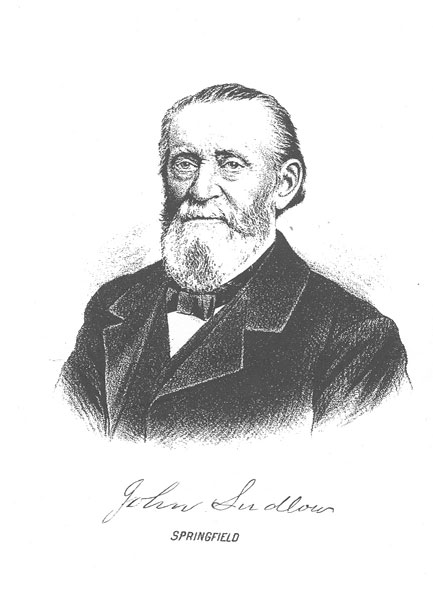
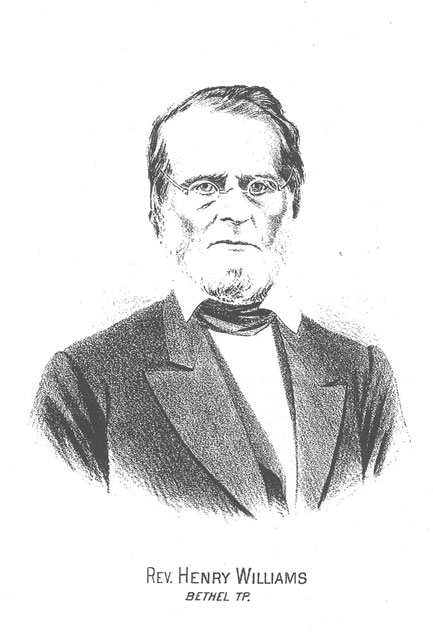
| |
|
|
|
| |
|
|
|
HISTORY OF CLARK COUNTY. INTRODUCTION. CONCERNING the spirit which pervaded the moral atmosphere that surrounded the early settlers and supplied the elements of a vigorous practical life, with all the accompanying hardships of privations and toil, it may well be said, "Of me what know ye, men of puny age? I am a rumor, an uncertain story, A vanished smoke, a scarce remembered page!" It has in all ages been esteemed a duty and privilege to honor the memory of those whose labors and self-denial have resulted in good to their country and to their race. Such tribute is justly due to those who laid the foundations of our present happy establishment here in Clark County. How well the requirements of such a tribute have been fulfilled by the pages of this volume must be decided by the mass of readers into whose hands the work will fall. Some one has said truly that " no history is complete until its successor has been written." This, then, may serve as a " datum-plane" from which to reach by comparison a more extended or more complete work in the future. That the great bulk of facts connected with the history of the county is here congregated for the first time, there can be no doubt; it must also be true that many important details are not here recorded, the reasons for their absence being obvious. The actors in those early scenes have nearly all made their final exit, while of the few surviving, many are "sore with the infirmities of age" and the deeds of their youth are forgotten, or but dimly remembered; many of the private papers and family records have been either destroyed, lost, or are in the possession of descendants whose present whereabouts are not known. In conclusion, the writer desires to thank those who have so kindly rendered assistance, and have granted access to public and private records and papers. The labor has been tedious, but the willingness of nearly all who have been applied to for information has made the work a pleasure. Only three or four of those who have been called upon for information have refused, or have evaded giving it. None save those who are engaged in collecting data can realize the difficulty of the task now, as compared with an earlier date. Had this been attended to while the pioneers were living, very many interesting incidents could have been found wherewith to have enlivened the general theme. A. P. S. SPRINGFIELD, April, 1881. 214 - HISTORY OF CLARK COUNTY. THE BATTLE OF PIQUA. As the coming of the white race to the soil of what is now Clark County was heralded by the uproar of battle, it is deemed fit to mark the occasion as the point from which this history is to continue. The following account of the engagement was recently prepared, and is from the pen of a prominent citizen, who is one of the few who have made the history of pioneer times an especial study. There are many floating traditions in regard to this expedition, while the recorded evidence is very meager. There are no known official reports by which these traditions may be verified or corrected. Many of the stories have undoubtedly been somewhat warped in the transmission from a former generation, either by forgetfulness or misunderstanding, or both. On account of the contradictory nature of many of these details, the whole must necessarily be viewed in the light of rational probability. After mach research, the subjoined account is believed to contain the essence of all that is now known of the battle, nor is it likely that more will ever be learned. unless it be by the discovery of relics and documents, which are not now known to be in existence. THE SIEGE OF THE OLD INDIAN TOWN OF PIQUA, AUGUST 8, 1780.* "The old Indian town of Piqua was situated about five miles west of the present site of the city of Springfield, Ohio, on the north bank of Mad River. In going there from the city named, you pass down the Mad River until you reach a point where the stream runs in a westerly direction out into a large basin or prairie, which gives some evidence of having at one time been the bottom of a small lake. At the time the Indians occupied the place, the prairie was about three miles long and one mile wide. It is now fenced off into farms under the highest state of cultivation. At the upper end of this beautiful open landscape, the river gracefully bends round and silently flows to the south; then again toward the west, continuing in the latter direction until it reaches the lower end of the prairie, where it sweeps round to the northwest, and is soon lost to sight in the forest below. At the time referred to, on the south side of the river was another prairie, bordered by the low hills in the distance. Over this prairie ran the road from the old Indian town of Chillicothe, about twelve miles south of Piqua, and reached the river on the south bank, nearly opposite the latter town. About two-thirds of the distance down the prairie, on the north side of the river, and further progress was obstructed by what might be called a willow swamp, stretching across the prairie from the southwest to the northeast, stop ping about one or two hundred yards short of a limestone cliff, rising out of the north border of the basin or prairie. Behind the willow swamp was located the town of Piqua, and behind the town was a round-topped hill, rising up _100 feet from the level of the plain. From the crown of this hill the country might be overlooked for as much as five miles up and down the river. The general appearance of the locality, in its almost primitive wildness, must have been of unsurpassed loveliness. The rocks on the north side of the prairie rose up out of the same like a stone wall, twenty-five or thirty feet high, running down in the direction of the round-topped hill back of Piqua; before reaching which it was suddenly cut off, leaving an open space between the hills and rocks. This was covered with a * By Thomas F. McGrew. HISTORY OF CLARK COUNTY. - 215 thick growth of forest trees of a low and bushy growth. It was impossible to pass up over this wall of rocks in large companies, except in one or two places, where they inclined to drop to the level of the prairie. At one point, there was an opening cut down from the point of the cliffs, and quite through them to the lowland by some natural force, and was so narrowed that not more than one person, certainly not more than two, could pass up or clown through the cut at the same moment of time. This place was concealed from observation by a heavy undergrowth of timber, and could be easily obstructed, and could check the advance of a victorious army. The approach to the lower part of the town was defended by a stockade fort, not common with Indians as a means of defense. It included a space of about two acres. The hill, the wall of rocks, the open plain, carpeted with wild flowers of all colors; the silver line of the river, the hills far off in the distance, crowned with forest trees, and the long line of Indian wigwams, marking their locations by curling wreaths of smoke, as it rose up from their fires, with here and there a cornfield, indicated that the Indians had selected this place not only for its natural strength, but as well for its fertility and beauty. The Indian children of the town could play before the cabin doors in the lowland. free from the apprehension of danger, while the warrior on the hill-top might sweep the whole country on the lookout for an approaching enemy, and, by an agreed signal. warn the whole tribe in a moment. In August, A. D. 1780. Piqua was quite populous. In addition to the Shawnees, 300 Mingoes were there as allies to aid in the defense of the place. Piqua is said to have contained, at one period, nearly four thousand Shawnees. The town was built after the manner of French villages. The houses extended along the river more than three miles, and were in many places more than twenty poles apart. The celebrated, hardened villain, Simon Girty, was the leader of the Mingo braves, as allies of the Shawnees. He had been educated in, and had adopted with savage delight all, the cruelties practiced by the Indians, and stood near, two years later, in the presence of his old friend Col. Crawford, and derived fiendish enjoyment from witnessing his agonies while burning at the stake. Perhaps he remembered, even in the presence of this awful event, that the hand of one of the daughters of Crawford had been denied to him before he deserted to the Indians. This would be dreadful revenge, but Girty was a dreadful savage. A prisoner among the Indians who met with the scoundrel described him as a man with dark, shaggy hair, low forehead, contracted brows, meeting above his short, flat nose, gray, sunken eyes, and thin, compressed lips, with a wicked expression of countenance that made him seem the picture of a villain. C. W. Butterfield writes that " all the vices of civilization seemed to center in him, and by him were ingrafted upon those of the savage state, without the usual redeeming qualities of either." He moved about through the Indian country during the war of the Revolution and the Indian war which followed, a dark whirlwind of fury, desperation and barbarity. In the refinements of torture inflicted upon helpless prisoners, as compared with the Indians', theirs seemed to be merciful. In treachery, he stood unrivaled. The prisoner who became his captive must abandon all hope of pity, and yield himself to the club, the scalping-knife and the indescribable agonies of the stake. No Indian, drunk, was a match for him. He swore horrid oaths. He appeared like a host of evil spirits. He was called a beast, and a villainous, untrustworthy cur dog. This savage, compounded of all the meaner qualities that could or might disfigure the life of a human being, it has been affirmed, had some rare moments of better emotions. He met with his former acquaintance, Simon Kenton, while a prisoner of the Indians, under sentence of death, 216 - HISTORY OF CLARK COUNTY. and called him his dear friend, and interfered and saved his life. He looked the scoundrel, with a gloomy stare, while "o'er his eyebrows hung his matted hair." The celebrated chief of the Shawnees, Catahecassa, or the Black Hoof, was born in Florida, and had bathed and fished in salt water before he settled on Mad River. He was present at the defeat of Braddock, near Pittsburgh, in 1755, and was engaged in all the wars in Ohio from that time until the treaty of Greenville, in 1795. He was a man of sagacity and experience, and of fierce and desperate bravery, and well informed in the traditions of his people. He occupied the highest position in his nation, and was opposed to polygamy and the practice of burning prisoners. He was a man of good health, and was five feet eight inches in height. He died in Wapakoneta at the age of one hundred and ten years, A. D. 1831. Without being able to find it so stated, after some investigation, in so many words, I believe that this Indian was the chief leader in the defense of Piqua when the place was invested by Gen. Clark. To prevent, if such a thing could be possible, almost continual depredations of the Indians upon the border population, an expedition was organized to march against their towns on the Mad River. This army rendezvoused at the place where Covington, in the State of Kentucky, now stands. It ascended the Ohio River from Louisville in transport boats, which also brought provisions and stores. On the opposite of the river they built a block-house, in which to store provisions and form a base of supplies. This house was the first one built on the site where the city of Cincinnati now stands. On the 2d of August, A. D. 1780, Gen. George Rogers Clark moved, with an army of 1,000 men, from the point named to the Indian towns on Mad River, located in and near to the territory which is now included in Clark County, Ohio. The distance to be marched was about 80 miles, through an untracked forest, over which, with great labor, the soldiers cut and bridged, when found necessary, a road for the passage of horses and pack-mules, and one six-pounder cannon. The soldiers marched without tents, beds or personal baggage. Their rations for a thirty-days campaign were six quarts of corn, one gill of salt, with what green corn and wild game they might pick up on the march. Any meat they obtained was cooked on sticks set up before the fire. Sometimes green plums and nettles were cooked and eaten by the men. The impression obtained, not only in the settlement, but with the soldiers, that if the army was defeated none of the men would escape, and that in such events the Indians would fall on the defenseless women and children of Ken tucky and massacre them, burn their towns and villages, and lay waste the country. It seemed to be a choice either that the white settlers or the Indians must be destroyed, and both parties regarded it in the same light, and acted with the calmness and bravery usual to forlorn hopes, formed of soldiers commanded to encounter some desperate exigency. Daniel Boone, the pioneer Indian fighter, acted as a spy for the expedition. The skill and vigilance which entered into the campaign will be demonstrated by a presentation of the manner, form and conduct of the army while on the march. It was separated into two divisions. Gen. Clark commanded the first and Col. Logan the second. Between these two columns marched the pack mules and. the artillery. The men in each division were ordered to march in four lines, about forty yards apart, with a line of flankers on each side, about the same distance from the right and left lines. In the event of an attack from the enemy in the front it was to halt, and the two right lines would wheel to the right, and the two left lines wheel to the left, and the artillery would advance to the front, the whole HISTORY OF CLARK COUNTY. - 217 forming a complete line of battle. The second division would form in the same manner, and advance or act as a reserve. By calling in the right and left flanking parties, the whole force would present a line of battle in the form of a square, with the pack mules and the baggage in the center. An attack on either flank, or the rear, the same maneuver would put the army in the most favorable position for defense or assault. On the 6th day of August, A. D. 1780, the army arrived at the Indian town of old Chillicothe, only to find it burned and the inhabitants gone. On the 7th, some days sooner than the Indians had expected, it drew up in front of Old Piqua. A soldier had deserted to the Indians before the army arrived at the mouth of the Licking, and gave notice of the approaching expedition. The attack commenced about 2 o'clock P. M. on the 8th day of August, and lasted until 5 in the evening. The assaulting forces were divided into three separate commands. One, under the command of Col. Lynn, was ordered to cross the river and encompass the town on the west side. To prevent this move from being successful, the Indians made a powerful effort to turn the left wing of the assaulting party, which Col. Lynn successfully defeated by extending his force a mile to the west of the town. Col. Logan, with 400 men under his command, was ordered to march up the south side of the river, concealing, if possible, the move from the observation of the Indians, and cross over the stream at the upper end of the prairie, and prevent their escape in that direction. Gen. Clark remained in command of the center, including one six-pounder cannon. He was to assault the town in front. This disposition of the forces, with a simultaneous assault made by the separate commands, promised, if well executed, the capture of the town and a complete rout of the Indians, with the death of a great number. According to the custom of the times, no prisoners were made. All that were captured were put to death. The Indians, according to their plan of defense, could not safely retreat, if defeated, over the round-topped hill, for the elevation would bring them within sight and range of the American rifle, and the cannon, with the command of Gen. Clark, which, in appearance and sound, created more fear than it did harm. Neither could they escape out of the upper end of the prairie, for Col. Logan and his 400 men had been sent to intercept them there; nor to the north, for this route was too much obstructed by the rocks; nor to the west or lower part of the town, the location of the stockade fort, for at this point the battle raged with the greatest fierceness, under the command of Col. Lynn. The constant crack of the rifle in its deadly work, the shouts of the white soldiers, the yells of the Indians, the screams of the wounded and dying, the distant roar of the cannon, disclosed this to be the point where defeat was to be accepted or victory won. Simon Girty, who never was a constant friend to any party, " gnashing his teeth in impotent rage," ordered his 300 Mingo Indians to withdraw from what may have appeared to him an unequal fight. This moment of time, near the same hour of the day one hundred years ago, was a dark and doubtful crisis in the history of that part of our country which is now regarded as the most beautiful, fertile and thickly populated part of Ohio. If Clark's army had been defeated, we cannot doubt but that every white soldier would have been put to death, and the State of Kentucky invaded by the Indians; and what would have followed on the border can only be conjectured by what we have been told in the history of Indian wars. The Shawnees, disheartened by the withdrawal of their allies, and pressed 218 - HISTORY OF CLARK COUNTY. by the fierce, rather desperate fighting of the whites, which they denominated madness," or fate, so reckless were the soldiers in exposing their lives. Against "madness," the Indians never contend. They crave up the fight and slowly fell back up the prairie, partly concealed by the tall grass, the wigwams, and the trees in the willow swamp. They fought as they retreated, not for victory. but for their lives, until they reached the rocks, beneath which they had concealed their women and children. Their situation was now worse than it had been at the commencement of the conflict, for they had passed all the low ground, making a retreat to the north practical, with the exception of the opening cut clown from the top of the cliff already described, and up through this, tradition claims, they marched' out into the hills. If Col. Logan had executed his part of the plan with greater rapidity, the Indians would have been cut off from this place of retreat, and a great number of them put to death. Some persons assert that Col. Logan marched to a point where Mad River meets with the waters of Buck Creek before he crossed the river, and then marched down the east side thereof to execute his part of the general plan. He marched about three miles, according to all the authorities, and that is the distance fiom the site of the Old Piqua to the mouth of Buck Creek. It follows that, if he did go so high up the river as the point named, that he would have traveled six miles before he could bring his men into action. This view of the maneuvering, after looking over the location of the battlefield, seems so unmilitary that I cannot accept it. I presume that he made a detour from the river, that his force might not be observed, as secrecy was one of the conditions of success. To accomplish his part of the general plan, he may have marched three miles, but certainly not six. Let this point be settled as it may, there is no dispute about the fact that when he got his men into position, the battle had been fought and won, and the Indians gone. The loss was about equal-twenty men on each side. On the 9th of August, the stockade fort, the shot-battered cabins, and the corn-fields, were destroyed. On the 10th, Gen. Clark, with his army, left for Kentucky. This campaign left the Indians without shelter or food. They had to hunt for their support and that of their families, leaving them no time for war, and the border settlements lived in peace and without foar. This once powerful nation of the Shawnees had resided near Winchester, Va., then in Kentucky and in South Carolina, after that on the Susquehanna, in the State of Pennsylvania. From this last-named point they emigrated to the banks of the Mad River, and remained until driven from Piqua by Gen. Clark. The Shawnees are now no more. The nation which gave birth to the great chiefs so intimately connected with the early history of Ohio, such as Blue Jacket, Black Hoof, Cornstalk, Captain Logan, Tecumseh, and the latter's vagabond brother, the Prophet, has gone out of history. Thomas L. McKenney, late of the Indian Department, Washington, says: " Finally, a remnant of about eighty souls, to which this once fierce and powerful nation had dwindled, removed, in 1833, to the western shore of the Mississippi." NOTES ON THE BATTLE OF PIQUA. There are many accounts of this affair, both written and traditional. Nearly every writer who has treated of the early history of the West has something to say about George Rogers Clark and his achievements, among which this one is mentioned, yet there is an unsatisfactory want of such details and particulars as would be found in the official reports of a modern engagement. There are two accounts in Howe's "Historical Collections of Ohio," one of which is reproduced from another work, while the other was from an article (fresh HISTORY OF CLARK COUNTY. - 219 and new when Howe wrote) written, or dictated, by the late Abraham Thomas, of Miami County, who was a soldier in Clark's army. Thomas calls it a " bloodless victory," yet he says they " took possession of all the squaws and papooses, and killed a great many warriors," which would hardly have been accomplished without some white man getting hurt. The most common statement is that the Indians lost seventeen warriors, and Clark a like number. There are some proofs that the whites suffered the loss of quite a number, and these scraps of evidence are now within reach of the present generation; for instance: The venerable Ezra Baker, of Mad River Township, who is now eighty-four years of age, remembers having seen the trench where Clark's men were buried, opened, and the remains of two or three men exposed. The spot where the Indians were buried was also determined by the same party of men. This was done on a sort of wager, or as proof that a certain stranger (who had made his appearance in that settlement a few days before, claiming to have been one of Clark's men) was not an impostor, but knew whereof he spoke in a blustering manner. Mr. Baker was about ten years of age at the time, and, boy-fashion, he followed the party and witnessed the result. The writer was one of a party of citizens, composed of Ezra and Leander Baker, Thomas Kizer (the veteran surveyor of Southwestern Ohio), William Whiteley, Esq., and others of the representatives of the early settlers, which party spent several days in examining the battle-ground of Old Piqua, with the view of more definitely ascertaining the site of the ancient stockade, council house, and other points of interest connected with the locality. This was in July and August, 1880, just before the Clark-Shawnee Centennial, and, while no material evidence was found to indicate the burial-place of the whites, there is little doubt that the flag-staff at present standing in Mr. Baker's orchard, is within fifty feet of the spot. The reader must remember that the whole ground is now in a high state of improvement, and digging pits and trenches can only be done to a limited extent. There were some remains of the stockade found in several places, the relative positions of which indicated its boundary lines; these were measured and examined by Col. Kizer, and duly noted in his field-book; other measurements and observations were also made. Various notions have from time to time been entertained, by different people, in regard to the movements of Logan's command (Clark's right wing) during the fight. Without going into tedious details, it may not be amiss to call attention to some items which present themselves to any one at all familiar with the topography of the field of Piqua: First, the rocky canon of Mad River, known as "Tecumseh's Rifle Range," would hardly be entered by any commander, under the uncertain circumstances which surrounded Col. Logan, without first knowing that "the defile" was clear; second, to have marched eastward across the highland, which rises within the bend of the river, would have been going away from the scene of action, and away from the Indian rear. Both of the above suppositions are averse to his having " gone up the river three miles," or "to the confluence of Buck Creek" with Mad River. The little valley of the stream known as Abberfelda Creek (which runs near the Sintz property), in its natural, unobstructed condition, would afford a tolerably safe route, and one leading in the direction of the rear ground of the enemy; besides, this, circuit would extend about three miles in distance, which would be in accordance with the distance named in the early accounts of the battle. The narrow defile through the cliffs is to be seen to-day, just as it was when the Indians filed through it on their way out of Clark's environment, except that the "floor," or rocky surface at the bottom, was leveled off, and in some places 220 - HISTORY OF CLARK COUNTY. , the passage was widened by the early settlers, who used it as a roadway from the valley to the uplands. This defile is worthy of a visit by any one at all interested in natural scenery with historic associations. The entrance is so hidden by the configuration of the cliffs, and by foliage, as to be unobservable by the passer-by, unless by an especial effort. There is a wide, bowl-shaped valley or park just behind the old Indian town, which is so situated as to be entirely out of sight from any point or direction from which an enemy would be likely to approach; this valley is watered by half a dozen large springs, and penetrated by two or three narrow ravines, which open by small pathways to the uplands in the rear. This was the assem bly-ground, where the Clark-Shawnee Centennial was held. For that occasion it was named Mingo Park. From its location and natural fitness, it is not. unlikely that this park was used as a cover for the non-combatant portion of the Indian inhabitants. During the early settlement of "New Boston " and vicinity, many relics and marks of the Indian occupations and Clark's engagement were found, and even now a rusty bayonet, or some other warlike article, is occasionally plowed up. Aside from these, nothing remains but the historic topography and the trail itions of the day. "The scene around is peaceful now, And broken is the battle spear, But nations have. been made to bow Beneath the yoke of conquest here." TECUMSEH AND PIQUA. As this book contains an illustrated sketch of this celebrated Indian chief, any further remarks would be superfluous were it not true that the name of Tecumseh is to some extent connected with the early history of this particular county. That he was born here is as well established as any other unrecorded event in this connection. There has been some confusion over the Indian name " Piqua," which, like many other names, was used in a sort of general way, and was applied to more than one locality. As to the origin of the word, or its complete signification, tradition informs us that the word " Piqua" signifies " a man formed out of ashes." It runs that many years ago the braves of the Shawnees were seated around their camp-fire, when a great puffing was observed among the ashes, and suddenly a full-grown man stepped forth-the first of the Piqua tribe-a sort of "Phoenix," as a more refined mythology called it. Of course all this was in accordance with the Indian notion of things: No "big" Indian was ever born, like other people, but came some way all at once, with the entire make-up of paint and bluster, and bloody knives sticking fast to him, and ready for business. The first Piqua was in this county, and was afterward the site of the now vacant town of New Boston, which see. This Piqua has entirely disappeared as a name, except as a special designation of an historical point. After the Shawnees were driven from here, they established themselves in what is now Miami County, and named that place Piqua also. There was another town of the same name in Southern Ohio. The second point yet retains the name, and is the city of Piqua, Miami County, Ohio. The third has been changed to Pickaway, and is the name of one of the counties of the State. This much to explain how the confusion in regard to the birthplace of Tecumseh could occur: Drake's "Life of Tecumseh," published in 1841, furnishes the following: HISTORY OF CLARK COUNTY. - 221 "Some diversity of opinion has prevailed as to the birthplace of Tecumseh. It is stated by several historians to have been in the Scioto Valley, near the place where Chillicothe now stands. Such, however, is not the fact. He was born in the Valley of the Miamis, on the bank of Mad River, a few miles below Springfield, and within the limits of Clark County. Of this there is the most satisfactory evidence. In the year 1805, when the Indians were assembling at Greenville, as it was feared with some hostile intentions against the frontiers, the Governor of Ohio sent Duncan McArthur and Thomas Worthington to that place to ascertain the disposition of the Indians. Tecumseh and three other chiefs agreed to return with these messengers to Chillicothe, then the seat of government, for the purpose of holding a `talk' with the Governor. "Gen. McArthur, in a letter to Drake (the author), under date of November 19, 1821, says: "When on the way from Greenville to Chillicothe, Tecumseh pointed out the place where he was born. It was in an old Shawanoe town, on the north west side of Mad River, about six miles below Springfield." There are many other bits of evidence tending to establish this fact beyond a doubt. Comment upon the life and deeds of this Indian would be out of place here, as he is referred to by various other contributors to this book. That he figured in some of the early scenes of this county is beyond dispute. In this connection, the recollections of the late John Ross, of German Township, are given as alluding to Tecumseh and the state of affairs when he was in his glory. "In those days, Indians were very numerous and quite hostile, so that the settlers lived in constant dread of them, many times being compelled to collect together for mutual protection. In 1806, during one of their outbreaks, all the whites for miles around collected at a place a few miles southwest of Springfield, since known as Boston, where they built a block-house. Col. Ward, Simon Kenton, and a few other of the prominent men of the party, went out and made a treaty with the Indians, which was kept about two years, or until 1808, when this treaty was renewed at the then village of Springfield. The militia and many other of the settlers met about sixty Indians, among whom were five or six chiefs, principal among whom was old Tecumseh. Mr. Ross remembered him as a tall, lithe figure, of good form, and fine, commanding appearance. He made a speech at the treaty, which, for an Indian, was remembered as being full of oratory, and remarkable for ease and grace of delivery. A white man had been murdered, for which the murderer was demanded, or the whole tribe would be held accountable. "Can you," asked Tecumseh, " hold your whole people accountable for a murder committed by one of your bad men? No; then you cannot hold us accountable." In 1810, a false alarm was given, and again they gathered in different points for protection. The alarm had been given by some one out on the "Beech" who had heard the report of a gun, and, not waiting to learn the cause, ran all the way in to the settlement and spread the news that the Indians were coming." INDIAN OCCUPANCY. To follow the intricate maze of aboriginal intermixtures of tribes and nations, or to locate many of the tribal subdivisions of those old nomads, would require more time and space than the plan of this work will admit. The follow ing extract from a paper entitled "Indian Migration in Ohio," lately published by the Western Reserve and Northern Ohio Historical Society, and prepared by C. C. Baldwin, Esq., of Cleveland, seems to express about all there is to say on the subject, so far as this history is concerned. 222 - HISTORY OF CLARK COUNTY. "We find, then, about 1640, the Eries ranged in Ohio from near the east end of Lake Erie, to near the west, and held the country back (to) and part of the Ohio River. That everywhere west were Algonquins, probably the Miamis and Ottawas pressing upon them. That below them on the Ohio were the Shawnees, and southeast of them their kindred the Andastes, were the Algonquins again. * * * * "The early history of the Shawnees is scantily traced, their positions did not bring them within the early acquaintance of the whites, or the knowledge of history. When they applied to LaSalle for French protection, he replied they were too remote. * * * * * Within the period of history, they pushed into Ohio from Kentucky, and the Cumberland River is called, in the early French maps, the rivers of the ancient Shawnees. That was not the first time they had been upon the Ohio. After the destruction of the Eries, they seem to have been next south upon that river, and I cannot but believe that while the Eries were at peace with the Shawnees lived next south, probably in Southern Ohio and Kentucky. * * * * * In the historical map of Ohio, appearing in 1872 in Walling & Gray's atlas, and prepared by Col. Charles Whittlesey, the Indian occupation of Ohio appears as follows: The Iroquois and tribes adopted by them, in Northeastern Ohio, including the valley of the Cuyahoga, the Tuscarawas and Wheeling Creek. The Wyandots and Ottawas occupied the valleys of the streams flowing into Lake Erie, west of the Cuyahoga, but no farther up the Maumee than Fulton and Henry Counties. The Delawares the valley of the Muskingum; the Shawnees the Scioto and its tributaries, and as far east as to include Raccoon Creek, and west including parts of Brown and Highland Counties. "The Miamis were in the western part of the State, including the valleys of the Great and Little Miami, and the upper part of the Maumee. "These were, in a general way, the limits of the tribes in Ohio from 1754 to 1780. "There were also Mohawks, Tuscarawas, Mingos and (other) descendants, not named in a tribal way of the ancient Eries and Neutrals. These named tribes were all intrusive within the period of history. "The Ottawas and Wyandots, although of different generic stock, lived much together, perhaps partly through sympathy in a similar downfall. They had been allies against the Iroquois, and in succession overcame. "The Shawnees and Cherokees seem to have been the foremost in the great Indian migrations which met.the Mound-Builders. It is thought singular that there are no traditions of that move. "But when we think how faithless are the traditions among the whites of one hundred years ago, almost sure to be very wrong, even of one's great-grandfather, and that the Mound-Builders apparently left Ohio several hundred years ago, at least, the want of memory of that event does seem singular (?). "Indians were always moving and warring. But the same careful linguistic study in America, that has told so much in the old world, will tell us something of the new." Those who have attempted to glean the facts of the dim unrecorded past, for historcial use, will appreciate Mr. Baldwin's remarks in regard to the unreliability of even the latest traditions. Many writers are inclined to the opinion that the Wyandots were among the earliest tribes on this soil, but, from the latest investigations, the conclusion seems to be that they were only a sub-tribe of the Eries and Iroquois. The following letter is here inserted as being pertinent to this subject. though taken from the proceedings of the late Clark-Shawnee celebration HISTORY OF CLARK COUNTY. - 223 THE SHAWNEE INDIANS. The following paper, prepared by Mr. C. C. Royce, attache of the Interior Department at Washington, D. C., which preparation was by request of Gen. Keifer, gives in complete form, but condensed, a history of the Shawnees, from the earliest days of the country to the present, taken from ancient records preserved at Washington. It formed a portion of the papers introduced at the celebration and can be read at leisure with interest and profit: SMITHSONIAN INSTITUTION, BUREAU OF ETHNOLOGY, WASHINGTON, D. C., August 4, 1880. HON. J. WARREN KEIFER, SPRINGFIELD, OHIO: My dear General: Our conversation of Friday last has troubled me a little. Your suggestion that I prepare an article on the history- of the Shawnee tribe of Indians to be read at the approaching centennial anniverasry of the victory of Gen. George Rogers Clark over that unfortunate people, was one in which it would under favorable circumstances have been especially gratifying to me to comply. There are two reasons, however, why it would be next to impossible for me now to give such a full and satisfactory account of the Shawnees as would stand the test of reasonable criticism: First-The time between now and the occurrence of the anniversary is too brief, and, second-My investigations of the subject-matter of such an article are as yet by no means complete. In spite of these serious drawbacks, however, I am willing to give a brief outline of my investigations and deductions, with the full understanding that it is to be considered as merely tentative and subject to such corrections-either of a minor or radical character-as the results of more elaborate inquiries may seem to justify. The Shawnees were the Bedouins, and I may almost say the Ishmaelites of the North American tribes. As wanderers they were without rivals among their race, and as fomentors of discord and war between themselves and their neighbors their genius was marked. Their original home is not, with any great measure of certainty, known. It is altogether improbable that it ever will be. Many theories on the subject have been already advanced, each with a greater or less degree of plausibility. More doubtless will, from time to time, be offered, but after all, the general public will be restricted to a choice of probabilities and each must accept for himself that which to his mind shall seem most satisfactory and convincing. First-In the year 1608, Capt. John Smith, of the Jamestown colony, in Virginia, proceeded upon an exploring expedition up the Chesapeake Bay. In the course of this expedition, he encountered and held communication with numerous nations or tribes of Indians then occupying the shores of the bay and its immediate vicinity. All these Indians lived in continual dread of a tribe known to them by the name of " Massawomekes." In the language of Smith: " Beyond the mountains whence is the head of the river Patawomeke (Potomac) the savages report, inhabit their most mortal enemies, the Massawomekes, upon a great salt water, which by all likelihood is either some part of Canada; some great lake or some inlet of some sea that falleth into the South Sea. These Massawamekes are a great nation and very populous." Smith further relates that the other tribes, especially the Pottawomekes, the Patuxents, the Sasquesahannocks and the Tockwoughes, were continually tormented by them, complained bitterly of their cruelty and were very importunate with him that he should free them from their assaults. This Smith determined to do, and, had not his project been vetoed by the Colonial Council, the history and 224 - HISTORY OF CLARK COUNTY. identity of this people would not now, in all likelihood, be enshrouded in such a mantle of doubt. He did, in fact, encounter seven canoes full of them at the head of Chesapeake Bay, with whom he had a conference by signs, and remarks that their implements of war and other utensils showed them to be greatly superior to the Virginia Indians, as also their dexterity in their small boats made of the bark of trees, sewed with bark and well " luted " with gum, gave evidence that they lived upon some great water. When they departed for their homes, the Massawomekes went by the way of what Smith denominates Willoughby's River, and which his map and description show to be the modern " Bush River," which is on the west side of the bay and trends in a northwest direction. The map accompanying the London edition of 1629, of Smith's Travels, located the Massawomekes on the south shore of a supposed large body of water in a northwest direction, and distant from the head-waters of the Patawomeke (Potomac) River some twenty-five leagues. This, making reasonable allowances for the discrepancies in topography, places them without doubt along the south shore of Lake Erie, with an eastern limit not remote from the present city of Erie, Penn., and extending thence westward. I am aware that at least two eminent authorities (Gallatin and Bancroft), whom it would almost seem the height of presumption for me to dispute, have assumed that the Massawomekes and the five nations were identical. The more closely I have examined the evidence, the more thoroughly am I convinced of their error in this assumption. At that date the most westerly of the five nations-the Seneca-was not in possession of the country west of the Genesee River. Extending from that neighborhood westward to and beyond the Niagara River and along the south east shore of Lake Erie, the country was occupied by a numerous nation known to history as the Attiwandaronk or Neutral Nation, whose power was broken and the tribes destroyed or dispersed by the Five Nations, but not until 1651, more than forty years subsequent to Smith's observations. To reach the country of the Five Nations from Chesapeake Bay, an almost due north course, or that of the Susquehanna River, would have been the natural and most convenient route to pursue. A route leading beyond the mountains, in which the Potomac River had its sources, would have been neither a natural nor convenient one for reaching the shores of Lake Ontario and vicinity, then the country of the Five Nations. It is highly improbable that war parties of this great Iroquois confederacy should have followed such a route in the face of the fact that the only tribes living along the line of the more direct route held them in great fear, and would gladly have allowed them to pass without molestation. I assume, then, that the villages of the Massawomekes occupied the south and southwest shore of Lake Erie, and that they controlled the intermediate country to the Alleghany Mountains as a hunting range, frequently extending their war and predatory excursions to the territory of tribes east of the mountains and along the upper portion of Chesapeake Bay. Second-From the accounts of early French travelers and the relations of the Jesuit missionaries, we are advised for the existence during the first half of the seventeenth century of a nation of Indians who were called by the Hurons, "Eries," by the Five Nations, "Rique," and by the French, the "Chat, or Cat Nation." According to Sagard's History of Canada, published in 1636, the name of Chat, or Cat, is thus accounted for: "There is in this vast region a country which we call the Cat Nation, by reason of their cats, a sort of small wolf or leopard found here, from the skins of which the natives make robes, bordered and ornamented with tails."
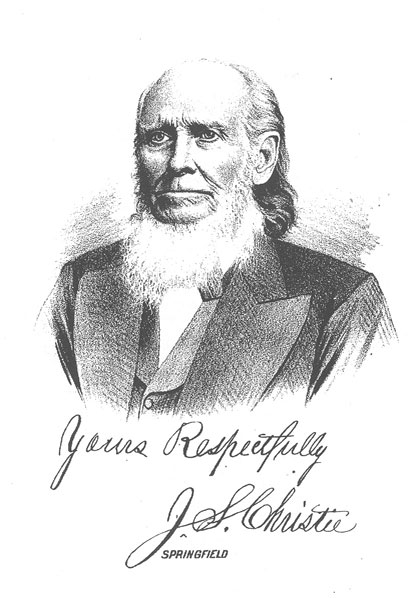
PAGE 225 - PICTURE OF J. S. CHRISTIE - SPRINGFIELD PAGE 226 - BLANK HISTORY OF CLARK COUNTY. - 227 This nation occupied a tract of country on the south shore of Lake Erie, identical with that to which I have assigned the Massawomekes of Smith. They were visited as early as 1626, according to the Jesuit relations, by two missionaries, Lagard and d'Allyon, who made an unsuccessful attempt to establish a mission among them; nor did the Jesuits, with the constant zeal and persistence so characteristic of them, ever succeed in obtaining a foothold with the tribe. At this time and for many years thereafter, they are spoken of as very numerous and powerful. A war having broken out between them and the Five Nations, the Eries were utterly overthrown and dispersed about the year 1655. From this date we find no mention of their existence as a nation. Schoolcraft, in his bulky and ill-assorted work on the " History, Condition and Prospects of the Indian Tribes," adopts the theory that the Eries and Neuters were one and the same people. That he is certainly mistaken, I hardly think there is room for reasonable doubt. The evidence of his error is abundant in the Jesuit relations, but I have only space to cite the testimony of Father Breboeuf, who visited the Neutral Nation in 1640, and remarked that only four towns of the latter nation lay east of the Niagara River, ranging from east to west, toward the Erielhonous or Chats. Also in speaking of Niagara River he says: "It falls first into Lake Erie or of the Cat tribe, and then it enters the Neutral grounds." Bressani, who spent some years in the country, also in his Breve Relatione, as is remarked by Shea, places the Neuters north of Lake Erie, and the Eries, south. Third -Cadwallader Colden published his History of the Five Nations in London in 1747. He begins with the traditional period of their history. Tradition, with Indians as with white people, is often utterly unreliable and not unfrequently totally incredible. The traditions of the events immediately preceding European settlement, from the recentness of their occurrence and their consequent freshness in the Indian mind, notwithstanding the average tendency to exaggeration and boastfulness, may, however, be esteemed as not wholly unworthy of confidence in the general facts related, regardless of their highly colored details. These traditions all concur •n the assertion that the Five Nations, a short time previous to the period of French settlement in Canada, lived near the present site of Montreal; that, as a result of a war with the Adirondacks, they were forced to leave their own country and fly to the banks of the lakes on which they subsequently lived, where the war was at intervals renewed and was still in progress at the time of the French occupation of Canada. Here they applied themselves to increasing their proficiency in the use of arms, and in order to raise the spirits of their people to the Sachems, "turned them against the Satanas, a less warlike nation who then lived on the banks of the lakes, and who, in the course of a few years, were subdued and driven out of their country." Colden doubtless borrows this relation from the account of Bacqueville de la Potherie, who was in Canada for several years anterior to 1700, and whose history of America was published about 1720. Charlevoix also has a similar relation. Both these authors, doubtless, as Judge Force has remarked, borrowed from the narrative of Nicholas Perot, who lived among the Indians for more than thirty years subsegent to 1665, and who enjoyed their confidence in an unusual degree. He relates that the Iroquois had their original home about Montreal and Three Rivers; that they fled from the Algonquins to Lake Erie, where lived the Chaouanous, who waged war against them and drove them to the shores of Lake Ontario. That after many years of war against the Chaouanous, and their allies, they withdrew to Carolina., where they now are. That the Iroquois (Five Nations) after being obliged to quit Lake Erie, withdrew to Lake Ontario, 228 - HISTORY OF CLARK COUNTY. and that after having chased the Chaouanous and their allies toward Carolina, they have ever since remained there in that vicinity. Here, then, we have in the earliest history of the country the names of three tribes or nations, who, by the accounts of different and widely-separated travelers, occupies the same region of the territory, viz.: First-The "Massawomekes" of Smith, who lived upon some great lake beyond the mountains in which the Potomac River has its sources, and which Smith's map shows to be in the location of Lake Erie. Second- The "Eries, or Chats," of the Jesuit relations, who occupied almost the entire south shore of Lake Erie; and Third-The "Satanas," of Colden, (who, in the vocabulary preceding his work, gives the name as the equivalent of Shaonous and) the " Chaouanous," Perot, who lived on Lake Erie, and from the teat of the narrative, evidently on the south shore to the west of the Five Nations. By all the accounts given of these people, they were, comparatively speaking, very numerous and powerful. Each occupied and controlled a large region of territory in the same general locality; each had, so far as history and tradition can throw any light upon the subject, long been the occupant thereof. The fact that neither of these authorities speaks of more than one nation occupying this region of country, and neither seems to have had any knowledge or tradition of any other nation having done so, coupled with the improbability that three numerous and warlike nations should, within the historic period, have occupied so limited a region as the south shore of Lake Erie-and one which by water communication would have been so easily accessible for each to the other-without any account or tradition having survived of their intercourse, conflicts and destruction of one another, to my mind is little less than convincing evidence of the fact that three such distinct nations never had a cotemporaneous existence, and that the Massawomekes, Eries and Satanas, or Chaouanous, were one and the same people. I am aware that the Chaouanous, or Shawnees as we now denominate them, speak the Algonquin tongue, and that the Eries have ever been linguistically classed as of Iroquois stock; but of the latter fact there seems to be no more convincing proof than a passage in the Jesuit relations of 1648, asserting that the Cat nation have a number of permanent towns,* * and they have the same language with our Hurons. The Jesuits never succeeded in establishing a mission among the Eries; their intercourse with them was almost nothing, and they have left us no vocabularies by which their linguistic stock can be determined. I regard, therefore, the single volunteer remark as to their having the same language with the Hurons, as having less weight in the scale of probabilities than the accumulated evidence of their identity with the Massawomekes and Chaounous. Their identity having been assumed, and the Eries having, by all accounts, been conquered and dispersed about 1655, it remains to trace the remnant in their wanderings across the face of the country. This is perhaps the most diffi cult and most unsatisfactory task that enters into the consideration of the subject. I could not, even were it desirable, in the space allotted to such a communication, give more than a few of the most general facts. To do otherwise would occupy much more time and space than my present object would justify or require. At this point I may remark that there is a manuscript map still in existence in Holland which accompanied a report made to the States General in 1614 or 1616, of the discoveries in New Netherlands, upon which a nation of Indians called "Sawwoaneu" is marked as living on the east bank of the Delaware River. De Laet also, in the Leyden edition of his history, published in 1640, enumerates the "Sawanoos" as one of the tribes then inhabiting the Delaware River. HISTORY OF CLARK COUNTY. - 229 It is of course impossible at this late day, in the absence of further data, to determine whether this tribe which seems to have been known on the Delaware for more than a quarter of a century, bears any relationship to the modern Shawnees. It is not impossible that in the course of the conflicts between the "Satanas" and the Five Nations, a body of the former may have become segregated from their friends and have terminated their wanderings by a settlement on the Delaware. The probabilities seem to be unfavorable to this hypothesis. The solution is more likely to be found in the fact that the word "Sawanoo" signified southern. The Delaware River was at that date known as South River, and "Sawanoo" or Southern may have been a sort of general term applied to Indians residing on that river. The Eries after their overthrow do not again appear in the cotemporary relations or maps under that name except as a destroyed nation. Their former location is shown on De l'Isle's maps of 1700 and 1703, Senex's map of 1710 and numerous others. The survivors being driven from their ancient homes; their villages and property destroyed, and deprived of the lake as a principal source of food supply, were forced to resort to the chase more exclusively as a means of subsistence. These things would have a tendency to divide the tribe into small hunting parties and to encourage the wandering propensities so often remarked of the Shawnees. In 1669 we find La Salle who was at that time among the Iroquois at the head of Lake Ontario, projecting a voyage of discovery down the Ohio, acknowledging the welcome present from the Iroquois of a Shawneee prisoner, who told him that the Ohio could be reached in six weeks, and that he would guide him to it. This would indicate that the Shawnees or a portion of them, at that date, were familiar with the Ohio country and probably residents of it Marquette, who was at La Pointe on Lake Superior in 1670, writes that the Illinois have given him information of a nation called "Chaouanons" living thirty days' journey to the southeast of their country. In the Jesuit relations of 1671-72, the name of " Chaouanong " appears as another name for " Ontouagannha," which is said in the relations of 1661-62 to mean, " where they do not know how to speak," but their location is not given. De l'Isle's map of 1700, however, places the " Ontouagannha " on the headwaters of the Santee and the Great Pedee Rivers in . South Carolina, and the same location is marked on Senex's map of ten years later as occupied by the villages of " Chaouanons." In 1672, Father Marquette in passing down the Mississippi River remarks upon reaching the mouth of the Ohio, that "This river comes from the country on the east inhabited by the people called Chaouanons, in such numbers that they reckon as many as twenty-three villages in one district, and fifteen in another lying quite near each other; they are by no means war-like, and are the people the Iroquois go far to seek in order to wage an unprovoked war upon them." In 1680, as related by Father Membre in his account of the adventures of La Salle's party at Fort Crevecoeur, the "Illinois" who were allies of the " Chaouanons," were warned by one of the latter tribe who was returning home from a trip to the " Illinois" country, but turned back to advise them of the discovery of an Iroquois army who had already entered their territory. During this same year a "Chaouenou" chief who had 150 warriors and lived on a great river emptying into the Ohio, sent to La Salle to form an alliance. On the map accompanying Marquette's journal published in 1681, the "Chaouanons" are placed on the Ohio River near the Mississippi, while on his original manuscript map-a fac-simile of which will be found in French's His torical Collections of Louisiana-they are located in a blank, unexplored region, a long distance to the east of the Mississippi, probably meant to be in the neigh- 230 - HISTORY OF CLARK COUNtY. borhood of the Ohio River, though that river is not laid down upon the map, and its course was not definitely known to Marquette. In 1682, M. de La Salle, after exploring the Mississippi River to the gulf, formally took possession of the country from the mouth of the river to the Ohio, on the eastern side with the consent of the " Chaouanous," " Chichachas" and other people dwelling therein. At page 502 of the third volume of Margry it is recorded that "Joutel, the companion of La Salle, in his last voyage says, in speaking of the Shawanoes in Illinois: They have been there only since they were drawn thither by M. de La Salle; formerly they lived on the borders of Virginia and the English colonies. Father Gravier led an expedition down the Mississippi to its mouth in the year 1700. He speaks of the Ohio River as having three branches; one coming from the northeast called the St. Joseph or Ouabachie; the second from the country of the Iroquois called the Ohio; the third on which the "Chaouanoua " live, comes from the south southwest. This latter was evidently the Tennessee. On De 1'Isles' map of 1700 previously alluded to, the "Outonigauha" are placed on the head-waters of the great rivers of South Carolina, and the " Chiononons" on the Tennessee River near its mouth. It appears however, from the report of an investigating committee of the Pennsylvania Assembly, made in 1755, that at least a portion of this band of the Shawnees or "Outonigauha" living in South Carolina, who had been made uneasy by their neighbors, came with about sixty families to Conestoga about the year 1698, by leave of the Susquehanna Indians who then lived there. A few of the band had about four years previously, at the soilcitation of the "Minsis" been allowed to settle on the Dela ware River among the latter. Other straggling parties continued from time to time for a number of years, to join their brethren in Pennsylvania, until they finally became among the most numerous and powerful tribes in the States. In 1700, William Penn visited the chiefs of the band at Conestoga, and in the same year the Council of Maryland resolved, " that the friendship of the Susquehannock and Shawnee Indians be secured by making a treaty with them, they seeming to be of considerable moment and not to be slighted." The map of North America by John Senex in 1710, indicates villages of " Chaouanous" on the head-waters of South Carolina, but apparently places the main body along the upper waters of Tennessee River, a short distance west of the Appalachian Mountains. This would make the very close neighbors of the Cherokees and probably places them too high up the river. Ten years later (1720) a map of the north parts of America, by H. Moll, does not indicate the presence of any " Chaouanous " on the Tennessee River, but shows their former territory to be occupied by the " Charakeys." This corresponds with the statement in Ramsey's Annals of Tennessee, page 45, that M. Charleville, a French trader near New Orleans, came among the Shawnees, then (1714) inhabiting the country upon the Cumberland River and traded with them, and that about this period the Cherokees and Chickasaws expelled them from their numerous villages upon the lower Cumberland. On this map of Moll's, is found at the mouth of the Cumberland (there denominated the Sault) River, the designation of " Savannah Old Settlement," indicating the probable abandonment at least several years previously of the last Shawnee village in .the Cumberland and Tennessee Valleys, in their gradual withdrawal to the north side of the Ohio River. As late as 1764, however, according to Ramsey, a straggling band of them moved from Green River in Kentucky, where they had been residing (though as I surmise, only temporarily), to the Wabash country. It seems also, that at some period anterior to 1740, a band of "Chaouanous," wanderers in all likelihood from the Cumberland and Tennessee country, had lived for a time within two leagues from the fort at Mobile, Ala., for in that HISTORY OF CLARK COUNTY. - 231 year M. de Bienville, the commandant assigned the place, which had been abandoned by them, to the use of some fugitive " Taensas." Another band, probably an offshoot from those who had wandered to South Carolina, found a home at the place now known as Oldtown, Alleghany County, Md., a few miles below the Cumberland, on the Potomac River, and, in 1738, we find by reference to Volume I, page 63 of the Virginia State Papers, that " the king of the Shawneee living at Alleghany sends friendly messages to Gov. Gooch * * * desires peace," etc. This is likely the same band who, in 1101, concluded a treaty with William Penn at Philadelphia, and is referred to in the preamble to the treaty, as inhabiting in and about the northern parts of the River Potomac. The nucleus for the Shawnee village which long occupied the neighborhood of Winchester, Va., is likely traceable to this band. But I have already far exceeded the proper limits of such an article, and am yet more than a century behind in my story. I can give but the merest outline of their subsequent history. I shall be unable to consider and discuss the probabilities of their identity with the "Savannah" Indians and their former residence on the Savannah River in Georgia; the story of their chief, Black Hoof, relative to their home on the Suwanee River in story their asserted consanguinity with the Sacs and Foxes, or any other of the numerous suggestions and theories concerning their origin and primal abode: Between the date of the ejection of the western portion of the Shawnees from the valleys of the Cumberland and the Tennessee Rivers, and the middle of the eighteenth century, their appearance in history is rare. They were doubtless scattered in several bands along the Ohio River and in the interior of what is nowthe States of Ohio and Indiana. The oldest map on which I have noticed the location of the Shawnees within the limits of Ohio, is that of Emanuel Bowen, published in London in 1752, which places a "village d'Chouanon" on the north side of the Ohio River about midway between the mouths of the Kanawha and Scioto. That branch of the tribe living in Pennsylvania had in the meantime become decidedly the most numerous and important portion of the Shawnee people. Their history is a part of that of the State in which they lived, and need not be here recited. It is sufficient to state the fact that owing to the aggressiveness and encroachments of the increasing white population, they were grad ually crowded from their lands and homes until about the year 1750, when they began their migrations to the west of the Ohio River, and within a few years had united with their western brethren and were quite numerous in the Muskingum and Scioto Valleys. They sided actively with the French in the war of 1755; aided materially in the defeat of Braddock and were a terror to the border settlements of Pennsylvania and Virginia. In 1756, an expedition under Maj. Lewis, against their upper town on the Ohio River, three miles above the mouth of the Kanawha, was a failure. In 1764, Col. Boquet's expedition to the Muskingum resulted in securing temporary peace with them. In 1774, Col. McDonald destroyed their town of Wappatomica, a few miles above Zanesville. In the same year they received a severe blow in the defeat at Point Pleasant. In 1779, Col. Bowman's expedition destroyed the Shawnee village of Chillicothe on the Little Miami River, three miles north of Xenia. In 1780, Gen. George Rogers Clark burnt the Piqua town on Mad River, the centennial anniversary of which is responsible for this lengthy disquisition. In 1782, Gen. Clark repeated his expedition and destroyed the Upper and Lower Piqua towns on the Great Miami within the present limits of Miami County. In 1786, Col. Logan destroyed the Mack-a-cheek towns in Logan County. 232 - HISTORY OF CLARK COUNTY. In 1790, the Shawnees suffered from the expedition of Gen. Harmar, but had a share with the Miamis in his final defeat. In 1791, they glutted their vengeance at the cruel defeat of St. Clair, and. in 1794, were among those who were made to feel the power of the Federal troops at FalleL Timbers, under Gen. Wayne, which brought the peace of 1795. In the meantime, the Shawnees had been parties to a treaty of peace with the United States in 1786, at the mouth of the Great Miarni, but it failed of its object. As the result of Wayne's victory, came the treaty of Greenville in 1795, participated in by the Shawnees and eleven other tribes, whereby all the territory south and east of a line beginning at the mouth of the Cuyahoga River; thence up the same to the portage leading to the Tuscarawas River; down the Tuscarawas to the crossing above Fort Laurens; thence westerly to Lorain's store on the Great Miami; thence to Fort Recovery (the place of St. Clair's defeat), and thence southwesterly to the Ohio River, opposite the mouth of the Kentucky River, was ceded to the United States. This tract comprised about two-thirds of the area of Ohio and a portion of Indiana. July 4, 1805, the Shawnees were again parties to a treaty wherein was ceded to the United States a large tract of country lying north and west of the Greenville treaty line, and east of a north and south line 120 miles west of the Pennsylvania boundary. By treaty of November 25, 1808, in conjunction with other tribes, they ceded the right of way for two roads; one running from Fort Meigs, on the Maumee, to the Western Reserve, and the other from Fremont, south to the Greenville treaty line. Prior to the war of 1812, the Shawnees had become hostile to the United States. The great Tecumseh and his scheming brother, the Prophet, with their allies, were defeated by Harrison at Tippecanoe in 1811, and the Indian alliance was finally broken and dissolved, by the death, in 1813, of Tecumaeh, at the battle of the Thames. By the treaty of 1817, the Wyandots, Pottawatomies and other tribes made a cession to the United States (in which the Shawnees concurred) of almost the entire Indian territory within the present limits of Ohio. Out of this cession the United States in turn granted them sundry small reservations upon which to live. Among these reservations there were for the Shawnees a tract ten miles square, with Wapakoneta as the center; a tract adjoining the above of twenty-five square miles on Hog Creek, as well as a tract of forty-eight square miles surrounding Lewistown for the mixed Senecas and Shawnees. The treaty of 1818 added twenty square miles to the reserve at Wapakoneta, and fourteen square miles to the one at Lewistown. By the treaty of July 20, 1831, the Lewistown Reserve was ceded to the United States and those at Wapakoneta and Hog Creek were ceded on the 8th of the succeeding month, by which transaction the last vestige of Shawnee right or claims to lands in Ohio became extinguished, and they agreed to move west of the Mississippi River. With this end in view a tract of 60.000 acres of land was granted to the Lewistown band of mixed Senecas and Shawnees, which was subsequently selected in the northeast corner of Indian Territory, to which they removed, and where, with some subsequent modifications of boundaries, they now reside. It is necessary here to state that a band of Shawnees some years prior to 1793, becoming dissatisfied with the encroachments of the white settlers, removed west of the Mississippi River, and in that year were, in connection with certain Delawares who accompanied them, granted a tract of land by Baron do Carondelet, the French Governor. The Delawares having in 1815 abandoned this
HISTORY OF CLARK COUNTY. - 233 region, the Shawnees, in 1825, ceded the land to the United States and accepted in lieu thereof for the accommodation of themselves and such of their brethren as should remove from Ohio, a tract in the eastern part of the present State of Kansas, 100x25 miles in extent, and removed thereto. To this reservation the Wapakoneta and Hog Creek band of Shawnees, after the treaty of 1831, removed, and the principal part of the tribe became again reunited. By the treaty of 1854, the Kansas Shawnees ceded to the United States all of their reservation but 200,000 acres, within which, allotments of land in severalty were made to the individuals of the tribe, who from time to time with the consent of the Secretary of the Interior sold the same, and under the provisions of an agreement entered into in 1869 with the Cherokees, they removed to the country of the latter and merged their tribal existence with them. A number of the Kansas Shawnees who, just prior to and during the late rebellion, wandered off to Texas and Mexico, returned after the war and were provided with a home in the Indian Territory alongside of the Pottawatomies, and are known as "Absentee Shawnees." These, together with those confederated with the Senecas in the northeastern part of Indian Territory, are all of the once numerous and powerful "Massawomekes" now left to maintain the tribal name of "Shawnee." C. C. ROYCE. EXTINCTION OF THE INDIAN TITLE. As closely allied to the foregoing article, the transfer of the lands of the Indian to his civilized successor, the white man, calls attention. The treaty of Fort McIntosh January 21, 1785, was conducted by Gen. George Rogers Clark, Richard Butler and Arthur Lee, Commissioners for the United States. The tribes represented were the Wyandots, Delawares, Ottawas and Chippewas; these inhabiting the extreme northern portions of the State west of the Cuyahoga River. The boundaries of the lands relinquished by this treaty, are variously stated by writers. From Monette's " History of the Mississippi Valley," it is learned that the line began " at the mouth of the Cuyahoga River, thence up the east bank of said river, to its lake source; thence across to the source of the Tuscarawas, and down that stream to its junction with Wolhonding Creek (near the town of Coshocton), thence in a direct line south of west, to the mouth of Mad River, thence up the Great Miami River to the Portage across to the St. Mary's, or main branch of the Maumee, thence with said river to Lake Erie, and along its south shore to the place of beginning." If this be correct, the line from Coshocton to the mouth of Mad River would enter Clark County at about the same point on its eastern boundary that the National road does, and would leave the county at another point on the southern boundary, near the southeast corner of Section 5, Town 3, Range 8, which is also a county corner. The other description of these boundaries is the same except the line above mentioned, which runs directly from Coshocton to" Loramie's," an old trading-post and military station in the northwest part of Shelby County, this line would pass far north of Clark County. It matters little, except for the sake of truthful details, whether all the lands of this county was ceded to the United States by the treaty of Fort McIntosh or not, for on the 31st day of January of the next year, 1786, the treaty of the Great Miami was concluded with the chiefs, warriors and head men of the Shawnees. The United States Government was represented by Gen. George Rogers Clark. Col. Richard Butler and Samuel H. Parsons. The conference was held at the mouth of the Great Miami River. By this treaty the General Government acquired all the lands in Ohio, east of the Great Miami, and south of a line running west from the confluence of Mad River and the Great Miami (Dayton). 234 - HISTORY OF CLARK COUNTY. As is the case to-day, these treaties did not prove final with the Indians, until they had been soundly threshed by Gen. Wayne in 1793 and 1794. This again brought them to proper terms, and, on the 3d day of August, 1795, Gen. Anthony Wayne, as Commissioner for the United States, concluded a treaty at Fort Greenville in Darke County. This was an important epoch in the history of the Indian wars upon the Ohio region, and closes the long series of hostilities which had been kept up against the Western frontier, with but few interruptions, since the beginning of the French war in the year 1754. ORIGINAL LAND SURVEYS. In October, 1778, John Cleves Symmes, in behalf of himself and his associates, contracted with the "Board of the Treasury" for 1,000,000 acres of land lying on the Ohio River, and between the Great and Little Miami Rivers, on the east and west, and to extend far enough north to include the above quantity of land; but Symmes failed to pay for this amount, and another agreement was made, whereby he became possessor of only about one-fourth part of the original territory, while the remainder reverted to the Government, and in due time was surveyed into townships and sections, and sold to whoever desired to possess it. The greater portion of what is now Clark County, was a part of the original tract bargained for by Symmes, and which went back to the Government in the year 1794. In 1789, Col. Israel Ludlow, a surveyor and part owner of the tract of land where Cincinnati now stands, laid cut the first plat of that city. In 1795, Ludlow laid out the city of Dayton, in which he was also an interested partner. During the period from 1795 to 1803 or 1804, Col. Ludlow appears to have been engaged principally in land surveying for the General Government and for various private land companies and individuals. The records of the. United States Land Office show that the public lands of this county were surveyed by Israel Ludlow in 1802, and by Stephen and Maxfield Ludlow in 180. The system adopted in surveying these lands, was the same as that followed by Symmes, in the laying off of the "Symmes Purchase" proper, and is unlike the Government system, used both then and now is this: The ranges in the Government system are rows of townships numbered from right to left, or from left to right, according as they are on the right or left of a primary line, called the " Principal Meridian," while in the " Symmes Purchase" the ranges are numbered from south to north, and the townships are numbered from west to east. Each range begins at the Great Miami River and extends eastward, and the first town on the west end of a range is No. 1, so that the same numbers do not stand over one another from north to south. Each whole township is divided into thirty-six sections, commencing at the southeast corner of each township, the first section is No. 1, the next north is 2 and so on; No. 7 is next west of No. 1, and is the beginning of the next tier of sections, etc. Israel Ludlow located the range, township, and each alternate section line before, or during the year 1802. In running the exterior lines of a township, a stake was planted every two miles; these were called "block corners," because the inclosed quantity contained a "block" of four square miles or sections. After the death of Israel Ludlow, which occurred in 1804, Stephen and Maxfield Ludlow completed the surveys in 1805, by running the remaining section lines half way between each block line mentioned above. It has beep the experience of every surveyor since then, that the distances and quantities generally "overrun" the specified amounts called for by Ludlow's notes. A part of the lands in this county were what was known as "Virginia Military Lands," and were never divided by any system of surveys; any person
PAGE 235 - PICTURE OF J. S. HULSEY - DECEASED PAGE 236 - BLANK HISTORY OF CLARK COUNTY. - 237 holding a warrant for a given number of acres selected the quantity named in the warrant, in any place- he desired and with no regard to the points of the compass, length, breadth, "or any other creature," so long as the lands did not encroach upon lands selected by others, and even that limit was often overstepped. The dividing line between the Virginia Military Lands and the Symmes Purchase, or Congress Lands, is known as "Ludlow's Line;" this line begins at the head-waters of the Little Miami, in this county, and runs north, 20' west, to the head-waters of the Scioto, crossing the head-waters of the Great Miami, near Belle Center, in Logan County. A part of this line is opened and used as a public road, and is called the Ludlow road. The "Roberts Line" was a line run by one Roberts, and while it was in a general way intended for a boundary between the same tracts of land, an agreement, or compromise between the United States Government and the State of Virginia was made, by which the line was expunged, and the Ludlow line established. The surveyed townships are not identical with the civil townships; for instance, the civil township of Springfield is composed of thirty-six sections (one entire township), known as " Town 5, Range 9," and fourteen whole and three fractional sections in Town 4, Range 9. "Pre-emption" lots are small parcels of land scattered here and there through the entire tract known as the Symmes Purchase. The history of these lots seem to be this: During the time the surveyors were running out the public lands, if any member of the party, for himself or his principal, desired to select and secure a choice lot of land, he did so, and the lines and corners were immediately established by the surveyors in the field, and the "field notes" of these special surveys were incorporated with the notes of the general survey, thus enabling the would-be owner to locate and describe his chosen tract at the Government Land Office. Nearly all of the old pre-emption lines and corners have disappeared, and are known only to the professional surveyor, who prizes them as monuments and reference data. Col. Thomas Kizer, the veteran surveyor, has in his possession a compass made by Dean of Philadelphia; this instrument was owned and used by his father, David Kizer, who obtained it from John Dougherty about 1813; Dougherty got it from Jonathan Donnel. This relic is marked: I. Ludlow, 1791; Henry Donnel, 1794; J. Donnel, 1796; John Dougherty, 1799; these marks are rudely scratched upon the cover of the instrument, and bear every evidence of being genuine; there is no doubt but that this old compass was used in making the first surveys in this county, or that it is the identical instrument used by John Dougherty, in laying off Demint's first plat of Springfield, and by Jonathan Donnel on the survey of " New Boston." EXTENT AND BOUNDARY. The county is twenty-nine miles long, from east to west, and about seventeen miles broad, from north to south, and contains 412 square miles. It is bounded on the north by Champaign County, east by Madison, south by Madi son and Green, and west by Montgomery and Miami. The northern and western boundary lines are straight regular lines coinciding with the township and section lines of the original survey; the eastern boundary is a straight line bearing several degrees east of north, while the southern boundary is broken by several offsets, and one or two diagonal lines. Springfield, the county seat, is situated in latitude north 39 50', longitude west of Washington 6' 45', or 27 minutes mean time, very nearly.* • From the local observatory of F. N. Bookwalter, Esq. 238 - HISTORY OF CLARK COUNTY. THE ERECTION OF CLARK COUNTY. On the 20th of February, 1805, the Legislature passed an act establishing the county of Champaign, by the third section of which act "the temporary seat of justice" was fixed "at the town of Springfield, at the house of George Fithen, until the permanent seat of justice be fixed by law." Thus was the little log town clothed with the dignity of a county seat, and hopes and aspirations kindled, which were not to be relinquished without an effort to preserve them. Urbana was laid out as a town in 1805, and, through the efforts of influential wren, who were interested in the new "plat," the county seat was permanently removed there. But Springfield had tasted the sweets of public honor and patronage ; besides the near town of Urbana was a rival, as a center of population and settlement, and, during the war of 1812, it was a Government military post; so, as soon as there was a sufficient number of people who naturally came to Springfield to " mill and to meeting," the subject of a new county began to be agitated, the result of which was that on Saturday, December 24, 1814, Mr. McBeth, of the House of Representatives, presented petitions from the inhabitants of Champaign, Madison, Miami and Green Counties, praying for a new county to be set off from those counties, agreeable to the boundaries specified in the petitions. Mr. Newel presented remonstrances from inhabitants of Champaign, which petitions and remonstrances were read and referred to a committee, with leave to report a bill or otherwise: "Ordered, That Mr. Davidson acquaint the Senate therewith." "Monday, December 26, Mr. Huston presented at the Clerk's desk remob strances from the inhabitants of Greene County, which were referred to the same committee, to whom were referred the said petitions, etc." Having fairly introduced the subject, and escorted it over the threshold of the House of Representatives, it will not be necessary to follow it through all the verbiage of the journals of the Senate and House, for the three years which followed its introduction. "Saturday, January 28, 1815, on motion the said bill do now pass, whereupon, on motion, ordered that the further consideration of said motion be postponed till Monday next." But the bill was not called up again this session, warranting the presumption that its friends found themselves too weak to secure its passage, and wisely preferring not to have the precedent of an unfavorable vote. December 28, 1815, Mr. Bell moved the order of the day, whereupon the House resolved itself into a committee of the whole, and, as such, amended the bill by striking out the first section and the enacting clause. "Resolved, that this House agree to the report of the committee of the whole. The question being taken, it was decided in the affirmative the bill was therefore lost." The next appearance of the subject is in the journal of the Senate, under the date of Wednesday, December 16, 1816, when at came up under the head of unfinished business of the last session, etc. Passing over several pages of matter, which record the "ups and downs" of the bill, the final entries are transcribed from the Senate journal. Saturday, December 13, 1817, " the Senate went into committee of the whole." * * * * * "Senate took up the amendments reported by the committee of the whole, to the bill to erect the county of Clark, which were agreed to." "Ordered that the bill as amended be engrossed, and read a third time on Monday next." Monday, December 15, 1817, " an engrossed bill entitled, etc., * * * was read the third time" HISTORY OF CLARK COUNTY. - 239 It was immediately put upon its passage and was passed. Yeas, 17; nays, 10. Tuesday, December 23, 1817, "the Senate received a message from the House of Representatives, by Mr. Hawkins:" Mr. Speaker, the House of Representatives have passed the bill entitled an act to erect the county of Clark." Thursday, December 25, 1817, the bill was signed by the Speakers of both branches of the Legislature, as being duly enrolled; Mr. Lucas from the joint committee of enrollment deposited it with the Secretary of State, and took his receipt therefor. And so the long fight was ended. Ohio had gleaned another wisp for the sheaf on her escutcheon, and had added one more dart to its bundle of arrows. As a "Christmas gift" she had granted the right of local representa tion and self-government to the plucky pioneers of "Little Clark," and made them a community by themselves with a "local habitation and a name," the retrospect of which confirms even the brightest visions of those who struggled for this conclusion. The creation of Clark County was the most bitterly contested of any of the early counties of Ohio. The nominal objection urged was that the territory proposed did not fill the constitutional requirements of 400 square miles. The real trouble seems to have been personal dislike and jealousy, between the leading citizens of the principal settlements in Green and the proposed county of Clark. It is unfortunate that the names of the principal actors in the controversy cannot be learned from the journals of the Legislature of that day, for, names excepted, the records furnish, to an active mind, a detailed history of the long struggle. Perhaps more Governors of Ohio participated, in one way or another, in the passage of this bill than in that erecting any other county in the State; they were Thomas Kirker, Othniel Looker, Thomas Worthington, Jeremiah Morrow,. Duncan McArthur, Robert Lucas and Joseph Vance. The passage of the bill and its excellent management throughout the unequal contest was more directly attributable to Daniel McKinnon, Senator from Champaign County, and one of the first Associate Judges of Clark County; Joseph Tatman also did good work, as a Representative, and was made one of the first Associate Judges. At the time of its erection, the taxable acreage of the county was 229,624 acres, then valued at $528,644, or an average price of less than $2 per acre. The whole number of voters was 4,648, and the total population amounted to 8065. "When the news of the passage of the bill reached Springfield, the citizens assembled at the tavern kept by my father (Cooper Ludlow), on the northwest corner of Main and Factory streets, and celebrated the occasion by the burning of tar barrels in the street, and a free use of apple toddy and the other accompaniments belonging to a great jollification of that day."* Of the authors of the petition, or those who signed it, or any of the details, there is no known evidence, except that of hearsay. At this late day it would be interesting to know who first suggested the name of Clark, who circulated the petition, and some of the incidents concerning its rise and progress at home, as well as in the Legislature. PHYSICAL FEATURES. Mad River enters the county a little distance west of the middle of its northern boundary line, and, flowing in a southerly and southwesterly course, leaves it at a point near the southwestern corner. The principal tributaries to Mad River in this county are Logonda or Buck Creek, Chapman's Creek, Don- *Dr. Ludlow. 240 - HISTORY OF CLARK COUNTY, nel's Creek, Honey Creek, and a few smaller streams. Beaver Creek is a large branch of Buck Creek. The Little Miami River rises in the southeast part of the county, and, flowing in a southwestern direction, leaves the county near the village of Clifton, at about the middle of the southern boundary. North Fork and Lisbon Fork are principal branches of the Little Miami; there are many other streams of less magnitude, which flow into one or the other of these principal rivers. Taking all these water-courses into consideration, the county is abundantly supplied with water for agricultural and industrial purposes, besides the ample drainage afforded. "The valley of Mad River is the most marked topographical feature of the county. Rising in the island of Huron Shale (black slate); just east of Bellefontaine, its source has an altitude of 1,438 feet above the tide water, which is as great as that of any other point in the State. The stream then passes over the edge of the Corniferous limestone, over a considerable outcrop of Helderberg limestone, in Champaign County, and finds its way to Clark County over a flat tract of country which is underlain by, the Niagara limestone, but at such depth that it is nowhere exposed in the bed of the stream. Swampy borders of considerable extent are found along its course in Champaign and the northern part of Clark Counties, which help to bestow upon the stream its comparatively permanent character. These borders, locally called `cat-head prairies,' consist largely of vegetable accumulations, and are peculiarly retentive of moisture. Ditches draw the water but for a very short distance on either side, and therefore it is almost impossible to drain these tracts. "The tributaries of 'lad River share in the peculiarities that it possesses, in the districts through which they flow. Those that enter the river near Springfield have wrought out picturesque and beautiful valleys in the Cliff lime stone, as, for instance, Buck Creek and Mill Creek, which crosses the Dayton Pike two miles below the city. The configuration of the valley at the junction of Mill Creek and Mad River indicates a long-continued history, in which the streams have occupied very different geographical relations from those now to be observed. A solitary remnant of their denuding action is found in a little island of Cliff rock. of three-fourths of an acre in area, that rises thirty feet above the general level in the angle between the two streams. "Almost all the streams of the county, great and small, have their springs and earlier courses in drift deposits. They flow for awhile, many of them, indeed, through their whole extent, in broad and very shallow valleys, that they have wrought in the surface accumulations of clay and gravel. In such cases, the width of the valleys is greatly disproportioned to their depth. On the eastern side of the county, the descent of a few feet-not more than twenty-five feet below the general level-brings us to a broad, flat plain, one-half a mile in width, perhaps. A stream of insignificant proportions meanders through the valley, but seems lost in the expanse. Indeed, the single-spanned bridge in the midst of a level tract is often our only intimation that we are crossing a valley. The several forks of the Little Miami in Green and Madison Townships furnish good examples of this sort. It may be noted, in passing, that these broad and shallow valleys constitute some of the finest agricultural districts of the county. "The. present topography of the county is to be mainly attributed to erosive agencies, which are still in progress. All that is wanting to complete the horizontal plain of rock which originally filled the area of the county has been carried away by ruining water. The surface of the county has been worn and chiseled by these agencies to a degree quite beyond a ready recognition. for these channels have been silted up bythe drift deposits so as to be greatly reduced in dimensions, or even wholly concealed from view. unless some accidental section HISTORY OF CLARK COUNTY. - 241 exposes them. The present surface of the county is irregular, through a considerable portion of it, the gravels and clays having been left in hills and hollows; but it is certain that the rocky floor has a far more uneven surface. "The lowest land in the county is found in the valley of Mad River, in the southwestern corner of Mad River Township. It is about 325 feet above low water mark of the Ohio River at Cincinnati. From this lowest level, taken as a floor, the whole county is built up to the extent of 100 feet, with the upper most beds of the Blue Limestone or Cincinnati Group. The average thickness of the Clinton limestone, the next story of the county, does not exceed twenty-five feet, and the heaviest single section of the Niagara group gives seventy-five feet in addition to these measurements. The deposits of the drift formation are built up in many instances from 15 feet to 100 feet above the rocky floor. "The highest land of the county, then, is from 600 to 625 feet above low water mark at Cincinnati, or from 1,025 feet to 1,050 feet above tide water. Some isolated points may exceed even this elevation by a few feet. The summits of Pleasant Township have probably as great an elevation as any land in the county. "The sand and gravel are left over the surface of the country in picturesque knolls and ridges, which add greatly to its natural beauty, and which, in the advantages they offer for building sites and road materials, form no mean element in its desirability for human habitation. These knolls and ridges are not the remnants of more extensive beds that covered the whole face of the country originally, as might be thought at the first inspection, but they were deposited where we find them, and in the same form that they now possess. This is clearly proved by the lines of deposition that their sections furnish. The ridges often inclose basin-shaped depressions of small extent, which can be accounted for in no other way than as the results of the original deposition of the surrounding masses. These depressions are particularly noticeable in the northeastern corner of the county, near Catawba." One prominent branch of business in this county springs from the vast amount of limestone existing here, large quantities of which are yearly converted into dressed building-stone, rough stone, lime, etc., which are thus spoken of in the " Geological Survey of Ohio:" "We come next to what has been denominated the Springfield stone, viz. the building-stone courses which form so constant an element in the Niagara rocks of Ohio at this horizon. It is separated from the West Union limestone by a distinct boundary. As this portion of the series is so well developed and exhibited in the Springfield quarries, it seems appropriate to designate it as the Springfield limestone, and this name has accordingly been attached to this division in all portions of Southwestern Ohio in which it is shown. It is a prominent member of the Highland County series, as will be seen in the report of the geology of that county, subserving there the same purpose as a building-stone that it does here. "The Springfield limestone is a magnesian carbonate, containing generally about 50 per cent of. carbonate of lime, and 40 per cent of carbonate of magnesia. Some of the remaining substances-a small percentage of silica, and also of alumina-stand in the way of its being burned into an approved lime. There is, however, no uniformity in its composition. "The prevailing color of this rock in Clark County is a light drab, though several blue courses occur. To the southward, the rock is mainly blue. The desir ability of the light-colored stone for fine work is sometimes lessened by faint reddish streaks through its substance. "The thickness of this division is never more than twenty feet, and seldom exceeds fifteen feet in this portion of the State. At Holcomb's, it is thirteen 242 - HISTORY OF CLARK COUNTY. feet. Like the other members of the series, it expands to the southward, reaching at Hillsboro its maximum in Ohio of forty-five feet. "Beginning in the Springfield quarries at the bottom of the series, we find several heavy courses, from ten to eighteen inches thick, overlying the West Union cliff. These lowest courses are blue in color, and, despite their massive appearance, are generally treacherous as building-stones. Where exposed to the weather, they lose, in a few years, their dressed surfaces, their seams continually widen, and, in a word, they show themselves to be undergoing a state of certain, though slow, disintegration. "The blue courses generally, even when found above the lowest beds, show the same tendency, and should at least be carefully tested before being used in structures where they can be attacked by atmospheric agencies. The drab courses are almost all durable building-stones in all ordinary situations. Making up as they do the bulk of this division, they furnish an invaluable supply of building-stone to Springfield and the adjacent country. "The character of the Springfield lime deserves some notice. It is the standard of excellence as a finishing lime in the Cincinnati market and for all Southwestern Ohio. It is carried in considerable quantity into Kentucky, and finds its way even to New Orleans. The qualities of the lime that especially recommend it are its mildness, its whiteness and its strength. "The quantity of lime annually produced in Springfield and its immediate vicinity is very considerable. It is not less than 500,000 bushels, and during some years it has largely exceeded this amount. The parties who deal in Springfield stone are the lime-burners also-the two branches of business being necessarily connected, as will be understood from the relations that the building-rock and limestone bear to each other." The timber of the original forests consisted of beech, maple (sugar), oak, hickory, poplar, walnut, and some ash. Of course, this was not the exact list for every township, but in a general way these were the principal varieties. In some localities, the beech prevailed; in others, the oak was the most common. There were no pines, hemlocks or chestnuts. On the tract where Fern Cliff Cemetery is now located are the remnants of what appears to have been a botanical garden, wherein were planted a great variety of such herbs and roots as the Indians used as remedies, or for seasoning their nondescript messes of meats and vegetables. It is not known to have been especially planted, but the great number of different botanical specimens on'so small an area of ground, together with the well-known medicinal character of some of them, makes this explanation plausible, at least. The soil of nearly every part of the county is more or less impregnated with lime; even the clays seem to be commingled with a lime "drift." This natural condition of the soil makes wheat-raising a prominent feature. This crop, therefore, is the leading one, as will be seen by the statistical table in another part of this volume. The rich bottom lands of the valleys are among the best corn lands in the country, and a large acreage of this crop is regularly planted. Of course the prospective market value of any crop regulates, to a great degree, the extent of its development, and it may not be surprising that the corn product sometimes exceeds all others in value here. Stock-raising is one of the special interests in which many of the farmers of this county have been long and profitably engaged; in fact, the breeding of fine stock was begun here at a date as early as at any other place in this part of the State. The table of crop statistics will give some idea of the variety and amounts of the farm products of the county: HISTORY OF CLARK COUNTY. - 243 MISCELLANEOUS STATISTICS FOR THE YEAR ENDING JUNE 1 1880. CHART NOT SHOWN COUNTY POPULATION
MOUNDS, RELICS, ETC. There are several mounds and other pre-historic works within the limits of this county. " The greatest is the mound at Enon. Some years ago, a party of young men, impelled by curiosity, dug a hole down through the center of the mound. One of them says: ` We found top soil all the way for thirty feet, when we came to a cave of curious construction; it was the shape of a bake-oven, and high enough for a man to stand upright in the center. It tapered down on the sides. On one side there was a door, that had evidently led from a ground entrance into the cave. In the middle of the cave was a pile of dirt and stone resembling an altar; on this were bones, charcoal and some pieces of decayed wood, and one piece of partly charred wood in a good state of preservation. This wood was preserved, but the bones would not stand moving. After the party had satisfied their curiosity, they cut their names and the date on the altar, filled up the excavation and left." (See Mad River Township.) On the Bechtle property, in the northwest part of the city of Springfield, and near the bridge across Buck Creek, is a mound which has never been opened. It is about twenty feet high and seventy-five or one hundred feet across the base. * Lands within the city which are taxed by the acre. 244 - HISTORY OF CLARK COUNTY. In what is now the railroad yard, just east of Limestone street, in Springfield, was a mound of considerable size. This was removed when the road was graded, many years since. Near this was a much smaller one, which was not known to be a mound until the process of leveling revealed its character. Both these contained bones and the usual specimens of charcoal, etc. On the farm of Edward Newlove, in the western part of the township of Harmony, is what appears to have been a fortification, and of which neither tradition nor history gives an account. The outer limits of this earthwork inclose nearly four acres, and axe in shape an oblong square. It has the appearance of having been planned and constructed in accordance with the rules of civil engineering, having a gateway on the north end, and one nearly opposite, on the south end. Half a mile north of this fort is a huge mound, the base of which covers about one acre. From this mound many bones have been exhumed, of a race of beings differing greatly from the present, and having no similarity to the red man. A mile west of the fort above mentioned, on the farm of William Allen, is an ancient burying-ground of an extinct race. The bones taken from this place are much larger than those of Americans, and, in many respects, give evidence of having belonged to a pre-historic people. On the old Ward farm, about two miles north of Springfield, are three ancient works. Two of these were cones of the usual form, and some twenty or thirty feet high when the country was new, though now much reduced by plowing over them. One of these was opened in 1853, and was found to contain bones, pottery, etc. These mounds were about one thousand feet apart, and on a due north and south line. The third was a low gravel hill or knoll, directly east of the mounds, and was full of bones, flints and other ancient handiwork. Near the residence of Henry Snyder, at Snyder's Station, in Mad River, a large, mound-like burying-ground was found a few years since. This ground was filled with bones, arrow-points, etc. The arrows were of an unusual form, being round at the point. The area was not large, yet the excavations yielded 128 of those points, some of which were in the Ohio collection, exhibited by William Whiteley, Esq., at the Centennial at Philadelphia. In 1876, at Catawba Station, on the C., C., C. & I. R. R., a gravel-pit was opened and an old burying-ground disclosed. This contained a vast quantity of bones. The residence of Thomas Sharp, Esq., on East Clifton street, Springfield, stands on a knoll which contains bones and other relics of a character generally found in these burial-places.
PAGE 245 - PICTURE OF J. L. TORBERT - DECEASED PAGE 246 - BLANK HISTORY OF CLARK COUNTY. - 247 LOG CABIN SONG.* I love the rough log cabin; It tells of olden time, When a hardy and an honest class Of freemen in their prime First left their fathers' peaceful home Where all was joy and rest, With their axes on their shoulders. And sallied for the West. Of logs they built a sturdy pile, With slabs they roofed it o'er; With wooden latch and hinges rude They hung the clumsy door. And for the little window lights, In size two feet by two, They used such sash as could be got In regions that were new. The chimney was composed of slats Well interlaid with clay, Forming a sight we seldom see In this a later day; And here, on stones for " fire-dogs." A rousing fire was made, While round it sat a hardy crew "With none to make afraid." THE HOMES AND HEARTHS OF THE PIONEERS. The cabin or log house was invariably the dwelling of the settler, and was the first thing to see to after the arrival upon the ground. The family frequently camped out, or lodged in the wagon, during the building of the cabin. Often the settler would precede the moving, and, after having selected his land, would get his house under roof, at least, before the family came, while at other times the family would be left at the cabin of the nearest neighbor until the new structnre was reared. The building itself was erected by rolling logs, previously selected, one upon the other, and " half-notching " each log at the corners in such a way that it would lay fairly upon the one underneath. The roof was composed of bark, or oftener of clapboards, split from some convenient timber that was straight-grained, or " free-rifted," as it was sometimes called. To keep the roof in place, long, heavy poles were laid upon the courses of clapboards. The openings for the two doors, the chimney, and one or two little windows, were either cut out with the ax after the cabin was raised, or the logs " butted " off as they were laid in place. The floors were made of puncheons, i. e., split logs, with the upper surfaces hewed. The hewing was sometimes omitted for want of time. The doors were composed of two or three clumsy planks made as the clapboards and puncheons were, and pinned to a couple of stout ribs which formed part of the hinges. The door-latch was of the same order, and was raised from the outside by a string, which was thrust through a hole in the door. At night, this "latch-string" was pulled in, and the door was thereby locked. To have the latch-string outside was a sign of welcome or free-heartedness, as is well expressed in the subjoined lines: "His latch-string hangs outside the door As it had always done before. In all the States no door stands wider To ask you in to drink our cider." *From an old song book. 248 - HISTORY OF CLARK COUNTY. It was common to have two doors, one directly opposite the other, so that a draught or current of air could be obtained, if necessary, to clear the room of smoke, or for ventilation. This arrangement also permitted a horse to be driven through the house when a huge back-log was to be taken in for use in the fireplace. It will not be necessary to go into all the details of the log cabin, such as the chinking and daubing with clay, and the rude notched logs that were set up on an angle as a substitute for stairs or a ladder. Nearly everything in the house was made on the spot. Furniture of all kinds was improvised, and if the pioneer had been thoughtful enough to provide a few tools, such as a saw and two or three augers, he soon found his household wants as well supplied as could be expected. The frontiersman soon learned to rely upon himself for as many of the necessities of life as his ingenuity and labor would produce. The forest furnished roots and barks and herbs for all sorts of ills. There, too, could be found many natural fruits, nuts and vegetables, which contributed not a little to the comfort of the seeker. "Domestic medicine" was practiced by every housekeeper, as there were no doctors within ten miles, may be, and no roads at that. Accidents would sometimes happen, resulting in broken bones or dislocations, or the ax would glance and bury itself in the foot or leg of the woodman. Then help must be procured as best it could; but, to offset the disadvantages of the situation, each settler was ever ready to drop his own business and attend to the wants of those in distress, with a degree of promptness not often met with in the whirl of busy life which exists at present. In those days there was a multitude of little things which required attention that are in no way troublesome to-day-for instance, the fire must never be suffered to go out; to be sure, the flint and tinder-box were at band, but that sometimes failed, and instances are plenty where long journeys on foot were necessary to procure fire. The wooden-ware of to-day was represented by troughs, or "dug-outs," or by what are called " gums." These latter were obtained, by a little labor, from the trunks of hollow trees. The sycamore or buttonwood was frequently found of large size, and with the whole interior portion rotted away, leaving only a thin rind or shell on the outside. To cut off a length from one of these trunks and scrape away the loose fragments of decayed wood was an easy task, when, with the addition of a bottom, sometimes made of a broad sheet of bark, a good substitute for a tub was obtained. These "gums " were used for bins for storing grain, for vats and tanks, for improving some favorite natural spring of water, and for any purpose which the ingenuity of the pioneer might fit them for, not forgetting the cradle, wherein was rocked some of the future " stalwarts " of public and professional life. Tinware was not to be obtained in the early days, but gourds of many varieties and sizes were raised and used as substitutes. Wooden trenchers did service as plates and platters; spoons were frequently carved from the wood of the sugar maple, which was also used for case knives, being shaved down into a thin, spatula-shaped blade. The bark of the elm and some other woods was peeled off -the trees in long shreds and used for strings, twisted into cords for beds, etc. The fire-place was a spacious, cavern-like recess in the end of the cabin, and was the source of light and heat to its inner life, as the sun is to that of the outer world. It was wide and ample, often eight feet or more in width by six or seven feet high, and a yard or so in depth. This structure was composed of the HISTORY OF CLARK COUNTY. - 249 most suitable material to be found convenient-refractory stones, banks of earth, sticks and clay, etc., but most frequently a combination of all these. The chimney, or upper portion, was laid up of small poles or split sticks, and the whole thoroughly plastered, inside and out, with a heavy coating of clay. The fuel, of course, was wood, and the more of it used the better; the fire-place was large enough to take in great bolts of timber, and save the trouble of chopping it into smaller pieces. The cooking was done " before the fire," it being a matter of doubt sometimes which was the nearest " done," the cook or the cookery, so intense was the heat from the crackling bonfire within the cavernous walls of the fire-place. At night, the whole interior was lighted by the same blazing log heap, lamps or candles being used as movable lights only. A kind of lamp was sometimes made by immersing a few strands of twisted tow in a gourd full of any kind of melted fat; when cold, it could be carried about without danger of spilling, and was ready for use when wanted. A modification of this was sometimes called a " slut candle." Every settler owned and used a rifle, the appendages of which were the powder-horn, bullet-pouch, wiping-stick and bullet-molds; powder and lead were bought by the quantity, and each man made his own bullets by filling the molds with melted lead. An iron ladle was part of the outfit of every pioneer, to be used for this purpose, but its absence or loss could be replaced by a gourd filled with clay, out of which a dish-like cavity was scooped; in this cavity was placed the lead, and live coals placed thereon, the lead soon melted and the bullets were run, regardless of the iron ladle. A block of green wood with a hollow in it answered as well as the gourd ladle. The cooking utensils were few and simple, consisting mainly of one or two iron pots, a bake-kettle with a heavy iron cover, a frying-pan and a skillet, or long-handled spider, to which list was added an iron tea-kettle as soon as one could be procured. The old-fashioned fire " slice " or flat shovel, with its long handle, was a part of the outfit, also a pair of tongs of peculiar fashion, well calculated to produce blood blisters upon the hands of the uninitiated. The evenings and rainy days were improved by meeting some of the many demands for the little odds and ends of every-day life. There were ax-helves, neck-yokes, ox-yokes, and other wooden ware to make; corn to be shelled and pounded, or some chore to be done, that would interfere with the regular work if performed at other times. Iron mongery was beyond the reach of the pioneers. All kinds of hardware-nails, bar-iron, tools, etc. were scarce and high, besides the services of a blacksmith were not to be had on every corner. If an ax failed or was lost, it might cost a journey of fifty miles to reach some one skilled in Vulcan's art who could make it good. The blacksmith was of nearly as much importance as the doctor, and was patronized by a greater number of people. His range. of handicraft extended over a wider field than the smith of to-day ventures to occupy. He was gunsmith, farrier, coppersmith, millwright, machinist, and surgeon general to all sorts of broken implements and utensils. His work-shop was the meeting-place of the frontiersmen from every direction, each waiting his turn to be served, as he did at the grist-mill. Sometimes those in waiting were obliged to remain overnight, and the house of the artisan therefore became a sort of a wayside inn. As a consequence, the man of grime was high authority for all that was new in regard to the Indian outbreaks, political news, and gossip generally. The blacksmith's shop was the scene of many a trial of skill in wrestling, lifting, running, rifle-shooting, etc., and if there chanced to be a bit of "firewater" in the party, the hard work of every-day life at home was forgotten for 250 - HISTORY OF CLARK COUNTY. the hour. With no desire to laud the evils of a promiscuous use of liquor, it must be borne in mind that the general custom of the people of those days was to drink any kind of Spirituous liquors that could be obtained. It seems, too, that the practice was in a great measure warranted by the situation. The pioneer was constantly engaged in the most arduous varieties of physical labor, and was often placed in positions where nothing short of the highest pitch of human endurance would save him or his friends from suffering or death. Under such circumstances, the exhilarating influences of a "drink" was a Godsend indeed. Then again, the settlements were isolated from the social establishments of the older parts of the country, and often from each other, so that " society," in anything like the sense which the term conveys to our modern understanding, was out of the question. With that, as with everything else, the settler must deal with himself and improvise a substitute. It is then little wonder that he made the most of his hours of recreation by a more or less limited alliance with King Alcohol. Every settlement, almost, had its " still," where the various grains were converted into whisky, and the apples into cider brandy, or " apple-j jack." Cider was as common as milk, perhaps more so, and was "on tap" from one year's end to the other in many of the early homes. One of the first things to require attention was the preparation of a patch of ground, wherein was planted the apple-seeds which had been " brought from home," and a nursery started. In due time, the sprouts were transplanted in the lot where the future orchard was to be. These young shoots were encouraged in their growth by all the means and attention at the command of the pioneer, until the young orchard began to bear fruit. Then the cider-mill, usually a couple of rude rollers, made from short lengths of the trunk of some hardwood tree was erected, and the liquid encouragement for the raisings, elections, huskings and meetings of the next year began to flow. Cider was used as a remedy for all sorts of ills. A kind of "tea " made of strong hard cider, with a pepper pod sliced into it, was a dose to make rheumatism beat a retreat; willow bark and the heart of an ironwood pickled in cider was good for fever and ague. Wild cherry bark and cider was a " warming " tonic, etc. Some of the good old pioneers were opposed to " drunk'ness " produced by whisky, and thought "moderation in all things " should be the motto of every man, yet many of these same men would drink moderately of hard cider so often during the day that when night came they hardly knew whether they were moderate drinkers or otherwise. Hard cider and all that comes of it was as distinctively a feature of the early times of this country as the ax and rifle. During the Presidential campaign of 1840, it, in conjunction with the log cabin, was emblazoned upon the banners of the Whig party as typical of the character of Gen. Harrison. The following is from the "Log Cabin Song Book" of forty years ago: TUNE - ROSIN THE BOW. Come ye who, whatever betide her, To freedom have sworn to he true, Prime up in a mug of hard cider, And drink to old Tippecanoe. (1) On tap I've a pipe of as good, Sir, As man from the cock ever drew No poison to thicken your blood, Sir, But liquor as pure as the dew. No foreign potation I puff, Sir, In freedom the apple tree grew, (1) Gen. Harrison was so called. HISTORY OF CLARK COUNTY. - 251 And its juice is exactly the stuff, Sir, To quaff to old Tippecanoe. Let "Van" * sport his coach and outriders, In liveries flaunting and Pay, And sneer at log cabins and cider But woe for the reckoning day. Root beer was a favorite beverage with the early settlers, it being available in all its details of sugar, roots and spring water. Home-brewed ale was also used to some extent, and, if properly made, was a good substitute for stronger liquor, being both refreshing and stimulating; but these shadows disappeared when the orchard began to furnish fruit for the substance-hard cider. The early settlers procured their subsistence in all sorts of ways, according to the circumstances surrounding them for the time being. Many who possessed means enough to do so purchased the staple articles until the new farm was in a condition to yield a portion of the bread and meat. But the great mass of settlers were men who possessed nothing but energy, courage, health and hope a combination of "faith" with "works" that would almost defy censure. Corn was planted, as soon as possible, and seems to have been the main dependence as a food-yielding cereal. Potatoes were cultivated with little trouble, and fur nished an important item in the list. Wheat was not so generally sown at first, on account of the great difficulty in preparing the ground and securing the crop, while the ordinary list of garden vegetables received such limited attention as time would permit. Of live-stock, the hog headed the list, as furnishing a greater amount and variety of food than any other animal, and with as little trouble to the owner; as the forest was full of nuts, roots and grubs, the hog took care of himself dur ing the seasons of summer and early autumn; being "at home " there, he sometimes " back-slid " and started after the idols of his fathers, making it difficult to find him when wanted, and much more difficult to catch when found. There was also quite a demand for pork, in its various forms, all along the frontier; this, then, was one source from which money could be obtained by the settlers. The first shipment of " goods " or produce from Clark County was a flat-boat load of pork, by David Lowry. (2) Cattle and horses were introduced slowly, at first, on account of the absence of forage, yet it must not be understood that the first comers were entirely destitute of this class of stock, as nearly all of them moved into the country with teams of oxen or horses. Ox teams were better suited to the wants of the pioneer farmer than horses were. A stout pair of cattle would twist and turn through the woods, over logs, hummocks and fallen timber, without jumping, or snapping some part of a har ness, and thereby causing an expensive delay. For "logging," a well-broken team of oxen was necessary, on account of their strength and steadiness. Did some fallen oak of enormous size and weight lie half buried in the forest mold, resisting all efforts of the woodman with fire and handspike, it was sentenced to be " snaked " out by the cattle. A little trench was punched through the dirt underneath it, the proper " hitch " made with the log-chains, a * Martin Van Buren. (2) In the year 1800, David Lowry built a flat-boat upon Mad River, to voyage down to the Miami, thence to the Ohio and Mississippi down to New Orleans, with a load of pickled pork, five hundred venison hams and bacon. The venison was taken on, and this first of flat-boats navigated down to Dayton, where, assisted by a man named Ross, Lowry made barrels to hold his pork. The boat floated down the Miami to the Ohio, and was rowed up to Cincinnati. Meanwhile, Lowry had his hogs driven from his farm to the same place, where they wets slaughtered, the pork salted in barrels, and started for New Orleans. Arriving at the end of his tedious journey, the pork yielded $12 per hundred, and the venture proved remunerative. Call to mind the stretch of route traversed, the rude craft and uncertain result, and appreciate the pluck which carried Lowry through, and see the same spirit manifested in the manifold industries of Clark to-day. 252 - HISTORY OF CLARK COUNTY. "skid" laid in place, the team backed into position, and, everything being ready, the word was given, the chains clinked as the "slack " came out of them, and for an instant there was a balancing of forces that made the result doubtful. A sharp crack of the whip, and a yell from the driver, the faithful team crouching almost to the ground, the well-packed earth around the giant trunk begins to crack, and the next moment the worm-eaten and moldy monster is high and dry above ground, where the ax and wedge. soon reduce it to a condition for burning. Meanwhile, the oxen are quietly ruminating over the result, with an expression that seems to indicate " next." Grain of all kinds was sown here and there among roots and stumps, scratched in with a bushy tree-top as a substitute for a harrow, reaped with a sickle, thrashed with a flail, and winnowed in any manner that would remove the chaff. Mills were rudely constructed and slow in their operation, besides being few in number and at long distances apart. Some of the. first settlers of this county were obliged to go to Lebanon, Warren County, for a little grist of corn. Sugar was made in the woods from the sap of the sugar maple, and was a good substitute for cane sugar. It was prepared in several different forms, such as caked sugar, stirred or dry sugar, tub sugar, etc. As the country grew older and cane sugar came into market at a fair price. the well-to-do housewife discovered that maple sugar "wasn't nice for cake," and would " turn tea." so for a period both were kept in stock; but the forests went down to make way for the plow, and maple sugar, as a plain backwoods necessity, disappeared, only to come to the surface again, in after years, as a high-priced and frequently adulterated luxury, in the crowded markets of the towns and cities, which in some cases now occupy the former sites of pioneer sugar camps. A recent writer of early history says: "The Indians learned the art of making sugar from the whites, but how to be cleanly about it they never would learn. It required a strong appetite to eat their sugar. When their sirup was about ready to granulate, they would have a raccoon ready to cook, which they would put into the sirup, hair, skin, entrails and all. The coon would get `done' in a short time, when he was removed and allowed to cool. A crust of sugar came away with the hair and skin. The flesh seemed nicely cooked, but the sugar-well! " Wild honey was sometimes found in what were called bee-trees. Some of these would be found to contain one or two hundred pounds of honey. The tree, of course, would be hollow for a portion of its length; this cavity was usually at or near the upper portion of the tree, and could not well be seen from the ground. The bear has a great love for honey, and a natural instinct for finding it; besides, he can climb, all of which make him the natural enemy of the bees, as well as a pretty good guide to their whereabouts. This state of things made it possible for the hunters to get a " clew" to the location and operations of both, sometimes, that would result in a supply of honey and bear's grease, both of which could be used to good advantage in the household. The money of those days was confined to the centers of trade more than it now is. To-day, the frontier is reached by rail about as soon as a settlement is made, and with the locomotive comes the result of trade, viz., money. Many of the early pioneers had no money after their arrival on the land, and were dependent on whatever could be turned to advantage for the wants of life. Exchange of labor was a practice engaged in by all; the settler who could swing a broad-ax would " hew " for the one who could not, and he in turn would plow or "log" for the hewer; the shoemaker went from house to house and worked up the leather, and sometimes took leather for pay. The miller and sawyer were paid by a system of tolls, sharing, etc. The money proper consisted of HISTORY OF CLARK COUNTY. - 253 Government coin and Spanish milled dollars, or a paper circulation representing it in value. "Cut money " was nothing more nor less than the Spanish dollars cut into halves or quarters, for the purpose of making change, as the fractional currency of the times was vastly inadequate to the demand. Nearly all the real money the settler could raise was expended in payments on his land, and for taxes. Barter, traffic, " changing work " and " swapping " were the details of business three-fourths of a century ago. Flour was purchasable at Chillicothe, Zanesville, and at Cincinnati. Goods were high; they were hauled in wagons to Pittsburgh, floated down the Ohio to Cincinnati, and thence hauled or packed up. Tea retailed at $2 to $3 per pound; coffee, at 75 cents; salt brought $10 to $12 per hundred pounds; calico was $1 per ,yard; whisky was $1 to $2 per gallon, and the Indians were excellent customers. Store-keepers are said to have given liquor free to encourage purchasers. THE AX. No implement, tool, insignia nor device is more worthy of being wrought in gold, or of receiving the honest regards of mankind, than this emblem of the efficacy of that early edict which declared that " In the sweat of thy brow shalt thou eat bread." Whether "Baltimore pattern," "Yankee," single or double bitted, concave or ridged, "jumped" or new, patent or home-made, double portioned, light or heavy, the tool was essentially the same. It was the consort of the rifle, and the constant companion of the frontiersman, while its echoing ring through the forest was the herald of the coming of "light and law." It is the medium through which the mighty force of "God's image " in man was made potential, to the end that the wild kingdoms of nature should become the gardens of Christian civilization. It was the wand in the hands of that great conjurer called Progress, whereby the haunts of the savage were transformed into the homes of "My chosen people." THE FIRST WHITE MEN. About the middle of the eighteenth century, the French Government claimed and held the whole extent of country west of the Alleghany Mountains, from the far north to the Gulf of Mexico on the south, excepting the territory of the Spanish dominion on the extreme southwest. This vast stretch of empire was penetrated by their bands of armed adventurers over the watery highways of the St. Lawrence, and the great lakes on the northeast, and through the Mississippi River on the south. At various points, far distant from each other were " posts" or military establishments, with the " ancient and honorable (?) post trader, as a necessary adjunct in each case. There is a tradition that there used to be a "trader's" station somewhere near the " forks of Mad River," and that the Indians settled in a little community around it. Just where this store was located (if it ever existed), is now unknown, as its history is nothing more than the rumor of a tradition that used to be common among the Indians. "The `Ohio Company' which had been formed in 1748, now dispatched (1753), Christopher Gist as an agent to explore the country and make a report of the result of his discoveries. As a pretext for this dangerous enterprise, he went in the capacity of a trader whose ostensible object was to carry on a friendly traffic with the Indians, but in fact to gain over their good will to the English, 254 - HISTORY OF CLARK COUNTY. by presents of arms and trinkets, whereby an alliance might be secured in case of a collision between the English and French colonies."* From this it will be seen that Gist was nothing more or less than a spy, and as such he explored the cotmtry north and west of the Ohio, and found various posts occupied by the French and Indians. Gist's account of this journey, with his report to the Ohio Company, was printed soon after his return, and is one of the earliest records of the state of affairs then existing; this work is now very rare and valuable, only three or four copies of it being known to be in existence in this country; from the language of the writer, it is inferred that he was the first man who explored those portions of the valleys of Mad River and Buck Creek, which are in this county. (2) Imlay's America is the title of a book published in the latter part of the eighteenth century, by an officer of the old Continental army, and extensively circulated as standard literature; from this work the following is taken: "Mr. Gist in his explorations in 1753, visited this French fort, a mere trading-post with a stockade. By him the stream was called Mad Creek, and now it is called Mad River." From these accounts, together with many plausible traditions, it may be fairly concluded that one of the early French trading-posts was located within the present, limits of this county. Some of the accounts of Old Piqua mention a trader's store, and many of the relics found in a certain corner of the Indian town are of such a character as to indicate the existence of an establishment of that kind. From about 1770 to the time of Gen. Clark's expedition, and for many years after this territory was a sort of middle ground between the British lines on the lakes, and the settlements in Kentucky. That these lands were explored by parties of land-hunters in the interests of Judge Symmes, and those associated with him, and by other bands of prospectors, is well known, in fact the territory was open for the inspection of any straggling individuals or parties of adventurers who were willing to take the chances of loosing their scalps for the sake of securing a home and good farm. JOHN PAUL. In the history of Bethel Township will be found an account of what is thought by many to have been the first settlement in this county. There is just enough mystery hanging over this circumstance to make it exceedingly interesting, and to prompt us to dig deeper and search further for the missing threads in the fabric; there are details and particulars connected with this case which are not proper materials for use by this generation of writers. Leaving this semi-traditional event to stand in its doubt- enshrouded condition, the first undoubted and well-established permanent settlement in this county by David Lowry and Jonathan Donnel is reached, and is thus narrated by the venerable Dr. John Ludlow. It may be remarked that this is probably the best account of the circumstance, now in existence, as after four months of close attention to this and kindred subjects, nothing new or important has been found to add to this article. Mr. Ludlow knew these men and conversed with them, and that with the view of recording what he heard, and had witnessed: "It is with the aid of my own recollections of David Lowry, Griffith Foos, Jonah Baldwin, Maddox Fisher and others among the early settlers of the town and vicinity, and the frequent conversations I have had with them, and also *History of Mississippi Valley. (2) "James Smith was the first white man to pass through the valley, accompanying a party of Indians. The journey occurred in 1760, and Smith saw elk and buffalo." From an old account, this was Col. James Smith, who was captured by the Indians in 1755, and lived with them many years. The statement that he was first is no doubt erroneous.
PAGE 255 - PICTURE OF WM. WHITE - SPRINGFIELD PAGE 256 - BLANK HISTORY OF CLARK COUNTY. - 257 with my father, relating to the early settlement of the country, that I am enabled to furnish some valuable information relating to the early history thereof. My recollection of the town and country is quite distinct as far back as the year 1818. I have also been aided in this work by the use of a small pamphlet published here in 1852,* but have been compelled to make several corrections in its statements from information I have gained from persons connected with the incidents related. In giving my own recollections of the men and women connected with this history, I beg the indulgence of surviving friends. "The first white man known to have settled here in the present limits of Clark County, were David Lowry and Jonathan Donnel. Mr. Lowry came to Ohio from Pennsylvania in the spring of 1795, and immediately engaged at Cincinnati to serve for three months as assistant in carrying provisions for the western army, under Gen. Anthony Wayne. At the expiration of this service, he joined a surveying party under Israel Ludlow (partner to Mathias Denman in forming the town of Cincinnati). The object of this company was to lay off the Government lands of the Miami country into sections for entry and sale, the land office being located at Fort Washington, or the village of Cincinnati. It was late on Saturday evening, in the forepart of the summer of 1795, that the company came to a place on Mad River, near to what was afterward called the Broad Ford, and not far from the present village of Enon, where they remained till the following Monday. During the intervening time, Mr. Lowry and Jonathan Donnel who was one of the party, wandered about viewing the surround ing country. They managed to cross to the opposite side of the river, where they became highly pleased with the rich alluvial soil, in which their feet sank over their shoes as they walked. The majestic trees, which stood thick upon the ground, furnished a continuous shade, and they passed over the broad bottom land to the rising ground where Donnel's Creek breaks through the hills into the bottom lands of Mad River. They wandered along the margin of the hills extending east, where they beheld for the first time the beautiful springs of clear water, from which they afterward drank during so many years of their lives. They became so highly pleased with this delightful scenery in its wild and uncultivated state, that they both determined, if possible, to make it their future home. They resolved to say nothing to their companions of what they had discovered. The whole party set out on Monday morning, and, when their survey was completed, returned to Cincinnati. While at Cincinnati after their surveying excursion, Lowry and Donnel learned that a man by the name of Patten Shorts had purchased and entered all that beautiful section of country with which they were so highly delighted, and that Shorts was in want of a surveyor to aid him in fixing the boundaries of his land. Mr. Lowry urged his friend Donnel to offer his services and take the "golden opportunity," as Mr. Lowry said to possess the favorite land they both so much coveted. Donnels entered upon the work with Shorts, and while thus engaged purchased for himself and Lowry the land they admired, and, in the fall of 1795, Donnel and Lowry established themselves on their lands, Lowry's choice being near the mouth of Donnel Creek, thus named for him by his friend Donnel. The home of Mr. Donnel was farther east, where a large spring gushes from the hillside, and runs across the rich and broad bottom-laud of Mad River. The new settlers found the woods filled with bear, deer, wild turkeys and other wild game. After the erection of their houses with the aid of no other tools than an ax and an auger, they took up their residence in the great wilder * Sketch of Springfield by R. C. Woodward. 258 - HISTORY OF CLARK COUNTY. ness of Ohio, being the first known white citizens within the present limits of Clark County. There are doubtless some who will remember the comfort and contentment afforded to the occupants of these primitive houses, such as were erected by Lowry and Donnel; erected within a few days to last for a whole life time; how the door, made of a few split boards, often squeaked with a peculiar coarse noise as the latch-string was pulled, and the door swung open upon its rude wooden hinges. These houses were quite dry and warm in winter, and their thick logs rendered them cool during the heat of summer. The ample fire-place and chimney afforded sufficient ventilation for health, and some of Ohio's brightest sons have gained the foundation of their greatness by study before their ample log fires. After Lowry and Donnel had thus prepared a shelter for themselves and families, they commenced the work of providing bear and deer meat for food during the winter. In the course of this winter, Lowry killed seventeen bears, and during the course of his life thought he had killed as many as a thousand deer. The new settlers found themselves in the midst of the Shawnee Indians, of whom Tecumseh was the chief. Their camp fires were often built near the cabins of Lowry and Donnel, and they managed to live with them on terms of friendship, and they frequently exchanged with each other such articles as each had to spare. Lowry spent much of his time in hunting with them, and they would often spend several days and nights in the woods together; and when Mr. Lowry would sometimes get lost in the wilderness, they would convey him to his cabin again, and by their many acts of kindness toward him convinced him of the sincerity of their kindness and friendship. On one occasion, however, they took offense at him, on account of his superior skill while engaged with them in their favorite sport of wrestling, and loaded a gun with the seeming intention of shooting him, but Lowry displayed so much courage at their threats, that their wrath was turned into the most extravagant demonstrations of admiration, while they took him up in their arms and carried him about the camp, exclaiming "Brave man! brave man!" The records of the Government Land Office show that this territory was surveyed by Israel Ludlow in 1801. Many persons have been unable to reconcile the apparent discrepancy between the two dates, 1795 and 1801. All such persons are reminded that according to all accounts these surveys were in progress for at least twelve years, and that the date above mentioned was that of the completion of the work. The lines known as " exterior" (range and township lines) were run first, and it is not unlikely that these lines were being located by the party with which Lowry and Donnel were connected in 1795. Their Saturday night camp was not far from a prominent and important " corner," i. e., the intersection of a range line with a township line, technically called a " township corner." Those who are familiar with the practice of surveyors in the field know that such points are selected for camping or halting places, other things being favorable, oftener than non-relative sites. A glance at the map of Clark County will discover such a "corner" near the village of Enon, and not far from where the party is reported to have found themselves on that early summer evening in 1795. The descendants of David Lowry are among the first and most estimable of the present inhabitants of the county, and reside upon the site of the early experiences of Lowry and Donnel. From them it is learned that their father brought his aged parents with him in the fall of 1795, and that these old people died within a few years afterward, and were buried in the " Minich " graveyard. HISTORY OF CLARK COUNTY. - 259 A search through this yard was rewarded by, the discovery of a fallen tombstone bearing this inscription: DAVID LOWRY,* Died 1800, aged 76 years. LETTICE, wife of DAVID Lowry, Died 1797, aged 65. This fairly establishes the facts and dates as already given; and brings us to the next settlement in order of time. This has been stated by different writers, during the last thirty years, in the following words, and while the paragraph is somewhat hackneyed, it contains about all that can be said in regard to this settlement: In 1796, two persons, named Kreb and Brown; came into the neighborhood; their camp was beyond the deep cut, near the second crossing of the Dayton Railroad. With them Lowry exchanged works, that' is, he hunted and fished to secure food for them, while they cultivated and raised the first corn crop in the vicinity of Springfield. The location was on lands now owned by the Sintz family, and is within a few rods of the west end of Bridge No. 20, on the C., C., C. & I. R. R. The only evidence of any of the old establishment now remaining is an apple tree, which is the only one left of a score or so which were planted by the first settlers on the spot.* It has even been asserted that these trees were found by Kreb and Brown when they came here, and they therefore built their cabin there. "Johnny Appleseed" has also been charged with planting the trees. This Kreb and Brown Station is in the extreme northeast corner of Mad River Township, and was therefore the first settlement in that subdivision. The next in order was the arrival of James Galloway, a blacksmith, at Mad River Township in 1798. "John Humphreys and Simon Kenton, together with six other families, came to the county from Kentucky in 1799. In summer, a fort was built by them near Mad River bridge, on the National road, west of Springfield. Fourteen cabins were raised and partly finished, and a block-house retreat thus made in case of Indian hostility." The above is not new, but will answer for a base upon which to rest a few necessary remarks. The" six other families" were James Demint, Philip Jarbo, William Ward, John Richards, William Moore and one other now unknown. Humphreys and Demint settled in Springfield, while Kenton and the others abandoned the block-house business and' went up the valley and settled in Moorefield Township. In 1800, John Judy settled in Harmony. Joseph Coffee came to Pleasant in 1802. In the year 1804, Abraham Inlow made the first improvement in Green Township. Pike Township was first settled by Samuel and Andrew Black, in 1806. In 1807, George Buffenbarger came to Madison. German Township was "squatted" upon by Storms, Adams and Cowshick, who were afterward bought out by the first regular settlers named Charles Rector and Archibald McKindley. No date of this settlement has been found, it *This was David Lowry, senior, as distinguished from David Lowry, the pioneer. *A former writer says the first orchard planted in the county, and probably in the State, was set out near George Sintz's quarry. The trees were carried on horseback from Pittsburgh. Many of them are still standing. 260 - HISTORY OF CLARK COUNTY. having probably disappeared with the early generation of men who made the " history." COUNTY BUILDINGS. Court Houses-Dr. Ludlow in his valuable paper says: For more than four years after the county was formed in 1818, the court held regular sessions at the tavern of John Hunt, on Main street." It appears that, in March. 1819, the Commissioners began to seriously consider the work of locating and building a court house, and, in April, they were met by a proposition from sundry citizens to locate it on the " common," or square, which Demint had reserved for the public use of the lot owners of his "plat." The parties pledged themselves to pay the stun of $2,215 toward the erection of the court house, provided the above-named site was chosen. The names and amounts were, in part, as follows: Madox Fisher, $300; John Ambler, $200; Joseph Perrin, $100; Jonah Baldwin, $100; Jacob Lingle, $100; Richard Hunt, $25; Pierson Spining, $1110: Samson Mason, $18; Griffith Foos, $25; William McIntire, $75; Samuel Simonton, $100; Thomas Fisher, $25; Andrew MCBeth, $25; William McCartney. $1011; Charles Cavalier, $25; William A. Needham, $15. "Whereupon the Commissioners ordered Col. John Daugherty to find the true lines of intersections of what is now Limestone and Columbia streets, in order that the new building might be located there; soon after, the Commission ers adopted a plan, furnished by Madox Fisher, and, on the 24th of May, 1819, the contract was given to Mados Fisher and John Ambler for the erection of the building (walls and roof), for the sum of $3,972, the work to be done by January 1, 1820. Mr. Ludlow says: `From the peculiar shape of the house, and the manner of building its walls, one would suppose Mr. Fisher expected it to stand for all coming time:' after the walls and roof were. completed, no more work was done on the building for two years." "On the 17th of April, 1821, the Commissioners met to consider the subject of the further prosecution of the work upon the court house," and a contract was made with John Dallis to lay the floors, and make the windows and some other wood work, for the sum of $1,498, but Dallis' job seems to have "hung fire." for it was in progress for several years, after which the matters rested until 1827, when a change of administration in the Board of Commissioners revived the subject, and one Nathan Adamson was employed to make a drawing of the cupola, or steeple. for which he received $4.50; and Charles Stewart agreed to build the said cupola for $480, which was completed during the following summer. Stewart and James S. Christie engaged to put in the rest of the wood work for the sum of 4598; in October, 182 l, the plastering was let to Baker W. Peck, and the same accepted as complete in the following month of July. "When the carpenter work was completed, and before the plastering was clone, the Commissioners passed this: "Resolved, That, in view of injury being done to the court house, in its present condition, that John Ambler be author ized to take possession of the same, and that he shall provide a. lock and key to the front door, and, in consideration of the services of Mr. Ambler, in his care of the house, he is allowed the privilege of letting the Presbyterian Society, and such other societies as he thinks proper, to have the use of the said court house, as a place of worship, for a period of one year from this date, reserving the right of the Commissioners to plaster said court house." The Commissioners seem to have concluded that they had " given away " the court house, and themselves too, by the above resolution, for at the next meeting it was "Resolved, That in our action with John Ambler, it was not intended to HISTORY OF CLARK COUNTY. - 261 exclude the Court of Common Pleas, or the Supreme Court, from their regular sittings in the court house." In the summer of 1828, the building was completed; in October, the Commissioners contracted with William Fisher and Nathan Adamson to " hang the new bell in the cupola of the court house, bought for that purpose." And on Saturday, the 25th of October, 1828, this bell sounded its first notes upon the ears of the people of the town, and the first court house of Clark County was completed. For nearly sixty years it sheltered the "gentlemen of the wig and gown," and many a sinner has left it for a stronger abode at Columbus; in early times it was used for local purposes to a great extent; lectures, conventions, as a place of worship, "magic-lantern" exhibitions, etc., were at home in the "old court house." It was struck by lightning once, which knocked a hole in the wall, and tore up some of the flooring. The cupola or spire was rather the worse for the half-century of storms that had whistled through it, and the shutters used to squeak and bang, on a rough night, as though the "house was haunted," and for that matter it was haunted, by waifs of the street, and by others who wanted to be out of sight of the passer by; to be sure the doors were sometimes locked, but the windows never. The building was a high, square, hip-roofed structure, with the cupola thrust up through the center of the roof, the east and south fronts were broken by plenty of windows, and main entrances, which were capped by bold, full, arches, which, with the heavy, wide span of the arches under the entablature gave the building an appearance not unpleasant to the beholder, as the lines of these arches were models of architectural symmetry, not often found in the compositions of to-day. The building was sold to Judge J. H. Littler for $50, and taken down in the summer of 1878, the doing of which disproved the ancient tradition that it was extra strong, as the mortar clove from the bricks with unusual ease. The bell was included in the purchase by Judge Littler, but was given by him to the Commissioners, to preserve as a relic-it is now in the yard of the " west county building;" it bears the inscription: "CAST BY JOHN WILLBANK, PHILADA.. 1828." The present court house was begun in 1878, and finished about the 1st of January, 1881; the new jail is situated on the same lot, and only a few feet from the court house. The whole establishment of court house, jail, real estate pur chased, furniture and improvement of grounds, has cost, in round numbers, $115,000. The first jail was a log and plank concern, on what is now known as Fisher street. It was on the east side, about halfway between Main and Columbia streets; it was built by the citizens of the west end of town, then called "Old Virginia." These people petitioned the Board of Commissioners, and agreed to build a jail sixteen feet square, one story high, " of as many feet up as the Commissioners may direct," for such price as the board "may see fit to pay." This jail was finished in July, 1818, for which the county paid $80 to Walter Smallwood, James Norton, Henry Rogers and Waitsel Cary. They used to keep a black bear chained in the front of this prison, over which (both jail and bear) one Abram D. Mere ness presided. There was a black man by the name of Johnson confined there once, who pried off the door, dumped it into the creek, and went about his business. This ancient bastile was sold to William Wilson for $24, after the build ing of jail No. 2, which was accomplished in November, 1824. This structure was situated on the northeast quarter of the public square, opposite the court house. It was built of oak timber, hewed square, and bolted together; the floor was of the same material, laid close together, and covered with another course 262 - HISTORY OF CLARK COUNTY. laid across the first; the ceilings were built in the same manner, only not quite so thick; then over the outside of this were brick walls, inclosing the whole, and giving the building a respectable appearance. The building was two stories high, and the brick work was extended to the south of the jail proper, far enough to inclose sufficient space for one or two county officers. The Recorder was located there for many years. There are many incidents related by the citizens of to-day, in regard to the old jail, but to its credit it is said that "no prisoner ever got out of it," except as he went through the door. In 1869, this jail was torn down to make room for the soldiers' monument. The third - jail was on the lot on the corner of High and Spring streets. The original plan was for a court house and jail combined, but the jail part was the only work completed; the building was begun about the year 1850, and discontinued in 1852, upon the completion of the prison. This work was built of stone and brick; the labor being largely done "by the day," and superintended by the Board of Commissioners. The records are not quite clear in regard to dates, of the rise and progress of this building. One entry shows that in September, 18'51, the work had cost over $8,000, and was yet in progress. In 1880, the building was pulled down, and large quantities of atone taken therefrom, for use in the building of the present court house and jail; there is yet a great amount of good material remaining on the grounds. The fourth jail has been mentioned in a previous paragraph, and is of so recent a date that it has no history beyond the ample records in the books of the Auditor, Treasurer and Commissioners. The "east" building contains the offices of the Treasurer, Recorder, Auditor, Commissioners and the Board of Agriculture. This building was erected in 1868. The "west" building contains the Probate Court room, Probate office, County Surveyor's office and a room for the County School Examiners, and was erected in 1869. The offices of the Clerk and Sheriff are in the new court house. The soldiers' monument is composed of a figure representing a soldier, clad in the uniform worn during the period of the late "war of the rebellion;" the dress includes the army overcoat, over which are the equipments; the cape of the overcoat is thrown carelessly back over the shoulder, while the " machine" fit of the trowsers and army shoes are faithfully portrayed. A Government musket, in the position of "rest on arms," is supported by both hands; the head is erect, and the position steady. The artist has grasped the situation, at the instant the soldier raises his head from the butt of his inverted musket, after having listened to the service over the grave of a fallen comrade. This figure rests upon a pedestal of Quincy granite, which weighs over thirty tons; the height of the figure is eight feet five inches; and the whole height of the monument is twenty-one feet and a few inches. The statue was modeled by J. A. Bailey, and cast by Henry H. Lovie, of Philadelphia, Penn. It is made of genuine antique bronze. This monument stands on the northeast quarter of the public square, and was furnished by contract with W. D. McKean, of Cincinnati, Ohio. It was dedicated May 30, 1870. The Chairman of the occasion was Hon. J. K. Mower; Chaplain. Rev. A. Hastings Ross; Orator, Hon. Joseph Cox, of Cincinnati. As the speaker pronounced the words " we. unveil to-day the granite monument, to the memory of the dead;" the covering fell from the figure, and the monument which was to stand forever as a reminder of the. deeds of Clark County's brave sons was exposed to the gaze of 3,000 of her patriotic citizens. HISTORY OF CLARK COUNTY. - 263 A vocal quartet, composed of A. O. Huffman, T. W. Bean, Frederick A. Putnam-and S. A. Ort, with J. P. Albin as organist, rendered the "Ship of State" and other selections, most effectively, during the ceremonies of the day. The statue was transported from the depot, and "raised," by William McIntyre & Sons, on the 19th of May, 1870. COUNTY OFFICERS. The subjoined lists are not offered as being quite complete, though not far from it. The public records do not always supply the information wanted, as many of them are of such a character as to be of but little use to whoever searches for historical facts. In a few cases the abstracts are missing, and there is no clew to who was elected, unless the fact be stumbled onto by chance. The assessors of real property are not given, as the list is not near perfect and would be of little interest. The names of the Infirmary Directors are given under the head of "County. Infirmary." REPRESENTATIVES TO UNITED STATES CONGRESS. Samson Mason, Samuel Shellabarger, J. Warren Keifer. STATE SENATORS TO LEGISLATURE. Alex Waddle, Harvey Vinal, John D. Burnett, Saul S. Henkle, Samson Mason, J. Warren Keifer, Ales Waddle, Thomas J. Pringle. REPRESENTATIVES TO STATE LEGISLATURE. James Paige, John Daugherty, James Foley, John A. Alexander, Charles Anthony, Ira Paige, W. V. H. Cushing, Alex Waddle, Stephen M. Wheeler, Isaac Housman, John 3I. Gallagher, Samson Mason, Samuel B. Williams, Henry W. Smith, John D. Burnett, Samuel Shellabarger, William Goodfellow, John H. Littler, A. Denny Rogers, John Howell, R. D. Harrison, Henry C. Houston, Perry Stewart, Benjamin Neff, John F. Oglevee, Enoch C. Dial, Nathan M. McConkey.* COUNTY COMMISSIONERS. 1818-20-John Black, James Foley, Enoch B. Smith. 1820-25-James Foley, John Black, John Heaton. 1825-26-John Black, John Heaton, John Layton. 1826-27-John Layton, John Black, Pierson Spining. 1827-30 John Black, John Layton, John Whiteley. 1830-31-John Black, John Whiteley, William Werden. 1831-33-John Whiteley, William Werden, Elnathan Cory. 1833-34 John Whiteley, Elnathan Cory, Oliver Armstrong. 1834-36 -Elnathan Cory, Oliver Armstrong, William Holloway. 1836- 38 - Elnathan Cory, William Holloway, John Whiteley. 1838-40-Elnathan Cory, William Werdon, John Whiteley. 1840-41-John Whiteley, William Werdon, Melyn Baker. 1841- 42-Melyn Baker, Adam Shuey, John Whiteley. 1842-47 Melyn Baker, Adam Shuey, Robert Turner. 1847-48-Robert Turner, Melyn Baker, William Whiteley. 1848-49-Melyn Baker, John Whiteley, Samuel Black. 1849-51-William Whiteley, Samuel Black, Adam Baker. 1851-52 Adam Baker, William Whiteley, Ezra D. Baker. 1852-56-William Whiteley, Ezra D. Baker, James F. Whiteman. 1856-57-Ezra Baker, James F. Whiteman, Samuel W. Sterrett. 1857-58-James F. Whiteman, Samuel W. Sterrett, Daniel O. Heiskell. 1858-61-Samuel W. Sterrett, Daniel O. Heiskell, D. L. *Reuben Wallace, of Bethel Township, was a member when the county was erected. Joseph Heifer is said to have been a representative also, though the date does not appear. 264 - HISTORY OF CLARK COUNTY. Snyder. 1861-63-Samuel W. Sterrett, Daniel O. Heiskell, L. B. Sprague. 1863-64-Samuel W. Sterrett, L. B. Sprague, David Hayward. 1864-65 Samuel W. Sterrett, David Hayward, E. B. Cassily. 1865-66-David Hayward, E. B. Cassily, Perry Stewart. 1866-67-E. B. Cassily, Perry Stewart, David Hayward. 1867-68-E. B. Cassily, William O. Lamme, Jacob Seitz. 1868-69-E. B. Cassily, William O. Lamme, William D. Johnson. 1869-70 E. B. Cassily, William O. Lamme, William D. Johnson. 1870-72-E. B. Cassily, William D. Johnson, N. M. McConkey. 1872-4-William D. Johnson, N. M. McConkey, H G. Miller. 1874-75-H G. Miller, N. M. McConkey, J. H. Blose. 1875-76.-N. M. McConkey, J. H. Blose, George H. Frey. 1876-77 -J. H Blose, George H Frey, Edward Merritt. 1877-78- George H Frey, Edward Merritt, Mark Spence,* John Scarff. 1878-79- George H. Frey, Edward Merritt, John Scarff. 1879-80- George H. Frey, John Scarff, Leon H. Houston.1880-81-John Scarff, Leon H. Houston, Jonathan S. Kitchen. |
| Date | Auditors | Treasurers | Recorders |
| 1818 | John Daugherty | John Ambler | David Kizer |
| 1819 | John Daugherty | John Ambler | David Kizer |
| 1820 | David Higgins | John Ambler | David Kizer |
| 1821 | William Wilson | John Ambler | David Kizer |
| 1822 | William Wilson | John Ambler | David Kizer |
| 1823 | William Wilson | John Ambler | David Kizer |
| 1824 | William Wilson | John Ambler | David Kizer |
| 1825 | William Wilson | John Ambler | Saul Henkle |
| 1826 | James S. Halsey | John Ambler | Saul Henkle |
| 1827 | James S. Halsey | John Ambler | Saul Henkle |
| 1828 | James S. Halsey | Cyrus Armstrong | Saul Henkle |
| 1829 | James S. Halsey | Cyrus Armstrong | Saul Henkle |
| 1830 | James S. Halsey | Cyrus Armstrong | Saul Henkle |
| 1831 | James S. Halsey | Cyrus Armstrong | Saul Henkle |
| 1832 | James S. Halsey | Cyrus Armstrong | Saul Henkle |
| 1833 | James S. Halsey | Cyrus Armstrong | Saul Henkle |
| 1834 | James S. Halsey | Cyrus Armstrong | Saul Henkle |
| 1835 | James S. Halsey | Cyrus Armstrong | Isaac Hendershot |
| 1836 | James S. Halsey
S.M. Wheeler |
Cyrus Armstrong | Isaac Hendershot |
| 1837 | Stephen M. Wheeler | Cyrus Armstrong | Isaac Hendershot |
| 1838 | Reuben Miller | Cyrus Armstrong | Isaac Hendershot |
| 1839 | Reuben Miller | Cyrus Armstrong | Isaac Hendershot |
| 1840 | Reuben Miller | Cyrus Armstrong | Issac Hendershot |
| 1841 | Reuben Miller | Cyrus Armstrong | Isaac Henderehot |
| 1842 | Reuben Miller | Cyrus Armstrong | Isaac H. Lancy |
| 1843 | Reuben Miller | Cyrus Armstrong | Isaac H. Lancy |
| 1844 | Reuben Miller | Cyrus Armstrong | Isaac H. Lancy |
| 1845 | Reuben Miller | Cyrus Armstrong | Isaac H. Lancy |
| 1846 | Reuben Miller | Cyrus Armstrong
(2) William Berry |
Isaac H. Lancy |
| 1847 | Reuben Miller | S. B. Williams | Saul S. Henkle |
| 1848 | Robert Black | ||
| 1849 | Reuben Miller | Samuel B. Williams | Robert Black |
| 1850 | Reuben Miller | Samuel B. Williams | Robert Black |
| 1851 | Reuben Miller | Samuel B. Williams | Robert Black |
| 1852 | Reuben Miller | Samuel B. Williams | Robert Black |
| 1853 | Reuben Miller | Samuel B. Williams | John H. Thomas |
| 1854 | Reuben Miller | Samuel B. Williams | John H. Thomas |
| 1855 | Reuben Miller | William C. Frey | John H. Thomas |
| 1856 | John Newlove | William C. Frey | Isaac Hendershot |
| 1857 | John Newlove | William C. Frey | Isaac Hendershot |
| 1858 | John Newlove | William C. Frey | Isaac Hendershot |
|
* Died in once. (2) Berry appointed to fill vacancy caused by death of Armstrong.
PAGE 265 - PICTURE OF JAMES S. GOODE PAGE 266 - BLANK HISTORY OF CLARK COUNTY. - 267 |
| Date | Auditors | Treasurer | Recorder |
| 1859 | John Newlove | Theodore A. Wick | Isaac Hendershot |
| 1860 | John Newlove | Theodore A. Wick | Isaac Hendershot |
| 1861 | John Newlove | Theodore A. Wick | Isaac Hendershot |
| 1862 | John Newlove | Theodore A. Wick | H. S. Showers |
| 1863 | John Newlove | Thomas R. Norton | *W. S. Miranda |
| 1864 | John Newlove | Thomas R. Norton | Ashley Bradford |
| 1865 | John Newlove | Thomas R. Norton | Ashley Bradford |
| 1866 | John Newlove | Thomas R. Norton | Ashley Bradford |
| 1867 | John Newlove | Theodore A. Wick | Ashley Bradford |
| 1868 | John Newlove | Theodore A. Wick | Ashley Bradford |
| 1869 | John Newlove | Theodore A. Wick | Ashley Bradford |
| 1870 | John Newlove | Theodore A. Wick | Ashley Bradford |
| 1871 | J. F. Oglevee | Richard Montjoy | Ashley Bradford |
| 1872 | J. F. Oglevee | Richard Montjoy | Ashley Bradford |
| 1873 | J. F. Oglevee | William S. Field | Ashley Bradford |
| 1874 | J. F. Oglevee | William C. Frey | Ashley Bradford |
| 1875 | Quincy A. Petts | William C. Frey | Ashley Bradford |
| 1876 | Quincy A. Petts | John W. Parsons | Ashley Bradford |
| 1877 | Quincy A. Petts | John W. Parsons | Ashley Bradford |
| 1878 | Quincy A. Petts | John W. Parsons | Ashley Bradford |
| 1879 | Quincy A. Petts | John W. Parsons | Ashley Bradford |
| 1880 | Quincy A. Petts | John W. Parsons | Ashley Bradford |
| Date | Sheriffs | Coroners | Surveyors |
| 1818 | Cyrus Ward | John Hunt | William Wilson |
| 1819 | Thomas Fisher | John Hunt | William Wilson |
| 1822 | Thomas Armstrong | John Hunt | William Wilson |
| 1824 | John A. Alexander | John Hunt | William Wilson |
| 1826 | William Sailor | John Hunt | William Wilson |
| 1828 | William Sailor | William Needham | William Wilson |
| 1830 | William Berry | William Needham | Reuben Miller |
| 1832 | William Berry | William Needham | Reuben Miller |
| 1834 | John Lattimer | Harvey Humphreys | Ruben Miller |
| 1836 | John Lattimer | Harvey Humphreys | William A. Rogers |
| 1837 | Samuel Harvey | ||
| 1838 | William Berry | John . Hunt | John R. Gunn |
| 1840 | William Berry | John R. Gunn | |
| 1842 | Absalom Mattox | Thomas Kizer | |
| 1844 | Absalom Mattox | Thomas Kizer | |
| 1846 | Daniel Raffensporger | Thomas Kizer | |
| 1848 | Harry Hallenback | Thomas Kizer | |
| 1850 | Harry Hallenback | Thomas Kizer | |
| 1852 | Joseph McIntyre | Thomas Kizer | |
| 1854 | Joseph McIntyre | Morton Cary | Thomas Kizer |
| 1856 | John E. Layton | Thomas Kizer | |
| 1858 | John E. Layton | Thomas Kizer | |
| 1860 | James Fleming | J. D. Moler | |
| 1862 | James Fleming | J. D. Moler | |
| 1863 | Cyrus Albin | Thomas Kizer | |
| 1864 | Cyrus Albin | Isaac Kay | Thomas Kizer |
| 1865 | James Fleming | Thomas Kizer | |
| 1866 | Cyrus Albin | Reuben Miller | William Brown |
| 1868 | E. G. Coffin | W. B. Huffman | William Brown |
| 1870 | E. G. Coffin | Oscar F. Bancroft | J. D. Moler |
| 1872 | Cornelius Baker | Biddle Boggs | Thomas Kizer |
| 1874 | Cornelius Baker | E. G. Coffin | Thomas Kizer |
| 1876 | E. G. Coffin | James Kinney | Thomas Kizer |
| 1878 | E. G. Coffin | J. L. Coleman | Chandler Robbins |
| 1880 | James Foley | J. L. Coleman | Frank P. Stone |
*A. Bean for a few months in 1863.
|
268 - HISTORY OF CLARK COUNTY. CLERKS OF COURT. John Layton, Thomas Armstrong, Saul S. Henkle, James S. Halsey, Har vey Vinal, Absalom Mattox, Edward P. Torbert. PROSECUTING ATTORNEYS. Zepheniah Platt, George W.' Jewett, Samson Mason, Charles Anthony, James L. Torbert, Charles Anthony, William White, John S. Hauke, James S. Goode, John C. Miller, Dixon A. Harrison, Thomas J. Pringle, Walter L. Wea-ver, George C. Rawlins, Walter L. Weaver. PROBATE JUDGES. James S. Halsey, James L. Torbert, John H. Littler, Enoch G. Dial, John C. Miller. COUNTY INFIRMARY. During the first sixteen or eighteen years of the history of this county, the poor were " farmed out," as it was called, i. e., let to the lowest bidders, who provided food, clothing, and all that was necessary for the ordinary wants of those unfortunates. During the session of the Board of Commissioners, held on the 4th day of December, 1833, a resolution was passed to purchase a lot for the erection of a suitable poor house. In the following month (January 18, 1834), the records show that Joseph Perrin transferred a tract of 48.54 acres to Clark County; on this ground the present infirmary stands. In 1839, Richard Rogers deeded another tract, adjoining the first on the north, to the county. On the 18th day of April, 1835, the Commissioners contracted with Hugh Degear and John Thompson to erect a suitable building for the sum of $2,500. In December, 1835, the Commissioners appointed Joseph Perrin, Charles Cavileer and Cyrus Armstrong as Infirmary Directors. On January 7, 1836, the first Board of Directors met and organized, and on February 8, same year, they appointed Dennis Jones Superintendent, and inserted a notice in the Pioneer that the poor house would be open for the reception of inmates on the 1st day of the June following (June 1, 1836). A little before this, however (May 30), John Ross, of Bethel, was admitted, he being the first one in the present house. Francis Elliott was appointed Superintendent March 1, 1842, to succeed Dennis Jones. The record is quite imperfect, as the next entry is dated December 14, 1842, at which time the Directors were J. W. Kills, Joseph Osborne and Levi Lathrop, with Dr. Keifer as physician. February 14, 1853, Directors were Kills, Osborne and Peleg Coates; Dr. A. Bruce appointed to fill vacancy caused by Dr. Keifer's removal from the county. December 13, 1853, Dr. -. Foster appointed physician. December 18, 1855, Directors-Kills, Osborne and Coates; Drs. Foster and Kay, physicians. December 9, 1856, Directors-same; Dr. Foster, physician. April 10, 1857, Dr. Isaac Kay appointed to fill vacancy January 13, 1858, Directors-same; Dr. Kay, physician. December 13, 1858, Directors-Kills, Osborne and Jasper W. Peet; Dr. H. H. Seys appointed physician. December 9, 1859, Directors-same; Dr. Reeves, physician. December 5, 1860, Directors-same; Dr. Reeves, physician. December 9, 1861, Directors -Kills, Osborne and William Eby; Dr. Reeves, physician. February 21, 1862; here there is another break in the record, as the entry informs us that Christopher Laybourn was re-appointed Superintendent, but omits to say when Francis Elliott ceased to fill the office. December 8, 1862, Directors-same; Dr. Kay. HISTORY OF CLARK COUNTY. - 269 physician. February 23, 1863, Directors-same; W. H. Ford, Superintendent. December 14, 1863, Dr. Kay, physician. January 7, 1864, Directors-William Eby, Joseph Osborn and Alex Ramsey; Superintendent Ford re-appointed. December 12, 1864, Dr. Kay re-appointed. January 5. 1865, Directors-same; Superintendent-same; Doctor-same. January 10, 1866, Directors-same; Superintendent-same; Doctor, John Rogers. July 2, 1866, Directors-Osborne, Eby and J. R. Miller. October 15, 1866, Directors-Osborne, Eby and J. D, Stewart. January 7, 1867, Directors-same; Superintendent--same; Dr. Kay, physician. 1868, Directors-same; Superintendent-same; Dr. Whitehead, physician. 1869, Directors-same; Superintendent-same; physician-same. 1870, Directors--same; Superintendent-same; Dr. Jesse O. Davy, physician. 1871, Directors-same; Superintendent-same; Dr. Whitehead, physician. 1872, Directors-same; Superintendent-same; physician-same. 1873, Directors-same; Superintendent--same; Dr. John Rodgers, physician. 1874,' Directors-Osborne, Stewart and John T. May; Superintendent-Ford; Dr. H. H. Seys, physician. 1875, Directors-same; Superintendent-same; physician Dr. W. E. Potter. 1876, Directors-same; Superintendent-Isaac Curl; physician--Dr. W. E. Potter; during this year, E. B. Cassily was appointed Director, to fill vacancy caused by the (loath of Joseph Osborne. 1877, Directors-Samuel Rhodes, John T. May, J. D. Stewart; Superintendent-Isaac Curl: physician-W. E. Potter. 1878, Directors--Rhodes, Stewart and John E. Layton;* Superintendent-Isaac Curl, superseded by James Fleming; physician-W. E. Potter. 1879, Directors-Rhodes, Layton and Isaac Kindle; Superintendent Fleming; physician-W. E. Potter. 1880, Directors-same; Superintendent same; physician--Dr. W. E. Potter. 1881, Directors-same; Superintendentsame; physician-Dr. Ormsby, to date (February 15, 1880). The institution is conducted under the careful management of the above directory in a manner at once pleasing and satisfactory to all concerned. The grounds are pleasantly situated, about one mile north of the court house. THE CHILDREN'S HOME. The origin of these noble public institutions can be traced to the active labors of a class of philanthropic people in different parts of the State. The subject was discussed upon the platform and through the press as long ago as the year 1856. In every large town or city in the State were more or less of a certain class of homeless children, who were dependent upon public charity for all that goes to make good citizens of the youth of the land. The war of the rebellion added great numbers of unprotected and helpless children to the already long list. This prepared the popular mind for decisive action, which was made practically manifest by an act of the Legislature, on the 20th of March, 1866. By this law, the Commissioners of any county in the State were empowered to take all necessary steps in the direction of providing a suitable home other than that of the County Infirmary for such of the homeless children as chanced to be within the jurisdiction of said Board of Commissioners. This could be done in one or more ways-either by contributing to any private institution already established, or by purchasing the same, or by organizing and erecting an entirely new establishment. About the year 1875, the subject of building a home in the county began to be agitated. After due consideration of all minor questions pertaining to the matter, the Board of Commissioners selected the present site, and on the 10th day of May, 1877, they contracted with various parties for the erection of suita- *Died in office. 270 - HISTORY OF CLARK COUNTY. ble buildings, and on the 4th day of March, 1878, Frederick Halford, Clifton M. Nichols and E. B. Cassily were duly appointed Trustees of the Children's Home. On the 14th day of March, same year, William Sloan was as appointed Superintendent, and his wife, Mrs. Mary Sloan, as Matron of the same. On the 1st of April, 1880, Nathan M. McConkey and wife were appointed to succeed Mr. and Mrs. Sloan, and in their hands the institution is at present. The home is located directly north of the infirmary, and about three-fourths of a mile distant therefrom. It is on the tract or lot of land purchased from Richard Rodgers in 1839, and formerly used as a wood lot for the infirmary. The site is well chosen, being far enough from the city to be sufficiently secluded, yet near enough for easy access by those who have occasion to visit the establishment. SKETCH OF THE BENCH AND BAR OF CLARK COUNTY. THE BENCH. The history of the Bench and Bar of Clark County would properly begin with the organization of the county, but there is record evidence of the sittings of court and the administration of justice which antedates that period. Springfield was temporarily the seat of justice for Champaign County, which then included what is Clark County within its limits. The first Judges who sat upon the wool-sack here were Francis Dunlevy, Presiding Judge; John Reynolds, Samuel McCullough and John Runyan, Associate Judges. Arthur St. Clair was Prosecuting Attorney, and John Daugherty Sheriff, with Joseph Vance Clerk. The above court was held at the house of George Fithian, in Springfield. There was a session of the Supreme Court held in 1805, the Judges being Samuel Huntington, Chief Justice; and William Sprigg and Daniel Symmes, Associates. At this session, three men were tried for shooting an Indian, whose name was Kanawa-Tuckow. The accused were Isaac Broken, Archibald Dowden and Robert Rennick, who were acquitted. The first Court of Common Pleas held in Clark County after the county was organized was on April 7, 1818, with Orrin Parish as Presiding Judge; Daniel McKinnon, Joseph Tatman and Joseph Layton, Associates. The State, under the constitution of 1802, had been divided into three circuits, in each of which a President of the Court of Common Pleas was appointed, while in each of the counties of the State there were appointed not more than three and not less than two Associates, who, during their continuance in office, were to be residents therein. The President and the Associate Judges in their respective counties, composed the Court of Common Pleas. All the legal business of the county was transacted in the Court of Common Pleas, including all probate and testamentary matters. The Judges were appointed by joint ballot of both houses of the General Assembly, and held their offices for the term of seven years, " if so long they behaved well." At the August term, 1819, Frederick Grimke was the President Judge. The first term of the Supreme Court held in this county began on July 10, 1819. Hon. Calvin Pease was the Chief Judge, and Hon. John McLean was associated with him. The Supreme Court was held once a year in each county. The first recorded act of the Supreme Court in Clark County was the appointment of Saul Henkle as Clerk pro tempore. His bond was in the sum of $2,000, and William Ross and William McCartney were his sureties, attested by Hiram Goble and Griffith Foos. The record of proceedings in the courts of those days was wonderfully brief and concise. The first jury case before this Supreme Court has a complete rec- HISTORY OF CLARK COUNTY. - 271 ord, which does not, including the names of the jurors impaneled, take half a page of an ordinary blank book. It was an "appeal in case, damages $400," in which Robert Barr was plaintiff and David Day was defendant. The following citizens of the county composed the jury: William Willis, William Hall, Arthur Layton, Justus Luse, Alexander Sympson, Samuel Hogg, Ralph Peterson, Thomas Turner, George Jennings, James Shipman, John Ambler, Samuel McMillan. G. Swan and S. Mason are the first attorneys who appear of record in this court. At the March term of the Common Pleas Court, 1820, Joseph H. Crane was the Presiding Judge, with the same Associate Judges as the first term. At the March term of this court, 1822, Samson Mason was, by order of the court, appointed Prosecuting Attorney of the county. Judge Crane continued in office as Presiding Judge until the close of the year 1828, having been elected to Congress in the fall of that year. He was an able lawyer and an excellent Judge. His administration was marked by even-handed justice, tempered by a suavity of manner which won him the esteem of those who were brought in contact with him. He was succeeded by Hon. George W. Holt, who continued to hold the office until 1834, at which time a new circuit was formed, in which the counties of Clark, Champaign and Logan were included, in addition to several counties from the Twelfth Circuit. The original Twelfth Circuit embraced the counties of Preble, Darke, Montgomery, Miami, Shelby, Logan, Champaign and Clark. Hon. Joseph Swan was chosen to preside over the new circuit, which embraced the counties of Franklin, Madison, Clark, Champaign and Logan, and, for a time, Hardin County. Judge Swan held the office of Presiding Judge from 1834 to 1845, at which later date he resigned in order to return to the practice at the bar. He was held in high esteem by the bar, and his resignation was received with regret. The Associate Judges of Clark County from 1831 to 1847 were Daniel McKinnon, William G. Serviss, Joseph Perrin, Ira Paige, John R. Lemen, John T. Stewart and Isaac Paint. Hon. James L. Torbert succeeded Judge Swan in 1846, and served in that capacity until after the adoption of the new constitution in 1852, when William A. Rogers, a prominent member of the bar, was elected to succeed him. Judge Rogers was then a member of the law firm of Rogers & White (Hon. William White, one of the present Supreme Judges of the State). Judge Rogers had been recognized by the members of the bar as a brilliant and successful advocate, who attained his ends by a strict devotion to principle, and appeal to the reason and sound judgment of his auditors. He was one of the ablest lawyers of the State, and his demise, in the midst of a career of promise and usefulness, was the source of great regret. He was elected Judge of the Court of Common Pleas shortly after the adoption of the new constitution, as an independent candidate, over the regular party nominee. Hon. Robert Barclay Harlan, of Clinton County, Ohio, then in this judicial district, had been nominated by the regular Whig convention as the candidate of that party. The people had been accustomed to the immemorial usage of an appointive judiciary, and they regarded with disfavor any tendency to the pollution of the bench with the degrading touch of partisan politics. There was a determination to discountenance the nominations of partisan Judges, and therefore a candidate such as Judge Rogers, who was the creation of no party, was heartily supported. In addition to this prejudice among the people, the character of Judge Rogers was in itself a sufficient commendation. He had allied himself with the political party known as the "Liberty," or Abolition party, whose cause he espoused with zeal. The political speeches he made were eloquent with the plea for the extermination of slavery. This feature of his public life, added to his exalted private character and his eminent fitness for the posi- 272 - HISTORY OF CLARK COUNTY. tion, gave him a standing with the people which was irresistible. The lawyers in the district were his stanch adherents. They labored assiduously in the contest, visiting the adjoining counties in the judicial district with such success that, notwithstanding the overwhelming Whig sentiment, Judge Rogers was elected. He carried to the bench the same ability and fairness which had made him prominent at the bar. Before the close of his term, he was seized with a fatal disease, which soon terminated his life, and William H. Baldwin, of Clinton County, Ohio, succeeded him by appointment of the Governor. Hon. Robert Barclay Harlan was nominated for the vacancy in 1855, and elected over William H. Baldwin. After the expiration of this unexpired term, Hon. Robert Barclay Harlan was again placed in nomination by his party. But the same opposing element which had encompassed his defeat before again rose up against him. The law partner of Judge Rogers, William White, was in 1856 presented by the Independents as a candidate. for Judge, and such was the. overwhelming popularity of the candidate that his election was almost unanimous, his majority in this county alone being over 3,700. Judge William ill iam White was born in England January '?8, 1822. He was left an orphan in his infancy, and was placed under the care of his uncle, James Dory, who brought him to the United States in 1831, taking up his residence in Springfield. At the age of twelve, he was apprenticed to a cabinet-maker for the term of nine years. He purchased his time by giving his notes for a considerable amount. These were afterward promptly paid. He early evinced a desire for education, and devoted all his energies toward the accomplishment of that end. All his spare hours from study and his leisure in vacations were devoted to his trade, to obtain means to purchase books, etc. Under the tutorship of Chandler Robbins, at the Springfield High School, he obtained the better part of his early education. Judge Rogers, then in large practice at the bar, encouraged him in kindly words to prosecute his legal studies in his office. The student was enabled, by teaching school at intervals and serving as night clerk in the post office, to earn sufficient means to allow him to complete his studies. Upon his admission to the bar in 1846, he was taken into partnership by his preceptor, which continued until the accession of the latter to the bench. In 1847, Mr. White was elected Prosecuting Attorney, and continued to hold the office successively for eight years. The diligent, earnest and faithful discharge of his official duties was recognized by the people in the largely increased majorities which were given him. In 1856, without solicitation upon his part, he was, by the members of the bar of his sub-judicial district, as before stated, placed in nomination as an independent candidate for Judge of the Court of Common Pleas. In October, 1861, he was re-elected. A vacancy was caused in the Supreme bench by the resignation of Judge Hocking H. Hunter, and, upon the request of the bar of this district, in February, 1861, Judge White was appointed by Gov. Brough as one of the Supreme Judges of the State, and in October of the same year, was elected to the unexpired term. In October, 1868, he was re-elected, and again in 1873, and in 1878. At the last election, he received a county majority of 2,392, being about double the usual party majority, while his vote in the State was also the. highest of any candidate on the State ticket. The career of Judge White, from comparative obscurity to the proud eminence he now occupies, is not due to any of the haphazard chances to which many are indebted for their success in life. His position has been the result of his own inherent energies-of the possession of those elements of character which always demand recognition, and will force success, although the obstacles in the way be mountain high. A diligent student, a conscientious lawyer and a courteous gentleman, added to quick perception, a comprehensive mind, which enables him to grasp the hidden points and dispel the cobwebs of sophistry, and an instinctive impartiality, have been the elements HISTORY OF CLARK COUNTY. - 273 of his success. The reported decisions of Judge White, running through the volumes of -the Ohio State Reports from the Fourteenth to the Twenty-sixth inclusive, and Volumes 29, 31, 34 and 35, are recognized by the profession of this and other States as models of clearness and perspicuity, for the extensive research, profundity of thought and thorough appreciation of legal principles embodied therein. The decisions, when cited, are given additional cogency by the assertion that they were rendered by Judge White. The only other Judge promoted from the bar of Clark County to its bench is the present Judge of the Court of Common Pleas, Hon. James S. Goode. Judge Goode was born in Warren County, Ohio, January 22, 1823. His parents were residents of the Old Dominion, but, early in the history of the State of Ohio, came from Virginia to Warren County, where they passed their remaining years. Judge Goode was educated at Miami University, from which he graduated with high scholarship in 1845. After an earnest application to the study of the law, in January, 1848, he was admitted to practice. He opened an office in Springfield at the same time, but, in April of the same year, he formed a partnership with Gen. Charles Anthony, and continued in active practice until 1875. He was at one time Mayor of the city of Springfield, and also ably filled the office of Prosecuting Attorney for two terms. During the twenty-seven years of an active practice, Judge Goode was among the recognized leaders of the bar. He had an extensive and lucrative practice, created by his energy and ability, being retained on one side or the other of all the important cases. Incessant application made such inroads upon his health as to demand relaxation. An untiring worker in his profession, it became necessary for him to leave it entirely. Thereupon, in 1875, he abandoned it for leisure, but he was not permitted to enjoy his otium cum dignitate, for a request was made to him by the members of the bar to accept the nomination of Common Pleas Judge. He did so, and was elected to the office by the unanimous vote of both political parties. When he took his seat upon the bench, the docket of our court was crowded by the accumulation of years. Justice was tardily administered, and the law's delay was the cause of much dissatisfaction. Judge Goode began to press business with the same energy and dispatch which he had displayed at the bar. Almost continuous sessions of the court were held in the illy ventilated, contracted and uncomfortable accommodations provided for holding court, to the injury of his health. He soon began to lighten the burdensome dockets, and so continued until the mass of business was cleared away, and a suit could be brought and tried during the same term. The administration of justice by Judge Goode has received the approbation of the bar. His careful examination of a case, the practical business view with which he scrutinizes it, the absolute impartiality of his decisions, his kindness to the younger members of the bar, and his deference to all, have made him an honored and respected Judge. While not an active partisan, he was a Whig in political faith, and has been connected with the Republican party since its organization. He has also been identified with the business interests of the city, and general interests of the county. THE BAR. The members of the bar as it existed at the organization of the county cannot now be given. There is no recorded evidence of their names. The musty volumes which lie smoldering in the vaults of the court house do not disclose them. The condition of the country at that time did not furnish sufficient business for lawyers to locate in our county seat and attend simply to the business of the county. So they were compelled to travel the circuit, and thus the attorney who had any reputation found himself docketed in causes in a dozen or 274 - HISTORY OF CLARK COUNTY. more different counties. With the older lawyers came the younger member of the profession, who also traveled the circuit, briefless, and often penniless, in the hope of being retained in a case, and thus begin his arduous work. Hence we find that most of the early litigated cases in Clark County were tried by attorneys who came here from other counties. Of the early bar of this county, as far back as 1831, there is but one survivor here-the venerable Edward H. Cumming--who has vivid recollections of the pioneer lawyers of those days. He. names as some of the members of the bar who were engaged in practice here before 1840, George W. Jewett, Platt, Higgins, Mott, A. G. Burnett, William A. Rogers, James M. Hunt, William White, J. B. Underwood, Joseph B. Craig, Joseph Anthony, James L. Torbert, Robert W. Carroll, William Cushing, Samson Mason, Charles Anthony and Harvey Vinal. There were other lawyers here who were engaged in practice, but their names have passed from the memories of the older lawyers. Gen. Samson Mason, born in New Jersey in 1793, was one of the most prominent lawyers in this part of the State. The beginning of his career dates back among the early years, while his professional life closed only with his death, in 1869. Gen. Mason married the youngest daughter of the well-known Dr. Needham, of Springfield, a lady noted for her accomplishments and eminent personal qualities, who was a most pleasant and valuable companion of the General during all his public career. Gen. Mason served in the Lower House of the Ohio Legislature for several terms. He was afterward elected to the Senate. In 1830, he was Chairman of the committee which revised the statutes of the State -a very important work-a Senatorial Elector on the Clay Presidential ticket, was actively interested in the State militia, and held different positions in the State service. He was at first Captain of a very, fine cavalry company here, and afterward became, successively, Colonel, Brigadier General and Major General. He was elected to Congress in the autumn of 1834, and served eight years, retiring in 1843. In 1840, he refused to be a candidate, but was nominated and elected in spite of his protestations. Afterward, in a peculiar emergency, he consented to serve a term in the House of Representatives. During the administration of MIillard Fillmore, he was United States District Attorney for Ohio The volume of the debates of the Ohio Constitutional Convention in 1850 and 18 51 show he was a prominent member. He was again in the State Senate during the. first year of the late war. As a lawyer, Gen. Mason had a reputation which extended beyond the State. His professional circuit embraced the counties of Clark, Greene, Champaign, Union, Logan and Madison. It is established upon reliable authority that for one whole year he was engaged in every litigated case tried in all this territory, and gained every one of them. Gen. Mason's public life was stainless. His integrity was never questioned. He was an honest lawyer and a faithful manager of all business intrusted to him. He was interested in all public matters. Our elder citizens remember how stoutly he advocated the cause of the city schools, and how withering the sarcasm directed against those who exerted " a malign influence" against them. So withering and so potent was his manner and language that these two words became a current phrase in common conversation. In all matters bearing upon the public and private interests of the community, Gen. Mason always took a leading part. He. accomplished very much for this city, and rendered very important service to the State at large, and was very useful as a public servant at Washington. The General had a most catholic spirit, embracing in his Christian love the entire race of men. In union religious meetings, his voice was frequently in exhortation and prayer, and no one who ever heard him in such a capacity will ever forget his fervent utterances. For many years, he was a member of the First Presbyterian Church. His health had been failing for
PAGE 275 - PICTURE J. WARREN KEIFER PAGE 276 - BLANK HISTORY OF CLARK COUNTY. - 277 some time, but his last sickness was brief, although very painful. He died in this city February 1, 1869. His son, Rodney Mason, who was at one time a member of the law firm of Mason, Bowman & Mason, is now engaged in the practice of the law in Washington, D. C. Charles Anthony-or Gen. Anthony, as he was more widely known-was a prominent member of the bar from 1824 to 1862. He was the third son of Joseph and Rhoda Anthony, who were members of the Society of Friends of Richmond, Va. Gen. Anthony came to Ohio in 1811, settling on a farm in Clinton County, but, soon after, he removed to Cincinnati, where, March 23, 1820, he was married to Miss Elizabeth Evans, and came to Springfield in 1824. As soon as he engaged in the practice of his profession here, he began to develop rapidly into the successful jury lawyer. He was a man of sterling integrity, of force of character, and suavity of manner, which made him popular among the people. He was three times elected Representative in the State Legislature, and was one of the most efficient, dignified and popular speakers of the House. Following his service in the Lower House, he was chosen to the Senate in 1833. In 1840, Gen. Anthony was an active participant in the Harrison campaign, making speeches all over the State, with Tom Corwin; had a great reputation upon the. stump, and was in great demand. As a reward for his zeal, under the Harrison-Tyler administration, he was appointed United States Attorney for Ohio, and held it four years. In all public enterprises, he was foremost in voice and deed, and was one of the architects of the good fortune of the city. The Masonic fraternity recognized in him a leader. He was elected Grand Master of the State. His death occurred March 31, 1862, and he was burieD with Masonic honors. The funeral was attended by an immense concourse of citizens, such was the universal respect in which he was held. The bar of the county passed appropriate memorial resolutions. His son, Joseph, was engaged in the practice of the law. He was a young man of promise, but died shortly after he entered his profession. Hon. Samuel Shellabarger, the most prominent lawyer in the annals of our bar, who to-clay stands foremost at the American bar, and has added to the achievements of the lawyer a national reputation as a statesman, read law in Springfield under Samson Mason, and was admitted to practice in the winter of 1846, and immediately thereafter located in Troy, Ohio, having formed a partnership with Hon. Thomas Smith, of Dayton, Ohio. Mr. Shellabarger remained in Troy about a year, when, in 1848, he returned to Springfield and entered into a partnership with James M. Hunt. Mr. Shellabarger was elected to the first General Assembly which met under the new constitution. In 1859, a partnership was formed with Judge James S. Goode, but the nest year Mr. Shellabarger was elected to Congress. He took his seat in the extra session of the Thirty-seventh, called for July, 1861. He was re-elected to the Thirty-ninth, Fortieth and Forty second Congresses. During his service in the Congress of the United States, Mr. Shellabarger took a prominent part in all measures of national importance. He was an eloquent speaker, and his voice always gained him auditors. In the exciting periods which called for prompt and judicious action on the part of Congress, Mr. Shellabarger was considered a safe guide. He was one of the recognized leaders of the House, and wielded a potent influence. He was a faithful adherent to his party, but eminently just. Throughout his Congressional career, not even his bitterest political opponents could say aught against his honesty. His incessant application to his public duties having seriously impaired his health, an appointment as Minister Resident to Portugal was accepted, in the hope that a sea voyage and a change of climate would restore his system to its wonted vigor; but he was compelled to resign in December, 1869. In the fall 278 - HISTORY OF CLARK COUNTY. of 1870, he was again elected to Congress, and, after serving that term, has so far permanently retired from public life and engaged in the active practice of his profession. Mr. Shellabarger has been for several years, and is now, practicing law at Washington, D. C. The eminent ability which he has displayed as a lawyer has brought him lucrative employment. As one of the counsel before the Electoral Commission at Washington, the most august tribunal the world has ever known, his argument in favor of the election of the Republican candidate received national commendation. George Spence, who has been the leading Democratic lawyer of the bar for a number of years, is a representative of that class of men who, by their own indefatigable efforts, have attained a position of prominence in the community. Mr. Spence is " to the manor born," his birthplace being in Pike Township. By energy and perseverance, Mr. Spence was enabled to obtain an education during his early youth, and, being of a mathematical turn at seventeen he secured the position of Assistant County Surveyor, which he held several years. During the fall of 1845, he was severely injured by being caught in the "tumbling shaft" of a thresher horse-power, from which he has never fully recovered. He taught school the following winter, and began to read Blackstone. with a view of securing a profession which would not require manual labor. for which he was unfitted. The following year, he attended the spring term of the Springfield High School, and continued his studies, teaching at intervals, and also attended a course at Gundry & Bacon's Commercial, Business and Law College at Cincinnati, afterward reading law in the office of Rogers & White, and was finally admitted to practice in the spring of 1850. In 1851, he opened a law office, where he has since continued to practice his profession. Mr. Spence has been identified with the growth and history of this city and county for upward of thirty years. He is a Democrat in politics, and thoroughly identified with his party in this city, county and State. He was a member of the Charleston Convention in 1860, and the candidate of his party for State Treasurer in 1865. Mr. Spence's energy is a marked characteristic. and to this trait, and his natural ability as a lawyer, is largely due the success to which he has attained, in spite of his early disadvantages. Gen. J. Warren Kiefer occupied a prominent position at the Clark County bar, but his distinguished services in the war of the rebellion have merged the lawyer into the soldier, and when again he resumed his practice, he was called into the service of his country as a statesman, so that his biography must, for the most part, narrate his achievements in the field and in the forum, as they have interfered with his professional career. Gen. Kiefer is another native of the county, having been born in Bethel Township January 30, 1836. His education was obtained in the public schools and at Antioch College. In 1855, he commenced the study of law with Gen. Charles Anthony, in Springfield; was admitted to the bar January 12, 1858, practicing his profession thereafter. Upon the inauguration of hostilities in 1861, he volunteered, was commissioned Major of the Third Ohio Volunteer Infantry, and mustered into service on April 27. On the 12th of June, the regiment re-enlisted for three years, was assigned to McClellan's command, and participated in the battles of Richmond, Cheat Mountain and Elkwater. In November, 1861, it was transferred to Buell's command, in Kentucky. In February, 1862, Maj. Kiefer was promoted to Lieutenant Colonel, and was engaged in the campaign against Bowling Green, Nashville and Huntsville. On September 30, 1862, he was appointed to the Colonelcy of the One Hundred and Tenth Ohio Volunteer Infantry, joining Milroy's command in Virginia, and, in the winter of 1862-63. commanded the post at Moorefield; was slightly wounded in the battle of Winchester, in June, 1863, while commanding a brigade. He was severely wounded (having his left arm shattered) HISTORY OF CLARK COUNTY. - 279 at the battle of the Wilderness. May 5, 1864, but was not thereby prevented from joining Phil Sheridan's army at Harper's Ferry. with his arm still in a sling. In this maimed condition, he was engaged in the battles of Opequon, Fisher's Hill and Cedar Creek, receiving in the former engagement a shell wound in the thigh, which did not deter him from leading a brigade successfully in the battles occurring almost immediately thereafter. " For gallant and meritorious services " in these battles, he was brevetted Brigadier General, and as such, assigned by President Lincoln December 29. 1864, and joined the army in front of Petersburg, taking prominent part in the important engagements just preceding. In 186, Gen. Kiefer was brevetted Major General " for gallant and distinguished services," and was mustered out of service on the 27th of June of that year. after a military service of four years and two months. Returning to Springfield, he resumed the practice of his profession in July, 1865. On November 30. 1866, he was appointed Lieutenant Colonel of the Twenty-sixth Regular United States Infantry. which he declined. In 1867. he was elected to the Ohio Senate.. In 1868, while Commander of the Grand Army of the Republic he organized the " Board of Control." for the establishment of the "Soldiers' and Sailors' Orphans' Home." at Xenia. of which the State assumed control in 18330, making Gen. Kiefer one of its Trustees. In 1876, he was elected to the Forty-fifth Congress from the Eighth Congressional District of Ohio, by a handsome Republican majority of 3,716 votes, being. two years later. re-elected in the Fourth District, over W. Vance Marquis, by 5.090 votes, receiving three-fifths of the whole vote cast. In the October State election of the year 1880, he received, as Representative of the Eighth District, 5,918 majority, the largest ever polled by any candidate in this district. In the Forty-fifth Congress, he served on the Committee on War Claims, and in the Forty-sixth on the Elections Committee. Samuel A. Bowman, who was at one time the law partner of Gen. Mason, and afterward associated with Judge Goode, was a graduate of Wittenberg College, and commenced the practice of the law in Springfield. Mr. Bowman soon rose to a commanding position at the bar. He has a well-deserved reputation throughout the State as a corporation lawyer, and his services are required for the most part in the higher courts of the State and in the United States. He has also conducted some important and intricate patent suits, which involved thousands of dollars. Mr. Bowman has not mingled in politics to any great extent, having never been a candidate for any office except that of a member of the Constitutional Convention. His professional duties have absorbed his time and attention. Among the other members of the bar who may be counted among the older lawyers are Hon. John C. Miller, the present Probate Judge, who has also filled the office of Mayor of the city, Prosecuting Attorney and City Solicitor; Hon. J. K. Mower, who has been City Solicitor and Representative in the General Assembly; A. P. L. Cochran, Esq., who has never been an aspirant for political preferment, although he has been frequently solicited for the use of his name for various .positions of trust; Hon. John H. Littler and E. G. Dial, each of whom have filled the offices of Probate Judge and Representative in the Ohio Legislature; D. M. Cochran, brother of A. P. L. Cochran, and former partner, was a prominent member of the bar, but died several years ago; James Willis was also a young man of brilliant parts, but died shortly after he commenced practice. There has been no organization of any kind connected with the Clark County bar until recently, when, at a called meeting of the members of the bar, April 5, 1878, an attempt was made to form a Bar Association. S. A. Bowman, Esq., was made Chairman of the meeting, and F. M. Hagan, Esq., appointed 280 - HISTORY OF CLARK COUNTY. Secretary. A large number of the attorneys were interested in the matter, and at this meeting a committee of five was selected to report a plan of organization. This committee consisted of the following gentlemen: S. A. Bowman, George Spence, Oscar T. Martin, Charles R. White and F. M. Hagan, with instructions to make their report at the next meeting. The association met again April 12, 1878, and this committee presented a constitution and by-laws, which was duly adopted and signed by most of the lawyers in the city. On the lath of April, the association elected their officers and appointed standing committees as follows: President, S. A. Bowman; Vice President, George Spence; Secretary, J. J. Hanna; Treasurer, Charles R. White; Executive Committee., A. P. L. Cochran, F. M. Hagan, A. H. Gillett; Investigating Committee, J. K. Mower, Oscar T. Martin, J. Harry Rabbits; Legal Reform Committee, George Arthur, J. F. Oglevee, W. A. Scott; Law Library Committee, T. J. Pringle, F. C. Goode, W. H. Dugdale. No further meetings of the association have been held, for the reason that it was deemed advisable to wait until the completion of the new court house, and also because it was expected that the association would be merged into a library association. The preliminary measures for the organization of the latter were taken, but they have not been completed. The following are members of the bar of Clark County, Ohio, as enrolled in 1881. Some are not in active practice: George Arthur, S. A. Bowman, A. T. Byers, M. T. Burnham, W. F. Bevitt, A. G. Burnett, A. P. L, Cochran, C. W. Constantine, Milton Cole, B. Chinn, E. G. Dial, W. H. Dugdale, Charles Dunlap, Graham Duwell, A. H. Gillett. Frank C. Goode, F. M. Hagan, E. O. Hagan, W. R. Horner, James Johnson, Jr.. O. B. Johnson, J. Warren Kiefer, C. C. Kirkpatrick, John H. Littler, J. K. Mower, Oscar T. Martin, P. B. Martin, B. F. Martz, J. F. McGrew, J. J. Miller, Percy Norton, W. S. Newberry, James H. Piles, Thomas J. Pringle. George C. Rawlins, J. H. Rabbits, R. C. Rodgers, W. M. Rockle, C. B. Rockhill, D. S. Runvan, George Spence, W. A. Scott, Frank Showers, Joseph Tritt, E. S. Wallace, F. W. Willis, W. H. Willis, Charles R. White, Fletcher White, Amos Wolf, Walter L. Weaver, C. F. Yakey. THE NATIONAL ROAD. The National road, known in law, and for many years generally, as the Cumberland road, on account of its eastern terminus at Cumberland, Md. The opening of this "good, broad highway leading down" was a prominent event in the history of the whole Northwestern Territory, and especially so in that of the counties and towns through which it passed. Few of the present generation, or at least the younger portion of it, are, apparently, familiar with the record of this once celebrated avenue, yet the perusal of that record will bring to mind many deeds and names, dates and facts connected with an important epoch in the history of our whole country. The work is a monument that may call to mind the good old days of honest contractors and able supervision. More than half a century has elapsed since it was constructed, yet its details of location, grades, road-bed, masonry, bridges, etc., are, in a general way, as good as when first established. The Government monogram, U. S., is as clearly visible upon all these, as though it were as indelibly stamped there, as it is upon muskets and mail-bags. The history of this important public work begins with the admission of Ohio into the Union, having its origin in the same act, from which the following is extracted. "An act to enable the people of the eastern division of the territory northwest of the river Ohio to form a constitution and State Government, and for HISTORY OF CLARK COUNTY. - 281 the admission of said State into the Union, etc. * Be it enacted, etc., * Section 7 (last paragraph), "That one-twentieth part of the net proceeds of the lands lying within said State, sold by Congress from and after the 30th day of June neat, after deducting all expenses incident to the same, shall be applied to the laying-out and making public roads, leading from the navigable waters emptying into the Atlantic to the Ohio, to the said State, and through the same. Such roads to be laid out under the authority of Congress, with the consent of the States through which the roads shall pass." "Provided, That the said State shall provide by an ordinance, irrevocable without the consent of the United States, that each and every tract of land sold by Congress, after the 30th day of June next, shall be and remain free from any tax, laid by said State, for the term of five years from the day of sale." Approved April 30, 1802. During the session of the Congress of the year 1806, an act was passed entitled "An act to regulate the laying-out and making a road from Cumberland, in the State of Maryland, to the State of Ohio." President Jefferson, in his special message of January 31, 1807, says: "I appointed Thomas Moore, of Maryland, Joseph Kerr, of Ohio, and Eli Williams, of Maryland, Commissioners to lay out the said road and to perform the other duties assigned to them by the said act. The progress which they made in the execution of the work, during the last season., will appear in their report, now communicated to Congress. On the receipt of it, I took measures to obtain the consent for making the road, of the States of Pennsylvania, Maryland and Virginia, through which the Commissioners proposed to lay it out. I have received acts of the Legislatures of Maryland and Virginia, giving the consent desired; that of Pennsylvania has the subject still under consideration, as is supposed. "Until I receive full consent to a free choice of route through the whole distance, I have thought it safest neither to accept nor reject, finally, the partial report of the Commissioners. Some matters suggested in the report belong exclusively to the Legislature." Again, in his special message of February 19, 1808, President Jefferson says: To the Senate and House of Representatives of the United States: The States of Pennsylvania, Maryland and Virginia, having, by their several acts, consented that the road from Cumberland to the State of Ohio, authorized by the act of Congress of the 29th of March, 1806, should pass through those States, and the report of the Commissioners communicated to Congress with my message of the 31st of January, 1807, having been duly considered, I have approved of the route therein proposed for the said road, as far as Brownsville, with a single deviation since located, which carries it through Uniontown. From "Notes on the Administration of Jefferson," the following is quoted as a key to the then prevailing political sentiments of different factions, especially in regard to "internal improvements:" "It was opposed on the constitutional ground that the power of making roads was not given to Congress, but, to obviate this objection, the consent of the States through whose territories the road was to pass (Maryland, Virginia and Ohio) was first required. Yet if Congress had not the power of making roads, as was contended, the consent of the State could not give it. "The bill passed, however, with the approval of President Jefferson, but the question continued to be long afterward a subject of controversy between those who were severally disposed to a strict and a liberal construction of the constitution." 282 - HISTORY OF CLARK COUNTY. For many years the affairs pertaining to the road were prominent among the questions of the day, not only in Congress, but also with the people. Want of space forbids anything more than a brief outline of the rise and progress of the work. During the administration of President Monroe (1817), a bill was passed, by Congress, making an appropriation for the continuing of this road, but was vetoed, by the President, on the ground that it was unconstitutional. In May, 1830, President Jackson vetoed the bill for constructing a similar road in Kentucky, known as the " Maysville road." From the accompanying message "Old Hickory's" views of the subject are quoted: "No less than twenty-three different laws have been passed through all the forms of the constitution, appropriating upward of $2,500,000, out of the national treasury, in support of that improvement (the Cumberland road), with the appro bation of every President of the United States, including my predecessor, since its commencement." This position of the President awakened a strong current of re-action, and many of the best administration men yet clung firmly to the policy of a liberal support of the then popular system of internal improvements. At the nest session of Congress (1831), several bills were passed, appropriating money for various public works, among which was the Cumberland road extension, through Ohio, Indiana and Illinois. The pressure of public opinion was so great that the Executive yielded, the bills were approved and became laws. The road was entirely completed as far west as the property of Col. Peter Sintz, a little beyond Mad River bridge. The survey and location were extended to Indianapolis, Ind., and a portion of the road opened, culverts built, etc., but the age of steam supplanted that of muscle, and the building of the early railroads connecting this Western country with the Atlantic seaboard deprived the road of its prestige; for many years Congress neglected to make appropriations for the necessary repairs, until finally, it was transferred to the States through which it passed. After this time, Ohio's portion became a part of the public works of the State and was cared for by the various acts of the Legislature until 187 1876, when that body reduced it to the level of other turnpikes, by placing it in charge of the Commissioners of the different counties through which the road extended. The "specifications" were of the "red tape" variety, and called for "thirty-three feet clear roadway," with three successive coverings of broken stone, to be passed over fifty times, with an iron roller, of regulation length, diameter and weight. "The stones to be no larger than would pass through an iron ring, the inside diameter of which was 2.25 inches," etc. The construction was in charge of engineer officers detailed from the United States Army, many of whom were "West Pointers," and some of these gentlemen were a little inclined to manifest their importance to the plain Buckeyes of "ye olden time." In conclusion, the appended sketch is given, as being as much descriptive of the relation the "Old Pike" bore to Clark County, as to the portion especially referred to by the writer: "The national turnpike that led over the Alleghanies from the East to the West is a glory departed, and the traffic that once belonged to it now courses through other channels; but it is simply because it is the past that the few old men living who have reminiscences of it glow with excitement and exalt it in recalling them. Aroused out of the dreamy silence of their ebbing days by a suggestion of it, the octogenarians who participated in the traffic will tell an inquirer that never before were such landlords, such taverns, such dinners, such whisky, such bustle or such endless cavalcades of coaches and wagons as could be seen or had in the palmy days of the old national "pike;" and it is certain that when the coaching days were palmy, no other post-road in the country did HISTORY OF CLARK COUNTY. - 283 the same business as this fine old highway, which opened the West and Southwest to the East. The wagons were so numerous that the leaders of one team had their noses in the trough at the end of the next wagon ahead; and the coaches, drawn by four or six horses, dashed along at a speed of which a modern limited express might not feel ashamed. Once in awhile Mr. Clay or Gen. Jackson made an appearance, and answered with stately cordiality the familiar greetings of the other passers-by. Homespun Davy Crockett sometimes stood in relief against the busy scene, and all the statesmen of the West and South-Harrison, Houston, Taylor, Polk and Allen among others-came along the road to Washington. The traffic seems like a frieze with an endless procession of figures. There were sometimes sixteen gayly painted coaches each way a day; the cattle and sheep were never out of sight; the canvas-covered wagons were drawn by six or twelve horses with bows or bells over their collars; the families of statesmen and merchants went by in private vehicles; and while most of the travelers were unostentatious, a few had splendid equipages. "Its projector and chief supporter was Henry Clay, whose services in behalf are commemorated by a monument near Wheeling. "The coaches ceased running in 1853; the `June bug,' the `good intent,' and the ' landlord's,' as the various lines were called, sold their stock, and a brilliant era of travel was ended." NEW BOSTON. In the eastern part of Bethel Township, about four miles west of Springfield, on the Valley Pike, is the site of what was once a flourishing little town called New Boston; it was located mainly upon a "bench" of land, on the north side of Mad River, and occupied the identical spot upon which stood the old Indian town of Piqua. Boston was laid out by its proprietor, Henry Baily, in November, 1809; Jonathan Donnel was the surveyor; the inlots were five poles wide by ten poles in length; the out-lots were twenty-two by twenty-nine poles; the streets were four poles wide and the alleys one pole. The plat was acknowledged before William Stephens, Justice of the Peace, November 17, 1809; recorded in Urbana November 18, 1809; in Clark County November 12, 1850: vacated by order of the Common Pleas Court, of Clark County, December 13, 1866. Boston was also the name given to the civil precinct comprising the westernmost portions of the county, probably including all of what is now Bethel, and the whole or a part of Pike, German, Mad River and a small portion of Springfield. The subjoined "poll-book of an election held in the Township of Boston, in the county of Champaign, on the 8th day of October, 1811, may be of interest, as indicating who the men were who kept the machinery of every-day life in motion, seventy years ago: Elias Baker, Thomas Gilliland, Philip Trout, Samuel Merandy, James McKentire, John Boice, Henry Haines, Sr., John Best, John McKentire, Hezekiah Stout, William Williams, Nathaniel Williams, Jeremiah Syms, Thomas McIntire, John Morris, Benjamin Morris, Henry Bailey, John Humphrys, William Donnel, John Campell, John Enoch, John Crain. John Adams, Abal Crawford, Thomas Hays, Josiah Mot, Layton Palmer, Joshua Gregory, Jonathan Donnel, John Hamilton, John Perrin, Peter Menack, Daniel McMillen, Thomas Williams, Peter Sentz, Ralph Gates, James Donnel, Jacob Huffman, James Gilliland, Casper Coar, Nicholas Sentz, Joseph Clevenger, William Enoch, Adam Replogal, Joseph Layton, Daniel Davis, Henry Haines, Jonathan Baker, John Gates. "We do hereby certify that Samuel Newel had forty-seven votes for the 284 - HISTORY OF CLARK COUNTY. State Legislature, Samuel McCullough had two votes for the State Legislature, James McElvain had forty-seven votes for County Commissioner, Daniel McKinnon had two votes for County Commissioner." "John Crain, John Humphrys, Thomas McIntire, Judges; Attest, William Donnel, John Campbell, Clerks." In the foregoing the style and spelling has been followed as near as could be; it will be observed that the names are not all written as the same names are now. Henry Bailey is said to have been more given to hunting and fishing than to business, and if reports be true the greater portion of the citizens of the little town of Boston were of the Rip Van Winkle type, only they never "waked up." There used to be a tavern there with "birthplace of Tecumseh" on the sign; there was also a graveyard, the remaining portion of which is now inclosed by a plain board fence, and stands in the middle of a farm lot. Whoever takes the "pains" to crush through the jungle of thorns and briers may find prostrate tombstones, with the name of Crawford, and other of the early names, rudely engraved thereon. There was also an academy building of stone which was never finished, and a log meeting house. The following was read at the late Clark-Shawnee Centennial celebration, which was held on the site of "New Boston:" Mr. T. F. McGrew-Dear Sir: If you wish to say anything in your address about Boston on the occasion of the celebration at the place where the town of Boston was located, I will here state what I remember of it in its prosperous days. Just after you pass 'the toll-gate, near the place named, the turnpike road turns more directly to the west, and it runs in nearly a straight line parallel with the river, until it slopes down to the lower lands forming the long stretch of river bottom. It was on this little piece of table land that the town of Boston was located. The old wagon road ran south and parallel with the present turnpike, and it was along this road in a single line that the town of Boston once stood The houses were not more than ten or a dozen in number, and were scattered along the road for a distance of perhaps forty rods, most of them on the south side, and were nearly all built of logs. One house on the south side was a frame house, where a tavern was kept by a man by the name of French. The last house on the west end of the street was an old log house, when I first remember the place, about the year 1818. It stood on the edge of the sloping ground that goes down abruptly into the prairie bottom. At that time there lived in this old house a man and his wife by the name of Powell, who always excited my boyish curiosity on account of their extreme old age, as I then passed frequently through the village on my way to the house of my aunt, who lived a short distance below. At this period of 1818, the town of Boston was a competitor for the county seat of justice; and, after it was located at Springfield, the town of Boston lost its prestige, and began its work of decline. The houses, poor at the best, one by one went into decay, and disappeared, and it must be at least a quarter of a century since the last one disappeared that stood there in 1818. The graves of some of its citizens are now inclosed with an old picket fence, near the decayed town's location. Yours truly, JOHN LUDLOW. ANTI-SLAVERY SENTIMENTS The first tide of emigration to this county set in from the direction of Kentucky, Maryland and Virginia, with quite a sprinkling of men from New England, the "Jersey" country and New York; as would be supposed the political complexion was Whig, so much so that Clark County was always a reliable stronghold of Whiggery. In those days to be a Whig was to avoid any collision
PAGE 285 - PICTURE OF GEO. SPENCE PAGE 286 - BLANK HISTORY OF CLARK COUNTY. - 287 with the interests of slavery or its extension. From this it may be seen that the political soil of this county was not the proper place to plant the seeds of " liberty," in the " abolition" sense of the term, and when an incidental or straggling germ chanced to drop here, it was plucked up, root and branch, amid loud notes of warning sounded from the party "bassoon." In 1844, the " Liberty party," so called, nominated James G. Birney for President of the United States, upon a platform, the main plank of which was opposition to slavery. Clark County's entire interest in this "Abolition cussedness," as one of the speakers of the campaign called it, was represented by twenty-one votes. "But in spite of the plowman, the nut which was planted Shall grow to a tree of magnificent size." Upon the partial disbandment of the Whig party, the greater number of its former supporters united with the then growing and progressive political organization known as the Free-Soil Party. "Abolitionism" as such had changed its most objectionable features, from an advocacy of abolishing slavery where it already existed, to the preventing of its extension into the Territories of the United States. The next step was the formation of the Republican party, with all there was of good, that had been maintained by each of the others, incorporated therein. The various anti-slavery atoms had now concentrated and were crystallized into a mass by the attempted destruction of the National Government, in the interests of slavery. The "tree" had attained its growth. How it withstood the cyclone of civil war, only to emerge with greater thrift, is a part of the history of our country not proper to transcribe here. Many incidents of more or less historical value are related in connection with the old anti-slavery movements. There was a station or two of the " Underground Railroad" here, also an eating house, and all the necessary belongings of a first-class depot. The house on Mechanic street, now occupied as a home for aged women, formerly the residence of John D. Nichols, Esq., was one of these stations. A secret closet was recently discovered in this building, wherein "Sambo " was stowed away when necessary. The place had every outward appearance of being a part of the old "Stack chimney," so much so that the present occupants set up a stove and thrust the pipe thereof into the bogus flue. In due time, of course, somebody " smelled woolen," an investigation ensued, and one or two blows from an ax disclosed an embryo conflagration, and the facts for this item. JOHN E. LAYTON AND THE GREENE COUNTY RESCUE CASE OF 1857. The following is inserted as being both historical and biographical, as it relates to one of Clark's most respected citizens, very recently deceased: Mechanicsburg, a beautiful village of 1,500 inhabitants, is situated in the southeast corner of Champaign County, on the headquarters of Darby Creek, and has always been noted for the strong and unyielding prejudice against slavery among her people. In the days of the underground railroad this was one of the regular depots, and no George Harris, fleeing from the smarting lash of the slave driver; ever failed to obtain protection and assistance within her borders; and like the old Jewish cities of refuge, her people never yielded up those who sought their protection.. Ad White, a fugitive from Kentucky, bearing the surname of his master, had made his way to the place of rest for the oppressed, and, thinking he was far enough away, had quietly settled down to work on the farm of Udney Hyde, near Mechanicsburg. His master had tracked him to the farm of Hyde, and obtained a warrant for his arrest at the United States Court in Cincinnati. Ben Churchill, with eight others, undertook his capture. He was at that time a powerful man, able and willing to whip his 288 - HISTORY OF CLARK COUNTY. weight in wildcats if necessary, and had expressed his determination never to return to slavery alive. Churchill & Co. had been advised of this and made their approaches to Hyde's house cautiously, informing some persons in Mechanicsburg of their business, and suggesting to them to go out and see the fun, which invitation was promptly accepted Ad slept in the loft of Hyde's house, to which access could only be obtained by means of a ladder, and one person only at a time. Here be had provided himself with such articles of defense as a rifle, double-barreled shot-gun, revolver, knife and ax, and had the steady nerve and skill to use them successfully if circumstances forced him to. Churchill and his party arrived at Hyde's and found the game in his retreat. They parleyed with him for some time, coaxed him to come down, ordered old man Hyde to go up and bring him out, deputized the men who followed them to go up and bring him down, but all declined, telling ing them five men ought to be able to take one. White finally proposed, in order to relieve Hyde of danger of compromise, if the five Marshals would lay aside their arms and permit him to go into an adjoining field, and they could then overpower him, he would make no further resistance, but so long as they persisted in their advantage he would remain where be was, and kill the first man who attempted to enter the loft. Deputy Marshal Elliot, of Cincinnati, was the first and only one to make the attempt to enter where White was, and as his body passed above the floor of the loft, he held a shotgun before him, perhaps to protect himself, but particularly to scare White. But White was not to be scared that way. He meant what he said when he warned them to let him alone, and, quick as thought, the sharp crack of a rifle rang out on the air, and Elliott dropped to the floor, not killed, but saved by his gun, the ball having struck the barrels, and thus prevented another tragedy in the slavehunter's path. This was the only effort made to dislodge White, and after consultation they left for Urbana, going thence to Cincinnati. The gentlemen who had followed them out to Hyde's rallied them considerably on their failure, and in all probability were not very choice in their English to express their opinions of "slave-hunters." Chagrined and mortified at their failure, and smarting under the sharp rallies of the bystanders, Churchill anu Elliott made their report to the Court at Cincinnati, and made oath that Azro L. Mann, Charles Taylor, David Tullis and Udney Hyde had interfered and prevented the capture of the negro White, and refused to assist when called upon. Warrants were issued for their arrest, and a posse of fourteen, headed by Churchill and Elliott, went to Mechanicsburg and took them in custody. The men were prominent in the community, and their arrest created intense excitement. Parties' followed the Marshals, expecting them to go to Urbana to board the cars for Cincinnati, but they left the main road, striking through the country, their actions creating additional excitement, and causing a suspicion of abduction. A party went at once to Urbana and obtained from Judge S. V. Baldwin a writ of habeas corpus, commanding the Marshals to bring their prisoners and show by what authority they were held. John Clark, Jr., then Sheriff of Champaign County, summoned a, posse and started in pursuit, overtaking the Marshals with their prisoners just across the county line at Catawba, when the two parties dined together. In the meantime Judge Ichabod Corwin and Hon. J. C. Brand went to Springfield with a copy of the writ, and started Sheriff John E. Layton, of Clark County, and his deputy to intercept them at South Charleston. They reached there just as the Marshals passed through, and overtook them half a mile beyond the town. In attempting to serve the writ, Layton was assaulted by Elliott with a shngshot, furiously and brutally beaten to the ground, receiving injuries from which he never fully recovered. Layton's deputy. Compton, was shot at several HISTORY OF CLARK COUNTY. - 289 times, but escaped unhurt, and when he saw his superior stricken down and helpless, he went to him and permitted the Marshals to resume their journey. Sheriff Clark and his party came up soon after, and Sheriff Layton was borne back to South Charleston in a dying condition, it was supposed, but a powerful constitution withstood the tremendous shock, although his health was never fully restored. The assault upon Sheriff Layton was at once telegraphed to Springfield and other points, causing intense excitement and arousing great indignation. Parties were organized and the capture of the Marshals undertaken in earnest. Their track now lay through Greene County. Sheriff Lewis was telegraphed for and joined the party. On the following morning, near the village of Lumberton, in Greene County, the State officers, headed by Sheriff Lewis, overtook the Marshals, who surrendered without resistance. The prisoners were taken to Urbana before Judge Baldwin and released, as no one appeared to show why they were arrested. or should be detained. The United States Marshals were all arrested at Springfield, on their way to Urbana, for assault with intent to kill, and, being unable to furnish security, were lodged in jail overnight. James S. Christie was Justice of the Peace at the time, and issued the warrants for the arrest of the Marshals; the excitement was so great that the examination was held in the old court house which proved too small for the crowd. Mr. Christie was one of those who were obliged to attend at Cincinnati. The Marshals again returned to Cincinnati and procured warrants for the arrest of the four persons released upon habeas corpus, together with a large number of citizens of Mechanicsburg, Urbana, Springfield and Xenia, who participated in the capture of the Marshals. In Champaign County the feeling against the enforcement of this feature of the fugitive slave law had become so intense that the officers serving the warrants were in danger of violence. Ministers of the Gospel and many of the best and most responsible citizens of Urbana said to Judge Baldwin, Judge Corwin, Judge Brand and Sheriff Clark, on the day of arrest: "If you do not want to go, say the word, and we will protect you," feeling that the conflict was inevitable, and might as well be precipitated at that time. These men, however, counseled moderation, and were ready and willing to suffer the inconvenience, expense and harassment of prosecution for the sake of testing this feature of the slave driver's law, and also in hope and belief that it would make it more odious, and secure its early repeal or change. The cases of Udney Hyde and Hon. J. C. Brand were selected as test cases representing the two features-that of Hyde for refusing to assist in the arrest of a fugitive slave; and that of Brand for interference with a United States officer in the discharge of duty. The District Attorney was assisted by able counsel, and the most eminent lawyers in the State were secured to conduct the defense, when, after a long and stormy trial, the jury failed to make a verdict. The contest had now lasted nearly or quite a year, and all parties were becom ing tired of it. The patriotism actuating both sides, though being of a different character and order,. was entirely exhausted, and the glory to be obtained would now be left for others yet to follow. The Kentucky gentlemen who had stirred up all this racket in his effort to get possession of his $1,000 in human flesh and blood now stepped to the front and proposed to settle the trouble if he could have $1,000 for his Ad White, and the costs in all the cases paid. This proposition was readily acceded to, the money paid, and the cases all nolled by District Attorney Matthews. The deed of Ad White was made in regular form by his Kentucky owner. and now forms one of the curious and interesting features of the Probate Court records for Champaign County. Thus ended one of the great conflicts in the enforcement of the fugitive 290 - HISTORY OF CLARK COUNTY. slave law, which did much toward crystallizing public sentiment against the extension of slavery, and added thousands to the Republican voters of the State. These scenes transpired in 1857, twenty-four years ago, and nearly all the prominent actors have passed away. Ad White was notified of his freedom, and at once returned to Mechanicsburg, where he yet resides, borne down by hard work and age, but ever cherishing the memory of those who gave him shelter and protection when fleeing from oppression and seeking his freedom. (RETURN TO THE TITLE PAGE) |