
HISTORY OF BUTLER COUNTY.
OCCUPATION OF THE MIAMI VALLEY.
AT the beginning of history in the West the lower part of the Miami Valley was deserted. It was in the nominal possession of the Shawnees, but they had no villages upon the ground. Vast herds of elk and deer roamed through the forests; beavers built their dams, and wolves, bears, and foxes preyed upon the weaker animals of the waste. The Indians near the Ohio were in a state of continual conflict, and the epithet of " dark and bloody ground," now appropriated to Kentucky, might well have been extended to two days' journey northward of the Ohio. The French missionaries have left no account of visits to this region, and the only whites, with one or two exceptions, who were here before St. Clair's expedition, were those whose unhappy lot had made them captives to their enemies.
As early as the year 1749, a company of English traders from Pennsylvania established a trading-house among the Twightewee Indians, on the west bank of the Miami River, on the first high ground below where Loramie's canal empties into the river, which they called Pickawillany. This was the first point of any English settlement in Ohio of which we have any record.
In the fall of the year 1750, the Ohio Land Company * appointed Christopher Gist, of Virginia, an agent to explore the regions west of the mountains. He went to Logstown, on the Ohio River, below Pittsburgh, thence proceeded to the Maumee River, where he found a village of the Ottawas, friendly to the French, and a number of Wyandots, divided in sentiment. Thence he met George Croghan, a deputy sent out from Pennsylvania by Sir William Johnson, the British Indian agent.
In concert they held a council with the chiefs, and received assurances of the friendship of the tribe. Next they passed to the Shawnee towns on the Scioto River, and received assurances of friendship from them, and then came to the Miami Valley. They crossed the Great
* This was not the company which purchased land at the mouth of the Muskingum, but a company composed of gentlemen of Virginia and Maryland, who obtained a grant from the crown of Great Britain, in 1745, for half a million of acres, to be taken principally on the south side of the -Ohio River, between the Monongahela and Kanawha Rivers.
Miami River, on a raft of logs, in the vicinity of the trading-house, near to where the town of Piqua now is, and there made treaties with the Piquas and representatives of the Wea Indians. Croghan then returned, and Gist descended the Miami River in a canoe, passing by where Hamilton now is, to the mouth ; thence down the Ohio River, and returned by way of the Kentucky River and over the high lands of Kentucky to Virginia, where he arrived in May, 1751.
Early in the year 1752, the French having heard of the trading-house on the Miami, sent a party of soldiers from Canada, accompanied by a band of Chippewa and Ottawa Indians as allies to the Miami Indians, demanding the surrender of the English traders, as intruders on French lands. The Miamians refused, a battle ensued, and after a severe fight, in which fourteen of the Miami Indians were killed and others wounded, the trading-house was taken and burned, and the traders either killed or carried away to Canada. From the appearance of the ground and excavations at this place, when the country afterwards became settled, the establishment must have been of considerable extent. The Province of Pennsylvania afterwards made a gift of condolence to the Miami or Twightewee Indians, in consideration of those slain in defense of the traders.
In the year 1780, Colonel Byrd, an officer in the British service in Canada, with an army of six hundred Indians and Canadians, with two pieces of artillery, made an incursion into Kentucky, and captured Ruddle's and Martin's stations, at the south fork of Licking River. The expedition proceeded principally by water, up the Maumee and St. Mary's Rivers ; then crossed to the head waters of the Big Miami, and descended it to the mouth ; thence up the Ohio to the mouth of Licking River, and up that stream to the forks. After having accomplished the object of their expedition they returned by the same route. As they appeared before Ruddle's station, on the twenty-second of June, they must have descended the Miami River in the month of May, or early in June.
In the year 1785 there was a fort built at the mouth of the Great Miami River, called Fort Finney. It was situated on, the level flat below the point of the hill, on ground subject to be overflowed at high-water. Judge Symmes states, in his pamphlet of " Terms of Sale
2 - HISTORY OF BUTLER COUNTY.
and Settlement of Miami Lands," published at Trenton, in the State of New Jersey, in 1787, that the fort was standing at that time.
In the Summer of 1785 George Rogers Clark ; General Richard Butler, of Pennsylvania (who was killed in St. Clair's battle, on the fourth of November, 1791) ; and General Samuel Holden Parsons, of Connecticut (who was afterwards one of the judges of the Northwest Territory), were appointed commissioners to hold a treaty with the Indians, at the mouth of the Great Miami River. It was with considerable difficulty that the Indians could be induced to assemble and brought to treat at all. But after some difficulty a treaty was concluded between the commissioners, and signed on the thirty-first day of July, 1786. But the advantages derived from this agreement were transitory. The Indians could not be prevented from outbreaks whenever it suited their purposes, and as soon as the whites appeared on the Ohio warfare followed.
The impression has generally prevailed that Judge John Cleves Symmes and his party were the first white persons who explored the Miami Valley. This idea is incorrect. As early as the year 1785, three years before the landing of Judge Symmes, a portion of the bottom lands of the Great Miami River were explored up as far as Hamilton, and opened, and marks made to designate the most eligible spots for the purpose of establishing preemption rights, by a party from Washington County, Pennsylvania. One of that company, John Hindman, who afterwards lived a short distance from Hillsborough, Ohio, gives an account of the expedition, as follows :
" My father, John Hindman, was a native and resident of Lancaster County, Pennsylvania, where I was born in 1760, and at the age of twenty years left that neighborhood for Washington County, where I remained four years. In the month of March, 1785, I left the State of Pennsylvania, taking water at the mouth of Buffalo Creek, with a party consisting of William West, John Simons, John Sept, and old Mr. Carlin and their families. We reached Limestone Point (now Maysville) in safety, where we laid by two weeks. The next landing we made was at the mouth of the Big Miami. We were the first company that had landed at that place. The Indians had left two or three days before we landed. We found two Indians buried, as they were laid on the ground, a pen of poles built around them, and a new blanket spread over each one. The first landing we found was near the mouth of Whitewater.
" Soon after we landed the Ohio raised so as to overflow all the bottoms at the mouth of the Big Miami. We went over, therefore, to the Kentucky side, and cleared thirty or forty acres on a claim of a man by the name of Tanner, whose son was killed by the Indians some time afterward, on a creek which now bears his name Some time in May or June we started to go up the Big Miami, to make what we called improvements, so as to secure a portion of the lands, which we selected out of the best and broadest bottoms between the mouth of the river and where Hamilton now stands.
" We started a north course, and came to Whitewater. Supposing it to be the Miami, we proceeded up the creek; but Joseph Robinson, who started from the mouth of the Miami with our party, and who knew something of the country, from having been taken prisoner with Colonel Laughery and carried through it, giving it as his opinion that we were not on the main river, we made a raft, and crossed the stream, having the misfortune to lose all our guns in the passage. We proceeded to where Hamilton now is, and made improvements wherever we found bottoms finer than the rest, all the way down to the mouth of the Miami. I then went up the Ohio again to Buffalo, but returned the same Fall, and found Generals Clark, Butler, and Parsons at the mouth of the Big Miami, as commissioners to treat with the Indians."
This, perhaps, needs some explanation. In the western part of Virginia and the part of the country from which Mr Hindman and his party came, at an early period of the settlement, land was to be had, as the saying was, for " taking up." A cabin was built, and by raising a crop of corn or grain of any kind, however small, the occupant was entitled to four hundred acres of land and a pre-emption right to one thousand acres more adjoining. There was also an inferior kind of land-title, known as "Tomahawk right," which was made by deadening a few trees near the head of a spring, and marking the bark of one or more of them with the initials of the name of the person who made the improvement. Mr. Hindman and his party, no doubt, believed that the same rule or custom would prevail in the Miami Valley, and the improvements made by him were probably of the description denominated " Tomahawk rights."
OPENING OF THE NORTHWEST TERRITORY.
AT the close of the Revolutionary war, when the independence of the United States of America had been acknowledged by all nations, several of the States set up exclusive claims to all of the unappropriated territory lying west of the Alleghanies. The most strenuous of these claimants were Massachusetts, Connecticut, and Virginia. The charter of Virginia, with that uncertainty which is a marked feature of British grants of the seventeenth century, allowed her western boundary to go as far as the Pacific Ocean ; and so did those of Massachusetts and Connecticut.
New York, with characteristic magnanimity, had previously given to the Union her lands in the Far West, acquired by treaty with the Indians, and sanctioned by England. To Pennsylvania shortly after she gave a port on Lake Erie, and to Massachusetts several millions of
OPENING OF THE NORTHWEST TERRITORY - 3
acres of lands in the western part of the State, running from Seneca Lake to Lake Erie. Massachusetts yielded up her claims to the Northwestern Territory, though borne out by her charter, and the influence of these examples, combined with the persuasions of the other States, finally and reluctantly wrung from Connecticut and Virginia concessions which rendered the settlement of Ohio possible. These States were bought off; the other States gave their lands away.
Connecticut claimed by virtue of her charter, granted by the crown of Great Britain. The State of Virginia claimed as well under her charter as by the rights of conquest under Colonel George Rogers Nark, in the year 1778, while it remained under the jurisdiction of Great Britain.
The States that had no vacant lands remonstrated against those claims as unjust and inequitable. They contended that, as the war had been sustained, and the independence of the country acquired, by the blood and treasure of all the States generally, everything that had been wrested from the crown of England in the struggle belonged to the United States, in their confederate capacity, as a matter of right, and should be held for their joint and equal benefit. There was considerable excitement on that subject at the time, and propositions were made in some of the newspapers of the day advising the destitute States that had no unappropriated lands within the limits of their charter to seize on portions of these vacant lands for their own use.
To allay the ferment, Congress made strong appeals to the justice and patriotism of the States holding these claims to make liberal cessions to Congress, for the common benefit of the Union. On the 20th of April, 1784, Congress adopted the following resolution :
" WHEREAS, Congress, by their resolution of September 6, 1780, having thought it advisable to press upon the States having claims to the Western country a liberal surrender of a portion of their territorial claims ; by that of the 10th of October, in the same year, having fixed conditions to which the Union should be bound on receiving such cessions, and having again proposed the same subject to the States, in their address of April 18, 1783, wherein, stating the national debt, and expressing their reliance for its discharge on the prospect of vacant territory in aid of other resources, they, for that purpose, as well as to obviate disagreeable controversies and confusions, included in the same recommendation a renewal of those of September 6 and October 10, 1780, which recommendations have not yet been complied with.
" Resolved; That the same subject be again presented to the attention of the United States ; that they be urged to consider that the war being now brought to a happy termination by the personal services of our soldiers, the supplies of property by our citizens and loans of money by them, as well as from foreigners, these several creditors have a right to expect that funds shall be provided
on which they may rely for the indemnification ; that Congress still consider vacant territory as an important resource, and that, therefore, the said States be earnestly pressed, by immediate and liberal cessions, to forward those necessary ends and to promote the harmony of the Union."*
The requisition of Congress was complied with by the State of Virginia. The Legislature of that State, on the 2d of January, 1781, resolved that they would yield to the Congress of the United States, for the benefit of the State, all their rights and claims to lands northwest of the River Ohio, on certain conditions, mentioned in the —act. The Congress by their act of the 13th of September, 1783, agreed to accept the cession on the condition named, and the Legislature of Virginia, by their act of the 20th of October, 1783, authorized their delegates in Congress to make the conveyance on the terms agreed on.
Accordingly, on the first day of March, 1784, a deed was executed, by which the State of Virginia ceded to the United States all her right and title to the territory northwest of the River Ohio, reserving the land lying between the Little Miami and Scioto Rivers, to satisfy bounties for the Virginia troops upon the continental establishment in the American Revolution, and also a tract at the Falls of the Ohio, reserved as compensation for the services of General George Rogers Clark.
On the 14th of September, 1786, the State of Connecticut granted to the United States her claims to Western lands with the reservation of a strip " beginning at the completion of the forty-first degree of north latitude, one hundred and twenty miles west of the western boundary line of the Commonwealth of Pennsylvania, as now claimed by the said Commonwealth, and from thence by a line to be drawn north parallel to, and one hundred and twenty miles west of, the said west line of Pennsylvania, and to continue north until it comes to forty-two degrees two minutes north latitude." This is the district on Lake Erie known by the name of " The Connecticut Reserve."
The Congress of the United States established a Board of Treasury, and authorized and empowered them to contract with any person or persons for the sale of public lands. And on the 20th of May, 1785, Congress passed "An ordinance for ascertaining the mode of disposing of lands in the Western territory,"++ which ordinance directed the public lands to be surveyed and laid off into townships of six miles square, by lines running due north and south, and others crossing these at right angles east and west, and each township to be subdivided into thirty-six sections, of one mile square each. Section number 16 in each township to be reserved and dedicated for the main-
* Old Journals of Congress," Vol. IV, p. 392.
+ " American State Papers, Public Lands," Vol. I, p.. 87.
+ + " Old Journals of Congress," Vol. IV, p. 520 ; " Land Laws of the United States," Vol. I, p. 349.
4 - HISTORY OF BUTLER COUNTY.
tenance of public schools within the township, and sections number 8, 11, 26, and 29 to be reserved for future disposition.
Seven ranges of townships were directed to be surveyed and laid off, extending west from the western boundary line of the State of Pennsylvania.
On the thirteenth day of July, 1787, the Congress of the Confederation adopted the celebrated ordinance for the government of the territory of the United States northwest of the River Ohio,* which was the first step towards establishing civil government, and throwing around it the first protection of law and preparing it for social existence. That ordinance affirmed and perpetuated the great principles of liberty, civil and religious, which had been set forth at the Declaration of Independence, reaffirmed in the treaty of 1783, and perpetuated by the Federal Constitution adopted in 1788.
The first sale made by the Board of Treasury, pursuant to the powers vested in them, was a tract of one million five hundred thousand acres at the mouth of the Muskingum River to " the Ohio Company." It was bounded on the east by the western boundary of the seven ranges, then in the course of being surveyed, and extending down the Ohio River and westwardly for quantity.
Manasseh Cutler and Winthrop Sargent were the agents on behalf of the directors of the company of associates, who negotiated with the Congress of the United States and the Board of Treasury for the purchase of the tract of land, as appears by a communication made by them dated New York, July 26, 1787. However, the agreement was not finally completed and the contract closed until the twenty-seventh day of October, in the same year. t According to the contract, in each township was reserved section number 16 for the maintenance of public-schools ; section number 29, for the support of religion.; and sections number 8, 11, 26, for future disposition. There were also given, within the tract, two townships of land for the support of a university, on which the Ohio University has since been established at Athens.
The Ohio Company, however, failing to make full payment for the whole amount due for their lands, consequently received a patent for only as much as they had paid for, being nine hundred and sixty-four thousand two hundred and eighty-five acres, instead of one million and a half. ++ However, a donation of one hundred thousand acres to actual settlers was given by Congress, to relieve the company of furnishing the donation entirely from their own lands, as they had proposed to do. I I
The second settlement begun in Ohio was the one at Columbia, and from this the other places in Hamilton and Butler Counties are offshoots. Shortly after, a
* Old Journals of Congress," VOL IV, p. 752; " Land Laws of the United States," Vol. I, p. 356.
t "Land Laws of the United States," Vol. I, p. 364. " Pioneer History," by S. P. Hildreth, p. 306.
++ Land Laws of the United States," Vol. 1, p. 364.
third party landed at Cincinnati, and a fourth at North Bend. These were all on Symmes's purchase, and were settled by men of energy and ability. At Fort Washington, since Cincinnati, a fort was raised for defense of the people, and at the other places block-houses were built. It was soon, however, found to be necessary to have posts in advance, and to this need may be ascribed the building of Fort Hamilton, on the site of the present city of Hamilton. In January, 1790, General Arthur St. Clair, then governor of the Northwest Territory, arrived at Cincinnati.
In the year 1788, a party of men were sent by Judge Symmes to explore the ground between the Miamis. They passed up through the country, from the mouth of the Great Miami River, to near where Middletown now is, thence traversed the country east to the Little Miami River, and down that stream to the Ohio.
THE BUILDING OF FORT HAMILTON—ST. CLAIR'S EXPEDITION.
THE general government, finding little effect produced on the hostile Indians from the expedition of General Harmar and other previous commands, determined to carry the war into the enemy's country, and attack the savages in their own fastnesses.
Arthur St. Clair, the governor of the Northwest Territory, was appointed major-general in the United States army on the 4th of March, 1791, and invested with the chief command of the troops to be employed against the hostile Indians.
The army was raised and assembled at Fort Washingtown, where Cincinnati now stands, in the ensuing Summer. On the 7th of August the troops which had arrived, except the artificers and a small garrison for the fort, moved to Ludlow Station, on Mill Creek, five miles from Cincinnati. On the 17th of September, 1791, a portion of the army was led by Colonel William Darke to the Miami River at Hamilton, which had been previously reconnoitered, and encamped on the prairie about half a mile below where the town now is. In a day or two, General St. Clair, who had been necessarily detained at Fort Washington, arrived, selected and laid out the site and commenced building Fort Hamilton, designed to cover the passage of the river, to serve as a place of deposit for provisions, and to form the first link in the chain of posts of communication between Fort Washington and the object of the campaign. The site selected for the fort was immediately on the bank of the river. The upper part of the fort was nearly opposite to where the east end of the bridge now is, and the lower part where the United Presbyterian meeting-house now stands. The ground was then thickly covered with timber, and the
THE BUILDING OF FORT HAMILTON - 5
thing necessary to be done was to clear off the site, and to cut the timber to the distance of two or three hundred yards all round.
The fort was a stockade work, the whole circuit of which was about one thousand feet, throughout the whole extent of which a trench about three feet deep was dug to set the pickets in, of which it required about two thousand to inclose the fort. It is not trees taken promiscuously from the forest that will answer for pickets ; they must be tall and straight, and from nine to twelve inches in diameter (for those of a larger size are too unmanageable) ; of course, few suitable trees are found without going over a considerable space of woodland. When found, they were cut down, trimmed of their branches, and divided into lengths of about twenty feet. They were then carried to the ground. Although some use was made of oxen in drawing the timber, the woods were so thick and encumbered with underbrush that it was found to be the most expeditious method to carry it. The pickets were then butted, with an ax or cross-cut saw, that they might be placed firm and upright in the trench. Some hewing upon them was also necessary, for there are few trees so straight that the sides of them will come in close contact when set upright. A thin piece of timber, called a ribbon, was run round the whole, near the top of the pickets, to which every one of them was pinned with a strong wooden pin, without which they would have declined from the perpendicular with every blast of wind, some hanging outwards and some inwards, which would have rendered them in a great measure useless. The earth thrown out of the trench was then returned and strongly rammed to keep the pickets firm in their places. About two thousand pickets were also set up on the inside, one between every two of the others,
to intercept any balls which might pass between the outer pickets. The work being then inclosed, a shallow trench was dug outside about three feet distant, to.carry off the water and prevent 'the pickets from being moved by the rains. The fort was situated on the first bank of the river; the second bank, where the court-house now stands, being considerably elevated, and within point-blank shot, rendered it necessary to make the pickets, particularly along the land side, of a height sufficient to prevent an enemy from seeing into the area, and taking the side next the river in reserve. Four good bastions were made of trunks of trees. One stood at the northeast angle of the fort, in High Street, south of where the post-office now is. On. this was raised a high platform, to scour the sec ond bank with artillery. Another platform was also raised on the bastion towards the river to command the ford (which was then opposite the lower part of the town) and the river for some distance up and down.
Planks for the platforms, gates, and other works connected with the forts and barracks were sawed by the first men with a whip-saw. Barracks were then erected inside of the fort for the accommodation of the officers, and for one hundred men. Two store-houses, a guard-room, a magazine, and some other necessary buildings were erected. The magazine stood at the southeast of the fort, near where the United Presbyterian Church now stands. It was built of large, squared timber, the sides coming close together, and covered with a hipped roof. It was used as a jail for many years after the organization of Butler County. The officers' mess-room stood near where the rear portion of the Universalist Church is at present. It was a frame building about forty feet long by twenty
6 - HISTORY OF BUTLER COUNTY
wide, one story high, weatherboarded with rough plank, and set upon wooden blocks, three feet high. This building was afterwards used as a court-house for many years after the organization of the county.
On the thirtieth day of September, 1791, the fort being nearly completed, so far, at least, as to be in a condition to receive a garrison, two pieces of artillery were placed in it, on the platform ; a salute was fired, and it was named Fort Hamilton, in honor of General Alexander Hamilton, then Secretary of the Treasury. General Richard Butler, second in command, and Captain Denny, aid-de-camp to General St. Clair, joined the army at Fort Hamilton on the 27th of September. The whole army was mustered and inspected at Fort Hamilton by Colonel Mentgez, inspector of the army. The whole force numbered two thousand three hundred non-commissioned officers and privates fit for duty. While they lay at Hamilton fifty-seven horses weft stolen by the Indians in one drove, and, on the 3d of October, the night before the army marched, twenty-one men deserted. A detachment of troops was made, to be left in garrison at Fort Hamilton, which was committed to the command of Captain John Armstrong. General St. Clair issued an order directing the manner in which the army was to march, to encamp, and form in order of battle, under various circumstances. The order of march was that the army should be preceded by a small party of riflemen with the surveyor to mark the course of the road; then were to follow the road-cutters, with a party to cover them ; then the advanced guard, and after them the army in two columns, with one piece of artillery in front, one in the center, and one in the rear of each column. In the space between the two columns was to march the remaining artillery, designed for the forts that should be erected ; then the horses with the tents and provisions, and then the cattle with their proper guard, who were to remove them in case of the enemy appearing. Beyond the columns, at the distance of about one hundred yards, was to march the cavalry in file, and beyond them, at the same distance, a party of riflemen and scouts, for escorts, and then to follow the rear guard at a proper distance. On the 3d of October, General St. Clair returned to Fort Washington to organize some militia which had arrived from Kentucky. On the morning of the 4th, the army was put in motion, and marched at eight o'clock, led by General Butler. They crossed the river at the ford opposite the lower part of Hamilton, and marched a mile and a half to Two' Mile Creek, and encamped on the land since owned by Mr. McClelland. General Butler thought fit to change the order of march laid down by General St. Clair so as to march the troops in one line, which required the opening of a road forty feet wide. There was no person with the army who had ever been through the country before to act as a guide, consequently the geography and topography of the country were utterly unknown to the army. John S. Gano was the surveyor who marked the line of the road according to a course taken by the compass.
The next day, October 5th, they marched over the hill to Four Mile Creek, and encamped in the bottom, where the Fearnot mill has since been built. October 6th, the army marched to Seven Mile Creek, and encamped on the east side of the creek, on lands since belonging to Robert Lytle, in the southeast corner of section 24, Milford Township. They gave those streams which they crossed names corresponding with the distance measured from Fort Hamilton to the places where they crossed them.
The army continued their march north, near the eastern line of what is now Milford Township. On the 8th, General St. Clair came up with them. General Butler, the next morning, made an apology to General St. Clair for having changed the order of march and substituting another, giving his reasons for doing so. The reasons assigned did not appear satisfactory to General St. Clair, because he thought that the line of battle could not so easily be formed from the order of march instituted as from the original one ; that, the artillery would have a considerable distance to march to their proper places, and that the labor of the troops was greatly increased by it ; for that it was much easier to open three roads, ten or twelve feet wide each, if necessary, than one forty feet wide, the quantity of big timber to be cut down increasing in a great proportion as the width of the road increased. But as it had been done, the army might continue to march in the same order for some days, as it might have an ill-effect if the two chief officers should be altering the dispositions made by each other; but that as they advanced into the country, where the enemy was likely to be met with, the original order of march should be resumed.
On the 13th of October, having advanced forty-four miles from Fort Hamilton, and a proper place presenting itself for another post, the army halted, and encamped in two lines, the artillery and cavalry being divided upon the flails, and the riflemen without them at right angles.
They then began the creation of a new post, which was called Fort Jefferson. This was in the present county of Darke, six miles from Greenville, the county seat. The work was completed on the 24th of October.
The army again took up its march, proceeded one day from Fort Jefferson, and encamped for the night. Although St. Clair had observed ordinary caution, his troops were very new, and the surprise which was meditated by the savages proved completely successful. They attacked the whites in force at about sunrise on the morning of the 4th of November, and easily succeeded in their attempt. The militia were slaughtered. Many fled across the country, and either died of their wounds or were picked up by the enemy, and the remainder retreated in disorder to Forts Jefferson and Hamilton. General St. Clair, although suffering severely from the gout, which prevented his walking, fought bravely ; two horses were shot under
CAPTAIN JOHN ARMSTRONG -7
him, and had a third been killed he must inevitably have been left as a prisoner. General Butler, after whom this county is named, was mortally wounded, and soon after died. Every thing was in the greatest confusion, and no exact statement of the loss was ever made. The indignation of Washington, on receiving the news of the defeat, was great. He had especially warned St. Clair against surprise, and yet the general had fallen into a trap. After the close of the campaign, however, a committee of Congress investigated the causes of the defeat, and exonerated the unhappy commander. His troops were undisciplined ; they were largely without clothing, their food supply was short, and their arms were bad. He was a victim to causes beyond his control.
The remains of the army encamped this night at Seven Mile Creek, within about seven miles of Fort Hamilton, where they arrived about noon on the 6th of November, and remained during the next day, taking care of the wounded, and resting and recruiting themselves after the fatigue and hardships they had endured.
On their arrival at Fort Hamilton it was ascertained that Major Thomas Butler, who was wounded, had not come in. A party from the garrison was immediately dispatched for the purpose of bringing him on, and to afford relief to any who might have been left on the road unable to proceed. Major Butler came in the next day.
Early on the morning of the 8th the remainder of the army set out, and reached Fort Washington (now Cincinnati) in the evening.
CAPTAIN JOHN ARMSTRONG.
As is said above, a detachment of troops was detailed and placed in garrison at Fort Hamilton before the army set out, which was committed to the command of Captain John Armstrong, who continued in command until the Spring of 1793. Most of the fortifications and interior buildings at this place were erected under his superintendence ; and when the remains of the army returned, after the disastrous defeat, he took charge of the wounded and provided for them until they were able to go forward to Fort Washington. Of his services at this post the letters of General St. Clair are highly complimentary.
Captain Armstrong was a well-tried soldier, a first-rate woodsman, and familiarly conversant with the Indian habits. At an early age he had entered the service in the Revolutionary army as a private soldier, but was immediately made a sergeant, and, on the 11th of September, 1777, was commissioned as an ensign, in which capacity he served until the close of the war in 1783. On the disbanding of the army he was continued in the service. He was commandant at Wyoming in 1784. He was an officer in the service at Fort Pitt in the years 1785 and 1786, and from the years 1786 to 1790 he was stationed at Fort Finney, at the Falls of the Ohio, which was situated on the Indian bank (at the lower end of what is now known as the old town of Jeffersonville).
In September, 1789, about six years after the close of the war of the Revolution (having continued JIP:nterruptedly in service), he received the appointment of a lieutenant, on the nomination of President Washington, which appointment was confirmed by the Senate in June, 1790 ; and, having joined the army under the command of General Josiah Harmar at Fort Washington, marched against the Indians on the 30th of September, 1790, during which campaign he was in the action fought under the command of Colonel Hardin on the 19th of October, west of the Miami village, in what is now the State of Indiana, and a few miles west of where Fort Wayne was afterwards built, suffering severely. The militia having been thrown into disorder, suddenly retreated, leaving Lieutenant Armstrong to contend at the head of a decidedly unequal force. The Indians on this occasion gained a complete victory, having in the whole near one hundred men. Lieutenant Armstrong in this engagement lost one sergeant and twenty-one men out of thirty of his command
Lieutenant Armstrong and most of his men stood their ground, anticipating a rally of the militia, in which they were disappointed, when the lieutenant, after shooting an Indian in the act of scalping the last man he had on the field, threw himself into the grass between a large oak stump and a log which had been blown down, where he remained about three hours in daylight. At night the Indians commenced their war-dance, within gun-shot of where he lay. Desiring to sell his life as dearly as possible, he at one time thought of trying to shoot a chief, whom he could distinguish by his dress and trinkets in the light of the fires. Taking his watch and compass from their fobs, he buried them by the side of the log where he lay, saying to himself, " Some honest fellow tilling the ground, many years hence, may find them, and these rascals sha'n't have them." Finding, however, great uncertainty in drawing a bead by cloudy moonlight and that of the fires at the dance, and thinking it possible that he might escape, in which case his watch and compass would be useful to him, he dug them up, and replaced them in his fobs. Soon after, he was satisfied that there were Indians near him, and was conscious that they would prefer taking him prisoner to shooting him. Should he cock his gun, and on attempting to escape, be discovered, he could wheel and shoot before the Indians would attempt to shoot. He thereupon cocked his rifle ; the Indians near him began to mimic ground-squirrels and perwink. The lieutenant cautiously moved, and on the third step was so distinctly discovered by the Indians that the savage yell was given, when everything was instantly silent at the dance. Armstrong then took to his heels, springing the grass as far as practicable to pre-
8 - HISTORY OF BUTLER COUNTY.
vent tracking. After running a short distance he discovered a pond of water, into which he immediately jumped, thinking there would be no track left there. Seating himself on a tussock of grass, with his gun on his shoulder and the water round his waist, he had not been in the pond for five minutes when the whole troop of Indians, foot and hnse, were around the pond, hurrahing for him. Using his own expression, " Such yells I never heard. I suppose the Indians thought I was a wounded man, that their yells would scare me, and I would run, and they could catch me ; but I thought to myself, I would see them damned first. The Indians continued their hunt for several hours, until the moon went down, when they retired to their fires. The ice was frozen to my clothes, and I was very much benumbed. I extricated myself from the pond, broke some sticks, and rubbed my thighs and legs, to circulate the blood, and, with some difficulty at first, slowly made my way through the bush. Believing that the Indians would be traveling between their own and the American camp, I went at right angles from the trace, about two miles, to a piece of rising ground. Thinking to myself, it is a cold night, if there are any Indians here, they will have fire; if I can't see their fire, they can't see mine, and a fire is necessary for me, I went into a ravine where a large tree had been blown up by the roots, kindled a fire, dried myself, and laid down and took a nap of sleep ; in the morning, threw my fire in a puddle of water, and started for camp."
Lieutenant Armstrong being a good woodsman and well acquainted with Indian habits, when he came to open woods, passed round them; in wet ground, walked on logs, and occasionally stepped backwards, to prevent being tracked. About half way from the battle-ground to the American camp, he discovered three Indians coming along the path meeting him ; he squatted in the hazel bushes, about twenty steps *om the trace, and the Indians passed without discovering him. Mr. Armstrong said: " I never so much wished for two guns in my life. I felt perfectly cool; could have taken the eye out of either of them, and with two guns should have killed two of them, and the other rascal would have run away, but with one gun thought it best not to make the attack, as the odds would be against me as three to one."
Reaching the vicinity of the ground where he had left the main army the day before, the day being now far spent, he expected soon to meet with those he had left there, but was suddenly arrested in his lonely march by the commencement of a heavy battle, as he supposed, at the encampment. Hesitating for, a moment, and then cautiously moving to a position from whiCh he could overlook the camp, instead of seeing there his associates in arms, from whom he had then been separated two days, a different scene was presented. The savages had full possession of the American camp-ground. "Is it possible," said he, " that the main army has been cut off?"
Having been two days without eating a mouthful, except the breakfast taken early in the morning of his leaving camp, he began to reflect what should be his future course.
Much exhausted from fatigue, without food, alone in the wilderness, far from any settlements, and surrounded by savages, the probability of his escape was indeed slight, but duty to himself and country soon determined him upon the attempt. At this moment the sound of a cannon attracted his attention. He knew it was a signal for the lost men to come in, and taking a circle, passed in the direction from whence the sound came, and arrived safe at the camp. The army had changed position from the time he had left, to a point two miles lower down the creek, which presented ground more favorable for encampment. The dusk of the evening had arrived when he got to camp, greatly to the surprise of his acquaintances, who had numbered him with the men who had fought their last fight.
Armstrong, in speaking of this engagement, and the heavy loss in his command, always evinced much feeling, saying: "The men of my command were as brave as ever lived; I could have marched to the mouth of a cannon without their flinching." Armstrong continued to hold the rank of lieutenant until March, 1791, when he was promoted to a captaincy, in which capacity he served until the Spring of 1793, when he resigned and, left the army.
When General Anthony Wayne with his army came to the West, he wrote a letter to Captain Armstrong, dated "Camp Hobson's-choice, May 12, 1793" (now the west part of Cincinnati), in which, referring to his resignation, he stated: " I sincerely lament the loss of an officer of your known bravery and experience, especially at this crisis, when we are really in want of many such," and adds: "Could you, or would you, undertake to raise a corps of mounted volunteers, for a given period, whose pay and emoluments will be as follows: viz. : the noncommissioned officers, one dollar per diem, and the privates seventy-five cents—each person finding his own horse, arm, and accoutrements, at his own risk—and seventy-five cents per diem in lieu of rations and forage; provided he furnishes himself therewith ? The President was by law authorized to appoint the officers. That power he has vested in me ; their pay and other emoluments (exclusive of fifty cents per diem for the use and risk of their horses) will be the sane as that of officers of corresponding rank in the legion." Having then acquired a family, and his constitution failing from hardships and exposure in the service of his country for a period of seventeen years, Mr. Armstrong declined service in this campaign. Soon after his resignation, Mr. Armstrong received the commission of a colonel of the militia of the Territory, and married a daughter of Judge William Goforth, of Columbia, at the mouth of the Little Miami River, in Hamilton County, where he settled and resided
CORRESPONDENCE BETWEEN WILKINSON AND ARMSTRONG - 9
until the Spring of the year 1814. He was many years a magistrate at Columbia, and also served as one of the judges of the court of Hamilton County. He was appointed treasurer of the Northwestern Territory. His first commission as treasurer is dated the thirteenth day of September, 1796. Another commission to the same office was dated the fourteenth day of December, 1799.
He lived at Columbia from 1793 to the Spring of 1814, when he returned to his farm, opposite the Grassy Flats, in Clark County, State of Indiana, and died there on the fourth day of February, 1816, after a confinement of five years and twenty-four days, during all which time he was unable to walk unless supported by persons on either side of him. His remains were interred on that farm, where a monument is placed to mark his resting-place.
CORRESPONDENCE BETWEEN WILKINSON AND ARMSTRONG.
GENERAL ST. GLAIR resigned the office of major-general on the 7th of January, 1792, and James Wilkinson, lieutenant-colonel of the Second Regiment of the United States Army, succeeded to the command of Fort Washington and the dependencies.
We shall here introduce some of the correspondence which took place between the commandant at Fort Hamilton and the commandant at Fort Washington, relative to the completion of the defenses of the fort, and tending to give an insight into, the state and condition of affairs in and about the fort and vicinity at the time.
On the 5th of February, 1792, Colonel Wilkinson gave orders to Captain Armstrong, at Fort Hamilton, to have a second flat or boat built at that place, to facilitate the transportation of holies, men, and provisions across the river. It is as follows :
" JOHN ARMSTRONG, ESQ.,
" Captain commandant Fort Hamilton :
" SIR,—The public service requires that a public flat or boat, for the transportation of horses, be built with the utmost dispatch at this post to facilitate the passage of the river. You will, therefore, be pleased to take the necessary measures with your usual promptitude, and believe me, with respect and attachment, sir,
" Your most obedient humble servant,
"J. WILKINSON,
"Lieut. col. commandant Second U. S. Regiment, commanding Fort Washington and dependencies.
"FORT HAMILTON, February 5, 1792."
Colonel Wilkinson came to the fort on the 15th of March, and at ten o'clock the next day left. Captain Armstrong thereupon wrote to General St. Clair : " FORT HAMILTON, March 17, 1792.
" DEAR GENERAL,—Colonel Wilkinson left this place at ten o'clock yesterday, with about two hundred men, with the intention of establishing an intermediate post between this and Fort Jefferson, now under the command of Captain Strong. On the 15th, my runners returned from the place appointed for the exchange of letters, and, having waited two hours after the appoitted time of meeting, returned without any information from Jefferson. As Captain Strong is a punctual officer, some accident must have happened to his express. My young men discovered fresh tracks of horses in several places on, 'e road, as many as five in a body ; the enemy must, th'erefore, be watching the trace, and perhaps be concerting a plan of attack on our advanced posts. A small party leave this garrison every morning before day, and reconnoiters the neighboring woods. They have not, as yet, discovered any signs of Indians. The garrison is now in a perfect state of defense, and for its greater safety I have commenced sinking a well. I beg leave also to observe that due attention is paid to the exercise and discipline of the men, etc.
" I hope, madam, this letter, although out of the line of etiquette, will not give offense. Unacquainted with the etiquette of addressing a lady, I have hopes the language of my profession will not be offensive to the companion of a brother officer. Be pleased, therefore, madam, to accept the thanks of my family, alias the mess, for your polite attention in sending us garden seeds, etc., and, should we be honored by a visit from the donor, the flowers shall be taught to smile at her approach and droop as she retires. We beg you to accept in return a few venison hams, which will be delivered you by Mr. Hartshorn. They will require a little more pickle and some niter. JOHN ARMSTRONG."
Colonel Wilkinson left Fort Hamilton with the intention of establishing an intermediate post between that and Fort Jefferson, then under the command of Captain Strong And pn the 19th March he wrote to Captain Armstrong from camp twenty-five miles in advance of Fort Hamilton, that he had built a fort. This was about half a mile west of where the town of Eaton, in Preble County, now is, and was named Fort St. Clair. He also ordered as follows :
" JOHN ARMSTRONG, ESQ.,
" Captain commandant .Fort Hamilton :
"DEAR SIR,—Please forward the inclosed express, and if Mr. Elliott gives you notice that his boats are ascending the Miami, you will detach a sergeant and twelve men to meet them at Dunlap's Station, and escort them to the post under your command. Every thing is safe here, and Charlie may kiss my foot. I built upon a square of one hundred and twenty feet a four-sided polygon, with regular bastions. The bastions will be com-
10 - HISTORY OF BUTLER COUNTY.
pleted in two hours. The work substantial and rather handsome. The area, covered yesterday morning by immense oaks, poplars, and beeches, is now clear for parade. Adieu.
"I am your most obedient servant,
" J. WILKINSON."
It was occasionally he practice to take provisions and stores from Fort Washington to Fort Hamilton by water in keel-boats that descended the Ohio River to the mouth of the Miami, and up the stream to Fort Hamilton, which was considered the easiest and safest route, but the greater portion was transported by land on pack-horses.
In a letter of Colonel Wilkinson to Captain Armstrong, dated Fort Washington, March 26, 1792, he directs him that Pack-horse Masters McClellan and Tate are to load at Fort Hamilton, and proceed to Fort St. Clair, accompanied by an escort, for the protection of the brigade, of a subaltern officer, four non-commissioned officers, and thirty men, and as this movement was deemed to be critical, the officer was directed to be extremely cautious. Captain Armstrong was also instructed to construct storehouses, either within the fortress, or immediately under its protection, for the reception of one thousand barrels of provisions.
Captain Armstrong, in his letter of the 26th of April, 1792, to Colonel Wilkinson, says :
" FORT HAMILTON, April 26, 1792.
" DEAR GENERAL,—An express is this moment arrived from Fort Jefferson. The dispatches accompanying this will give you the news of that place. I have only to add, although the enemy are in the neighborhood of this place, I have, as yet, evaded the execution of their designs, and that, with the Assistance of Captain Ford's horse, have, and will on to-morrow have, timber enough in the garrison to finish one of the buildings mentioned in my last. It will contain all the flour now exposed, and what is on board the boats now coming up. I wish they may arrive safe. The express did not touch at St. Clair.
" I have the honor to be, with respect, your obedient
servant, JOHN ARMSTRONG,
Captain First Regiment United States Army."
Captain Armstrong writes to Gieral Wilkinson :
" FORT HAMILTON, 27th April, 1792.
" DEAR GENERAL,—My letter of last evening, sent by express carrying the dispatches from Fort Jefferson, I hope arrived safely. If the building ordered to be erected here should not be finished as soon as you expected, permit me to observe the fault is not mine. Carpenters were sent forward without tools to work with, or the necessary means of hauling timber. Every exertion in my power has been called forth to complete the business in question. I expect one of the buildings will be finished early next week, which, when completed, will contain the provisions already sent forward. Additional ones must be made, and I dread the consequence, as my small command will not enable me to furnish a sufficient party to cover the workmen from the enemy, should they appear in force. When the oxen arrive I shall proceed to the completion of this business, and use all the industry and precaution in my power. I hope the steel carpenters' and armorers' tools will be sent forward, as without them your orders can not be carried into execution. You must be tired of the repeated applications made for them. What is become of my former express ? I fear he did not reach you. I feel for the party under Major Shaumburgh. Should those Indians mentioned in Captain Shay's, letter meet him, his party must be cut off. This is an important suggestion. I wish you might think proper to furnish two good woodsmen for this post, who might carry dispatches without confining themselves to the road. I have no such characters in my command "
There are two references in the annexed letter of General Wilkinson which need explanation. The " God of War" refers to General Knox, then Secretary of the War Department, who was deemed unfriendly to the settlement of the West, for private and mercenary reasons. There appears, however, to have been no foundation for these views. The " Gaines" alluded to was General Edmund P. Gaines, whose promotion from ensign to lieutenant it announces, and whose continuance in the army for nearly sixty years is without a parallel in the United States' service, and has few examples in European military registers. His widow is still living.
GENERAL T. WILKINSON TO CAPTAIN ARMSTRONG.
" FORT WASHINGTON, April 29th, 1792.
" DEAR SIR,—All your letters, except those by McDonald, have come safe to hand. I fear these have taken the back track, as Ave have not seen or heard of the man. Please to forward me a duplicate of your letters by him.
" You will find from the inclosed list that little Hodgdon, although always deficient, has not been so much so as you expect. The articles receipted for us by Shaumburgh were expressly for your garrison, and exclusive of those intended for Jefferson. The articles which remain unsupplied will be furnished by the next escort, as far as they can be procured, and you must write to Lieutenant Shaumburgh to return you the articles which he improperly carried forward, or such part as may be handily conveyed by your expresses, viz: the chalk-lines, gimlets, stone, compass, saw, and chisel. You can not be too cautious, for I fear it will be impossible, with all your vigilance, to preserve every man's hair a month longer. You have to combat an enterprising, subtle, persevering enemy, who, to gain an advantage, would think it no hardship to creep a mile upon his belly over a bed of thorns.
"Your regiment is broken all to pieces by promotion. You are now second captain, and if the God of War were not unfriendly to you, you should soon be a major. The organization and discipline of the army is to undergo a
CORRESPONDENCE BETWEEN WILKINSON AND ARMSTRONG - 11
great reform. The particulars have not yet been transmitted to me, but I am told it is to be styled the American Legion, commanded by a major-general, and divided into four sub-legions, to be commanded by brigadiers. I infer that the inferior corps will be battalions, commanded by majors, and that regiments are to be done away, as we are to have no more lieutenant-colonels. Zeigler's resignation was accepted, and he struck off the rolls, the fifth of March, long before he had offered his commission to me. Subordination and sobriety'are circumstances which the President is determined to enforce at all hazards. I wish you to congratulate Gaines for me on his promotion, and tell him that it will depend. upon himself, in a great degree, when he may be a captain. My friendship will depend entirely upon his continuing the sober man I formerly knew him to be. I feel some anxiety for Elliott's last convoy by the river. Should it arrive safe, you will return the escort, under cover of the night, to this place. The season approaches when we must not trifle with the enemy. Adieu.
" I am, with sincere regard, yours,
"JAMES WILKINSON,
" Lieutenant-colonel Commandant.
"N. B.—You will make up and sign the abstracts of the contractor, in as strict conformity to the order of the 18th February as may be, and in future are to observe it exactly. To this end, all detachments and parties passing you must specify in their returns the respective corps and companies to which they appertain. J. W.
"CAPTAIN JOHN ARMSTRONG."
On the first of next month Captain Armstrong wrote to General Wilkinson:
"FORT HAMILTON, 1st May, 1792.
" DEAR GENERAL,—I was honored with your letter of yesterday by the express, which gave me great relief, as my apprehension with respect to his safety had given pie painful sensations. McDonald, whom I sent to headquarters on the 23d of April, carrying the dispatches of Jefferson and St. Clair, is either killed or taken. I am anxious for the safety of this, but conceive it my duty, until you order it otherwise, to send forward those letters from the outposts, be the danger ever so great. I have as yet lost no men, although the enemy have been frequently seen around us.
" The building I have already begun will, when finished, contain all the flour now here. Shall I proceed to erect one of the other bastions? Those buildings add much to the strength of the garrison, but getting up the timber will be attended with some danger. Captain Cushing's men arrived yesterday, and, with those sent forward on the 20th, will return this evening. When they left St. Clair those from Jefferson had not arrived, although expected the day before.
"If this communication is kept up by soldiers who, being unacquainted with the woods, must keep the roads, I am fearful we shall lose many of our men. I wish it might occur to you as proper to have two woodsmen at each post for that purpose. The proceedings of the court-martial, whereof Captain Ford was president, were forwarded by McDonald, and from the presumption that the president did not take a copy I have directed the judge-advocate to forward one to Captain Ford by this express. Please to inform me if Major Zeigler's resignation is accepted."
The reply of Colonel Wilkinson was as follows :
" FORT WASHINGTON, May 4, 1792.
" SIR,—A disappointment on the part4if the contra,--Le prevents my dispatching the heavy escort, so soon as my last letter mentioned, and the party which now goes on is to endeavor to join Fort St. Clair under cover of night. They are to halt with you the day they may arrive, and you are to cross thence over the river, on the evening of that day after sunset, taking the necessary precaution to prevent the enemy from discovering their numbers. You will give the corporal orders to reach St. Clair in the course of the night on which you dispatch him. His safety and the safety of the little convoy depend on the strict observance of this order. Captain Peters, with an efficient escort, waits the arrival of a drove of bullocks which have been injudiciously halted at Craig's, and will not reach this place until the 8th inst. By him you will receive a volume from Yours, truly,
" JAMES WILKINSON,
" Lieutenant-colonel Commandant.
" P. S. I expect to break an ensign here to-morrow. He is under trial."
The expeditions sent from one post to the other were invariably accompanied with danger. Ambuscades were always to be dreaded. Captain Armstrong writes :
" FORT HAMILTON, May 7, 1792. "
LIEUTENANT-COLONEL JAMES WILKINSON :
"DEAR SIR,—On the evening of the 5th inst., your letter was handed me by the corporal conducting the escort. As Indians had shown themselves on the opposite shore for three succeeding days, I detained the escort until the evening of the 6th, and in the interim detached Lieutenant Gaines, with twenty men, five miles on the road leading to St. Clair, with directions to recross Joseph's Creek, and to form in ambuscade until the same party pass him, which promises an ample reward. If there was nothing improper in the request I would solicit their continuance here until the opening of the campaign.
" Yours, JOHN ARMSTRONG,
" Captain First Regiment, United States Army."
Captain Armstrong's apprehensions seem to be well founded in this case. He wrote to Colonel Wilkinson, May 9, 1792:
" The express from St. Clair arrived this morning about
12 - HISTORY OF BUTLER COUNTY.
seven o'clock. Sergeant Brooks, who brought the dispatches, says he saw, and was within two rods of, an Indian about half a mile from this post. The savage was endeavoring to shoot a deer with an arrow, and, on discovering the party, he gave a yell, which was answered at no great distance by three or four others. A raft on which three or four might have crossed the river floated past the fort about two o'clock. The horse upon which McDonald was sent express on the 23d of April has returned to the garrison ; the rider must, therefore, have been killed."
On the 11th of May, Colonel Wilkinson writes to Captain Armstrong :
“FORT WASHINGTON, May 11, 1792.
" DEAR SIR,—Your letter of the 8th came to hand in due season. I thank you for the precautions taken for the security of the convoy to St. Clair. I love a man who thinks ; too few do so, and none else should command. All the tools which can be procured here will be delivered you by Captain Peters—I mean of those you have required. The balance of Kersey's company, one sergeant and three privates, will join you with this escort. You may make the exchange proposed for a man at Dunlap's Station, but must send an orderly good soldier to take the place of the sawyer.
" Your monthly rations are in future to be regulated by the inclosed form, and they must be delivered at this post (as practicable) on the 4th of each successive month. The couriers will, in future, leave Jefferson on the first day of the, month, and every twelve or fifteen days after.
You may rest satisfied that the command of Fort Hamilton shall not be changed whilst I have influence, in any instance, until some general movement takes place. Let him who wins wear, he who woos enjoy,' will, I believe, be the motto of my colors. Mr. Hartshorn must be here by the 25th, to take command of the horse. Hamilton will be up by the same day, I expect. I rest much upon the enterprise and perseverance of these young men ; I hope they may distinguish themselves. I will furnish you another officer the moment the state of this garrison permits.
" For the safety of our communications, to save the troops, to assist in guarding the cattle, and for the purpose of scouting and reconnoitering, I have determined to annex to each of the outposts two confidential woodsmen, to be subject to the orders of the respective commandants, agreeably to the inclosed articles. The whole party are to accompany the convoy out, and, on Captain Peters's return, Resin Baily and Joseph Shepperd are in the first instanceito be stationed with you ; but, to proportion the duty of these men fairly, there must be a rotation. The party, then, which leaves Fort Jefferson, will deliver the dispatches from that post and St. Clair to you; your men are to run with them, and, on their return, are to go forward to St. Clair, where they will continue, and the party at St. Clair will carry forward the dispatches to Jefferson, where they will take post until remanded by Major Strong, and will proceed in this manner until other regulations may be deemed expedient. Nevertheless, on extraordinary occasions extraordinary messengers are to be dispatched.
" You will receive by this escort ten fat bullocks, which are to be killed and issued before you touch a ration of the bacon other than what may be necessary to your own mess. The grazing of these cattle and saving the guard harmless will, I know, be extremely hazardous, but rely on your ,genius and resources.
“ The cattle must be penned inside of the walls of the garrison every night. Should any men desert you, the scouts are to take the track, pursue, overtake, and make prisoners of them, and for every one so apprehended and brought back you may engage them twenty dollars. If the deserter is discovered making for the enemy it will be well for the scout to shoot him and bring his head to you, for which allow forty dollars. One head lopped off in this way and set upon a pole on the parade might do lasting good in the way of deterring others.
" Yours respectfully, J. WILKINSON.
" CAPTAIN JOHN ARMSTRONG, Fort Hamilton."
Captain Armstrong, on the 15th of May, wrote to General Wilkinson:
"MY DEAR FRIEND,—YOUr ietterS of the 29th of April and 11th May came duly to hand. Captain Peters, with his convoy, marched this morning, and I am extremely happy you mentioned the circumstance of the troops returning from St. Clair being detained on the opposite shore all night, as it gives me an opportunity of communicating to you the cause why they were so detained, and trust my motives will justify the measure, and convince you that in doing so I did my duty. Those troops arrived at sunset, the large flat being rendered useless by a neglect in the men of Lieutenant Shaumburgh's command The river was high. Having the small flat only to effect the crossing, it would have taken the greater part of the night, and from the height of the water and darkness of the weather, I conceived would be attended with much danger, and perhaps the loss of several lives.
" I sincerely thank you for your friendly advice respecting the exercise of the law martial against a citizen, and shall adhere strictly thereto.
" Sure I am, the circumstance of having confined one of the contractor's men must have been improperly and partially represented to you. Contempt of an order of the commanding officer of a post would be unjustifiable in a citizen, much more so in one that is, in some measure, connected with the army, and, agreeable to the customs established in the last war, subject to be punished by martial law (see section 13, article 23, of the articles of war). Men employed by the contractor as an aid to the quartermaster are indulged with an idea that
CORRESPONDENCE BETWEEN WILKINSON AND ARMSTRONG - 13
they were not subject to the martial law. Figure to yourself what would be the situation of an officer commanding one of our recruits ! That they are subject thereto I have never heard disputed. Should those characters be impressed with a different idea, and supported therein, fatal would be the consequences produced in the army. I shall at all times give a negative to the establishment of so bad a precedent. In the return you inclosed from the quartermaster he has committed an error. The company book mentioned therein, it seems, was intended for, and is appropriated, with the wafers, quills, and greater part of the paper, to the use of his department. The oil-stone is also missing. My surveyors remain idle for want of files. On further inquiry I find the surveyor mentioned in my last is at Covault's Station, instead of Dunlap's. I wish you could, for a time, spare me the cooper belonging to Captain Kersey's company, and now at Fort Washington, to be employed in making canteens. I have a1 quantity of cedar collected for that purpose. A part of each of the unfinished buildings—in the bastions is raised two stories high, and may hereafter be converted into soldiers' barracks and officers' quarters. I intend finishing the upper story in each, so that when you honor us with a visit, a cool, comfortable room will be at your service. The articles mentioned in the inclosed returns are actually wanted, and I hope you will think proper to order them furnished.
" Captain Peters's detachment marched yesterday morning, and in the evening the savages tomahawked a man employed by the quartermaster to drive the public team, about four hundred yards from the fort, where he had strolled without arms and contrary to the order of 5th April. It appears that the fellow was sitting down at the root of a tree, and perhaps asleep.
"I employ as a guard to the cattle a non-commissioned officer and eight men, who have orders to confine themselves to some thicket near the drove, mud be seen as seldom as possible. Permit me here to observe, the contractor ought to have one or two men to drive the bullocks, covered by the guard.
" Your orders respecting the bacon, -etc., shall be strictly attended to. I have signed the abstracts up to the first of May, and confess to you I can't see any way of executing them agreeable to the copy from the War Office. You will please to observe there is no column for artificers, wagoners, pack-horsemen, or for any extra rations whatever. I would thank you to point out the mode of bringing those in, with a strict uniformity to the returns sent forward, referred to in your orders. I kept no copy of my letter by McDonald, as it contained nothing material. Our regiment is broken, indeed, and not benefited much by the commanding officer's being at so great a distance, who, I presume, would reduce some companies to fill others, and send the supernumerary officers on the recruiting service.
" Those woodsmen you have been pleased to direct for each post will be the means of saving many of our best men, who are generally employed on the service undertaken by them. Your partisan corps will have much in their power, and I trust, do honor to themselves ; it is the handsomest command in the army. I am sorry the God of War has formed any unjust prejudices against me. I will not suffer him to do me injustice, and ask no favors. The person who made the representation to you must be young in service, and possessed of more passion than judgment. To have crossed the troop and left near a hundred horses without a guard would, in my opinion, have been very improper.
" Yours, respectfully, JOHN ARMSTRONG,
" Captain Commandant."
Colonel Wilkinson was appointed a brigadier-general in May, 1792, and on the twenty-sixth of that month he writes to Captain Armstrong, from Fort Washington :
"I applaud the plan and progress of your buildings, and wish you to extend and complete them, because I shall spend much of my idle time with you after our chief arrives. You should contrive some place for cooling wine and preserving fresh meat and butter, milk, etc. The contractor must find men to drive his cattle, in my opinion, and that point is now before the executive for their decision."
He also adds, in the same letter : " Hardin and 'Freeman left us day before yesterday, the former for Sandusky, the latter for Maumee. I think it equivocal what may be the event, but do expect they will return."
In his next letter Captain Armstrong says :
"FORT HAMILTON, June 1, 1792.
" DEAR Sin,—Your letter of the 24th of May came duly to hand. I am pleased with the idea of having much of your company this Summer. I have happily anticipated your wishes. I have a cellar adjoining the well, and in part of it a cistern that contains about four hundred gallons, which I fill with water once every day, which serves to keep the cellar cool, and answers the purpose of a fish pond. The pleasing idea of being received into the arms of friendship in Philadelphia must, in some measure, lessen the fatigues of the long journey your lady is about to undertake. I sincerely wish her a pleasant and safe passage.
" Will you come and eat strawberries with us ? If we had a cow you should have cream also. Green peas we have in abundance. If you could spare some radish seeds, their produce would hereafter serve to ornament your table. Foal- of the cattle left for the supply of this post broke from the drove some days since, took the road for Fort Washington, and could not be overtaken by the party on foot who pursued them as far as Pleasant Run. One other this morning swam across the river, and is so wild that Mr. Ewing has crossed to shoot him. There is, therefore, only one bullock remaining ; he will .give the garrison about four days' provision.
14 - HISTORY OF BUTLER COUNTY.
" You will no doubt receive by this express a letter from Lieutenant Gaines, inclosing two orders relative to the affairs of this garrison. Should he inclose you the orders of the 25th and 31st of May, anything that may appear ambiguous therein will be explained by the following relation : I had filled the cistern already spoken of in the evening, in order to give the water the night to settle for the use of the troops next day. Mr. Gaines drew the plug and emptied it. As the drawing of three or four hundred gallons of water is attended with much fatigue, by the way of reprimand, I observed to Lieutenant Gaines that, if directing him to attend the filling and emptying it would have any other effect than to hurt his feelings, I would direct his attention thereto for a month. His reply was that he would disobey such an order, the issuing of which will be the cause of a complaint. He is young in service, and will learn better. I have read him this part of my letter, and referred him to the eighteenth chapter of the baron's instructions.
" From the list of appointments accompanying your list, I see there are but three brigadiers appointed. I think the law says four, and, I hope, means yourself.
" Respectfully, your obedient servant,
" JOHN ARMSTRONG.
“BRIGADIER-GENERAL JAMES WILKINSON."
On the 11th he narrates the escape of two scouts :
" DEAR SIR,—Bailey and Clawson left this on the night of the 7th, which was the evening of the day they arrived. They report that, two miles on the other side the Seventeen Mile Creek, about half-past five o'clock P. M., they saw three Indians standing in the road, with their faces towards St. Clair, and about one hundred and fifty yards in their front. They took to the left of the road in order to make the fort for which they were bound. A foot from the road, in crossing a branch, they saw two watching at a lick ; in running down the bank their belts broke, and they lost their packets, after which, at a little distance, they saw two more Indians, who pursued them. They say they heard the savages in pursuit until yesterday ten o'clock, when they struck a creek, the center of which they took and kept until they struck the river—I suppose ten miles.
" Yours, with great respect,
" JOHN ARMSTRONG.
" FORT HAMILTON, June 11, 1792."
On the same date, General Wilkinson writes :
" FORT WASHINGTON, June 11, 1792.
" DEAR SIR,—I this morning received your letter of last evening, and regret the accident which has befallen my last dispatches, though I think it as fifty to one the enemy have not got them, for it is probable they were not in view when the papers were dropped, and if they were, their attention would .have been too much engaged to regard the packet.
" By this conveyance you will receive the iron, hemp, and two scythes, etc. I have ordered Hodgson to send out the window-glass, and every other article which has not been heretofore furnished, and to strengthen your garrison I send you the fragment of Pratt's company at this place. One-half the scythes, fairly assorted, must be sent forward to Fort Jefferson, and I must flatter myself that you will employ your utmost exertions to procure the largest quantity of hay profitable in your neighborhood. This is, indeed, an object of great magnitude. When the grass is finally secured, it is my purpose to throw a small quantity of salt among it, in order to render it palatable and nutritious. In this momentous business you shall command every requisite aid, and must duly notify me of every want.
" The lieutenants stationed with you and at St. Clair are to accompany Lieutenant Hartshorn to Fort Jefferson, where they are to coninue for the security of the bullock and grass guards at the post. The regular transport of provisions which are now about to commence will furnish frequent opportunities of writing, and, as the horse will make their head-quarters with you, you can at any time employ a party to come on to this post. I expect one hundred mounted riflemen from Kentucky in six or seven days, engaged for three months to ply on the communication to Jefferson.
" With much esteem, I am, dear sir, yours sincerely,
" JAMES WILKINSON,
" Brigadier-general.
“N. B.—You must consider the order restraining the movements of the commanding officers of posts as done away, and are to exercise your discretion. The cavalry are to receive your orders after they return from Jefferson.
“ J. W.
" CAPTAIN ARMSTRONG."
To which Captain Armstrong replied :
"FORT HAMILTON, June 21, 1-792.
" DEAR GENERAL;—Agreeable to the directions contained in your letter of the 11th instant, five of the scythes were sent forward to Major Strong, and with the remaining six I commenced work on Monday, and have already cured five cocks of hay, which, in my opinion, is little inferior to timothy. It is so warm on the prairie, that it is cut, cured, and cocked the same day, consequently can lose none of its juices. An additional number of scythes will be necessary, in order to procure the quantity you want. I can find no sand as a substitute for whetstones ; perhaps some might be procured among the citizens. One, two, or three, if more can not be had, would be a great relief. The window-glass, iron, and hemp came forward, but none of the other articles wrote for.
" I have allowed the mowers one and a half rations per day, and both them and the hay-makers half a pint of whisky each. This, I hope, will meet your approbation. I have also promised to use my endeavors to pro-
CORRESPONDENCE BETWEEN WILKINSON AND ARMSTRONG - 15
cure them extra wages. As the contract price of whisky is about sixteen shillings per gallon, and this extra liquor can not be considered as part of the ration, would it not be well to furnish it as well as the salt in the quartermaster's department? I am sure you will conceive that men laboring hard in the hot sun require an extra allowance, and it may be bought here at fifteen shillings cost and carriage. Lieutenant Hartshorn returned last evening with his command, and will, no doubt, report to you. He is of opinion that there is a camp, of Indians not far distant from this, on the west side of the river. I shall employ his company as a covering party to the haymakers, etc., which will make the duty of the infantry lighter—the many objects we have to attend to makes their duty very hard. The want of camp-kettles to cook their meat in is a great inconvenience. Inclosed you have a return for articles we can not well do without. The want of clothing for the men is also a subject of complaint. I am told there are a number of pairs of linen overalls in store at headquarters. I wish you would think proper to send them here, with some shirts, to cover our nakedness. Indeed, I should feel much relieved by a visit from you. Permit me here to suggest the necessity of furnishing grass hooks for the horse, and, indeed, the contractor's men ought to have them also.
"The officers of the Second Regiment contend with me for rank, and, I believe, are about to make a representation to the President on the subject. As I filled Captain Mercer's vacancy, and was myself the bearer of his commission, and being appointed by a different act of Congress, I feel no uneasiness with respect to their. claims. But the want of my commission may be some inconvenience. I addressed General Knox on this subject in March last ; having received no answer, I fear, from the multiplicity of business in your office at that time, he overlooked my request, and have therefore to solicit your influence with him for a copy of my commission, to support my claims.
" Respectfully yours, JOHN ARMSTRONG,
" Captain Commandant."
The tract of land about a mile south of Fort Hamilton, between where the pond was and the Miami River, comprehending five or six hundred acres, was, at the time of which we are writing, a beautiful natural prairie, covered with a luxuriant growth of grass. It was here the grass was cut and hay made.
After Wilkinson's visit the following was sent by Armstrong :
" DEAR GENERAL,-I feel myself in some measure relieved from the visit you have paid this post. As the important duties imposed on my command have come within your own observation any remarks with respect to my apprehensions from the enemy become .unnecessary. Every force you may please to put under my command shall be employed to the utmost advantage my ability and exertions may be adequate to. Securing the hay appears to be an object of great attention. Perhaps one or more public teams may be had at head-quarters. The use of them here would effect your wish. Fifty pairs of shoes, if more can not be spared, would be a great relief. Ten cartridge and ten bayonet belts, also, would enable me to parade my company in uniform. To serve me in this instance I am sure would give you pleasure. I well know they are in store, but perhaps claimed by some officers who have not men to wear them. Ten men will complete my company ; perhaps you may think proper to increase my command by sending them forward. The whip-saw have received is not calculated for my wants; perhaps a better one might be procured. The scythes are subject to be broken, and, some of them being good for naught, more may be thought necessary. The whip-saw, file, and whetstones, as soon as they can be had, will serve to forward the business 11011 have ordered. Two or more noncommissioned officers would add to the safety of my small parties.
"Yours, with respect, JOHN ARMSTRONG.
"July 1, 1792."
Wilkinson forwarded a horse to Armstrong's care :
"FORT WASHINGTON, July 6, 1792.
" DEAR SIR,-I have only time to tell you that you must forward by the convoy, if it has not reached you, the inclosed letter, or if it has, by two of your runners, it being of moment. Keep a good look out for Poor Jack,' or Charley may burn the hay. Adieu.
" Yours, etc., JAMES WILKINSON,
" Brigadier-general.
" N. B. I send a nag for your particular attention. She is my favorite, and is very poor.
J. W.
" J. ARMSTRONG, Captain Commandant."
General Wilkinson writes to Captain Armstrong, dated
"FORT WASHINGTON, July 7, 1792.
" I send out to apprise you that this day, about noon, a party of savages fired on a party consisting of two men, a woman, and Colonel Spencer's son, about one and a half miles above this, and on this side of the river. One man was killed, the other wounded, but not mortally, and poor little Spencer carried off a prisoner. I sent out a party, who fell in with their trail in General Harmar's trace, about six miles from this, and followed it on the path, about two miles farther, when the men failing with fatigue, the sergeant was obliged to return. Master Spencer's trail was upon the path. This is a farther answer to the pacific overtures, and makes me tremble for your hay. I pray you, if possible, to redouble your vigilance, and on Monday morning early Captain Peters will march with his company and six wagons to your assistance. Send me twenty horses the moment Peters reaches you, and I will be with you next day ; in the mean time, your cavalry should scout on both sides of the river, and your riflemen be kept constantly in motion."
16 - HISTORY OF BUTLER COUNTY.
The Spencer referred to in General Wilkinson's letter was Oliver M. Spencer, of Cincinnati, who was then a boy eleven years of age. His father lived in Columbia, and young Spencer had been on a visit to Cincinnati, to spend the Fourth of July, and, having stayed until the 7th, set out in a canoe with four other persons who were going to Columbia. About a mile above Deer Creek, one of the men, much intoxicated, made so many lurches in the canoe as to endanger its safety, and Spencer, who could not swim, becoming alarmed, was, at his earnest request, set on shore, as was also the drunken man, who was unable to proceed on foot, and was, accordingly, left where he landed. The three in the canoe, and Spencer on shore, proceeded on, but had progressed only a few rods, when they were fired on by two Indians A Mr. Jacob Light was wounded in the arm, and another man killed on the spot, both falling overboard, the man on shore tomahawked and scalped, and Spencer, after a vain attempt to escape, was made prisoner, and carried off by the savages and taken out to an Indian village at the mouth of the Auglaize River, where he remained several months in captivity. The tidings of these events were taken to Fort Washington by Light, who swam ashore a short distance below, by the aid of his remaining arm, and Mrs. Coleman, the other passenger, who, though a woman of sixty years of age, and, of course, encumbered with the apparel of her sex, was unable to make any effort to save herself, but whose clothes, floating on the surface of the river, buoyed her up in safety. It is certain, at any rate, incredible as it may be thought by some, that she floated down a considerable distance, and came safely to shore. Spencer, after remaining nearly a year among the Indians, was taken to Detroit, where he was ransomed, and finally sent home, after an absence in various places of three years, two years of which he passed among his relatives in the State of New Jersey. He resided, subsequently, in the city of Cincinnati, became a preacher in the Methodist Episcopal Church, and was for many years cashier in the Miami Exporting Company Bank. He died at Cincinnati, in May, 1836, leaving several sons, who subsequently held offices of honor and trust. A narrative of Mr. Spencer's captivity was written by himself, and published in 1836.
In his next letter Captain Armstrong says :
" FORT HAMILTON, July 8, 1792,
Half-past 12 o'clock P. M.
" DEAR SIR,—Your letter by express was this moment handed me. I am truly sorry for the misfortunes of Colonel Spencer's family, and much obliged to you for the early information and advice. The convoy moved this morning, at which time the spies were detached in the direction mentioned in my letter of yesterday. If they discover no fresh tracks, they will not return. Be assured every exertion on my part will be made, not only to save my men, but to procure as much hay as possible. The weather for some days past has been unfavorable to our hay parties. The horse will be detached for you the moment Captain Peters arrives.
" Yours, with due respect,
" JOHN ARMSTRONG.
"GENERAL JAMES WILKINSON."
Spirituous refreshments were regarded then as necessary, and General Wilkinson provided them for the garrison at Fort Hamilton :
"FORT WASHINGTON, July 10, 1792:
" DEAR SIR,-I send you by Captain Peters ten gallons port wine, and five gallons brandy, which please accept. The wagons are hired at twenty shillings per day and found. You know how to get the pennyworth out of them. Drive late and early, and make short halts; at the same time, keep your scythes steadily at work. We shall soon complete the three hundred tons, and the sooner the safer andtetter. I wish you to send me an escort of twenty horse on Friday, that I may join you. Last night I received an express from Major-general Wayne, the purport solely to prohibit offensive operations on our part. This express costs the public one hundred dollars, for what ? The shoes and belts are sent to you. Mr. Miller is to do duty while he continues with you.
" In haste, I am yours, etc.,
" JAMES WILKINSON,
" Brigadier-general. "
J. ARMSTRONG, EsQ, Captain Commandant."
To this Captain Armstrong replied :
" FORT HAMILTON, July 14, 1792,
" 8 o'clock P. M.
" DEAR GENERAL,-YOUR letter of this morning, by Sergeant Armstrong, came duly to hand. I send you the two men mentioned therein, as also a letter to Colonel Johnson, on private business, which I will ask you to forward by youi: express. My hay and bullocks are safe, and, I conceive, much more exposed when grazing than when in the pen. Captain Peters's company will on the morrow encamp on the parade, as well as the men of Lieutenant Hartshorn's troops. I am willing to believe were you here they would remain on the ground they at present occupy.
" Believe me, sir, I am conscious of our exposed position, and well know we have been reconnoitered by the enemy, who will probably, with three hundred, attempt a stroke at this post—I mean the haymakers. In two days more I shall have all my hay home ; and Mr. Miller, who has been particularly useful to me, and a judge of the quantity, says there will be an hundred and fifty tons. This is more than I calculated on. The remaining one hundred and fifty can easily be procured, and as much more, if wanted, and workmen, guards, etc., can be furnished. Two or more carpenters are wanted, to assist.
" With due respect,
" JOHN ARMSTRONG.
" GENERAL JAMES WILKINSON."
CORRESPONDENCE BETWEEN WILKINSON AND ARMSTRONG - 17
General Wilkinson writes to Captain Armstrong, dated July 12, 1792:
" I have this moment received your letter, by Sergeant Policy, and sent out Sergeant Armstrong and a party 01 the horses for the two prisoners who have escaped from the enemy.
"You will mount them on two of the quartermaster best horses, and let them move under cover of the night. I can not leave this post until I take their examination and transmit it to the Secretary of War, and therefor( the sooner they arrive the better.
" Should the enemy attempt to pull down your bullock-pen, or to fire your hay during the season of dark. ness, Captain Peters and a sub. are to sortie with fifty men, and with or without flints, as you may judge proper. The gates to be instantly shut, and your works manned in the most defensive manner your forces may admit. I go upon the probability that circumstances may induce you to have his command somewhere or somehow within your walls.
" Captain Barbee is not to move before he receive further orders, but is daily to keep out light reconnoiter- ing parties, on foot or horseback, in every direction."
On the 17th, Armstrong sends the following:
"BRIGADIER-GENERAL JAMES WILKINSON:
" DEAR GENERAL,—Your letter of yesterday cam( duly to hand. The distressed situation of the settler. on the Little Miami, and, in short, everywhere on the frontiers, calls loudly for the aid of government. It not probable that you may be authorized to call into sere ice from Kentucky a body of horse sufficient to justify an enterprise against some of the Indian towns—perhap that at Auglaize River, or at its mouth. The savages arc certainly very poor, and the destroying their corn-fields would make them more so. This, in my opinion, would have a better tendency to bring about a peace than to expend dollars in presents at a treaty. Sonic of Captain Barbee's men being sick and their horses lame. the greater part of the. infantry being on fatigue, was to detach any part of the former, who are employed for the safety of the workmen, the objects you have in view could not be accomplished in due season; and, indeed. with all my exertions, unless additional workmen arc sent forward, it will be Winter before the house I ham commenced will be finished. Two carpenters, two saw yers, with whips and files, could be employed to public advantage.
" Inclosed you have a return of Captain Barbee' troops, who are daily employed as patrols. With me there is no doubt but the enemy are contemplating stroke at our advanced posts. If intended against this place and St. Clair, policy would justify the peaceable disposition they have shown toward both, as it might, it their opinion, throw us off our guard ; but be assured shall leave as little chance as our situation will admit of
" Inclosed you have an account against those spies, for articles furnished by Mr. Ewing, for the payment of which I am held responsible. Please to direct the stop-
' pages to be made, and paid to Mr. Bunton in behalf of the contractor. All is well here.
"Yours,
JOHN ARMSTRONG."
On the 19th General Wilkinson wrote :
" FORT WASHINGTON, July 19, 1792.
" DEAR SIR,—Mr. Hartshorn has this day returned from Columbia; and I expect to leave this post (if nothing material intervenes) on the 2d, with sixty-eight fresh pack-horses ; in the mean time you will be pleased to send back all the hired teams you can spare, as they are expensive, under an escort of infantry taken from your garrison, say twenty or twenty-five men. I gave the horse, the riflemen, and Captain Peters's company for a march forwards, and shall take from you all but two of your scythes. Phis may happen about the 24th ; in the mean time, make hay.
" Yours, JAMES WILKINSON.
" J. ARMSTRONG, Captain Commandant."
There seems then to have been a long gap between the letters. Armstrong writes in November :
" FORT HAMILTON, November 15, 1792.
" DEAR GENERAL,--YOUR letter of the 12th inst. came duly to hand. From the unfinished state of the building you have ordered to be erected we could not possibly spare a' second team from the fort, and the one sent in was of little worth. Every exertion is used to complete the building as soon as possible ; but unfortunately for us, we have lost two days this week in consequence of the wet weather. Our mason is sick, and one other of the sawyers, so that both saws are idle, the cellar unfinished, as also the plastering your rooms ; the doors are hung just finished, floor laid, and partition up, so that you can lodge therein. The building for the reception of forage is also up ; and on Monday we shall raise the rafters, but plank will still be wanting. The magazine is finished, excepting the hanging of the doors and underpinning. Nothing further has been done to the stables. The meadow has been cut and the hay in stack. Major Smith has, no doubt, mentioned the circumstance of a boy being fired on and chased at his post ; also an attempt to carry off the cattle by removing the pickets. Captain Barbee will, no doubt, inform you of the rencounter between one of his men and a savage. The villains are doubtless watching the road; it will, therefore, be very unsafe for Major Story's express to keep it any part of the way ; if they do, it should be in the night time. I have thought proper, sir, to detain at this post four of the Columbia militia, whose terms have not expired, to serve as spies to apprise us of the approach of our enemy, who, being disappointed in their favorite object (stealing horses), would embrace a secondary one, that of taking scalps. The number of small
18 - HISTORY OF BUTLER COUNTY.
parties employed daily in the woods will, I hope, justify the measure."
The building mentioned in the foregoing letter was erected for the quarters of the commanding officer of the fort, and commonly called General Wilkinson's house. It was situated on the west side of the fort near the bank of the river, a little further than the west line of John W. Sohn's house. It was a frame building, weather boarded, fifty feet long by twenty feet wide, and two stories high. It had a heavy stone chimney in the center, and was di- vided into two rooms on each floor. On the west was a covered porch or piazza to the second story, supported by wooden posts extending the whole length of the building, with doors communicating from each of the upper rooms. From this piazza was a fine prospect extending up and down the river. The gate of the fort was hung to the southwest corner of the house, and there was a space (a fifty or sixty feet between the west side of the fort and the river bank. The kitchen on the north was a rough one-story log building, with an open space of about eight feet between the kitchen and the main house. When the fort was abandoned in 1796, this building was occupied by William McClellan as a tavern for a number of years It stood till about the year 1812 or 1813, when it was pulled down and removed.
The building marked F in the interior of the fort was called the officers' mess-room. After the county o Butler was organized, it was the room in which the Cour of Common Pleas and Supreme Court were held for several years.
The magazine stood in the south-east angle of the fort It was a building about fourteen feet long, made of larg logs hewed square, and laid close. together, with a floo and ceiling of heavy logs hewed and laid in the sam manner. The roof was hipped on all four sides, coming to a point in the center, where was surmounted by round ball of wood.
SUCCESSORS TO CAPTAIN ARMSTRONG.
NOT long after this, and before the close of the year, Captain Armstrong was succeeded in the command of th fort by Major Michael Rudolph, a brave Maryland office] who had served both in Lee's Legion and elsewhere, wit credit, during the Revolutionary War. The best remenbered fact of his command was the punishment of three deserters. The story rests upon hearsay largely, and ti character of Major Rudolph would exclude any gratu tous cruelty. Desertion had become common, and it wt found necessary to make an example. We find the na rative in Howe's " History of Ohio," and it rests upon manuscript in the possession of Mr. McBride. It is neessary, however, to say that Mr. McBride, in his later years, would not assume the responsibility of vouching for it. It is as follows :
" Late in the Fall of 1792, an advance corps of troops, under the command Major Rudolph, arrived at Fort , Hamilton, where they wintered. They consisted of three companies of light dragoons, one of rifle, and one of infantry. Rudolph was a major of dragoons, from lower
Virginia. His reputation was that of an arbitrary and tyrannical officer. Some time in the Spring, seven soldiers deserted to the Ohio River, where, procuring a canoe, they started for New Orleans. Ten or fifteen miles be- , low the Falls of the Ohio, they were met by Lieutenant , (since General) Clark, and sent back to Fort Hamilton, where a court-martial sentenced three of them to be hung, two to run the gauntlet, and the remaining two to lie in irons in the guard-house for a stipulated period. John r Brown, Seth Blin, and Gallaher were the three sentenced to be hung. The execution took place the next , day on a gallows erected below the fort, just south of the t site of the present Associate Reformed church, and near the residence of James B. Thomas.
" Five hundred soldiers were drawn up in arms around the fatal spot, to witness the exit of their unfortunate comrades. The appearance of the sufferers at the gallows is said to have been most prepossessing. They were all young men of spirit and handsome appearance, in the opening bloom of life, with their long hair floating over their shoulders. John Brown was said to have been a young man of very respectable connections, who lived near Albany, New York. Early in life he had formed an attachment for a young woman in his neighborhood, of unimpeachable character, but whose social standing did not comport with the pride of his parents. He was for-
bidden to associate with her, and required to pay his addresses to another. Broken-hearted and desponding, he a left his home, enlisted in a company of dragoons, and came to the West. His commanding officer treated him so unjustly that he was led to desert. When under the gallows, the sergeant acting as executioner inquired why the sentence of the law should not be enforced upon him.
He replied, with emphasis—pointing to Major Rudolph—that he had rather die nine hundred deaths than be subject to the command of such a man, and was swung off without a murmur. Seth Min was the son of a respectable widow, residing in the State of New York. The rope being awkwardly fastened around his neck, he h struggled greatly. Three times he raised his feet, until they came in contact with the upper part of the gallows, when the exertion broke his neck.
" Immediately after the sentence had been pronounced on these men, a friend hastened to Fort Washington, as where he obtained a pardon from General Wilkinson. But he was too late. The execution had been hastened a by Major Rudolph, and he arrived at Hamilton fifteen minutes after the spirits of these unfortunate men had taken their flight to another world. Their bodies were
SUCCESSORS TO CAPTAIN ARMSTRONG - 19
immediately committed to the grave, under the gallows. There, in the dark and narrow house, in silence, lies the son of a widowed mother, the last of his family. A vegetable garten is now cultivated oer the spot, by those who think not nor know not of the once warm heart that lies cold below.
" The two other deserters were sentenced to run the gauntlet sixteen times, between two ranks of soldiers, which was carried forthwith into execution. The lines were formed in the rising ground east of the fort, where now lies Front Street, and extended from Smithman's corner to the intersection of Ludlow Street. One of them, named Roberts, having passed eight times through the ranks, fell, and was unable to proceed. The attendant physician stated that he could stand it no longer, as his life had already been endangered.
" Some time after, General Wayne arrived at the post, and, although frequently represented as an arbitrary man, he was so much displeased with the cruelty of Major Rudolph, that he gave him his choice to resign or be cashiered. He chose :the former, returned to Virginia, and subsequently, in company with another gentleman, purchased a ship, and went on a trading voyage to Europe. They were captured (it is stated) by an Algerine cruiser, and Rudolph was hung at the yard-arm of his own vessel. I have heard some of those who were under his command, in Wayne's army, express satisfaction at the fate of this unfortunate man."
To inflict the cruel punishment of death for the crime of desertion was at first so abhorrent to the feeling of the officers (many of whom were in the army for the first time that it was diffrcult to procure a conviction. Even if a deserter was sentenced by a court-martial, he was got off by some scheme or device, or perhaps the use of some such pitiful tales as that just related.
The wife and children of General James Wilkinson accompanied him to Fort Washington when he joined the army as second in command in 1792. Three deserters were under sentence of death and were to be shot within two or three days after their arrival. But Mrs. Wilkinson employed her importunities to such advantage that she procured from the commanding general a pardon for those criminals. The usual preparations were, however, made for their execution, and on the appointed day they were brought on the parade- ground in full view of the whole army. But while the sentence of the court-martial was being read by the adjutant, General Wayne rode up and stopped the proceedings, and stated, among other things, that he had been induced, chiefly for the gratification of the lady of General Wilkinson, to grant a reprieve for those deserters. " But," said he, in a loud, clear, and emphatic manner, " the first man, and every man, who shall hereafter be found guilty of the crime of desertion, shall surely die, so help me God." The successful interposition of this lady caused her name to be imprinted as an angel of mercy on the
hearts of every soldier in the army. Two of the poor fellows, on returning to their quarters, after being released, ejaculated, "Thank God!" at every step; the other (an Irishman) inquired, " Why do n't ye thank 'Lady Wilkinson ? I am sure the general said it was her that saved us."
A story was published by a writer in the Southern Literary Messenger that Major Rudolph, after his leaving the army, went to Europe, entered the French Army, and afterwards became famous as Marshal Ney. It affords another ingenious example of the literary myths which surround distinguished men. We have had the Dauphin of France among us, and it is no more than right that we should teturn the compliment by giving the French one of the bravest and most dashing generals of modern times.
In the month of September, 1793, the army of General Wayne marched from Cincinnati to Fort Hamilton, and encamped about half a mile south of the present High Street, on the edge of the prairie mentioned previously. They did not march on theo.same paths that St. Clair had used, nor did they encamp at the same places. This precaution they observed all the way up the country. They did not even cross the river at the same ford. At the point we mention a breastwork was thrown up, of which the marks were visible until a few years ago.
That Summer General Wayne caused an addition to be made to Fort Hamilton, by inclosing with pickets an area of ground on the north of the fort erected by General St. Clair. This addition extended up the river to about the north line of Stable Street. Near the northwest angle were erected artificers' shops, and the residue of the space was mostly occupied by stables for the dragoons' horses and barracks for the men.
On leaving Fort Hamilton, General Wayne detailed a strong body of men for its defense. The command of the place was given to Major Jonathan Cass, father of General Lewis Cass. Major Cass was a brave officer of the Revolution. He joined the cause of the struggling colonies immediately after the first gun had been fired at Lexington, and participated in the battles of Bunker Hill, Trenton, Princeton, Germantown, Saratoga, and Monmouth. He was a native of New Hampshire, of which colony his ancestors were pioneers. He remained in command at this place until after the treaty of Greenville, a period of two years. We do not know who was in charge after him, but it is probable that the troops were lessened gradually, until in the end they were all withdrawn. The treaty of Greenville was signed on the 3d of August, 1795 ; but six months before this Israel Ludlow had laid out the town of Hamilton, and a little settlement was springing up around the walls. Some of the buildings were still standing in 1813.
Much of the success obtained by our army in 1794 was owing to the experience gained by the spies, who were active, vigilant woodsmen, and watched the move- ments of the savages with unceasing vigilance. It is to
20 - HISTORY OF BUTLER COUNTY.
be wished we could have had the names of those who thus acted, as well as of the garrison in the fort, but they are no longer preserved. Some of them have been left to us, however, and are given in the following paper :
AGREEMENT.
" We, the subscribers, having engaged as spies, scouts, and messengers in the service of the United States to be stationed at Forts Hamilton, St. Clair, and Jefferson, do covenant, bind, and oblige ourselves to receive, obey, and, as far as may be in our power, carry into effect all the lawful commands which may from time to time be given us by the commandant of the post where we may respectively be stationed, for and in consideration of which we are, by agreement with Lieutenant-colonel Commandant Wilkinson, to be subsisted with a Continental ration per day to each of us, and are to receive one dollar for every day of our service, from the time of muster until discharged.
" As witness our hands, at Fort Washington, the 12th of May, 1792.
DANIEL GRIFFIN
JOHN FLETCHER,
DANIEL. CAMPBELL,
JOSIAH CLAWSON,
RESIN BAILEY,
JOSEPH SHEPPERD."
The enlistments, discharges, and appointments of noncommissioned officers were as follows :
ENLISTMENTS AND DISCHARGES.
" I, ARTHUR CONWAY, do acknowledge myself to be fairly and truly enlisted in the service of the United States of America, and in the First United States Regiment, to serve as a soldier for the term of three years, unless sooner discharged ; and to be obedient to the order of Congress and the officers set over me, agreeable to the establishment of Congress, passed the 13th of April, 1789. As witness thereof I have set my hand this twenty-second day of February, 1794.
" Witness:
ARTHUR CONWAY.
" ADAM YOHE."'
DISCHARGE.
"By JOSIAH HARMAR, ESQ., brigadier-general in the service of the United States of America, and commanding the troops in the Western Department.
" These are to certify that the bearer hereof, Casper Sheets, private soldier in Captain David Strong's company, and in the First Regiment, having faithfully served the United States for the term of two years, eight months, and three days, and not inclining to re-enlist upon the establishment of the 30th of April, 1790, he is hereby honorably discharged the service.
" Given at head-quarters, at Fort Washington, this fourth day of December, 1790.
" ATTEST : JOSIAH HARMAR,
" Brigadier-general.
" WILLIAM PETERS, Lieutenant, Acting Adjutant."
CERTIFICATE OF APPOINTMENT AND REDUCTION AS CORPORAL.
" This may certify that Casper Sheets, late a soldier in my company, was appointed corporal first day of April, 1788, and was reduced the 17th of September, 1790.
" D. STRONG,
"Captain First United States Regiment. "FORT WASHINGTON, May 13, 1791."
MURDERS BY THE INDIANS FROM 1790 TO 1795.
The red man was almost everywhere in the thickets around Fort Hamilton, lurking for the scalp of his enemy, and many a gallant spirit met an untimely grave in the vicinity. The life of a white man, unprotected, out of the reach of the guns of the fort, was not safe for a moment. The road from Cincinnati to Dort Hamilton was narrowly watched ; the murders were so frequent upon it that when cases of the kind were reported in Cincinnati they scarce obtained a passing remark, unless some person of distinction had fallen.
In the Summer of 1792, two wagoners were watching some oxen which had been turned out to graze on the common below Fort Hamilton. A shower of rain coming on, they retired for shelter under a tree which stood" north of where the Columbia bridge now is. The Indians, who had been concealed in the adjoining underbrush watching them, crept silently up, and, rushing violently upon them before they were aware, killed one and took the other prisoner. The one taken prisoner was Henry Shafor, who, several years after his return from the Indians, settled in Butler County, on the west side of the Miami River, two or three miles below Rossville, where he lived until near 1840. So stealthily had the Indians approached, that the murder was unknown to the men in the garrison until evening,- when they went out to look after the men and oxen, although the transaction had taken place within one hundred and fifty yards of the pickets of the fort.
In the Summer of 1792 a large body of Indians surrounded Fort Jefferson. Before they were discovered by the garrison, a party of them crept up and secreted themselves in the underbrush and behind some logs near the fort. Knowing that Captain Shayler, the commandant, was passionately fond of hunting, they imitated the noise of turkeys with great exactness. The captain, not dreaming of decoy, hastened out with his son, fully expecting to return loaded with game. As they approached nearer the place where the sound came, the savages rose and fired. The son, a lad of fine promise, fell. The captain turned, and fled to the garrison. The Indians pursued him closely, calculating either to take him prisoner or to enter the sally gate with him in case it should be opened for his admission. They were, however, disap¬pointed ; though at his heels, he entered, and the gate
MURDERS BY THE INDIANS - 21
was closed at the instant they reached it. In his retreat, he was badly wounded by an arrow in the back. Had this been the only penalty of his temerity, he might have blessed his patron saint ; but the loss of a favorite child, sacrificed by his rashness and folly, rested on his memory, and inflicted a punishment as bitter as malice itself could invent or desire to impose.
Fort Jefferson, the post farthest out in advance, being forty-four miles distant from Fort Hamilton, it was deemed proper to have an intermediate post between them, to serve as a place of security, and guard the safety of the communication between them. Accordingly, a site was selected about three-quarters of a mile west of where the town of Eaton now is, and General Wilkinson sent Major John S. Gano, belonging to the militia of the Territory, with a party of men, to erect the fort, which was accomplished, and completed early in the Spring of 1792, and named Fort St. Clair.
In the Fall of that year, a second battle was fought, almost under the cover of the guns of Fort St. Clair, between a corps of riflemen and a body of Indians.
Early in the Summer of 1791, A. W. Prior, in company with two others, set out on a trip to convey provisions from Cincinnati to Fort Hamilton. On their way they encamped at Pleasant Run, four miles from Hamilton, on lands lately owned by Aaron L. Schenck, where the Indians fired upon them and killed Prior, the other two men making their escape to Fort Hamilton.
In the year 1791, an express on its way from Fort Hamilton to Fort Washington was waylaid by the Indians and killed and scalped two miles and a half south of Hamilton, on the Springdale pike, on the canal, near H. L. Moudy's' farm-house. The Indian was concealed behind a forked white oak tree, near the northwest corner of the ministerial section, which tree is standing at the present time.
Some time in the year 1791, a brigade of wagons, transporting provisions from Fort Washington to Fort Hamilton, guarded by a detachment of thirty or forty men, under the command of a lieutenant, was attacked by the Indians with a galling fire about six miles south of Hamilton, near what was formerly called the long bridge, and near where Mr. Edwards now lives. The escort, with a few horsemen who were in company, charged upon the Indians and made them retreat. They, however, had eight men killed in the skirmish and killed two or three of the Indians.
In 1794 Colonel Robert Elliott, contractor for supplying the United States Army, while traveling with his servant from Fort Washington to Fort Hamilton, was waylaid by the Indians and killed at the big hill, south of where Thomas Fleming formerly lived, and near the line between the counties of Butler and Hamilton. It is now known as Fountain Hill farm. When Colonel Elliott was shot and fell from his horse, the servant made his escape, riding full speed, Elliott's horse fol lowing him, and both arrived safe at Fort Hamilton. The colonel, being somewhat advanced in life, wore a wig. The savage who shot him, in haste to take his scalp, drew his knife, and seized him by the hair. To his astonishment, the scalp came off at the first touch. The wretch exclaimed in broken English, "Dam lie!" In a few minutes the surprise of the party was over, and they made themselves merry at the expense of their comrade. Some of the Indians, who were present when Elliott was killed, communicated these facts to some of the officers at the treaty of Greenville, in 1795, and described the manner in which they amused themselves with the wig after their surprise was over. On the next day, a party of men from Fort Hamilton, with a coffin, and taking the 'servant with them, went to where Elliott had been killed, found the body, put it in the coffin, and proceeded on their way to Fort Washington. When they had gone a mile or two on their way from where they found the body, about a mile south of Springdale, where Mr. Sorter lately lived, they were fired upon by a party of Indians. The servant, who was then riding the same horse from which Elliott had been killed the day before (which was a spotted horse of rather an uncommon appearance), was shot dead at the first fire. The remainder of the party then retreated, leaving the body of Elliott, which the Indians took, and broke open the coffin. The party, however, soon rallied, retook the body, and carried it to Cincinnati, together with that of the servant, and buried them side by side in the Presbyterian cemetery. Several years afterwards, Captain Elliott, of the United States Navy, son of the colonel, erected over his remains a neat monument with an appropriate inscription.
Early one morning, in the Summer of 1794, a soldier was dispatched as an express from Fort Hamilton to Greenville. He was tomahawked and scalped near where Captain Delorac formerly lived, close by. the brick mill, at a small branch in the upper part of Rossville. Although the deed was committed within sight of the garrison, they knew nothing of it until informed by Colonel Matthew Hueston, who, the previous night, had lodged at a camp nine miles from Hamilton, and came to the fort about nine o'clock in the morning. When on his way, he discovered the body of the soldier, the blood flowing yet warm from the wounds ; a sow and pigs were drinking the blood. The Indians, fearing to alarm the garrison, must have concealed themselves in the grass and bushes at the side of the path, and suddenly sprung out and caught the horse of the express as he attempted to pass.
In the year 1794, an escort of dragoons, who were guarding a party conveying corn and other provisions from Fort Washington to Hamilton, were attacked at the big hill near the south line of Butler County. Eight men were killed and several wounded. The Indians took and burnt the corn and carried away the horses.
In 1794 the Indians killed and scalped two pack-horse-
22 - HISTORY OF BUTLER COUNTY.
men, who were on their way to Hamilton, at Bloody Run, south of Carthage. Some wagoners, who were in company, made their escape to Fort Washington.
In 1794 a brigade of wagons, loaded with provisions and other stores, were sent from Fort Hamilton to supply the garrison at Greenville, convoyed by an escort commanded by Captain Lowry. On their way they were attacked and defeated by the Indians near where the town of Eaton now stands. Captain Lowry, Lieutenant Boyd, and eighteen privates were killed. The Indians took all the horses, shot the oxen, and left them and the wagons on the ground.
At the place where St. Clair's trace crossed Seven Mile Creek, in Milford Township, near the south line of section twenty-four, there was camping ground on each side of the creek. In the month of December, 1794, when there was snow on the ground, eight pack-horsemen encamped one night in the bottom on the west side of the creek. Early the next morning they were fired upon
1 by a party of Indians. Seven of the men were killed, and one made his escape to Fort Hamilton. A party of men went out from the fort the same day and buried the bodies of the men killed. They lie in the bottom on the west side of the creek, on land formerly owned by Major William Robison. The place of their interment is still known and pointed out by persons residing in the neighborhood.
These were the last murders of that period committed by the Indians in this part of the country.
SYMMES'S PURCHASE.
Is the year 1787 John Cleves Symmes, who was at that time Chief Justice of the State of New Jersey, visited the Western country, descended the Ohio River to the falls, and conceived the plan of forming a company to buy a large tract of land between the Miami Rivers, which, on his return home, he proposed to a number of his friends. They agreed to join with him in the purchase, and take limited interests if a plan could be devised which would be just and equitable. A plan was accordingly drawn up by Mr. Symmes, which met the approbation of his associates.
The company was formed, consisting principally of officers of the Revolutionary army and other wealthy and influential citizens of New Jersey. However, the benefits of the contract were not confined exclusively to the company. The public at large were invited to participate, and every person who chose might become an associate, and take as much land at first cost as they could pay for. John Cleves Symmes then submitted a proposition to Congress, dated at the city of New York, on the 29th day of August, 1787, to purchase for himself and his associates all the land lying between the Miami Rivers, south of a line drawn due west from the western termination of the northern boundary line of the Ohio Company's purchase, made by Messrs. Sargent and Cutler, on the same terms as the grant made to that company, excepting only, that instead of two townships for the site of a university, one only might be assigned for the benefit of an academy. The probable expectation of Mr. Symmes, and also of the Congress of the United States, at the time, was that the boundaries designated in his petition would include about one million of acres of land. But the geography of the country being then imperfectly known, subsequent surveyors have ascertained that a parallel of latitude extending due west' from the northern boundary line of the Ohio company's purchase would pass several miles south of Dayton, and would not include more than half a million of acres. On the application of Mr. Symmes the Congress of the United States, on the 2d day of October, 1787, made an order that the petition and proposals of John Cleves Symmes should be referred to the Board of Treasury to take order thereon.
The treasury board seems to have assented to the proposals of Mr. Symmes, and made an agreement with him for the sale of the tracts of land mentioned in his petition. However, no specific written contract appears to have been executed at the time, except the petition of Mr. Symmes and the order made thereon. The conditions of the contract appears to have been that the tract of land should be surveyed by the geographer of the United States,* and the contents ascertained. Mr. Symmes and his associates were to lay off the tract into townships of six miles square, and sections of one mile square, according to the land ordinance of the 20th of May, 1785. Section No. 16, in each township, was given for the support of public schools ; section No. 29 for the purposes of religion ; and sections Nos. 8, 11, and 26 in each township were reserved by Congress for future disposition. Also, one complete township was given for the purpose of an academy or college, to be laid off by the purchasers as nearly opposite to the mouth of Licking River as an entire township could be found eligible-in point of soil and situation, to be applied to the in, tended object by the Legislature of the State. The price of the land was to be two-thirds of a dollar per acre, and Mr. Symmes at the time paid into the treasury the sum of $82,198 on account of the purchase money, the principal part of which was advanced by his associates.
On the 25th of November, 1787, John Cleves Symmes published his "Terms of Sale and Settlement of Miami Lands," addressed to the public and had one thousand
* Thomas Hutchins was geographer of the United States ; however, he went out of office in 1790, and no other was selected until Rufus Putnam was appointed surveyor general of the United States in 1796.
SYMMES'S PURCHASE - 23
copies of them printed in small pamphlet form at Trenton, New Jersey, and distributed among the people. The plan, as laid down in the pamphlet, stated distinctly the interest which Mr. Symmes was to have in the contract. He reserved for his own use and benefit the entire township lying lowest down in the point of land formed by the Ohio and Miami Rivers, and the three fractional parts of townships which might lie northwest and southwest between such entire township and the waters of the Ohio and Great Miami, estimated to contain about forty thousand acres of land. He engaged to pay for this land himself, and lay out a handsome town plat thereon, with eligible streets, and lots of sixty feet front and rear, and one hundred and twenty feet deep, every other lot of which was to be given freely to any person who should first apply for the same. Lot number one to be retained, and lot number two to be given away, and thus, alternately, throughout the town, upon condition that the person so applying for and accepting of a lot or lots should build a house or cabin on each lot so given, within two years after the date of the first payment made to the treasury board, and occupy the same by keeping some family therein for the first three years after building. And every person who should accept a town lot should have the privilege of cutting on the proprietor's land adjacent as much timber for building as he should need during the term of three years from the time when he first began to build on his lot.
Mr. Symmes's associates consented that he should hold and dispose of this tract of land for his own benefit. They had the privilege of selecting as much of the residue of the purchase as they saw proper, and the community at large were invited to become associates, and to locate as much of the lands as they desired at the contract price. To induce them to do so without loss of time, it was stated that after the first day of May, 1788, the price of the land would be one dollar per acre, and after the first of November, thence following, the price would be still further increased as the settlement of the country would justify. It was, however, expressly stipulated that all money received above the original price should be applied towards the making of roads and bridges in the purchase.
It was also stipulated that a register should be appointed to superintend the locations and sales of the lands, and to receive and apply the surplus money for the purposes designated. This stipulation, however, was never fulfilled. Mr. Symmes acted as register himself, and received all moneys paid, as well after as before the augmentation of the price.
It was also stipulated in the terms of sale and settlement that every purchaser of a section or quarter section which he might have located, if it could be done with safety, must continue such settlement and improvement, or live in the country in some station of defense for seven years, unless succeeded by others who should supply his place. Persons failing to comply with these terms were to forfeit the one-sixth part of each tract, to be taken off in a square at the north-east corner of the section or quarter section, which should revert to the register for the time being, in trust, so far as to authorize him to grant to any volunteer settler who should first make application to the register therefor previous to any settlement being made thereon by the proprietor or some person for him, upon condition, however, that such volunteer settler should immediately proceed to make an improvement on the land, and continue his settlement or live in some station in the country for defense, as required of the proprietor or first locator. And after seven years' occupancy by the volunteer settler he was entitled to receive a deed from the register for the one-sixth part of the tract so forfeited, without any charge except the fee of one-third of a dollar to the register for making the deed.
The plan was well calculated to hasten the settlement of the country, and appears to be founded on justice and propriety, as it was no more than reasonable that those who became the owners of the soil should in some way contribute to the defense of the country by personal service or by some other person for them. The difficulty of first opening and making roads in a new country, covered with a dense forest, is a heavy tax on the first settlers, to which the owners of the land ought all to contribute ; hence, the justice of the measure, that those who failed to aid in the settlement and defense of the country should forfeit a part of their land to those who underwent the original dangers and hardships. The settlement of one family on the forfeited sixth part of a section would, in reality, make the remainder of the tract of more value than otherwise the whole would have been in a wilderness.
Many non-residents who purchased land from Mr. Symmes failed to comply with the terms of sale and settlement, and consequently forfeited a sixth part of their land, which, as the country began to be settled, was soon occupied by volunteer settlers. Hence many of the titles to land in the Miami purchase are derived from that source.
Early in the Summer of 1788 Judge Symmes, in company with a number of families, set out from New Jersey for the Western country to commence a settlement on his purchase. The contract not having been finally closed with him by written agreement, Congress, on learning that fact, and recollecting certain statements which had recently been made in some of the public prints of the day on the subject of Western lands, became alarmed. They considered it probable that the object of Judge Symmes was to get possession of the land he proposed to purchase, and then set them at defiance. Under that impression a resolution was offered in Congress ordering Colonel Harmar, who was then stationed with his regiment at Fort McIntosh, at the mouth of Beaver, thirty miles below Pittsburg, to dis-
24 - HISTORY OF BUTLER COUNTY.
tress him, directing the expense to be paid out of the money deposited by Mr. Symmes on his purchase, and the remainder of the sum to be returned to him. Fortunately, Dr. Elias Boudinot and General Jonathan Dayton, two of his associates, were in Congress at the time, and were enabled to make such explanations as induced a withdrawal of the resolution. They immediately dispatched a messenger after Mr. Symmes, who found him at Pittsburg. To remedy the difficulty he executed a power of attorney, dated the 10th day of August, 1788, to Jonathan Dayton and Daniel Marsh, two of his associates, authorizing them to close the contract in such form as they might think proper. The messenger returned to New York with the document, and Mr. Symmes proceeded to the Miami country.
As soon as the agents received the letter of attorney they consulted with the associates, and on their advice prepared and executed a contract of three parts, bearing date the 15th of October, 1788, between the commissioners of the Board of Treasury of the first part, Jonathan Dayton and Daniel Marsh of the second part, and John Cleves Symmes and his associates of the third part, for the purchase of " all that certain tract or parcel of land situate and being in the Western country adjoining to the Ohio River ; beginning on the bank of the same river, at a point exactly twenty miles distant along the several courses of the same, from the place where the great river Miami enters itself into the said river Ohio by the several courses thereof to the said Great Miami River ; thence up the said river Miami, along the several courses thereof to a place from whence a line drawn due east will intersect a line drawn from the place of beginning aforesaid, parallel with the general course of the Miami River, so as to include one million of acres within those lines and the said rivers."
The price of the land was two-thirds of a dollar per acre, one-seventh part of which was payable in United States military land warrants, and the residue in gold or silver, or certificates of debt due from the United States, not including interest, for which new certificates or indents were to be issued. The sum of $82,198 having already been paid into the treasury by Mr. Symmes, a further payment of $82,198 was required to be paid within one month from the time the geographer or some other person authorized by the United States should survey and mark the boundary lines of the whole tract, and return a map of it to the Board of Treasury, the residue of the purchase money to be paid in six semi-annual installments, and on the payment of each installment a patent was to issue for a proportionate quantity of land. The contract contains a provision that if Judge Symmes and his associates should fail to perform the condition of the contract it should inure to the benefit of Jonathan Dayton, Daniel Marsh, and their associates, who covenanted, in that case, to perform it for themselves.
The certificates of debt of the United States were then selling at about twenty-five cents for a dollar. As the contract authorized one-seventh of each installment to be paid in military land warrants, General Dayton was appointed to receive them. A suffrcient quantity of those warrants having been put into his hands to cover a range of townships, the third entire range was set apart for that purpose, and afterwards, on the thirtieth day of October, 1794, a deed of conveyance was made by Judge Symmes to General Dayton, in trust for the owners of the warrants. From that circumstance it obtained the name of the military range. In this range the township of Hamilton is situated. A map of the country was made by Judge Symmes, as accurately as it could be expected to be drawn before an actual survey. It was laid off into ranges of six miles wide, extending from the Great Miami River to the Little Miami River, and numbered from south to north. Two fractional ranges, however, adjoin the Ohio River, lying south of the first entire range. Each range is divided into townships of six miles square, and numbered from west to east, commencing at the Great Miami River. Each township is subdivided into thirty-six sections of one mile square, and numbered from south to north, beginning at the southeast corner of the township.
In the Fall of 1788 or early part of the Winter, Judge Symmes employed thirteen surveyors to lay out and subdivide the country into townships and sections as required by his contract. He directed Israel Ludlow, one of his surveyors, in whom he had most confidence, to begin at a point as far south as he could discover in the most southerly bend of land on the bank of the Ohio River, between the Miami Rivers, and run a meridian or north line from the bank of the Ohio River six miles north, and monument the line of termination. He was further instructed by Judge Symmes to survey or run a due west line from the point where the meridian of six miles terminated to the Great Miami River, and also a due east line to the Little Miami River, and to graduate this line into mile distances, set stakes and monuments, and mark trees at each mile along this base or first east and west line for corners of sections. This was called the base line. It is the line running east and west, three miles north of the old corporation-line of the city of Cincinnati, and passing on the south side of Cumminsville. Agreeably to Judge Symmes's instructions, Israel Ludlow commenced at a point on the Ohio, about four miles below Cincinnati, and ran a. meridian line six miles north and monumented the termination of the six miles. The point of termination is the corner of sections Nos. 3, 4, 9, 10 in town two of the second fractional range, about half a mile north-east of Cheviot, Green Township, Hamilton County. The line run from the Ohio River was called the first meridian, and was extended by Mr. Ludlow until it struck the Great Miami River between two and three miles below the town of Hamilton. The surveyors were then directed
SYMMES'S PURCHASE. - 25
to commence each at a stake or corner made on their base line, and to survey and run meridian lines according to the magnetic needle, fifteen miles north from the base line, and set stakes and mark trees at the termination of each mile as corners to sections. The east and west lines of the sections were not run by Judge Symmes's surveyors, but were left open to be run by those who might purchase the land. At the termination of the fifteen miles from the base line, the third or military range commenced, which Judge Symmes said belonged solely to the military gentlemen, and that he had no right to interfere in the survey of that range. A line was run north from the termination of the fifteen miles, six miles across the third range, without marking or making corners, and then an east and west line was run from the Great Miami to the Little Miami Rivers, and graduated into mile distances, and corners established as on the first base line. This formed the south boundary of the fourth range, where the lands of Judge Symmes recommenced, to which the several surveyors were directed to repair and continue their surveys north in the same manner they had done from the first base line. On reaching about one mile north of the sixth range it was discovered that, in consequence of hilly ground or inaccuracies in chaining, the stakes set as corners for sections did not correspond with each other on a due east and west line ; hence a correction was made by running another east and west line froml one river to the other, from which they commenced their surveys anew, and continued to move on, laying out the country into townships and sections for about thirty miles north of where the town of Dayton now is. This plan of laying out the country without closing the survey of sections by running east and west lines to connect the survey, it will be perceived, was readily subject to great inaccuracy. Hence, scarcely two sections in the purchase could be found of the same shape and contents. This now is particularly noticeable in the townships of Fairfield and Union. One surveyor might pass over level ground and his chain-carriers measure correctly ; another might have to pass over rough, hilly ground, or his chain-carriers might be careless, and measure inaccurately or make mistakes.
The surveys were made in the Winter of 1788-89, which was very severe and cold, and the Indians being hostile, none knew at what moment they might be fired on from some ambuscade by the lurking foe. Hence, it is not at all surprising that, after running a few miles, the stakes set would not correspond with each other on a due east and west line. In some instances the corner of a section is more than a quarter of a mile north or south of the corresponding corner on the other side of the section. Indeed, it is uncertain if there is a single section in the purchase the corresponding corners of which are on the same east and west line.
Some few years afterwards, as the country became settled, these irregularities were discovered, and found to be embarrassing, and were loudly complained of. To remedy the difficulty, Judge Symmes, four or five years afterwards, after many of the sections had been improved, got Israel Ludlow and John Dunlap, two of his surveyors, carefully to remeasure the meridian line which-forms the eastern boundary of the section on which the city of Cincinnati is laid out, and set up new stakes and make new corners at the end of each mile. , This he declared to be the standard line, and the new corners made according to the remeasurement to be the true corners of the sections. This line is about five miles east of the town of Hamilton, and is the meridian which passes through the town of Springdale, and the line between Fairfield and Union Townships, in Butler County. Judge Symmes directed purchasers to run east and west lines from the new corners made on the standard line, and establish their corners at the points of intersection on the meridians. This plan, if persisted in, would have changed every original corner in the purchase, and rendered confusion more confounded.
A year or two afterwards a considerable portion of the country in the neighborhood of Springdale was resurveyed, according to Judge Symmes's directions, from the standard line, and new corners made. Many persons claimed by the new corners as regulated from the standard line, others claimed to hold by the old corners, and consequently a number of law-suits were commenced. At length the difficulty was settled by a decision of the Supreme Court, confirming the old corners, on the ground that the original survey had been made, and returned to the Treasury Department under the authority of Congress as the contract required, and no power had been given to alter or change it.
It appears that John Dunlap, one of Judge Symmes's surveyors, who ran the meridian line between the first and second townships in the second entire range, when he struck what was formerly called the pond, below Hamilton, a little west of where the rendering factory was, believed he had struck the Great Miami River. In his field-notes Mr. Dunlap says : "At seventy chains struck Miami. It runs south 42̊ west, a fine, high bank on this side that can 't overflow ; the bottom good. On the other side of the river there is a large prairie. Marked a black oak on the bank of the river, and made an offset of seven chains east, and then ran north ten chains up the river (east up the pond, however) ; thence from the river east eighty chains to my stake, No. 20, along the south side of the military range."
From this it is evident he struck the pond and not the river, the ground corresponding with his notes and the prairie mentioned, as on the other side of the river is the prairie, lying between the pond and river. In fact, in 1809, on making a survey to identify the line in relation to a law-suit, the small black oak-tree, then lying down, was found at the place with the original marks on it, as described in the field-notes.
26 - HISTORY OF BUTLER COUNTY.
In the month of June, 1790, Jonathan Dayton, who claimed the third range in trust for certain military gentlemen who had deposited military land warrants with him in payment for the land, appointed Israel Ludlow and John S. Gano as surveyors to subdivide that range into townships and sections. Previous to beginning the survey Gano, Ludlow, and Judge Symmes had a consultation together concerning the mode of ascertaining the southern boundary of the range ; the result of which consultation was to commence at the intersection of the base and standard lines, and run north with the standard lines fifteen miles, and from that point run an east and west line for the southern boundary of the military range. Gano and Ludlow then proceeded to measure fifteen miles on the standard lines, and ran an east and west line from the Great Miami to the Little Miami River as the south boundary of the military range, and surveyed and laid off the range into townships and sections from that line. This survey was made in the latter part of the year 1790.
From the point on the standard line where the fifteen miles from the base line terminated, Ludlow ran a due west line to the Great Miami River. This line passes south of the corners made by Judge Symmes's surveyors, in some instances, a considerable distance. A line was also run due east from the standard line to the Little Miami River. As this line interfered with the stakes originally set on the meridians by Judge Symmes's surveyors, it gave rise to several law-suits. In a case between Bruce and Suydam, as to the line between the sections adjoining the Great Miami River, below Hamilton, the Supreme Court, after a long, protracted suit, decided in favor of the north line. In another suit, which was litigated for several years, between Phillips and Ayres, as to a line five or six miles east of Hamilton, the decision was in favor of the south line. In this case the Supreme Court decided that there was an original authority given to General Dayton to survey, and consequently to run the boundaries of his range. Some cases of dispute have been settled by compromise and others long remained in litigation undecided. For some four or five miles contiguous to the Great Miami River the settlers hold to the north line, under a plea that so much of the line had been previously run by Dunlap under the authority of Judge Symmes, and can not, therefore, be changed by a second line.
It having been ascertained that some of the sections contained more than six hundred and forty acres, and that others were deficient in quantity, but that the entire survey contained the full quantity of land required to fill the sections, several years after, Judge Symmes, in order to do justice to all, established a rule that where there was a deficiency in a section, he engaged to refund the purchase money at the rate of four dollars per acre, and where there was a surplus he exacted payment at the same rate. Whether he had a legal right -Co estab lish such a rule or not, it seemed to be equitable, and many of the purchasers acquiesced in the arrangement.
The original proposition made by Judge Symmes to Congress was to purchase all the lands lying between the Miami Rivers ; to which proposition he believed the Board of Treasury had assented. The written contract, however, made by his agents on the 15th day of October, 1788, established the eastern boundary, commencing at a point on the Ohio River twenty miles distant from the mouth of the Great Miami River by the several courses of the Ohio (this point would be opposite Main Street, in the city of Cincinnati), and from thence running northwardly, parallel with the general courses of the Great Miami River for quantity. Mr, Symmes had sold the principal part of the land lying between that boundary and the Little Miami River. In order to obtain relief from these embarrassing difficulties, he repaired to Philadelphia, then the seat of government, in the Spring of the year 1792, and in the first place petitioned Congress to alter his contract in such manner that it might extend from the Great Miami Myer to the Little Miami River. In pursuance of his application, Congress passed a law, dated the twelfth day of April, 1792, entitled, " An act for ascertaining the bounds of a tract of land purchased by John Cleves Symmes;" which law "authorized the President of the United States, at the request of John Cleves Symmes, to alter the contract made between him and the Board of Treasury" in such manner that the said tract of land may extend from the mouth of the Great Miami to the mouth of the Little Miami, and be bounded by the river Ohio on the south, by the Great Miami on the west, by the Little Miami on the east, and by a parallel of latitude on the north extending from the Great Miami to the Little Miami, so as to comprehend the proposed quantity of one million of acres.* However, as a condition for granting this indulgence Mr. Symmes was required to relinquish to the United States fifteen acres of land in Cincinnati contiguous to Fort Washington for the accommodation of the garrison at that fort. This was done in the same instrument of writing which ratified the alteration. By this alteration of the contract a large number of meritorious persons, who had purchased of Judge Symmes, were secured in their lands and their improvements.
This object being secured, Mr. Symmes immediately presented another petition to Congress, praying for the passage of a law authorizing the President of the United States to convey to him by letters patent as much of the land contained in his contract as he might then be able to pay for. A law was passed to that effect, on the 5th of May, 1792, entitled, " An act authorizing the grant and conveyance of certain lands to John Cleves Symmes and his associates," which empowered the President to issue letters patent, under the seal of the United States,
* Laws of United States, Vol. II page 270.
SYMMES'S PURCHASE - 27
to John Cleves Symmes and his associates, their heirs and assigns, in fee simple, for such number of acres of land as the payments then made by them, on their contract of the 15th of October, 1788, would pay for, estimating the land at two-thirds of a dollar per acre, making the several reservations specified in the contract and in the law of the 12th of April, 1792.
The third section of this act also stipulated that the President should convey to John Cleves Symmes and his associates, in trust, for the purpose of establishing an academy and other public schools and seminaries of learning, one complete township, in conformity to an order of Congress, of the 2d of October, 1787, made in consequence of the application of Mr. Symmes for the purchase of the tract of land.
According to the law of the 12th of April, 1792, before any alteration could be made in the contract with Mr. Symmes, it was necessary that he should make such a request, and we find that he did, by a certain instrument of writing, bearing date twenty-ninth day of September, 1794, which he signed and delivered to the President, requesting that the contract made between the Board of Treasury and himself and associates might be modified and altered in accordance with the stipulations of the act entitled " An act for ascertaining the bounds of a tract of land purchased by John Cleves Symmes."*
On the reception of this document, George Washington, then the President of the United States, by letters patent under his hand, and the seal of the United States, dated at Philadelphia, on the 30th of September, 1794, declared the contract made with John Cleves Symmes and his associates to be altered and modified as requested by Mr. Symmes, and in the manner set forth in the law of Congress authorizing the alteration. +
On a settlement made with John Cleves Symmes, at the Treasury Department, it was ascertained that two hundred and forty-eight thousand five hundred and forty acres had been paid for ; but, in consequence of the reservation of the college township, fifteen acres contiguous to Fort Washington, and other reserved sections within the limits of the grant, the boundaries of the whole tract, as required to be conveyed to him, would contain three hundred and eleven thousand six hundred and eighty-two acres. The draft of a patent was made by Alexander Hamilton, the Secretary of the Treasury.
When it was presented to Mr. Symmes he objected to it because it conveyed the land to him and his associates and not to himself alone, and insisted on having it altered. The Secretary refused to change it, and an appeal was made to the President, who, after a careful examination of the subject, decided that the patent was in strict conformity with the contract of Mr. Symmes and his associates, and the act of Congress on which it issued. He therefore refused to interfere, and Judge
* Land Law, Vol. I, page 374.
+ Ibid., page 376.
Symmes was obliged to accept it in the manner it had been drawn. The patent is signed by George Washington, the President, under the seal of the United States, and dated the thirtieth day of September, 1794. It conveyed to John Cleves Symmes and his associates, their heirs and assigns, " all, that tract of land beginning at the mouth of the Great Miami River, and extending from thence along the river Ohio to the mouth of the Little Miami River, bounded on the south by the river . Ohio, on the west by the Great Miami River, on the east by the Little Miami River, and on the north by a parallel of latitude to be run from the Great Miami River to the Little Miami River, so as to comprehend the quantity of three hundred and eleven thousand six hundred and eighty-two acres of land;" reserving, however, out of the tract the quantity of fifteen acres of land for the accommodation of the garrison at Fort Washington; a tract equal to one square mile near the mouth of the Great Miami River, to be reserved in the event of certain contingencies afterwards to take place ; and also reserving out .of each township section numbered sixteen for the support of public schools, section numbered' twenty-nine for the purpose of religion, and sections numbered eight, eleven, and twenty-six for such purposes as Congress might thereafter direct. It was further stipulated in the patent that one complete township of land of six miles square, to be located as near the center as might be in the tract of land granted, should be held in trust for the purpose of erecting and establishing therein an academy and other public schools and seminaries of learning, and for supporting them.
The northern boundary of the tract was required to be surveyed and marked by Judge Symmes or his associates from certain points on the Great and Little Miami Rivers, to be fixed and established by Israel Ludlow, according to a survey made by him of the courses of those rivers, under the direction of the Department of the Treasury; a certificate of which survey, dated the twenty-fourth day of March, 1794, was then on file in the Treasury Department. This line, commonly called the patent line, commences on the Great Miami River, a few rods north of the mouth of Dick's Greek, below Amanda, in Butler County, and runs east through the first tier of sections in the fourth range, about one-third of a mile north of the northern boundary of the third or military range.
Judge Symmes, having obtained his patent, returned to the Miami country and commenced the issuing of deeds to those to whom he had sold land. Prior to that time they had no other evidence of 'title than an agreement or warrant delivered to them by Judge Symmes when they respectively purchased. On the thirtieth day of October, 1794, John Cleves Symmes made a deed to Jonathan Dayton for the whole of the entire range, containing, according to the calculations of Israel Ludlow,
28 - HISTORY OF BUTLER COUNTY.
sixty-four thousand three hundred and forty-five acres and a half, exclusive of sections numbered 8, 11, 16, 26, and 29, which had been reserved in each township according to the contract made with Mr. Symmes. The consideration is stated in the deed to have been $42,897 of military land warrants paid into the treasury of the United States.
The contract entered into between the Board of Treasury and John Cleves Symmes, by his agents, on the 15th of October, 1788, stipulated that the geographer, or some other person authorized by the United States, should survey and mark the boundary lines of the whole land contracted for, and return a map of it to the Treasury Department, and likewise a copy to Judge Symmes. Mr. Symmes bound himself to pay at the rate of two-thirds of a dollar per acre for the land after deducting the several reservations specified in the contract—$82,198 having been paid before that time. The further sum of $82,198 was to be paid within one month after the survey and map of the purchase should be made and delivered. The remainder of the purchase money was divided into six installments, to be paid semi-annually, so that the last payment would become due three years from the time the plat or map should have been delivered. Some time in the year 1788 or 1789 Israel Ludlow made a survey of the course of the Ohio River and of the Great Miami and Little Miami Rivers, for some considerable distance north from the Ohio River ; but the survey of the boundaries, according to the written contract, never was made. Thomas Hutchins was, at that time, the geographer of the United States, but went out of office in 1790, and no other person was appointed in that department until 1796, when Rufus Putnam was appointed surveyor -general. The government claimed that the last installment of the purchase money had become due from Mr. Symmes previous to May, 1792, and as only two installments had then been paid, that the contract was liable to forfeiture.
When Congress passed the law in 1792 relative to Symmes's purchase, it was understood by them that the arrangements then made terminated the contract of 1788 ; but as no formal release was taken from Judge Symmes he considered his contract still in existence, and felt that he could rely on a further fulfillment of it on the part of Congress. As the northern boundary line of the patent extended only a short distance into the fourth range, a large quantity of land previously sold by Mr. Symmes was not covered by it. In addition to this, on his return from Philadelphia he continued his sales, and disposed of the land within every part of his contract to any person who made application in the same manner that had been done before.
In this way the largest portion of the tract originally purchased had passed from Mr. Symmes, and was claimed by others, many of whom were residing on and improving the laud. The towns of Middletown, Franklin, and Dayton had been laid out and settled ; mills had been erected, houses built, and orchards planted. In fact, for miles north of the patent line the country was as thickly settled and as well improved as it generally was within the patent. In the mean time Judge Symmes's right began to be questioned by the settlers. Various rumors on that subject were afloat, and the purchasers became uneasy. They began to fear for their safety, and insisted that Mr. Symmes should take measures for their security. They had paid large sums of money in the purchase and improvement of their farms, and began to feel as though it had all been lost. Some of them proposed to make a direct application to Congress for relief. Mr. Symmes dissuaded them from that measure, as it might tend to defeat the claim which he still insisted on for the fulfillment of his contract. Finding that he could pacify them no longer, he concluded to make another application to Congress, and in the Fall of the year 1796 went to Philadelphia. He took with him about one hundred thousand dollars in money to pay to the government, and induce them to recognize the obligation Of his contract, and spent the Winter there in fruitless attempts to induce them to receive the money.
The government assumed the ground that the arrangement made in 1792 was a final adjustment of all his claims ; that the whole contract might, at that time, have been declared forfeited, and that their recognition of it to the extent to which he was able to make payment at the time was rather a matter of favor than of strict right. They alleged that a formal release from him was unnecessary, as the forfeiture of the contract was apparent on its face. Finding that there was not the most distant hope of success, Mr. Symmes abandoned his claim in despair, leaving the purchasers whose lands were not covered by his patent to seek the best remedy in their power. The situation of those individuals was truly distressing. Many of them had paid for their lands in full ; all of them had paid more or less, and most of, them had expended considerable sums of money and several years of labor in improving them. In this situation they found themselves completely in the power of the government, and liable to be driven out at any moment. They presented their case to Congress, and prayed relief. In 1799 an act was passed in their favor, entitled " An act giving the right of pre-emption to certain persons who have contracted with John Cleves Symmes or his associates for lands between the Miami Rivers."
This law secured to all persons who had made written contracts with Judge Symmes prior to the first day of April, 1799, and whose lands were not comprehended in his patent, a preference over all others at two dollars per acre. In 1801 an amendatory law was passed, extending the right of preemption to all who had purchased and made written contracts previous to the first day of January, 1800.
CHARACTER OF JUDGE SYMMES - 29
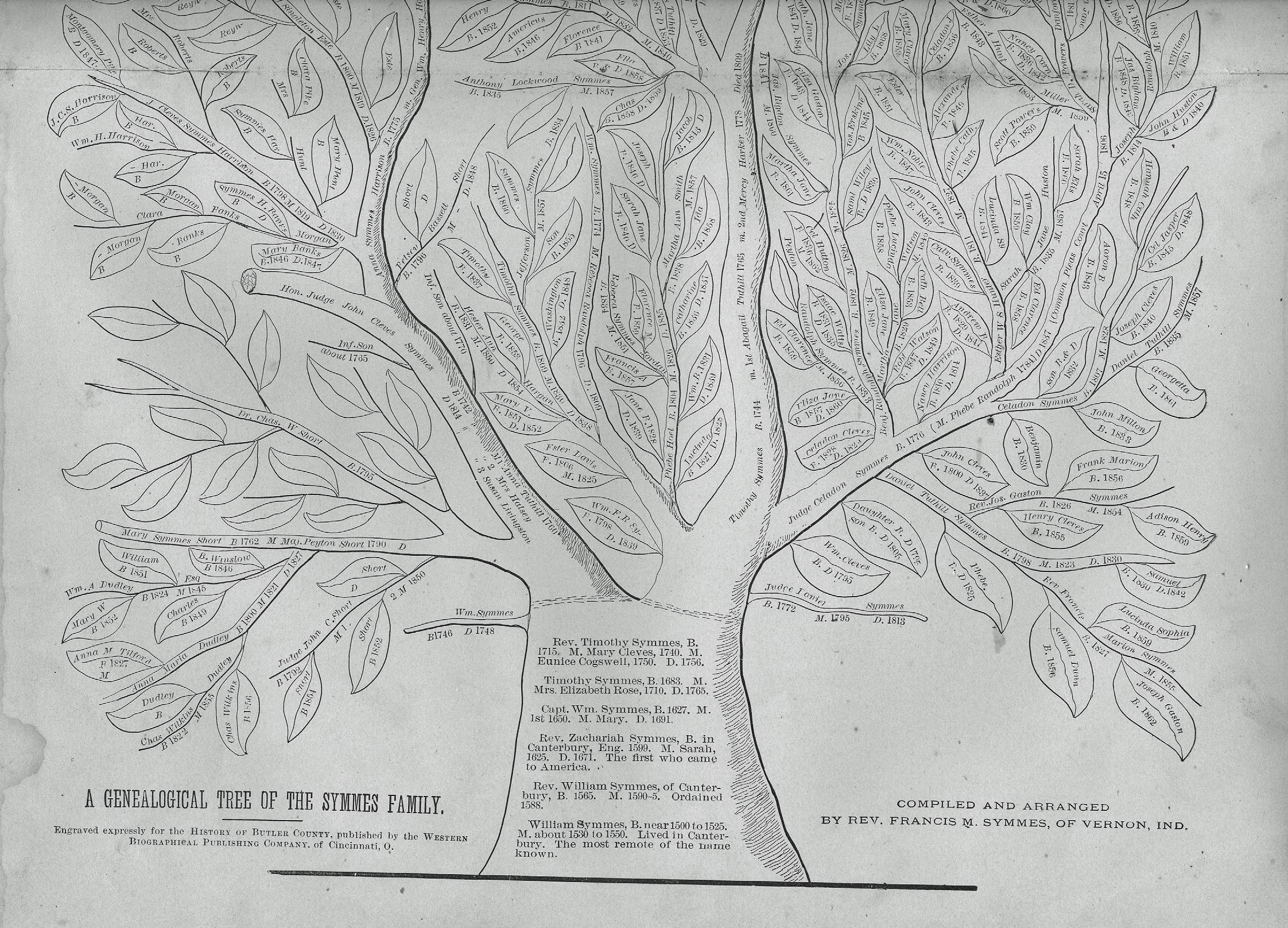
In October, 1801, Thomas Jefferson, President of the United States, appointed John Reily and William Goforth commissioners, to act in conjunction with the receiver of public moneys in: Cincinnati, for the purpose of ascertaining the right of persons claiming the benefit of these pre-emption laws. The commissioners immediately opened an office in Cincinnati, and gave notice to all those claiming the benefit of the pre-emption laws to exhibit their claims for allowance.
This commission extended only for one year ; but at the expiration of the first year it was continued for a second year, and John Reily and Dr. John Selman were appointed commissioners to act with James Findlay, receiver of public moneys. After the expiration of the second year the duties of this commission were transferred to the register and receiver of public moneys at Cincinnati, and continued from year to year, till all the purchasers were able to complete their payments and secure their titles.
By the operation of these just and salutary laws more than five hundred meritorious families were not only saved from ruin, but made independent and happy. The extension of the right of pre-emption by the law of 1801 to all who had purchased prior to the 1st of January, 1800, enabled every purchaser to save himself, and the extension of credit which Congress gave from time to time, by subsequent laws, was so liberal that many of them were enabled to raise their installments as they became due from the products of their farms. Their descendants are now enjoying the fruits of their labors in comfort and affluence.
CHARACTER OF JUDGE SYMMES.
JOHN CLEVES SYMMES, the original patentee of the lands between the two rivers, was a native of Riverhead, Long Island, where he was born on the 10th of July, 1742. He was the son of the Rev. Timothy Symmes, who was a native of Scituate, Massachusetts, and was graduated at Harvard College in 1733. His mother was Mary Cleves.
John Cleves Symmes, early in life, was employed as a teacher and land surveyor, but soon after attaining his majority removed to New Jersey, where he became active among those who were engaged in opposing the pretensions of Great Britain. He became a member of the Committee of Safety for Sussex County, and acted as chairman in 1774, and the year after was colonel of one of the regiments of militia which were then raised. When Howe and his army landed on Long Island, Colonel Symmes's regiment was actively employed in aiding to erect works of defense against the British, and afterwards took part in the battle of Long Island and the subsequent retreat. In this engagement, however, Symmes did not participate. He had been elected a delegate to the State convention of New Jersey, which met at Burlington on the 10th of June, and was a member of the committee which drafted a constitution. At the end of 1776 he was sent up to Ticonderoga, having been delegated by the Legislature of his State to make a new arrangement of the officers of the New Jersey regiment stationed in the Northern Department. On rettuning home he joined the command of Colonel Jacob Ford.
" On the 14th December, while quartered at Chatham, and charged with the duty of covering the retreat of Washington through New Jersey, Colonel Ford received intelligence that eight hundred British troops, commanded by General Leslie, had advanced to Springfield, four miles from Chatham. He ordered Colonel Symmes to proceed to Springfield and check the approach of the enemy, if possible. Accordingly, Colonel Symmes, with a detachment of the brigade, marched to that village, and attacked the British in the evening. This was the first check Leslie met with after leaving Elizabeth ; but others soon followed, and his further progress in • that direction was effectually stopped." (Edsall's Address, Sussex Centenary, p. 63.)
In 1776 he was appointed to the command of the forts which extended along the northwest frontier of New Jersey as a protection against the Indians. Sussex County was at that time in a very exposed condition. He aided General Dickinson in the attack which was made upon the British in Staten Island. His duty called him to Redbank Fort when the English sailed up the Delaware and attacked Redbank and Mifflin Forts, the latter of which they took. He served with distinction at the battle of Monmouth, and was in the battle of Short Hills. During the possession of Long Island by the enemy it was much exposed to forays by the Americans, and in these predatory attacks Colonel Symmes took a prominent part. He made five descents at different times, and at one time captured a schooner and made ten men prisoners. This he did with the assistance of only four men. One of the younger sons of George the Third—Prince William Henry, who was a midshipman— was, towards the end of the war, quartered in New York, and several schemes were formed for his capture. Colonel Symmes was offered a command by General Washington for the purpose of making a prisoner of the young prince, but declined ; and the tender was then made to Colonel Humphreys, who accepted. The enterprise, however, came to nothing. The reputation Colonel Symmes gained in a military way he did not lose in civil life. He was six years a member of the council, one year lieutenant-governor, and twelve years a judge of the Supreme Court of New Jersey, becoming chief justice. After the conclusion of the war he was a member of the Continental Congress, serving in this capacity two years. The fever of land speculation took possession
30 - HISTORY OF BUTLER COUNTY.
of many. of our best men after the peace allowed them to begin settlements, and Ohio, Kentucky, Tennessee, Western New York, and Pennsylvania were the seat of the chief operations. Judge Symmes, at the same time as the agents of the Ohio Company, made application for a tract of land in Ohio, and was finally granted it. He was made a judge of the Northwest Territory by Congress, February 19, 1788, and soon afterwards removed to the Ohio Valley, where he spent the remainder of his days. In 1789 he located himself at North Bend, below Cincinnati, where for years he dispensed an elegant and profuse hospitality. He contributed much by his public spirit to the settling of the whole region.
When Judge Symmes came West he led a party of immigrants. The first detachment which came out was led by Major Benjamin Stites, and settled at Columbia, five miles east of the center of the present city of Cincinnati; the second was conducted by Matthias Denman and Robert Patterson, which stopped at Cincinnati ; and the third was that of Judge Symmes. We give from Burnet's " Notes " an account of this expedition :
" The third party of adventurers to the Miami purchase were under the immediate care and direction of Judge Symmes. They left Limestone on the 29th of January, 1789, and on their passage down the river were obstructed, delayed, and exposed to imminent danger from floating ice, which covered the river. They, however, reached the Bend, the place of their destination, in safety, early in February. The first object of the judge was to found a city at that place, which had received the name of North Bend, from the fact that it was the most northern bend in the Ohio River below the mouth of the Great Kanawha.
" The water-craft used in descending the Ohio in those primitive times were flat-boats made of green oak plank, fastened by wooden pins to a frame of timber, and caulked with tow or any other pliant substance that could be procured. Boats similarly constructed, on the Northern waters, were then called arks; but on the Western rivers they were denominated Kentucky boats. The materials of which they were composed were found to be of great utility in the construction of temporary buildings for safety, and for protection from the inclemency of the weather, after they had arrived at their destination.
" At the earnest solicitation of the judge, General Harmar sent Captain Kearsey, with forty-eight rank and file, to protect the improvemehts just commencing in the Miami country. This detachment reached Limestone in December, 1788 ; and in a few days after, Captain Kearsey sent a part of his command in advance, as a guard, to protect the pioneers under Major Stites at the Little Miami, where they arrived soon after. Mr. Symmes and his party, accompanied by Captain Kearsey, landed at Columbia, on their passage down the river, and the detachment previously sent to that place joined their company. They then proceeded to the Bend, and landed
about the 1st or 2d of February. When they left Limestone it was the purpose of Captain Kearsey to occupy the fort built at the mouth of the Miami by a detachment of United States troops, who afterwards, descended the river to the Falls.
" That purpose was defeated by the flood in the river, which had spread over the low grounds and rendered it difficult to reach the fort. Captain Kearsey, however, was anxious to make the attempt ; but the judge would not consent to it. He was, of course, much disappointed and greatly displeased. When he set out on the expedition, expecting to find a fort ready built to receive him, he -did not provide the implements necessary to construct one. Thus disappointed and displeased, he resolved that he would not attempt to construct a new work, but would leave the Bend and join the garrison at Louisville.
" In pursuance of that resolution, he embarked early in March, and descended the river with his command. The judge immediately wrote to Major Willis, commandant of the garrison at the Falls, complaining of the conduct of Captain Kearsey, representing the exposed situation of the Miami settlement, stating the indications of hostility manifested by the Indians, and requesting a guard to be sent to the Bend. This request was promptly granted, and before the close of the month Ensign Luce arrived with seventeen or eighteen .soldiers, which, for the time, removed the apprehensions of the pioneers at that place. It was not long, however, before the Indians made an attack on them, in which they killed one soldier and wounded four or five other persons, including Major J. R. Mills, an emigrant from Elizabethtown, New Jersey, who was a surveyor and an intelligent and highly respected citizen. Although he recovered from his wounds, he felt their disabling effects to the day of his death.
" The surface of the ground where the judge and his party had landed was above the reach of the water and sufficiently level to admit of a convenient settlement. He therefore determined, for the immediate accommodation of his party, to lay out a village at that place, and to suspend, for the present, the execution of his purpose as to the city of which he had given notice, until satisfactory information could be obtained in regard to the comparative advantages of different places in the vicinity. The determination, however, of laying out such a city was not abandoned, but was executed in the succeeding year on a magnificent scale. It included the village, and extended from the Ohio across the peninsula to the Miami River. This city—which was certainly a beautiful one, on paper—was called Symmes, and for a time was a subject of conversation and of criticism ; but it soon ceased to be remembered—even its name was forgotten—and the settlement continued to be called North Bend. Since then, that village has been distinguished as the residence and the home of the soldier and statesman, William
FORMATION OF COUNTY AND TOWNSHIPS - 31
Henry Harrison, whose remains now repose in a humble vault on one of its beautiful hills.
" In conformity with a stipulation made at Limestone, every individual belonging to the party received a donation lot, which he was required to improve as the condition of obtaining a title. As the number of these adventurers increased in consequence of the protection afforded by the military, the judge was induced to lay out another village, six or seven miles higher up the river, which he called South Bend, where he disposed of some donation lots ; but that project failed, and in a few years the village was deserted, and converted into a farm.
" During these transactions the judge was visited by a number of Indians from a camp in the neighborhood of Stites's settlement. One of them, a Shawnee chief, had many complaints to make of frauds practiced on them by white traders, who fortunately had no connection with the pioneers. After several conversations and some small presents, he professed to be satisfied with the explanation he had received, and gave assurances that the Indians would trade with the white men as friends. ' " In one of their interviews the judge told him he had been commissioned and sent out to their country by the thirteen fires, in the spirit of friendship and kindness, and that he was instructed to treat them as friends and as brothers. In proof of this he showed them the flag of the Union, with its stars and stripes, and also his commission, having the great seal of the United States attached to it ; exhibiting the American eagle, with the olive-branch in one claw, emblematical of peace, and the instrument of war and death in the other. He explained the meaning of those symbols to their satisfaction, though at first the chief seemed to think they were not very striking emblems either of peace or friendship ; but before he departed from the Bend he gave assurances of the most friendly character. Yet, when they left their camp to return to their towns, they carried off a number of horses belonging to the Columbia settlement, to compensate for the injuries done them by wandering traders who had no part or lot with the pioneers. These depredations having been repeated, a party was sent out in pursuit, who followed the trail of the Indians a considerable distance, when they discovered fresh signs, and sent Captain Finn, one of the party, in advance, to reconnoiter. He had not proceeded far before he was surprised, taken prisoner, and carried to the Indian camp. Not liking the movements he saw going on, which seemed to indicate personal violence in regard to himself, and having great confidence in his activity and strength, at a favorable moment he sprang from the camp, made his escape, and joined his party. The Indians, fearing an ambuscade, did not pursue. The party possessed themselves of some horses belonging to the Indians, and returned to Columbia. In a few days the Indians brought in Captain Finn's rifle, and begged Major Stites to restore their horses, alleging that they were innocent of the depreda tions laid to their charge. After some further explanations, the matter was amicably settled, and the horses were given up."
Judge Symmes was three times married. His first wife was Ann Tuthill; the second was Mrs. Halsey, and the third Susanna, daughter of William Livingston, governor of New Jersey, and-at the outbreak of the war of the Revolution -better and more widely known than almost any of the other defenders of our liberties as derived from our ancestors. He had two daughters— Maria, who married Major Peyton Short, of Kentucky ; and Anna, who married William Henry Harrison, afterwards President of the United States.
Judge Symmes was of a large, majestic figure, of pleasant manners and great benevolence. He was well liked by the Indians. At the treaty of Greenville he was told that in the war he was frequently the object of the aim of the enemies of the white men, but that when he was recognized they refrained from pulling the trigger. He died at Cincinnati, February 26, 1814, in the seventy-second year of his age, and was buried with military honors on a hill near his late residence at North Bend. It is only a little distance from the tomb of his illustrious son-in-law, General Harrison. On the flat tablet which covers the grave is the following inscription :
Here rest the remains of
JOHN CLEVES SYMMES,
who, at the foot of these hills, made the first settlement between the Miami Rivers. BOrn on Long Island, State of New York, July .21st, A. D. 1742. Died at Cincinnati, February 26, A. D. 1814.
The residence of Judge Symmes stood about a mile northwest of the present railway station-house at North Bend, at the foot of the hill dividing the Ohio from the Great Miami River. It was destroyed by fire, March, 1811, during the owner's temporary absence, when all of his valuable papers were burned. The fire was supposed to have been the work of an individual who had become angry at Judge Symmes because the latter had refused to vote for him as a justice of the peace.
FORMATION OF BUTLER COUNTY AND ITS TOWNSHIPS.
ON the 24th day of March, 1803, the General Assembly of the State of Ohio passed "An act for the division of the counties of Hamilton and Ross,"* by which act the county of Butler was established, comprehending the country included within the following bound-
* Laws of Ohio, Vol. I, page 9.
32 - HISTORY OF BUTLER COUNTY.
aries : Beginning at the northeast corner of section number seven, in the third township of the second range in the Miami purchase ; running thence west to the State line ; thence north with the State line toia point due west from the middle of the fifth range of townships of the Miami purchase ; thence east to the Great Miami River; and bounded on the east by the Miami River and a line running north on the section line from the place of beginning to the Miami River.
The southern boundary of the county, as established by this act, was a west line from the place of beginning. This line, when run, passed through the tier of sections south of the present boundary line, dividing farms, and struck the Miami River in the Colerain bend, about a mile south of the present county line. To remedy this inconvenience, the Legislature passed a law on the 20th of January, 1808,-to establish the line between Hamilton and Butler Counties.* By this act the line was established, beginning at the southeast corner of Butler County, as mentioned in the first act ; thence westwardly along the line of the tier of sections to the Great Miami River ; thence down the Miami River to the point where the line of the next original surveyed township, on the west side of the river, strikes the same ; thence west along that line to the western boundary of the State.
This is the present line between the counties of Butler and Hamilton.
On the 15th day of February, 1808, the Legislature established the county of Preble, + and made its south boundary a line beginning at the southwest corner of the sixth township in the first range east of the meridian drawn from the mouth of the Great Miami River (the northwest corner of the college township) ; thence east along the township line to the range line between the third and fourth ranges ; thus cutting off from the county of Butler, on the north, about one tier and a half of sections. The north boundary line of Butler County, as originally established, struck the Miami River on the west side, about two miles above the town of Franklin, opposite where the protection wall, on the east side of the river above Vanderveer's mill, has since been made, at the time the Miami Canal was constructed. On the 30th of January, 1815, the. Legislature passed a law attaching that part of Butler County which lay within the first and second fractional townships in the fifth range to the county of Warren,1: and which now comprehends that portion of Franklin Township, Warren County, lying west of the Great Miami River ; thus reducing the county of Butler to its present dimensions.
This county was named Butler after General Richard Butler, a heroic soldier of the Revolution. He distinguished himself on more than one occasion in a remarkable manner. He was a native of Pennsylvania, and
* Laws of Ohio, Vol. VI, page 19.
+ Ibid., page 164.
++Laws of Ohio; Vol. XIII, page 109.
was one of a family of brothers who were active in the Revolutionary struggle. He lost his life in the memorable defeat of St. Clair by the Indians, as is told more fully elsewhere.
At the same session that the county of Butler was established by the Legislature, a resolution was passed on the 15th day of April, 1803, appointing James Silvers, Benjamin Stites, and David Sutton commissioners to examine and select the most proper place for the seat of justice of Butler County.
These commissioners, having given twenty days' notice of their time and place of meeting, met at the town of Hamilton early in the month of July, 1803, and having taken an oath, as required by the law establishing seats of justice, proceeded to the duties incumbent on them. Several places were proposed to the commissioners as eligible sites for the seat of justice. Amongst the most prominent of them was a beautiful situation immediately on the west bank of the Miami River, about four miles above the town Of Hamilton, called the " High Bank tract," then owned by William McClellan and George P. Torrence, adjoining to where the late John Wilson formerly lived.
A company, composed of Jacob Burnet, John Sutherland, Henry Brown, James Smith, and William Ruffin, owned a large tract of land on the west side of the Miami River, opposite the town of Hamilton, including the situation where the town of Rossville (now known as West Hamilton) was afterward laid. They proposed the ground where Rossville now is as an eligible site for the seat of justice.
Israel Ludlow, the proprietor of the town of Hamilton, submitted to the commissioners the following proposition in writing :
" I will give for the use of the county a square for public buildings, agreeably to the plan recorded of the town of Hamilton ; also a square for the church and burying- ground, consisting of eight town lots, together with the commons in front 'of the town, for public uses—such as boat-yards, etc.—in case the honorable commissioners should conceive the town of Hamilton a convenient and suitable place for the seat of justice ; and will also pay two hundred dollars toward the erection of a court-house.
" (Signed) ISRAEL LUDLOW."
The commissioners having examined the different places proposed, after due deliberation decided in favor of the town of Hamilton as the most eligible place for holding the several courts, accepted the proposition of Mr. Ludlow, and established the seat of justice at Hamilton, of which they made report to the Court of Common Pleas, then in session, on the 15th day of July, 1803.
Israel Ludlow died on the 21st of January, 1804, before complying with the proposition made to the commissioners. However, afterwards Charlotte Chambers Ludlow, John Ludlow, and James Findlay, surviving
FORMATION OF COUNTY AND TOWNSHIPS - 33
administrators of Israel Ludlow, petitioned the Court of Common Pleas of Butler County for leave to complete the contract, on which the court rendered a decree at the December term, 1808 ; in pursuance of which decree the administrators paid to the county of Butler the sum of two hundred dollars, and executed a deed for the square of ground at present occupied by the court-house and public buildings, being in-lots Nos. 95, 96, 97, and 98, in the town, and also a square for the burying-ground, being in-lots Nos. 13, 14, 15, 16, 29, 30, 31, and 32.
The first associate judges appointed by the Legislature for the county of Butler were James Dunn, John Greer, and John Kitchel. They met at Hamilton on the 10th day of May, 1803, and held their first Court of Quarter Session at the house of John Torrence, who then kept a tavern in the house standing on the corner of Dayton and Water Streets, on lot No. 132. This house is still standing, and owned by Henry S. Earhart, who has occupied it as a family residence for many years. It was built by John Torrence, and was the first frame building erected in the town of Hamilton outside of the garrison. Although this house was built more than eighty years ago, the frame-work is as solid and firm, apparently, as it was half a century since. The siding or weatherboarding was of black walnut, and was sawed by means of a whip-saw. Every nail used in putting on the siding and roof was made to order by a blacksmith then residing in Hamilton. The judges at this session appointed John Reily their clerk pro tent., divided the county into five townships, and ordered an election to be held in the several townships on the 1st day of June then next, for the election of a sheriff and coroner for the county of Butler, to serve until the general election in October.*
On the 1st day of June, 1803, the associate judges commenced the second session of the Court of Quarter Sessions at the same place in Hamilton. At this session a statement of votes given for sheriff and coroner at the election held on the 1st day of June was returned to the judges, by which it appeared that James Blackburn was elected sheriff and Samuel Dillon-coroner.
The first regular term of the Court of Common Pleas for Butler County, at which cases were tried, was commenced on Tuesday, the 12th day of July, 1803, at the house of John Torrence, in Hamilton. The court was composed of Francis Dunlevy, president judge; James Dunn, John Greer, John Kitchel, associate judges; Daniel Symmes, prosecuting attorney for the State; James Blackburn, sheriff; John Reily, clerk. The grand jury, being the first impaneled in the county of Butler, were :
1. David Enoch, Foreman.
2. James Watson
3. John Scott.
4. Samuel Dick.
5. William Crooks.
6. James Scott,
7. Matthew Richardson,
8. Robert Lytle
9. Moses Vail.
10. James McClure:
11. Andrew Christy.
12. Benjamin Line.
13. Solomon Line.
14. John McDonald.
* Laws of Ohio, Vol. I, page 69.
At this term John Reily was appointed clerk of the Court of Common Pleas ; July 13, 1803, James Heaton was appointed county surveyor for the county of Butler ; July 14, 1803, Joseph F. Randolph was appointed county treasurer ; and on the same day the court made an order that the building lately occupied and used by the troops of the garrison as a magazine should be assigned to be the jail for Butler County.
The first term of the Supreme Court of the State of Ohio for Butler County was held at Hamilton on the 11th day of October, 1803, by Samuel Huntingdon and William Sprigg, judges ; John Reily, clerk ; Arthur St. Clair, prosecuting attorney for the State ; William McClellan, sheriff.
As previously noted, the Court of Quarter Sessions, at their meeting of Tuesday, May 10, 1803, established the boundaries of townships as follows :
FAIRFIELD TOWNSHIP.
Beginning at the bank of the Miami, on the eastern side, at the place where the south boundary line of the county strikes the same ; thence east with the southern boundary line of the county to the southeast corner of section No. 14 of the second township of the second entire range ; thence north to the Great Miami River ; thence southwestwardly down the same to the place of beginning. Two 'justices were assigned.
LIBERTY TOWNSHIP.
Beginning at the southeast corner of section No. 14 of the second township in the second entire range on the south boundary line of the county ; thence north to the Great Miami ; thence northeastwardly up the Miami to the northern boundary of fractional section No. 10 of the second township in the third or military range ; thence east to the eastern boundary of the county ; thence south with the eastern boundary of the county to the southeast corner thereof; thence west with the southern boundary of the county to the place of beginning. Two justices.
LEMON TOWNSHIP.
Beginning on the west bank of the Great Miami, at the southwest corner of fractional township No. 1 in the fourth range west of the Miami ; thence north to the northern boundary of the county ; thence east with the northern boundary line of the county to the northeast corner thereof; thence southwestwardly and south with the eastern boundary of the county to the southeast corner of section No. 11, township 3, in the third entire range ; thence west to the Miami ; thence southwestwardly down the Miami to the beginning. Two justices.
ST. CLAIR TOWNSHIP.
Beginning on the west bank of the Miami at the southwest corner of the fractional township No. 1 of the fourth range west of the Miami ; thence north to the
34 - HISTORY OF BUTLER COUNTY.
northern boundary of the county ; thence west to the northwest corner of the county ; thence south to the southwest corner of the township No. 4 of the first range west of the Miami ; thence east to the Miami ; thence northeasterly and northwestwardly up the Miami to the place of
beginning. Two justices.
ROSS TOWNSHIP.
Beginning on the west bank of the Miami at the northeast corner of fractional township No. 1 of the third range west of the Miami ; thence west to the western boundary of the county ; thence south to the southwest corner of the county ; thence east with the southern boundary of the county to the Miami ; thence northeastwardly up the Miami to the place of beginning. One justice.
These were the original townships.
On the 21st day of January, 1804, the Legislature passed a law to provide for the incorporation of townships. (Laws of Ohio, Vol. II, page 93.) This law em- powered the commissioners of the county to alter the boundaries of townships, and to set off new townships. At a meeting on June 11, 1804, consisting of the following persons, Ezekiel Ball, Matthew Richardson, and Solomon Line, John Reily was appointed their clerk.
On the petition of a number of the inhabitants of St. Clair Township, December 2, 1805, Wayne Township was erected as follows :
WAYNE TOWNSHIP.
" Ordered, that the following tract of land and country, now part of St. Clair Township, in the county afore said, to wit : Beginning at the southeast corner of the third township of the third range west of the Miami thence north with the eastern boundary line of said third range to the north boundary line of the county ; thence west with said northern boundary line to the west bound ary line of said third range ; thence south with the said last-mentioned line to the southwest corner of the aforesaid third township in the third range aforesaid thence to the place of beginning,-shall compose a township to be called and known by the name of Wayne Township."
MILFORD TOWNSHIP.
At the same session of the same commissioners, on g petition of the inhabitants of St. Clair Township, it was " ordered, that the following tract of land and country now part of St. Clair Township, in the county aforesaid to wit : Beginning at the southeast corner of the fifth township of the second range west of the Miami ; thennorth with the east boundary of the said second range the north boundary of the county ; thence west with the northern boundary line to the northwest corner of th county ; thence south with the western boundary line the county to the southwest corner of the fifth township in the first range ; thence to the place of beginning,— shall compose a township which shall be called and known by the name of Milford Township."
REILY TOWNSHIP.
December 7, 1807, on the meeting of James Black- burn, Matthew Richardson, and James Smith, commissioners, on a petition of some of the inhabitants of St. Clair Township, it was " ordered, December 8, 1807, that so much of the township of St. Clair as lies within the following boundaries, to wit : Beginning on the west- ern boundary line of the county at the southwest corner of the fourth township in the first range ; thence east with the township line to the southeast corner of the section numbered 32 of the fourth township in the second range ; thence north with the sectional line to the north boundary line of the said fourth township in the said second range ; thence west with the township line to the western boundary line of the county aforesaid ; thence south with the same to the place of beginning,—shall compose a township which shall be called and known by the name of Reily Township." Election to be held at the house of Henry Burget on the 2d day of January, 1808, for electing township officers.
MADISON TOWNSHIP.
May 7, 1810, at a meeting of James Smith, James Blackburn, and William Robison, commissioners, on petition of some of the inhabitants of Lemon Township, it
was " ordered, that so much of the said township of Lemon as lies within the following boundaries, to wit : - Beginning on the west bank of the Miami at the south- - west corner of township No. 1 of the fourth range ; ; thence north with the western boundary line of the said ; fourth range to the boundary line of the said county of Butler ; thence east with the said northern boundary line to the Miami ; thence south and southwardly with the - meanders of the Miami to the place of beginning,—shall compose a township which shall be called and known by
the name of Madison Township." Election to be held ; at the house of Jacob Kemp on the 19th of May, 1810, for the election of township officers.
MORGAN TOWNSHIP.
March 4, 1811, at the meeting of James Blackburn, William Robison, and John Wingate, commissioners, it was " ordered, that so much of the township of Ross as lies within the following boundaries, to wit : Beginning at the southwest corner of the county of Butler ; thence a north with the western boundary line of the said county 1to the northwest corner of township No. 3 of the first range east of the meridian line drawn from the mouth of the Great Miami River ; thence east with the northern boundary line of the same township to the northeast of corner thereof; thence south with the eastern boundary line of the same to the south boundary line of the county - of Butler aforesaid ; thence west with the said southern
THE FIRST COUNTY BUILDINGS - 35
boundary line to the place of beginning,—shall compose a township which shall be called and known by the name of Morgan Township." Election to be held at the house of William Jenkins on the first Monday of April, 1811, for the election of township offrcers.
OXFORD TOWNSHIP.
August 5, 1811, at a session of the same commissioners, on petition of inhabitants of Milford Township, it was " ordered, that so much of the township of Milford as lies within the following boundaries, to wit : Beginning at the northwest corner of the county of Butler ; thence south with the western boundary line of the said county of Butler to the southwest corner of township numbered five in the first range east of the meridian line drawn from the mouth of the Great Miami River ; thence east with the southern boundary line of the same township to the southeast corner thereof; thence north with the eastern boundary line thereof to the north boundary line of the said county of Butler ; thence west with the same to the place of beginning,—shall compose a township which shall be called and known by the name of Oxford Township." Election to be held at the house of Sylvester Lyons on the 24th day of August, 1811, for the election of township officers.
HANOVER TOWNSHIP.
At the meeting of the Board of Commissioners December 2, 1811, William Robison, John Wingate, and James Blackburn being present, on petition of the inhabitants of Reily and St. Clair Townships, it was " ordered, that so much of the said townships as lies within the following boundaries, to wit : Beginning at the southeast corner of the surveyed township No. 4 in the second range east of the meridian line drawn from the mouth of the Great Miami River ; thence north to the northeast corner of the same township; thence west to the northwest corner thereof; thence south to the southwest corner thereof; thence east to the place of beginning,—shall compose a township which shall be known and designated by the name of Hanover Township." Election to be held at the house of Aaron Sacket on the 21st day of December, 1811, for the election of officers.
UNION TOWNSHIP.
At the meeting of the commissioners, June 2, 1823, " petitions being presented for the division of Liberty Township, ordered that the prayer of said petition be granted, and that the new township be called by the name of Union. Township, and that an election be held," etc. No boundaries given.
This seems to be the only record of the matter preserved in the books of the county commissioners. Union was the last township erected, except Hamilton. That was so made after its erection as a city and union with Rossville.
THE FIRST COUNTY BUILDINGS.
AFTER the previous sessions of the Court of Common Pleas, the sittings of the court were transferred to one of the old buildings of the garrison, which had been erected for a mess-room for the officers of the army. It was a frame building, roughly weatherboarded, without either filling in or plastering. It was set upon wooden blocks, which elevated it about three feet above the surface of the ground, affording, underneath, an admirable shelter for the hogs and sheep of the village.
The judges' seat was a rough platform made of unplaned boards, erected at the north end of the building. A long table, similar to a carpenter's work-bench, was placed in front of the judges' seat—around which the lawyers were accommodated with benches made of slabs, for seats. The remaining space was occupied by suitors, witnesses, and spectators. In this building the sessions of the court were held from the year 1803 until the year 1810.
The Court of Common Pleas, as previously stated, at their July term, 1803, assigned the building which had previously been used by the troops of the United States stationed at Fort Hamilton as a magazine, to be the county jail. The roof came to a point in the center. Standing isolated from any other building, it was, of course, very insecure. Escapes were almost as frequent as commitments. In the year 1808 two persons were confined in this prison—one of them, named Henry Wason, a wild, drinking Irishman, somewhat notorious at that time, who had been committed for disorderly conduct or a breach of the peace. Having by some means procured a stone, he commenced beating against the door, and finally, putting his arm out of the aperture, he beat off the padlock, opened the door, and came out, leaving the other prisoner, who was chained to the floor, still in confinement. He went directly to the clerk's office, which was only a few rods distant, and told the clerk to inform the sheriff, and get him to take care of that d-d horse- thief who was in jail ; for he was determined to stay no longer in such company ; and he, accordingly, went to his home. No further notice was taken of him. This building was the only jail of Butler County from the year 1803 until the year 1809.
The clerk's office was kept in a small log building which stood south of where the fort was situated, and outside the line of pickets. It had originally been erected for a storehouse or sutler's shop by some trader attached to the garrison at the time the fort was occupied by the army. It stood on lot No. 66, a few rods south of where the United Pre'sbyterian Church now stands. It was built of logs about twenty feet long by eighteen feet wide, and two stories high, with a porch to each story, fronting on the alley. The lower room was the office ; the upper apartment was occupied as a lodging-room. The building was afterward remodeled, reduced to one story, and tenanted by a German family
36 - HISTORY OF BUTLER COUNTY.
In this building the offices of the Court of Common Pleas and Supreme Court, the commissioner's office, the recorder's office, and the post-office were kept by John Reily from the time of the organization of the county until some time in the year 1809. Here, in court times, when the court was not in session, and in the evenings, assembled the judges, the lawyers, and the picked men of the county. It was, in fact, head-quarters, where all the best society met to spend their leisure hours and enjoy themselves with entertaining conversation.
In the year 1809 Mr. Reily removed his office to the south room of his private residence, which he had erected, and just then completed, on lot No. 99, on the east of the public square, where he kept his office until the year 1824, when, the present brick offices on the public square having been built by the county and completed ready for the accommodation of the offices, Mr. Reily removed his office to that building.
The first building erected on the public square was a jail. Soon after the -seat of justice was established at Hamilton, a subscription paper was drawn up and put in circulation for the purpose of raising funds to aid the county in erecting public buildings. It was numerously subscribed by citizens of the county and others having an interest in the prosperity of the town. Subscriptions were received in " money, whisky, or grain, stone, lime, brick, timber, merchandise, mechanical work, labor, and hauling." The amount subscribed was about $1,500. In October, 1804, the commissioners of the county appointed Benjamin F. Randolph and Celadon Symmes to make collections on the subscriptions obtained. However, it was long before they were all collected. Some of them remained unpaid as late as the year 1815.
On the thirtieth day of September, 1805, Ezekiel Ball, Matthew Richardson, and Solomon Line, commissioners of the county of Butler, made a contract with John Torrence and John Wingate to furnish the materials and build a jail for the county on the south side of the public square. The building was to be of stone, thirty-three feet by twenty-two, two stories high, and to be erected and inclosed by the first day of September, 1806, for the sum of $1,600. The contractors erected and inclosed the building, according to their agreement, by the Fall of 1806.
The finishing and completing the interior of the building, securing and adapting it in a manner suitable for a jail, was not- included in their bargain, but was an additional expense, and required some time to effect, so that it was not ready for the reception of prisoners until December, 1808. The inside walls of the prison were lined with logs about a foot square, laid close together, on which was a lining of two-inch oak-plank, well secured with iron spikes. The floor and ceiling were of hewed logs, placed in the same manner as the sides, so that the whole was very secure against escapes. The lower story was divided into three apartments, having a cell in the middle for a dungeon. The upper story was divided into two rooms for debtors.
On the second day of February, 1807, the commissioners of Butler County made a contract with William Squier to put up a building adjoining the jail, already erected, for the accommodation of the jailer and his family ; the building to be of stone, thirty-three feet by thirty, and two stories high, corresponding with width and height of the jail then erected ; the whole making a building fifty feet long by thirty-three feet wide. Mr. Squier was to furnish all the materials, and have the building entirely completed, according to the plan laid down; by the 1st of December, 1807, for which he was to be paid the sum of $1,690. Mr. Squier, however, not prosecuting the work with vigor, did not complete the job by the time stipulated in his contract. It was the beginning of the year 1810 before the building was entirely completed, ready for the reception of the jailer and his family.
The building was divided by a hall running across the building between the prison and the other portion of it, which was divided into two apartments in the lower story for the occupancy of the jailer and his family The upper story, over the jailer's apartments, was fitted to accommodate the sittings of the courts, in which room the courts were held from the year 1810 until the year 1817.
At the time this building was erected the numerous fine stone-quarries now known to exist in the neighborhood of Hamilton had not been discovered. The only stone then attainable was procured from the bed of the Miami River, and was generally of small size and of an inferior quality. The mechanical art of building had not then acquired the perfection to which it has since attained, and the whole work appears to have been executed without a sufficient regard to that strength and durability necessary to render a building designed for a prison entirely secure. While it was occupied as a prison somc escapes were made by means of breaches through the walls where the fire-places were, which subjected the county to considerable expense. The whole building, in its architectural appearance and in its internal economy and arrangement, presented neither a model of elegance or convenience.
The present jail was built by Alexander P. Miller, to whom the contract was awarded on the 4th of March, 1846. It cost $8,581, and was finished and accepted on the 9th of August, 1848. The old jail was sold at public auction on the 15th of July to Robert E. Duffield for one hundred and ninety-four dollars, by whom it was pulled down and removed. The jail, as it now exists, is a stone structure two stories high, about fifty feet by ninety, presenting a handsome appearance. The front of the building is occupied for a residence by the sheriff, and the rear is appropriated to the detention of prisoners. This room is about forty-five feet square, with a solid stone floor, and lined with boiler iron for twelve feet high.
THE FIRST COUNTY BUILDINGS - 37
It has ten cells, situated in the center of the room, five on each side. There is no provision for women in the building other than is afforded by a small and insecure room on the second story.
On the twentieth day of November, 1813, the commissioners of the county contracted with John E. Scott to furnish all the materials and erect and finish a courthouse, according to a plan that had been drawn and agreed upon, to be completed by the expiration of the year 1816, for the sum of $9,000. He entered upon the execution of the work immediately, and had it completed by the time stipulated in the contract. The building was of brick, erected on a stone foundation. It was fifty-four feet long by forty-four feet wide, and two stories high. The lower story, twenty feet high, was fitted up for the court-room, having the judges' seat on the south. The main entrance was by a door on the north ; there was also a door on the east and another on the west side of the building, and a private door on the south, near the southwest corner, to communicate with the jail. The second story was eighteen feet in height, divided into a hall and four rooms, for the accommodation of the grand and petit juries, and for such other purposes as might be required. On the top of the building, in the center of the roof, which was hipped on all four sides, was a cupola, surmounted with an iron spire, on which were two balls of gilded copper. The height from the ground to the uppermost ball was one hundred and ten feet.
The contract price for building the court-house, as before mentioned, was $9,000. However, on the application of the contractor, who alleged that he had lost money on the job, the Legislature, at their session of 1817-18, passed a law authorizing the commissioners of Butler County to make a further allowance to the contractor not exceeding one thousand dollars, if, in their
judgment, on an examination of the accounts of his expenditures, it should appear that he had sustained a loss on the contract. The commissioners, on an examination of the account of his expenditures in erecting the building, made the allowance authorized by law, and accordingly, on the twelfth day of October, 1818, they paid him the further sum of one thousand dollars, making the whole cost of the court-house $10,000. The sittings of the courts were transferred from the old stone building, and the first court was held in the new court-house at the April term, 1817.
In the cupola was suspended a fine-toned bell, which was used not only for the assembling of the court, but on other public occasions, and tolled at the funerals of respectable citizens. It was also, for a number of years, rung regularly every day at nine o'clock in the morning, at twelve o'clock at noon, and at nine o'clock in the evening, by a person employed for that purpose, who was regularly paid for that service from a fund raised by voluntary subscription of the citizens of the town.
The plan and arrangement of the court-house being considered inconvenient and not well suited for the accommodation of the court and those in attendance on that tribunal, the commissioners of the county, in the year 1836, resolved to make an alteration and improvement of the building, and for that purpose employed William H. Bartlett, a carpenter then residing in Hamilton, to superintend and carry into effect the plan of the alteration, which was immediately commenced by him, and completed, in the manner in which the building remains at present, by the termination of the year 1837. The courthouse, as at present modeled and arranged, is fifty-four feet in length from north to south by forty-four feet in width from cast to west, with a portico of ten feet projection in front on the north, with four columns of brick, plastered with hydraulic cement. The columns are of the Grecian-Ionic order, thirty-two feet in height, supporting a cornice and pediment of the same order. On the north end of the building is a handsome cupola, surmounted by a figure of Justice, holding a sword and balance. The whole height from the ground to the top of the figure on the cupola is one hundred and eleven feet. The court-room is in the second story, which was finished in very neat and elegant style. The judges' seat is on the south side of the court-room, with a gallery on the north. The lower story is divided into four apartments. The most northern one, at the general entrance, is occupied as an anteroom, in which is the stairway leading to the vestibule of the court-room. In the northwest corner is a room occupied as a sheriff's office. The remaining southern part is fitted up for the accommodation of the coroner and for grand jury rooms. The whole expense of the new modeling and alteration of the building made under the superintendence of Mr. Bartlett amounted to the sum of $15,919. Some remodeling and alteration was done about ten years ago.
In the cupola is suspended a fine-toned bell, the same which formerly hung in the cupola of the old courthouse. Between 1830 and 1840 a fine clock was purchased and placed in the cupola, having a face on each side of the square, pointing out the lapse of time, and striking the hours on a bell as they pass. The clock cost one thousand dollars, which was paid for by the voluntary contributions of the citizens of the place.
In February, 1820, the commissioners of the county contracted with Pierson Sayre for furnishing the materials and building two public offices on the public ground for the accommodation of the county offrces, to be erected, one on the east and one on the west of the court-house, some distance therefrom, and in line with the front of that building ; to be of brick, one story high ; each forty feet long by twenty feet wide, with a stone foundation; each building to be divided into two apartments, and made fire-proof. The contract price for building them was $2,486. They were completed, ready for the reception of the offices, by the year 1822. The manner in which the offices were made fire-proof was by laying a
38 - HISTORY OF BUTLER COUNTY.
floor of boards on the upper joists which supported the ceiling. On this was laid a course of brick, which was covered with a layer of sand or clay, six or eight inches deep. The wood-work of the doors and windows was covered with sheet-iron. The floors were first laid with brick.
In the year 1836 an addition of twenty-three feet was built to the office on the west of the court-house, and the whole building raised to two stories in height. The work was done by Thomas. M. Thomas, and cost $1,500. In the year 1837 a similar addition was made to the building on the east of the court-house by Jacob H. Elerick, at a cost of $1,820. Thus each building, as it stands at present, is sixty-three feet long by twenty feet wide, and two stories high, divided into suitable apartments on each floor. The whole cost of these offices, thus far, amounted to the sum of $5,806. Some additional sums were, necessarily, afterwards expended in fitting up the rooms for the better accommodation of the offices. In the year 1877 an addition was erected to the west building for the use of the treasurer and county commissioners. The foundations are of the best quarry stone, and the building is two stories high, of brick. It is about twenty feet square.
In 1858 the commissioners caused complete fire-proof apartments to be constructed in the interior of the buildings, one for each—the auditor, treasurer, recorder, and Probate Court.
The rooms on the first floor of the east building are assigned to the clerk of the court for his office. The rooms on the second floor, over the clerk's offrce, are occupied by the Probate Court. The east room, on the lower floor of the west building, is the county treasurer's office. The west room is the recorder's office ; and the auditor's and commissioners' offices are on the upper floor of the building.
In the Summer of the year 1817 the public square was inclosed with an open board fence made of mulberry posts and poplar plank. The materials were furnished and the fence put up by Daniel Keyte for $1.25 per panel of ten feet.
In 1838 the commissioners of the county had the public square inclosed with a fence of iron railing, except a small portion on the east and west adjoining the streets, which is left outside the inclosure. The foundation is a wall built of limestone, sunk two feet below the surface of the ground. Above the surface there is a wall built of large, well-dressed and cut limestone, brought from the quarries near Dayton, having a coping of the same material, on which is placed the fence, a neat and strong iron railing, with gates at the proper positions, appropriately ornamented.. The whole length of the in- closure is one thousand and seventy-one feet. Daniel Skinner, of Hamilton, executed and put up the iron work ; Mr. Doyle, of Dayton, put up the stone foundation. The work was begun in the Summer of 1838, but was not completed until June, 1839. The cost was $7,293.84. The square has been graded and planted with ornamental trees, presenting a beautiful prospect, not surpassed by any in the State of Ohio. .
PIONEER LIFE AND CUSTOMS.
THE pioneers of the West three-quarters of a century ago, and more, were of a hardier and more self-reliant class than those who followed. They lived largely by the hunt ; consequently, they were expert in the use of firearms. They began life anew in a dense wilderness filled with gigantic trees, and, therefore, were skilled in handling an ax. Roads and bridges there were none, so that a close observation of the bark of trees, the stars, the breaking of twigs and bushes, and the position of trees and natural objects, was necessary to enable them to find their way from one house to another. They were compelled to be pupils of Izaak Walton in his gentle craft ; for fish add much to the pleasures of the table. They must be vigilant and brave ; for danger from Indians and wild beasts had not yet gone. And they must be good farmers ; for all their efforts were only preparatory to the clearing up of the soil. They made shoes, tanned their own leather, constructed their own household implements, and were obliged to teach their children, unaided by pedagogue or preacher. They were a strong, hardy race.
Those who came West were rarely destitute of a little money, and if there were exceptions to this rule it was among young men with strong arms and invincible determination. Removal to their new location was most generally from concerted action in neighborhoods. Occasionally entire villages felt the impulse, and moved bodily. Some Churches were organized in the East, elected their deacons and other officers, took up their line of march for the West, and the congregation drove their teams by day, halted at night, invariably offering prayers at bed-time and at meals, and resumed their march the next day, stopping on Sunday for a long season of religious worship. Such was the case with some of those who first went to the Western Reserve, and, to a modified extent, this will hold good for the congregation of believers whose descendants now worship at Paddy's Run. Land was not infrequently bought in the East ; but most generally the actual settler saw the ground before purchasing.
The projectors of the land companies did not spare flowery adjectives when describing the good qualities of the tracts they had to sell. Olie of the first companies was the Scioto. It was represented in Europe by Joel Barlow, the poet, who spoke of its merits as a poet should sing when describing an Arcadia. In his circular,
PIONEER LIFE AND CUSTOMS - 39
liberally distributed in Paris, he chants the praises of the country bordering on the Ohio :
" A climate wholesome and delightful, frost even in Winter almost entirely unknown, and a river called, by way of eminence, the Beautiful, and abounding in excellent fish of vast size ; noble forests, consisting of trees that spontaneously produce sugar (the sugar-maple), and " a plant that yields ready-made candles (Myrica cerifera); venison in plenty, the pursuit of which is uninterrupted by wolves, foxes, lions, or tigers. A couple of swine would multiply themselves a hundred-fold in two or three years without taking any care of them. No taxes to pay ; no military services to be performed."
Similar stories were published and told about the lands in the Miami Valley, although, as Judge Symmes and his associates were not poets, there was not so much exaggeration. Much of the land hereabout was taken up in New Jersey and in New York and Philadelphia, largely by persons who never intended coming out to Ohio, and who bought simply because it seemed likely to become a profitable speculation. The very first who came had most generally been in the armies of St. Clair or Wayne. The settlement of Hamilton was nearly entirely from this source. But the great covered wagons began moving out here with the first roads, and before that cattle and horses were driven slowly and laboriously over the mountains and down to the promised land. Pittsburg became the center of an outfitting industry similar to that which St. Joe occupied for so long a time on the plains. Here the emigrant met those who had been over the route and knew its dangers and pitfalls; here the land-jobbers congregated, and here were dealers with all the implements, gear, and articles of clothing likely to be needed in the war against the forces of nature. We have now conquered, but three generations have died since the contest began.
Pittsburg, swarmed with life. So also did one or two of the towns lower down the river, where boats could be bought and the passengers committed to the slow-moving stream. The boat was very plain and simple. It was large enough to contain six or eight tons of load; but tlat, was al). Floating down the river would now be pleasant enough ; but then there were stretches of twenty or thirty miles without a single house. The crack of a rifle might at any moment be heard, striking down the head of a family or wounding some woman or child, and causing dismay and sorrow to those who survived. By night and by day the river bank must be watched. The boat must be pushed away from sand-bars, and steered so as to avoid contact with snags.
To those who were going to the settlements north of Cincinnati it was most usual to stop there, sell the boat, and proceed overland. To come to Hamilton was often two or three days' journey in unfavorable. weather. The land having been bought, either from the United States or from Symmes's company, the next step to be taken was to clear it. He was happy who could get some other adventurer to join him for the first few days, until he had made a beginning in the forest. To fell the trees was a colossal undertaking. Many of them were three or four feet in diameter, and some much exceeded these figures. The spot for the cabin was usually picked out from its contiguity to a spring. Here, then, a space of thirty feet square having been selected, the axes rang merrily out, and one afte/ another the monarchs of the forest fell. They were trimmed of their branches, the underbrush cleared away, and the first log, having been partially squared, was laid upon 'the ground in the place where the cabin was to be. Notches were cut near the ends, and in these notches other logs were laid, one at a time, until the building had reached high enough for a roof, which was at first only boughs and bark. Doors were cut in, openings for windows left, and the house was ready for its first occupancy. Daniel Doty, of Middletown, lived out-doors for more than two weeks, cooking and sleeping in the open air while his cabin was going up. This was just over the border in Warren County, and the denseness of the woods was the reason why he finally abandoned that neighborhood, and came to reside on the banks of the Miami. He was tired of the warfare against nature, and when he heard that there was a beautiful natural prairie at the side of this river, he left his improvements, on which he had. spent eight or nine months, and became a dweller in what is now Butler County.
The cabin windows were made by sawing out about three feet of one of the logs, and fastening in a few upright pieces. For lights they put in paper, and greased it with bear's-oil and hog-fat, pasting it on the upright pieces. There was then very little glass made in the country, the only place in the West being in Pittsburg, which is still the center of the glass industry ; and the high cost of transportation and the lack of money put it out of the power of the settlers to purchase this transparent material.
Housekeeping presented many serious discouragements. That civilization which is a multiplication of wants, our forefathers, happily, had not attained to. Rather they adhered to Goldsmith's dictum, " Man wants but little here below." It is surprising how few are the things which are really indispensable. In the forest, without roads, with scarcely even a path, it was difficult to get any thing from market, and it was still more difficult to take it thither ; for the latter was likely to be the heavier commodity. It did not pay to transport Indian corn, oats, or wheat ; and a farmer can scarcely raise any thing more valuable than these. He consumed all he grew ; or, if he did not, he threw the remainder away. Flax was made into cloth at his own house ; so was wool changed from the back of a sheep to a regularly woven fabric. This Vas, of course, when sheep could be kept ; wolves and bears often made it impossible. The gun often supplemented the fruits of the soil. Deer and rac-
40 - HISTORY OF BUTLER COUNTY
coons, foxes and wolves, opossums and squirrels abounded. The man of the house left home before daybreak, and before noon often returned with a huge load of venison or wild turkeys. The stranger who came by as welcome. He represented the outside world to them/ He was eater and church, school and fair, all in one. They heard nothing of what was going on except as he echoed it
Sometimes the pioneer bean eyelid more unpretentiously. With an ax he started out too fell enough aplings to build a rude hut seven feet by four, and five feet high. It was open in font, Where a place was left for a fire. A frying-pan and a jack-knife would come the equipment. Coals lingered the whole day. A piece of pork would be put in the pan and fried, and, with a
6 piece of bread, borrowed, like its oleaginous neighbor, from a farmer of the vicinity, the wood-chopper made hearty meals. Coffee not introduced at the beginning of the State settlement indeed, the latter much use until 1830. One of these pioneers has left us an account of his struggles to get a frock for the baby :
" I built a log-house twenty feet square—quite aristocritic in those days-and moved into it I was fortunate enough to possess a, jack-knife. With that I made a wooden: knife and two wooden forks, which answered admirably for us to eat with. A bedstead was wanted. I took two round poly for the posts, inserted a pole in them for a side-fail; two other poles were inserted for the end pieces, the ends of which were put in the logs of the house; some puncheons were then split and laid from the side-rail to the crevice between the logs of the house, which formed a substantial bed-cord, on which we laid our straw-bed—the only bed we had—on which we slept as soundly and woke as happy as Albert and Victoria.
" In process of time a yard and a half of calico were wanted. I started on foot through the woods ten miles to procure it ; but, alas! when I arrived I found that, in the absence of both money and credit, the calico was not to be obtained. The dilemma was a serious one, and how to escape I could not devise ; but I had no sooner informed my wife of my failure thwn she suggested that I had a pair of thin pantaloons which I could very well spare, that would, make quite a decent frock. The pants were cut out, the frock made, and in due time the child' was dressed."
The house, after being first erected, needed many repairs and alterations to fit it for, the residence of a family. It was always left with great interstices between the logs; which needed to be filled up with mud or clay or with pieces of wood. As the means of the family increased and saw-mills were built the rude structure Was often enveloped with a frame covering ; but underneath all was unchanged. The house occupied by General Harrison -until his death, situated at North Bend, was an instance, Generally the chimney was built up on the, outside, and the floors were of slabs of wood, rough-hewn by the ax. Exdepting for Indians there was no need of bar or bolt. Acre wever no thieves, and no dishonest people. Credits, were long and pay was taken in almost every thing to lie found in the country. Potash, hides and furs, cattle, A tobacco, and, latter, wheat and oats, were merchantable articles, and often answered instead of money itself. But the prices, as we should judge than now, were ruinously low. We give elsewhere, in the article on the National Armory and in some of our local histories, the cost of commodities as they were forty and six years ago. The currency was as varied as the articles for which they were given. There were notes of banks on half a dozen different, States in various stages of depreciation; the United States currency of dollars, dimes; and cents ; currency from New Spain, Cuba, and other Spanish Americon countries ; British siiver; and French five-franc pieces. Each of these floated at some conventional price and it required careful study to know the value of each, kind. The calling of money broker was, until the late war, one of must lucrative in the United States.
The agriculture of the day was rude. Fruit grew with a luxuriance and certainty which it does] not now equal; but the qualify of the apples; pears, and plums first planted wasp poor. The trees were sheltered by the surrounding forests, and the insects which are no the bane of the fruit-producer had not yet made their appearance. The smaller fruits----the strawberry, raspberry, and currant—were uncultivated ; but. the melon in Its different varieties was abundant the trees were deprived of life by being girdled, and then afterwards cut down; but el often they food for many years, weakening and falling a mot deplorable sight. After'the trees were felled the stumps were burned out and pulled out ; the ground was fertilized with the ashes and mold, and the crops that crops that were obtained were in great abundance. There was no rotation of corps, no underdraining, scarcely any surface draining, and no manuring, except the small portion derived from the stable. When one field was worn out, another was got ready. There were few sheep, but hogs were numerous. They were of the genuine racer breed, and earned their own living. Chickens and turkeys were numerous, and the :holiday meal always included one of these. Pork was the great staple. It had an advantage over the other products of the farm. The hog could be driven from home to the market, "and corn could in no way be more easily moved than in this concentrated form. Hot biscuits were the delight of the farmer, and cold bread was very rarely eaten. The maple-tree furnished an abundant yield of molasses and, sugar, and there was no lack of fruit to be put up in homely preserves.
Farmers worked their places with much less labor than at present. They rarely hired. any help, except at harvest, and the pioneer, with his wife and children, toiled on year after year with little assistance. There
PIONEER LIFE AND CUSTOMS - 41
was usually a cow or two, and the duty of milking and making butter devolved upon the wife. So did that of making cloth, and the garments out of the cloth. The husband made the shoes, except at the time when some o wandering shoemaker sought shelter and a few days' work. A clock was too expensive a thing to have ; rude dials answered every purpose on bright days, and on dark days they guessed as to the hour. The crockery was homely yellow ware, and was often eked out by pewter and wooden dishes. Fine queensware and china were not to be seen. The ovens were- huge and capacious, and in them could be baked whole turkeys or sheep. So also were the fire-places of those houses which were constructed after the people became a little forehanded. Here and there may now be seen an ancient dwelling in which the Dutch oven is a prominent part.
It was a difficult thing, even after a family had some money, to get luxuries. Public sentiment frowned upon them as effeminate, and the shopkeepers did not have odd and curious articles on hand. The chairs and tables were at the beginning made by the stout hands of the farmer himself; the beds were built in the house, and thongs of deer or coarse ropes were extended across from side to side, to give the requisite elasticity. Over this was a tick, filled with oat-straw, and the high structure was surmounted by a feather-bed, loved by all who were brought up to know its soft embraces, and contemned by this latter-day generation, who have been taught that it is hygienically bad, and makes man, woman and child too comfortable. The last of all were the sheets of linen, woven at home, and a counterpane, carefully joined to gether from twoscore different patterns of cloth—a true housewife's delight. If there was a cradle, it was made at home. Perhaps it might be half a barrel cut length-wise, and furnished. with rockers ; sometimes it was a log hollowed out ; but generally it was made by some handy man in the neighborhood. The floor was rough, as it must needs be when slabs or puncheons are used to lay it. There was no danger of dying from sufocation, as there was a huge fire-place and chimney to make a draft, and innumerable chinks and crevices in the walls and floors to admit the free air of heaven ; and there were no needless pieces of furniture for the housekeeper, to dust and keep in order. What would she have said could she have seen the present craze for pottery and furniture ?
For the first score of years after the treaty of Greenville the hunting of wild animals formed an essential portion of the pioneer's livelihood. It is true that most men did not neglect tilling the soil on this account; but until the wild animals had been nearly exterminated his stock and crops were not of much account. Squirrels swarmed in vast numbers, and to them a corn-field was a particular attraction. Bears had the same weakness. It was a common plan for farmers to go on a Summer's who night to a corn-field, and there wait for the quadruped to approach. If the field were fenced, the beast would find some place to climb over the, rails. When at the top, he would carefully look in every direction for an enemy. After a time, seeing none, he would drop off. the
fence inside the field. He can not climb down, and so must fall. Having picked himself up, and waited, perhaps, ten minutes to see if he was observed, he would proceed to the hills of corn, pull down the sulk, strip the tiers of the husk, and begin eating tar. succulent grains with the greatest relish. It was wonderful what devastation one bear would make in a corn-field in one night. If the plans of the hunter had been well carried out, he would fire from his ambush as soon as the bear
was near enough, and enough meat would be obtained to last his family until the carcass could be no longer kept. The skin was worth a round sum', either to sell or to keep. The fat, tried out, made a pomade or ointment, and the ;dogs had a feast on the poorer parts of the animal. These latter were an important part of every household. From one to six were to be found near each
farmstead, and, if of " low degree" and not well trained, they would make the night vocal by their barking. they were useful, however. They aided the farmer to discover any deprecator on his fields, whether man or beast they helped him in his encounters with savage animals, and they formed excellent playmates for his children. In all new ,countries man prizes the companionship of dogs. In hunting wolves and foxes they were essential, and were the same with raccoons and opossums. The latter were largely fainted at night, and formed excellent roasts for the family: The furs and skins of animals formed the most compact and valuable of all commodities that the
frontiersman had to do with. Offered at the shopkeepers', they brought cash, and in dealings of one man with another they passed more readily current than any other property. A premium was paid on the heads of wolves by the commissioners of Butler County for a number of years, and this stimulated the energies of the hunter. Many expedients were used to ensnare these animals.
Large traps were made and baited, the mechanism being , such that the attempt to take the bait would result in the fall of the gate, thus securely imprisoning the beast. Other hunters would take the ovary of the female wolf at a particular time of the year rub it upon their boots, and then walk across the paths where the animals were sure to come. They immediately left whatever they were
doing, and followed. This plan, while very successful, was attended with great danger, as the wolves became infuriated when they saw the deception that had been practiced upon them, and not infrequently attacked the backwoodsman. Often have hunters been obliged to climb trees to secure their safety. But so effectual were the attempts to exterminate wolves that few have been
seen by any one now living, and there is probably no one resident in the county has killed one within its limits.
It is impossible to give a description of a school that
HISTORY OF BUTLER COUNTY - 42
shall entirely correspond to that which existed among our forefathers. It was entirely sustained by subscription, the wealthier men paying a little more than the poorer ones. The schoolmaster was a man of consideration. He ranked next in the community after the doctor, the lawyer, and the minister, and although his learning might not have been great, it was greater than that of the persons in whose society he found himself. Often he was some man who had traveled far afield, and knew more of the world than his auditors. He generally wrote a good hand, was familiar with the easier parts of arithmetic, had a little knowledge of geography, English, American and Roman history, and could read passably.
He only gave instruction in reading, writing, and arithmetic, and if he taught these well he satisfied his patrons. The houses were generally of logs, with a capacious fireplace, and the benches and desks were of plain plank or slabs, the flat side uppermost. There was no uni-- formity of books. Each pupil brought what he had, and all were in turn used by the teacher. One thing is undeniable : the pupils carried from the schools more that they remembered, considering the extent of the curricuulum, than is now done in similar places. There was more concentration, and there was no study of a dozen different branches, all of necessity imperfectly acquired.
It must not be imagined that all the inhabitants were farmers. The hunter and trapper preceded them, and the blacksmith followed. Many of the articles which we now buy ready made were then beat out on the anvil. Nails were among these ; the point to a plowshare, the remainder being wood ; bolts and bars, knives, sickles, and axes were wrought out by his labors. He was an indispensable man. Something which is widely different from that found to-day was the multitude of innkeepers. Roadside taverns abounded everywhere. It was necessary for the traveler to stop over-night, and as he could only make from ten to twenty miles per day, often finding two or three miles too much, he was compelled to avail himself of their facilities. In the smaller kind there was only a lower room and a loft, into which the traveler mounted by a ladder. Here were three or four beds, and if there were women in the party there was a curtain to divide their part of the garret from the other part, in which the men slept. In the larger there were two log-cabins, side by side, with, of course, additional accommodations. Log houses were the rule then, not the exception. When John Reily came to Hamilton, nearly eighty years ago, the cabins outnumbered the frame houses, and the latter were very small, unpretentious dwellings. The landlord in those days gave plentiful fare, but not what would now be considered as of the best quality. It was pork and potatoes, with corn-bread. Chickens were afforded as often as possible, and always on gala-days ; but beef and mutton were seldom seen, unless the former, salted, in Winter-time. There was game on the table when the landlord or his guests were fortunate enough to shoot any, or when he could make an exchange with a neighbor for some. Often the inns were fail, and the wayfarer slept in his wagon or under a friendly tree. Expenses were low. The York shilling, or twelve and a half cents, was at that time considerably used in this neighborhood, and meals were generally charged for at that rate, sleeping from six to nineteen cents, and the same for horse-feed. The bar had an abundance of whisky and rum, sold at three cents a drink. No beer or ale was used, nor were there any fancy drinks. Water and sugar were the only things ever put .in the glass to modify the taste, except occasionally a little mint. The pioneers drank enormously, ,.yet such was the strength of their constitutions and the bracing effect of living in the open air, they seemed to suffer no ill effects from it. There were drunkards, it is true ; but they had given up labor, and had no other thought than the bottle.
The taverns were frequently the scene of balls. Here gathered all the young men of the neighborhood who were not Church members, and the young ladies whom they had invited to accompany them. The largest room in the inn was cleared of all furniture, a couple of fiddlers found place in one corner, and some citizen with a stentorian voice, or perhaps one of the fiddlers, called off the figures. Dancing began early. By sundown, often, small parties might be seen on their way to the house appointed, and in the neighborhood every available place was used to tie the horses which brought the cavaliers and their fair charges. These dances were old-fashioned, and few persons now would know them. The minuet was never in vogue in this section ; it went out of date with hair-powder. But quadrilles, country dances, and reels were the order of the night. There was no languidness. Few girls were wall-flowers, and when they were on the floor they moved with vivacity. There was a careless and open enjoyment. No regulations were made as to dress. Few of the ladies aspired to silk or gentlemen to broadcloth; but, instead, they wore plain linsey-woolseys and coarse woolen clothes. The entertainment culminated at supper-time, which was near midnight. Here were roast and boiled turkey and chicken, boiled ham, any stray articles of game that could be got in time, biscuits, pies and cake, and preserves—a royal supper it seemed to them, but which our degenerate and weakened race could hardly digest. After another hour or two of dancing the party broke up, and Ethelberta was escorted home by her faithful Edwy.
Those who clad the human frame were people of consequence. Caps were generally made at home, and few men, except of the better sort, wore hats ; so that this calling did not thrive. The milliner was not in request. The decoration of bonnets was entirely a home affair. But while most men possessed an elementary knowledge of shoemaking, and some even owned a cobbler's kit, it was not generally found expedient to make shoes. So
MEETINGS OF THE COMMISSIONERS - 43
the journeyman cordwainer made his circuits, even as the dressmaker now does. In one house he might be kept a couple of days, in another a couple of weeks, busily at work repairing and making shoes and boots. These were firmly and substantially constructed, and had a weight in
them of leather which nowadays is rarely seen. hey. were larger and roomier, and when new resisted the rain very well. It was not an uncommon thing to find those which had been worn the second year. There were, in a region like this, no thin shoes, or shoes got up expressly for show. Vanity or the length of purse was not great, enough. Moccasins were worn here for many years after the first settlement of the country. They were soft and easy to walk in, and made without trouble. They were much affected by those with tender feet.
The tailor did not come in, at the very beginning, but he was here within a half-dozen years. There was then no ready-made clothing, and all material was cut and sewed in the neighborhood where it was used. Gentlemen wore broadcloth, which was imported and was very costly, and many of them were clad in it continually. Artisans or farmers never wore such an expensive cloth, except it might be for a wedding-suit, and all professional men were to be told by it. The Methodist minister always had a very long-tailed coat, and he could be distinguished as far as he could be seen on account of this garment.
An indispensable man was the saddler and harness maker. There was much riding on horseback, as the roads were poor when they existed at all, and it was a necessity not only to be a good horseman, but to be well provided with riding-gear. Tanners and curriers were ' also soon to be found in most localities. Deerskins were prepared during the last century for garments by those who followed a trade called skin-dressers, and their prod- ucts were worn by men of all classes. Others were known as leather-breeches makers. These callings have been superseded at the present day. Some trades have gone out of use. There were men who made spinning- wheels and looms, and like machinery. Joel Collins made powder, which is now only manufactured by ex- tensive establishments.
There was preaching of the Gospel in many parts of the country. Among these early missionaries the names of Crume, MacDill, Montfort, Elliott, and others, rise up in the remembrance of those who attended upon their ministrations, or whose parents did. They preached everywhere—in private houses, blacksmith-shops, groves, open spaces, or wherever they could attract auditors. Many of the early ministers were men without education, but with strong minds trained by experience and obser- vation. They understood the nature of the men to whom they talked and what arguments would influence them. They dealt more with personal religion than with ab- stract and barren idealizations, and they wrought much good in the community.
MEETINGS OF THE COMMISSIONERS.
ON the second Monday of June, as we have previously stated, Ezekiel Ball, Matthew Richardson, and Solomon Lines met in Hamilton, and organized as the Board of County Commissioners. John Reily acted as clerk. Their first business was the auditing of bills, and the first 'bite allowed was to William Crooks, a judge at the pre- vious selection, for making a return to the clerk's office at Cincinnati, Hamilton County. For this they gave him two dollars. The others were as follows : James Black- burn, late sheriff, State prosecutions and proclaiming elec- tins, $21: ; William McClellan, sheriff, State prosecutions, proclaiming elections, etc., $18 ; John Reily, clerk of the Common Pleas, State prosecutions, certifying elec- tions, etc., and one jury-box furnished, $27.25 ; Darius C. Orcutt cleaning up the court-house and jail and furbishing a lock to each, $4 ; Mahlon Baker, services as over- seer of the poor of the township of Liberty, $5 ; Matthew Winton, assignee of George Swan, for seven grown wolve' scalps taken, $7 ; John Greer, balance of his services as county commissioner and secretary to the com- missioners for the year 1803, and for stationery, $16.50 ; James Dunn, balance of his services as county commis- sioner for the year 1803, $1.50.
On their meeting of July 2, 1804, they allowed the following bills : George Myracle, one wolf-scalp, $1; Philip Hayle, keeping Martin Rixendoll, a pauper, for six months previous to the first Monday of May at $20, and from then until the 21st of June at $6.12, $26.1F; Connor & Ormsby, nails furnished for repairing the jail, $7.41; Samuel Dillon, coroner, for holding an inquisition on the dead body of Haney Thomson, and for travel, etc., to hold an inquisition on the dead body of John Morfoot, $17.74.
They then made an order that the listers of the several towns proceed immediately to take in the lists of land and taxable property in their respective township, and flake return on the first Monday of August next.
On Monday, 6th of August, 1804, they allowed bills as follows : Samuel Miller, extra repairs to the court-house, $12.81 ; James Blackburn, collector of taxes for the year 1803, was ordered to exhibit his amount of collection for adjustment before the Board of Commissioners on the fourth Monday of August ; August 27, 1804, George Lone was allowed for a wolf-scalp, $1; James Craven, lister of St. Clair Township, taking lists of land, etc., $21.25 ; Thos. Pottenger, appraiser in St. Clair Township, $1.25 ; Jas. Dunn, associate judge of the Court of Common Pleas, $20.17 ; John Greer, an associate judge, $16.17 ; James Mahan, lister of Ross Township, taking lists of land, etc., $11.75 ; Frederick Schaff, lister of Liberty Township, taking lists of land, $16.75 ; Daniel Nelson, appraiser of houses in Liberty Township, $1.25 ; George Harlan, lister of Fairfield Township, $20 ; John Torrence, appraiser in
44 - HISTORY OF BUTLER COUNTY.
Fairfield Township, $5 ; Garrett Vannest, lister of Lemon Township, $23 ; John Carson, appraiser in Lemon Township, $2.50 ; John Dunn, taking and returning to the clerk of the Common Pleas sundry lists of land in the year 1803, which had not been entered for taxes as the law required, $6.25.
James Blackburn, collector of the county-taxes for the year 1803, appearing by John Dunn, his agent, exhibited his amount of collection as follows : James Blackburn, debtor to the county of Butler amount of taxes committed to him to collect for the year 1803, $594.49 ; credit, cash and orders paid into the county treasury, $464.70 ; order for the remission of Joel Williams's tax on his mill in part, $3 ; commission of six per cent on the amount collected, $35.60 ; leaving a balance due, including delinquents, etc., of $91.13.
On application of Joseph Burgh, of Lemon Township, three dollars of the county taxes assessed on him for the year 1803, on a horse said to be kept as a covering horse (which was not), was remitted, and an order drawn directed to James Blackburn, collector.
The Board of Commissioners for August 28, 1804, made the following assessment of taxes : On property subject to taxation in the county, $770.13 ; taxes of ferries, $1 ; probable amount received from tavern-keepers, $50 ; probable amount received from retailers of merchandise, $60 ; probable amount received by the dividend of the State tax, $186 ; balance of the county taxes of 1803 not yet accounted for by the collector, making a probable deduction of twenty dollars for delinquencies and insolvencies, $68.13. Total, $1,135.26.
They then made the following appropriations or distributions : Listers of the several townships for services, $102.75 ; James Dunn and John Greer, associate judges, $36.34 ; John Dunn, making return of lands, etc., in 1803, $6.25 ; sheriff and clerk of the Common Pleas, for State and county services, $40 ; attorney prosecuting the pleas of the State, $80 ; associate judges' fees, $100 ; grand jury fees, $100; judge of election fees, $30; support of paupers, $75 ; wolf and panther scalps, $50 ; Listers, for completing the lists of laud, agreeably to law, $25 ; Board of Commissioners' fees, their clerk, and stationery, $100; collector's and county treasurer's commis- sioia, $70 ; outstanding orders drawn by the commissioners, which remain-unsatisfied, $100 ; necessary for delinquencies and contingent expenses, $219.92. Total, $1,135.26.
The commissioners ordered that the collector of the county taxes should be allowed a commission of six per cent for trouble in collecting and paying over the taxes, and that the county treasurer be allowed a commission of three per cent for receiving and paying out moneys.
William McClellan, sheriff of the county, having given notice to the Board of Commissioners that he should not undertake the collection of the State or county taxes, and no person offering to undertake the collection of the same, it was ordered that the commissioners should meet at the court-house in Hamilton on Thursday, the sixth day of September, for receiving proposals for the collection of State and county taxes.
Edward Gee was allowed for a wolf-scalp, $1.
On the application and complaint of Thomas McCullough, at their meeting September 6th, 1804, ordered that the valuation of his mills be lowered from $3,000 to $2,000, making a deduction in his tax of $5. The valuation of William Smith's house and saw-mill was reduced from $700 to $500, making a reduction in his taxes of $1 ; Joel Williams's mill was reduced in the valuation from $1,500 to $1,000, reducing his taxes $2.50; David Eunch's grist and saw-mill was raised in valuation from $1,000 to $2,000, increasing his taxes $5; the valuation of Daniel Griffing's mill was raised from $100 to $200, increasing his taxes 50 cents; the valuation of Shobal Vail's mill was increased from $300 to $500, raising his taxes $1; the valuation of Stephen Vail's mills was raised from $600 to $1,200, increasing his taxes $3 ; Samuel Gregory's mill was set at $300, increasing his tax $1.50. These variations made an increase of $2.50.
At the meeting of September 19, 1804, an order was drawn for Job Gee, for a wolf-scalp, $1; George Harlan was appointed collector of the county taxes for the county for that year, seven hundred and seventy-three dollars and sixty-three cents.
The Board of Commissioners met again October 4, 1804, and orders were drawn in favor of the
following persons: Joseph Spencer, killing a grown wolf, $1; William Cooley, killing two grown wolves, $2 ; Matthew Winton, assignee of Benjamin Allen, killing a grown wolf, $1; Thomas Cooch, 4 grown wolves, $4 ; Daniel Doty, a judge of the election held in Lemon Township for county commissioner, :$1.25; William Broderick, a judge of the election held in St. Clair Township for county commissioner, $1.25; Daniel Nelson, a judge of the election held in Liberty Township for county commissioner, $1; James Dunn and John Greer, for services performed as associate judges in/laying off the county into townships, appointing the place of holding elections, and attending to receiving and certifying the elections of. the first sheriff and justice of the peace for the county and representative to Congress, each, $6 ; John Reily, clerk of the Common Pleas, for receiving and listing the lands of non-resident proprietors, making out a general alphabetical list of the State tax for the year 1804, and for making out and certifying three copies, $32.16 ; John Reily, clerk to the Board of Commissioners, for services, including making out the duplicate of county taxes, and books and stationery furnished the commissioners for the use of the county, $37.16.
Benjamin Fitz Randolph and Celadon Symmes were authorized and requested to collect and receive of and from the several persons who have subscribed money, whisky, or grain for the purpose of assisting the county Of Butler to erect public buildings at Hamilton, the seat
MEETINGS OF THE COMMISSIONERS - 45
of justice, such sum and sums of money, whisky, and grain, as they had respectively subscribed ; and also to receive from persons who had subscribed stones, lime, brick, timber, mechanical work, labor, or hauling, or any kind of country produce which can or may be exchanged for cash. They were authorized to exchange the articles which they might receive into cash, and deposit it in the county treasury. The clerk was to furnish Benjamin Fitz Randolph and Celadon Symmes each with a copy of the subscription paper and of the order.
At the meeting of November 5, 1804, John Beaty received the premium for a wolf-scalp, 50 cents ; James Patterson, the premium for five wolf-scalps, $2.50. John Reily, clerk of the commissioners, for services in drawing copies of the order of appointments of B. F. Randolph and Celadon Symmes to collect the moneys subscribed for public buildings at Hamilton, and making out and certifying extracts of lands entered for taxes in the county, which were in the counties of Hamilton; Warren, Greene, Ross, and Fairfield, was granted $5.79 ; and the following sums were also allowed: John Kitchel, associate judge, $39.67 ; John Greer, associate judge, $8; Daniel Beaty, Isaac Stanley, and Dennis Ball, as judges of the election in Fairfield Township, each, 50 cents; Darius C. Orcutt and John R. Beaty, clerks of the election in Fairfield Township, each, 50 cents; John Beaty, Ralph W. Hunt, Joseph Cox, John Morrow, Isaac S. Swearingen, judges of election in Liberty Township ; Henry Weaver, Ezekiel Ball, John Craig, Robert Ferris, Isaiah Morris, judges of election in Lemon Township ; Robert Winton, Mr. Scott, John Orbison, William Richardson, judges of election for St. Clair Township; James Dunn, Isaac Gibson, James Elliott, Maxwell Parkinson, James Mahan, William Morris, judges of election for Ross Township, were each allowed from 50 cents to $1.50 for their services ; David Johnston, a judge of the election in Lemon Township, in October, 1804, $1.25; Samuel Beeler, a judge of the election in St. Clair Township, $1.25 ; Isaac Shields, for carrying an abstract of the votes given for senator in the county of Butler, at the October election, 1804, to the clerk's office in Warren County, $2 ; Daniel Baker and Justus Jones, executors of Edward Jones, deceased, for services in making return to the clerk's office in Hamilton, of the election in Liberty Township, in October, 1803, $2; William McClellan, sheriff, for his service in proclaiming elections and summoning grand jurors, etc., $13.50 ; John Greer and Celadon Symmes, for services in attending at the clerk's office in canvassing the votes of the county, each, $1; John Reily, clerk of the Court of Common Pleas, for his services in receiving, canvassing, and certifying the votes at the October annual election, furnishing certificates to the persons elected, and certifying the roll-books of the election of electors of President and Vice-president of the United States, $8.75.
February 25, 1805, the Board of Commissioners met, and amounts were allowed and orders drawn, as follows: Samuel Walker, wolf-scalp, $1 ; Jesse Simpson, wolf- scalp, $1; David Lee, three wolf-scalps, $3 ; James Dunn, associate judge, $12 ; John Greer, associate judge, $12; William McClellan, sheriff, hire of a stove for the use of the court-house at January term, 1805, and furnishing fuel, $4 ; Philip Hayle, for the keeping of Martin Rixendoll, a pauper, frOm the 21st of June to the 5th of November, $18.88. It was ordered that George Harlan, collector of the county taxes of the year 1804, should lay before the Board of Commissioners an account of the moneys collected by him and paid to the county treasurer.
April 8, 1805, on application of Peter Shafer, the commissioners ordered a deduction to be made in his county taxes, to the amount of eighty cents. The following amounts were allowed : George Myracle, wolf scalp, $1; Isaac Wiles, work done for the use of the jail, and making irons for the confinement of criminals in the jail, $8.72 ; James Young, wolf-scalp, $1; Adam Smith, wolf-scalp, $1; Michael Pierce, one of the judges of an election held in Lemon Township, on the first Monday in-April, 1805, for a justice of the peace, and'making rementurn, $1.25 ; Captain John Gray, for himself and 'ten privates of his company, in guarding the jailoat January term, 1805, $14 ; William McClellan, sheriff, for locks, etc., procured for the use of the jail, $2.75 ; William Butler, assignee of Thomas Baxter, inspector of Butler. County, for money expended in procuring and branding irons, etc., for the use of the inspector of said county, $12.50.
June 10, 1805, the following amounts were allowed : John Reily, clerk of Butler Common Pleas, the annual allowance by law for failures in State prosecutions, including his services in certifying the election of a justice of the peace in Lemon Township, $23.10 ; John Reily, clerk of the Board of Commissioners, for services from the 5th November, 1804, to the 22d May, 1805, including stationery furnished, $10.83; Samuel Dillon, coroner, for an inquest taken on the dead body of Stephen Wilcocks, 14th April, 1805, $11.90 ; James Dunn, associate judge, $12; Henry Weaver, associate judge, $12; John Greer, associate judge, $12 ; Captain James Blackburn, the pay of the guard for the jail, fUrnished hot,' his company, at January term, 1805, $6.75 ; Captain John Wingate, the pay of the guard for the jai] in January, 1805, furnished from his company, $27.75 ; William McClellan, sheriff, annual allowance by law for failures in State prosecutions, including the summoning of two grand juries, $23; Thomas Hunt, lister of Liberty Township, $13.75 ; Thomas Hill, appraiser of Liberty Township, $1.25 ; Robert Ferris, lister of Lemon Township, $25 ; Moses Vail, appraiser of Lemon Township, $1.25 ; George Harlan, lister of Fairfield Township, $20 ; Isaac Stanley, appraiser of Fairfield Township, $2.50 ; James Mahan, lister of Ross Township, $12.50; William Mitchell, appraiser in Ross Township, $1.25 ; George Myracle, wolf-
46 - HISTORY OF BUTLER COUNTY.
scalp, $1 ; Peter Domoss, rolf-scalp, $1; Jesse Simpson, wolf-scalp, $1; Thomas Alas,: wolf-scalp, $1 ; John Denow, wolf-scalp, $1; Aaron Van Camp, wolf-scalp, $1; Daniel Nelson, wolf-scalp, $1; Sameel Beeler, 2 wolf-scalps, $2.
John Reily was appointed clerk to the Board of Commissioners of Butler County, agreeably to the provisions contained in the act entitled "An act establishing boards of commissioners."
It was ordered that, pursuant to the statute entitled "An act for gratiting licenses and regulating ferries, taverns, and stores," the following sums should be paid into the county treasury by each and every person obtaining a license to keep a tavern or ferry in the county of Butler : On each and every tavern licensed in-the towns of Hamilton, Rotsville, and Middletown, the sum of twelve dollars annually ; for each and every tavern licensed on any highway in any township in the county (the towns of Hamilton, Rossville, and Middletown excepted) the sum of six dollars annually; for every ferry license granted to keep a ferry on the Miami between the towns of Hamilton and Rossville, or at any distance not exceeding half a mile from either of these towns, four dollars; and further, that the rates of ferriage hereafter to be demanded for the transportation of persons and property across the Miami at public ferries, be as follows: Single person, six and one-fourth cents; man and horse, twelve and one-half cents ; loaded wagon and team, one dollar; any other four-wheeled carriage, seventy-five cents ; an empty wagon and team, or a loaded cart and team, fifty cents ; empty cart and team, or sled or sleigh and team, thirty- seven and a half cents ; every horse, mare, mule, ass, or head of neat tattle, six and one-fourth cents; every sheep, hog, or goat, three cents.
On Thursday, 20th June, 1805, the amounts allowed against the county were: William Squire, Jacob Bell, and Thomas Pounds, for their services as viewers of the road from Smith & St. Clair's mill on Four-mile, in St. Clair Township, to Nathaniel Bell's, on Elk Creek, each, $4; Henry Weaver, for his own services, and the chain-carrier and marker, in surveying the road from Smith & St. Clair's mill, on Four-mile, to Nathaniel Bell's, on Elk Creek, and making a report, $12.75 ; Henry Taylor, Jeremiah Beaty, and John Gray, for their services as viewers of the road from Rossville, by Beaty's, Cooley's, and others, to the State road at or near the east side of the College Township, each, $3 ; John R. Beaty, for his own services, and the services of the chain-carrier and marker, in surveying and laying out the road from Rossville, by Beaty's, Cooley's, and others, to the State road, at or near the east side of the college township, $10.50.
On the 5th of August, 1805, it was ordered that the following shall be the assessment of county taxes to be raised : Amount of taxes, as per the lister's returns, under the county levy law, $862.34 ; balance of taxes of the years 1803 and 1804, not yet accounted for by the collectors, $500 ; probable amount received from tavern- keepers, $100 ; probable amount received from retailers of merchandise, $40 ; probable amount received from the county's dividend of the land taxes for the years 1804 and 1805, $480 ; total, $1,982.34.
The following were the appropriations of county taxes: The listers, assessors, and others, $310.33 ; probable amount of outstanding orders on amounts allowed last year, $350; probable am unt of the associate judges' fees, $100 ; attorney prosecuting for the State, $80; sheriff and clerk of the Common Pleas, $50; grand jury, $100; judges of elections, $20 ; paupers, $60 ; Board of Commissioners, clerk, and stationery, $100 ; collector's and county treasurer's commissions, $100 ; towards building a jail, $500 ; contingent expenses and delinquencies, $212.01 ; total, $1,982.34.
For collecting and paying over the county taxes, eight per cent. was allowed ; and the county treasurer was allowed a commission of three per cent on all moneys received and paid out.
September 2, 1805, at the meeting of the Board of Commissioners, the amounts allowed were as follows : Robert Lytle, John Scott, James White, John Wilson, David Johnston, Aaron Vail, William Smith, Joseph Millender, Joel Williams, Elias Baldwin, James Sutton, Benjamin Line, William Hayes, Abel Bell, and Thomas Dillon, for two days' services as grand jurors at the Court of Common Pleas, August term, 1805, each, $1.50 ; Thomas Hunter, constable, for attending on the grand jury, $1.50.
Several errors were corrected in the entries of land, and deductions made in the taxes, as follows : James Barnet, 100 acres, to be changed from first-rate to second- rate ; Jacob Case, 190 acres, second-rate ; Joseph Eli, 600 acres, first-rate; Robert Ferries, 60 acres, first-rate ;
David Fleanard, 300 acres, second-rate ; Sam. Ferguson, 250 acres, second-rate, changed to 220 acres ; William Gwillym, 320 acres, second-rate ; Michael Hildebrand, 102 acres, second-rate, changed to third-rate ; Joseph Hunter, 200 acres, second-rate ; Aaron Huffman, Sen., 5 acres, second-rate; George Isminger, 320 acres, second- rate ; James Kennedy, 50 acres, second-rate.
On September 30, 1805, accounts were allowed and orders drawn for Darius C. Orcutt, for crying the building of the jail, $2; John Torrence and John Wingate, first installment for building the jail, $400.
At the meeting of November 4, 1805, accounts were allowed to Isaac Shields, for conveying an abstract of the votes given for a senator in Butler, at the last October election, to the clerk's office, in Warren County, $2; James Scott, William Cooley, and Daniel Perry, for their services as viewers of the road from Rossville to Scott's tan-yard on Seven-mile, each, $3 ; James Heaton, surveyor, and the services of the chain men and marker, in surveying and laying out the road from Rossville to Scott's tan-yard on Seven-mile, $9.50 ; William
MEETINGS OF THE COMMISSIONERS - 47
Crooks, 1 wolf-scalp, $1; Israel S. Swearingen, making a return of the annual election in Liberty Township, $1; William Broderick, for making a return of the annual election in St. Clair Township, $1.25.
Accounts were allowed on December 2, 1805, to Philip Hayle, for farming of Martin Rixendoll, a pauper, from the first Monday in May last to the first Monday of November last, being his fees for the first half-year, $28.75; James McClure, one of the judges of an election held in Lemon Township, on the 16th November, 1805, for the election of a -justice of the peace, $1.25; John Reily, clerk of Common Pleas, for making transfers of land and a duplicate of the land taxes for 1805, $39; Edward Bebb, William Cooley, Samuel Williams, William Broderick, Joseph Williamson, John Koon, Thomas Irwin, and James Dunn, Jr., services as grand jurors, each, 75 cents.
January 6, 1806, accounts were allowed Daniel Perry, James Walker, John Parkison, George Drybread, Moses Vail, Shubal Vail, Robert Evans, David Griffis, Samuel Seward, Joseph Stephens, John Hamilton, Isaac Enoch, James Willis, and Brice Virgin, as grand jurors, each, $1.50; William McClellan, sheriff, for the hire of a stove, fuel, etc., for the court-house, at December term, 1805, and for the dieting of Mary Willis, in jail on commitment, from the 4th to the 19th December, 1805, $8 ; George Harlan, fees for collecting the taxes in Fairfield Township, for the year 180.5, $15.57.
February 10, 1806, the amounts allowed were: Jacob Lewis and John Walker, one day's service as grand jurors, each, 75 cents ; John Enyart, Andrew Christy, and James Irwin, one day's service as grand jurors at the Supreme Court, in Butler County, on the second day of November, 1805, each, 75 cents ; Celadon Symmes, services at the office of the clerk of Butler Common Pleas, on the 11th of January last, to canvass and certify the votes given at the election for justices of the peace in Wayne and Milford Townships, on the seventh day of January last, $1; Joshua Delaplane, notifying Celadon Symmes to attend at the clerk's office of Butler Common Pleas, to canvass the votes given at the elections for justices of the peace in Wayne and Milford Townships, on the seventh day of January last, 75 cents.
April 7, 1806, the Board of Commissioners granted John Torrence and John Wingate, in part of and on the amount of the second installment for the building of the jail of Butler County, $200.
May 5, 1806, accounts were allowed to David Beaty, Benj. Bell, Jacob Whitenger, Joseph Walker, William Blackburn, Robert Moorehead, John Robison, Samuel Dickey, Davis Ball, Abraham Huff, John Wingate, Thos. McCullough, and Isaac Reed, for services as grand jurors, each, $1.50; George Harlan, for attending on the grand jury, at April term, $1.50; Philip Hayle, balance in full for the farming of Martin Rixendoll, a pauper, for the year 1805, $28.75; John Reily, clerk of the Board of Commissioners, for his services from 2d September, 1805, to 7th April, 1806, $26.50.
June 2, 1806, at the meeting of the Board of Commissioners, accounts were allowed to Meeker Squire, one of the judges of the election held in Lemon Township, on the 24th May, 1806, for a justice of the peace, $1.25; John Torrence and John Wingate, in full of the second installment for building the jail of Butler County, $200.
At their meeting June 9, 1806, John Orbison was given commission on the collection of the county taxes in St. Clair Township, $16.94; and accounts were allowed to Thomas Hunt, lister of Liberty Township, listing of lands and taxable property, $21.50; Brice Virgin, appraiser in Liberty Township, $1.25 ; Robert Ferris, of Lemon Township, listing lands and taxable property, $29 ; James Marshall, appraiser in Lemon Township, $3.12 ; James Craven, lister of Wayne Township, $11.25 ; Robert Scott, lister of Milford Township, $6.25; 'William Broderick, lister of St. Clair Township, $11.25 ; John Gerard, lister of Ross Township, $13.75 ; George Harlan, lister of Fairfield Township, $26.25 ; John Wingate, appraiser of houses, etc., in Fairfield Township, $6.25 ; William McClellan, sheriff of Butler County, fees on State prosecutions, when the State has failed, and for summoning grand jurors, advertising elections, etc., $48 ; John Reily, clerk of Butler Common Pleas, for his fees on State prosecutions, when the State has failed, canvassing and certifying elections, making transfers of land and certifying the same, $39.50 ; Matthew Hueston, one of the viewers of the road from Rossville, by Crooks's, Richmond's, etc., to Iseminger's mill, on the dry fork of Whitewater, $6 ; John McDonald, viewer, $6 ; James Watson, viewer, $6; James Heaton, surveyor, $7 ; William Mitchell, chain-man, $2.25 ; Israel Woodruff, chainman, $2.25;. William Crooks, ax-man, $1.50; Andrew Christy, one of the viewers of the road from Smith & St. Clair's mill, on Four-mile, up the Miami, by Brown- lees & Samples's mill, etc., thence to the north boundary of the county, at or near Vandervere's mill, $8 ; Samuel Gregory, viewer, $8; Garrett Vannest, viewer, $6; Henry Weaver, surveying the road and making a plat, including the fees of the chain-men and ax-men, etc., $20.75 ; William Squire, as viewer of the road from EnoCh's mill, on the Miami, eastwardly to the county line, $3; John Carson, viewer, $3; Thomas Irwin, viewer, $1; Henry Weaver, surveyor, for his own service and the services of the chain-man and ax-man, $7.25; James Irwin, viewer of the road from John Vannie's to the county line, in a direction for Beadle's Station, $1; Ellis John, viewer, $1; Michael Hildebrand, one of the viewers of the same road, $1; John Morrow, surveyor, for his own services, and the chain-men and markers, $5.25.
The premium or bounty on every wolf or panther killed in the county was made for each wolf or panther under six months old, 50 cents ; and for each wolf or panther above six months old, $1.
48 - HISTORY OF BUTLER COUNTY.
The following was made the price of tavern licenses in the county of Butler : For each license granted to keep a tavern in the town of Hamilton, Rossville, or Middletown, the sum of $10 ; for each license granted to keep a tavern in the county of Butler (the towns of Hamilton, Rossville, and Middletown excepted), the sum of $6.
The prices of license to keep ferries on the Miami were fixed as follows: For a license to keep a ferry on the Miami, between the towns of Hamilton and Rossville, or at any place within a mile of either of the said towns, $4 ; and for a license to keep a ferry on the Miami at any other place in the county, except as above excepted, $2. The rates of ferriage at all public ferries on the Miami, for the ensuing year, was made as follows : Single person, six and one-fourth cents ; man and horse, twelve and one- half cents ; loaded wagon and team, one dollar; any other four-wheeled carriage, seventy-five cents ; empty wagon and team, or a loaded cart and team, fifty cents ; empty cart and team, a sled or sleigh and team, thirty-seven and a half cents ; every horse, mare, mule, ass, or head of neat cattle, six and one-fourth cents ; everysheep, hog, or goat, three cents.
July 7, 1806, the Board of Commissioners allowed the following accounts : Thomas Hunt, judge of the election for justice of the peace in Liberty Township, $1; Benjamin Thompson, a judge of the election of justice of the peace in St. Clair Township, $1; Isaac Gibson, a judge of the election for a justice of the peace, held in Ross Township, 21st of June, $1; Celailon Symmes, services in attending at the clerk's office to canvass the votes given at elections for justices of the peace, $1.25.
ORDER FOR ELECTIONS.
" WHEREAS, It hath been fully shown to the Board of Commissioners that the inhabitants residing in the original surveyed townships hereinafter mentioned, from their number of electors in each township, are fully entitled to the privilege of holding elections respectively therein for the purpose of electing three trustees and one treasurer in each of the said townships, agreeably to the tenor of the act entitled An act to incorporate the original surveyed townships.'
"Therefore, for the purpose of electing the said three trustees and one treasurer in each of the said townships, it is ordered that elections be held therein respectively at the times and places hereinafter specified, to wit:
" In township numbered one, of the second entire range east of the Miami (being Fairfield, a part of which lies in Hamilton County), at the house of John Maxwell, in said township, on Saturday the second day of August next.
" In township numbered two, of the second entire range east of the Miami (part of which lies in the county of Hamilton), at the house of William Orson, in said township, on Saturday the second day of August next.
" In township numbered two, of the third entire or military range (Fairfieldj, at the house of Benjamin Line, in said township, on Saturday the second day of August next.
" In township numbered three, of the third entire or military range (Liberty), at the house of John Beaty, in said township, on Saturday the second day of August next.
" In township numbered two, of the fourth entire range east of the Miami (Lemon), part of which lies in the county of Warren, at the house of Joshua Davis, in said township, on Saturday the second day of August next.
" In township numbered five, in the second range west of the Miami (Milford), at the house of Abel Stout, in said township, on Saturday the second day of August next.
" It is also ordered that written notices of the same elections be set up in the said several townships respectively, agreeably to the requisitions of the above recited statute.
" Notices made out, twenty copies."
August 4, 1806, the Board of Commissioners ordered that the assessments of county taxes for the current year should be as follows: Assessments on probable receipts— County taxes, as per the lister's returns, $1,146.49; land taxes (the county's moiety), $400 ; licenses to tavern- keepers, store-keepers, and ferries, $200; fines (probably), $50 ; balance due from collectors, $260. Appropriations— Residue of the second installment for building the jail, $200 ; last installment for jail, $800; lister's and other accounts liquidated and allowed, $330.56 ; probable amount of associate judge's fees, $100; prosecuting attorney of the State, $80 ; clerk of Common Pleas and sheriff, $40 ; grand jury fees, $25 ; judges of election, $10; wolf-scalps, etc., $30 ; collector's and county treasurer's commissions, $150 ; Board of Commissioners, clerk and stationery, $100 ; delinquencies and contingencies, $140.93.
The following persons were appointed to collect the county taxes : Fairfield, George Harlan, $276.845 ; Lemon, Robert Ferris, $306.695 ; Liberty, Thomas Hunt, $147.15 ; Milford, Robert Scott, $83.50 ; Ross, John Gerrard, $95.60; St. Clair, William Broderick, $124.65; Wayne, Nathaniel Bell, $116.25.
September 1, 1806, the following persons received $2.25 each for services as grand jurors : B. F. Randolph, Henry Brown, Jacob Line, James McClure, Michael Pierce, James Stuart, William Ogle, James Martin, James Pearis, David Fleanard, Thomas Matthews, James Mills, Thomas Hunt, Thompson Maxwell. Torrence & Wingate received payment in full of their last installment, $1,800.
The following collectors were appointed to collect the State taxes: Fairfield, George Harlan, $121:53; Lemon, Robert Ferris, $180.34; Liberty, Thomas Hunt, $118.88; Milford and St. Clair, William Broderick, $50.53; Ross, John Gerrard, $59.278; Wayne, Nathaniel Bell, $48.315.
MEETINGS OF THE COMMISSIONERS - 49
September 2, 1806, James Blackburn, collector of county taxes for the year 1803, exhibited his accounts, as follows: Dr.—James Blackburn, to the amount of his duplicate of county taxes for the year 1803, $594.49. Cr.—By amount of cash paid into the county treasury, and per treasurer's receipts, $542.71 ; by amount- of deductions and delinquencies allowed, $17.19 ; by amount of commission for collecting and paying over, etc., $34.59.
October 6, 1806, James Heaton, county surveyor, for expenses incurred in ascertaining the southern boundary line of Butler County, was granted $29.25.
November 3, 1806, accounts were allowed: John Gray, appraiser in St. Clair Township, $1.25; John Nelson and George Howard, wolf-scalp, each, $1; Isaac Reed, making return of election from Lemon Township, $1.25 ; Thomas Hunt, one of the judges of election in Liberty Township, $1; James Scott, one of the judges of election in Milford Township, $1; Isaac Gibson, one of the judges of election in Ross Township, $1; Robert Taylor, one of the judges of election in St. Clair Township, $1 ; John Patterson, one of the judges of election in Wayne Township, $1; Joshua Delaplaine, carrying an abstract of votes given for senatorto the clerk's office in Warren County, $2; Celadon Symmes, attendance at clerk's office, in canvassing the election, $1; James Smith, for his attendance at the clerk's office, at the canvassing of the election, $1; Isaac Stanley, for attendance at the clerk's office, at the canvassing of five different elections, and the drawing of three different juries, $4; David Lee, wolf-scalp, $1.
December 2, 1806, the following accounts were allowed : Isaac Stanley, services as one of the viewers of the road from Rossville up the Miami, intersecting the road from Hamilton up Four-mile, etc., at or near Hampton Adkins's, $1.70; Isaac Wiles, one of the viewers, $1.70; William Murray, one of the viewers, 85 cents ; James Heaton, surveying, with the fees of the chain-men and markers, etc., $4.84; Samuel Kennedy, 'as one of the viewers of the proposed highway from Cotton Run, by Win- ton's, etc., thence to D. Perry's, $4; John Vinnedge and Isaiah Ball, viewers, each, $4; James Heaton, surveying, including the fees of the chain-men and marker, $9.50 ; Samuel Dick, one of the 'appraisers of damages on the proposed highway from Cotton Run, by Winton's, to D. Perry's, $1; Ebenezer Paddox, James Cummins, Charles Breece, and Thomas Pounds, for the same, each, $1; John Reily, clerk of the Board of Commissioners, mak ing out duplicates of taxes for the collectors, and as clerk to the Board of Commissioners from 5th May, 1806, to 4th November, 1806, $74.
January 5, 1807, the following amounts were allowed: James Dunn, associate judge, $16.50; Henry Weaver, associate judge, $16.50; Celadon Symmes, associate judge, $16.50; William McClellan, sheriff, for stove hire and fuel, etc., for the courthouse, at December term, 1806, candles, and a lock for the jail, $5 ; James Smith, Alexander Wilson, Williams Hays, Robert
Colwell, Thomas Alston, Bladen Ashby, Joseph Lummis, David Chambers, Robert Winton, Charles Breece, James McClure, Samuel Davis, Ezekiel Ball, and William Martin, grand jurors, each, $1.50; Brice Virgin, constable, for attending on the grand jury of Butler Common Pleas, $1.50 ; Thomas Ferguson, wolf-scalp, $1; Thomas Hunt, collecting the county taxes in Liberty Township, 1806, $11.32 ; Robert Scott, collecting the county taxes in Milford Township, $6.70 ; George Gerrard, collecting State taxes in Ross Township, $3.83 ; John Gerrard, collecting the county taxes of Ross Township, $7.74; William Broderick, collecting the State tax of Milford Township, and the county and State tax of St. Clair Township, $13.89; Isaac Wiles, making a chain for the confinement of criminals in jail, $4.50 ; Nathaniel Bell, collecting and paying over the State taxes in Wayne Township, $2.95 ; George Harlan, collecting and paying over the State taxes in Fairfield Township, $7.77; Davis Ball, one of the viewers of the road crossing the Miami at Baum's ford, thence tb the Greenville road, $3.40 ; Levi Jennings, viewer, $3.40; Jacob Bell, viewer, $3.40; Nathaniel Stubbs, surveying, including the chain-carrier's and marker's fees, $7.02; John Sample, services in making return of election of justices of the peace in Lemon Township, $1.
February 2, 1807, premiums were paid on wolf-scalps to James Irwin, George Howard, George Maskle, Thomas Cooch, and James Cummins.
March 2, 1807, accounts were allowed to Charles Breece, services as one of the viewers of the proposed highway from Williams's mill, on Indian Creek, to the highway leading from Hamilton to Cincinnati, $2.55 ; Joseph Walker and William Crooks, viewers, each, $2.55 ; James Heaton, surveying, $5 ; Israel Woodruff and Isaac Woolverton, chain-men, each, $1.34 ; Jonathan Woolverton, marker, $1.34 ; Samuel Kennedy, .James Smith, James Cummins, John Wingate, and Isaac Wiles, assessors of damages, each, 85 cents; Levi Limpus, wolf-scalp; George Harlan, collecting and paying over the county taxes in Fairfield Township, $22.66.
The Board of Commissioners, on March 30, allowed the following : Joseph Lee, 2 wolf-scalps, $2 ; William McClellan, sheriff, fees paid for the apprehension of John Welsh, committed on a charge of robbing the United States mail, $50 ; John Reily, clerk of Board of Commissioners, making out a 'duplicate of the State taxes from the lister's returns, a copy for the auditor of state, etc., and for services to the third March, instant, $39.75.
Accounts allowed at the session of May 4, 1807: James Dunn, associate judge, holding a special court, $27 ; Henry Weaver, associate judge, $19.50; Celadon Symmes, associate judge, $18 ; James Shields, Edward Bebb, Thompson Maxwell, Daniel Baker, Jahn Vansickle, Samuel Enyart, Peter Williamson, James Young, Robert Taylor, Junior, William Morris, Charles Stuart, Robert
50 - HISTORY OF BUTLER COUNTY.
Christy, grand jurors, each, $2.25 ; Thomas Hunter, constable, for attending on the grand jury in Butler Common Pleas, $2.25 ; John Smalley, a judge of the election for coroner. in Liberty Township, $1 ; William Swafford, a judge of the election for coroner, held in Milford Township, $1.25 ; John Richmond, a judge of the election for coroner in Ross Township, $1.12; Robert Winton, a judge of the election for coroner in St. Clair Township, $1.12; Benjamin Van Cleif, a judge of the election for coroner in Wayne Township, $1.25 ; Uzal Edward, assignee of John Garrison, wolf-scalp, $1; William Liston, wolf-scalp, $1; Samuel Fraser, wolf-scalp, $1; William Squire, first installment for building the jailer's house, $250.
July 6, 1807, accounts were allowed as follows: James Smith, one of the viewers of the road from Hamilton, by Middletown, to the county line, in a direction for Franklin, in Warren County, $6.80; John Torrence and Charles Breese, viewers, each, $6.80; Daniel Chambers and Smith Thompson, chain-men, each, $3.25 ; Henry Hesley, ax-man, $2.68; Henry Mason, ax-man, 67 cents; James Heaton, surveyor, $9.50 ; James Smith, one of the viewers of the highway from John Hamilton's to the north boundary of the county, in a direction fdr the town of Eaton, including a transcript from the records of Hamilton County, of a survey, $5.50; John Torrence, viewer, $4.25 ; David Beaty, viewer, and for furnishing a chain-man, $6.26 ; Thomas Edmunson, chain- man, $2.01; Hampton Adkins, ax-man, $2.01; James Heaton, surveyor, $6.50 ; Henry Taylor, one of the viewers of the highway from Scott's tan-yard up Seven mile Creek, $3.40 ; Samuel Davis, viewer, $2.55; Jacob Witenger, viewer, $3.40; Darius C. Orcutt and Israel Woodruff, chain-men, each, $1.67 ; Robert Scott, axman, $1.34 ; James Heaton, surveyor, $5.75 ; Solomon Line, one of the assessors of damages on the road leading from Hamilton by Middletown, and from John Hamilton's to the north boundary of the county, in a direction for the county of Eaton, $3.40; Andrew Christy and Isaac Stanley, assessors of damages, each, $3.40 ; John McDonald, assessor of damages, $3.40 ; James McClure, assessor of damages on the road leading from Hamilton by Middletown, $1.70 ; John Reily, clerk of Butler Common Pleas, $35.50.
Accounts were allowed, at the meeting of August 3, 1807, to John Deneen, wolf-scalp, $1; William Gard, wolf-scalp, $1; George Roby, 4 wolf-scalps, $2.50.
A statement was made of the probable general receipts and expenditures of Butler County for the year 1807 : County taxes, $1,395 ; land tax (the county moiety), $330 ; tavern, store, and ferry licenses, $200; fines, $30.
The appropriations were judged to be as follows: Listers' and other accounts liquidated and allowed, $303.61 ; third installment of the jailer's house, $500; associate judges' fees, $150 ; attorney prosecuting the pleas of the State, $80 ; clerk and sheriff, $50 ; grand jury, $90 ; judges of elections, $20 ; wolf-scalps, $40 ; collectors' and county treasurer's commissions, $170 ; roads and highways, $100 ; Board of Commissioners' clerk and stationery, $150; delinquencies and contingent expenses, $301.39.
The following persons were appointed to collect the county taxes : Fairfield, George Harlan, $338.015 ; Lemon, Robert Brown, $326.91 ; Liberty, Thomas Hunt, $173.775 ; Milford, John Frazer, $104.80 ; Ross, Andrew Wilson, $155.865 ; St. Clair, John Orbison, $153; Wayne, James Bartley, $142.70.
At the meeting of the Board of Commissioners, September 7, 1807, accounts were allowed to James Dunn, associate judge, $19.50 ; Henry Weaver, associate judge, $21 ; Celadon Symmes, associate judge, $19.50 ; Arthur St. Clair, attorney for the State of Ohio, $27 ; Ezekiel Ball, William Barkalow, William Murray, William Gray, Jacob Piatt, Joseph Cox, Isaac John, Henry Taylor, Samuel Smith, John Halstead, Daniel Crume, Thomas Pottenger, Solomon Line, James McClure, and Thompson Maxwell, grand jurors, each, $2.25 ; Brice Virgin, constable, attending the grand jury, $2.25 ; Hugh Care, wolf-scalp, $1; William Roby, 3 wolf-scalps, $2.50 ; Zachariah P. De Witt, wolf-scalp, $1; Samuel Lee, wolf- scalp, $1; Samuel Crooks, wolf-scalp, $1; Thomas Paine, wolf-scalp, $1.
September 8, Adam Dickey, one of the viewers of the highway from Middletown, by Thomas Hunt's, to the State Road, between Thomas Hill's and Isaac Swearengin's, $2.25 ; Abraham Huff and Joseph Williamson, viewers, each, $2.25 ; Isaac S. Swearengin, surveyor, $5 ; Ira Hunt and William Hunt, chain-men, $2.01; Nathaniel Hill, chain-man, $2.01; Isaac Hunt, ax-man, $2.01; William McClellan, sheriff of Butler, fees for services in State prosecutions, where the State failed, advertising elections and summoning grand jurors, and locks for the jail, $57.42 ; John Riley, clerk of the Board of Commissioners, making out duplicates of county and State taxes for the collectors, and stationery furnished, $58.37. On application of Samuel Seward, it was ordered that a deduction be made in his taxes of a stud-horse of $4.
The following collectors of State taxes were appointed: Fairfield, George Harlan, $122.892 ; Lemon, Robert Brown, $180.315 ; Liberty, Thomas Hunt, $139.597 ; Milford, John Frazer, $13.202 ; Ross, Andrew Wilson, $49.956; St. Clair, John Orbison, $41.68 ; Wayne, James Bartly, $48.217.
Accounts allowed, October 5, as follows: Samuel Crooks, one of the viewers of the highway from near J. Beaty's to the north-west corner of the college township, $3.40; Zachariah P. Dewitt and Samuel Beeler, viewers, each, '$3.40; David Woolverton, chain-man, $2.34 ; Stephen Elkins, marker, $2.34 ; William Squire, the second installment towards building the jailer's house, $250 ; William Patton, taxes on a stud-horse improperly levied and collected in 1806, $4.
November 2, accounts were allowed to James Heaton
MEETINGS OF THE COMMISSIONERS - 51
surveying the highway leading from near J. Beaty's to the north-west corner of the college 'township, $9; Elihu Line, one of the chain-men, $3.01 ; John McClellan, carrying the abstract of the election for senator in October, 1807, to the clerk's office in Warren County, $2 ; John Stow, wolf-scalp, $1.
Accounts were allowed, December 7, 1807, to Isaac Wiles, smith-work for the county, by the direction of the sheriff, $3.50 ; David Lee, George Myracle, and John Burns, wolf-scalps, each, $1; John Orbison, commission for collecting the State taxes in St. Clair Township, $2.50 ; James Bartley, collecting the State taxes in Wayne Township, $2.89 ; Robert Brown, the State taxes of Lemon Township, $10.82 ; John Frazer, the State taxes in Milford Township, 79 cents ; William Murray, one of the viewers on the alteration of the highway leading from Rossville to Iseminger's mill, including fees of one day for marker or ax-man, $2.37 ; Isaac 'Wiles, viewer, including fees of one day of chain-man, $2.37 ; Robert Douglass, reviewer, 85 cents; James Heaton, surveying, $3 ; Davis Smith, chain-man, 67 cents ; Will_ iam Steel, viewer on the alteration of the highway from Scott's tanyard, up Seven Mile, 75 cents; Gilbert Marshall, viewer, 85 cents ; Thomas Simmons, viewer, 85 cents ; Henry H. Jones, surveyor, $1.50.
James Heaton, commissioner of the highway leading from Hamilton to Cincinnati, having exhibited to the board his account and charges against the State of Ohio, for laying out and repairing, $75, it was allowed.
January 4, 1808, accounts were allowed as follows : James Dunn, associate judge, $21 ; Henry Weaver, associate judge, $21; Celadon Symmes, associate judge, $21; Arthur St. Clair, attorney for the State, $27 ; Matthew Winton, James Brown, Thomas Hueston, Stirring Marsh, Spire Little, Jacob Miller, Joseph Stuart, Samuel Harden, Nathan Stubbs, Samuel Davis, Peter Voorhies, John Ayres, James Mills, Jacob Lewis, and John Vinnedge, grand jurors, each, $2.25 Brice Virgin, constable, for attending the grand jury, 1807, $2.25; John Reily, clerk of the Board of Commissioners, for making a duplicate of the State taxes from the listers' returns in 1807, $17.50 ; Thomas Hunt, collecting the county and State taxes of Liberty Township, $21.86 ; William Foster, wolf-scalp, $1; James Bartley, collecting the county taxes of Wayne Township, $11.37 ; William Squire, third installment towards building the jailer's house, $500. It was ordered that all delinquent collectors of taxes should meet the Board of Commissioners at Hamilton on the first Monday in February next, for the purpose of settling up their respective collections.
Accounts allowed at the, meeting of February 1, as follows : David Blackburn, a judge of an election in Reily Township, $1; Cornelius Doty, wolf-scalp, 50 cents ; John Wingate, survivor of Torrence & Wingate, extra work in building the jail, $40; George Harlan, collecting and paying over the county taxes in Fairfield Town- ship, $33.74 ; Robert Brown, collecting and paying over the county taxes in Lemon Township, $25.03.
March 7, 1808, the accounts allowed were as follows: John Dunn, appraiser in Ross Township, $1.25; Isaac Stanley, attending at the clerk's office in canvassing and certifying elections, $1; John Vinnedge, attending at the clerk's office in canvassing and certifying elections, $1.50; John McClellan, notifying John Vinnedge to attend at the clerk's office to canvass and certify an election, $1; John Frazer, collecting and paying over the county taxes of Milford Township, $8.25 ; Thomas Cooch, one of the viewers of the road from the lands of Samuel McCleary to the northern boundary of the county, $3.40 ; James Martin and Robert Barnhill, viewers, each, $3.40 ; William Martin, chain-man, $1.34; John Frazer, chain-man, $1.34 ; David Frazer, marker, one day, 67 cents ; John Davis, marker, one day, 67 cents ; Henry H. Jones, surveying, $4. 50 ; John Reily, clerk of the Board of Commissioners, $27.75.
It was ordered that suits should be instituted against all delinquent collectors of taxes who fail to produce and deposit with the clerk of the board within ten days the county treasurer's receipts; and that suits be instituted against all delinquents who subscribed to pay either in cash, whisky, or grain, towards the public buildings for the use of the county of Butler, including the donation made or subscribed by C. R. Sedam. It was ordered that William Corry, attorney at law, be . employed as counsel on behalf of the county.
May 2, 1808, accounts were allowed to James Dunn, associate judge, $19.50; Henry Weaver, associate judge, $19.50; Celadon Symmes, associate judge, $19.50; William Corry, attorney for prosecuting the pleas of the State, $27; James Mills, John Hamilton, Jr., Enoch Danford, Abner Enoch, James Rugless, Samuel Dickey, Moses Tegarden, John Thompson, William Webster, Andrew Wilson, Joseph Worth, Isaac Wiles, John Coon, William Hayse, and Thompson Maxwell, grand jurors, each, $3.
Accounts were allowed at the meeting of June 6, 1808, to Amos Hawkins, 5 wolf-scalps, $5 ; George Myracle, wolf-scalp, $1 ; David Lee, 2 wolf-scalps, $2; John Patterson, damages sustained by the alteration of the road commonly called Wayne's trace, through his lands as per report of the viewers, $13; David Beaty, coroner, for the cost and charges of an inquest held on the dead body of Ambrose Lawrence, $10.90; Maxwell Parkison, 8 wolf-scalps, $4.
At the August meeting, a statement of the probable general receipts and expenditures of the county of Butler, for the year 1808, was given. Probable receipts : County taxes, $1,396.29 ; land tax, the county moiety, $422; tavern, store, and ferry licenses, $200; fines and forfeitures, $30 ; arrears of county taxes for 1807, $130.09. Appropriations: Amount probably necessary to meet the orders which remained unsatisfied on the
52 - HISTORY OF BUTLER COUNTY.
second Monday in June, 1808, $400; listers and other accounts liquidated since second Monday in June, 1808, $145.62; fourth installment of the jailer's house, $345; associate judges' fees, $150; attorney, prosecuting the pleas of the State for the county, $80 ; clerk and sheriff, $50 ; grand jury's fees, $100 ; judges of elections, $40 ; wolf and panther scalps, $40 ; viewers of roads and highways, $50; probable amount of the Board of Commissioners, clerk, and stationery, $150; towards furnishing the new jail, $300 ; collectors' and county treasurer's commissions, $200 ; contingent expenses and delinquencies, $127.76. The following collectors were appointed to collect the county taxes : Fairfield, George Harlan, $306.249; Lemon, William Harvey, $323.825; Liberty, Thomas Hunt, $181.525; Milford, Robert Scott, $89.50; Reily, John Price, $59.50; Ross, James Mahan, $139.55; St. Clair, William Broderick, $160.536; Wayne, James Barclay, $135.61. The following collectors of State taxes were appointed, and having given bonds, etc., were severally furnished with duplicates : Fairfield, George Harlan, $186.194 ; Lemon, William Harvey, $210.454 ; Liberty, Thomas Hunt, $141.55 ; Milford, Robert Scott, $19.13 ; Ross, James Mahan, $73.748 ; St. Clair, William Broderick, $49.655 ; Wayne, James Barclay, $55..535. Captain Isaac Wiles, for the soldiers to guard the jail in June and July, 1808, $19.25 ; John Wingate, sheriff, services rendered the county, including a portion of the annual allowance made by law, to the sheriff for failures in State prosecutions, $70.50 William McClellan, late sheriff, proclaiming elections, including a part of the annual allowance made by law to the sheriff, for failures in State prosecutions, etc., $24; John Reily, clerk of Butler Common Pleas, $35.50 ; John Reily, clerk of the Board of Commissioners, in drawing orders for roads and highways established by the Board of Commissioners, $33.
Accounts were allowed, September 5, 1808, to James Dunn, associate judge of Butler Common Pleas, $15; Henry Weaver, associate judge, $15; Celadon Symmes, associate judge, $15; William Corry, attorney-at-law, prosecuting the pleas of the State in Butler Common Pleas, 1808, $27; Samuel Dick, John Dickson, Adam Dickey, Moses Vail, Michael Morningstar, John Fisher, Thomas Kyle, Benjamin Hawkins, John Withrow, John Richardson, John Richmond, Henry Taylor, Thompson Maxwell, Samuel Davis, and John Morris, grand jurors, each, $1.50; Robert Brown, constable, for attending the grand jury, $1.50 ; Samuel Powell, appraiser in Lemon Township, $3.12 ; Robert Lytle, one of the viewers on the road beginning at the State Road between Ogle's and Stout's, thence to Greenwood's, $1.70 ; William Robison, viewer, $1.70 ; James Scott, viewer, $1.70; James Heaton, surveyor, $3; Morton Irwin, chain-man, 67 cents; Robert Crome, chain-man, 67 cents; John Kennedy, ax-man, 67 cents ; John Reily, clerk of the Board of Commissioners, $65.25.
William Squire was requested to lay before the board, at their next meeting, a statement of what sums he has collected on the subscription papers made toward the public buildings.
At the next meeting it was ordered that William Squire have further time given, or until the first Monday of November next, to lay before the board a statement of the sums by him collected on the subscription paper made toward public buildings, and put into his hands for collection ; and it was ordered that suit be again instituted against William Squire and his bail, on their contract for building the jailer's house, etc.
At the meeting of November 7, 1808, it was ordered that there be allowed to the judges and clerks of elections the sum of 75 cents per day, and the sum of five cents per mile to the judge who returns the poll-book.
Amounts were allowed to John James,, wolf-scalp, $1; Godfrey Waggoner, wolf-scalp, $1; John Wingate, sheriff, in part for locks, etc., furnished for the jail, $15.03 ; Ezekiel Ball, one of the judges at the October annual election in Lemon Township, and for returning the poll- books, $2.90; John Wingate, sheriff, for work done at the jail, $12.07.
December 6, 1808, accounts were allowed to the following persons : Hough, Blair & Co., for iron locks, nails, etc., furnished the sheriff for the use of the jail, $33.43 ; John Wingate, sheriff, plank furnished for the jail, making doors and hanging the same, $26.06 ; William McClear, iron furnished for the jail, $70; John Reily, clerk of the Board of Commissioners, to making a duplicate of the State taxes, $29.75.
February 6, 1809, accounts were allowed to James Dunn, associate judge, $21; Henry Weaver, associate judge, $24 ; Celadon Symmes, associate judge, $21 ; William Corry, prosecuting the pleas on behalf of the State, $27 ; David Beaty, Isaac Stanley, John Vinnedge, John McDonald, James Piper, John Morrow, Abraham Montoney, John Kennedy, Knoles Shaw, Robert Winton, Samuel Ayres, John Craig, Matthew Hueston, Solomon Line, and Thomas Hunt, grand jurors, each, $2.25; Robert Brown, constable, in attending on grand jury, $2.25; Ezekiel Ball, judge of the election for justice of the peace in Lemon Township, $1.45 ; Joseph Lummis, judge of election, 75 cents ; Gideon Long, judge of election, 75 cents ; Daniel L. Pierce, clerk of election, 75 cents ; James Bolis, clerk of election, 75 cents ; Enoch Danford, judge of the election of justices of the peace in Wayne Township, $1.25; James Witherow, judge of election, 75 cents ; James Staggs, judge of election, 75 cents ; Moses Evans, clerk of the election for justices of the peace in Wayne Township, 75 cents; Isaiah Ore, clerk of election, 75 cents ; Matthew Hueston, attendance at the clerk's office to canvass and certify the election of justice of the peace held in Lemon Township, $1; John Jolly, notifying Matthew Hueston to attend at the clerk's office to canvass and certify the election for justice of the peace in Lemon
MEETINGS OF THE COMMISSIONERS - 53
Township, 75 cents ; John Vinnedge, attending at the clerk's office to canvass and certify the election for justices of the peace in Wayne Township, $1; James Mills, plank furnished for the court-room, $6 ; Hugh Blair & Co., a pair of andirons, shovel, and tongs, furnished for the use of the court-room, $5.69 ; Thomas Hunt, commission for collecting and paying over the State and county taxes of Liberty Township, $26.39 ; James Barclay, collecting and paying over the State and county taxes of Wayne Township, $16.59; William Harvey, collecting and paying over the State and county taxes of Lemon Township, $31.88 ; Nathaniel Bell, collecting and paying over the county taxes of Wayne Township, $9.20; Aaron Southard, carpenter work done in the court-room, $18.
At the meeting of February 15, 1809, a request was made by William Squire, the undertaker of the jailer's house, for more money on the contract, and refused, suit having been instituted by the board.
March 7, 1809, accounts were allowed to Samuel Dick, for his services as one of the viewers of the road from Rossville to the west boundary of the county, opposite James Crooks's, $5.10 ; William Blackburn, viewer, $5.10; William Crooks, viewer, $5.10; James Heaton, surveyor, $8.50 ; Benjamin Davis and Cyrus Timbrul, chain-men, each, $2.68 ; Hampton Adkins, ax-man, $2.68 ; Samuel Dick, one of the viewers of the road from Williams's mill, on Indian Creek, to the west boundary of the county, at the west side of section No. six, town four, of the first range, $4.25 ; William Blackburn and William Crooks, viewers, each, $4.25 ; James Heaton, surveyor, $7 ; Benjamin Davis and Cyrus Lambert, chain-men, each, $2.01 ; Hampton Adkins, axman, $2.01 ; John Wingate, sheriff, two large locks, etc., procured for the jail of Butler County, $17.17.
Accounts were allowed, April 10, 1809, to William Wilson, a judge of the election for justice of the peace in Lemon Township, held 3d April, 1809, for returning the poll-book, $1.45 ; Joseph Williamson and Squire Little, judges of election, each, 75 cents ; Joseph Worth and Amos Sewell, clerks of election, each, 75 cents ; John E. Scott, for his services as a judge at the election of justice of the peace held in Milford Township, 3d April, 1809, and for returning the poll-book, $1.30; Conrad Dow and William Ogle, judges of election, each 75 cents; Matthew Richardson and Joseph Steele, clerks of election, each, 75 cents ; George Myracle, wolf-scalp, $1; Nathan Griffith, for a large lock made for the jail of Butler County, $16 ; William Squire, in part of the fourth installment for building the jailer's house, $150; John Wingate, sheriff of Butler County, for dieting and guarding, etc., John Cummins, a prisoner, lately confined in the jail of Butler County, $64.15 ; John Reily, clerk of the Board of Commissioners, $10.50.
Suit was ordered instituted against George Harlan, delinquent collector of State taxes in the township of Fairfield for the year 1808.
May 1, 1808, accounts were allowed to James Dunn, associate judge, $18 ; Henry Weaver, associate judge, $18 ; Celadon Symmes, associate judge, $18 ; William Corry, attorney, for prosecuting the pleas of the State in Butler Common Pleas, 1807; $27; Arthur St. Clair and Jacob Burnett, attorneys, for prosecuting the pleas of the State, Butler Common Pleas and Supreme Court, against Cornelius Cummins, $16 ; James Heaton, Squire Little, Benjamin Van Cleif, Robert Brown, Isaac S. Swearingin, Michael Ayres, William Smith, Solomon little, Ebenezer Paddocks, William Mitchel, Joseph Walker, Thomas Hunt, John Vinnedge, Thompson Maxwell, and John Smith, grand jurors, each, $2.25 ; Josiah Conklin, constable, for attending the grand jury, $2.25 ; Benjamin Davis, making hinges and spikes for the jail, $19.45 ; John Wingate, in part on account of work and materials found, etc., for the completing the jail, $134.44.
Accounts were allowed on the meeting of June 5, 1809, to David Beaty, coroner, for holding an inquest on the dead body of Baldwin Moore, on the 19th March, 1809, $13.30.
June 17, 1809, it was ordered, by and with the assent of William Squire, that the suit now pending in the Butler Common Pleas between the Board of Commissioners, plaintiffs, and William Squire and his sureties, on the contract for building the jailer's house, finding the materials, etc., be submitted to reference.
Accounts were allowed at the next meeting, that of July 3, 1809, to George Harlan, as lister and appraiser of houses in Fairfield Township, $27.50 ; James Heaton, appraiser of houses in Fairfield Township, $6.25 ; Robert Ferris, lister and appraiser of houses in Lemon Township, $30.62; Abner Enoch, appraiser of houses in Lemon Township, $4.37 ; Thomas Hunt, lister and appraiser of houses in Liberty Township, $24 ; Michael Ayres, appraiser of houses in Liberty Township, $1.25 ; Robert Young, lister and appraiser of houses in Milford Township, $8.75; James Martin, appraiser of houses in Milford Township, $1.25 ; John Price, lister and appraiser of houses in Reily Township, $7.50 ; William Broderick, lister and appraiser of houses in St. Clir Township, $12.50 ; Adam Heath, appraiser of houses in St. Clair Township, $1.25; Nathaniel Bell, lister and appraiser of houses in Wayne Township, $11.45 ; Jonathan Staggs, appraiser of houses in Wayne Township, $2.50 ; Peter Williamson, one of the judges of the election for justices of the peace in Liberty Township, and returning the poll- book of the same, $1.75 ; Daniel Nelson, one of the judges of election, $1; Joseph Cox, judge of election, $1; John Freeman, clerk of election, $1; Thomas Fish, clerk of election, $1; William Squire, fourth installment for building the jailer's house, $194.34.
It was ordered that notice should be given, by publication in the Whig and Liberty Hall, to all those who were in arrears with the comity of Butler on their subscriptions made to assist in erecting public buildings, to
54 - HISTORY OF BUTLER COUNTY.
come forward and deposit the same with Isaac Stanley, of Hamilton, or confess a judgment before him for the same before the first day of August next, and that suits be immediately instituted against all those who should fail to comply with the foregoing requisition.
Probable amount of the general receipts and expenditures of Butler County for the year 1809:
RECEIPTS.—Amount of the county taxes, $1,507:58; one-third part of the State or land tax, $288 ; store, tavern, and ferry license, $200; fines and forfeitures, $20 ; arrears of taxes in the collectors' hands, for the year 1808, $240.82.
APPROPRIATIONS.—Amount probably necessary to pay for the orders drawn (outstanding) previous to the second Monday in June, 1809, $300 ; amount of orders drawn since the second Monday in June, 1809, $364.12; probable amount of the associate judges' fees, $160; attorney for the State, $80 ; clerk and sheriff, $80 ; grand jury's fees, $120 ; judges and clerks of elections, $70 ; wolves' and panthers' scalps, $40; viewers, etc., of roads and highways, $50; Board of Commissioners, their clerk, stationery, etc., $175 ; collectors' and county treasurer's commissions, $200 ; necessary to be expended on the jail, contingent expenses and delinquencies, $617.28.
Accounts were allowed William Broderick, commission for collecting and paying over the county taxes of St. Clair Township, $15.83 ; John Wingate, sheriff of Butler County, for materials furnished and work done in completing the jail of Butler County, including dieting criminals and the annual allowance, made by law, for failures in State prosecutions, $281.23; John Reily, clerk of Butler Common Pleas, $46.12 ; William Murray, one of the judges of the election of justice of the peace, in Fairfield Township, $1 ; David Beaty, judge of election, $1; Thomas W. Spencer, judge of election, $1; James Heaton, clerk of election, $1; William Doty, clerk of election, $1 ; William Caldwell, judge of the election held for electing two justices of the peace, St. Clair Township, on August 3, 1809, and returning the poll-book, $1.75; George Huffman, judge, of election, $1; Robert Winton, judge of election, $1 ; Jeremy Beaty, clerk of election, $1; John Taylor, clerk of election, $1; Christopher Beeler, wolf-scalp, $1; Joe Collins, wolf-scalp, $1.
The following persons were appointed to collect the county taxes : Fairfield, George Harlan, $332.442 ; Lemon, William Harvey, $379.897; Liberty, Thomas Hunt, $176.425 ; Milford, Robert Young, $94.20; Reily, John Price, $71.80; Ross, James Denning, $141.50; St. Clair, William Broderick, $169.261; Wayne, Nathaniel Bell, $142.06.
The following persons were appointed to collect the State taxes: Fairfield, George Harlan, $158.207; Lemon, William Harvey, $602.051; Liberty, Thomas Hunt, $160.387; Milford, Robert Young, $81.535 ; Reily, John Price, $18.18 ; Ross, James Dunning, $59.308 ; St. Clair,
William Broderick, $49.734; Wayne, Nathaniel Bell, $76.959.
September 4, 1809, accounts were allowed as follows: James Dunn, associate judge of Butler Common Pleas, $15; Henry Weaver, $15; Celadon Symmes, $9; William Corry, attorney for the State in Butler Common Pleas, $27; James Smith, Samuel Kennedy, John Caldwell, John Baker, Hendrick Lane, Tobias Barkalow, John Fisher, Thomas Irwin, John Dunn, Robert Morehead, Joseph Hough, Samuel Davis, Thompson Maxwell, Henry Taylor, and James Pierce, grand jurors, each, $1.50; Daniel Salle, constable, for attending grand jury in Butler Common Pleas, $1.50.
PROCEEDINGS FROM 1813 TO 1819.
We continue our extracts from the commissioners' minutes, but in a more condensed form. They are not continuous from those before given.
November 23, 1813, the commissioners drew an order of $2,000, as first payment to John E. Scott, on the new court-house.
December 7, 1813, the bond of James McBride, for the faithful discharge of his duties as sheriff, was recorded, with James and Hugh Wilson as his sureties; amount, $4,000.
January 3, 1814, Matthew Richardson took his seat as county commissioner, having been appointed to fill the vacancy caused by the resignation of John Wingate. His associates were James Blackburn and William Robison.
February 7, ordered that John Scott, contractor of the new court-house, be allowed to collect the subscriptions of stone, brick, timber, lime, mechanical work, labor, etc., as reported by committee on subscriptions, July 18, 1803. The bond of David Beaty, of $2,000, indorsed by David Beaty, David Brant, and Samuel Miller, for the faithful discharge of the former's duties as coroner, recorded.
May 2, John Richmond, road commissioner, was allowed $6.75, in full for his services in the repair of the road from the forks of the State road at Knox & Iseminger's mill to Hielay's mill.
June 6, the commissioners appointed John Reily clerk, Hugh Wilson treasurer, and Richard Scott collector of State or land taxes, the treasurer's remuneration to be three per centum.
August 1, the board made their yearly estimate of the probable receipts and expenditures of the county as follows : Receipts—From county taxes, $2,300 ; land taxes, $350 ; store, tavern, and ferry licenses, $300 ; cash in treasury, taxes, fines, and debts due to the county over and above the sum of $1,250 heretofore appropriated for building court-house, $1,275.50 ; total, $4,425.50. Expenditures—Associate judges, $220; State attorney, $81; clerk and sheriff, $120 ; dieting prisoners in jail, $100 ; grand jury and constables, $100; judges and clerks of elections, $150; viewers of roads, $75; commissioners,
MEETINGS OF THE COMMISSIONERS - 55
clerk, and stationery, $200; listers and appraisers of property, $153.51 ; collectors and county treasurer, $300 ; orders drawn by commissioners not yet presented for payment, $150 ; to be paid towards new court-house, $1,500 ; to meet delinquencies and contingent expenses, $1,275.99 ; total, $4,425.50.
May 1, 1815, the commissioners agreed to have but two windows in the north end of court-house, first floor (instead of four), and three in the second floor (instead of five).
June 5, the rates of ferriage were reduced by the board exactly one-half.
August 7, the estimates of the year's receipts and expenditures were made as follows : Receipts, $4,809 ; expenditures, $4,809 ; allowing $2,000 to run the courthouse, and $1,393.17 for contingent expenses.
January 1, 1816, it was ordered that the sheriff should keep in repair the jailer's house (the court-room included), without any compensation, excepting only the use thereof for the accommodation of the jailer.
August 5, the estimates of receipts and expenditures for the current year shows a falling off over the previous year as follows : Receipts, $4,236.96 ; expenditures, $4,236.96 ; allowing but $1,500 toward the court-house building, and $1,029.01 for contingent expenses.
November 4, Joseph Henderson took his seat as commissioner, having been re-elected. Daniel Milliken, associate judge, having presented an account of $102, for duties, such as allowing writs of habeas corpus, examining bills in equity, allowing writs of injunction, etc.,. which was not allowed by the Board of 'Commissioners, gave notice of an appeal to the Court of Common Pleas.
January 6, 1817, ordered that the Public Square be inclosed with a board fence, open work, and that there be left off from each end four poles, on the north side one pole, and that the south side be on a line with the jail and jailer's house, and that Hugh Wilson be the agent to purchase the materials and make the contract for in- closing the same.
March 3, Daniel Keyt agrees to inclose the Public Square at the rate of $1.25 per panel, and $5 for making three gates, one in front of each door off' the courthouse, the materials to be furnished by the Board of Commissioners.
April 5, Doctor William Greenlee was appointed to attend Peter D. Green, a lunatic confined in the jail of Butler County.
June 2d, the license for store-keepers and peddlers for retailing merchandise was placed at $10.
June 3d, Celadon Symmes was offered a contract for putting railings around the oourt-house square.
August 4th, John Hall, of Rossville, was appointed commissioner in place of John Withrow, who refused to serve.
September 13th, a ball and spire for the court-house was purchased for $309.
November 10th, Thomas Blair took the oath and his seat as county commissioner, having been duly elected to said office.
August 4th, James McBride, for duties as sheriff for previous year and for money expended in erecting a tenement near court-house, $89.42.
John Reily, clerk of commissioners, for year's services, $70.50.
October 13th, John Young, for tin-work on cupola of court-house, $7.
December 6th, Pierson Sayre, sheriff-elect, filed his bond of $6,000, with James McBride and John Caldwell as sureties.
John Hall, coroner-elect, filed his bond in the sum of $2,000, with William M. Smith and Henry Traber as sureties.
April 4, 1818, a bridge was ordered built over Two- mile Creek, north of Rossville, at an expense of $100 ; also a bridge across Elk Creek at Miltonville, to cost $40.
June 18th, Britton Moore was appointed to lay out $20 on the improvement of the county road from Belch's tavern to the east boundary of the county on the way to Lebanon. Moore was appointed in the place of Joseph Stevens, who refused to serve.
August 3d, the receipts of the county for the year were estimated at $6,670.75.
August 12th, Dr. Daniel Millikin was appointed to attend John Johnston, a lunatic confined in county jail.
September 10th, John Smith was appointed sealer of measures in place of Hugh -Wilson, resigned.
August 12th, Dr Millikin was allowed $2 for attending John Johnston, as above.
John E. Scott was voted $1,000 over and above the original contract price for building the court-house, he having shown that he expended that sum necessarily.
November 7th, William Robison took his seat as commissioner.
January 5th, 1819, John Snider was allowed $9 for expenses in going to Cincinnati for some stove-pipe.
March 1st, it being found that the moneys then in the treasury, together with the moneys due to the county, and which money it was expected would be collected, would be sufficient to defray the ordinary expenses of the county for that year, it was, therefore, ordered that no tax under the act entitled " An act regulating county levies" be levied on the county for the year, and that notice thereof be given to the listers by publication in the Miami Herald.
We end our quotations with the year 1819. Enough has been given to show how inexpensively the wheels of government turned in the early part of the century, and with how little power men could be controlled. Ohio came fourth into the world a full-fledged commonwealth, the first known in history. It was Minerva bursting full-armed from the brain of Jupiter. Yet every thing moved smoothly.
56 - HISTORY OF BUTLER COUNTY.
The reader will notice some things that sound oddly enough. The court was obliged to omit its sessions until a stove could be hired by the sheriff; subscriptions were taken for the public buildings in labor, whisky, provisions, or money ; wolves were an object of so much fear that a premium was offered for their destruction, and laying out a new road was one of the commonest occurrences. It may interest those who know at what rate we now pay our public servants, to see how frugally judges of election, judges, sheriffs, and clerks were paid. There were no expenses worth considering for the poor or for the vicious ; no charge for lunatics; the coroner's bills light, and schools were not in existence.